What baitfish New Hampshire lake trout key on
It's incredibly frustrating, isn't it? You spend hours on the water, trolling your favorite spoons, or dropping a jig, and the lake trout just aren't biting. Often, the missing piece of the puzzle isn't your technique or your gear, but a fundamental understanding of what New Hampshire's elusive lake trout are actually eating. They're not just randomly swimming around looking for a meal; they're hyper-focused on specific baitfish that make up the bulk of their diet. This guide will take a deep dive into the primary baitfish species that New Hampshire lake trout key on, helping you understand their patterns, and ultimately, put more fish in your boat (or on the ice!).
The Unrivaled King of Forage: Rainbow Smelt
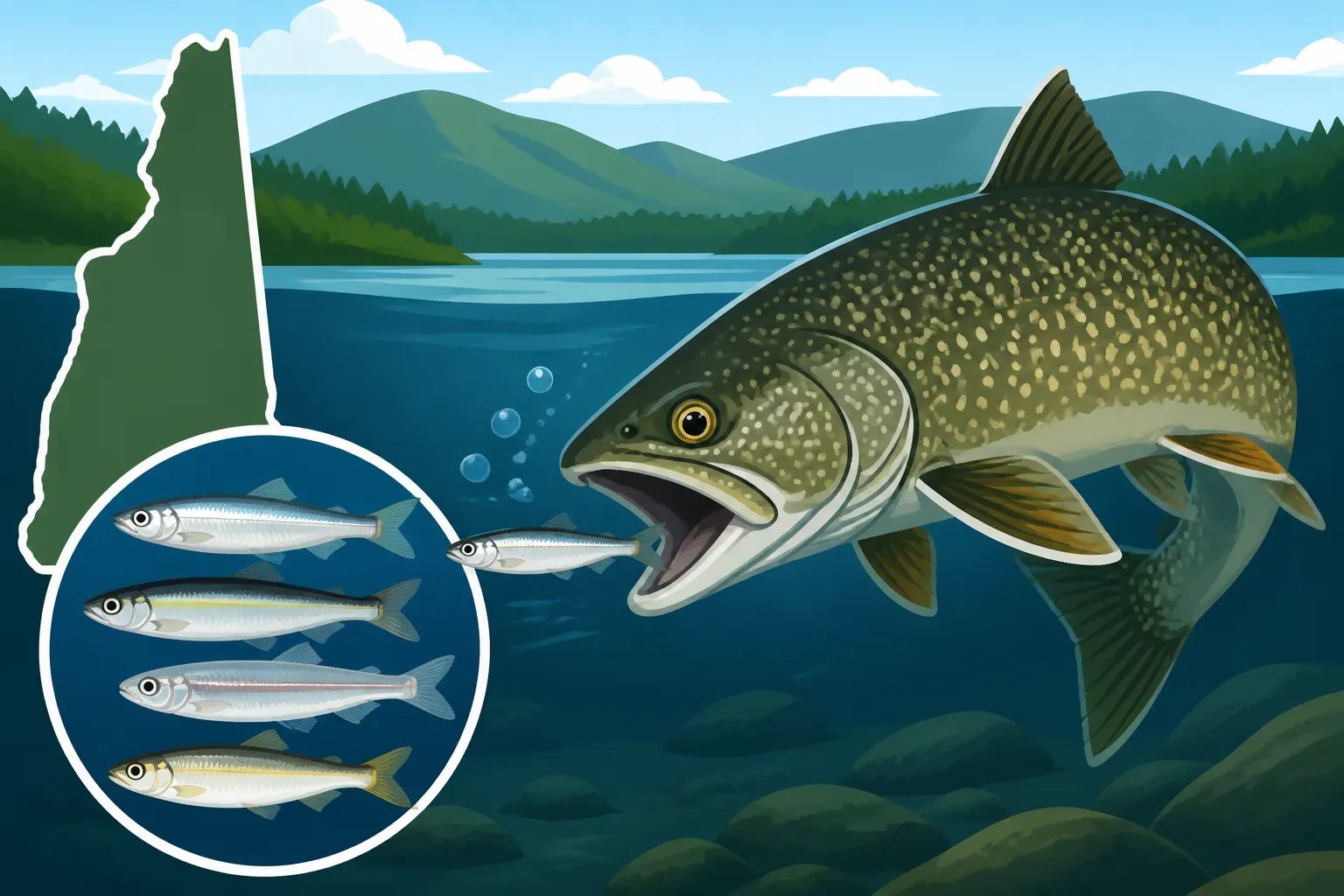
When you talk about lake trout in New Hampshire, you simply cannot avoid talking about rainbow smelt. These small, silvery fish are the lifeblood of many of our deepest, coldest lakes, serving as the primary caloric engine for thriving lake trout populations. For many anglers, understanding smelt is synonymous with understanding lakers.
Why Smelt Reign Supreme for Lake Trout
Rainbow smelt are, quite simply, a perfect food source for lake trout. They are highly abundant in many of New Hampshire's prime lake trout waters, forming massive schools that are easy for a predator like a laker to target and consume efficiently. Smelt are also packed with fat and protein, providing the high-energy diet necessary for lake trout to grow to impressive sizes. Imagine a grocery store aisle filled exclusively with your favorite, most nutritious food—that's what a smelt school is to a lake trout.
New Hampshire lake trout have evolved alongside these baitfish, developing hunting strategies perfectly suited to ambushing schools of smelt in the clear, cold depths. When you see a healthy lake with a robust population of big, fat lake trout, you can almost guarantee it has an equally robust population of rainbow smelt. Without this foundational forage, our trophy lake trout fisheries simply wouldn't exist as we know them. Understanding the dynamic between these two species is crucial, and you can learn more about this relationship by exploring topics like Rainbow Smelt as Forage Fish in New Hampshire Lakes and What rainbow smelt are and why they matter to salmon.
Smelt's Seasonal Influence on Lake Trout
The seasonal movements of rainbow smelt directly dictate where lake trout will be found throughout the year. It's a constant, aquatic game of follow-the-leader.
- Ice-Out Frenzy: As the ice melts in spring, smelt often move into shallower waters to spawn. This is a prime time for lake trout, who follow them in, providing some of the best early-season fishing opportunities. The trout are often hungry after a long winter and aggressively feeding on these accessible baitfish. Anglers often find success casting or slow-trolling near shorelines and inlets where smelt congregate.
- Summer Depths: Once the water warms and the thermocline sets up, smelt retreat to the cooler, deeper parts of the lake. Lake trout don't hesitate to follow, often suspending at specific depths where the water temperature is ideal and smelt schools are present. This is when deep-water trolling and vertical jigging become essential, often requiring specialized electronics to locate these elusive schools. If you want to know more about fishing in different seasons, check out New Hampshire Lake Trout Ice Fishing Season Dates or Best Techniques for Deep Water Summer Lake Trout.
- Fall Turnover: As the lake cools in the fall and the water column mixes (turnover), smelt can disperse throughout the lake more broadly, or sometimes move back shallower. This again signals a shift for lake trout, who become more active and can be found in a wider range of depths, aggressively feeding before winter sets in.
Recognizing these seasonal patterns in smelt behavior is key to anticipating where the lake trout will be, rather than just blindly searching. It's about thinking like a fish—specifically, thinking like a smelt, and then thinking like a predator chasing that smelt. For more on the broader context, consider How rainbow smelt affect New Hampshire lake fisheries.
Beyond Smelt: Other Vital Baitfish Species
While rainbow smelt are undeniably paramount, New Hampshire's lake trout aren't exclusively smelt-eaters. They are opportunistic predators, and in lakes where smelt might be less abundant or in certain specific situations, other baitfish play a significant role in their diet. It's like having a favorite meal, but still enjoying other delicious options when they're available.
Yellow Perch as Opportunistic Meals
Yellow perch are a common sight in many New Hampshire lakes, and while adult perch are often too large for most lake trout to bother with, their smaller, younger counterparts can become a crucial food source.
In lakes where smelt populations might be cyclical or less robust, juvenile yellow perch step up to fill the void. Lake trout will target these smaller perch, especially during certain times of the year when perch are abundant in shallower areas, or when they're transitioning from deeper weeds. Anglers often find that when perch are schooling, even larger lake trout won't pass up an easy meal. This is particularly true in areas where rock piles and submerged timber provide excellent ambush points for a laker to pick off a stray perch. For more details on these common residents, you can read Yellow Perch in New Hampshire Lakes.
Alewife and Other River Herrings
While not as widespread as smelt in New Hampshire's prime lake trout waters, alewife and other river herrings can be significant forage in specific systems. These are anadromous fish, meaning they typically live in saltwater and migrate into freshwater to spawn. However, some landlocked populations exist or have been introduced in certain lakes, where they can become a dominant baitfish.
Alewife are often larger than smelt, offering a substantial meal for a lake trout. When present, they can lead to very robust growth rates for lake trout. Their oily flesh is highly nutritious. Anglers fishing these specific lakes need to adjust their presentations to mimic these larger baitfish, often using bigger lures or slower trolling speeds to appeal to trout feeding on this bulkier forage. Knowing if your target lake has a strong alewife population is a significant piece of the puzzle.
Cisco (Lake Herring) – A Lesser-Known Gem
Cisco, also known as lake herring, are another species that can be a vital deep-water forage fish for lake trout, though they are not as commonly discussed as smelt. Cisco are cold-water fish that typically inhabit the deeper, cooler sections of large lakes, often overlapping with the preferred habitat of lake trout.
Like smelt, cisco are schooling fish and offer a nutritious, high-energy food source. They can be particularly important in lakes that are deep and cold enough to sustain healthy cisco populations. Because they dwell in similar deep-water environments, lake trout are perfectly positioned to feed on them. Anglers who understand the specific presence of cisco in a given lake might choose lures that mimic their size and coloration, especially when fishing very deep structure.
| Baitfish Species | Primary Habitat | Typical Size | Nutritional Value | Influence on Lake Trout Behavior |
|---|---|---|---|---|
| Rainbow Smelt | Deep, cold lakes | 3-7 inches | High (oily) | Dominant. Dictates seasonal depth & movement. |
| Yellow Perch | Variable, incl. shallower | 4-10 inches (juveniles key) | Medium | Opportunistic, especially for smaller trout or in smelt-sparse lakes. |
| Alewife / River Herring | Specific lakes/rivers, deep | 6-12 inches | High (oily) | Significant where present; larger meal. |
| Cisco (Lake Herring) | Deep, cold lakes | 8-14 inches | High (oily) | Important deep-water forage in specific systems. |
How Baitfish Behavior Shapes Lake Trout Location
Understanding what lake trout eat is only half the battle; knowing where they eat it is the other crucial half. Lake trout are remarkably efficient predators, and their movements are almost always tied to the movements of their primary food sources. It's a direct connection that savvy anglers can exploit.
Following the Food: Seasonal Migrations
As we touched on with smelt, lake trout are master followers. Their entire year is often a dance with their prey.
During the spring, right after ice-out, lake trout will often push into shallower areas, sometimes even within casting distance of shore, because that's where the smelt are moving to spawn. They're capitalizing on an easy meal in more accessible waters. But as soon as those smelt retreat to the depths to escape warming surface temperatures, the lake trout will drop right back down with them.
In the height of summer, when the lake stratifies and a distinct thermocline forms, both smelt and lake trout will congregate within a specific band of comfortable temperature and oxygen levels, often near the thermocline or just below it. This might be 40, 60, or even 100 feet down, depending on the lake. If you're not fishing at that specific depth, you're likely missing the vast majority of the active fish. This is why techniques like downrigging for lake trout are so effective, allowing you to present your lure precisely in the strike zone. You can dive deeper into these seasonal strategies by looking at How to Catch Lake Trout in New Hampshire and Lake Trout Fishing in New Hampshire.
Depth, Temperature, and Oxygen: The Crucial Trio
The habitat preferences of baitfish are strongly influenced by water temperature and oxygen levels, which in turn dictate where lake trout will hunt. Lake trout themselves are cold-water species, thriving in temperatures generally between 45-55 degrees Fahrenheit.
- Temperature: Baitfish like smelt and cisco also prefer colder water, often congregating in the deep, oxygen-rich zones. As summer progresses, the surface layers warm significantly, driving these baitfish, and thus the lake trout, into the cooler depths.
- Oxygen: While cold water holds more oxygen than warm water, the very deepest parts of some lakes can become oxygen-depleted during prolonged stratification. This creates a "squeeze" where baitfish and trout are confined to a specific thermal and oxygen band. If you find a school of baitfish on your fish finder at a certain depth, and the temperature at that depth is in the lake trout's preferred range, you've likely found your target zone. The lake trout will be right there, often just below or adjacent to the densest bait schools, ready to ambush.
Understanding this interplay means that even without seeing a lake trout on your sonar, if you find a dense school of baitfish in the optimal temperature and oxygen range for lakers, you are in the right place.
Mimicking the Menu: Selecting Effective Lures and Baits
Knowing what baitfish lake trout key on is invaluable, but the real challenge for us anglers is translating that knowledge into effective lure and bait choices. The goal isn't just to catch a fish, but to catch fish that are actively feeding on a specific forage.
Smelt Imitations: The Go-To Choice
Given their dominance in the lake trout diet, lures designed to imitate rainbow smelt are usually your best bet. Smelt are typically slender, silvery, and often have a greenish or bluish tint on their backs.
- Spoons: Classic trolling spoons like the Sutton, Mooselook Wobbler, or Doctor Spoon are absolute staples. Their erratic wobble and flash perfectly mimic a wounded smelt. Colors that feature silver, blue, green, or even black backs are highly effective. Varying the size of your spoon to match the size of the local smelt population can make a huge difference. You can find a vast array of these on platforms like Amazon, offering different sizes and patterns to experiment with.
- Stickbaits: Long, slender stickbaits, both sinking and suspending models, can be deadly, especially when fish are shallower or suspended. Brands like Rapala or Bomber make excellent smelt-colored minnow imitations. Trolling these at various depths or casting them during the spring spawn are effective tactics.
- Soft Plastics: When jigging, especially through the ice or vertically in open water, soft plastic "minnow" or "fluke" style baits, typically 3-5 inches long, on a lead head jig can be incredibly effective. The subtle action of the soft plastic often fools hesitant lake trout. Again, silvery, white, or light green options are prime choices. To get a better idea of what works, consider reading Best Lures for Lake Trout Trolling.
Remember, presentation is key. A lure that perfectly mimics a smelt, but isn't presented at the correct depth or speed, won't get bit.
Perch and Herring Impersonators
While smelt might be the main course, having options to mimic other baitfish can save a slow day.
- Perch Imitations: If you suspect lake trout are keying on yellow perch, particularly in lakes with fewer smelt, lures with a perch pattern (yellow, green bars, orange fins) can be highly effective. Crankbaits, swimbaits, or even larger spoons in perch colors can be worth trying. This is particularly relevant around submerged structure where smaller perch tend to hide.
- Larger Profiles for Herring: In lakes known to have alewife or cisco, you'll want to use larger lures to match their size. Spoons and stickbaits that are 6-9 inches long, with a broader profile and a chrome or blue/silver finish, are good choices. Sometimes, a larger, slower presentation is what's needed to entice a trout that's used to feeding on bigger baitfish.
Experimentation is crucial. Sometimes, a slightly different profile or color, perhaps something a bit more vibrant you might find on Amazon, can trigger a bite when nothing else will. For more general trolling advice, check out Trolling Techniques for New Hampshire Lake Trout and Best Trolling Gear for New Hampshire Lake Trout.
Reading the Water: Signs of Baitfish and Lake Trout
It's one thing to know what they eat and what lures to use, but another entirely to locate the fish in the vast expanse of a New Hampshire lake. Successfully targeting lake trout hinges heavily on your ability to "read the water" – to interpret the subtle and not-so-subtle clues that reveal the presence of their primary food sources.
Using Electronics to Locate Bait Schools
This is arguably the most critical modern tool for lake trout anglers. Your fish finder isn't just for finding game fish; it's perhaps even more important for finding baitfish.
- Sonar Interpretation: Learn to interpret what a school of baitfish looks like on your sonar screen. They typically appear as dense clouds or balls of tiny arches. Sometimes, lake trout will be directly beneath, within, or just outside these bait balls, appearing as larger, distinct arches.
- Down Imaging/Side Imaging: Advanced sonar technologies like down imaging can give you a more photographic view of bait schools, revealing their density and shape. Side imaging can help you scan a wider area to locate baitfish concentrations away from directly under your boat.
- Depth and Thermocline: Pay close attention to the depth at which you're seeing bait. Correlate this with your water temperature gauge to find the thermocline. As discussed, lake trout will often be found at or just below this transition zone, where the baitfish are also holding. If your fish finder shows a distinct band of bait at, say, 50 feet, you know to target your lures at that depth. Investing in a good quality fish finder, many of which are available on Amazon with various features, can drastically improve your success. This applies to a wide range of fishing on lakes like Lake Winnipesaukee; for more insights, see Lake Winnipesaukee Lake Trout Fishing.
Observing Surface Activity and Shoreline Clues
While lake trout are primarily deep-water fish, there are specific times and conditions where surface activity can provide clues.
- Ice-Out: During the brief window of ice-out, especially in spring when smelt are shallow, you might observe "nervous water" or even actual baitfish jumping at the surface as lake trout push them from below. This is a rare but exciting sight and a clear indicator of feeding activity.
- Bird Activity: Keep an eye on diving birds like gulls or loons. While they often target panfish, sometimes their frenzied activity can indicate a school of baitfish being pushed to the surface, which could also attract lake trout, especially during turnover periods when fish are more dispersed.
- Baitfish Runs: In specific rivers or inlets that have smelt or herring runs, observing the actual movement of these baitfish can tell you exactly where the lake trout will be staging to intercept them. This often happens close to shore or in specific currents.
These visual clues, when they appear, are like flashing neon signs telling you where the action is. Combine them with your electronic readings for the most comprehensive picture.
Conservation and the Future of Forage
As anglers, we have a vested interest in the long-term health of New Hampshire's fisheries, and that includes the crucial baitfish populations that sustain our beloved lake trout. Without a healthy forage base, our lake trout populations simply wouldn't thrive.
Managing Healthy Baitfish Populations
New Hampshire Fish and Game Department plays a critical role in monitoring and managing these populations. This involves studying the reproductive success of baitfish, assessing their abundance, and understanding how environmental changes might affect them. For anglers, our part involves respecting regulations, practicing catch and release when appropriate, and being mindful of our impact on the ecosystem.
A balanced ecosystem means not just healthy game fish, but healthy populations of everything from the smallest plankton to the largest predatory fish. When the baitfish are doing well, the lake trout will inevitably follow. It's a fundamental principle of aquatic ecology. Learning more about the regulations that help protect our aquatic resources can be found in a resource such as New Hampshire Fishing Regulations Explained.
The Impact of Invasive Species
Unfortunately, invasive species pose a significant threat to native baitfish populations and, by extension, to the lake trout that rely on them. Species like rusty crayfish or certain invasive aquatic plants can outcompete native baitfish for food and habitat, or disrupt the delicate balance of the food web.
Anglers can do their part by preventing the spread of invasives. This means cleaning, draining, and drying all boats and gear between water bodies. Never transport bait from one lake to another, and never release aquarium fish or unused bait into natural waters. Maintaining the health and diversity of our native baitfish is paramount for the continued success of New Hampshire's lake trout fishing.
Understanding what New Hampshire lake trout key on isn't just about catching more fish; it's about connecting with the intricate natural world beneath the surface. It's about respecting the delicate balance that allows these magnificent fish to thrive. The next time you're out on a New Hampshire lake, consider the invisible ballet happening deep below, the constant pursuit of the hunter and the evasive dance of the baitfish. Armed with this knowledge, you'll not only be a more effective angler but also a more informed steward of our precious aquatic resources.
Disclaimer
This article is for general informational purposes only and does not constitute professional advice. Laws, prices and regulations vary by location and change over time. Consult a qualified professional for guidance on your specific situation.