Trolling Techniques for New Hampshire Lake Trout
New Hampshire’s vast, deep lakes hold a special allure, particularly for those chasing the elusive and powerful lake trout. Many anglers find themselves frustrated, however, endlessly dragging lures behind their boat with little success, wondering if they're even in the right zip code, let alone the right depth. This comprehensive guide is designed to cut through that confusion, arming you with the precise trolling techniques and insights needed to consistently put New Hampshire lake trout in your net.
Understanding Lake Trout Behavior and Habitat in New Hampshire
Before you even think about setting a line, it's crucial to understand the fish you're after. Lake trout are magnificent creatures, relics of the ice age, perfectly adapted to the cold, oxygen-rich depths of New Hampshire’s larger lakes. Their behavior is largely dictated by water temperature, available forage, and light conditions, which change dramatically throughout the year.
Seasonal Movements and Depth Preferences
Lake trout are extremely sensitive to water temperature. Unlike bass or panfish that can tolerate a wide range, lakers thrive in cold water, typically preferring temperatures between 45 and 55 degrees Fahrenheit. This preference drives their movements throughout the seasons, making depth control paramount to successful trolling.
In the spring, right after the ice melts, often referred to as "ice-out," lake trout can be found surprisingly shallow. The entire water column is cold and oxygenated, and baitfish like rainbow smelt are often congregating in bays and near shorelines for their own spawning rituals. This is a fantastic time to target lakers in the top 10-30 feet of water, often even without heavy trolling gear. As spring progresses into early summer, the upper layers of the lake begin to warm, and the lake trout start their descent, seeking cooler water. They'll typically follow the thermocline – the distinct layer where water temperature changes rapidly – as it deepens. By mid-summer, especially in July and August, they will be concentrated in the deepest, coldest parts of the lake, often 50 to 100 feet down or even deeper, particularly in lakes like Lake Winnipesaukee or Sunapee. This deep-water habit is what makes trolling for lake trout such a challenge, requiring specialized equipment to get your lures down to where the fish are holding. Come fall, as the surface waters cool again and the lake begins to "turn over," lake trout may once more move shallower, preparing for their own spawning activities in late fall. This can offer another window of opportunity for shallower trolling, though they rarely come as close to the surface as during ice-out.
Forage Base and Diet
Knowing what lake trout eat is like having a cheat sheet for selecting the right lures and presentations. In New Hampshire's lakes, the primary forage for lake trout is often rainbow smelt. These small, silvery baitfish are incredibly important to the laker's diet and growth. Where there are smelt, there are usually lake trout.
Beyond smelt, lake trout will also feed on other baitfish species, such as alewives (where present), smaller yellow perch, and even smaller trout. Occasionally, they'll opportunistically feed on aquatic insects or even crawfish, but their preference leans heavily towards protein-rich schooling baitfish. Your trolling lures, therefore, should mimic these prey species in terms of size, profile, and color. Long, slender stickbaits and spoons that imitate a struggling or fleeing smelt are often incredibly effective. Understanding the lake trout life cycle in New Hampshire lakes can further enhance your strategic planning, as their feeding patterns shift with their biological needs throughout the year.
Essential Trolling Gear for New Hampshire Lake Trout
Successful lake trout trolling isn't just about dropping a line in the water; it requires a specific arsenal of gear designed to get your offerings to the right depth and present them enticingly. Investing in the right equipment can make all the difference between a frustrating day on the water and a memorable one.
Rods, Reels, and Lines
When it comes to rods for lake trout trolling, you'll want something with a moderate to fast action and a decent backbone to handle the weight of heavy downrigger balls, lead core line, or the pull of a large fish. A rod in the 7 to 9-foot range is ideal, providing enough length for spreading lines and absorbing the shock of strikes. Look for rods specifically designed for trolling or downrigger fishing.
Reels need to be robust with a good drag system and sufficient line capacity. Level wind baitcasting reels are generally preferred for their ability to handle heavy lines and provide excellent control when dropping lures. When considering your line, you have several options, each with its own advantages:
- Monofilament: A good all-around choice for top-lining or lighter trolling. It has stretch, which can be forgiving during a fight.
- Fluorocarbon: Excellent for leaders due to its near invisibility in water and abrasion resistance.
- Braided Line: Offers incredible strength-to-diameter ratio and zero stretch, providing excellent sensitivity. Often used as a main line with a fluorocarbon leader.
- Lead Core Line: This is a specialized line with a lead center, designed to sink. Different colors indicate 10-yard sections, and each color typically sinks about 5 feet per 10 yards at a trolling speed of 2-3 mph. It’s effective for getting lures down to moderate depths without downriggers.
- Copper Line: Similar to lead core but sinks faster and is heavier. Used for reaching deeper depths than lead core, offering a direct connection to the lure.
When purchasing any of this, you can often find a wide selection on platforms like Amazon, offering a convenient way to compare brands and read reviews. For deeper insights into selecting the right setup, check out our guide on Best Trolling Gear for New Hampshire Lake Trout.
Downriggers and Planer Boards
These are your depth control specialists, indispensable for serious lake trout trolling, especially in deeper water.
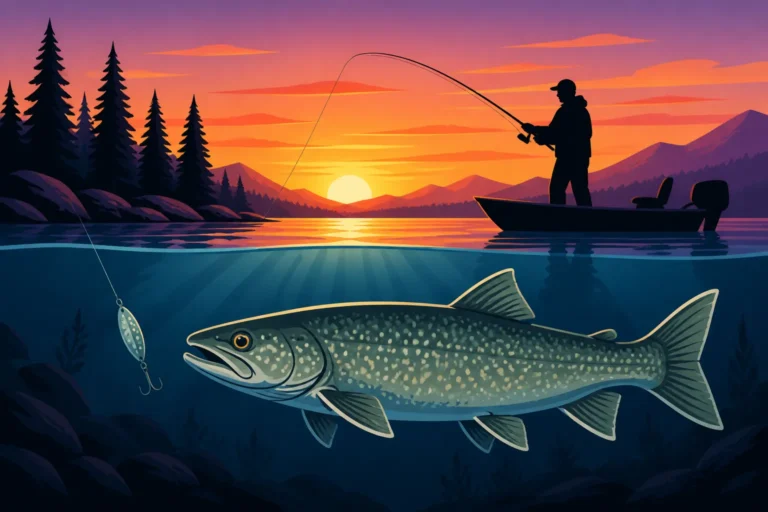
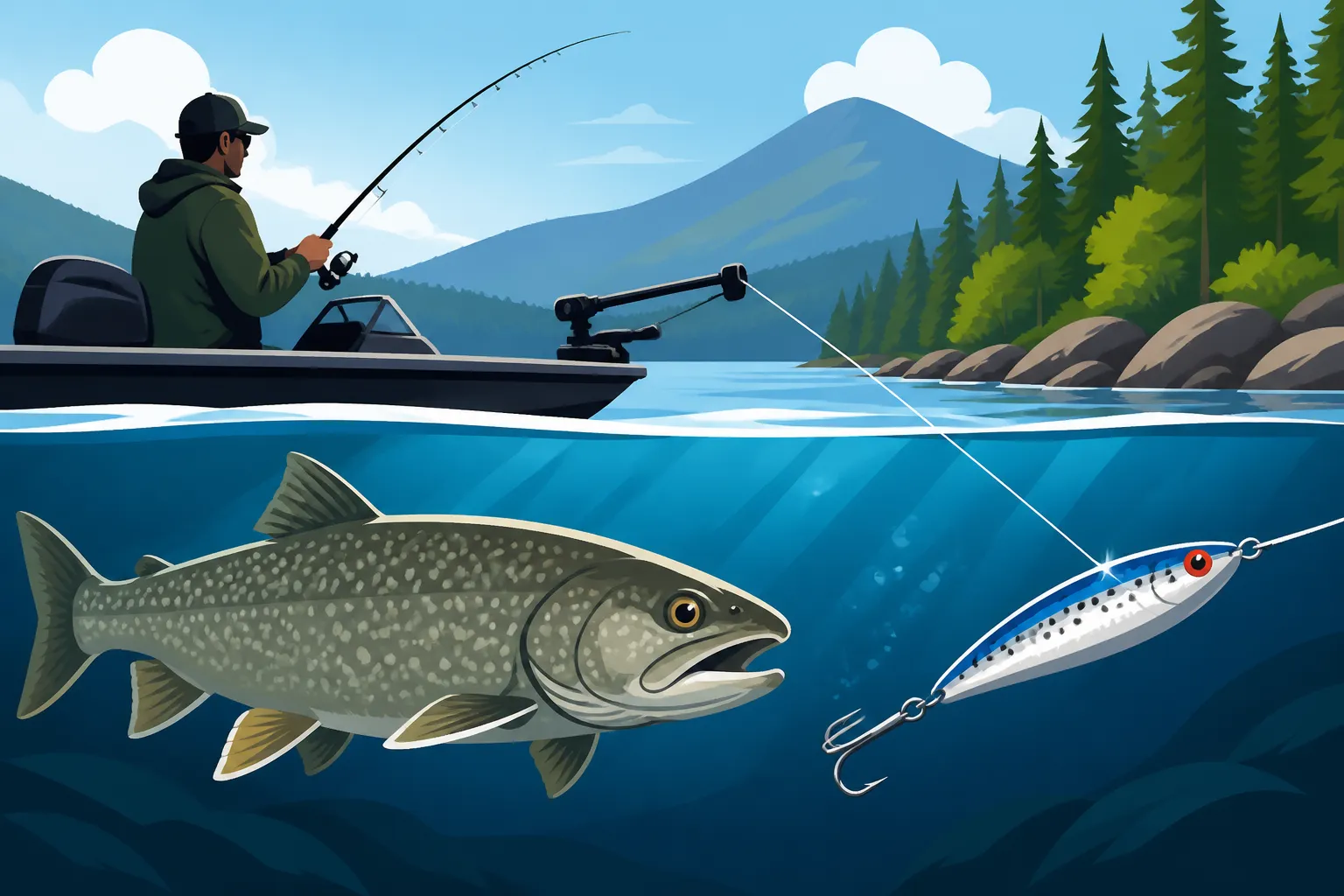
- Downriggers: These devices allow you to precisely control the depth of your lure. A heavy lead ball (typically 6 to 12 pounds) is lowered to a desired depth, and your fishing line is clipped to the downrigger cable with a release clip. When a fish strikes, the line pops free from the clip, allowing you to fight the fish directly without the weight of the downrigger ball. This method provides the most accurate depth control and allows lures to swim freely, unimpeded by heavy lines. For summer deep water trolling, downriggers are often non-negotiable for consistently reaching lake trout. Many anglers use a pair of downriggers to create a wide trolling spread.
- Planer Boards: While less common for the very deep trolling required for lake trout in summer, planer boards are excellent for spreading out your lines horizontally, especially when fishing shallower or when wanting to cover more water near the surface. They pull your lures out to the side of the boat, preventing tangles and allowing you to present multiple lures at different distances from your boat's path. They are more frequently used for species like salmon or shallower cruising trout, but can be useful in spring when lakers are higher in the water column.
Both downriggers and planer boards add a layer of complexity but significantly increase your chances of success by putting your lures exactly where the fish are, whether that's 20 feet or 120 feet down.
Lures and Baits
The choice of lure or bait is critical and should always mimic the lake trout's natural forage. Given that rainbow smelt are a primary food source, anything that imitates a smelt is usually a good starting point.
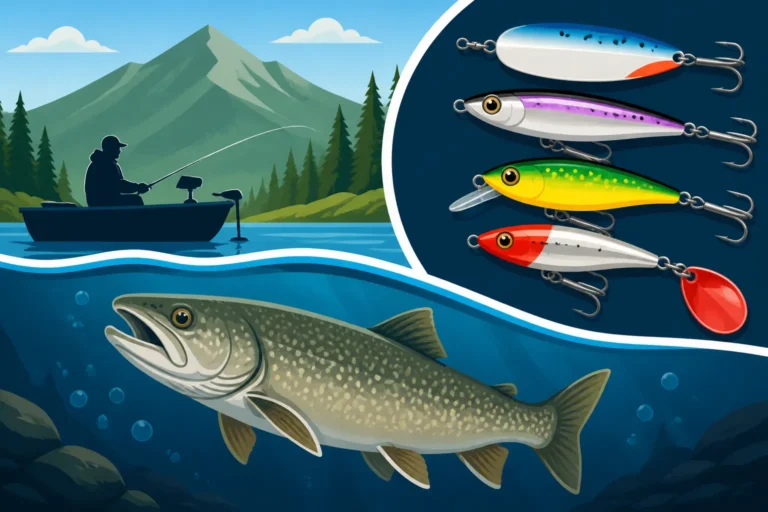
- Spoons: Metal trolling spoons like the popular Mooselook Thinfish, Sutton Spoons, or the classic Eppinger Dardevle are perennial favorites. Sizes typically range from 2.5 to 5 inches, mimicking the size of smelt. Colors that are silver, blue, green, or even gold, often with some sort of tape or reflective finish, tend to be very effective. Varying the retrieve or trolling speed will change the action of the spoon, making it flutter, dart, or wobble, imitating a wounded baitfish.
- Stickbaits (Minnow Plugs): Long, slender hard plastic or wood lures like Rapala, Yo-Zuri, or Storm Deep Thunder often excel at imitating baitfish. These come in various diving depths, and many are designed for trolling. Look for models that dive to 10-30 feet on their own, or use them in conjunction with downriggers or lead core to reach greater depths. Natural baitfish patterns are key here.
- Soft Plastics: Sometimes, a subtle approach is best. Large tube jigs or plastic swimbaits, particularly those rigged on a jig head and fished vertically or slowly trolled, can be deadly. White, pearl, or chartreuse colors can be very effective, especially when tipped with a piece of bait.
- Live Bait: Live rainbow smelt or shiners, if legally allowed and available, are often irresistible to lake trout. They can be slow-trolled behind a downrigger or drifted. Make sure to check New Hampshire Fishing Regulations Explained for specific bait restrictions in certain waters. Some anglers also use dead bait, such as preserved smelt, rigged to spin enticingly in the water. For more specific recommendations, our guide on Best Lures for Lake Trout Trolling offers detailed insights.
Mastering Trolling Techniques for Different Seasons
The "how-to" of trolling for lake trout changes significantly throughout the year, primarily because the fish's depth preference shifts with water temperature. What works at ice-out won't necessarily work in the dog days of summer.
Spring Ice-Out Trolling (Shallow Water Tactics)
This is perhaps the most exhilarating time to troll for lake trout because they are often found in relatively shallow water, sometimes even in the top 10 feet! Right after the ice leaves, the entire water column is cold and oxygenated, and baitfish are often moving into shallower areas to spawn. Lake trout follow them.
During ice-out, you don't always need heavy downriggers. Many anglers successfully flat-line or use lighter lead core setups. Trolling spoons and shallow-diving stickbaits in natural baitfish colors are highly effective. Focus your efforts on the shallower areas of the lake, especially near points, coves, and rocky shoals where baitfish might congregate. Keep your trolling speed on the slower side, around 1.5 to 2.5 mph, to give the lakers time to react. The cool water means they might not be as aggressive as other times of the year, so a subtle, natural presentation is often best. Don't be afraid to experiment with brighter colors early in the morning or on cloudy days, as the light penetration is often lower. This shallow-water window is relatively short, usually lasting only a few weeks after ice-out, so make the most of it.
Summer Deep Water Trolling (Thermocline Strategies)
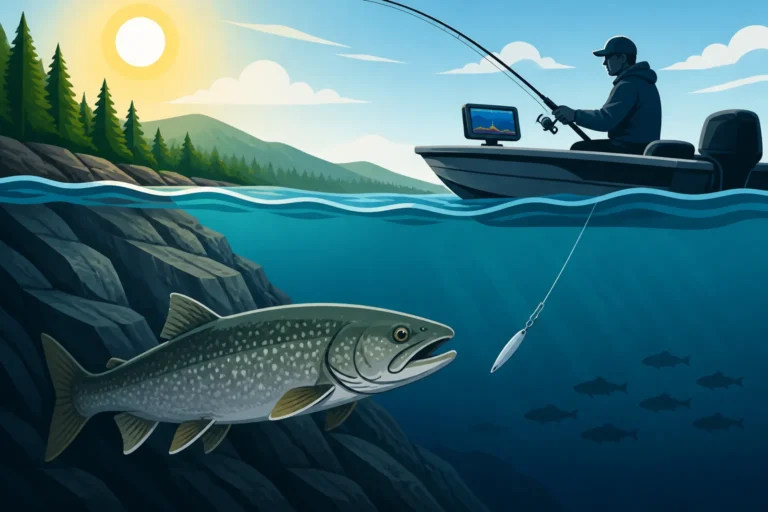
As New Hampshire's lakes warm up through late spring and into summer, lake trout retreat to the cool, deep waters below the thermocline. This is where downriggers become absolutely essential. Without them, you're mostly just guessing where the fish are, and your lures won't reach the strike zone.
Identifying the thermocline is key. Many modern fish finders can help you locate this temperature transition layer. Once found, you want to set your lures to run just above, in, or just below the thermocline. This is often in the 50-100+ foot range in larger lakes. Precision is paramount; being off by 10 feet can be the difference between catching fish and a silent spread. Experiment with different depths until you start getting bites. Trolling speeds often increase slightly in summer, to between 2 and 3 mph, sometimes faster, to cover ground and trigger reactive strikes from fish holding in the cold. Long, slender spoons and deep-diving stickbaits are staples. Many anglers will "stack" lures on their downriggers, running two lines off one downrigger, or use multiple downriggers to cover various depths. Monitoring your sonar closely for baitfish schools and individual arches is critical here; if you mark fish, adjust your depth accordingly.
Fall Trolling (Pre-Spawn Aggression)
Fall can be another fantastic time to troll for lake trout in New Hampshire. As the surface water temperatures begin to drop and the lake "turns over," lake trout often become more active and aggressive, preparing for their late fall spawning period. They may be found at a variety of depths, from relatively shallow to moderately deep, as the cold water returns to higher in the water column.
The cooling water tends to make lake trout more active feeders. Trolling speeds can range from 2 to 3.5 mph, and sometimes even faster, to generate a reaction strike. While downriggers are still valuable for precise depth control, lead core or even heavy braided line with significant weight can be effective as fish may be spread throughout different layers. Focus on areas with rocky structure, shoals, and underwater humps, which are often preferred spawning grounds. Lure choices remain similar to summer – spoons and stickbaits that mimic smelt – but you might experiment with slightly larger profiles or more vibrant colors as the fish are often more willing to chase. Pay attention to changes in weather; a cold snap can often trigger a strong feeding bite.
Advanced Trolling Strategies and Troubleshooting
While simply getting a lure to the right depth is a good start, true lake trout trolling success often comes down to finessing the details and adapting to changing conditions.
Speed, Direction, and Presentation
These three factors are often overlooked but can dramatically impact your success rate.
- Speed: Lake trout are often finicky about speed. Generally, 1.5 to 3.5 mph is the sweet spot, but sometimes faster or slower is needed. Too slow, and lures might not have the right action; too fast, and fish might not have time to react or identify the lure. Pay attention to your lure's action at different speeds. You can often see this by bringing it close to the surface or by watching your rod tip.
- Direction: Trolling in a straight line forever can be effective, but often the most productive strategy is to incorporate gentle turns. When your boat turns, the lures on the inside of the turn slow down and drop, while the lures on the outside speed up and rise. This change in speed and depth can often trigger strikes from following fish. Experiment with S-turns, circles around structure, or even figure-eights over a marked fish.
- Presentation: Beyond just lure selection, consider how your lure is presented. Is it swimming freely? Is it fouled with debris? A subtle wobble or erratic darting motion is usually what you want. Ensure your line is clean, and your lure is running true. Sometimes, adding a small piece of bait (like a strip of sucker meat or a preserved smelt) to a spoon or jig can add scent and attraction. The goal is to imitate a natural, vulnerable baitfish.
Reading Sonar and Interpreting Structure
Your fish finder is your eyes below the surface, and knowing how to interpret its readings is crucial. Modern units, particularly those with side imaging or down imaging, available through retailers like Amazon, can paint an incredibly detailed picture of the underwater world.
- Locating Fish: Learn to identify lake trout on your sonar. They often appear as distinct, strong arches, sometimes suspended over deep water or hugging the bottom near structure. Mark these fish with your GPS, and consider circling back over them.
- Finding Baitfish: Where there's bait, there are usually predators. Look for dense schools of baitfish, often appearing as "clouds" or tight balls on your screen. Trolling through or around these bait schools can be highly productive.
- Interpreting Structure: Lake trout relate to underwater structure. This includes humps, rocky points, ledges, deep channels, and even sunken timber. Use your sonar to map out these features and concentrate your trolling efforts in these areas. Understanding the bottom contours can help you predict where lake trout will hold. Many high-quality fish finders designed for deep lake fishing can be found by researching online.
Adjusting to Conditions and Troubleshooting
No two days on the water are exactly alike. Being able to adapt is a hallmark of a successful angler.
- Weather Changes: Cold fronts, high pressure, or approaching storms can all affect lake trout behavior. During a strong cold front, fish might become lethargic and suspend more. You might need to slow down your troll, switch to more subtle lures, or target specific depths more precisely.
- Water Clarity: Very clear water often means fish are more spooky. Use longer fluorocarbon leaders and more natural lure colors. Stained water might call for brighter colors or lures with more vibration.
- Fouled Lines and Lures: Regularly check your lines and lures. Weeds, leaves, or even a small piece of debris can completely kill a lure's action and prevent bites. If you haven't had a strike in a while, reel in and inspect.
- No Bites? Change it Up! If your usual techniques aren't working, don't be afraid to change. Vary your speed, switch lures, change colors, adjust depth by 5-10 feet, or move to a completely different area of the lake. Persistence combined with strategic adaptation is key. It's also worth noting that knowing the New Hampshire Fishing Season Dates and Closures can help you plan your trips around optimal times for specific techniques.
Here’s a quick overview of common trolling setups and their applications:
| Trolling Method | Typical Depth Range | Recommended Line Type | Best for Season/Conditions | Advantages | Disadvantages |
|---|---|---|---|---|---|
| Flat Lining | 0-25 feet | Monofilament/Fluorocarbon | Spring Ice-Out, early morning/late evening, low light | Simple, light tackle feel, direct fight with fish | Limited depth control, susceptible to boat spook, narrower spread |
| Lead Core | 10-60 feet (approx. 5ft/color) | Lead Core (multi-color) | Spring/Fall transition, moderate depths, covering water | No heavy hardware on rod, covers good depth range, easy to deploy | Less precise depth, line stretch, can be bulky, harder to "feel" light bites |
| Downrigger | 20-150+ feet | Braid/Mono Mainline + Leader | Summer Deep Water, precise depth control, targeting thermocline | Most accurate depth, clear fight with fish, lures run freely | Requires specialized equipment, more complex setup, heavier gear |
| Dipsy Diver/Planer | 0-40 feet (depending on size) | Braid/Mono Mainline + Leader | Spreading lines, covering moderate depths, targeting shallower fish | Expands horizontal spread, some depth control | Less precise depth than downriggers, can be cumbersome, line release |
Best New Hampshire Lake Trout Waters for Trolling
New Hampshire is blessed with numerous deep, cold-water lakes that provide excellent lake trout habitat. Knowing where to focus your efforts can significantly increase your chances of success.
Lake Winnipesaukee and Other Major Lakes
When people think of lake trout fishing in New Hampshire, Lake Winnipesaukee is often the first body of water that comes to mind, and for good reason. As one of the largest and deepest lakes in the state, it holds a thriving population of lake trout. The sheer size of Winnipesaukee means there’s an incredible amount of deep, cold habitat, as well as vast areas of schooling smelt for the lakers to feed on. Popular trolling areas on Winnipesaukee include "The Broads," areas around Bear Island, and deep channels near Wolfeboro and Meredith. Trolling here, especially in summer, requires a keen understanding of depth charts and sonar. Our comprehensive Lake Winnipesaukee Fishing Guide offers more specific details for targeting these waters.
Beyond Winnipesaukee, several other major lakes offer fantastic lake trout trolling opportunities:
- Lake Sunapee: Another deep, clear lake known for its healthy population of lake trout and landlocked salmon. Similar to Winnipesaukee, deep water trolling is key here in the warmer months.
- Newfound Lake: Famed for its exceptionally clear waters and impressive depths, Newfound is a prime lake trout destination. It also has a strong smelt population.
- Squam Lake: While perhaps better known for its bass fishing, Squam Lake also holds a respectable population of lake trout in its deeper basins.
- First Connecticut Lake: Up in the remote North Country, this is a beautiful, wild lake that offers excellent opportunities for various cold-water species, including lake trout.
These are just a few of the top contenders. For a broader look at potential fishing grounds, our guide to the Best Fishing Lakes in New Hampshire provides even more options. When planning your trip, always consult the New Hampshire Fish and Game Department website for current stocking reports and any specific advisories for these waters.
Special Regulation Waters
It's absolutely critical to be aware that certain bodies of water in New Hampshire may have special regulations that differ from statewide rules. These special regulations can impact everything from bag limits and possession limits to specific gear restrictions or even seasonal closures for certain species.
For lake trout, this might mean a specific slot limit (where fish within a certain size range must be released), different daily limits, or even unique season dates. Some waters might be designated "catch and release only" for certain species. Before you launch your boat and start trolling, always, always check the latest New Hampshire Freshwater Fishing Digest. This digest, available online and at license vendors, is the definitive source for all regulations. Ignoring these rules can lead to significant fines and penalties. For example, understanding New Hampshire lake trout limit and possession rules is not just good practice, it's mandatory for every angler.
Trolling for lake trout in New Hampshire is a rewarding pursuit that combines skill, patience, and the right equipment. By understanding the fish's behavior, mastering the techniques for different seasons, and knowing your chosen waters, you can significantly increase your chances of landing one of these magnificent cold-water giants.
Disclaimer
Please note that fishing regulations, conditions, and fish behavior can change. Always consult the latest New Hampshire Fish and Game Department regulations before heading out on the water. This guide is for informational purposes only and does not supersede official state regulations.