Best Trolling Gear for New Hampshire Lake Trout
There's nothing quite like the thrill of chasing lake trout in New Hampshire's pristine, often incredibly deep, waters. But let's be honest, it can be utterly frustrating when you're out there, trolling around, and just not getting any bites. You know the fish are down there, lurking in the cold, dark depths, but how do you get your lure in front of them? It's not enough to just drop a line in the water; you need the right gear, specifically designed for trolling for these elusive giants. This comprehensive guide is going to walk you through everything you need to know about setting up your boat and tackle to effectively troll for lake trout in New Hampshire, taking the guesswork out of your next fishing adventure.
Why Lake Trout Trolling Demands Specialized Gear in New Hampshire
Trolling for lake trout isn't just "fishing with a boat." It's a precise art that requires a thoughtful approach to gear, especially in the unique environment of New Hampshire's lakes. These aren't your average farm ponds; we're talking about deep, oligotrophic waters where lake trout thrive in conditions that demand specific tactics and equipment.
The Deepwater Challenge: New Hampshire's Unique Lakes
Many of New Hampshire's prime lake trout waters, like Lake Winnipesaukee, Squam Lake, or Newfound Lake, are incredibly deep. We're talking hundreds of feet in some spots! Lake trout are cold-water fish, preferring temperatures in the 40s and 50s Fahrenheit, which means in the warmer months, they retreat to these extreme depths. This presents a massive challenge for anglers trying to get their lures down to the strike zone and keep them there consistently. You can't just cast out and expect to reach them. The gear you choose—from your line to your lures to your depth control systems—must be capable of handling these depths and the incredible pressure they exert. Anything less, and you're just dragging a lure through empty water, hoping for a miracle.
Targeting Lake Trout: Habits and Habitat
To truly understand the gear, you need to understand the fish. Lake trout are opportunistic predators, often cruising along structure like underwater humps, rock piles, and deep ledges, or suspended in the water column, chasing schools of baitfish like rainbow smelt. Their diet and habitat preferences dictate the type of lures and baits that will be most effective. They're not usually picky eaters, but they are often shy, especially in clear water. This means your presentation needs to be both attractive and subtle enough not to spook them. Knowing where they prefer to hang out, whether it's near the bottom or suspended in open water, directly influences how you rig your lines and set your depth. Learning about Lake Trout Fishing in New Hampshire can really help you pinpoint their usual haunts.
Precision and Presentation: The Trolling Advantage
Trolling offers a distinct advantage when targeting lake trout because it allows you to cover vast amounts of water and present your lure at a consistent depth and speed. Unlike casting, where your lure's depth and action are often erratic, trolling gives you control. You can dial in the exact depth, experiment with different speeds, and even run multiple lines at varying depths and distances behind the boat. This systematic approach increases your chances of intersecting with active fish, and when you do, you can replicate that success. Without the right gear, maintaining this precision—especially when battling wind, current, and boat speed—becomes nearly impossible, turning a strategic hunt into a random drag.
Rods and Reels: Building Your Trolling Arsenal
Your rod and reel are the foundation of your trolling setup. They need to be robust enough to handle the immense strain of heavy weights, long lines, and, of course, a powerful lake trout on the other end. Skimping here is a recipe for frustration and lost fish.
Rods Built for Battle: Power, Length, and Action
When it comes to trolling rods for New Hampshire lake trout, you're looking for something with specific characteristics. First, forget about ultra-light, sensitive rods; these are not finesse fish from shallow water. You need a rod with a medium-heavy to heavy power. This power is crucial for absorbing the shock of a strike while maintaining enough backbone to handle the significant drag of a downrigger ball or a long section of leadcore line, not to mention fighting a large, deep-diving fish.
The action of the rod should typically be moderate to fast. A moderate action rod will have a more parabolic bend, absorbing headshakes and surges from the fish, which is excellent for keeping hooks set. A faster action provides more responsiveness and helps with hook sets when you're dealing with long lengths of line.
As for length, trolling rods are generally shorter than casting rods. You'll often see rods in the 6-foot to 8-foot range. Shorter rods are easier to handle in the boat and allow you to set up multiple rods without tangles. However, if you're using planer boards to spread your lines wide, a slightly longer rod (8 to 9 feet) can be advantageous, helping to keep lines separated. Brands like Ugly Stik or Penn offer durable trolling rods that can withstand the rigors of lake trout fishing. You can often find a good selection at Bass Pro Shops or online through retailers like Amazon.
Reels for Relentless Runs: Capacity, Drag, and Gearing
A reliable trolling reel is just as important as the rod. You need a reel that can hold a lot of line, has a smooth and powerful drag system, and sturdy gearing to handle the fight.
Line capacity is paramount. When trolling deep for lake trout, you might have several hundred feet of line out, especially with leadcore. Look for conventional reels, often called "level wind" reels, that are designed for trolling. These reels typically have a larger spool and can comfortably hold 300+ yards of 20-pound test monofilament or braid, or a full spool of colored leadcore.
The drag system must be smooth and consistent. A jerky drag can lead to snapped lines or pulled hooks, especially with a powerful fish like a lake trout. Test the drag before you head out and ensure it engages smoothly under pressure. Lever drags are popular for their ease of adjustment during a fight, while star drags are common and effective on many trolling reels.
Gearing is also a consideration. While a high retrieve ratio isn't as critical as it is for casting, a durable, well-built gear system is essential for reeling in heavy weights and stubborn fish, day after day. A reel with a lower gear ratio (e.g., 3.8:1 or 4.2:1) provides more cranking power, which is ideal when battling a strong fish from deep water.
Matching Rod and Reel for Optimal Performance
The best approach is to consider your rod and reel as a system. They should be balanced. A heavy-duty reel on a light rod will feel clunky and perform poorly, and vice-versa. Many manufacturers offer pre-matched trolling combos, which can be a great starting point, especially for those new to lake trout trolling. These combos are designed to work together, providing the right balance and performance for the task at hand. For instance, pairing a heavy-duty conventional reel with a 7-foot medium-heavy trolling rod creates a formidable setup capable of tackling most New Hampshire lake trout scenarios, whether you're running downriggers or a full core of lead.
The Lifeline: Choosing the Right Trolling Lines
The line connecting you to the fish is arguably the most critical component of your trolling setup. It dictates how deep you can go, how sensitive your feel is, and ultimately, whether you land that trophy lake trout. There's no single "best" line; rather, a combination of line types is often the most effective strategy.
Beyond Monofilament: The Role of Braided Line
While traditional monofilament has its place, particularly for its stretch and shock absorption, modern braided lines have become incredibly popular for trolling, especially for top lines or as backing.
- Monofilament (Mono): Mono has a lot of stretch, which can be a blessing and a curse. It acts like a shock absorber, helping to prevent hooks from tearing out during headshakes. However, that stretch also means less sensitivity, making it harder to detect subtle bites, especially when you have hundreds of feet of line out. It also has a larger diameter for a given breaking strength, meaning more water resistance and less depth. Many anglers use 20-30 lb test monofilament for standard trolling applications or as the final leader section when using leadcore.
- Braided Line: Braid, like offerings from PowerPro or Sufix, has virtually no stretch, providing incredible sensitivity. You can feel every bump, every weed, and every subtle tap from a curious lake trout. Its thin diameter also means less water resistance, allowing your lures to run deeper or requiring less weight to reach a desired depth. Many anglers use 30-50 lb test braid as their main line when running downriggers or dipsy divers, then add a fluorocarbon leader for stealth. The downside is its lack of stretch can sometimes lead to pulled hooks if your rod isn't designed to absorb shock.
Leadcore Line: Mastering Depth Control
If there's one line type synonymous with lake trout trolling in New Hampshire, it's leadcore. This specialized line consists of a lead wire core surrounded by a braided nylon sheath, marked with different colors every 10 yards (or 30 feet). The genius of leadcore is that the lead core helps the line sink without needing additional weights on the line itself.
- How it Works: Each color segment (often called a "color") sinks to a relatively consistent depth at a given trolling speed. A common rule of thumb is that each color will get you about 5-7 feet of depth, but this varies significantly with line diameter, lure choice, and boat speed. Running a "full core" (10 colors) of 18 or 27 lb test leadcore can get your lure down to 50-70 feet, often without any other weights.
- Advantages: Leadcore offers excellent depth control without the hassle of clip-on weights, and it spreads your lures out without requiring downriggers. It's fantastic for targeting lake trout suspended at specific depths.
- Challenges: It's bulky, requires reels with high line capacity, and retrieving it can be slow due to its weight. It also has a significant amount of stretch and requires a fluorocarbon leader. Understanding How deep to troll for salmon at Winnipesaukee can give you an idea of the kind of depth you're trying to achieve, which directly applies to lake trout.
Fluorocarbon Leaders: The Invisible Connection
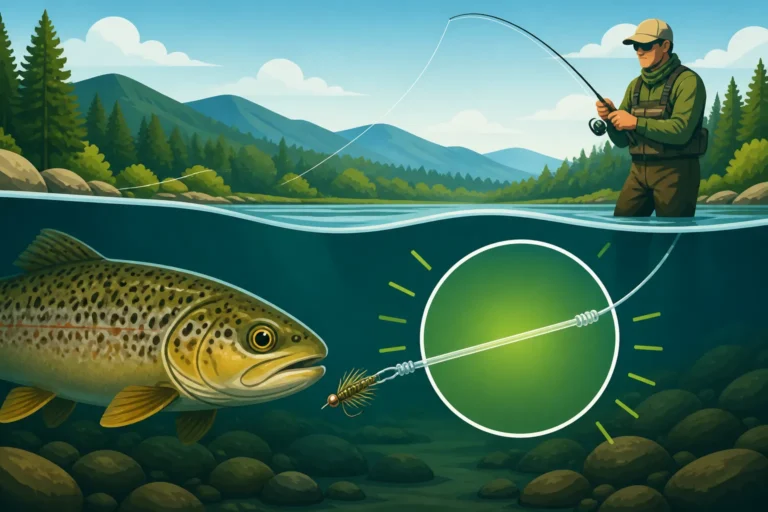
No matter what main line you're using, a fluorocarbon leader is almost always a necessity for lake trout trolling in New Hampshire. New Hampshire's lakes are renowned for their incredible clarity, and lake trout are often wary.
- Invisibility: Fluorocarbon line has a refractive index very close to that of water, making it virtually invisible underwater. This is crucial for presenting your lure naturally and avoiding spooking cautious fish.
- Abrasion Resistance: It's also incredibly abrasion-resistant, which is a huge plus when your line might be dragging against rocks or the lake bottom in pursuit of lakers.
- Recommended Setups:
- Braid to Fluoro: Use a strong knot (like an FG knot or Alberto knot) to connect 6-10 feet of 10-15 lb test fluorocarbon leader to your braided mainline.
- Leadcore to Fluoro: Similarly, connect a 50-100 foot section of 10-15 lb test fluorocarbon leader to the end of your leadcore. This long leader allows the lure to swim freely, separate from the bulky leadcore, which is essential for a natural presentation.
Choosing the right line setup is key. Don't be afraid to experiment with different combinations to find what works best for the specific lake and conditions you're fishing. For example, some anglers might run a full leadcore setup on one rod and a braided line with a dipsy diver on another to target different depths and present various lures. This strategic choice helps you maximize your chances.
| Line Type | Key Characteristics | Pros | Cons | Best Use Case |
|---|---|---|---|---|
| Monofilament | Stretchy, good knot strength, affordable | Shock absorption, good for violent strikes | Low sensitivity, less depth, visible underwater | Top lines, short leaders, situations needing stretch |
| Braided Line | No stretch, thin diameter, strong | High sensitivity, deep running, very strong | No shock absorption, can be visible, requires leader | Main line for downriggers/dipsy, backing, high sensitivity needs |
| Leadcore | Lead wire core, color-coded, heavy | Self-sinking, precise depth control without external weights | Bulky, slow retrieve, low sensitivity (needs fluoro leader) | Mid-depth trolling without downriggers, specific depth targeting |
| Fluorocarbon | Low visibility, abrasion-resistant, moderate stretch | Nearly invisible, durable, good presentation | Stiffer than mono, more expensive, can be harder to knot | Leaders for all trolling setups, stealthy presentation |
Lures and Baits: Decoys for Deepwater Success
Once you've got your rods, reels, and lines sorted, it's time to think about what you're actually going to put in front of those lake trout. The right lure or bait can make all the difference, and just like other gear, selecting the best options for New Hampshire lake trout often means thinking about what they eat naturally.
Flash and Vibration: The Allure of Trolling Spoons
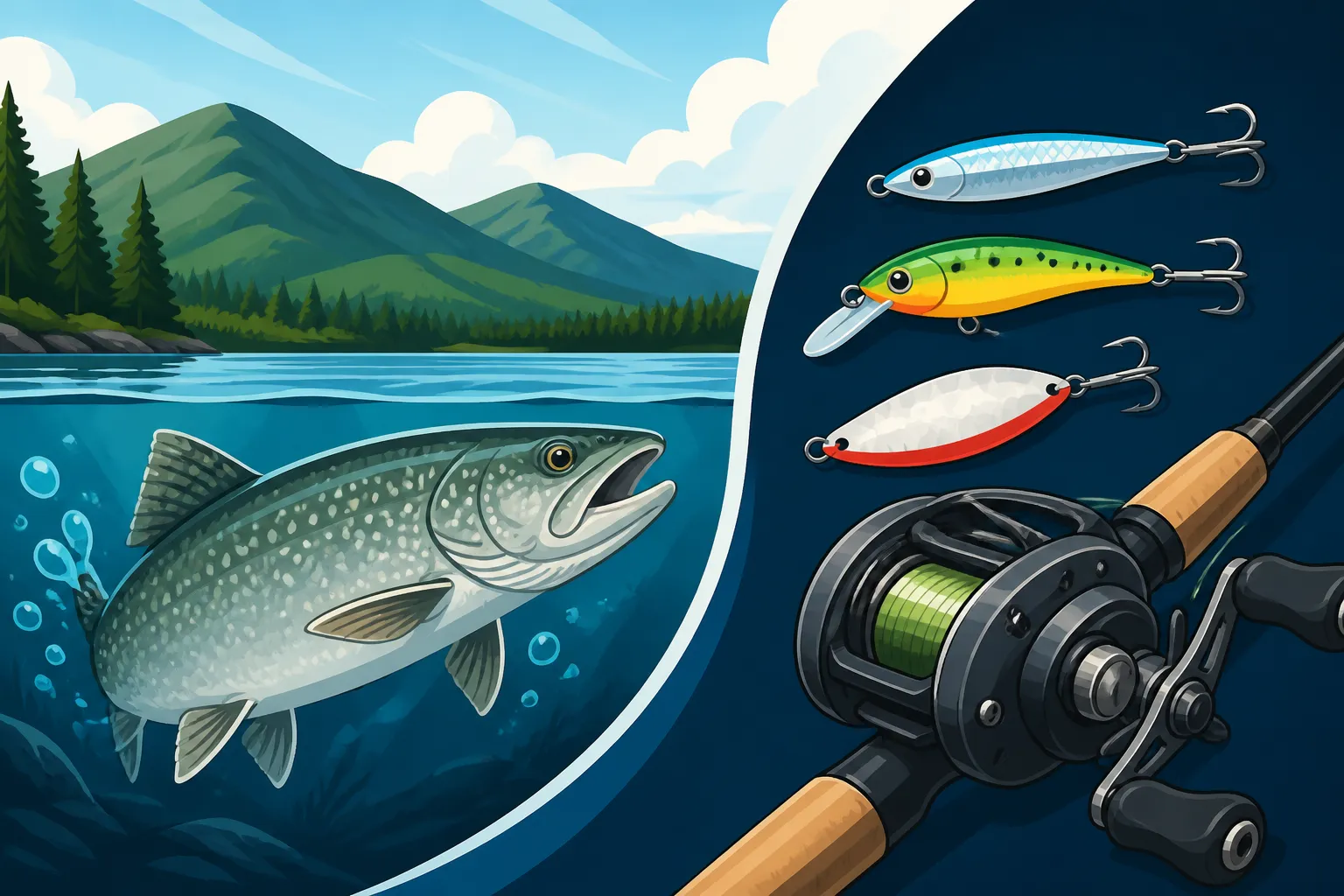
Trolling spoons are absolute staples for lake trout. Their erratic wobble and shimmering flash perfectly mimic injured baitfish, making them irresistible to hungry lakers.
- Size and Color: For New Hampshire's lake trout, spoons typically range from 2.5 to 5 inches. Smaller spoons are great early in the season or when targeting fish feeding on smaller smelt. Larger spoons can attract bigger fish. As for colors, natural patterns that imitate smelt (silver, blue, black, white) are always a solid choice. However, don't shy away from bright, flashy colors like chartreuse, orange, or even glow-in-the-dark options, especially in deeper, darker water or on overcast days. Often, a combination of flash (like silver or gold) and a contrasting color (like blue or green) works wonders.
- Action and Weight: Different spoons have different actions. Some have a wide, slow wobble, while others have a tighter, more erratic flutter. Experiment to see what the fish prefer on a given day. The weight of the spoon also impacts its depth and how it performs at different trolling speeds. Thinner, lighter spoons will have more flutter, while heavier ones will run deeper and have a tighter action. Brands like Sutton, Michigan Stinger, and Northern King are popular choices among lake trout anglers. You can often find a wide variety of these spoons at your local tackle shop or online via Amazon. If you're looking for Best Spoons for Lake Trout Trolling, you'll find plenty of suggestions there.
Plugs and Stickbaits: Mimicking Natural Prey
Beyond spoons, plugs and stickbaits are also incredibly effective for lake trout, particularly those designed for trolling. These lures often have a more aggressive swimming action and can imitate larger baitfish.
- Diving Lips: Look for plugs with long, prominent diving lips. These lips are designed to catch water and pull the lure down to specific depths. Some plugs are designed to run deep on their own, making them excellent choices for leadcore or in shallower lake trout haunts.
- Action and Profile: Plugs typically have a distinct wiggling or darting action. Again, natural baitfish patterns are key—think silver, black, blue, or perch-like finishes. Sizes can range from 3 to 7 inches, depending on the average size of the forage in the lake and the size of the fish you're targeting. Brands like Rapala (Deep Husky Jerk, Shad Rap), Storm (Deep ThunderStick), or even some local custom plug makers often produce excellent results.
- Speed Sensitivity: Some plugs perform better at slower speeds, others at faster. Pay attention to how the lure "swims" next to the boat before deploying it.
Embracing Live Bait: The Natural Edge
Sometimes, nothing beats the real thing. Live bait can be incredibly effective for lake trout, especially when the bite is tough or for targeting exceptionally large, wary fish.
- Smelt are King: In New Hampshire, the primary forage for lake trout is often rainbow smelt. If you can legally obtain and use live smelt, they are dynamite. Presenting a live smelt on a slow-trolled rig can be irresistible.
- Sucker Minnows: Larger sucker minnows can also be very effective, especially for trophy-sized lake trout.
- Rigging: Live bait is typically rigged on a single hook through the nose or back, or with a simple quick-strike rig that utilizes two small treble hooks to ensure a solid hookset without hindering the bait's natural swimming action. When using live bait, troll slowly—just enough to give the bait a natural swimming motion. Remember to check current regulations on baitfish use for specific waters in New Hampshire.
When Jigs and Soft Plastics Make a Surprise Appearance
While less common for traditional trolling, there are specific situations where jigs and soft plastics can be effective, especially when fished in conjunction with a downrigger or snapped off the main line.
- Jigging Spoons: Heavy jigging spoons, often used for vertical jigging, can be trolled effectively when snapped to a downrigger release. They have a frantic, erratic action when pulled through the water that can mimic a fleeing baitfish. These are great for when lake trout are suspended in deeper water and are actively chasing bait.
- Soft Plastics: Large swimbaits or tube jigs can also be attached to a downrigger release, offering a different profile and action than traditional hard lures. The subtle movement of a soft plastic bait can sometimes entice a hesitant fish. These are typically fished slowly, again, mimicking a wounded or fleeing baitfish.
- Targeting Deep Structure: If you're marking fish tight to deep structure, a slow-trolled heavy jig tipped with a piece of bait can sometimes coax a strike when other lures fail.
The key to successful lure and bait selection is variety and experimentation. Have a selection of spoons, plugs, and perhaps some live bait options on hand. Pay attention to what's working (or not working) and adjust your spread accordingly. A tackle box well-stocked with different colors, sizes, and actions is your best friend on the water.
Advanced Depth Control Systems: Getting to the Strike Zone
This is where the "deep" in "deepwater lake trout" really comes into play. Simply having heavy lures and leadcore won't always get you to the precise depth you need, especially when fish are suspended at specific contours or thermal layers. Advanced depth control systems are vital for consistent success in New Hampshire's deep lakes.
Downriggers: Your Command Center for Depth
Downriggers are the ultimate tool for precision depth control in lake trout trolling. They allow you to send your lure down to an exact depth, regardless of how light your lure or line is, and keep it there.
- How They Work: A downrigger consists of a heavy lead ball (typically 6-12 pounds) attached to a cable on a spool. Your fishing line is clipped to this cable using a "release clip." You lower the ball to your desired depth, and your lure swims freely behind it. When a fish strikes, your line pops out of the release clip, and you fight the fish directly on your rod, without the weight of the downrigger ball.
- Advantages:
- Pinpoint Depth: You can set your lure at a specific depth, often within a foot or two, by watching your fish finder.
- Versatility: Allows you to use lighter lines and lures, which often results in a more natural presentation.
- Multiple Depths: With multiple downriggers, you can target different depths simultaneously, effectively covering more of the water column.
- Types: Manual downriggers are cranked by hand, while electric downriggers do the work for you with the push of a button. Electric models from brands like Cannon or Scotty are incredibly convenient, especially when frequently adjusting depths or when using heavier balls.
- Setting Up: Proper downrigger setup involves mounting them securely to your boat, understanding how to use the release clips effectively, and integrating them with your sonar to ensure your lure is precisely where you think it is. Don't forget to practice deploying and retrieving them before hitting the water. For more specific guidance, checking out Best Downriggers for Lake Trout Trolling would be a smart move.
Dipsy Divers and Planer Boards: Expanding Your Reach
While downriggers are fantastic for depth, dipsy divers and planer boards help you spread your lures horizontally, covering a wider swath of water and preventing tangles between multiple lines.
- Dipsy Divers: These are disc-shaped devices that clip onto your main line (usually braided line) and use water pressure to dive down and away from the boat. They also have a trip mechanism that releases when a fish strikes, allowing you to fight the fish without the diver's resistance. Dipsy divers come in various sizes and can be adjusted to dive to specific depths and angles (left or right). They're great for covering the water column and adding another dimension to your trolling spread without the complexity of a full downrigger setup.
- Planer Boards: Planer boards, whether inline or mast-mounted, are designed to tow your fishing line out to the side of the boat, well away from the prop wash and the boat's shadow. This is particularly useful in clear waters where lake trout can be skittish.
- Inline Boards: Clip directly to your fishing line and run out to the side. When a fish strikes, the board stays on the line, but its resistance lessens, indicating a bite.
- Mast Systems: Utilize a larger board towed off a mast, with release clips attached to a main line running from the mast. Your fishing lines clip into these releases, and when a fish strikes, the clip releases the line, leaving the board to continue running.
- Benefits: Planer boards allow you to present lures in undisturbed water, mimic schools of baitfish, and cover a massive area, significantly increasing your chances, especially when fish are scattered.
Weighted Systems: Simpler Alternatives for Depth
If you're just starting out or prefer a simpler approach, several weighted systems can help you reach lake trout depths without the investment in downriggers.
- Snap Weights: These are lead weights that clip directly onto your fishing line at a desired distance from your lure. They're adjustable and effective for adding extra depth to any trolling setup. The "10-foot rule" is a common guideline: for every ounce of weight, your lure will run approximately 10 feet deeper at moderate trolling speeds.
- Lead Keels: Pre-weighted keels can be tied directly into your line a few feet in front of your lure. They add weight and also help to prevent line twist.
- 3-Way Rigs: A 3-way swivel allows you to attach your main line to one eye, a dropper line with a weight to a second eye, and a leader with your lure to the third eye. This creates a vertical presentation where the weight drags the bottom (or a specific depth), and your lure swims just above it. This is a classic method for targeting bottom-hugging lake trout. While not as precise as downriggers, these simpler weighting methods are often effective and more budget-friendly.
Experimenting with different depth control methods is part of the fun of lake trout trolling. Often, a combination of systems—perhaps a downrigger on one side, a dipsy diver on the other, and a leadcore line out the back—will give you the most comprehensive coverage and best results.
Electronic Essentials: Seeing What Lies Beneath
In the clear, deep waters of New Hampshire, "seeing" what's below the surface isn't just a luxury; it's practically a necessity for consistent lake trout success. Modern marine electronics have revolutionized the way we fish, allowing us to locate fish, identify structure, and stay on course.
High-Definition Sonar: Unveiling Underwater Secrets
A good fish finder with high-definition sonar is your most valuable asset when trolling for lake trout. It acts as your underwater eyes, showing you the depth, bottom contours, submerged structure, and, most importantly, the fish themselves.
- Capabilities: Look for units with advanced CHIRP sonar, Down Imaging (or DownScan), and Side Imaging (or SideScan) capabilities.
- CHIRP Sonar: Provides incredibly clear, detailed views of the water column, allowing you to easily distinguish individual fish, baitfish schools, and even your downrigger balls.
- Down Imaging: Gives you a photo-like view directly beneath your boat, making it easy to identify specific bottom features like rock piles, humps, and submerged timber—all prime lake trout habitat.
- Side Imaging: Scans out to the sides of your boat, revealing structure and fish that you might otherwise miss. This is excellent for scouting new areas and covering wide expanses of water quickly.
- Interpreting the Screen: Learning to read your sonar is a skill that comes with practice. Look for arches that indicate fish, bait balls (often appearing as cloudy masses), and distinct changes in bottom structure. Pay attention to the depth at which you're marking fish; this will tell you exactly where to set your downriggers or leadcore. Brands like Humminbird, Lowrance, and Garmin offer excellent units that can drastically improve your success rate. Many of these can be found at Bass Pro Shops or online at Amazon.
- Targeting Deep Water: For New Hampshire's deep lakes, ensure your transducer is rated for deep-water performance (e.g., 200kHz/50kHz dual frequency or a dedicated CHIRP transducer). This ensures you get a clear signal even at significant depths.
GPS and Chartplotters: Precision Navigation and Spot Saving
Having a reliable GPS unit or chartplotter integrated with your fish finder is another game-changer. It allows you to navigate effectively and, crucially, to mark and return to productive fishing spots.
- Navigation: GPS helps you maintain a consistent trolling speed and track, which is vital for replicating successful patterns. It also keeps you safely on course, especially in large, unfamiliar lakes or when fog rolls in.
- Waypoint Management: When you find a promising hump, mark a school of baitfish, or hook a lake trout, you can instantly save that location as a waypoint. This allows you to return to that exact spot later in the day or on future trips. Over time, you'll build a library of productive waypoints that are invaluable.
- Mapping: Chartplotters often come pre-loaded with detailed lake maps, showing depth contours, navigational aids, and other important features. These maps are incredibly helpful for identifying potential lake trout holding areas like deep humps, drop-offs, and points. Knowing the underwater topography is almost as important as knowing where the fish are.
Water Temperature Gauges: Finding the Sweet Spot
Lake trout are highly sensitive to water temperature. While your fish finder might give you surface temperature, a water temperature gauge that reads deeper in the water column can be incredibly valuable for finding the "thermal sweet spot" where lake trout are most active.
- Why it Matters: Lake trout thrive in cold water (generally 45-55°F). In summer, this means they'll be deep. However, subtle temperature changes, even at depth, can influence their activity. If your lure is in water that's too warm, you might be wasting your time.
- Integration: Some downriggers come with integrated temperature probes that send real-time temperature data back to your fish finder screen. You can also purchase standalone temperature probes that clip to your downrigger cable or can be manually deployed.
- Finding the Thermocline: The thermocline (the layer where water temperature changes rapidly) is often a key area for lake trout, as it concentrates baitfish. Being able to identify and target this layer with your temperature gauge and sonar can lead to consistent success.
Investing in quality electronics can significantly elevate your lake trout trolling game. They remove much of the guesswork, allowing you to fish more efficiently and effectively.
Must-Have Accessories for a Smooth Trolling Experience
Beyond the core rods, reels, lines, lures, and electronics, a successful lake trout trolling trip in New Hampshire requires a host of essential accessories that make the experience smoother, safer, and more productive. Don't underestimate the importance of these smaller items!
Rod Holders: Securing Your Spread
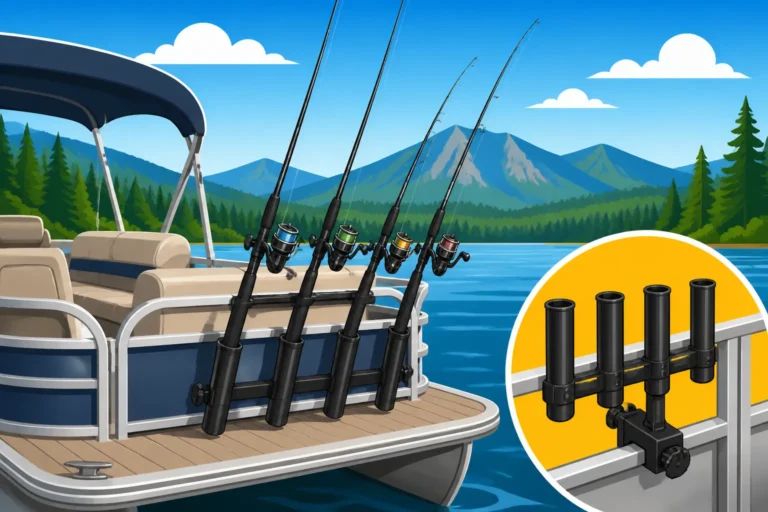
When you're running multiple lines and potentially heavy downrigger balls, sturdy rod holders are non-negotiable. They keep your rods organized, secure, and properly positioned for optimal lure presentation and easy access when a fish strikes.
- Types:
- Flush Mount: Permanently installed into the gunwales of your boat, providing a very clean look.
- Rail Mount: Clamp onto boat rails, offering flexibility in placement without permanent installation.
- Adjustable/Swivel Mount: Allow you to change the angle and direction of your rod, which is crucial for fine-tuning your trolling spread and keeping lines separated.
- Durability: Look for heavy-duty, corrosion-resistant materials like stainless steel or high-strength plastics. Lake trout strikes can be violent, and you need holders that can withstand the strain. Companies like Scotty, Cannon, and Cabela's offer a range of reliable rod holders. When purchasing, make sure they are compatible with your boat's configuration and strong enough for the type of trolling you'll be doing.
Landing Nets and Release Tools: Handling Your Catch Responsibly
Once you've hooked that trophy lake trout, you need the right tools to bring it into the boat safely and, if you plan to release it, minimize stress.
- Large, Deep Net: Lake trout can be big and powerful. You'll need a landing net with a wide hoop and a deep, rubberized mesh. Rubberized mesh is gentler on the fish's slime coat, reduces tangles with hooks, and is easier to clean. A long handle is also a plus for reaching fish from boats with higher freeboards. A net specifically designed for salmon and trout will serve you well.
- Pliers/Forceps: Essential for quickly and safely removing hooks. Long-nosed pliers or specialized fishing forceps allow you to reach deep-set hooks without injuring your hands or the fish.
- Fish Grips: For handling larger fish, especially if you plan to photograph them, fish grips (like BogaGrip or similar brands) provide a secure hold without harming the fish's scales or jaw.
- Gloves: Consider wearing fishing gloves for better grip and protection against sharp fins or hooks, especially when handling feisty lake trout. Responsible handling is crucial for the health of New Hampshire's lake trout fishery. Is It Legal to Release a Lake Trout You Catch in New Hampshire? and Landlocked salmon catch and release survival tips will provide more details on best practices.
Coolers, Storage, and Safety Gear: The Practical Necessities
These are the items that often get overlooked but can make or break your trip in terms of comfort, convenience, and safety.
- Coolers: A high-quality cooler is essential for keeping your bait fresh and preserving your catch, especially on longer trips. Look for models with good insulation and a tight seal. Brands like Yeti, RTIC, or Igloo MaxCold are popular choices. Ensure it's large enough for your anticipated catch and drinks/food.
- Tackle Storage: Keep your vast array of spoons, plugs, and terminal tackle organized in sturdy, waterproof tackle boxes or bags. Clear plastic utility boxes are great for separating lures by type or color. A good tackle management system ensures you can quickly find what you need when the bite is on. A good Tackle Box Setup for New Hampshire Anglers will save you a lot of time and frustration.
- Safety Gear: Don't ever compromise on safety.
- Life Jackets (PFDs): Ensure everyone on board has a properly fitting, readily accessible personal flotation device. Check Life Jacket Requirements for New Hampshire Boaters for specific regulations.
- First Aid Kit: A well-stocked kit for minor cuts, scrapes, and emergencies.
- Navigation Lights & Horn: If boating after dark or in low visibility.
- Fire Extinguisher & Throwable Device: Required for certain boat sizes.
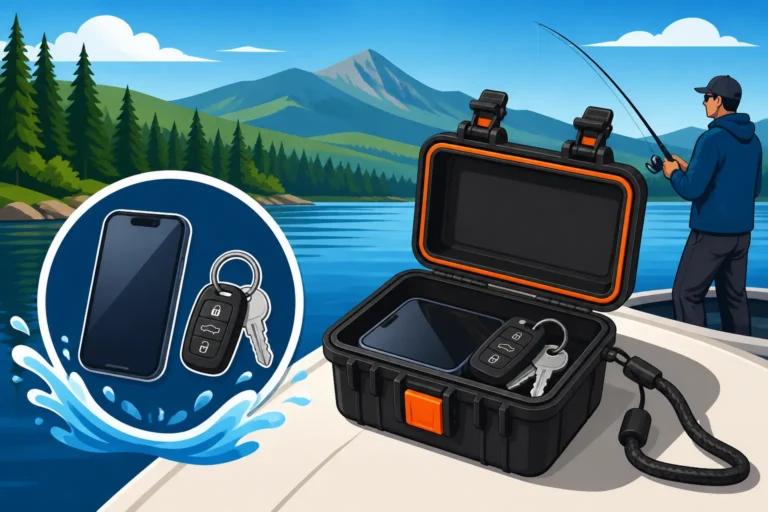
- VHF Radio/Cell Phone: For communication in emergencies.
- Sun Protection: Sunscreen, hats, and polarized sunglasses (essential for seeing subsurface structure and reducing glare).
- Knives and Tools: A sharp fishing knife for cutting line or bait, a multi-tool for on-the-spot repairs, and line cutters.
By having these essential accessories on board, you're not just prepared for the unexpected; you're setting yourself up for a much more enjoyable and effective lake trout trolling adventure on New Hampshire's stunning waters.
Disclaimer
This article is for general informational purposes only and does not constitute professional advice. Laws, prices and regulations vary by location and change over time. Consult a qualified professional for guidance on your specific situation.