Best fluorocarbon leader length for spooky trout
There's nothing quite like the thrill of coaxing a beautiful trout from a crystal-clear New Hampshire stream or lake. Yet, many of us have experienced the sheer frustration of approaching a promising spot, only to watch a wary trout spook and dart away at the first sign of our line. Those fish, especially the wild and educated ones, seem to have eyes like a hawk and an uncanny ability to detect anything artificial. This guide dives deep into one of the most critical elements for outsmarting these incredibly finicky fish: choosing the best fluorocarbon leader length to maximize your stealth and improve your catch rate in the varied waters of the Granite State.
Why New Hampshire Trout Are So Skittish
If you've spent any time on the water here in New Hampshire, you know our trout are often exceptionally wary. It’s not just a myth; there are very real, environmental, and behavioral reasons why these fish seem to possess an almost supernatural ability to detect danger. Understanding these factors is the first step to choosing the right gear, including your leader.
Crystal Clear Waters and High Pressure
Much of New Hampshire's trout habitat, especially our beloved mountain streams and many smaller ponds, boasts incredibly clear water. Whether you're fishing a pristine tributary high in the White Mountains or a popular, frequently stocked pond, that clarity is a double-edged sword. On one hand, it's beautiful to see the bottom structure and sometimes even the fish themselves. On the other, it means fish have a much easier time seeing your line, your shadow, or any unnatural movement. Think about fishing a small brook near the Kancamagus Highway on a bright, sunny day—those brook trout don't have a lot of cover, and they've seen plenty of anglers.
Couple this natural clarity with fishing pressure, and you have a recipe for spooky trout. Our more accessible spots, whether it's a stretch of the Pemigewasset River or a local town pond stocked for the season opener, see a lot of angler activity. Fish that survive even a few encounters learn quickly what a fishing line looks like, what a shadow means, and what isn't natural in their environment. This continuous "education" turns otherwise willing fish into highly cautious predators, making the presentation of your bait or lure paramount.
Trout's Keen Eyesight and Lateral Line
Trout are visual hunters, and their eyesight is truly remarkable, especially in clear water. They possess excellent peripheral vision and can detect subtle movements and shapes from a surprising distance. Their eyes are designed to help them identify tiny insects, minnows, or other food sources drifting by. Unfortunately for us, they're also highly adept at identifying foreign objects, like a thick monofilament line. The way light reflects off a line, or how a line creates an unnatural disturbance in the water, can instantly put them on high alert.
Beyond their eyesight, trout also have a highly developed lateral line system. This sensory organ runs along both sides of their body and allows them to detect vibrations and pressure changes in the water. Even if they don't see your line, a heavy line causing too much drag or an unnatural "wake" can be felt by their lateral line, sending warning signals straight to their brain. This is particularly relevant when you're trying to present a delicate fly or a small lure naturally.
Natural Food Sources vs. Artificial Presentations
Trout are constantly assessing their environment for food. In a natural setting, their meals — whether it's a drifting insect, a struggling minnow, or an underwater nymph — move in a very specific, natural way. When you cast an artificial lure or fly, you're trying to mimic this natural movement as closely as possible. However, any unnatural stiffness or drag from your fishing line can disrupt this illusion.
Imagine a tiny nymph drifting downstream in a current. If it's attached to a heavy, visible line that creates drag, the nymph will move at an unnatural speed or path, or even worse, "skitter" unnaturally across the surface. This deviation from the norm is a huge red flag for a cautious trout. They quickly learn to associate these unnatural movements with danger, and they will refuse to strike, or worse, flee the area. This is where the almost invisible nature of fluorocarbon, combined with the right leader length, can make all the difference in achieving that crucial natural presentation.
The Invisible Advantage: Understanding Fluorocarbon Leaders
For years, monofilament was the go-to leader material. It still has its place, but for spooky trout, fluorocarbon has become an indispensable tool. It's not just marketing hype; there's real science behind why it performs so well in clear water and for finicky fish.
Refractive Index: The Cloaking Device
The biggest game-changer with fluorocarbon is its refractive index. Without getting too bogged down in physics, the refractive index is a measure of how much light bends when it passes from one medium to another. Water has a certain refractive index, and so does fishing line. Monofilament has a refractive index that's quite different from water, which means light bends significantly when it hits the mono, making it highly visible to fish. Think of how a spoon looks bent when you put it in a glass of water – that's due to the difference in refractive index between air and water.
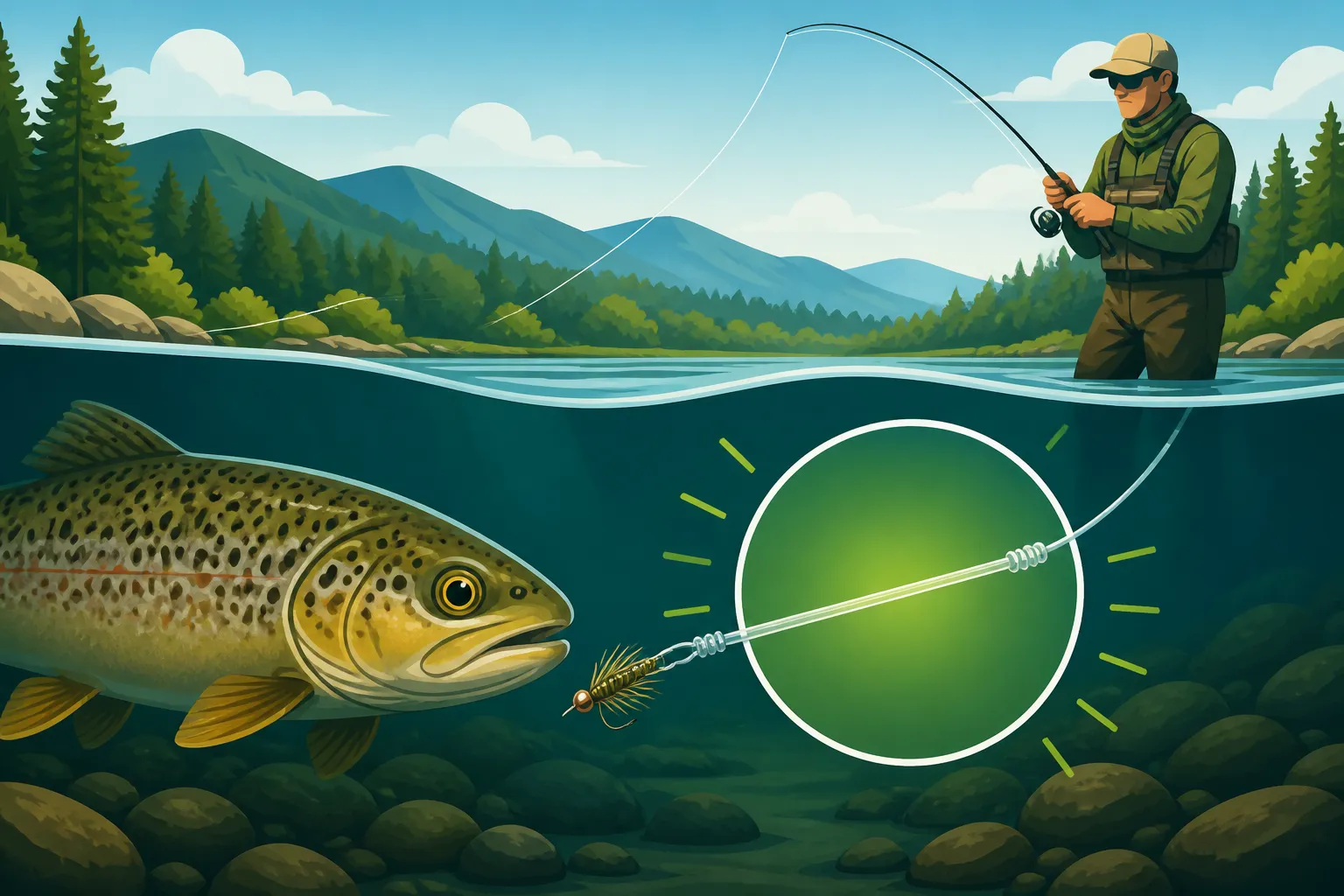
Fluorocarbon, however, has a refractive index that's incredibly close to that of water. This means light passes through it with minimal bending, making the line nearly invisible when submerged. It's not perfectly invisible, but it's much harder for a trout to detect, especially in clear conditions. This "cloaking device" effect allows you to present your bait or lure with a stealth that monofilament simply can't match, significantly reducing the chances of spooking those wary New Hampshire trout. This subtle advantage can be the difference between a fish hitting your offering or turning its nose up at it.
Density, Strength, and Sensitivity
Beyond its near-invisibility, fluorocarbon offers several other crucial advantages for trout fishing. First, it's denser than monofilament. This means it sinks faster, which can be a huge benefit when you're trying to get a nymph or a small jig down to the strike zone quickly in a current, or fishing deeper lakes for species like lake trout or salmon. This faster sink rate also helps maintain a more direct connection to your lure, reducing slack in the line and improving feel.
Secondly, fluorocarbon is generally more abrasion-resistant than monofilament of the same diameter. This is a big deal when you're fishing rocky streams, around submerged logs, or over gravel beds – common scenarios in many New Hampshire trout waters. It means your leader is less likely to fray or break when it comes into contact with abrasive structures. It also boasts impressive knot strength, provided you tie your knots carefully and moisten them thoroughly before cinching down.
Finally, fluorocarbon has very little stretch compared to monofilament. This lack of stretch translates to increased sensitivity. You'll feel those subtle takes much better, which is vital when trout are lightly mouthing a bait or when nymphing for finicky fish. It also provides a more direct power transfer when setting the hook, increasing your chances of a solid hookset. While some anglers might miss the shock-absorbing stretch of mono for bigger fish, the trade-off in sensitivity and stealth is often worth it for trout.
Dialing in Your Leader Length for New Hampshire Trout
Choosing the right fluorocarbon leader length isn't a one-size-fits-all proposition. It's a dynamic decision based on a variety of factors, from the specific water you're fishing to the species of trout you're targeting and even the weather conditions. The goal is always to maximize stealth without sacrificing control or castability.
Short Leaders: When Stealth is Secondary (2-4 feet)
Sometimes, a shorter fluorocarbon leader, typically 2 to 4 feet in length, is all you need. These scenarios usually involve situations where trout are less pressured, water clarity isn't extreme, or when you need more direct control over your presentation.
- Murky or Stained Water: If you're fishing a stream after a heavy rain, or a pond with naturally tannic or turbid water, visibility is already reduced. Trout won't be able to see your line as easily, making a longer, super-stealthy leader less critical. You can get away with a shorter leader, which is easier to cast and manage.
- Aggressive Fish & Fast Currents: On days when trout are actively feeding and less cautious, or in faster currents where your lure is moving quickly, a shorter leader offers better control. This is common when targeting more aggressive brook trout in smaller, oxygenated mountain streams. The fish are often reacting on instinct, and the subtle visual cues of your line are less impactful.
- Heavy Cover: If you're fishing around thick submerged vegetation or brush, a shorter leader is less likely to get tangled, snagged, or wrapped around obstacles during the cast or retrieve. This helps prevent frustration and lost lures.
- Ice Fishing: When you're Ice Fishing in New Hampshire, especially jigging in deep water, a short leader of 2-3 feet is very common. You're typically fishing vertically, and direct contact with your jig is often more important than extreme stealth. However, even then, fluorocarbon's invisibility can make a difference in clear-water lakes like Winnipesaukee.
Medium Leaders: The Versatile Workhorse (4-7 feet)
For many New Hampshire trout fishing situations, a medium-length fluorocarbon leader, ranging from 4 to 7 feet, strikes an excellent balance between stealth and castability. This is often the sweet spot for general purpose trout fishing.
- All-Around Stream Fishing: Whether you're drift fishing nymphs or casting small spinners and spoons in a medium-sized river like the Merrimack or Connecticut River tributaries, a 5-6 foot leader gives you enough separation from your main line to fool most trout without being overly cumbersome to cast. It allows for a natural drift while still maintaining good control over your lure.
- Light Spinning in Lakes & Ponds: When fishing smaller lakes or ponds with moderate clarity, a medium leader is often ideal. It provides the stealth needed for finicky fish that might be cruising the weed lines or drop-offs, while still allowing for easy casting of light lures or suspending baits. This length is a great starting point when you're unsure of the conditions or fish behavior.
- Float Fishing: If you're using a float or bobber to suspend bait or a jig, a 4-6 foot leader beneath the float is often a good length. It allows your presentation to drift naturally in the current or hang at a specific depth, while keeping your main line further away from the strike zone.
Long Leaders: Maximum Stealth for Wary Trout (7-12+ feet)
When trout are at their spookiest, often in ultra-clear water or under heavy pressure, a long fluorocarbon leader is your secret weapon. This is where the truly technical trout fishing begins, especially for Fly Fishing for Trout in New Hampshire.
- Gin-Clear, Heavily Pressured Waters: Think about those small, pristine streams in the White Mountains that see a lot of foot traffic, or popular catch-and-release fly fishing sections. In these environments, trout have seen it all. A long leader (8-10 feet or even more) maximizes the distance between your main line and your offering, reducing the visual footprint and allowing your fly or lure to drift as naturally as possible. This is crucial for fooling educated brown trout or sensitive brook trout.
- Technical Dry Fly Fishing: When you're trying to fool a trout sipping tiny insects off the surface with a delicate dry fly, a long leader is almost mandatory. It helps achieve a drag-free drift, which is critical for convincing the fish that your artificial fly is the real deal. The length helps the fly land softly and float naturally for a longer period.
- Subtle Presentations with Light Lures: Even with spinning gear, if you're using ultra-light tackle and tiny lures in clear water for wary fish, a long leader of 7-9 feet can make a significant difference. It allows for a more subtle entry into the water and a more natural action of the lure.
- Targeting Trophy Fish: Larger, older trout are often the wariest. If you're specifically targeting a trophy brown trout in a known holdover spot, giving them every reason to feel safe with your presentation might require extending that leader length. This could be in one of the deeper trout ponds or larger rivers with less current where trout have ample time to inspect your offering.
Environmental Factors to Consider
Beyond the general guidelines, several environmental factors should always influence your leader length choice:
- Water Clarity: This is the primary driver. The clearer the water, the longer your leader should generally be.
- Light Conditions: On bright, sunny days, shadows are more pronounced, and light penetration is higher, making lines more visible. Consider a longer leader. On overcast days or during low light (dawn/dusk), you might be able to get away with a slightly shorter leader.
- Size of Water Body: Smaller, intimate streams where you're often closer to the fish demand longer leaders for stealth. Larger lakes or rivers with more expansive water and deeper holding areas might allow for slightly shorter leaders, though clarity still plays a huge role.
- Target Species: While all trout can be spooky, some, like wild brook trout in a remote mountain stream, tend to be less educated than a large brown trout in a heavily fished river. Landlocked salmon in New Hampshire's deep lakes, like Sunapee or Winnipesaukee, are legendary for their wariness, often requiring extremely long leaders, especially when trolling or fly fishing. Conversely, freshly stocked rainbow trout might not be as leader-shy initially. You can find more specific rules for individual species in guides like New Hampshire Landlocked Salmon Regulations or New Hampshire Trout Limit and Possession Rules.
Here’s a quick reference table to help visualize leader length choices:
| Fishing Scenario | Water Clarity | Leader Length Recommendation | Reasoning |
|---|---|---|---|
| Ice Fishing (Jigging) | Variable (often clear) | 2-4 feet | Direct contact, vertical presentation, less casting. |
| Murky/Stained Stream or Pond | Low | 2-4 feet | Reduced visibility makes line less noticeable. |
| Fast-Moving Mountain Stream (Small Brookies) | Clear | 3-5 feet | Fish react quickly, less time to inspect; easier casting in tight spots. |
| General River/Medium Lake (Spinning) | Moderate to Clear | 4-7 feet | Good balance of stealth and control for varied conditions. |
| Heavily Pressured, Clear River (Spinning) | Very Clear | 7-9 feet | Maximizes separation from main line for wary fish. |
| Technical Dry Fly Fishing | Very Clear | 9-12+ feet | Critical for drag-free drift and maximum stealth for rising fish. |
| Lake Trolling (Landlocked Salmon/Lake Trout) | Very Clear (often deep) | 8-15 feet (or more) | Fish have time to inspect; extreme stealth often required. |
| Nymphing in Clear Streams | Clear to Very Clear | 7-10 feet | Allows nymphs to drift naturally at depth without line interference. |
Rigging and Maintaining Your Fluorocarbon Leaders
Having the right fluorocarbon leader length is only half the battle; knowing how to properly rig and maintain it is just as crucial for success on the water. Incorrect knots, mismatched line weights, or damaged leaders can quickly negate all the advantages of fluorocarbon.
Choosing the Right Knots for Strength and Stealth
Fluorocarbon can be a bit stiffer and has less stretch than monofilament, which means knot tying requires a little extra care. When connecting your fluorocarbon leader to your main line (which might be braided or monofilament), you need a strong, reliable knot that creates a smooth transition. For example, if your main line is braided, an FG knot is incredibly strong and streamlined, passing through guides with minimal friction. However, it can be tricky to tie on the water. A more approachable and very effective option for braided to fluorocarbon is a Double Uni Knot or a Crazy Alberto knot. These knots, when tied correctly and cinched down slowly and wet, provide excellent strength. For mono to fluorocarbon connections, the Blood Knot is a classic for a reason, offering superb strength and a low profile.
When tying your lure or hook to the end of your fluorocarbon leader, knots like the Improved Clinch or Palomar are excellent choices. The Palomar is particularly strong and easy to tie, though it can be a bit bulky for very small flies or lures. Always moisten your knots generously with saliva before cinching them tight. This reduces friction and heat build-up, which can weaken fluorocarbon. Take your time, ensure the coils are neat, and test your knot by pulling firmly before casting. A weak knot is just an invitation for a lost fish.
Matching Line Weight and Diameter
The general rule of thumb is to match the strength of your leader to the conditions and the fish you're targeting, while still being as light as possible. For most New Hampshire trout fishing, fluorocarbon leaders in the 4lb to 8lb test range are common. Lighter lines (4-6lb) are usually reserved for highly pressured, clear waters, delicate presentations, or smaller fish. Heavier lines (6-8lb) offer more abrasion resistance and control for larger trout or fishing around cover.
It’s also important to consider the diameter of your main line versus your leader. If your main line is significantly thicker than your leader, the connection knot can become a weak point or create an awkward hinge in your line, affecting casting and presentation. Ideally, your leader should be only slightly thinner, or at least not drastically thicker, than your main line. For example, if you're using 10lb braid (which has a very thin diameter), pairing it with a 6lb fluorocarbon leader often works well. You can find a good selection of various fluorocarbon spools from brands available at Bass Pro Shops or online retailers like Amazon, allowing you to experiment with different sizes and find what works best for your setup.
Proper Storage and Regular Inspection
Fluorocarbon, while tough, isn't indestructible. Improper storage can lead to kinks, nicks, and reduced strength. Always store your fluorocarbon spools out of direct sunlight and away from extreme heat, as UV rays and high temperatures can degrade the line over time. Keep spools in their original packaging or in a dedicated tackle box compartment to prevent them from unraveling or getting damaged.
Before every fishing trip, and even periodically throughout a day of fishing, take a moment to inspect your leader. Run your fingers slowly along the length of the fluorocarbon, feeling for any nicks, abrasions, or rough spots. These small imperfections can drastically weaken the line, leading to unexpected break-offs. If you find any damage, or if your leader has been subjected to a lot of abuse (e.g., dragged over rocks, tangled in snags, or caught several fish), it's always best to cut off the damaged section and re-tie, or replace the entire leader if necessary. Don't be afraid to snip off a few feet and retie your lure if you've been fishing a lot of rocky bottom; a fresh knot and a clean section of line are cheap insurance against losing that trophy New Hampshire trout you've been dreaming about.
Learning how to choose and rig your fluorocarbon leader effectively is a continuous process, influenced by your experience and the ever-changing conditions on New Hampshire's diverse fishing waters. By understanding why trout are spooky and how fluorocarbon helps, you'll be well on your way to more successful and satisfying days chasing those elusive fish.
Disclaimer
This article is for general informational purposes only and does not constitute professional advice. Laws, prices and regulations vary by location and change over time. Consult a qualified professional for guidance on your specific situation.