Fly Fishing for Trout in New Hampshire
New Hampshire's rushing rivers, crystal-clear streams, and serene mountain ponds offer a truly unparalleled experience for fly anglers. However, the diverse waters and often wary trout can present a steep learning curve, leaving many feeling overwhelmed about where to start or how to consistently fool these beautiful fish. This comprehensive guide will unravel the mysteries of fly fishing for trout in the Granite State, equipping you with the knowledge, techniques, and confidence to enjoy success on its legendary waters.
The Irresistible Charm of New Hampshire Trout Streams
There’s something truly magical about fly fishing in New Hampshire. It's more than just catching fish; it’s about immersing yourself in the stunning natural beauty, the rhythm of the water, and the quiet pursuit of a wild creature. From the White Mountains to the Monadnock Region, the state offers a remarkable array of angling opportunities that draw both seasoned veterans and eager newcomers alike. It's a place where every bend in the river or ripple on a pond holds the promise of a memorable encounter.
Why New Hampshire Captivates Fly Anglers
New Hampshire stands out as a premier destination for fly fishing due to its unique blend of pristine waters, diverse landscapes, and a vibrant population of trout. Anglers here aren't just casting lines; they're stepping into an ecosystem teeming with life, where the clarity of the water often allows you to spot your quarry before you even cast. The state's commitment to conservation, combined with its varied topography, means you can find everything from easily accessible roadside streams to remote, high-elevation ponds that feel a world away. This variety ensures that every trip can be a new adventure, catering to different skill levels and preferences, whether you prefer delicate dry fly presentations or aggressive streamer retrieves.
The sheer abundance and variety of trout-holding waters, from large freestone rivers to tiny brook trout trickles, means you're never far from a potential hotspot. There's a certain quiet solitude that comes with navigating these waters, offering a perfect escape from the hustle and bustle of everyday life. The challenge of deciphering a river’s currents, identifying trout lies, and presenting a fly just right against a backdrop of granite peaks or dense forests is what truly hooks many fly anglers on New Hampshire. It’s a place where you can feel connected to generations of anglers who have sought the same peace and challenge on these very same waters.
Getting to Know New Hampshire's Trout Family
To truly excel at fly fishing in New Hampshire, it’s essential to understand the different trout species you'll encounter and their unique characteristics. The state is primarily home to three magnificent species: the native brook trout, and the introduced brown and rainbow trout. Each has its own preferred habitat, feeding habits, and temperament, which greatly influences your approach.
The brook trout is New Hampshire's official state fish and a true gem of the Granite State. These vibrant fish, adorned with vermillion spots and distinctive worm-like markings (vermiculations) on their backs, thrive in the coldest, purest headwater streams and remote mountain ponds. They are often smaller than their introduced cousins but possess an unparalleled fighting spirit and breathtaking beauty. Catching a wild brook trout on a small mountain stream is a quintessential New Hampshire experience, demanding stealth and often a delicate presentation with small dry flies or nymphs. To learn more about this remarkable species, check out our guide on Brook Trout: New Hampshire's Native Trout.
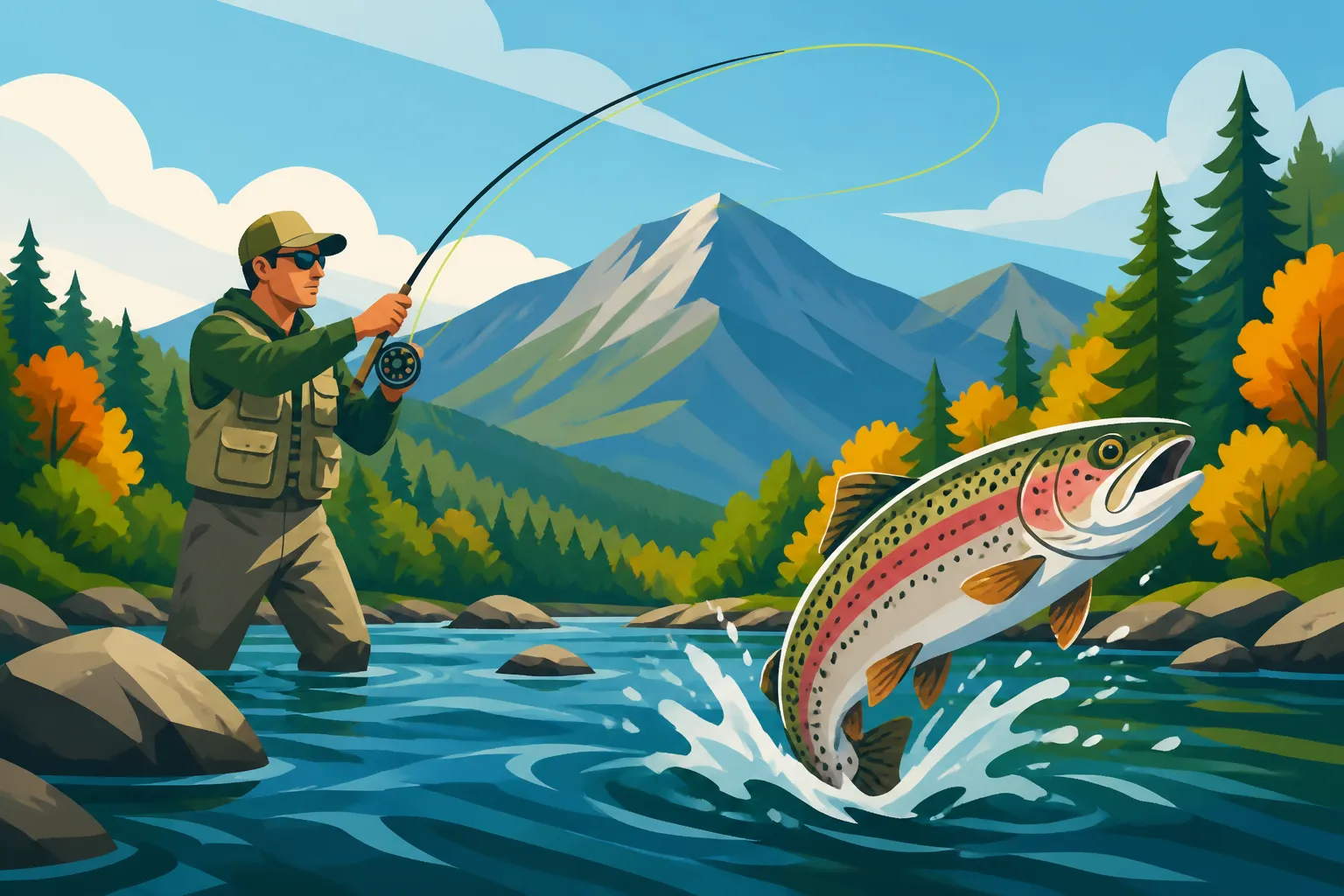
Rainbow trout are known for their spectacular aerial displays when hooked and their distinctive pinkish-red stripe along their sides. They are widely stocked in many of New Hampshire’s lakes, ponds, and larger rivers, making them a popular target for anglers, especially in waters that receive regular trout stocking. Rainbows are generally less finicky than browns or wild brookies and will often readily take a variety of flies, from nymphs and streamers to dry flies during a hatch. Their aggressive nature and strong fights make them a favorite among many fly fishers seeking consistent action.
Brown trout, identifiable by their larger, darker spots, often with red halos, are more elusive and often grow to considerable sizes in New Hampshire's larger rivers and lakes. They are known for their wary nature and tend to be more nocturnal, feeding heavily during low light conditions. Browns are highly predatory and will readily strike streamers and larger nymphs, especially when targeting trophy fish. They often inhabit more complex structures like undercut banks, fallen trees, and deep pools, requiring careful presentation and a good understanding of the water. Targeting a large brown trout on a New Hampshire river is often the ultimate challenge for a fly angler, testing every skill in their repertoire.
Decoding the Seasons: Opportunities and Adaptations
The changing seasons in New Hampshire dramatically influence trout behavior and, consequently, your fly fishing strategies. What works in spring might be entirely ineffective in summer or fall, requiring anglers to be adaptable and observant. Understanding these seasonal shifts is crucial for consistent success.
Spring (April-May) brings the highly anticipated trout season opener. As the ice melts and waters begin to warm, trout become increasingly active, eager to feed after a long winter. This is a prime time for nymphing, as insects are abundant in their subsurface stages, and for fishing streamers in swollen, often turbid waters. Stocked trout are fresh and aggressive, providing excellent opportunities, especially in the weeks immediately following stocking. Water levels can be high from snowmelt and spring rains, making wading challenging but often concentrating fish in slower seams and eddies. Keep an eye on stream temperatures; as they climb into the mid-40s and 50s, more insect activity will kick off. Our guide on New Hampshire Trout Stocking and Fishing Rules can help you plan your spring outings.
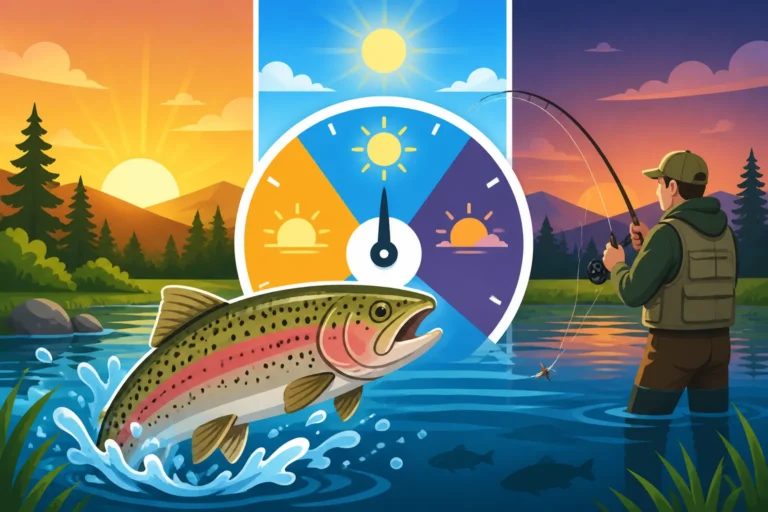
Summer (June-August) transitions into a period where water temperatures rise, and hatches become more prolific. Dry fly fishing can be exceptional during morning and evening hatches of caddis, mayflies, and stoneflies, especially in cooler, shaded streams. However, mid-day can be tough, particularly in warmer, lower elevation waters. Focus on fishing early mornings or late evenings, and seek out high-elevation streams or waters with consistent cold water inputs where brook trout thrive. Terrestrial patterns like ants, beetles, and grasshoppers become incredibly effective as these insects fall into the water. Low water conditions can make trout extra spooky, demanding stealth and delicate presentations.
Fall (September-October) is often considered the most beautiful and rewarding season for fly fishing in New Hampshire. The foliage explodes with color, and cooler temperatures invigorate trout. Brown trout and brook trout prepare for spawning, becoming more aggressive and often willing to chase larger streamers or take dry flies during strong hatches. Rainbows also feed heavily. This period offers fantastic opportunities for all types of fly fishing, from delicate dry fly presentations to stripping large streamers. Water levels usually stabilize, and fish are actively feeding to build up reserves for winter. The crisp air and vibrant scenery make every cast a joy, even if the fish aren't always cooperative.
Assembling Your Fly Fishing Arsenal
Embarking on a fly fishing adventure in New Hampshire requires the right tools for the job. Just like a chef needs specific knives, an angler needs a carefully chosen setup to handle the diverse conditions and trout species found throughout the state. Don't worry, you don't need to break the bank, but investing in quality gear where it counts will significantly enhance your experience and success.
Choosing the Right Rod, Reel, and Line Combo
Your rod, reel, and line form the core of your fly fishing system, and selecting the appropriate combination is crucial for effectiveness and enjoyment. The "weight" of your gear refers to its power and the size of line it’s designed to cast, impacting how well you can handle different fly sizes and fish.
For most New Hampshire trout fishing, a 4-weight or 5-weight fly rod is a versatile choice. A 4-weight offers more sensitivity and a lighter feel, making it ideal for smaller streams, delicate presentations, and average-sized brook or rainbow trout. It’s a joy to cast all day with lighter flies. A 5-weight rod is often considered the all-around workhorse, capable of handling larger dry flies, heavier nymphs, and small streamers, while still providing a good fight with decent-sized trout. It's a great choice if you're only planning to buy one rod. For tiny, brushy brooks where stealth and short, accurate casts are key, a 2-weight or 3-weight rod can be incredibly fun, albeit specialized. Conversely, if you’re exclusively targeting larger brown trout with big streamers or fishing very windy, open waters, a faster action 6-weight might be beneficial. Our guide on Best Fly Rods for New Hampshire Trout Streams offers more specific recommendations.
When it comes to reels, for trout fishing, its primary function is to hold your line and provide a smooth drag for fighting fish. A simple, reliable single-action reel with a smooth, adjustable drag system is usually sufficient. You don’t need an expensive, super-lightweight reel for trout, as the rod typically does most of the work. Just ensure it balances well with your chosen rod.
Fly line is perhaps the most critical component, as it’s what actually carries your fly to the target. For most situations, a weight-forward (WF) floating line matched to your rod's weight is the best option. This line tapers to a heavier front section, making it easier to cast longer distances and turn over larger flies. For specialized nymphing techniques, some anglers prefer a nymphing-specific line or even a longer level line. For fishing deeper stillwaters or aggressively stripping streamers, a sinking tip or full sinking line might be appropriate, but start with a floating line for general trout fishing. Don't forget to spool on some appropriate backing before your fly line; it's essential for those long runs from bigger fish!
Waders, Boots, and Essential Accessories for Comfort and Safety
Comfort and safety on the water are paramount, especially when navigating New Hampshire’s often rocky, slippery, and sometimes cold trout waters. Investing in quality wading gear will make your experience much more enjoyable and safe.
Waders are your first line of defense against the elements. Breathable chest waders are the most versatile choice, keeping you dry and comfortable whether the air is warm or cold. Look for durable materials like Gore-Tex or similar proprietary fabrics that offer good puncture resistance. Stockingfoot waders, which require separate wading boots, are generally preferred over bootfoot waders for better ankle support and comfort. Brands like Simms, Orvis, and Redington offer excellent options across various price points. You can often find great deals on quality waders and boots on platforms like Amazon, but always prioritize fit and durability.
Matching your waders, wading boots are incredibly important for traction and ankle support. Felt soles offer excellent grip on slippery rocks but can be banned in some areas due to concerns about invasive species transfer. Rubber soles with studs provide a good alternative and are generally more versatile. Whichever you choose, ensure they fit snugly over your wader booties and provide good ankle stability. A sturdy wading staff is also a non-negotiable safety item, especially when navigating unfamiliar or swift currents. It provides an extra point of contact, helping you maintain balance and gauge water depth, preventing dangerous falls.
Beyond the big items, a few essential accessories will make your day on the water smoother. A vest or chest pack is ideal for organizing your fly boxes, leaders, tippet, and tools, keeping them easily accessible. Don’t forget crucial items like nippers (for cutting line), hemostats or forceps (for de-hooking fish safely), a net (preferably rubberized or knotless to protect fish, especially when practicing catch and release), and a thermometer to monitor water temperature, which is vital for understanding trout activity and practicing responsible catch and release in warm water. A good pair of polarized sunglasses is also essential for reducing glare and spotting fish and submerged hazards.
Stocking Your Fly Box: Must-Have Patterns for New Hampshire
One of the most exciting aspects of fly fishing is the endless array of patterns, each designed to imitate a specific insect or baitfish. While you could fill countless fly boxes, a core selection of proven patterns will cover most situations you’ll encounter in New Hampshire.
For dry flies, which imitate adult insects on the surface, you’ll want a mix of patterns to match common hatches. The Elk Hair Caddis (sizes #12-18) is a universal producer, imitating caddisflies that are abundant throughout the state. The Adams Parachute (sizes #12-20) is another must-have, effectively imitating a wide range of mayflies. For smaller, more delicate presentations, especially to wary wild brook trout, small Blue Winged Olives (BWO) (sizes #16-22) and Light Cahills (sizes #12-16) are essential. During late summer and early fall, don't overlook terrestrial patterns like foam beetles, ants, and grasshopper imitations (sizes #10-16), as these often provide explosive strikes when natural insects fall into the water.
When it comes to nymphs, which imitate the subsurface larval and pupal stages of insects, variety is key. The Hare’s Ear Nymph (sizes #12-18) and Pheasant Tail Nymph (sizes #12-20) are classic, highly effective patterns that imitate a wide range of aquatic insects. For imitating stonefly nymphs, especially in larger rivers, a Pat’s Rubber Legs or a Prince Nymph (sizes #8-14) can be deadly. Don't forget some micro-nymphs or midge patterns (sizes #20-24) for technical tailwaters or when fish are picky. A few San Juan Worms or Squirmy Wormies can also be surprisingly effective, especially after rain or during high water when trout are looking for easy meals.
Finally, streamers imitate baitfish or larger aquatic creatures, and they are incredibly effective for targeting larger, more aggressive trout, especially brown trout. The Woolly Bugger (olive, black, brown, sizes #4-10) is arguably the most versatile streamer, imitating everything from sculpins to leeches. Other effective patterns include the Clouser Minnow (olive/white, chartreuse/white, sizes #4-8) and various Muddler Minnow patterns. These are fished by stripping them through the water to mimic fleeing baitfish, often provoking aggressive strikes. To further refine your selection, explore our detailed guide on Fly Patterns for New Hampshire Trout Streams.
Mastering the Art of the Cast and Presentation
Casting a fly rod might look intimidating, but it's a skill that, with practice, becomes incredibly fluid and natural. Beyond just getting the fly out there, true mastery lies in the presentation – making your artificial fly behave as naturally as possible to trick wary trout. This is where the artistry of fly fishing truly shines.
Fundamental Casting for Beginners: Overhead and Roll Casts
Every fly angler starts with the basics, and the overhead cast is the foundation. It's essentially a smooth, controlled motion that uses the weight of the fly line to load the rod. Start by stripping out about 20-30 feet of line. With your dominant hand holding the rod and your index finger extended along the cork, perform a smooth, accelerating back cast, stopping the rod sharply at about the 1 o'clock position (or slightly past vertical). Wait for the line to unroll behind you, feeling the "load" in the rod, then smoothly accelerate forward, stopping the rod sharply at about 10 o'clock. The key is to avoid a jerky motion and to let the line do the work. Practice this rhythm, focusing on consistency and smooth acceleration, and soon you'll be delivering flies with precision.
The roll cast is another indispensable technique, especially when you have obstructions behind you that prevent a full back cast. Imagine you're drawing a "D" shape with your rod tip. Start with the line laying on the water in front of you. Raise your rod tip slowly until the line forms a "D" loop behind your rod tip (without going over your shoulder). Then, make a forceful, forward stroke, flicking the line forward. The line will roll out in front of you, delivering the fly without needing a back cast. This cast is incredibly useful on tight, brushy New Hampshire streams where space is limited. Mastering both the overhead and roll cast will give you the versatility to handle most casting situations.
Mending and Drag-Free Drifts: The Key to Deception
Once you can cast, the real challenge begins: making your fly look natural. Trout are incredibly sensitive to drag, which occurs when the fly line pulls your fly unnaturally across or against the current. A drag-free drift is paramount, especially when fishing dry flies or nymphs in current. This means your fly should move at the exact same speed as the natural food items drifting alongside it.
Mending is the technique used to achieve and maintain a drag-free drift. After your cast, as your line lands on the water, you'll often see parts of it in different current speeds. A mend involves lifting a section of your fly line off the water and repositioning it upstream or downstream to counteract the forces of the current. For example, if your fly is drifting down a fast current and your line is caught in a slower current, the slower current will pull your fly, creating drag. To fix this, you'd make an upstream mend, throwing a loop of line upstream of your fly, giving the fly more time to drift naturally. Conversely, if your line is in a fast current and your fly is in a slower one, you'd make a downstream mend. It’s a subtle but continuous dance with the current, requiring constant attention and small adjustments.
Reading the Water: Where Trout Live and Feed
You can have the best cast and the perfect fly, but if you're not putting it where the fish are, you'll have little success. Reading the water is the art of identifying potential trout lies – the places where trout hold, rest, and feed. Trout, being cold-blooded creatures, are always looking for a balance of food, cover, and comfortable water temperature.
In rivers and streams, look for structural elements that provide these three things. Riffles (shallow, fast-moving water) are often food factories, churning up insects, and trout will often hold in the slower seams adjacent to them, or just below them, waiting for food to drift by. Runs are deeper, more consistent currents where trout might hold in the main flow if it’s not too swift, or along the edges. Pools are deeper, slower sections that offer excellent holding water, especially in the heat of summer. Look for the head of the pool (where the fast water enters), the tail of the pool (where the water exits), and any structure within the pool like submerged rocks, logs, or undercut banks. Eddies – areas of swirling, slower water behind obstructions – are also prime spots where tired trout can rest and ambush passing food.
Always remember that trout face upstream, waiting for food. Therefore, you generally want to approach from downstream and cast upstream or across-stream, allowing your fly to drift naturally into their feeding lane. Pay attention to shadows, changes in current, and any visible structure. The more you observe, the better you'll become at anticipating where a trout might be hiding.
The Delicate Dance of Entomology and Matching the Hatch
One of the most captivating and challenging aspects of fly fishing is understanding the natural food sources of trout – aquatic insects. The term "matching the hatch" is famous for a reason; when trout are focused on a specific insect emergence, presenting an imitation that closely resembles their current meal can be incredibly effective.
Unraveling the World of Aquatic Insects
New Hampshire's diverse waters are home to a myriad of aquatic insects, forming the backbone of the trout's diet. The three most important groups for fly anglers are mayflies, caddisflies, and stoneflies. Each group has distinct life cycles and behaviors that influence how and when trout feed on them.
Mayflies are perhaps the most elegant of aquatic insects, recognized by their upright, sail-like wings, two or three long tails, and delicate bodies. Their life cycle begins as a nymph, living on the stream bottom. When ready to emerge, the nymph drifts to the surface, sheds its shuck, and emerges as a winged "dun" (subimago). These duns float on the surface, making them vulnerable and highly attractive to feeding trout. After a period, the dun molts into a "spinner" (imago), which is the sexually mature adult. Spinners typically mate in swarms over the water and then fall back to the surface, often with outstretched wings, in a "spinner fall" – another prime feeding opportunity for trout. Different species of mayflies hatch throughout the year, with common ones in New Hampshire including Sulphurs, Hendricksons, Green Drakes, and Blue Winged Olives (BWO).
Caddisflies are characterized by their tent-shaped wings that fold over their bodies, resembling a small moth, and they have two short antennae. Their larval stage often involves building cases out of pebbles, sticks, or silk, while others are free-ranging. When emerging, caddis pupae often swim rapidly to the surface, making them a high-energy meal for trout. The adults are strong fliers and will often flutter across the water after laying eggs, making them a challenging but rewarding target for dry fly anglers. Common caddis species in New Hampshire hatch from spring through fall, and trout often key in on these energetic emergers.
Stoneflies are generally larger insects, characterized by their flat bodies and two sets of wings that lay flat over their backs when at rest. Their nymphs typically live under rocks and in faster currents. They crawl out of the water onto rocks or vegetation to emerge, making them less available to feeding trout on the surface compared to mayflies and caddis. However, their large nymphs are a significant food source subsurface, especially in higher flows. Trout also eagerly consume adult stoneflies that accidentally fall back into the water. Large stonefly nymphs are crucial patterns for fishing deeper, faster runs in New Hampshire's larger rivers.
Identifying and Imitating Key New Hampshire Hatches
The art of matching the hatch involves observing what insects are present and active, then selecting a fly pattern that mimics their size, color, and behavior. This requires a keen eye and a bit of entomological knowledge.
Start by observing the water and the surrounding air. Are there insects flying? Are they on the water's surface? What color are they? How big? If you see trout rising, note how they are feeding – gently sipping duns, splashing at emergers, or gulping spinners. Often, picking up a few natural insects from the water or the bank can give you clues. Compare these naturals to the flies in your box. The goal isn't necessarily a perfect replica, but a "reasonable facsimile" that trout will mistake for the real thing.
In New Hampshire, certain hatches are particularly important. Early spring often sees Hendricksons (a larger mayfly, typically size #12-14) or Blue Winged Olives (smaller, size #16-22) on the water. As summer progresses, Sulphurs (yellowish mayflies, size #14-18) and a variety of caddis hatches (size #14-18) become prominent. Fall can bring another push of BWOs and larger, darker caddis. Staying informed about local conditions and recent hatch reports from fly shops (like those found in North Conway or Meredith) can give you a significant advantage. Remember, even if you don't see adults, the nymphal stages are almost always present and represent a consistent food source for trout.
Beyond the Hatch: Terrestrials and Attractor Patterns
Sometimes, despite your best efforts, there's no visible hatch, or the trout aren't keying in on naturals. This is where terrestrial patterns and attractor patterns come into play. These flies imitate insects that fall into the water from the bank (terrestrials) or are simply designed to grab a trout's attention.
Terrestrials are incredibly effective during the warmer months, typically from late spring through fall. Ants, beetles, and grasshoppers are common land-based insects that frequently end up in the water, especially near grassy banks or overhanging vegetation. Trout see these as large, protein-rich meals and will often strike them aggressively. Carrying a selection of foam ants (sizes #14-18), beetle patterns (size #12-16), and various hopper imitations (size #8-14) can save your day when hatches are sparse. These patterns often work best when cast close to the bank, mimicking an accidental fall.
Attractor patterns, on the other hand, don't necessarily imitate a specific insect but are designed to stand out and trigger an aggressive or curious strike from a trout. They often feature bright colors, flashy materials, or an exaggerated profile. Classic dry fly attractors include the Royal Wulff, Humpy, or Stimulator, which can represent a general large insect or simply entice a fish to rise out of pure aggression. For subsurface fishing, flashy nymphs like the Copper John or Rainbow Warrior often serve as effective attractors, especially in off-color water or when trout aren't particularly selective. These flies are great confidence boosters and can often coax a strike when more subtle imitations are ignored.
Proven Techniques for Every Scenario
Fly fishing is an art of adaptation. The conditions on the water – from current speed to light levels and water temperature – are constantly changing, and your approach needs to change with them. Having a diverse toolkit of techniques will allow you to confidently tackle nearly any situation New Hampshire's trout waters throw at you.
The Effectiveness of Nymphing: Subsurface Success
When trout aren't rising to dry flies, the vast majority of their feeding happens subsurface, making nymphing one of the most consistently productive fly fishing techniques. Nymphs imitate the immature forms of aquatic insects, which spend most of their lives on the streambed.
There are several effective nymphing strategies. Indicator nymphing is perhaps the most common and beginner-friendly. You attach a small, buoyant indicator (like a Thingamabobber or a yarn indicator) to your leader, a few feet above your nymphs. The indicator acts like a bobber, suspending your nymphs at a desired depth and signaling strikes. The key is to get your nymphs drifting naturally at the same speed as the current, directly to the fish's feeding zone. You might use one or two nymphs, often with a heavier "point" fly to get down quickly, and a smaller "dropper" fly behind it. Adjust your indicator's depth frequently until you find where the fish are holding.
For more technical situations, particularly in faster, complex currents, Euro Nymphing (also known as tight-line nymphing) has become incredibly popular. This method utilizes a longer, lighter rod and a specialized leader that allows for direct contact with your nymphs, eliminating the need for a strike indicator. The angler maintains a tight line to the nymphs, feeling for subtle takes rather than watching an indicator. This allows for incredibly precise depth control and sensitivity, making it deadly effective in pocket water and complex currents often found in New Hampshire's mountain streams. While it has a steeper learning curve, the rewards for mastering it are immense, particularly for targeting wild brook trout in their natural habitat.
The Thrill of Dry Fly Fishing: Surface Takes
For many, dry fly fishing is the quintessential fly fishing experience. There's nothing quite like watching a trout rise gracefully to sip your imitation from the surface, creating that perfect "plop" and knowing you’ve fooled a wary fish. It demands delicate presentations and precise timing, but the visual reward is unmatched.
Successful dry fly fishing hinges on two primary factors: a drag-free drift and matching the hatch (or at least presenting a reasonable facsimile). As discussed earlier, a drag-free drift means your fly floats at the same speed and direction as the natural current, appearing as if it's naturally drifting food. Any unnatural drag will immediately alert the trout to the deception. This requires constant mending of your line to manage the various current speeds.
When a hatch is underway, observe which insects are prevalent and their size and color. Select a dry fly that closely imitates these characteristics. Cast gently upstream of a rising fish, allowing your fly to drift naturally into its feeding lane. Anticipate the rise, and once the fish takes your fly, a subtle, firm lift of the rod will set the hook. Sometimes, trout will sip a dry fly so gently it's barely a ripple; other times, they'll smash it with an aggressive splash. The challenge and reward of enticing a fish to the surface make dry fly fishing a truly addictive pursuit.
Streamer Fishing for Aggressive Trout and Bigger Bites
If you're looking to target larger, more aggressive trout, especially brown trout that are often more predatory, then streamer fishing is the technique for you. Streamers imitate baitfish, leeches, sculpins, or other larger prey items that big trout key in on. This method is often more active and aggressive than delicate dry fly or nymph fishing.
Streamer fishing involves casting your fly and then actively retrieving it through the water, mimicking the erratic movements of a baitfish trying to escape. This is usually done with a series of short, sharp strips of the fly line, interspersed with pauses. The key is to impart action to the fly, making it "swim" in a lifelike manner. Experiment with different retrieve speeds and cadences until you find what triggers a strike. Sometimes a fast, erratic retrieve is best; other times, a slow, methodical strip with long pauses will coax a bite.
Streamers are particularly effective in larger rivers, deeper pools, and after heavy rains when the water might be slightly off-color. They are also excellent during periods of low light, such as dawn, dusk, or on overcast days, when larger trout tend to be more active feeders. Don't be afraid to cast big, dark streamers into likely holding lies, such as undercut banks, fallen trees, or deep eddies. The strikes can be incredibly violent and exhilarating, often from the biggest fish in the system. For targeting larger brown trout, a weighted streamer fished deep can be incredibly effective. Consider looking into techniques described in our How to Catch Brown Trout in New Hampshire Streams guide for more specific streamer advice.
Navigating New Hampshire's Premier Trout Waters
New Hampshire is a treasure trove of trout waters, each offering its own unique character and fishing opportunities. From world-renowned rivers to secluded high-country ponds, knowing where to go is almost as important as knowing how to fish. Local knowledge can be invaluable, but this overview will give you a great starting point for your adventures.
Iconic Rivers and Streams for Classic Fly Fishing
The Granite State boasts several rivers and streams that are legendary among fly anglers, offering diverse experiences for wild and stocked trout.
The Pemigewasset River, often affectionately called "The Pemi," is a major waterway flowing through the heart of New Hampshire. Its upper sections in the White Mountains offer classic freestone river fishing, with good populations of brook, brown, and rainbow trout. Further downstream, the river widens, offering larger pools and runs, often holding bigger fish. Access can be found at various points, including state parks and public easements. Many sections of the Pemi are regularly stocked, providing consistent action throughout the season. Learn more about its many access points and fishing tips in our Pemigewasset River Fishing Guide.
The Swift River, located near Conway and the Kancamagus Highway, is another popular and picturesque trout stream. It's known for its easily accessible sections, stunning scenery, and good populations of stocked and wild trout. Its mix of riffles, runs, and pools makes it ideal for both nymphing and dry fly fishing, particularly during strong hatches. The Swift is an excellent river for both beginners and experienced anglers due to its clear waters and consistent stocking. Our guide, Swift River Trout Fishing, provides more detailed information.
The Ellis River, near Jackson, is a beautiful mountain stream known for its healthy population of brook and rainbow trout. It features a good mix of pocket water, small pools, and runs, often requiring a more delicate approach. The Ellis is a quintessential White Mountains trout stream, perfect for anglers seeking classic mountain stream fly fishing. You can find more specific advice on this stunning water in our Ellis River Trout Fishing article.
The Connecticut River, particularly its upper reaches and tributaries in northern New Hampshire, offers some of the state's best opportunities for trophy trout. Certain sections are managed under special regulations, often fly-fishing-only, to promote large, wild trout populations. These waters can be challenging but incredibly rewarding for those seeking a true trophy. For more details on these special sections, read our guide on New Hampshire Connecticut River Trophy Trout Regulations.
Hidden Gems: Remote Ponds and Smaller Tributaries
While the well-known rivers offer fantastic fishing, New Hampshire also boasts countless hidden gems – remote ponds and smaller, often unnamed, tributaries that provide a unique and often more solitary fly fishing experience. These waters are often the stronghold of wild brook trout.
Exploring the high-elevation ponds in the White Mountains or other remote state forests requires a bit of effort, often involving a hike, but the rewards are immeasurable. These ponds are typically teeming with vibrant, wild brook trout that rarely see a fly. The fish might not be large, but their beauty and the pristine, untouched surroundings make for an unforgettable outing. Ultralight gear, small dry flies, and careful stealth are often the keys to success in these delicate ecosystems. Finding these spots often involves consulting topographic maps and a willingness to explore, but the sense of discovery is a huge part of the allure.
Don't overlook the myriad of smaller tributaries that feed into larger rivers. These often-overlooked streams can hold surprising numbers of wild brook trout or even transient rainbows and browns. They typically require more bushwhacking and a more intimate casting style (like the roll cast) due to overhanging vegetation. These small streams are often the perfect place to hone your casting skills in tight quarters and appreciate the intricate beauty of a healthy, natural trout habitat. They rarely see heavy fishing pressure, offering a peaceful and productive escape.
The Best Times and Conditions for Specific Waters
Understanding the nuances of when and where to fish can dramatically improve your success rate. General seasonal guidelines are helpful, but specific conditions on a particular water body can dictate your tactics.
For larger, freestone rivers like the Pemigewasset, early spring after ice-out can be excellent for nymphing and streamer fishing as trout are eager to feed. As water temperatures rise into summer, focusing on shaded sections, early mornings, or late evenings will be more productive. The fall spawning runs can make large brown trout especially aggressive to streamers.
For smaller, wild brook trout streams, summer can be fantastic, especially in higher elevations where water temperatures remain cool. These smaller streams often fish well during mid-day too, as long as the water isn't too warm. After a summer rain, these streams can come alive as insects are washed into the current.
When fishing larger, stocked ponds, especially those that receive regular stockings, the weeks immediately following a stocking event are often prime. During these times, trout are less wary and more likely to take a variety of flies. Check the New Hampshire Trout Stocking Report and Map from NH Fish and Game to time your visits perfectly.
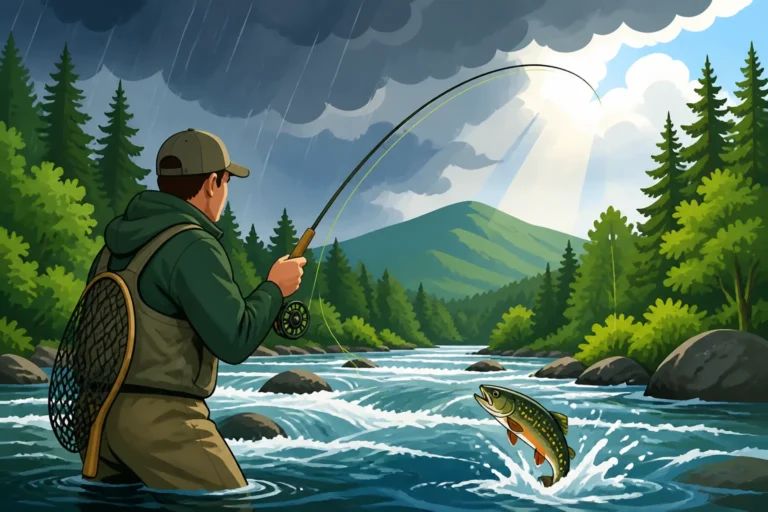
Always pay attention to weather patterns. Overcast days can extend good dry fly fishing well into the day, while bright, sunny conditions often push trout into deeper, more shaded lies. After a heavy rain, rivers might be high and muddy, making nymphing or streamer fishing with dark, large patterns more effective closer to the banks. Conversely, in low, clear water, stealth and delicate presentations with smaller flies are paramount.
Ethics, Regulations, and Responsible Angling
Fly fishing in New Hampshire is a privilege, and with that comes the responsibility to protect the resource for future generations. Understanding and adhering to regulations, practicing ethical angling, and demonstrating respect for the environment are cornerstones of responsible fly fishing.
Practicing Catch and Release with Care
While keeping a few trout for the pan is certainly an enjoyable part of fishing, many fly anglers in New Hampshire practice catch and release, particularly for wild trout or in special regulation waters. The goal is to maximize the survival rate of released fish, ensuring a healthy population.
Here are some best practices for catch and release:
- Minimize Fight Time: Use appropriate tackle to land the fish as quickly as possible, avoiding prolonged fights that exhaust the fish.
- Keep Fish in Water: Handle the fish as little as possible and always try to keep it in the water. Avoid dragging it onto dry land or rocks.
- Wet Hands: Always wet your hands before touching a fish. Dry hands can remove the fish's protective slime coat, making it susceptible to disease.
- Barbless Hooks: Crimp down the barbs on your hooks or use barbless hooks. This makes hook removal much easier and quicker, reducing stress and injury to the fish.
- Proper De-hooking: Use forceps or hemostats to quickly and carefully remove the hook. If the fish is deeply hooked (which is rare with flies), cut the leader as close to the hook as possible rather than trying to rip it out.
- Revive Gently: If the fish seems lethargic, hold it gently upright in the current (facing upstream) until it regains its strength and can swim away on its own. Never push a fish back and forth in the water; simply hold it steady.
By following these simple steps, you significantly increase the chances of a released trout surviving to fight another day and spawn future generations.
Understanding New Hampshire's Specific Fly Fishing Rules
New Hampshire has a comprehensive set of fishing regulations designed to manage its fisheries sustainably. Before you even head to the water, you'll need a valid New Hampshire Fishing License Guide for 2026. Licenses can be purchased easily online through the NH Fish and Game website; learn how in our guide How to Buy a Fishing License Online in New Hampshire.
Beyond the general license, it is absolutely crucial to consult the annual New Hampshire Freshwater Fishing Digest. This document details specific rules for different waters, which can vary widely. Pay close attention to:
- Season Dates: While many waters are open year-round, some have specific closed seasons or extended catch-and-release periods.
- Bag and Possession Limits: These specify how many fish of a certain species you can keep per day and how many you can possess in total. For example, the New Hampshire Daily Trout Limit can vary by water body and species.
- Length Limits: Some waters have minimum or maximum length limits for trout to protect spawning fish or encourage the growth of trophy-sized individuals.
- Special Regulation Waters: New Hampshire has many "Special Regulation Waters" that have unique rules, such as "fly fishing only," "artificial lures only," "catch and release only," or specific tackle restrictions. For instance, you might encounter New Hampshire Catch and Release Fly Fishing Only Waters that prohibit bait. Always check these specific rules for the water you plan to fish, as violations can result in significant fines.
- Tackle Restrictions: Ensure your gear complies with any specific regulations, especially regarding bait versus artificial lures.
Ignorance of the law is not an excuse, so take the time to read and understand the regulations for your chosen fishing spot.
Preserving the Future of Our Fisheries
Responsible angling extends beyond just following the rules; it encompasses a broader commitment to conservation and respecting the environment. The principles of Leave No Trace are particularly relevant for fly anglers who often venture into wild, pristine areas.
- Pack It In, Pack It Out: Everything you bring with you, take back out. This includes all trash, fishing line, and even organic waste like fruit peels.
- Stay on Trails: When approaching streams or ponds, stick to established trails to minimize erosion and disturbance to sensitive riparian habitats. If there's no trail, walk lightly and avoid trampling vegetation.
- Respect Private Property: Much of New Hampshire's land is privately owned. Always respect private property boundaries and seek permission if you need to cross private land to access public waters. Even on public lands, be mindful of other users.
- Protect Water Quality: Avoid introducing any non-native species (like live bait from other areas) and be mindful of pollutants. If using felt-soled wading boots, clean them thoroughly between different water bodies to prevent the spread of invasive organisms.
- Educate Others: Share your knowledge of ethical angling and conservation practices with fellow anglers, especially those new to the sport. By working together, we can ensure that New Hampshire's incredible trout fisheries remain healthy and vibrant for generations to come.
Table of Recommended New Hampshire Fly Patterns by Season
To give you a head start in stocking your fly box, here's a table summarizing some go-to patterns for different seasons and trout species in New Hampshire. Remember, this is a starting point; experimentation is always encouraged!
| Fly Type / Season | Spring (April-May) | Summer (June-August) | Fall (September-October) | Target Species / Notes |
|---|---|---|---|---|
| Dry Flies | Hendrickson (#12-14) Blue Winged Olive (BWO) (#16-20) Elk Hair Caddis (#14-18) |
Sulphur (#14-18) Light Cahill (#12-16) Grasshopper patterns (#10-14) Ant/Beetle patterns (#14-18) |
October Caddis (#10-14) BWO (#18-22) Stimulator (#10-14) Small Midges (#20-24) |
Best for rising trout, especially in cooler water or during hatches. Terrestrials shine in summer. |
| Nymphs | Hare's Ear Nymph (#12-16) Pheasant Tail Nymph (#14-18) Prince Nymph (#12-16) Copper John (#12-16) |
Hare's Ear Nymph (#14-18) Pheasant Tail Nymph (#16-20) Green Caddis Larva (#14-18) Zebra Midge (#18-22) |
Stonefly Nymphs (Pat's Rubber Legs #8-12) Pheasant Tail Nymph (#14-18) Squirmy Wormy (#12-16) |
Year-round producers. Essential for subsurface feeding trout. Euro Nymphing highly effective. |
| Streamers | Woolly Bugger (Olive, Black #6-10) Muddler Minnow (#6-10) |
Woolly Bugger (Black, Brown #8-12) Sculpin Imitations (#6-10) |
Woolly Bugger (Olive, Black, White #4-8) Clouser Minnow (#4-8) Articulated Streamers (#2-6) |
Excellent for aggressive trout and targeting larger brown trout. Effective in low light or off-color water. |
Disclaimer
Please note that fishing regulations can change. While this guide provides comprehensive information based on current understanding, it is always your responsibility to consult the official New Hampshire Fish and Game Department website or the current Freshwater Fishing Digest before heading out. This ensures you have the most up-to-date information on licenses, season dates, bag limits, and specific water body regulations. Fishing involves inherent risks; always prioritize safety on and around the water.