Best smallmouth bass lures for Winnipesaukee in summer
Fishing for smallmouth bass on Lake Winnipesaukee in the heat of summer can be one of the most rewarding, yet frustrating, experiences for any angler. Those bronze bombers become elusive, moving off their shallow spawning grounds into the deeper, clearer water, often leaving us scratching our heads about where they went and, more importantly, what they'll actually bite. This comprehensive guide is here to unravel the mysteries of summer smallmouth on the "Big Lake," helping you select and present the best lures to entice those hard-fighting fish.
Understanding Winnipesaukee's Summer Smallmouth Behavior
Once the spring spawn is over, usually by late June or early July, Lake Winnipesaukee's smallmouth bass transition from their territorial, nest-guarding ways to a more nomadic, forage-driven existence. This shift means they move off the easily accessible shallow flats and rocky points into deeper water, often suspending over structure or following baitfish schools. It’s a completely different ballgame from spring fishing, and understanding this behavioral change is key to choosing the right lures and presentations.
Post-Spawn Recovery and Deep Water Migration
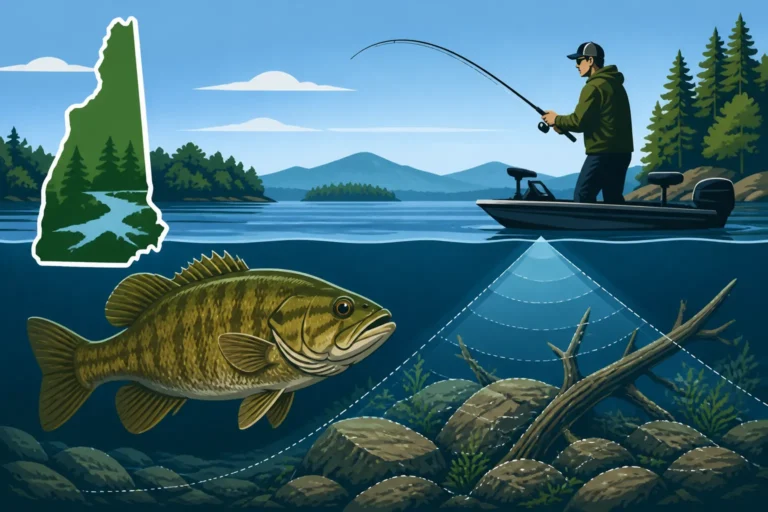
After the exhaustive efforts of spawning, smallmouth bass enter a recovery phase. They're still hungry, but they're not necessarily as aggressive or confined to the shallows. The warming surface temperatures of Winnipesaukee in summer push these fish down to more comfortable depths where the water is cooler and oxygen levels are stable. You'll find them gravitating towards deeper rock piles, humps, ledges, and transition areas where hard bottom meets soft. This is when your electronics become your best friend, helping you locate these deeper structures where fish might be holding. They're often in depths of 15 to 40 feet, sometimes even deeper on the vast expanse of Winnipesaukee. Knowing how to locate these hidden gems can make all the difference, and our guide on How to read structure for smallmouth on Winnipesaukee offers excellent insights into identifying these crucial spots.
Following the Forage: Smelt and Alewives
Smallmouth bass are opportunistic predators, and their movements are heavily dictated by their prey. In Lake Winnipesaukee, two primary baitfish influence smallmouth behavior: rainbow smelt and, to a lesser extent, alewives. These forage species often suspend in open water or near deep structure, and if you can find the bait, you're usually not far from the bass. During summer, baitfish schools can be anywhere from the main lake basin to deeper bays, and smallmouth will often suspend below or within these schools, waiting for an opportunity to strike. This means your lure selection needs to mimic these baitfish in size, profile, and action. If you're seeing dense baitfish on your sonar, you can bet the smallmouth are nearby. Our comprehensive article, Smallmouth Bass Habits on Winnipesaukee, delves deeper into these predatory behaviors.
Essential Lure Categories for Summer Smallmouth
Given the clear, deep waters and the foraging habits of summer smallmouth in Winnipesaukee, your tackle box needs to be well-stocked with lures that can effectively reach these fish and imitate their natural prey. We're talking about a mix of topwaters for those low-light opportunities, diving lures for covering water, and finesse presentations for when the bite gets tough.
Topwater Temptations for Dawn and Dusk
There's nothing quite like a surface strike from a hard-fighting smallmouth. While summer smallmouth generally hold deeper, there are specific times and conditions when topwater lures can be incredibly effective on Winnipesaukee. Early mornings, late evenings, and overcast days, especially around rocky shorelines, isolated humps, or emergent grass beds, create prime conditions for topwater action. The clear water means fish can spot these disturbances from a distance.
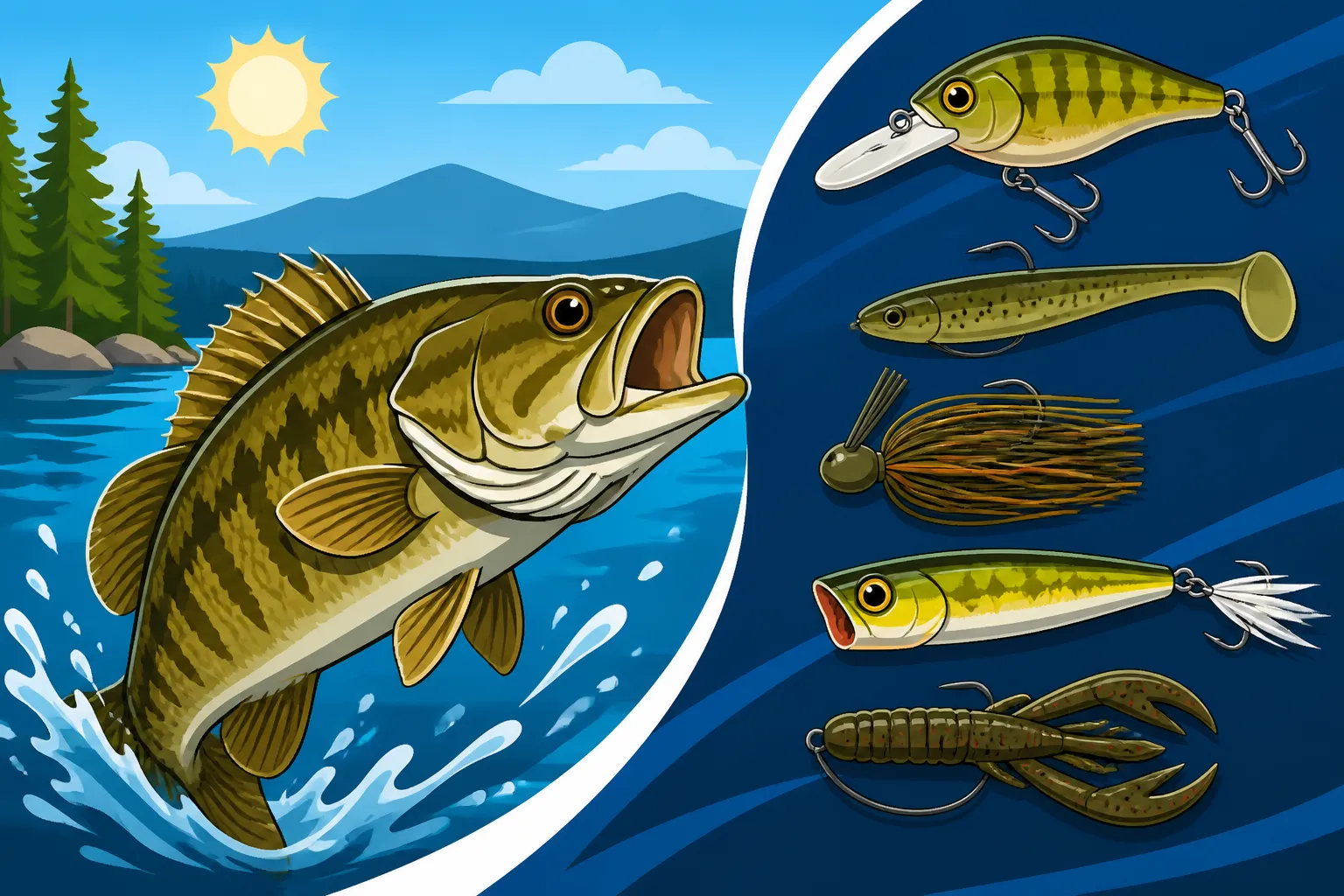
Poppers, with their cupped faces that push water and create a "bloop" sound, are fantastic for drawing strikes from aggressive fish. Walk-the-dog style baits, like a Heddon Super Spook Jr. or a Lucky Craft Sammy, glide from side to side across the surface, mimicking a struggling baitfish. These require a bit of practice to get the retrieve right, but once mastered, they are deadly. Prop baits, with small propellers at one or both ends, create a churning commotion that can call fish up from several feet below. When using topwater, focus your casts around visible cover or over deep rock piles early in the morning. Give the lure time to sit after it splashes down, then start your retrieve with varying pauses. You might find a good selection of these classic topwater lures on Amazon if you're looking to expand your arsenal.
Diving Lures for Covering Water
When smallmouth are actively chasing bait or holding at specific depths, diving lures are indispensable. These categories include crankbaits and jerkbaits, both designed to elicit reaction strikes or imitate fleeing baitfish.
Crankbaits: Medium to deep-diving crankbaits are excellent for finding fish holding along rocky transitions, humps, and ledges in Winnipesaukee. Look for lures that dive to the 8-15 foot range or even deeper, depending on the structure you're targeting. Colors that mimic smelt or crawfish are often winners. The key is to make contact with the bottom or structure; the deflection off these elements often triggers a strike. Experiment with retrieve speeds; sometimes a steady retrieve works, other times a stop-and-go motion is more effective. The article on Best crankbait retrieve for Winnipesaukee smallmouth offers specific strategies to maximize your success with these baits.
Jerkbaits: Long, slender jerkbaits are perhaps one of the most versatile lures for summer smallmouth on Winnipesaukee, especially suspending models. These lures excel at imitating dying or injured baitfish. A good jerkbait can be worked anywhere from a few feet below the surface down to 10-15 feet, depending on its diving lip. The retrieve typically involves a series of sharp jerks, followed by a pause. The pause is critical, allowing the lure to suspend tantalizingly in the water column, often when a smallmouth will commit. In Winnipesaukee's clear water, a long pause can be incredibly effective. Consider colors like clear, chrome, or those with a bluegill/smelt pattern. Brands like Rapala, Megabass, and Lucky Craft are popular choices and can be easily found on platforms like Amazon.
Top Lure Picks for Summer Smallmouth on Winnipesaukee
Now that we've covered the categories, let's get into some specific lure types that consistently produce smallmouth bass on Lake Winnipesaukee during the summer months. These are tried-and-true choices that should be in every angler's tackle box.
Soft Plastics: Versatility in Finesse
When the bite is tough, or fish are pressured, soft plastics shine. Their subtle action and lifelike appearance often fool even the most finicky smallmouth.
Drop Shot Rigs: The drop shot is arguably one of the most effective finesse presentations for deep-water smallmouth, especially in clear lakes like Winnipesaukee. It allows you to present a small plastic bait precisely at the depth fish are holding, keeping it suspended off the bottom. Small worms, minnow imitations, and creature baits (like a Berkley Gulp! Minnow or a Z-Man TRD) rigged on a small hook are deadly. The key is to choose plastics that have a lot of natural action with minimal movement from the angler. You can fish it vertically over deep structure or cast it out and slowly drag it back. This technique is indispensable when you see fish on your sonar but can't get them to commit to faster-moving baits.
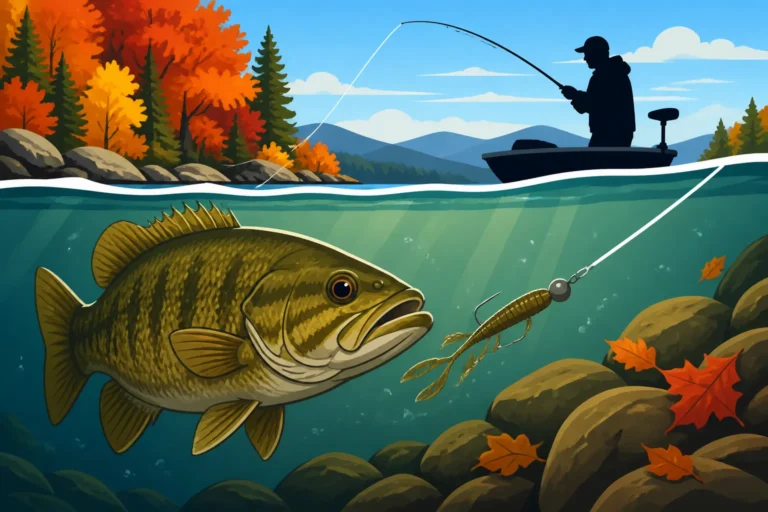
Tubes: Tube baits, often overlooked by some, are absolute smallmouth magnets. When dragged or hopped along the bottom, they perfectly mimic crawfish, a primary food source for bass. When falling, they spiral, creating a unique action. They can be rigged in several ways: with an internal jig head for dragging, or Texas-rigged for fishing around heavier cover. Focus on rocky bottoms, humps, and ledges. Colors like green pumpkin, watermelon, or shades of brown are excellent choices to imitate crawfish. You can also swim tubes for a different presentation, making them highly versatile.
Grubs and Swimbaits: Small paddle-tail grubs and swimbait bodies rigged on a jig head are excellent for imitating smelt or other small baitfish. These are great for casting and retrieving over deep grass, along rock walls, or even open water when smallmouth are actively chasing schools. A steady retrieve or a slow swim-and-pause can be incredibly effective. White, pearl, and silver colors work well for baitfish imitations in Winnipesaukee's clear water.
Underspins: Flash and Vibration
Underspins are a relatively newer addition to many anglers' arsenals, but they have quickly proven their worth for smallmouth bass. Essentially a jig head with a small spinner blade attached to the bottom, underspins combine the subtle action of a grub or swimbait with the flash and vibration of a spinner. This combination makes them highly attractive to smallmouth keying in on baitfish.
Pair an underspin jig head (like a VMC Neon Moon Eye or a Picasso SmartMouth) with a realistic minnow-profile swimbait. The blade spinning beneath the bait creates a flickering light and thumping vibration that can draw fish in from a distance, especially in the clear waters of Winnipesaukee. They can be fished with a steady retrieve, slowly hopped along the bottom, or even jigged vertically when fish are suspended. These are fantastic for covering water and often trigger reaction strikes from fish that might be hesitant to commit to a plain swimbait.
| Lure Type | Best Conditions | Key Features | Target Depth (approx.) |
|---|---|---|---|
| Topwater | Low light (dawn/dusk), overcast days, calm water | Surface disturbance, "walk-the-dog" action, popping | Surface |
| Jerkbaits | Clear water, suspending fish, targeting structure | Suspending pause, erratic darting action | 5-15 feet |
| Deep Crankbaits | Covering deep flats, ledges, deflecting off cover | Deep diving lip, rattles, aggressive wobble | 10-25+ feet |
| Drop Shot Rigs | Finesse, deep water, pressured fish, vertical fishing | Subtle action, suspended presentation, light line | 15-40+ feet |
| Tubes | Bottom dragging, mimicking crawfish, rocky areas | Spiraling fall, natural crawfish profile | 10-30 feet |
| Underspins | Finding active fish, imitating baitfish, flash | Spinner blade, swimbait profile, vibration | 5-20 feet |
Beyond the Lures: Techniques and Tips for Success
Having the right lures is only half the battle. How you present them, your understanding of the water, and your overall approach will significantly impact your success rate when targeting summer smallmouth on Lake Winnipesaukee.
Mastering Your Retrieve and Presentation
Smallmouth bass in Winnipesaukee's clear summer waters can be incredibly sensitive to lure presentation. It's not enough to just cast and reel. You need to be thoughtful about every aspect of your retrieve.
Varying Your Speed and Pauses: This is perhaps the most crucial tip for any lure. Smallmouth don't always want a steady retrieve. For jerkbaits, the length of your pause can be the difference between a follow and a strike. For crankbaits, experimenting with slow rolling versus aggressive burning can trigger different reactions. Even with soft plastics on a drop shot, the amount of "shaking" or dead-sticking you do can be key. Pay attention to what the fish tell you. If they're following but not biting, change something – speed, pause, color, or even lure size. This level of detail in your presentation can significantly improve your chances, as discussed in detail in How to Catch Smallmouth Bass in New Hampshire Lakes.
Matching the Hatch: While we often talk about matching the hatch for trout fishing, it applies just as much to smallmouth. If you're seeing schools of smelt on your fish finder, use lures that match their size and color. This means chrome, silver, or light blue patterns for jerkbaits and swimbaits. If you're fishing rocky areas where you know crawfish are present, darker green, brown, or orange-tinged tubes and jigs will be more effective. Carrying a good selection of colors and sizes for each lure type will give you options when the fish are particular.
Reading the Water and Using Your Electronics
Winnipesaukee is a vast lake, and blind casting will quickly lead to frustration. Learning to read the water and effectively use your fish finder are paramount for summer smallmouth success.
Locating Key Structure: In summer, smallmouth relate heavily to underwater structure. This includes rock piles, humps, ledges, points that drop into deep water, and even submerged timber. Use your GPS and sonar (like a Humminbird HELIX or a Lowrance HDS) to identify these features. Side imaging and down imaging technologies are incredibly valuable for finding hidden structure and even spotting individual fish or bait schools before you cast. Once you find a promising spot, mark it on your GPS and fish it thoroughly. Understanding Best sonar settings for finding structure on Winnipesaukee can give you a significant edge.
Understanding Water Temperature and Depth: As mentioned earlier, summer heat drives smallmouth to cooler, deeper water. Your fish finder often has a temperature gauge, which can help you identify thermoclines where fish might be holding comfortably. Additionally, the clearer water means smallmouth are often deeper during the brightest parts of the day, moving shallower only during low light conditions or when actively chasing bait to the surface. Adjust your lure choice and presentation depth accordingly. The general wisdom on Best water temperature for smallmouth bass fishing suggests prime temperatures are often around 65-70 degrees Fahrenheit, which you'll find in deeper parts of Winnipesaukee during summer.
Gear Considerations for Optimal Performance
Finally, having the right rod, reel, and line will enhance your ability to cast, present lures effectively, and successfully fight these powerful fish.
Rod and Reel Setup: For jerkbaits and crankbaits, a medium-heavy action casting rod between 6'6" and 7'0" with a fast tip is ideal. This allows for long casts and the power to drive hooks home. Pair it with a baitcasting reel with a gear ratio around 6.4:1 or 7.1:1 for versatility. For finesse techniques like drop shotting or tubes, a medium-light to medium action spinning rod, 6'9" to 7'3", with a fast or extra-fast tip, paired with a 2500-3000 series spinning reel, offers the sensitivity needed to detect subtle bites. For general fishing, a Best rod length for Winnipesaukee smallmouth bass is usually in the 6'8" to 7'2" range.
Line Selection: In Winnipesaukee's clear waters, fluorocarbon line is often preferred for its low visibility and sensitivity. For baitcasting setups, 10-12 lb test fluorocarbon is a good all-around choice. For spinning setups with finesse presentations, 6-8 lb test fluorocarbon or braided line with a fluorocarbon leader is excellent. The braid offers superior casting distance and sensitivity, while the fluorocarbon leader keeps your lure virtually invisible to wary smallmouth. You can find quality fishing lines from various brands on Amazon, ensuring you have the right strength and stealth for the conditions.
Remember, fishing is about continuous learning and adapting. What works one day might not work the next. Stay observant, keep experimenting with your lures and techniques, and you'll find summer smallmouth bass on Lake Winnipesaukee can provide some of the most exciting fishing experiences New Hampshire has to offer!
Disclaimer
Fishing regulations and conditions can change. Always consult the latest New Hampshire Fish and Game Department rules and advisories before heading out on the water. This guide is for informational purposes only and does not supersede official regulations.