Best Techniques for Deep Water Summer Lake Trout
Summer in New Hampshire is absolutely gorgeous, but for many lake trout anglers, it brings a unique challenge: the fish vanish into the depths, chasing cooler water and their preferred forage. That frustrating feeling of marking fish on your sonar but being unable to reach them with conventional methods is all too common. This guide is here to demystify deep water summer lake trout techniques, helping you effectively target these elusive giants when they retreat to the thermocline.
Understanding Summer Lake Trout Behavior and Habitat
As the New Hampshire summer progresses and surface waters warm up, lake trout, being cold-water species, don't just disappear. They simply move to their preferred temperature zones, typically following the thermocline – that invisible boundary layer where warm surface water meets colder, deeper water. This behavioral shift is crucial for anglers to understand if they want to find success during the hottest months.
The Thermocline: Lake Trout's Summer Sanctuary
Imagine a giant, multi-layered cake in our deep New Hampshire lakes like Winnipesaukee or Newfound Lake. The top layer is warm and inviting for swimmers, but inhospitable for cold-loving lake trout. Below that is a transition layer, the thermocline, where the temperature drops significantly, and then the deep, cold bottom layer. Lake trout will seek out water temperatures generally between 45°F and 55°F. In mid-summer, this usually puts them in or just below the thermocline, often in depths ranging from 40 to 100 feet or even more, depending on the specific lake's characteristics and the year's weather patterns.
This isn't just about temperature; it's also about dissolved oxygen. The deep, cold water typically holds more oxygen, which is vital for these fish. They also follow their primary food source, often schools of rainbow smelt or other baitfish, which also seek refuge in these cooler, oxygen-rich depths. Without this understanding, you might be fishing fantastic structure in 20 feet of water, but if the water temperature is 70°F, you'll be empty-handed because the lake trout simply aren't there. It's about thinking like a fish and understanding their priorities.
Forage and Feeding Patterns in Deep Water
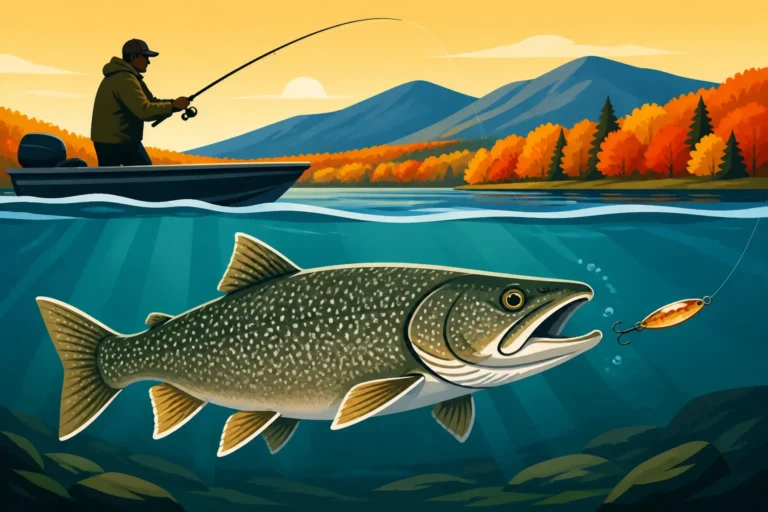
Lake trout in New Hampshire are opportunistic predators, and their diet primarily consists of smaller baitfish like rainbow smelt. When these smelt school up in the deeper, cooler water, the lake trout are right there with them, creating a dynamic feeding environment. This means that successful deep water summer lake trout fishing often involves "matching the hatch," or more accurately, matching the forage.
If you can locate schools of baitfish on your sonar, chances are good that lake trout won't be far behind. They'll often lurk below or on the edges of these baitfish schools, waiting for an easy meal. Their feeding can be sporadic; they might be active during low light periods, or they might take advantage of specific currents or structural elements that funnel bait. Understanding the life cycle of these forage species and where they congregate at different times of the day and throughout the summer can give you a significant edge. This also means paying attention to what kind of baitfish are prevalent in the particular lake you're fishing.
Essential Gear for Targeting Deep Water Lake Trout
Trying to catch deep water lake trout with your standard bass rod and reel is akin to trying to bail out a leaky boat with a teacup – it’s just not going to cut it. Targeting fish that are 50 to 100 feet down requires specialized equipment designed to get your lures to the strike zone and maintain control. Investing in the right gear is non-negotiable for consistent success.
Robust Rod and Reel Setups
For deep water lake trout, you'll need gear that can handle the heavy weight required to get your lure down, withstand the pressure of deep-water battles, and endure the strain of long trolling runs. Think heavy-duty.
A medium-heavy to heavy power rod, typically 7 to 8.5 feet long, is ideal for trolling. Look for rods with a moderate action that can absorb the shock of a strike without tearing the hook out, yet have enough backbone to fight a powerful lake trout from the depths. Fiberglass or composite rods are often preferred for their forgiving nature when trolling with downriggers or leadcore lines. For reels, a conventional baitcasting reel with a robust drag system and high line capacity is a must. Line counter reels are incredibly useful, allowing you to precisely monitor how much line you have out, which is critical for replicating successful depths. Brands like Daiwa, Penn, or Shimano offer excellent options for this kind of heavy-duty fishing. Many anglers will browse options on Amazon to compare features and read reviews before making a purchase.
Specialized Lines and Leaders
Your choice of fishing line is perhaps even more critical than your rod and reel when fishing deep. Standard monofilament has too much stretch and can be difficult to get to depth without excessive weight.
Braided line is often the main line of choice for deep water applications due to its thin diameter, incredible strength, and virtually zero stretch. This allows for much better sensitivity, helping you detect subtle bites from deep-dwelling lakers, and more efficient depth control. However, braided line is highly visible, so you'll need a fluorocarbon leader attached with a strong knot (like an Albright or FG knot). Fluorocarbon is nearly invisible underwater and offers excellent abrasion resistance against rocks and the fish's teeth. The length of your leader can vary, but typically 10 to 20 feet is a good starting point. The pound test of your main line might be 30-50 lb braid, while your leader could range from 15-25 lb fluorocarbon, depending on the size of fish and clarity of the water you anticipate. This setup provides the best of both worlds: strong, sensitive main line and a stealthy presentation at the lure.
Downriggers and Leadcore Systems
These are the workhorses of deep water lake trout fishing. Without them, consistently getting your lure to the exact depth where fish are holding is incredibly challenging.
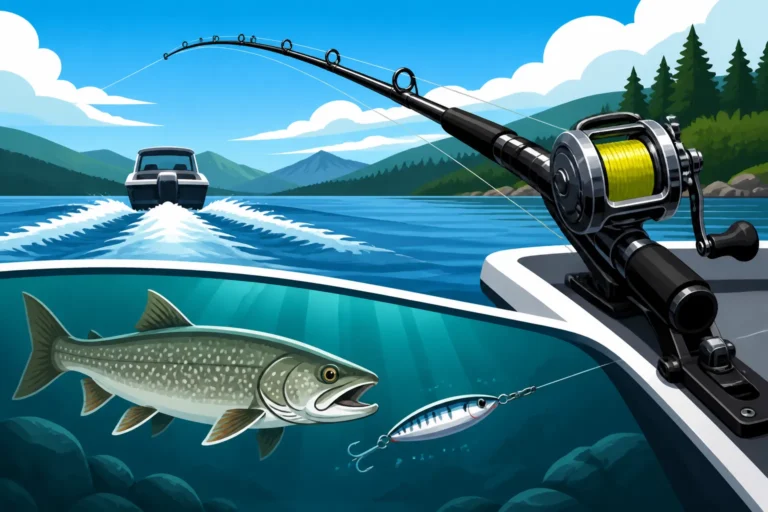
Downriggers are mechanical devices that use a heavy cannonball weight (usually 8-12 lbs) and a cable to carry your fishing line down to a precise depth. A release clip holds your fishing line, and when a fish strikes, the line pops free from the clip, allowing you to fight the fish directly without the weight. This system offers unparalleled depth control and allows your lure to swim freely, unencumbered by heavy weights. They are fantastic for covering large areas and experimenting with different depths until you find where the fish are holding. Many newer downriggers even have electric motors and depth tracking features, making them incredibly user-friendly.
Leadcore line is a specialized fishing line that has a lead core inside a braided nylon sheath. The lead makes the line heavy, allowing it to sink. Each "color" (usually 10 yards) of leadcore sinks to a predictable depth at a given trolling speed. For example, you might get 5 feet of depth per color at 2 mph. By letting out a certain number of colors, you can achieve a specific depth. While not as precise as a downrigger for exact depth, leadcore is simpler to deploy and allows for multiple lines to be run without the need for multiple downriggers. It's especially effective when fish are scattered over a wider depth range. You'll typically run a leader of 10-20 feet of fluorocarbon off the end of your leadcore. This guide on Best Trolling Gear for New Hampshire Lake Trout delves deeper into specific brands and setups.
Trolling Techniques for Deep Water Lake Trout
Trolling is by far the most popular and effective method for covering water and finding lake trout in their deep summer haunts. It allows you to present lures at specific depths over extended periods, making it easier to intersect with active fish. Mastering these techniques will significantly increase your success rate.
Downrigger Strategies for Precision Depth
Using a downrigger offers surgical precision in lure placement, which is paramount when lake trout are concentrated in a narrow band within the thermocline. The key is to monitor your fish finder constantly and adjust your downrigger ball depth to match where you're marking fish and bait.
Start by setting your downrigger ball a few feet above the top of the thermocline or just above where you're marking baitfish, and then adjust from there. Experiment with running your lure directly in the thermocline, or even a few feet below it, as lakers often look up to feed. Vary your trolling speed between 1.5 to 3.0 mph. Sometimes a subtle change in speed can trigger a strike. It's also effective to create "S-turns" with your boat; the outside lure speeds up, and the inside lure slows down, creating an erratic action that can entice a following fish to strike. Don't be afraid to experiment with multiple downriggers if your boat allows, staggering depths and lure types to quickly determine what the fish prefer. Remember that on Lake Winnipesaukee, for example, the thermocline can be quite distinct, so precise depth is key.
Leadcore and Weighted Line Approaches
While downriggers provide pinpoint accuracy, leadcore and other weighted lines offer a simpler, yet highly effective way to get lures deep, especially for boats without downriggers or when fishing slightly shallower deep water (e.g., 30-60 feet).
When using leadcore, the trick is to understand its sinking rate. A general rule of thumb is about 5-7 feet of depth per color (10 yards) at a trolling speed of 2 mph. So, if you want to fish at 40 feet, you might let out 6-8 colors of leadcore. Troll in straight lines over known structure or areas where you've marked fish. Leadcore also works well in conjunction with planer boards if you want to spread multiple lines out wide from the boat, covering a larger swath of water without spooking fish directly underneath. For even deeper applications or where you need to get down faster, segmented leadcore (where only the main line is leadcore, and the leader is long fluorocarbon) or even braided line with large snap weights (which clip directly onto your main line) can be effective. These techniques require more trial and error to dial in the exact depth, but offer versatility. For more detailed insights into specific setups, check out Trolling Techniques for New Hampshire Lake Trout.
Locating Lake Trout in Deep Water
Finding deep water lake trout in the vast expanse of a New Hampshire lake can feel like searching for a needle in a haystack. But with the right tools and knowledge, you can narrow down their potential hiding spots and increase your chances of success. It's all about reading the water and the electronics.
Utilizing Sonar and Fish Finders Effectively
Your sonar or fish finder is your absolute best friend when chasing deep water lake trout. It allows you to "see" underwater and identify key features that hold fish. This isn't just about marking fish; it's about understanding the entire water column.
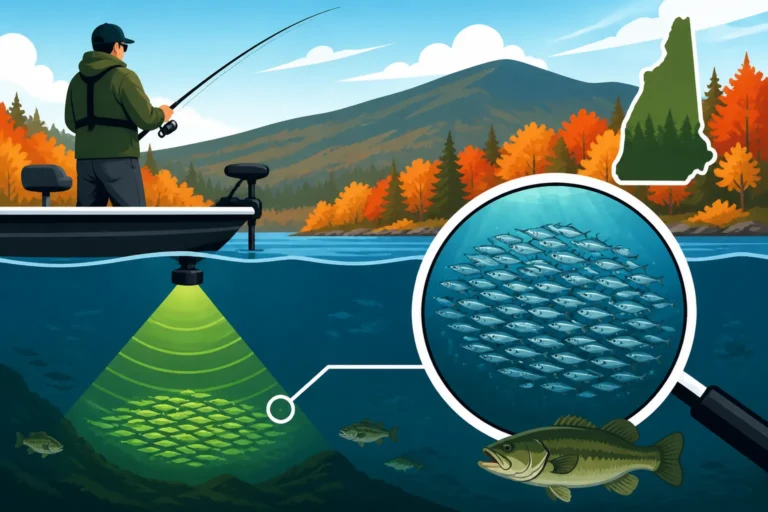
Start by looking for the thermocline, which will show up as a distinct band on your sonar where the water temperature changes abruptly. This is often indicated by a hazy, layered appearance. Once you locate the thermocline, you can usually expect to find lake trout in or just below this layer. Next, look for baitfish schools. These will appear as dense clouds or clumps of small arcs, and lake trout will often be found either directly within or just below these schools. Pay close attention to prominent structures like humps, submerged islands, deep points, and rock piles. Lake trout will often relate to these features, using them as ambush points or areas to conserve energy. Look for individual large arcs (fish) on your screen, especially those holding tight to the bottom or suspended near structure. Modern fish finders with side imaging or down imaging can provide even more detailed views of the bottom and surrounding areas, helping you pinpoint precise locations. If you're looking to upgrade, consider Best Fish Finders for New Hampshire Lakes for detailed reviews.
Understanding Deep Water Structure and Current
Lake trout, even when deep, still relate to structure and are influenced by subtle currents within the lake. They don't just suspend randomly; they use their environment to their advantage.
Focus on topographical features that provide cover, ambush points, or funnel baitfish. Deep humps or underwater islands that rise significantly from the main basin are prime locations. Lake trout will often hold on the windward side or the top of these structures, where currents may bring food. Deep rock piles or boulder fields offer excellent cover and attract baitfish seeking refuge. Also, consider the main lake basin itself. While seemingly featureless, subtle changes in bottom composition, depth transitions, or even small depressions can hold fish. On large lakes like Winnipesaukee, specific areas might develop subtle currents due to wind or inflows, which can concentrate bait and, subsequently, lake trout. Pay attention to how the fish are positioned relative to the structure; are they on top, on the sides, or just off the edge? This will inform your lure presentation and trolling path.
Bait and Lure Choices for Deep Water Lake Trout
Once you've located the fish and have your gear dialed in, the next crucial step is presenting the right bait or lure. Deep water lake trout can be picky, so having a selection of proven producers is essential. The general rule is to imitate their primary forage: smelt.
Smelt Imitations and Spoons
The rainbow smelt is the cornerstone of the lake trout diet in many New Hampshire lakes, so lures that mimic these silvery baitfish are incredibly effective.
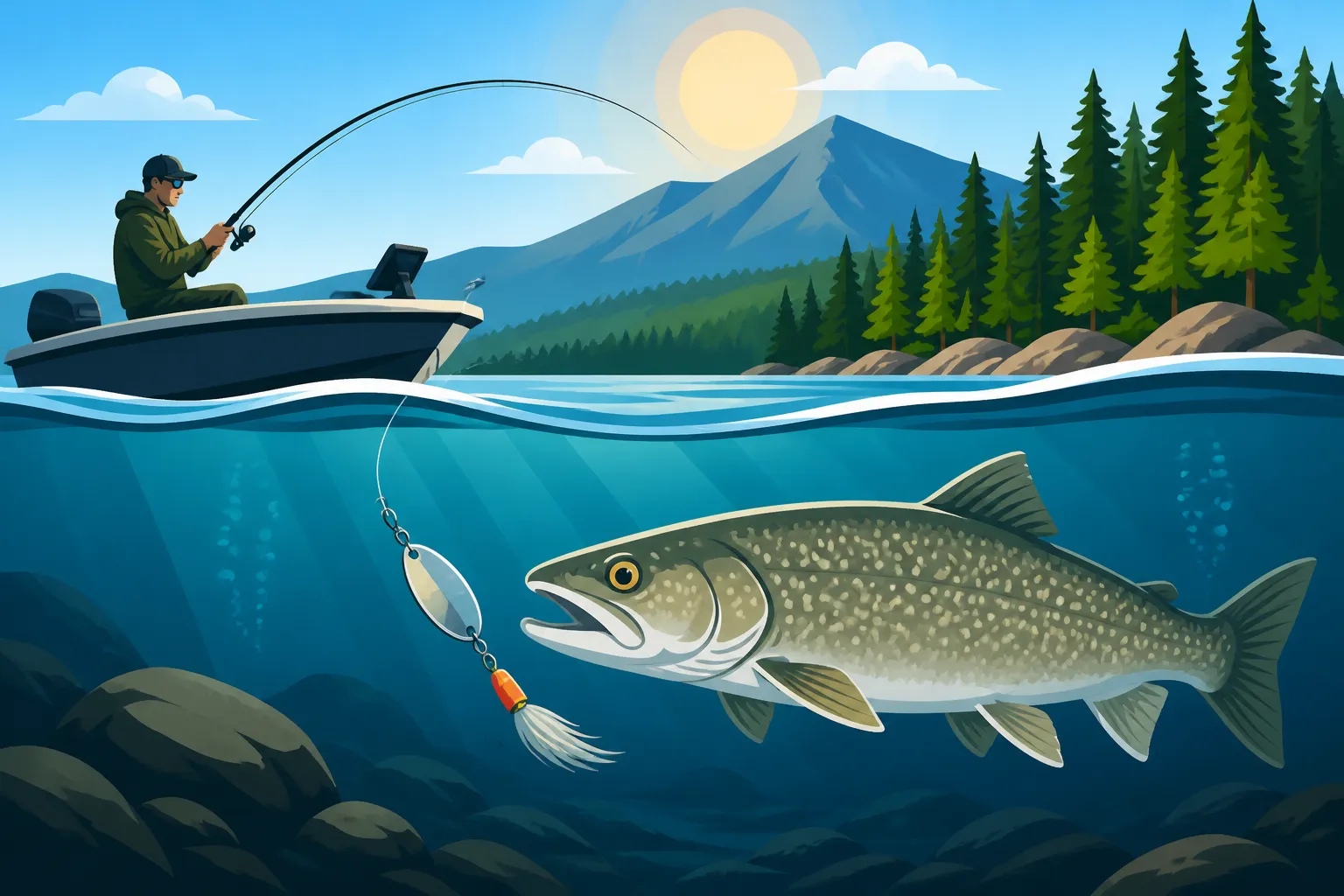
Long, slender spoons are arguably the most popular and effective lures for deep water lake trout. Their wobbling, darting action perfectly imitates a struggling smelt. Popular spoon colors often include silver, blue/silver, black/silver, or even iridescent patterns that shimmer in the deep, low-light conditions. Brands like Sutton, Doctor, and the venerable Mooselook Thrasher spoons are perennial favorites among New Hampshire anglers. Different sizes and thicknesses will provide varying actions and sink rates. When trolling, spoons should be attached to your leader with a high-quality ball-bearing swivel to prevent line twist. Experiment with spoon size and color until you find what the fish are keying on. Sometimes a subtle difference in flash or vibration can make all the difference. Many anglers stock up on a variety of spoons from retailers or online stores like Amazon, ensuring they have options for different light conditions and fish preferences.
Deep Diving Plugs and Jigs
Beyond spoons, other lure types can be incredibly effective, especially when you need to reach specific depths or trigger a different kind of strike.
Deep diving crankbaits or stickbaits, often referred to as plugs, can be highly productive, especially when targeting fish that are suspended slightly shallower in the deep water column or near the top of structure. Look for plugs that have a realistic baitfish profile and a strong wobbling action. Colors that imitate perch, smelt, or even trout can be very successful. These plugs are typically trolled on leadcore or with snap weights to achieve their maximum diving depth.
For a more active approach, vertical jigging can be deadly, particularly when you've pinpointed a school of fish or a lone laker on your sonar. Heavy jigs, usually 1 to 3 ounces, in a variety of shapes and colors (white, glow, chartreuse, silver) can be dropped directly down to the fish. Tip these jigs with a piece of cut bait (like a smelt head or belly strip) for added scent and attraction. The technique involves a vigorous lift and drop, allowing the jig to flutter and flash, followed by a pause to entice a strike. This method requires a good understanding of your fish finder to stay on top of the fish. You can find a vast array of jigging spoons and soft plastic baits suitable for tipping on Amazon, giving you plenty of options to experiment with.
| Trolling Method | Depth Range (Typical) | Pros | Cons | Ideal Conditions |
|---|---|---|---|---|
| Downrigger | 30-150+ feet | Precision depth control, lure runs freely, no line drag | Requires specialized equipment, can be cumbersome, more setup time | Pinpointing exact depth, scattered fish, clear water |
| Leadcore Line | 20-80 feet | Simpler setup, multiple lines possible, cost-effective | Depth less precise, some line drag on lure, slower boat speed | Covering wide depth ranges, boats without downriggers |
| Snap Weights / Dipsy Divers | 10-60 feet | Versatile, easy to adjust, works with standard gear | Adds weight directly to line (can affect lure action), less stealthy | Moderate depths, occasional deep fishing, quick depth changes |
| Deep Diving Plugs | 10-30 feet (on their own) | Realistic action, covers mid-depths efficiently, triggers strikes | Limited depth without added weight, specific speed required | Targeting upper thermocline, active fish |
| Vertical Jigging | Any depth (spot specific) | Highly active, works on marked fish, good for suspended fish | Requires constant attention, less water covered, boat positioning | Marked fish, schooled fish, specific structure |
Seasonal Considerations and Best Times
While this guide focuses on summer, it's worth noting that "summer" fishing for lake trout isn't a single, static event. Conditions and fish behavior can change significantly from early summer to late summer. Being aware of these nuances can help refine your approach.
Early Summer vs. Late Summer Transitions
Early Summer (Late May to June): As the ice comes off the larger lakes and the surface water slowly begins to warm, lake trout might still be found in relatively shallower depths, particularly in the 20-40 foot range. They'll be more active and less concentrated than in mid-summer. This is a transition period, and you might find them hitting a wider variety of lures, including some surface presentations in low light conditions. As warming trends accelerate, they will quickly move deeper. The smelt might also be more scattered before fully congregating in the deeper, cooler water.
Late Summer (August to Early September): By late August, the lake's thermal stratification is usually at its peak. The thermocline is well-established, and lake trout will be at their deepest and most concentrated. They will be highly reliant on the coldest, most oxygenated water available, often congregating around deep structure or following dense schools of smelt. This is when precision fishing with downriggers becomes absolutely critical. As September approaches and days shorten, there might be subtle hints of them starting to roam a bit more, especially in anticipation of cooler fall temperatures. It's also worth noting that their metabolism might slow down a bit in the deeper, colder water, so slower presentations might be more effective.
Time of Day and Weather Influences
Even in deep water, lake trout can be influenced by light conditions and weather, though perhaps not as dramatically as surface-dwelling fish.
Time of Day: Early morning and late evening can still be prime times for deep water lake trout. While they're deep, lower light levels can encourage them to be more active and potentially move slightly shallower within the thermocline, or venture off deep structure to feed. During the bright midday sun, they might hold tighter to structure or remain in the absolute darkest, deepest parts of their preferred zone. Some anglers report good success during midday as well, especially if you can consistently present lures in the exact strike zone.
Weather: Overcast days can sometimes make fish more active, even in deep water, as the overall light penetration is reduced. Stable weather patterns are generally preferred over drastic changes. Cold fronts, while often detrimental to shallow water fishing, might have a less immediate impact on deep water lake trout, as their environment is more stable. However, extreme barometric pressure drops can sometimes put even deep-water fish into a funk. Always keep an eye on your fish finder, as changes in weather might cause fish to shift their depth by a few feet, and you'll want to adjust accordingly. Knowing the Best Time of Year to Fish in New Hampshire for different species can give you an edge across the seasons.
Safety and Best Practices for Deep Water Anglers
Deep water fishing, especially when using specialized equipment and targeting large fish, comes with its own set of safety considerations and best practices. It's not just about catching fish; it's about being responsible and ensuring a positive experience for everyone on the water.
Boating Safety and Navigation
When you're out on large New Hampshire lakes like Sunapee or Lake Winnipesaukee, especially far from shore, boating safety is paramount.
Always ensure your boat is in excellent working condition, with all required safety equipment on board (life jackets, fire extinguisher, horn, navigation lights). Have a reliable marine radio or fully charged cell phone for emergencies. Check the weather forecast before heading out, as conditions can change rapidly on large bodies of water, leading to strong winds and rough chop that can be dangerous for smaller boats. Be mindful of other boaters, especially when trolling; maintain a predictable course and avoid sudden turns. If you're using downriggers, be aware of their cables and weights to avoid fouling other lines or equipment. It's a good idea to inform someone on shore of your float plan, including where you're going and when you expect to return. Remember that New Hampshire Boating Laws for Anglers dictate specific requirements, including registration and life jacket rules, which are critical for safe operation.
Fish Handling and Conservation
Lake trout are a valuable resource in New Hampshire, and proper fish handling, especially for catch-and-release, is crucial for their survival and the health of the fishery.
When bringing a lake trout up from significant depths, they can suffer from barotrauma – a condition caused by the rapid change in pressure. This can result in an expanded swim bladder, making it difficult for the fish to swim back down. If you intend to release the fish, minimize handling time out of the water. Use a large, knotless rubberized net to avoid damaging their protective slime coat. If a fish appears to be suffering from severe barotrauma and you want to release it, consider using a descending device (like a "fish gripper" or specialized tool) to quickly return it to depth. This helps recompress the swim bladder and increases its chances of survival. Always handle fish gently, supporting their body weight, especially larger ones. If you plan to keep fish, be sure to know the New Hampshire Bag and Possession Limits by Species and keep them on ice immediately to maintain meat quality. Responsible angling ensures that these magnificent fish will be available for future generations to enjoy.
Disclaimer
Please be aware that fishing regulations, including licensing, seasons, and bag limits, can change. Always consult the latest New Hampshire Fish and Game Department regulations before heading out. This guide is for informational purposes only and does not constitute legal advice or an exhaustive list of all regulations.