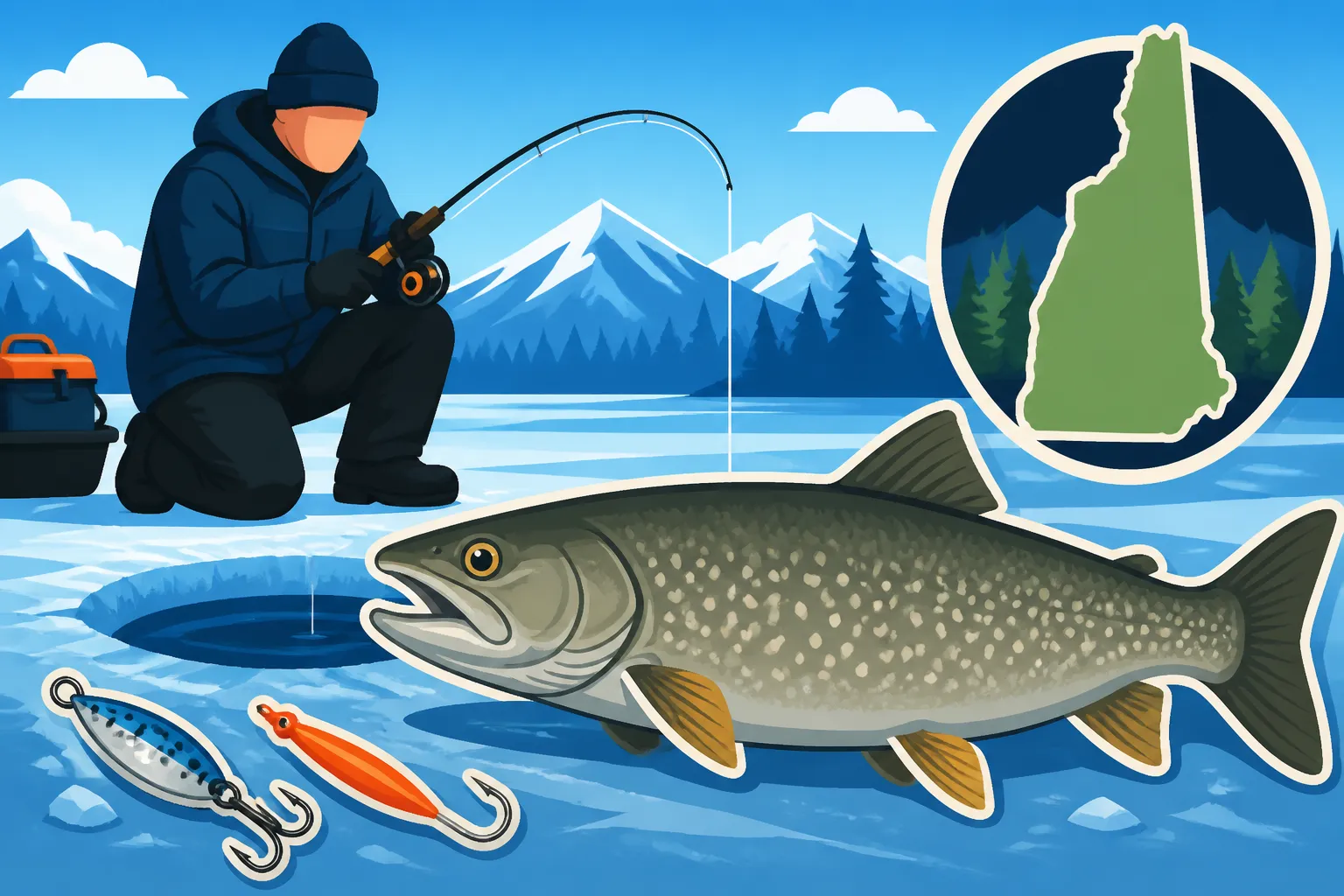
Best Techniques for Ice Fishing Lake Trout
There’s nothing quite like the crisp air and serene silence of a New Hampshire winter, but when you're out on the ice chasing the elusive lake trout, that tranquility can quickly turn to frustration if you're not getting bites. Finding and coaxing these deep-water giants from beneath several feet of ice presents unique challenges, often leaving anglers wondering if they're even in the right spot or using the correct approach. This guide is dedicated to equipping you with the tried-and-true techniques and essential knowledge to turn those quiet days into memorable battles with New Hampshire's magnificent lake trout through the ice.
Unraveling the Mystery of Lake Trout Under the Ice
Lake trout are notorious for their preference for deep, cold, oxygen-rich waters, and this doesn't change when a sheet of ice forms over their habitat. The biggest challenge for ice anglers is often simply locating these fish in vast, deep lakes like Winnipesaukee, Squam, or Newfound. It’s not about drilling random holes; it’s about understanding their winter patterns and where they relate to structure and forage.
Reading the Lake Bottom for Prime Lake Trout Real Estate
When the mercury drops and the ice thickens, lake trout tend to gravitate towards specific structural elements that offer both comfort and access to food. Think about deep main lake basins, sharp drop-offs, underwater points, and humps that rise significantly from the surrounding bottom. These areas act as highways and ambush points for predatory fish. Lake trout will often cruise the edges of these structures, moving up and down in the water column as they hunt. Your goal is to identify these features using detailed contour maps, whether paper charts or digital versions on your fish finder. Look for areas where a deep flat suddenly gives way to a sharp incline, or where an isolated hump is surrounded by much deeper water. These are the kinds of spots where lake trout will often stage.
Locating Their Primary Forage Species
Lake trout are apex predators, and their movements are heavily dictated by the presence of their food sources. In New Hampshire's deep, cold lakes, the primary forage for lake trout is often rainbow smelt. These small, silvery baitfish congregate in schools, often suspended in the water column or relating to deep structure where they feel safe. If you can find the smelt, you're halfway to finding the lake trout. Sometimes, lake trout will be right on the bottom, but often, especially in the winter, they'll be suspended anywhere from 10 feet off the bottom to halfway up in the water column, patrolling for schools of baitfish. A good strategy is to look for areas historically known for productive smelt populations. Understanding What lake trout eat in New Hampshire lakes is crucial for effective targeting.
Utilizing Electronics to Gain an Edge
In the world of ice fishing for lake trout, electronics aren't just a luxury; they're practically a necessity. A high-quality flasher or a modern ice fishing sonar unit can dramatically increase your success rate. These devices allow you to see exactly what's beneath your hole: the bottom contour, your bait, and most importantly, any fish that come into the transducer cone. When you're dropping a jig or bait down, you can monitor its depth in relation to the bottom and any marks that appear on screen. If you see a fish rising to investigate your presentation, you can adjust your jigging action accordingly. Top-tier brands like Garmin, Humminbird, and Lowrance offer excellent portable units specifically designed for ice fishing. These tools help you understand not just if there are fish, but how they're reacting to your offering, giving you real-time feedback that's invaluable for deep-water species.
Essential Gear for New Hampshire Lake Trout Ice Fishing
Chasing lake trout through the ice demands specific gear that can withstand the harsh New Hampshire winter conditions and handle powerful, deep-water fish. Skimping on tackle can lead to frustrating break-offs and lost opportunities, especially when you've waited patiently for that big bite.
Robust Rod and Reel Setup
For lake trout, you're not using dainty panfish gear. You need a stout ice fishing rod, typically 32 to 40 inches long, with a medium-heavy to heavy power rating and a sensitive tip. The robust backbone is necessary to handle the weight and fight of a large lake trout, while the sensitive tip helps detect subtle bites in deep water. Paired with this, a reliable spinning reel in the 2500-4000 series range is ideal. It needs a smooth drag system and enough line capacity to hold 100-150 yards of strong line. Many experienced anglers will actually opt for a baitcasting reel designed for ice fishing, as they can offer more control over line drop and retrieval with heavier baits. When looking for a good setup, check reviews on platforms like Amazon for rods and reels known for their durability and performance in cold conditions.
Smart Line Choices for Cold Water
Your line is the critical link between you and the fish, and in cold water, it needs to perform. For ice fishing lake trout, a braided line is often preferred for its strength, lack of stretch, and sensitivity, allowing you to feel even the lightest takes in deep water. A good starting point is 15-20 pound test braid. However, braid can absorb water and freeze, so many anglers will use a short fluorocarbon leader, typically 8-12 feet long, attached to the main braid with a strong knot like an Albright or FG knot. Fluorocarbon is nearly invisible underwater, provides excellent abrasion resistance, and has very little stretch, making it a perfect complement to braid. For your fluorocarbon leader, consider a 10-15 pound test, depending on water clarity and how aggressive the bite is.
Shelters and Augers for Comfort and Access
Sitting exposed on a frozen lake for hours is not only uncomfortable but can be dangerous. A good ice fishing shelter, whether a portable flip-over or a hub-style pop-up, provides crucial protection from wind, snow, and extreme cold. These shelters are essential for maintaining body warmth and focus. When it comes to punching holes through potentially thick New Hampshire ice, a reliable auger is non-negotiable. While manual augers are fine for early ice, once it thickens to more than a foot, a gas-powered, propane-powered, or electric auger becomes a game-changer. An 8-inch or 10-inch auger is standard for lake trout, allowing you to bring a sizable fish through the hole. For a deeper dive into ice access, check out advice on How thick ice needs to be before New Hampshire anglers fish it. For longer sessions, an ice shanty can make all the difference, providing a warm, comfortable base.
Effective Baits and Lures for Lake Trout Under the Ice
Lake trout can be finicky, but with the right presentation of bait or lure, you can entice even the most wary fish. Success often comes down to matching the hatch or offering something irresistible in their deep, cold environment.
Live Bait Options: The Irresistible Enticement
Nothing beats live bait for its natural scent, movement, and allure, especially for sluggish winter lake trout. The go-to live bait in New Hampshire is often the rainbow smelt, as it's their natural food source in many lakes. If smelt aren't readily available or permitted, large golden shiners or other robust baitfish can be effective. You typically hook live bait gently through the back or lips, allowing it to swim naturally. When using tip-ups, suspending a lively baitfish just above the bottom or at the depth where you're marking fish can be incredibly effective. The erratic movements of a struggling baitfish send out vibrations that lake trout can detect from a distance, often triggering an aggressive strike. Always ensure your live bait adheres to New Hampshire Fishing Regulations Explained regarding baitfish transport and use to avoid any issues.
Artificial Lure Selection: Jigging for Action
Artificial lures, primarily jigging spoons and tube jigs, are staples for ice fishing lake trout.
- Jigging Spoons: These metal spoons, ranging from 1/2 ounce to 2 ounces or more, are designed to flutter and flash on the drop, mimicking an injured baitfish. Popular choices include the Swedish Pimple, Kastmaster, or specialized flutter spoons. Colors vary, but silver, gold, white, and chartreuse are perennial favorites, often tipped with a piece of bait (like a smelt head or a small minnow) for added scent.
- Tube Jigs: Soft plastic tube jigs, often 3-6 inches long, are incredibly versatile. Rigged on a jig head (1/2 oz to 1 oz or more), they imitate squid, smelt, or other forage. White, black, clear, or green pumpkin colors are popular. The soft, undulating tentacles of a tube jig provide a lifelike action that can be irresistible to lake trout. Again, tipping with a piece of real bait can dramatically improve their effectiveness.
- Bladed Baits: Lures like the Rapala Jigging Rap or similar bladed baits offer a unique darting action that can cover a lot of water and draw in curious lake trout. Their ability to swim in a circular motion within the hole makes them excellent search baits.
For a great selection of these lures, check out fishing sections on Amazon, where you can find various brands and styles.
The Power of Scent and Attractants
Even with the best live bait or most enticing lure, adding scent can often be the secret sauce that pushes a hesitant lake trout to commit. Fish attractants, whether sprays, gels, or pastes, release powerful odors that can mimic injured baitfish, crawfish, or other natural food sources. These scents can mask human odors, encourage fish to hold onto the bait longer, and ultimately lead to more hookups. Apply these liberally to your artificial lures, or even to your live bait, especially if the bite is slow. Brands like Pro-Cure, Smelly Jelly, or Berkley Gulp! Alive! products are popular choices for their effectiveness. The slightest edge can make a big difference when you’re trying to tempt a trophy lake trout from the depths.
Mastering Presentation and Techniques
It’s one thing to find the fish and have the right gear, but knowing how to present your bait or lure effectively is what truly separates successful ice anglers from the rest. Lake trout can be moody, and sometimes a slight change in technique is all it takes to trigger a strike.
Active Jigging Strategies
Active jigging involves continually working your lure to attract fish. There isn't a single magic formula, but rather a range of techniques to experiment with:
- Lift and Drop: This is a fundamental technique. Drop your lure to the desired depth (often just above where you're marking fish or near the bottom). Then, sharply lift the rod tip 1-3 feet, allowing the lure to fall back on a semi-slack line. This mimics a fleeing or injured baitfish. Pause for a few seconds at the bottom of the drop before repeating. Many strikes happen on the fall or during the pause.
- Pound and Pause: For more aggressive fish or to call fish in from a distance, pound your lure against the bottom a few times, creating puffs of silt. This can simulate a feeding fish. After pounding, lift the lure 1-2 feet off the bottom and hold it still or give it subtle twitches.
- Subtle Wiggle: Sometimes, especially when fish are less aggressive, less is more. Keep your lure at a consistent depth and impart a very subtle, quivering motion with your wrist. This makes the lure gently vibrate, mimicking a weak or dying baitfish, which can be an easy meal for a lake trout.
- The "Death Spiral": With tube jigs or some spoons, you can impart a slow, controlled lift and drop, allowing the lure to gently spin or spiral as it falls. This can be deadly when lake trout are wary.
Experiment with retrieve speeds, jigging cadence, and the duration of your pauses. Watch your flasher for how fish react, and adjust accordingly. If a fish comes in and then leaves, try a different action.
Setting Up Tip-Ups for Passive Presentation
While active jigging keeps you engaged, tip-ups allow you to cover multiple holes and present bait passively, which is often how the biggest lake trout are caught. New Hampshire regulations often allow for up to two lines per angler, so you can run two tip-ups or one jigging rod and one tip-up.
- Spread Your Holes: Drill holes strategically, covering different depths or structural elements along a drop-off or around a hump.
- Depth Control: Lower your live or dead bait to the desired depth. Often, suspending bait 1-5 feet off the bottom is a good starting point, but adjust based on what your electronics are telling you about the fish. Many anglers will set one tip-up higher in the water column and another deeper to find the fish's preferred feeding zone.
- Baiting: Hook your live bait (smelt or shiner) carefully through the back (avoiding the spine) or just behind the dorsal fin. If using dead bait, a treble hook inserted into the body or a single hook through the head works well.
- Waiting Game: Once set, the flag on the tip-up will signal a bite. Don't rush to grab it immediately. Give the fish a few seconds to fully take the bait and turn away before carefully lifting the line and setting the hook with a firm pull. This patience is key, as lake trout can mouth the bait before fully committing. Learn more about Best Techniques for Ice Fishing Lake Trout with various setups.
Understanding the Lake Trout Bite
Lake trout bites on ice can range from a violent strike that nearly pulls the rod from your hand to an incredibly subtle "dead weight" feeling. Sometimes, your rod tip will simply load up as if you've snagged the bottom, only for it to slowly move. This often indicates a lake trout that has inhaled your lure and is simply swimming away with it. On tip-ups, the flag going up is obvious, but sometimes the reel might spin slowly as the fish cruises. It’s crucial to pay attention to any change in line tension, resistance, or visual cues on your flasher. If you see a fish approach your lure and then your line feels heavy or slackens slightly, set the hook! When the bite is subtle, keeping your rod tip close to the hole and minimizing line slack can help with detection.
Prioritizing Safety and Comfort on the Ice
Ice fishing is an exhilarating experience, but the harsh winter environment demands respect. Safety should always be your top priority, followed closely by comfort to ensure an enjoyable and successful outing on New Hampshire's frozen lakes.
Checking Ice Conditions: Never Take Chances
The most critical safety rule for ice fishing is to never assume the ice is safe. Conditions can vary wildly across a single body of water, even over short distances, and change rapidly with weather fluctuations.
- Minimum Thickness: A generally accepted minimum for safe walking is 4 inches of clear, solid ice. For snowmobiles or ATVs, you need at least 5-7 inches. For a small car or truck, 8-12 inches are recommended, and even then, extreme caution is necessary. Always consult local regulations regarding vehicle use on ice.
- Checking as You Go: Use an ice chisel, spud bar, or auger to check ice thickness every few steps, especially as you venture further out or into new areas.
- Visual Cues: Avoid areas with cracks, pressure ridges, slushy spots, or discolored ice (darker ice can be thinner). Areas near inlets, outlets, or submerged springs can have dangerously thin ice even when the rest of the lake is solid.
- Buddy System: Always fish with a partner and let someone know your plans and expected return time. For detailed information, review the guidelines on How thick ice needs to be before New Hampshire anglers fish it.
Proper Layering for Extreme Cold
New Hampshire winters are no joke, and spending hours on the ice requires strategic layering to stay warm and dry.
- Base Layer: Start with moisture-wicking synthetic or merino wool base layers against your skin. Avoid cotton, as it retains moisture and will make you cold.
- Mid-Layers: Add insulating layers like fleece jackets, down vests, or wool sweaters. Multiple thinner layers are better than one thick one, as they trap more air and allow you to adjust to changing temperatures.
- Outer Layer: Your outermost layer should be waterproof and windproof to protect against the elements. A specialized ice fishing suit or high-quality ski/snowboard gear is ideal. Look for insulated bibs and a jacket that provide warmth and protection from slush and snow. Brands like StrikerICE or Clam are popular for their warmth and safety features, and often available through retailers like Amazon.
- Extremities: Don't forget insulated, waterproof boots (e.g., Sorel, Baffin), warm wool or synthetic socks, a warm hat, a neck gaiter, and insulated gloves or mittens. A pair of thinner gloves for handling fish and bait, worn under larger mittens, is often a good setup.
Emergency Preparedness on the Ice
Even with precautions, accidents can happen. Being prepared can be the difference between a scare and a tragedy.
- Ice Picks: Carry a pair of ice picks around your neck or in an easily accessible pocket. If you fall through, these can help you grip the ice and pull yourself out.
- Rope: A length of rope (50-100 feet) can be thrown to someone who has fallen through the ice.
- Whistle: A loud whistle can signal for help if you're in distress.
- First-Aid Kit: A basic first-aid kit should always be with you for minor injuries.
- Change of Clothes: Keep a dry change of clothes in a waterproof bag in your vehicle, just in case.
- Charged Phone: Ensure your phone is fully charged (and perhaps in a waterproof case) for emergencies.
It's a good idea to know the Life Jacket Requirements for New Hampshire Boaters even in winter, as some might apply or be good practice for added flotation.
| Item Type | Recommended Item | Purpose |
|---|---|---|
| Rod/Reel | 32-40" Medium-Heavy Ice Rod, 2500-4000 series Reel | Handles strong lake trout, sensitive tip for bites. |
| Line | 15-20lb Braided Main Line, 10-15lb Fluorocarbon Leader | Strength, sensitivity, stealth. |
| Auger | 8-10 inch Electric/Gas/Propane Auger | Efficiently drills large holes through thick ice. |
| Shelter | Portable Flip-Over or Hub-Style Shanty | Protection from wind, cold, and snow. |
| Live Bait | Rainbow Smelt, Golden Shiners | Natural forage, irresistible movement and scent. |
| Artificial | Jigging Spoons (1/2-2oz), Tube Jigs (3-6") | Mimics baitfish, versatile for active jigging. |
| Scent | Pro-Cure, Smelly Jelly, Berkley Gulp! Alive! | Enhances appeal, masks human scent, triggers bites. |
| Safety | Ice Picks, Spud Bar, Rope, Whistle | Essential for self-rescue and aiding others in emergencies. |
| Apparel | Layered waterproof/windproof insulated suit, warm boots, hat, gloves | Stays warm, dry, and comfortable in extreme cold. |
| Electronics | Flasher or Ice Fishing Sonar (e.g., Humminbird, Garmin) | Locates fish, tracks bait, shows fish reaction in real-time. |
Seasonality, Regulations, and Where to Go
Understanding when and where to target lake trout, along with the specific rules governing their capture, is paramount for a successful and legal ice fishing experience in New Hampshire.
Early and Late Season Considerations
The ice fishing season in New Hampshire generally runs from December through March, but lake trout behavior changes as the winter progresses.
- Early Ice (December-January): During early ice, lake trout are often more active and can be found in shallower depths (20-40 feet) than later in the season. They may be more willing to chase lures aggressively. Focus on points, humps, and sudden drop-offs where baitfish are still active. Ice thickness is paramount during this period; be extra cautious.
- Mid-Season (January-February): This is often when ice is thickest and conditions most stable. Lake trout may move to deeper main lake basins, suspending over significant depths but still relating to underwater structure. Slower, more subtle presentations with bait on tip-ups can be very effective, though active jigging can still produce. This is often the prime time for venturing into deeper, offshore spots.
- Late Ice (March): As the ice starts to melt and spring approaches, lake trout can become more active again, often moving shallower as oxygen levels in deeper water might shift. They might feed more aggressively in preparation for spring. However, late ice is also the most dangerous, with rapidly deteriorating conditions. Always prioritize safety over catching fish during this period. For specific dates, consult New Hampshire Lake Trout Ice Fishing Season Dates.
Navigating Lake Trout Regulations by Water Body
New Hampshire has detailed fishing regulations, and these can vary significantly from one water body to another, especially for species like lake trout. It's not a one-size-fits-all situation.
- Statewide Rules: The general statewide regulations for lake trout usually involve a minimum length limit and a daily bag limit. However, these are often overridden by special regulations on specific lakes.
- Special Regulation Waters: Famous lake trout lakes like Winnipesaukee, Squam Lake, and Newfound Lake often have their own unique rules regarding season dates, daily limits, and minimum/maximum lengths. For example, New Hampshire Lake Winnipesaukee lake trout regulations are distinct from other lakes. You might find slot limits (where fish within a certain size range must be released) or different possession limits.
- Checking the Digest: Before heading out, always consult the most current New Hampshire Freshwater Fishing Digest. This is available online through the New Hampshire Fish and Game Department website. It's your ultimate source for all regulations, including New Hampshire Ice Fishing Regulations by Water Body and specific bag limits like New Hampshire Lake Trout Limit and Possession Rules. Ignorance of the rules is not an excuse, and penalties for violations can be steep. Take a few minutes to read up and ensure you're fishing legally.
Prime New Hampshire Lake Trout Destinations
New Hampshire boasts some truly exceptional lakes for ice fishing lake trout. While specific spots can change year to year, some lakes consistently produce:
- Lake Winnipesaukee: The largest lake in New Hampshire, Winnipesaukee is a lake trout paradise. Its immense size, varied structure, and abundant smelt population make it a top destination. Expect to target fish in depths ranging from 40 to over 100 feet, especially around "The Broads" area, and the numerous humps and drop-offs.
- Squam Lake: Known for its stunning scenery, Squam also holds healthy populations of lake trout. It's a bit shallower than Winnipesaukee in many areas, but still offers deep holes and rocky structures where lakers thrive.
- Newfound Lake: With its incredibly clear water and deep basins, Newfound Lake is another prime spot for lake trout. The clarity means stealthier presentations are often key here.
- Sunapee Lake: Located in the Dartmouth-Lake Sunapee region, this lake also offers excellent lake trout ice fishing, often alongside landlocked salmon.
These lakes are consistently listed among the Best Ice Fishing Lakes in New Hampshire for a reason. Always respect private property, use designated access points, and leave no trace behind.
Disclaimer
The information provided in this guide is for general informational purposes only and is not intended as a substitute for official regulations. Fishing rules and conditions can change. Always consult the latest New Hampshire Fish and Game Department regulations before heading out on the ice, and prioritize safety above all else.