When striped bass leave Great Bay for the ocean
Striped bass migration patterns explain when fish leave Great Bay for the Atlantic Ocean each season based on temperature and food availability.
Know what’s on the line.
Gamefish and panfish profiles — identification, behavior, feeding habits, and species-specific strategies for every catch.
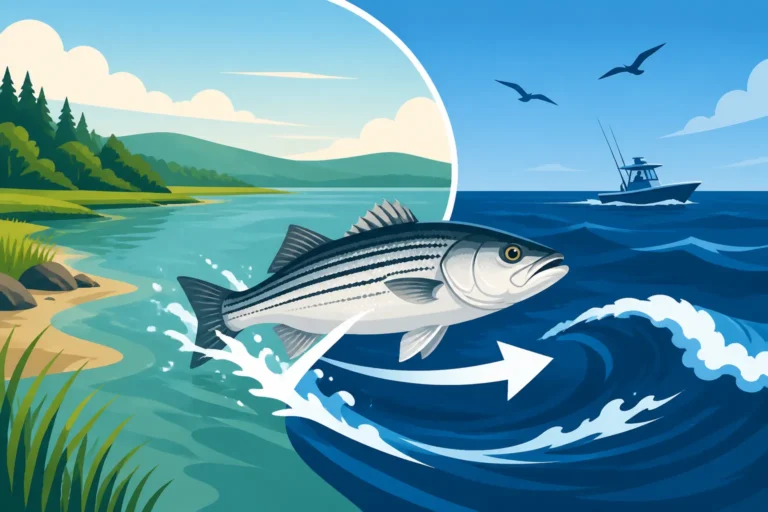
Striped bass migration patterns explain when fish leave Great Bay for the Atlantic Ocean each season based on temperature and food availability.
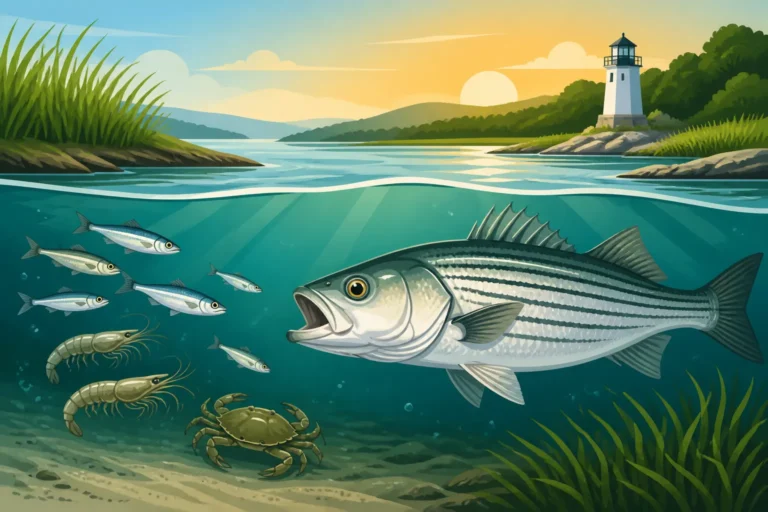
Striped bass in Great Bay eat baitfish, shrimp, and crabs, driven by tides, water temperature, and freshwater river inputs.
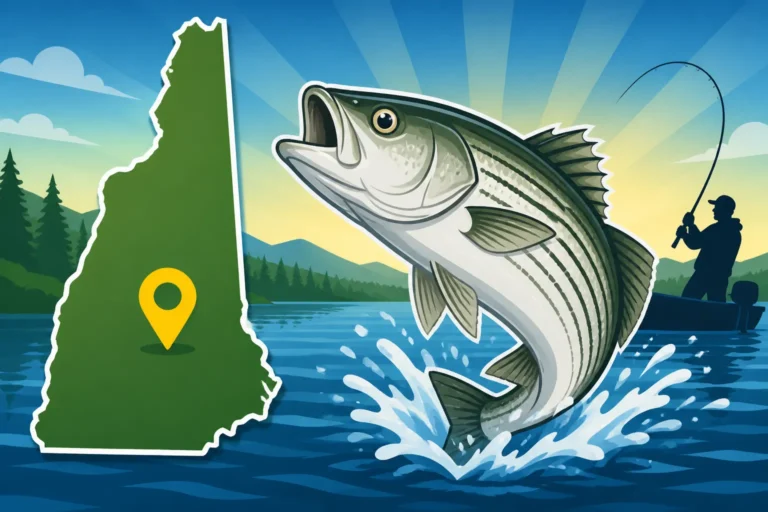
New Hampshire striped bass habitats and coastal tidal estuaries explain where anglers catch the state record trophy fish.
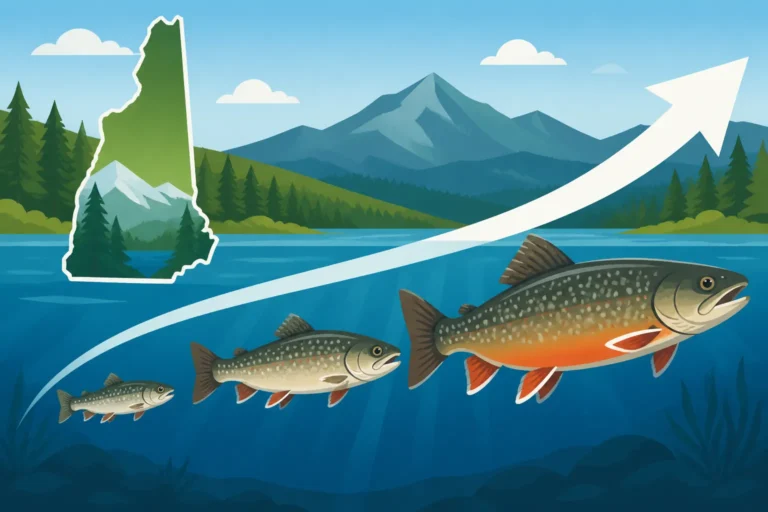
Growth rate of stocked splake in New Hampshire waters depends on genetics, food availability, and environmental conditions.
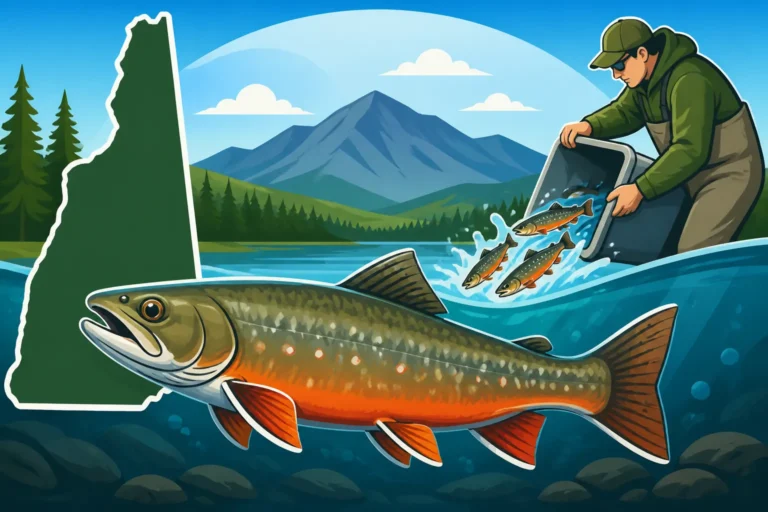
New Hampshire Fish and Game stocks splake in select lakes to enhance fishing opportunities and create hybrid sport fisheries.
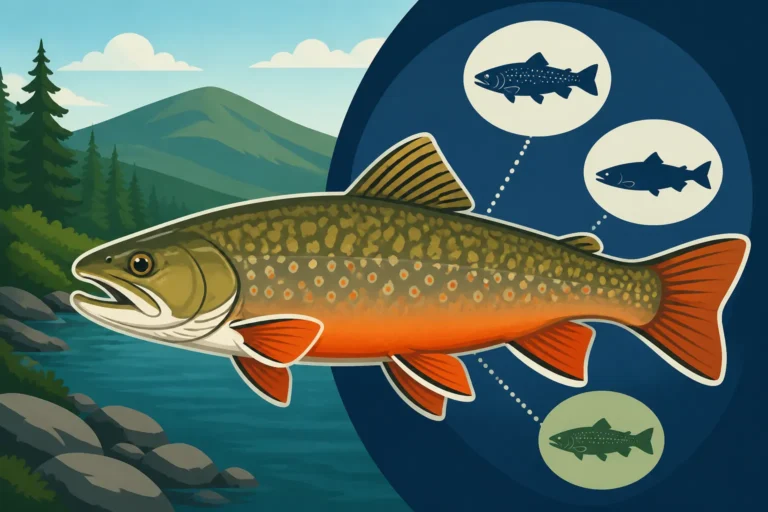
A hatchery cross of a male brook trout and a female lake trout, named from speckled and lake, mixing brook trout growth and color with lake trout size.
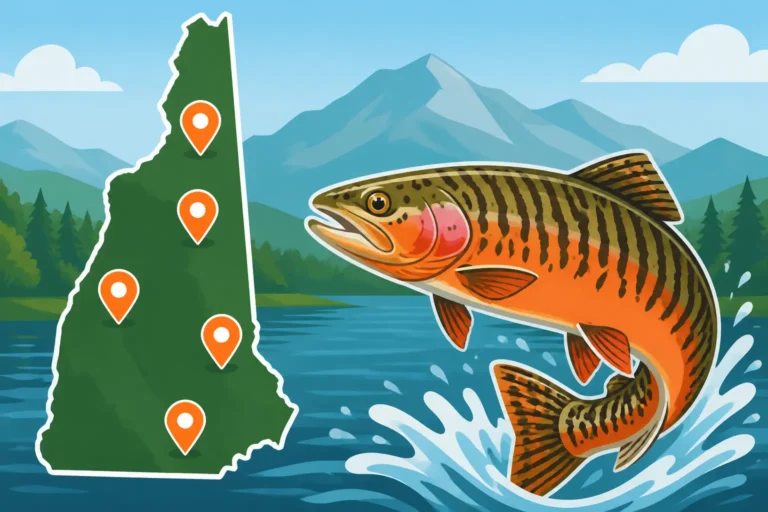
New Hampshire tiger trout locations and stocking details help anglers find specific waters managed by state fish and game officials.
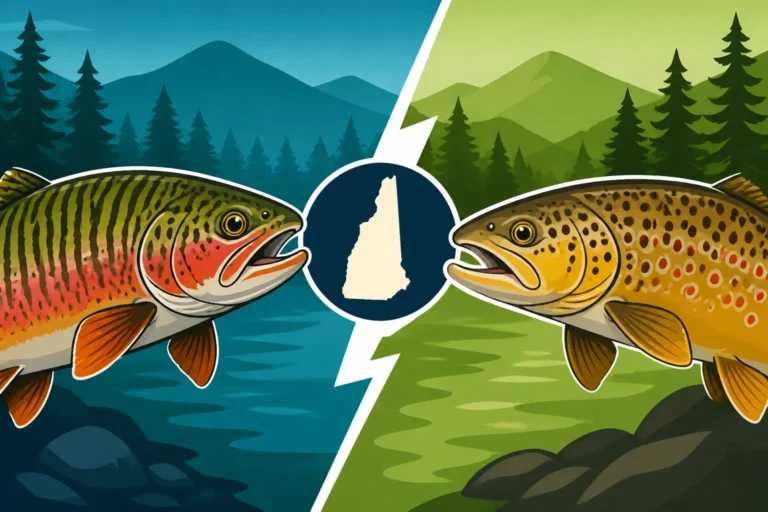
Tiger trout and brown trout identification in New Hampshire waters helps anglers distinguish origins, biology, and appearance.
Tiger trout are sterile hybrids of male brook trout and female brown trout raised in hatcheries for specific stocking programs.
New Hampshire fish consumption advisories explain safe eating limits for fish from state waters based on contaminant levels.