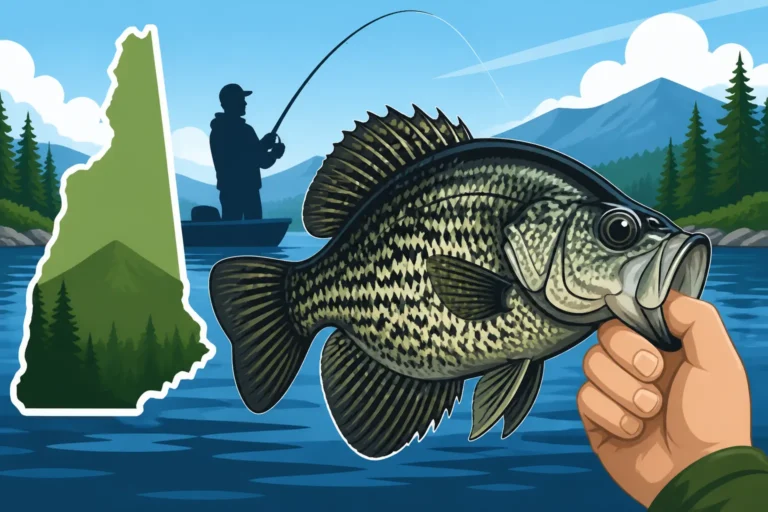
What a tiger trout is and whether they are in New Hampshire
There's a lot of confusion buzzing around about certain fish species, especially when it comes to those elusive, uniquely patterned trout. Many anglers, myself included, have wondered about the "tiger trout"—what exactly is it, and is it a fish you might actually encounter while casting a line in New Hampshire's beautiful waters? This guide will dive deep into the mystery of the tiger trout, its unique characteristics, and whether it calls the Granite State home, helping you understand this fascinating fish.
Understanding the Elusive Tiger Trout
Let's clear up some of the mystique surrounding the tiger trout right from the start. This isn't just a creatively named fish; it's a genuine biological marvel that often sparks curiosity and excitement among those who are lucky enough to encounter one. Its distinctive markings are truly something to behold, resembling the stripes of its namesake predator.
What Exactly Is a Tiger Trout?
At its heart, a tiger trout is a hybrid—a cross between two distinct species: a male brook trout ( Salvelinus fontinalis) and a female brown trout (Salmo trutta). It’s not a separate species in itself, but rather a unique offspring that inherits traits from both parents. What makes them so captivating is their striking appearance. They typically feature a worm-like, maze-like, or reticulated pattern across their flanks, ranging in color from dark brown or black to lighter gold or tan. This patterning often extends over their fins as well, making them easily distinguishable from their parent species once you know what to look for.
Imagine holding a fish that looks like a living topographical map, with swirling, intricate patterns that seem to shift in the light. That's a tiger trout. They also tend to have a more streamlined, torpedo-like body shape, reflecting the strong swimming capabilities of both brook and brown trout. Their tails are usually square or slightly forked, and while they don't grow to the massive sizes of some lake trout, they can certainly reach impressive lengths, especially in waters where they have abundant food sources.
How Do Tiger Trout Come About?
The creation of a tiger trout is quite specific. It occurs when milt (sperm) from a male brook trout fertilizes eggs from a female brown trout. The reverse cross (male brown trout and female brook trout) is far less common and rarely viable. What’s truly interesting, and a key factor in their management by fisheries departments, is that tiger trout are almost always sterile. This means they cannot reproduce on their own, making them a "dead-end" hybrid in terms of perpetuating their lineage.
While natural hybridization between brook and brown trout can occur in the wild where their spawning grounds overlap, it’s exceedingly rare. The conditions have to be just right, and the success rate is incredibly low. Most of the tiger trout encountered by anglers are the result of deliberate efforts by fish hatcheries. Fisheries managers in various states and countries specifically breed them for stocking programs, taking advantage of their sterility, aggressive feeding habits, and striking appearance. These hatchery-bred fish are then released into certain waters to provide unique angling opportunities or to address specific management goals, which we'll delve into a bit later.
The Allure of the Tiger Trout
So, why are anglers so fascinated by these hybridized beauties? Well, it's a combination of factors. First and foremost, their aesthetics are undeniable. That unique, maze-like pattern makes every tiger trout a trophy in its own right, even if it's not a record-breaker in size. Catching one feels like winning the lottery because they're simply not as common as other trout species. This rarity adds a certain mystique and desirability.
Beyond their looks, tiger trout are also known for being incredibly aggressive fighters. They inherit the powerful spirit of both the brook trout and the hard-hitting nature of the brown trout, often putting up a spirited battle when hooked. For fly anglers, spin fishermen, or bait users, landing a tiger trout is an experience that often ranks high on the list of memorable catches. Their aggressive nature also makes them excellent foragers, meaning they can grow quite quickly in a healthy environment. This combination of stunning beauty, fierce fighting ability, and relative scarcity makes the tiger trout a truly sought-after prize for any angler.
Are Tiger Trout Found in New Hampshire? The Granite State's Approach
Now for the big question: can you actually go out and target a tiger trout in New Hampshire? The answer isn't as straightforward as a simple "yes" or "no," but it leans heavily towards "unlikely" for most anglers seeking them specifically. New Hampshire's Fish and Game Department has a particular philosophy when it comes to stocking and managing its fisheries, which often guides decisions about which species are introduced.
New Hampshire's Stocking Philosophy
New Hampshire Fish and Game (NHF&G) has a robust stocking program, but it primarily focuses on species that are either native to the state, like the Brook Trout: New Hampshire's Native Trout, or those that are well-established and thrive in specific environments, such as brown trout and Rainbow Trout Stocking in New Hampshire. The goal is often to enhance fishing opportunities, support ecological balance, and sometimes to restore native populations. When it comes to stocking, NHF&G prioritizes healthy, sustainable fisheries. They frequently stock waters with brook, brown, and rainbow trout, ensuring plenty of angling opportunities across the state. You can often find details about these efforts in the New Hampshire Trout Stocking Report and Map.
Hybrid species like the tiger trout are generally not part of their regular stocking agenda. Their focus tends to be on pure strains or specific non-native species that have proven beneficial without adverse ecological impacts. This is a common strategy among many state agencies who prefer to manage known quantities and avoid potential, even if minimal, risks associated with novel introductions. For example, another hybrid, the splake (a cross between a brook trout and a lake trout), is stocked in New Hampshire, but it's for very specific management reasons in certain lakes, often to fill a niche or control another population. What a splake is covers this in more detail.
Rare Sightings and Accidental Catches
While NHF&G doesn't actively stock tiger trout, that doesn't completely rule out their presence. It's theoretically possible, though highly improbable, for natural hybridization to occur in some of the smaller, colder streams where both brook trout and brown trout coexist and spawn. However, as mentioned, this is an incredibly rare event, and the survival rate of such natural hybrids to adulthood is minimal. You'd be more likely to spot a moose in your backyard than catch a naturally occurring tiger trout!
There's also the remote possibility of "unofficial" introductions. Sometimes, well-meaning but misinformed individuals might transport fish from one water body to another, or even bring in fish from other states where tiger trout are stocked. This practice is illegal and strongly discouraged by NHF&G due to the risks of introducing diseases or invasive species. However, it's a reality in some areas. If a tiger trout were caught in New Hampshire, it would most likely be an accidental catch from such an extremely rare natural cross or an undocumented release, rather than a fish from a state-sanctioned stocking program.
Official Statements and Stocking Programs
New Hampshire Fish and Game maintains detailed records of their stocking activities, which are publicly available. A thorough review of their stocking plans and annual reports consistently shows no mention of tiger trout. Their emphasis remains on the species that form the backbone of New Hampshire's vibrant trout fisheries: brook, brown, and rainbow trout. Many anglers consult these reports to plan their Trout Fishing in New Hampshire trips, looking for freshly stocked waters.
For instance, states like Utah, Pennsylvania, and Wisconsin have had active tiger trout stocking programs for years, often utilizing them for unique trophy fisheries or as a tool for managing populations of less desirable fish like suckers. These states find value in their aggressive feeding habits and sterility. New Hampshire, however, chooses a different path, focusing its resources on the ecological and angling benefits of its established trout species. This doesn't mean the species isn't appreciated; it simply reflects a different set of management priorities for the Granite State's waterways. So, while you might find a variety of excellent fishing gear for different trout species on Amazon, you probably won't find a dedicated section for "New Hampshire Tiger Trout Lures" because the fish just aren't a common target here.
Distinguishing a Tiger Trout from Other New Hampshire Salmonids
Even though tiger trout are not routinely stocked in New Hampshire, it's always good to know what you're looking for. Misidentification is pretty common when you're dealing with trout, especially as colors can vary depending on habitat, diet, and even spawning phase. Knowing the key differences can help you properly identify your catch, should you ever encounter something truly unusual.
Tiger Trout vs. Brown Trout
The most common misidentification, understandably, is confusing a tiger trout with a brown trout. This makes sense, given that the brown trout is one of the tiger trout's parents. Brown trout (Salmo trutta) are known for their striking spots—dark spots, often with pale halos, and sometimes red or orange spots, particularly on their flanks. Their coloration can range from golden brown to olive green, with a lighter belly. These spots are usually distinct and round or oval.
A tiger trout, however, exhibits a truly unique vermiculated or maze-like pattern, almost like a fingerprint, rather than distinct spots. This pattern is formed by interconnected wavy lines or blotches that create a marbled effect, typically on a lighter background. While a brown trout's spots are separate and distinct, the tiger trout's markings flow into each other. If you caught a fish and were unsure, checking a good field guide, perhaps one you purchased from Amazon, would be a great way to compare patterns side-by-side.
Tiger Trout vs. Brook Trout and Other Hybrids
Comparing a tiger trout to its other parent, the brook trout (Salvelinus fontinalis), reveals another set of distinctions. Brook trout, New Hampshire's native char, are renowned for their striking beauty, featuring light spots (often yellow or reddish) on a dark, olive-green to black background, with distinctive worm-like markings (vermiculations) on their backs, often extending onto their dorsal fin. They also have bright white leading edges on their lower fins, often with a black stripe, which is a key identifier.
While both brook trout and tiger trout have vermiculations, on the brook trout, these are primarily on the back and upper flanks. On the tiger trout, the "tiger stripes" cover most of the body, creating a much more intricate and widespread pattern.
Then there's the splake, another brook trout hybrid (Splake Stocking in New Hampshire Lakes). Splake are a cross between a male lake trout and a female brook trout. They tend to have a more forked tail than either brook or brown trout, and their spots are usually lighter, often more diffuse, and not nearly as intricate or maze-like as a tiger trout's. They typically lack the vibrant colors of a brook trout and the distinct haloed spots of a brown trout. Recognizing the differences requires a keen eye and familiarity with the specific characteristics of each species. For a quick reference, here's a table summarizing key differences:
| Feature | Brook Trout | Brown Trout | Tiger Trout | Splake |
|---|---|---|---|---|
| Parent Species | N/A (Pure species) | N/A (Pure species) | Male Brook x Female Brown | Male Lake x Female Brook |
| Body Markings | Light spots (yellow/red) on dark background; vermiculations on back; white fin edges | Dark spots (red/black) with halos on lighter background | Distinctive maze-like, vermiculated pattern all over flanks | Light, irregular spots; no halos; somewhat worm-like on back |
| Tail Shape | Square or slightly notched | Square or slightly notched | Square or slightly notched | Moderately forked |
| Coloration | Olive-green to dark; red/orange belly in spawning | Golden-brown to olive; lighter belly | Dark brown/black swirls on lighter gold/tan | Grey-brown; sometimes faint colors |
| Sterility | Fertile | Fertile | Generally sterile | Generally sterile |
| Native to NH | Yes | No (Introduced) | No (Hybrid) | No (Hybrid, specifically stocked) |
Documenting a Potential Tiger Trout
If you happen to catch a fish in New Hampshire that strongly resembles a tiger trout, congratulations—you've caught something truly special and incredibly rare! The first thing to do, if you plan to release it, is to handle it with extreme care. Minimize its time out of the water, use wet hands, and support its body fully. A good quality landing net, like those widely available on Amazon, can make this process much smoother and safer for the fish.
Before release, try to get a clear photograph of its patterns and overall shape. Having multiple angles is helpful. If you’re truly curious and it's within legal limits to keep it based on New Hampshire daily trout limit and New Hampshire Fishing Regulations Explained, consider documenting its length and weight. Then, reach out to the New Hampshire Fish and Game Department. They would be very interested in any credible reports of such a rare catch, as it provides valuable, albeit infrequent, data points about the state's fishery ecosystems. They can help confirm the identification and might even want more details about the location and conditions of the catch.
Why New Hampshire Might (or Might Not) Stock Tiger Trout
The decision to stock a particular fish species isn't made lightly by fisheries departments. There are numerous factors at play, from ecological impacts to angling demand and the sheer cost of raising fish. For a hybrid like the tiger trout, these considerations are even more pronounced.
Benefits of Stocking Hybrids
Other states that stock tiger trout often do so for several compelling reasons. One significant benefit is their aggressive growth rate. Because they're a hybrid, tiger trout often exhibit "hybrid vigor," meaning they grow faster and larger than either of their parent species under ideal conditions. This can create exciting trophy fisheries in a relatively short amount of time, giving anglers a chance at a bigger, harder-fighting fish.
Another major advantage is their sterility. Since they can't reproduce, they don't impact the genetic integrity of native populations. They can be stocked into specific waters without the risk of overpopulation or competing directly with wild-spawning fish for future generations. This sterility also makes them a useful tool for managing "trash fish" populations, like suckers or other undesirable species. Tiger trout are voracious predators, and a sterile population can be introduced to help control these populations without adding another reproducing species to the ecosystem. Their unique appearance also adds a "wow" factor, attracting anglers who are looking for something different, boosting local tourism and recreational fishing interest.
Drawbacks and Considerations
Despite these benefits, there are valid reasons why New Hampshire, and many other states, choose not to stock tiger trout. One primary concern is the cost and effort involved in their production. Breeding hybrids, especially on a large scale, can be more complex and resource-intensive than breeding pure strains of trout. Hatcheries need specific protocols to ensure successful fertilization and rearing.
From an ecological standpoint, even though they are sterile, introducing any non-native fish, even a hybrid, carries potential risks. While tiger trout can't reproduce, they still compete for food and habitat with native species. There's also the philosophical debate about focusing resources on native species (Native trout species found in New Hampshire) versus introducing non-native or hybrid fish. Many state agencies prioritize maintaining the health and genetic purity of their wild, native fish populations. They often view Non-native trout species stocked in New Hampshire as a means to enhance fishing without disrupting the natural order too much.
Furthermore, there's always the consideration of angler preference. While some anglers love the idea of unique hybrids, others prefer to fish for traditional trout species. NHF&G likely assesses the overall demand and impact before making decisions on widespread stocking of new or hybrid species.
The Future of Hybrid Stocking in New Hampshire
Given New Hampshire's current focus on its established trout fisheries, it's unlikely we'll see a widespread stocking program for tiger trout in the immediate future. The state has a robust system for stocking brook, brown, and rainbow trout, which provides excellent fishing opportunities year-round. They also manage other unique fisheries, such as those for Landlocked Salmon Fishing in New Hampshire and Lake Trout Fishing in New Hampshire, which are significant draws for anglers.
However, fisheries management is an evolving science, and priorities can shift. As new research emerges on the ecological impacts and benefits of various species, or as angler preferences change, NHF&G might revisit the idea of introducing other hybrid species for very specific, controlled purposes. For now, if you're looking to catch a tiger trout, your best bet is to travel to a state where they are actively stocked. But never say never in the world of fisheries; the Granite State continues to offer incredible and diverse fishing experiences for its wide array of well-managed waters. In the meantime, you can easily find plenty of gear for catching other types of trout, like specific fly patterns or spinning lures, right on Amazon, making sure you're ready for whatever New Hampshire's waters have to offer.
Disclaimer
This article is for general informational purposes only and does not constitute professional advice. Laws, prices and regulations vary by location and change over time. Consult a qualified professional for guidance on your specific situation.