How to euro nymph a mountain freestone stream
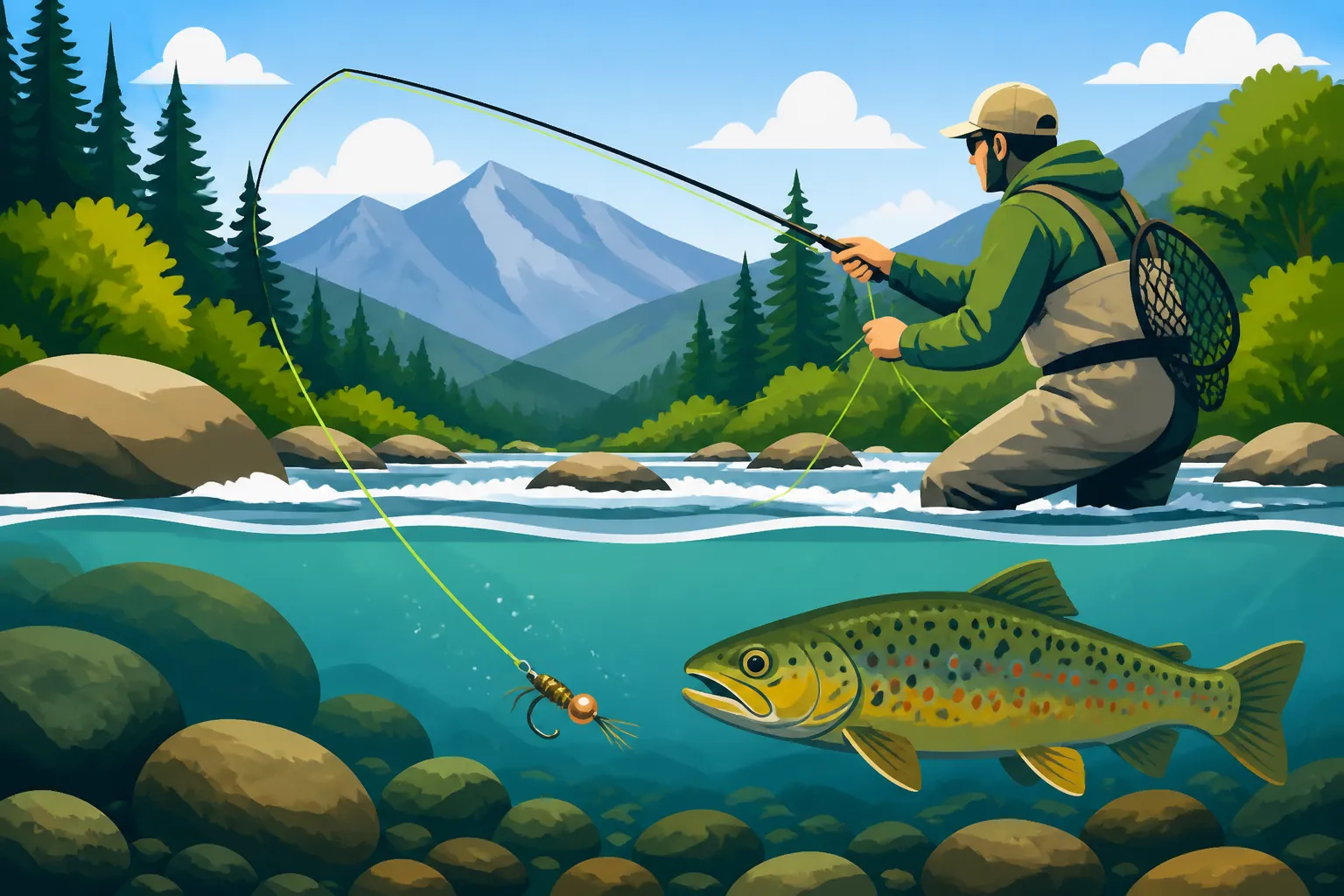
Trying to effectively nymph a fast-flowing mountain stream in New Hampshire with a traditional indicator setup can feel like wrestling an octopus – constant drag, missed strikes, and the frustration of never quite reaching those trout hiding in the turbulent pockets. This guide is here to untangle that mess, showing you precisely how to harness the power of Euro nymphing to conquer the Granite State's challenging freestone waters, putting more trout in your net.
Understanding Euro Nymphing Fundamentals for Freestone Streams
Euro nymphing, often called "contact nymphing," is less about casting long lines and more about precise presentations, direct contact, and hyper-sensitive strike detection. It's a method born from competitive angling, specifically designed to deal with the exact conditions you find in New Hampshire's smaller, swift mountain streams.
Why Euro Nymphing Excels in New Hampshire's Mountain Waters
New Hampshire is blessed with an abundance of beautiful freestone streams, particularly in regions like the White Mountains. Think of rivers such as the Swift River Trout Fishing or the Ellis River Trout Fishing—these are textbook freestone streams. They're characterized by rocky bottoms, rapid elevation changes, and a patchwork of riffles, runs, and deep pockets created by boulders and fallen timber. The water flows with an energy that makes traditional indicator nymphing incredibly difficult. An indicator will constantly drag, pulling your flies unnaturally through the currents, or get hung up on the bottom before your flies even reach the fish.
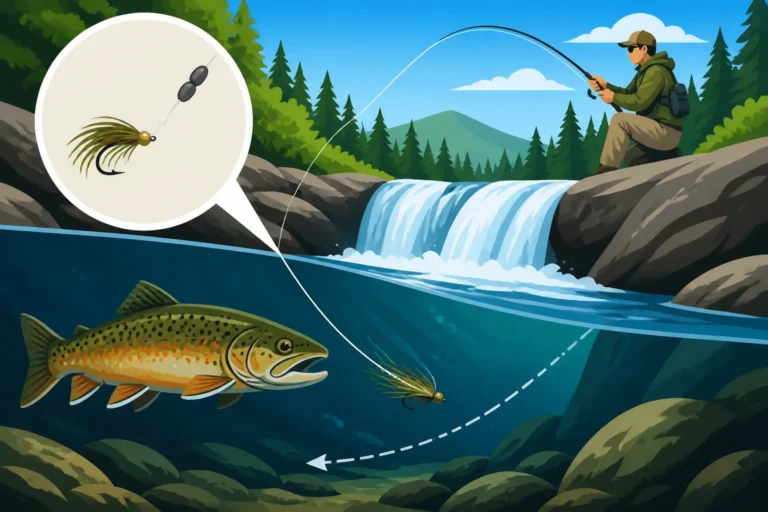
Euro nymphing sidesteps these issues entirely. By removing the indicator and using a specialized leader setup, you maintain a direct, uninterrupted connection to your flies. This allows you to feel even the most subtle takes, which are often just a slight hesitation or tick on your line, rather than a dramatic pull on a bobber. In these chaotic currents, trout have mere fractions of a second to decide if they want to eat your fly, and that direct contact is what lets you detect those fleeting opportunities. It's also remarkably efficient, allowing you to systematically dissect a stretch of river, probing every promising lie without constantly re-rigging due to drag or tangles. The ability to control your drift precisely in varying currents is a game-changer for these wild, often spooky trout.
Essential Gear for Euro Nymphing New Hampshire's Freestone Streams
Getting set up for Euro nymphing doesn't require a complete overhaul of your existing fly fishing arsenal, but some specialized gear makes a world of difference. Your rod, line, and leader system are the crucial components.
First, the rod: typically, Euro nymphing rods are longer and lighter than traditional trout rods, often ranging from 10 to 11 feet in length, and in weights from 2-weight to 4-weight. This extra length allows you to keep more line off the water, minimizing drag, and provides better reach for guiding your flies through complex current seams. A softer, more parabolic action in the tip is also beneficial, as it acts like a shock absorber for light tippets and provides incredible sensitivity for detecting strikes. Brands like Echo, Cortland, or Redington offer excellent Euro nymphing specific rods that are well-suited for the dynamic conditions of New Hampshire's freestone streams. You can find a great selection, often with customer reviews to guide your choice, on platforms like Amazon.
Next, your line and leader: a specialized Euro nymphing line is typically very thin and lightweight, designed not to be cast far, but to simply provide weight for the reel. It's the leader that does all the work. The Euro nymphing leader is a complex, multi-sectioned affair, starting with a thick butt section that tapers down to a thin, brightly colored "sighter" section. This sighter, often bi-colored (e.g., pink and chartreuse), is your primary strike indicator. Below the sighter, you'll find a tippet ring, which is a tiny metal ring that connects your sighter to your fishing tippet. The tippet itself can be as light as 5x or 6x, essential for a natural drift and fooling wary wild trout. For these technical setups, I highly recommend checking out specialized fly shops or the vast selection available on Amazon for specific Euro nymphing leaders, sighters, and tippet rings.
Finally, the flies: Euro nymphs are typically heavy, slim, and tied on jig hooks. Jig hooks allow the fly to ride hook-point-up, reducing snags on the bottom—a common occurrence when you're intentionally fishing near the streambed. Tungsten beads are preferred over brass for their extra weight, allowing the flies to sink quickly. Popular patterns for New Hampshire freestone trout include various Perdigon nymphs, squirmy wormies, caddis larva imitations, pheasant tails, and subtle hare's ears. The key is to have a range of weights and colors to match different depths and conditions. Having a variety of fly patterns for New Hampshire Trout Streams is crucial. You might also want to explore durable Best Waders for New Hampshire Trout Streams and sturdy Best Wading Boots for Rocky Streams to keep you comfortable and safe while navigating these demanding rivers.
Here's a quick comparison of Euro Nymphing vs. Traditional Indicator Nymphing:
| Feature | Euro Nymphing | Traditional Indicator Nymphing |
|---|---|---|
| Strike Detection | Visual observation of sighter, tactile feel | Visual observation of floating indicator |
| Drag Control | Excellent; rod keeps most line off water, direct contact | Challenging in complex currents, indicator causes drag |
| Weight System | Weight integrated into flies (tungsten beads) | Split shot or weighted flies |
| Leader Setup | Long, complex leader with sighter, tippet rings | Simpler leader with added indicator |
| Casting Style | Short, controlled lob casts, pendulum casts | Overhead casts for distance |
| Best For | Fast, technical water; pocket water; wary fish | Slower, more uniform currents; longer drifts |
Mastering the Euro Nymphing Techniques on New Hampshire Rivers
Once you have your gear dialed in, it's time to hit the water and learn how to put these specialized tools to work. The true art of Euro nymphing lies in your ability to read the water, approach stealthily, and maintain a flawless, drag-free drift.
Reading the Water and Approach for Mountain Trout
Understanding where trout hold in a freestone stream is paramount. In mountain rivers, trout often seek refuge and feeding lanes in areas that offer both cover from predators and a steady supply of food. Look for "pocket water"—the turbulent sections immediately downstream of large boulders, fallen logs, or rock ledges. These pockets create calm-water zones where trout can rest while waiting for nymphs to be washed into their strike zone by the main current. Current seams, where fast water meets slow water, are also prime locations, as they act like conveyor belts for aquatic insects. Riffles and the deeper sections of plunge pools also deserve your attention.
When approaching these spots, remember that mountain streams often have very clear water, making trout highly sensitive to disturbance. Stealth is your best friend. Move slowly and deliberately, keeping a low profile. Avoid heavy footsteps on the bank or wading through the primary holding water. Think of it like hunting: spot your target, plan your approach, and execute with minimal disruption. Often, the best strategy is to fish upstream, working your way slowly against the current. This keeps you behind the fish, as trout naturally face upstream, and allows your flies to drift towards them from a natural direction. For more general advice on navigating the regulations of New Hampshire's waterways, you might want to consult the New Hampshire Fishing Regulations Explained.
The Art of the Drift and Strike Detection
The core principle of Euro nymphing is achieving a truly "dead drift," where your flies move through the water at the exact same speed as the surrounding current, without any unnatural drag. To do this, you'll be using your long rod to keep almost all of your fly line off the water, with just your leader and flies in contact. Make short, controlled casts upstream and slightly across the current, positioning your rod tip high and following your flies downstream with the rod tip, creating an arc.
The brightly colored sighter section of your leader is your window into what's happening beneath the surface. As your flies tumble downstream, your sighter should move at a consistent, natural speed. Any hesitation, twitch, stop, or sudden acceleration of the sighter should be interpreted as a strike, and you should set the hook immediately with a subtle, upward flick of the wrist. This takes practice, as it's easy to mistake a subtle take for the flies merely bumping the bottom. However, in freestone streams, bumping the bottom is exactly where your flies should be! If you're not occasionally tickling the stream bed, your flies aren't deep enough. It's a fine line to walk, but with time, you'll develop a feel for the difference. Adjusting your weight (by changing flies or adding a small piece of lead-free putty) to match the current speed and depth is key to maximizing your time in the strike zone. You might encounter situations with high water spring conditions where the currents are extra challenging, or low clear water conditions where stealth and presentation become even more critical.
Advanced Tactics and Local Wisdom for New Hampshire Anglers
Once you've got the basics down, you can start refining your approach with more advanced tactics, tailoring your nymph selection and understanding local regulations to truly maximize your success.
Nymph Selection and Rigging for Varied Conditions
Matching the hatch might be a dry fly angler's mantra, but nymph selection in Euro nymphing is about matching the profile and weight to the water conditions and prevalent food sources. In New Hampshire's freestone streams, you'll find a variety of aquatic insects: stoneflies, caddis, and mayflies, as well as terrestrial insects that fall into the water. Having a diverse box of nymphs is crucial. For faster, deeper pockets, heavier tungsten-bead nymphs are essential to get down quickly. For shallower runs or when trout are less active, lighter nymphs or even unweighted patterns can be more effective.
The beauty of Euro nymphing is the ability to run multi-nymph rigs. A common setup involves a heavier "point fly" at the bottom to get the rig down, followed by one or two lighter "dropper flies" tied off the tippet above it. You can experiment with different combinations: perhaps a large, heavy stonefly imitation as your point fly, with a smaller, more realistic Perdigon or caddis larva as your dropper. The distance between your flies can also be adjusted; closer together for shallow, tight pockets, and further apart for deeper, more uniform runs. Don't be afraid to experiment! You can easily assemble a wide array of tying materials or pre-tied flies from Amazon to ensure you're always prepared. Understanding the life cycle of Landlocked Salmon in New Hampshire Lakes or the Lake Trout Spawning Season in New Hampshire might also give you insights into broader aquatic insect activity.
Navigating Access and Regulations in New Hampshire's Freestone Streams
New Hampshire offers fantastic public access to many of its freestone streams. Popular fishing areas like the Pemigewasset River Fishing Guide, parts of the Connecticut River, and many smaller brooks and streams within the White Mountain National Forest provide abundant opportunities. Always be mindful of private property boundaries and respect landowner rights. It's a good idea to research specific access points or consult local maps before heading out. The New Hampshire Fish and Game Department's website is an invaluable resource for this, often providing maps and detailed information on public easements and access points.
It's absolutely essential to stay informed about New Hampshire's specific fishing regulations. Many mountain streams, particularly those supporting wild trout populations, have special regulations. Some sections might be designated as New Hampshire Catch and Release Fly Fishing Only Waters, while others may have specific season dates, tackle restrictions, or daily limits. Always carry a copy of the current Reading the New Hampshire Freshwater Fishing Digest, either a physical copy or a digital version on your phone, and ensure you have a valid New Hampshire Fishing License Guide for 2026. These regulations are in place to protect our precious fish populations and ensure sustainable fishing for future generations. When you're fishing these pristine environments, always practice Leave No Trace principles: pack out everything you pack in, avoid disturbing stream banks, and handle fish with care for release.
Disclaimer
The information provided in this guide is for general informational purposes only and is not intended as legal advice regarding fishing regulations. Regulations can change frequently. Always consult the official New Hampshire Fish and Game Department website or the most current New Hampshire Freshwater Fishing Digest for the precise and up-to-date rules and regulations before you go fishing. Your safety and compliance with all applicable laws are your sole responsibility.