How to rig smelt for landlocked salmon trolling
Landlocked salmon are one of New Hampshire's most prized game fish, but coaxing these wary predators to bite, especially when trolling, can feel like a real challenge. Many anglers struggle to present their bait in a way that truly mimics natural forage, leading to frustration and empty nets. This comprehensive guide will walk you through the art and science of rigging smelt for landlocked salmon trolling, ensuring your presentation is irresistible and helps you land that trophy fish on New Hampshire's beautiful lakes.
Why Smelt are the Ultimate Bait for Landlocked Salmon
When you're targeting landlocked salmon, understanding their diet is half the battle. These magnificent fish are apex predators in their freshwater domains, and in New Hampshire's deep, cold lakes, one particular forage fish stands head and shoulders above the rest: the rainbow smelt. Using smelt as bait isn't just tradition; it's a direct appeal to the salmon's natural instincts and predatory drive.
The Natural Connection: Salmon's Primary Forage
Imagine living in a house where one type of food is always readily available, delicious, and perfectly sized. That's how landlocked salmon view smelt. In lakes like Winnipesaukee, Sunapee, or Newfound Lake, smelt populations are often abundant, forming the cornerstone of the salmon's diet. These slender, oily fish are packed with protein and fats, providing essential energy for salmon growth and survival. When you present a smelt, whether live or dead, you're offering them exactly what they're programmed to hunt and eat. It’s like ringing the dinner bell right in front of them.
This natural connection means that salmon are not only familiar with smelt but actively seek them out. They recognize the scent, the profile, and the swimming action of smelt more than any other baitfish. Anglers who consistently use smelt often report higher success rates because they’re tapping into this fundamental predator-prey relationship. It removes a layer of skepticism the salmon might have for artificial lures, especially in clear, heavily fished waters where they become extremely wary. For a deeper dive into their habits, check out our guide on Landlocked Salmon Life Cycle in New Hampshire Lakes.
Understanding Smelt Behavior and Presentation
Beyond just being a food source, the way smelt behave in the water is crucial to how we rig them. Smelt are relatively delicate, fast-moving baitfish that often school in open water, but also cruise shorelines and drop-offs. A successful smelt presentation for landlocked salmon trolling needs to mimic this natural movement, making your bait appear alive and vulnerable. A dead smelt that's just dragging lifelessly won't fool a seasoned salmon. Instead, it needs to spin, dart, or wobble in a way that suggests a disoriented or injured baitfish – an easy meal.
This is where the art of rigging comes in. The goal is to impart action to the smelt that's consistent with what a salmon expects. Whether it's a slow, tantalizing roll or a quick, erratic dart, the presentation must be convincing. Factors like trolling speed, leader length, and the specific rigging method all contribute to how your smelt moves through the water column. The more lifelike you can make it, the higher your chances of enticing a strike from a cautious landlocked salmon.
Essential Gear for Trolling Smelt for Salmon
Successful smelt trolling for landlocked salmon isn't just about the bait; it's about having the right tools for the job. From your rod and reel to the specialized rigging components, each piece of gear plays a critical role in presenting your smelt effectively and ensuring you can land that powerful fish. Skimping on tackle here can lead to lost fish and endless frustration, which nobody wants after spending hours on the water.
Rods, Reels, and Line Choices
When you're trolling for landlocked salmon, you'll want a rod that can handle the specific demands of the technique. A medium-light to medium power rod, typically between 7 to 9 feet in length, with a moderate action is ideal. This combination allows for good shock absorption when a salmon strikes, preventing hooks from tearing out, while still having enough backbone to control a hard-fighting fish. The longer length helps spread out your lines if you're running multiple rods and provides better leverage when fighting fish.
For reels, a high-quality spinning reel in the 2500-4000 series or a small baitcasting reel with a smooth drag system is perfect. Capacity is important, as salmon can make blistering runs, especially after initial hook-set. Spool your reel with 6-10 pound test monofilament or fluorocarbon line. Monofilament offers a bit of stretch, which can be forgiving, while fluorocarbon is nearly invisible in the water and has excellent abrasion resistance. Some anglers opt for braided line as a main line for its sensitivity and zero stretch, but typically pair it with a long fluorocarbon leader to maintain stealth. Many specialized trolling rods and reels can be found on Amazon, offering a wide range of options to suit different preferences and budgets.
Specialized Trolling Hardware: Leaders, Swivels, and Hooks
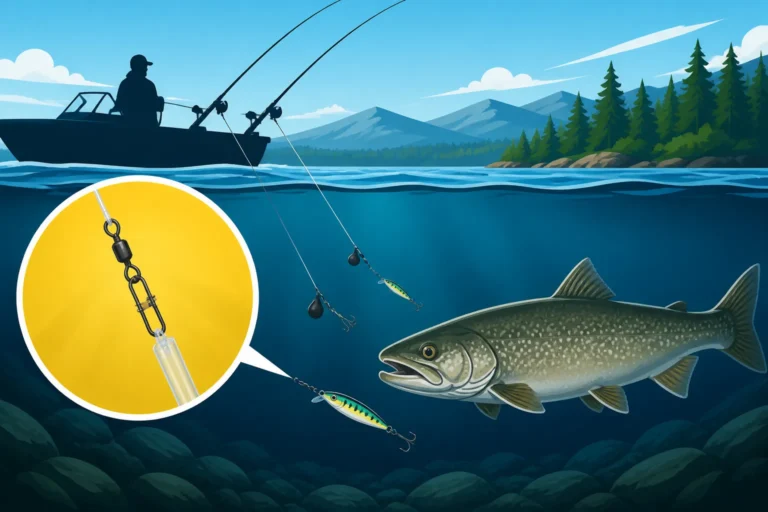
The terminal tackle is where attention to detail really pays off. For your leader, 4-8 pound test fluorocarbon is generally preferred. Its invisibility underwater is a huge advantage when targeting wary salmon in clear New Hampshire lakes. The length of your leader can vary, but typically runs from 6 to 15 feet. Experimentation is key here, as salmon can be finicky about leader length on any given day. A good quality barrel swivel or ball bearing swivel is essential between your main line and leader to prevent line twist, especially when your smelt is spinning.
For hooks, a single, sharp treble hook (size 10 or 12) is often used for dead smelt rigs, carefully placed to impart the desired spin. Alternatively, many anglers prefer a combination of a small single hook (like a size 8 or 10 octopus hook) for the nose or jaw, followed by a small treble hook trailing near the tail. The key is to use hooks that are small enough not to impede the natural action of the smelt, but strong enough to hold a thrashing salmon. Look for chemically sharpened hooks for better penetration. Always have a variety of these components in your tackle box; you can usually find diverse hook and swivel sets on Amazon to keep you prepared.
Downriggers, Planer Boards, and Sinking Lines
To get your smelt down to the depths where landlocked salmon often hold, you'll need some depth control mechanisms. Downriggers are the most precise tool, allowing you to present your bait at an exact depth and release the line upon a strike. This ensures your smelt is consistently in the strike zone. If you don't have downriggers, diving planes or lead core line can also be effective for reaching specific depths. Lead core line, in particular, changes depth based on the amount deployed and your trolling speed.
Planer boards are fantastic for spreading your lines out from the boat, covering a wider swath of water and preventing tangles, especially when you're running multiple rods. This can be particularly useful when fishing broad, open areas of lakes like Winnipesaukee. While not always necessary, these tools significantly enhance your ability to present smelt effectively across different depths and spreads, increasing your chances of finding fish. For more on advanced trolling setups, consider reviewing our guide on Best Trolling Gear for New Hampshire Lake Trout, as many techniques overlap.
Step-by-Step Guide to Rigging Live and Dead Smelt
Rigging smelt might seem daunting at first, but with a little practice, it becomes second nature. The goal is always to make the smelt look as natural and appealing as possible to a hungry landlocked salmon. Whether you’re using fresh dead smelt or lively ones, the specific rigging technique will dictate their action in the water, which is paramount for enticing a strike.
Rigging Dead Smelt for a Natural Spin
Dead smelt are often preferred by experienced trollers because they offer consistent action and can be easier to manage than live bait. The key to rigging a dead smelt is to make it spin or roll slowly through the water, mimicking a wounded or disoriented baitfish. Here's a common method:
- Select Your Smelt: Choose a fresh, firm smelt, ideally 3-5 inches long. The fresher, the better for scent and durability.
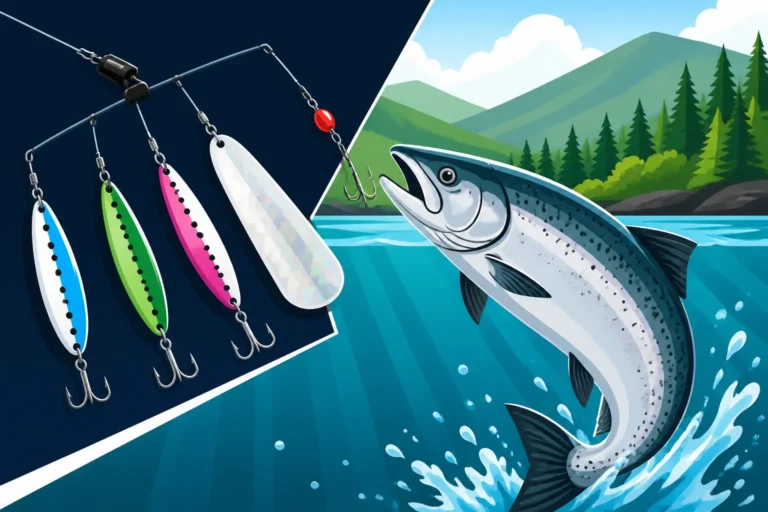
- Prepare Your Rig: You'll typically use a single treble hook on a fluorocarbon leader, often with a small lead weight or an inline spinner rig (like a Wedding Ring or similar action-imparting device) positioned a few feet in front of the smelt.
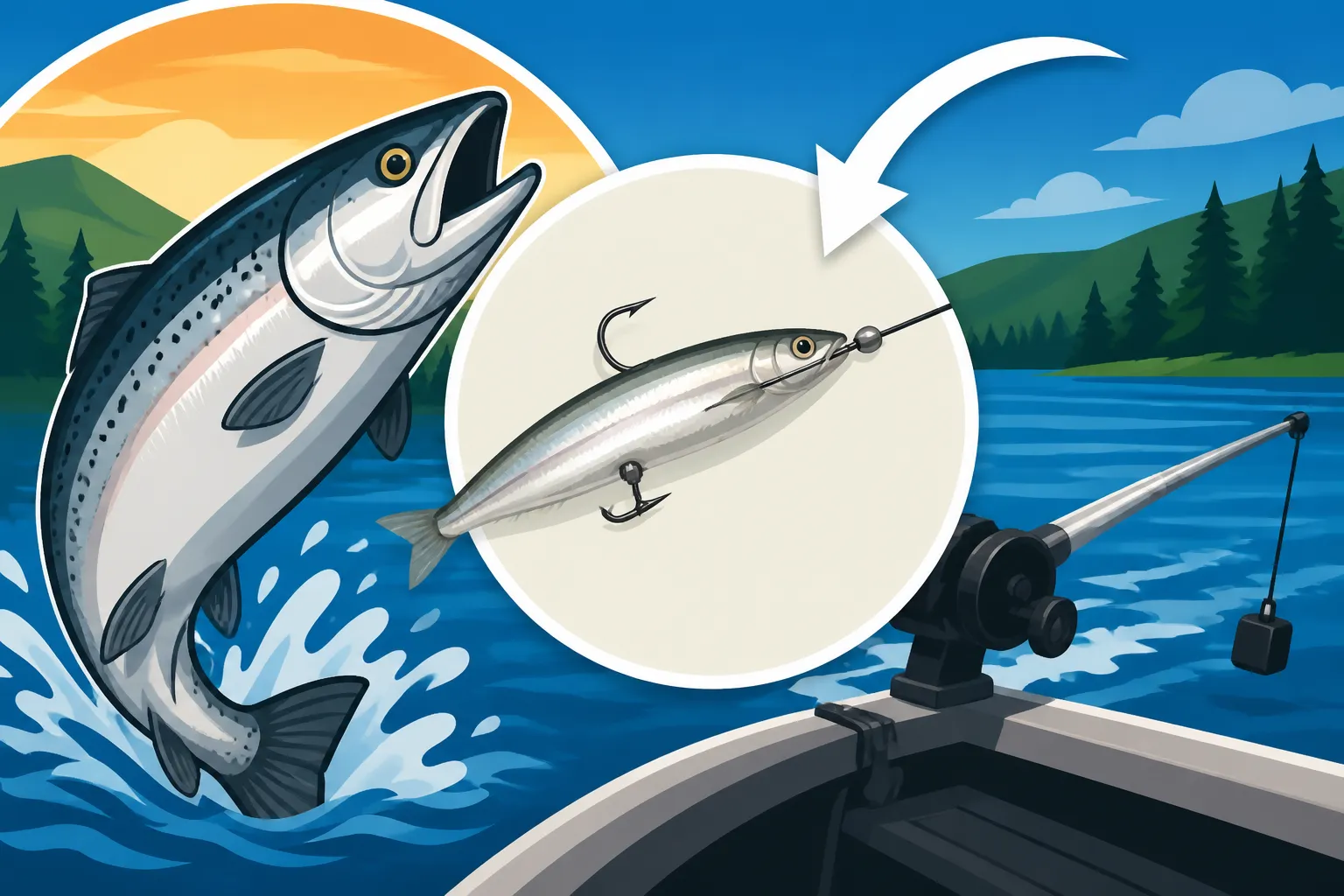
- Thread the Hook: Gently insert one point of the treble hook into the smelt's mouth and out through one of its gill plates. Then, rotate the hook and embed another point into the smelt's belly or side, ensuring the smelt has a slight curve. This curve is crucial for creating the spinning action. Some anglers use a dedicated smelt rig like a Quickfish or a similar bait holder, which has a wire that you thread through the smelt to secure it and impart a spin. These are often available on Amazon.
- Test the Spin: Before deploying, drop the rigged smelt next to the boat and slowly pull it through the water. It should exhibit a gentle, enticing spin. If it tumbles or spins too rapidly, adjust the hook placement until you achieve that perfect, natural roll. This step is often overlooked but is vital for success. A good spin mimics a dying baitfish, which salmon find irresistible.
Many anglers find this method highly effective for covering vast expanses of water and presenting a bait that consistently calls to predatory salmon.
Rigging Live Smelt for Maximum Appeal
While dead smelt are effective, there's nothing quite like the allure of a live baitfish for drawing strikes. Live smelt offer natural scent, vibrant movement, and a "fleeing" action that can trigger aggressive reactions from salmon. However, rigging live smelt requires care to keep them active and healthy.
- Hook Placement: The most common method is to nose-hook the smelt. Gently insert a single, small hook (size 8 or 10 octopus hook works well) through both lips, taking care not to pierce the brain or damage vital organs. This allows the smelt to swim freely and naturally.
- Dorsal Fin Hooking: Another option is to hook the smelt lightly just behind the dorsal fin, taking care to avoid the spine. This can give it a more frantic, injured swimming action. This method is generally used when you want the bait to swim erratically, often closer to the surface or around structure.
- Use a Treble for the Tail: Some anglers add a small trailing treble hook, lightly embedded near the tail, especially for larger smelt or when targeting aggressive biters. This increases the hook-up ratio if salmon are short-striking the bait.
- Maintain Water Quality: Keep your live smelt in a well-aerated bait bucket with fresh, cool water. Stress and warm water will quickly kill your bait, rendering it useless. Regularly change the water, or use a portable aerator to ensure a constant oxygen supply.
Live smelt are excellent when you are fishing a known salmon holding area, or when fishing suspended fish, allowing the natural movements of the bait to draw attention. Remember that regulations for live bait use vary, so always consult the New Hampshire Fishing Regulations Explained before you head out.
Tips for Maintaining Bait Integrity
Regardless of whether you're using live or dead smelt, maintaining their integrity is crucial for sustained success.
- Freshness is Key: For dead smelt, always use the freshest bait possible. If you catch your own smelt, immediately put them on ice or freeze them individually in water to preserve their texture and scent. Thaw them slowly when you're ready to fish.
- Handle with Care: Both live and dead smelt are delicate. Avoid squeezing them tightly or leaving them in direct sunlight. Use a soft net for live bait to minimize scales loss and injury.
- Check Your Bait Often: When trolling, especially with dead bait, debris can get snagged, or the smelt can lose its desired spin. Periodically reel in your line and inspect your bait. Make sure it's clean, hasn't been mangled by previous strikes, and is still spinning correctly. A fouled bait is a wasted troll.
- Scent Enhancements: For dead smelt, some anglers add commercially available scent attractants to give an extra boost to the bait's natural oils. While not always necessary, a little extra appeal can sometimes make the difference on tough days.
Trolling Techniques and Considerations for New Hampshire Waters
Rigging your smelt perfectly is only half the equation; you also need to know how to present it effectively in the vast and varied waters of New Hampshire. Trolling for landlocked salmon is a dynamic process that requires constant attention to speed, depth, location, and reading the subtle cues of the water.
Speed, Depth, and Location: The Trolling Triangle
These three factors are intrinsically linked when trolling for landlocked salmon.
- Speed: Landlocked salmon often prefer a trolling speed that gives your smelt a natural, enticing action, typically ranging from 1.5 to 2.5 miles per hour. Too slow, and the smelt might not spin correctly; too fast, and it might look unnatural or cause the bait to wash out. Watch your rod tip and adjust your speed until your smelt is performing its best. On days when salmon are lethargic, a slower presentation might be key. If they're aggressive, bumping up the speed can sometimes trigger a chase.
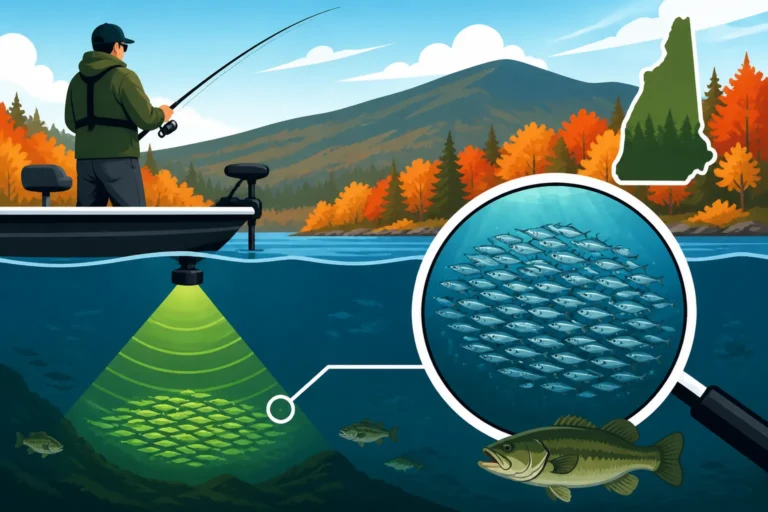
- Depth: Salmon are cold-water fish, and they will follow temperature breaks and baitfish schools. In New Hampshire lakes, they often suspend in the water column, especially during warmer months. Understanding the thermocline (the layer of abrupt temperature change) is crucial. Use your fish finder to locate bait schools and identify the depth at which salmon are holding. This depth can vary significantly by season and even by the time of day. For specifics on depths in Lake Winnipesaukee, check out How deep to troll for salmon at Winnipesaukee.
- Location: Salmon will generally be found where their food is. Look for concentrations of smelt using your sonar. These could be over deep points, along old river channels, near sudden depth changes (drop-offs), or sometimes just cruising in open water basins. Pay attention to structure on your maps and sonar, even if it's deep below the surface. Submerged islands, humps, and ledges can hold bait, and thus, salmon.
Mastering this "trolling triangle" involves constant adjustment and observation. Don't be afraid to change one element at a time until you find what the salmon are responding to on a given day. For a general overview of seasonal fish behavior, consider our article on Best Time of Year to Fish in New Hampshire.
Reading the Water: Structure and Temperature
New Hampshire's lakes are diverse, from the expansive depths of Lake Winnipesaukee to the clearer, colder waters of Sunapee and Newfound. Reading the water means more than just looking at the surface; it means understanding the underwater topography and conditions.
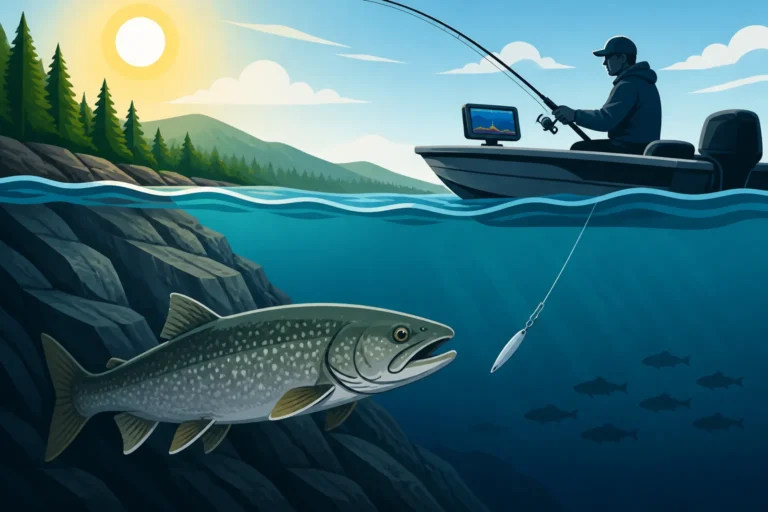
- Structure: Salmon will use underwater structure as ambush points or holding areas. Steep drop-offs, submerged humps, rocky ledges, and even deep channels are all prime locations. Use your electronic charts and sonar to identify these features and focus your trolling passes over and around them. If you see baitfish stacking up on structure, salmon are likely nearby.
- Water Temperature: As mentioned, salmon are sensitive to temperature. During the summer, they'll retreat to the cooler, oxygen-rich waters below the thermocline. In spring and fall, they might be found shallower as the entire water column cools. A good temperature gauge on your downrigger or boat is invaluable for finding that ideal temperature zone, often in the 48-58 degree Fahrenheit range for landlocked salmon.
- Current and Wind: While lakes don't have strong river currents, wind can create surface currents that affect your trolling spread and bait action. Pay attention to how your boat is drifting or how your lines are setting. Wind-blown points can sometimes concentrate baitfish and, consequently, salmon.
Understanding these elements and how they interact can significantly increase your success rate. Many anglers find that tracking these variables in a logbook helps them discern patterns over time.
Seasonal Adjustments for Smelt Trolling
The approach to rigging and trolling smelt for landlocked salmon changes dramatically with the seasons in New Hampshire. Salmon are opportunistic predators, but their location and activity levels are heavily influenced by water temperature and the availability of their primary food source.
- Spring (Ice-Out to Early June): After the ice leaves the lakes, salmon are often found closer to the surface, feeding aggressively on smelt that are also moving into shallower areas. This is a prime time for flat-lining smelt (trolling without downriggers or heavy weights) or using shallow diving planes. The fish are often hungry and less wary. Focus on inlets, shallow bays, and near shorelines where smelt might be congregating. This period is often described in detail in our guide to How to fish for salmon right after ice-out.
- Summer (Late June to August): As the water warms, salmon retreat to the cooler, deeper parts of the lake. This is when downriggers become indispensable for precisely presenting smelt at depths of 40-100 feet or more, usually just above or within the thermocline. Pay close attention to your fish finder to locate schools of smelt and target your presentation there. Trolling speed might need to be slightly slower as salmon can be a bit more lethargic in the heat. Early mornings and late evenings can still offer shallower opportunities as salmon might venture up to feed.
- Fall (September to November): As the lake temperatures cool, salmon become active again and begin to move shallower, mirroring their spring behavior. This is a fantastic time for aggressive feeding as they prepare for winter. You'll find them at mid-depths, often targeting smelt that are schooling up before their own spawning runs. Trolling speeds can be varied, and sometimes a faster presentation can trigger a chase from an eager fish. This period can offer some of the best fishing of the year for trophy-sized fish. For insights into landing larger fish, see Landlocked Salmon Growth Rate to Trophy Size.
| Rigging Method | Pros | Cons | Best Used When… |
|---|---|---|---|
| Dead Smelt (Spinning) | Consistent, predictable action; less maintenance; can be scented | Requires practice for proper spin; less natural movement | Covering large areas; salmon are actively feeding |
| Live Smelt | Maximum natural appeal; enticing movement; strong scent | Delicate to handle; requires bait tank; can die easily | Targeting specific spots; salmon are finicky or lethargic |
By understanding these seasonal nuances and adjusting your rigging and trolling strategies accordingly, you can significantly increase your chances of hooking into some magnificent New Hampshire landlocked salmon. Remember to always consult the New Hampshire Fishing Season Dates and Closures for specific regulations regarding salmon.
Disclaimer
This article is for general informational purposes only and does not constitute professional advice. Laws, prices and regulations vary by location and change over time. Consult a qualified professional for guidance on your specific situation.