How to catch pickerel through thick weeds
Oh, the joy (and sometimes, the sheer headache) of fishing for pickerel in New Hampshire's lakes and ponds! If you've ever tried to haul a feisty chain pickerel out of a dense mat of lily pads or submerged hydrilla, you know the struggle is real. It’s a challenge that tests your patience, your gear, and your knots. This guide is all about tackling that exact frustration: how to successfully target and land those toothy critters when they're hunkered down deep in their weedy strongholds. We'll dive into the specific strategies, gear, and mindset you need to turn those frustrating snags into triumphant catches.
Understanding Pickerel in Their Weedy Domain
Before we even cast a line, let’s get into the mind of a chain pickerel. These fish are absolute masters of ambush, and their preferred address often happens to be the thickest, nastiest vegetation you can find. It’s not just a coincidence; it's a strategic choice on their part, and understanding why will dramatically improve your success.
Why Pickerel Love Thick Weeds
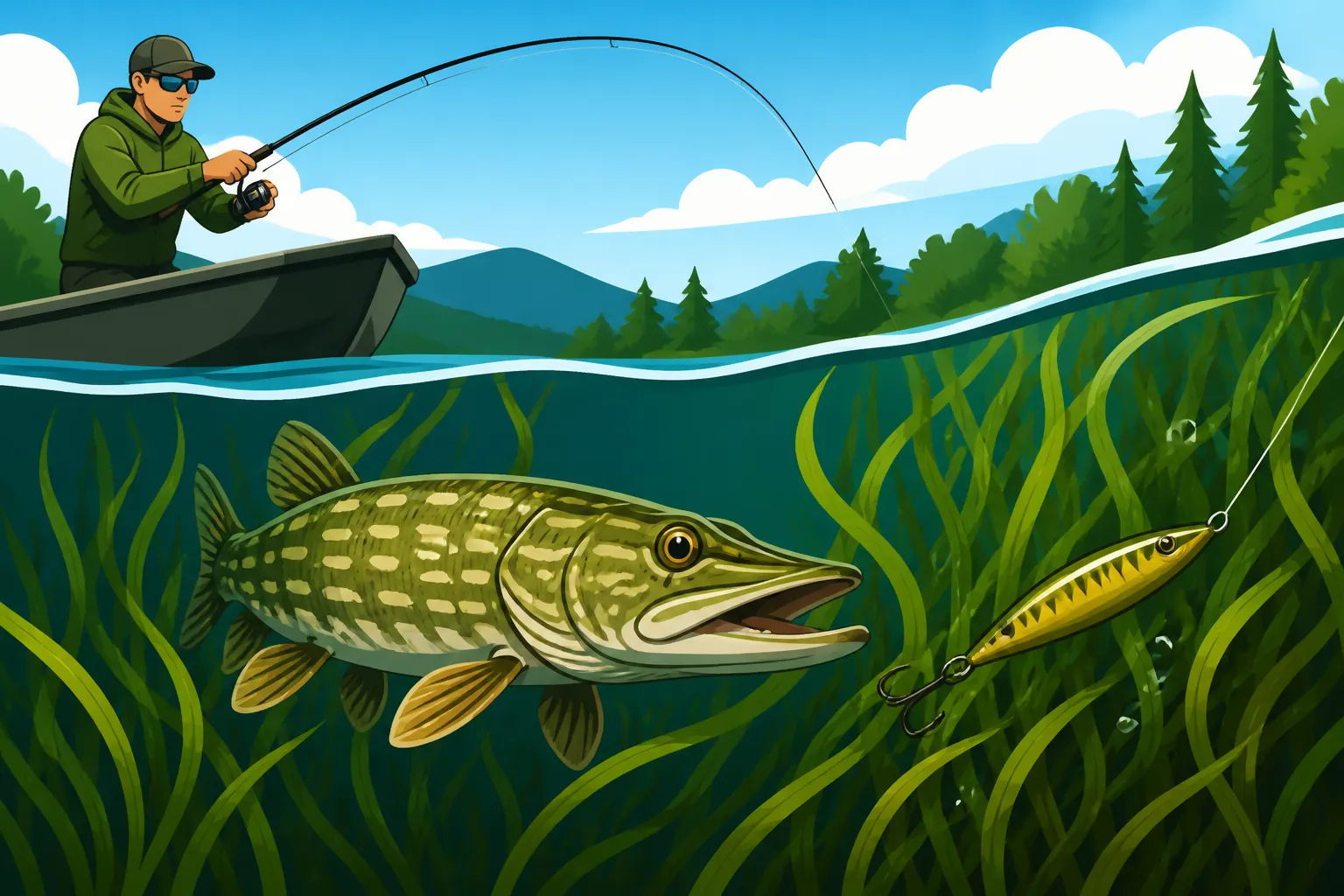
Imagine you're a lean, green torpedo of a fish, built for explosive sprints. Where would you hide to best surprise your prey? Not out in the open water where you can be easily spotted, right? No, you'd find the perfect camouflage, a spot where you can blend in and wait for an unsuspecting minnow, frog, or even a smaller panfish to swim by. That's exactly what thick weeds provide for pickerel.
Firstly, dense vegetation offers incredible cover. Their mottled green and yellow patterns allow them to virtually disappear among submerged plants, making them almost invisible to both prey and larger predators. Secondly, these weed beds are often teeming with life. Baitfish, amphibians, and insects all seek refuge or sustenance in the weeds, creating a natural buffet for the pickerel. It's their grocery store, their nursery, and their fortress all rolled into one. Thirdly, weeds can moderate water temperatures and oxygen levels, offering comfortable conditions, especially during hot summer days or in shallow, cold areas in early spring. You’ll often find them just on the edge of a weed line, or nestled deep within, waiting patiently. They don't expend energy chasing; they wait for the meal to come to them. Understanding these Chain Pickerel Habits in New Hampshire Ponds is crucial for effective targeting.
Pickerel Behavior in Dense Vegetation
Pickerel are primarily sight feeders, and their long, duck-bill-like snout, packed with razor-sharp teeth, is perfectly adapted for grabbing and holding onto prey. When they're in thick weeds, their strike zone can be surprisingly small. They don't typically chase a lure far; instead, they'll often explode from their hiding spot, grab the lure, and immediately try to dart back into the cover, using the weeds to their advantage to shed the hook. This behavior means your presentation needs to be right on the money.
You'll often find them lurking in pockets within the weed mats, along the edges where open water meets dense growth, or in lanes that run through the vegetation. They're not always deep inside the impenetrable stuff; sometimes the slightly thinner patches just off the main mat can be hotspots. Their predatory instinct means they're always alert, so a lure that mimics a struggling baitfish or a frog splashing on the surface is often irresistible. But the key is getting that lure to them without getting completely fouled in the salad first. They can be incredibly aggressive, and that sudden, jarring strike is what makes fishing for them so exhilarating.
Essential Gear for Weedy Pickerel
Fishing in thick vegetation isn't for the faint of heart, or for flimsy gear. You need tackle that can stand up to the challenge of not only fighting a powerful fish but also ripping your lure through heavy cover. Skimping on your setup here will lead to nothing but frustration, broken lines, and lost lures.
Rods, Reels, and Line for the Fight
When you're pulling a pickerel out of a jungle of weeds, you need leverage. A medium-heavy to heavy power baitcasting rod, typically 6'6" to 7'6" in length, is your best friend. Look for a rod with a fast or extra-fast action, meaning the tip bends easily but the backbone is stiff, giving you the power to set the hook hard and horse fish out of cover. A good quality graphite rod will offer sensitivity to feel subtle bites through the weeds, combined with the necessary power. For those who prefer spinning gear, opt for a comparable medium-heavy setup, but understand that baitcasters often provide better casting control and retrieval power for heavier, weedless lures. Many anglers find great options for Best Fishing Rods for New Hampshire Lakes that double perfectly for pickerel in weeds.
Matching that rod with a robust reel is critical. For baitcasters, a reel with a good gear ratio (6.X:1 to 7.X:1) and a strong drag system is essential. You need to be able to pick up line quickly when a fish strikes and keep it from burying itself deeper in the weeds. For spinning reels, choose one with a durable frame, a smooth, powerful drag, and a good line capacity.
Now, let's talk line – this is arguably the most important component when fishing weeds. Monofilament stretches and isn't abrasion-resistant enough for this kind of work. Fluorocarbon is better for abrasion, but its low stretch can still be a disadvantage when trying to rip through weeds. Braided line is the undisputed champion for weed fishing. Opt for 30 to 50 lb test braided line. Its incredible strength, zero stretch, and superior abrasion resistance mean you can cut through vegetation, feel every subtle bump, and haul fish out without fear of breaking off. While braid is great, it can be visible in clear water, so I often recommend a short (12-18 inch) leader of 20-30 lb fluorocarbon attached with a strong knot like a FG knot or double uni knot. This leader provides an invisible connection to your lure and offers an extra layer of abrasion protection right at the bait where the pickerel's teeth are most likely to shred your line.
Lures and Baits that Dominate the Weeds
The key to lure selection for thick weeds is simple: weedless or nearly weedless designs. Anything with exposed treble hooks will quickly become a weed ball, wasting your time and spooking fish. Pickerel are aggressive, so presentation matters more than extreme finesse. What chain pickerel eat in New Hampshire ponds can give you good clues about what lures to choose.
Here are some top choices:
- Weedless Spoons: These are classics for a reason. Spoons like the Johnson Silver Minnow or Dardevle have a single, upward-pointing hook protected by a wire guard, allowing them to slide over and through dense weeds without snagging. They wobble and flash, mimicking a struggling baitfish, and pickerel absolutely hammer them. You can buy these on Amazon easily.
- Spinnerbaits: With their single hook and wire frame, spinnerbaits are surprisingly weedless. The blades create flash and vibration that can call pickerel out of cover. Choose ones with good weed guards and perhaps a trailer hook for short-striking fish. Chartreuse, white, and fire tiger colors are often excellent.
- Soft Plastic Frogs/Toads: These are phenomenal for fishing over dense lily pads or matted vegetation. Rigged weedless with a wide-gap hook, they skip across the surface. When a pickerel strikes, it's usually explosive and visible – pure adrenaline! Hollow-bodied frogs are especially effective, as they float and present a lifelike profile.
- Soft Plastic Swimbaits (Weedless Rigged): Larger paddle-tail swimbaits rigged on a weighted, weedless swimbait hook can be worked through thinner weeds or along the edges. The thumping tail creates irresistible vibration.
- Jigs with Weed Guards: Flipping and pitching jigs with stout weed guards can be effective for punching through small openings or into thicker cover. Add a creature bait or plastic chunk trailer for extra bulk and action.
- Inline Spinners (with caution): While not perfectly weedless, a single-hook inline spinner can be effective in slightly sparser weed beds or along the very edges. Their flash and vibration are highly attractive. Just be prepared for occasional snags.
When considering colors, don't overthink it. Chartreuse, white, black, and natural baitfish patterns are almost always good bets. The flash and action often matter more than the precise shade when pickerel are in a feeding mood. For more specialized advice, check out Best Baits for Chain Pickerel in Weed Beds.
Essential Accessories for Weed Warriors
Beyond your rod, reel, and lures, a few extra items will make your weedy pickerel adventures much more enjoyable and successful.
- Pliers/Forceps: Pickerel have incredibly sharp teeth. You absolutely need a good pair of long-nosed pliers or forceps for hook removal. Never, ever stick your fingers in a pickerel's mouth. I keep a pair of sturdy, stainless steel pliers on a lanyard around my neck for quick access. You can find excellent options on Amazon.
- Braid Scissors/Line Cutter: Braided line is tough, and standard nail clippers won't cut it cleanly. Invest in a good pair of braid scissors or a dedicated line cutter tool for clean knot tying and lure changes.
- Net with Rubber Mesh: If you're serious about catch and release, a net with rubberized, knotless mesh is ideal. It protects the fish's slime coat and fins, and hooks don't get tangled as easily. Pickerel can be quite feisty at the boat, and a net helps land them safely and quickly.
- Polarized Sunglasses: These aren't just for looking cool! Polarized lenses cut glare on the water, allowing you to see submerged weed lines, pockets, and even cruising pickerel, which is invaluable when targeting fish in cover.
- Boat or Kayak: While you can shore fish for pickerel in weeds, a small boat, canoe, or fishing kayak (like those discussed in Best Kayaks for New Hampshire Fishing) gives you unparalleled access to the prime weedy real estate. It allows for quieter approaches and better angles for casting into dense cover.
- First-Aid Kit: With sharp hooks, sharp teeth, and potentially slippery conditions, a small first-aid kit with bandages, antiseptic wipes, and tape is always a good idea.
Techniques for Navigating and Fishing Thick Weeds
Now that we understand the pickerel's habitat and have the right tools, let's talk strategy. Fishing thick weeds isn't about brute force; it's about smart navigation, precise presentations, and a bit of finesse where it counts.
Casting and Retrieving Strategies
The most critical aspect of fishing thick weeds is getting your lure into the strike zone without snagging on the way in or out. This requires accuracy and thoughtful retrieves.
- Pinpoint Casting: Forget bombing long casts. Focus on short, accurate pitches and flips into openings, along weed edges, or into lanes within the vegetation. Look for "pockets" – small areas of open water surrounded by weeds. These are prime ambush points. Practice skipping lures under overhanging branches or docks that border weed beds, as pickerel often lurk there too.
- Vary Your Retrieve: Pickerel are opportunistic, but they respond well to erratic movements that suggest a wounded or fleeing prey. Experiment with retrieve speeds, pauses, and twitches.
- Burn and Stop: Reel a weedless spoon or spinnerbait quickly, then suddenly pause for a second or two. Often, a pickerel will strike on the pause or as you restart the retrieve.
- Walk the Dog (Frogs): For hollow-bodied frogs, use a rhythmic twitch-twitch-pause motion to make the frog "walk" across the surface of the lily pads. This creates a commotion that screams "easy meal" to a lurking pickerel.
- Slow Roll: For spinnerbaits and weedless swimbaits in slightly thinner cover, a slow, steady retrieve just above or through the tops of the weeds can be very effective, especially if you occasionally tick the weed tops.
- High Rod Tip: Keep your rod tip high, especially when retrieving over the top of matted vegetation. This helps keep your line out of the weeds and guides your lure over obstacles. When a fish strikes, drop your rod tip slightly towards the fish to set the hook hard, then immediately lift it high to leverage the fish out of the cover.
- Reading the Weeds: Pay attention to where the bites are coming from. Are they hitting along a specific depth contour of the weed line? Are they in the thickest stuff or just outside it? Pickerel can hold in different parts of the weed bed depending on time of day, weather, and water temperature. Adjust your casting and retrieval depth accordingly.
Jigging and Vertical Presentation in Pockets
Sometimes, the pickerel are buried so deep in impenetrable mats that casting over them isn't enough. This is where vertical presentations come into play, especially if you're fishing from a boat or kayak that allows you to position directly over weed pockets.
- Punching Through Mats: For truly dense vegetation, some anglers use heavy tungsten weights (1/2 to 1 oz or more) with stout weedless hooks and compact soft plastics (like beaver baits or small creature baits). This "punching" technique involves literally pushing the lure through the mat to reach the open water underneath. Once through, let it sink, give it a few aggressive jigs, and then retrieve. The fall through the mat often triggers a reaction strike.
- Vertical Jigging Pockets: If you're drifting or slowly trolling through a weed-choked area and spot an opening in the cover (either visually or with your fish finder), you can drop a weedless jig or even a heavier weedless spoon directly into that pocket. Let it sink to the bottom, then work it with sharp, short jerks, keeping it within that confined open space. This allows you to present a lure right in front of a pickerel's face.
- Working the Edges: Don't forget the transition zones. Often, the outside edge of a weed line where it meets open water, or the seam where two different types of vegetation meet, can be incredibly productive. These are natural travel lanes and ambush points for pickerel.
Patience, Persistence, and Presentation
Fishing for pickerel in thick weeds demands a unique blend of these three qualities. It's easy to get frustrated when you're constantly snagging, or when fish are short-striking and disappearing back into the cover.
Patience is key because you'll likely make many casts that result in nothing but a lure full of weeds. Don't get discouraged. The pickerel are there; it's about finding their exact location and presentation. Sometimes slowing down your retrieve or pausing longer makes all the difference.
Persistence means continually working new pockets, adjusting your angles, and trying different lures or retrieve speeds until you find what clicks. If one spot isn't producing, quietly move a short distance and try another similar patch of weeds. Keep varying your approach, especially with retrieves for Best Techniques for Chain Pickerel.
Finally, Presentation is paramount. It’s not just about what lure you use, but how you use it. A flawless cast into a tight pocket, a perfectly weedless retrieve, and a lure action that truly mimics vulnerable prey will lead to more strikes. And remember, when you get that violent strike, set the hook hard, keep that rod tip high, and reel like crazy to get that fish out of the cover before it has a chance to wrap you up. It’s a battle, and you want to win it quickly!
Safety and Best Practices When Fishing Heavy Cover
Fishing is about enjoyment, but it's also about responsibility – to yourself, to the fish, and to the environment. When you're dealing with sharp-toothed predators in dense vegetation, a few extra precautions go a long way.
Safely Handling Pickerel
Chain pickerel are often underrated for their fight, but they’re always respected for their teeth. Their mouths are truly full of needle-sharp teeth, and a thrashing pickerel can inflict a nasty cut.
- Never Lip a Pickerel: Unlike bass, you should never try to lip a pickerel.
- Use Tools: Always use your long-nosed pliers or forceps for hook removal. If the hook is deep, use them to cut the line as close to the hook as possible. It's better to leave a hook in than to seriously injure the fish trying to pry it out.
- Control the Fish: If you're landing a pickerel without a net, grab it firmly behind the head, just above the gills. This gives you control of its body and keeps its mouth away from your hands. Some anglers use a fish gripper tool to hold the fish securely.
- Minimize Air Time: If you plan to release the fish, keep its time out of water to an absolute minimum. Hold it horizontally, support its belly, and get it back in the water quickly after a photo.
Minimizing Environmental Impact
As anglers, we have a responsibility to be good stewards of New Hampshire's waters. Fishing in thick weeds can present unique challenges to this commitment.
- Retrieve Snagged Lures Carefully: While strong line helps, snags will happen. Try to retrieve your lure as gently as possible to avoid breaking off line and leaving it in the water. If a lure is truly stuck and you can’t get it, cut your line as close to the lure as possible to minimize the amount of fishing line left in the environment, which can be harmful to wildlife.
- Respect Vegetation: Try not to unnecessarily churn up or damage weed beds. While navigating, take care to avoid running your motor directly through dense patches if you can paddle or use a trolling motor around them. These weed beds are vital habitat for many species.
- Pack It In, Pack It Out: This golden rule of outdoor recreation is especially true around weedy shores. Don't leave any trash, fishing line scraps, or bait containers behind.
- Be Aware of Regulations: Always be mindful of local New Hampshire Fishing Regulations Explained, including specific rules for certain water bodies regarding invasive species, bait use, or specific closures. This often means cleaning your boat, trailer, and gear thoroughly between water bodies to prevent the spread of invasive plants and organisms.
Know Your Local Regulations
Every water body in New Hampshire can have slightly different regulations regarding seasons, limits, and even specific gear restrictions. Always consult the most current New Hampshire Freshwater Fishing Digest before you head out. This isn't just a suggestion; it's a requirement to ensure you're fishing legally and responsibly. Knowing, for instance, the New Hampshire Bass Catch-and-Release Season, Explained can give you an idea of times when other species, like pickerel, might be more active or subject to different rules.
It’s often beneficial to explore different water bodies. For instance, New Hampshire State Park Fishing Guide can point you to various ponds and lakes, many of which are known for their healthy pickerel populations and abundant weed beds.
Here's a quick comparison of popular weedless lure types for pickerel:
| Lure Type | Weedless Rating | Primary Target Area | Action/Presentation | Pros | Cons |
|---|---|---|---|---|---|
| Weedless Spoon | High | Over/Through dense mats | Wobble, flash, subtle sink | Excellent snag resistance, strong flash | Can be ignored if fish want topwater |
| Spinnerbait | Medium-High | Edges, moderate weeds | Flash, vibration, erratic swim | Versatile, good search bait | Can foul in extremely thick stuff |
| Soft Plastic Frog | High | Surface mats, lily pads | Splashing, walking the dog | Explosive topwater strikes, highly visible | Less effective below surface, requires finesse |
| Jig w/ Weed Guard | Medium-High | Pockets, deeper holes | Punching, subtle hops, creature imitation | Good for vertical presentations, heavy | Slower retrieve, can get stuck in wood |
| Weedless Swimbait | Medium | Thinner weeds, edges | Tail thumping, realistic profile | Good for active fish, natural look | Not as snag-proof as spoons/frogs |
Remember, fishing for pickerel in thick weeds is a rewarding challenge. It teaches you precision, quick reflexes, and a deep appreciation for the strategic mind of an ambush predator. With the right gear and techniques, you'll be pulling those green machines out of the salad bowl like a seasoned pro.
Disclaimer
This article is for general informational purposes only and does not constitute professional advice. Laws, prices and regulations vary by location and change over time. Consult a qualified professional for guidance on your specific situation.