Best technique for lake trout in cold water
Trying to catch lake trout when the water is frigid can feel like you're searching for a needle in a haystack, especially in New Hampshire's deep, cold lakes. The fish seem to vanish, refusing to bite anything you throw at them, leading to long, frustrating days on the ice or in a chilly boat. This comprehensive guide will walk you through the precise techniques, essential gear, and a deep understanding of lake trout behavior that will transform your cold-water fishing trips from exasperating to exhilarating.
Understanding Lake Trout Behavior in Cold Water
Lake trout are magnificent creatures, perfectly adapted to the deep, cold waters they call home. However, their behavior shifts dramatically as water temperatures plummet, making them a unique challenge for anglers. Understanding these changes is the first step toward putting more fish in your net.
The Metabolism Slowdown
When water temperatures drop significantly, typically below 40-45°F (around 4-7°C), a lake trout's metabolism slows down considerably. Think of it like a bear going into a mild hibernation – they still need to eat, but they're not nearly as active or aggressive as they would be in warmer months. This metabolic slowdown means they're burning less energy, moving slower, and often holding tighter to structure.
This is a common frustration for many anglers. You might be used to aggressive strikes and hot bites in other seasons, only to be met with subtle taps or no interest at all in the cold. It's not that the fish aren't there; it's that their motivation to chase down a meal is much lower. They become more opportunistic, preferring an easy meal that doesn't require much energy expenditure. This dictates not only where you'll find them but also how you need to present your lures. You can't expect them to rocket across a flat to snatch a fast-moving bait; instead, think slow, deliberate, and right in front of their noses.
Where to Find Them in Winter and Early Spring
Locating lake trout in cold water means understanding their thermal preferences and their need for accessible forage, even with a reduced appetite. While they are a cold-water species year-round, extreme cold pushes them to specific zones.
During the hardwater season, which covers much of winter in New Hampshire, you'll often find lake trout suspended over deep basins or holding tightly to significant underwater structures like humps, drop-offs, and deep points. On Lake Winnipesaukee, for example, the deeper sections near "The Broads" or areas around major islands become prime real estate. They might be in 60 feet of water, but they could also be suspended anywhere from 20 feet below the ice down to 50 feet. It's less about a specific depth and more about finding the thermal sweet spot and where their primary food source, like rainbow smelt, is congregating. Often, these fish will be hugging the bottom or suspended just above it if the baitfish are deeper. You can learn more about New Hampshire Lake Trout Ice Fishing Season Dates to plan your trips.
As ice-out approaches and throughout the early spring when the open water is still quite cold, lake trout will still be deep. They won't venture into the shallows until the surface water warms up considerably. Focus on the same deep structures and suspended schools of baitfish. They might shift slightly, perhaps moving onto the deeper shoulders of humps rather than directly on top, or patrolling channel edges. The key is to think vertically. If you're on a lake like Sunapee, which is known for its deep salmon and trout, you're going to be looking at depths ranging from 40 to over 100 feet, especially near the steepest drop-offs where baitfish might be seeking refuge or food. Understanding How deep lake trout go in summer provides a stark contrast, highlighting just how different their cold-water patterns can be.
Essential Gear for Cold Water Lake Trout Fishing
Successfully targeting lake trout in cold water demands specialized gear. You need equipment that not only stands up to the harsh conditions but also allows you to detect the subtle bites and effectively fight these powerful fish from the depths.
Rods, Reels, and Lines
When it comes to cold water lake trout, your rod, reel, and line setup is paramount. For vertical jigging through the ice or from a boat, a sensitive yet powerful rod is critical. You're looking for a medium-heavy to heavy power rod, typically 30 to 48 inches for ice fishing, or 6 to 7.5 feet for open water. The action should be fast to extra-fast, allowing you to feel those light bites and set the hook quickly in deep water. A good example might be an Ugly Stik GX2 in a medium-heavy action, which offers durability and sensitivity for a reasonable price, widely available on Amazon.
Paired with this, a reliable spinning reel in the 2500-4000 series is ideal. It needs a smooth drag system, as lake trout can make powerful runs. Brands like Daiwa or Shimano offer excellent options that perform well in cold temperatures. For line, a low-stretch braided line, like PowerPro or Sufix 832, in 15-30 lb test, is a game-changer for deep water sensitivity. Its lack of stretch allows you to feel the slightest tap, even when fishing 100 feet down. Crucially, you'll need a fluorocarbon leader, usually 8-15 lb test, tied directly to your braid. Fluorocarbon is nearly invisible underwater, which is vital for wary lakers in clear New Hampshire waters, and it offers excellent abrasion resistance against sharp rocks or the fish's own teeth.
For slow trolling, a slightly longer, more moderate action rod (7-9 feet) with a stout backbone is often preferred. This allows the rod to absorb the shock of a strike and keep the fish pinned. Conventional reels with line counters are invaluable for precise depth control, especially when using lead core line or downriggers. The main line might be 20-30 lb monofilament or braid, again with a fluorocarbon leader. You can find a wide selection of Best Trolling Gear for New Hampshire Lake Trout options, including these reels and rods, on various online retailers.
Sonar and Navigation
In the expansive lakes of New Hampshire, a quality fish finder isn't just a luxury; it's a necessity for targeting lake trout in cold water. These sophisticated units allow you to identify depth, bottom structure, and most importantly, mark fish and bait schools. For ice fishing, flasher units like the Vexilar FL-8 or a Garmin Striker Cast portable sonar are indispensable, providing real-time feedback on what's directly beneath your hole. They help you see your lure, gauge fish interest, and determine their depth.
For open water fishing, a boat-mounted fish finder with CHIRP sonar, side imaging, and down imaging capabilities is highly recommended. Brands like Humminbird (with their MEGA Imaging) or Lowrance (with ActiveTarget) offer incredible detail, allowing you to not only see individual fish but also identify subtle contours, submerged points, and bait concentrations that indicate where lake trout might be lurking. Learning to interpret the sonar readings for lake trout, which often appear as distinct arches suspended near structure or tight to the bottom, is a skill that comes with practice. The more you use it, the better you become at distinguishing lake trout from baitfish or bottom clutter. Many excellent Best Fish Finders for New Hampshire Lakes are available and can be purchased through Amazon, providing a crucial edge in locating these deepwater predators. Without reliable electronics, you're essentially fishing blind, which can lead to endless frustration when the fish are scattered and holding deep.
Top Techniques for Cold Water Lake Trout
With your gear sorted and a basic understanding of lake trout behavior, it's time to dive into the most effective methods for coaxing a strike in icy waters. Both vertical jigging and slow trolling have their distinct advantages, depending on the conditions and your preference.
Vertical Jigging
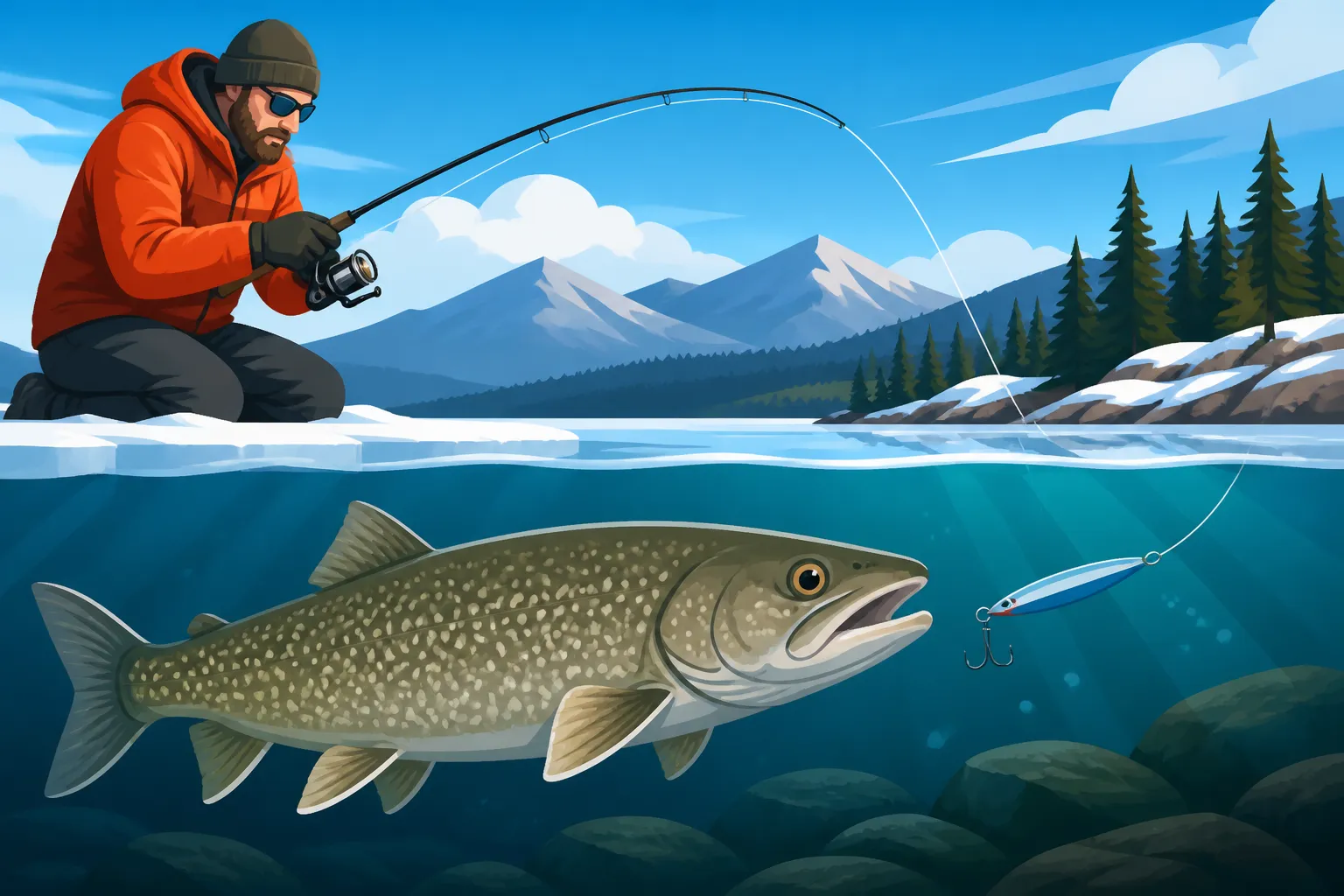
Vertical jigging is an incredibly effective technique, particularly when you've pinpointed fish on your sonar, whether through an ice hole or from a boat. The key is a slow, methodical presentation that appeals to a lethargic fish.
Here's how to approach it:
- Drop and Locate: Lower your lure to the bottom, then reel up a foot or two. Watch your sonar. You want to see your lure on the screen, and ideally, some fish nearby. If you mark fish suspended, drop your lure just above them.
- Subtle Movement: In cold water, aggressive jigging often spooks fish. Instead, focus on small, subtle movements. Lift your rod tip 6-12 inches, then let the lure flutter back down on a semi-slack line. The "flutter" or "fall" is often when the strike occurs.
- Pause is Key: After each lift and fall, pause. A long pause, sometimes 10-20 seconds or even longer, is crucial. This allows a hesitant lake trout to approach and inspect the bait without feeling threatened. Think of it as presenting an easy, injured meal.
- Lure Choices:
- Spoons: Heavy jigging spoons like the Kastmaster, Swedish Pimple, or Acme Little Cleo in silver, gold, or glow colors are excellent. Tip them with a small piece of cut bait (like a smelt or shiner head) or a plastic grub for added scent and appeal.
- Tube Jigs: White, pearl, or natural-colored tube jigs (3-5 inches) on a heavy jig head (3/8 oz to 1 oz+) are deadly. The tentacles provide a subtle, lifelike action even with minimal movement.
- Blade Baits: Vibrating blade baits like the Sebile Vibe Blade or Rapala Rippin' Rap can trigger reaction strikes with their tight wobble on the lift and flutter on the fall.
Remember, bites can be incredibly light in cold water – a subtle "thump," a sudden slack in the line, or just an added weight when you lift. Stay hyper-focused on your rod tip and line.
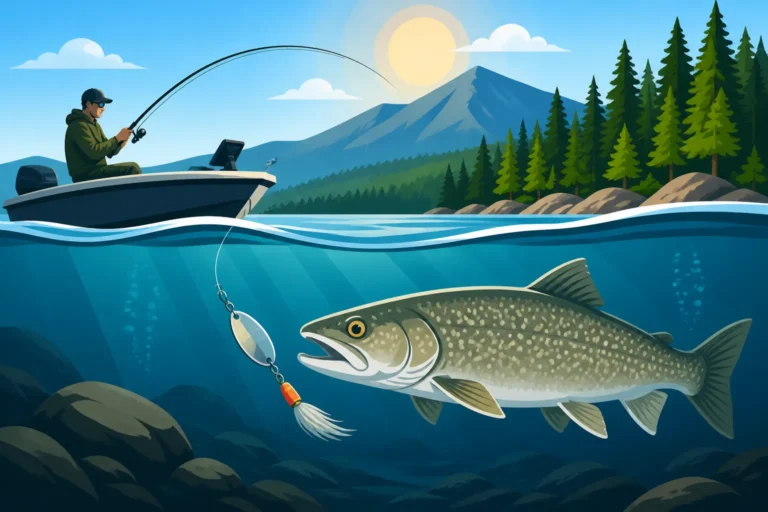
Slow Trolling with Downriggers or Lead Core
When lake trout are more scattered or actively searching for food, slow trolling becomes the preferred method. This allows you to cover more water and present your lure at a consistent, precise depth.
- Downriggers: These are essential for maintaining lures at exact depths, especially in deep water. You can run multiple lines at different depths and distances from the boat. The release clip allows the lure to swim naturally until a fish strikes, at which point the line pops free, and you fight the fish directly.
- Lead Core Line: This colorful line changes color every 10 yards, with each color typically representing 5-7 feet of depth at a slow troll (around 1.5-2.0 mph). It's a simpler alternative to downriggers for reaching deep targets, though less precise. A general rule of thumb is 5 feet of depth for every color you let out at a standard trolling speed.
- Speed is Critical: "Slow" is the operative word. Aim for 1.0 to 2.0 mph. Lake trout in cold water aren't likely to chase a fast-moving bait. Experiment with slight variations in speed – sometimes a subtle acceleration or deceleration can trigger a strike.
- Lure Types:
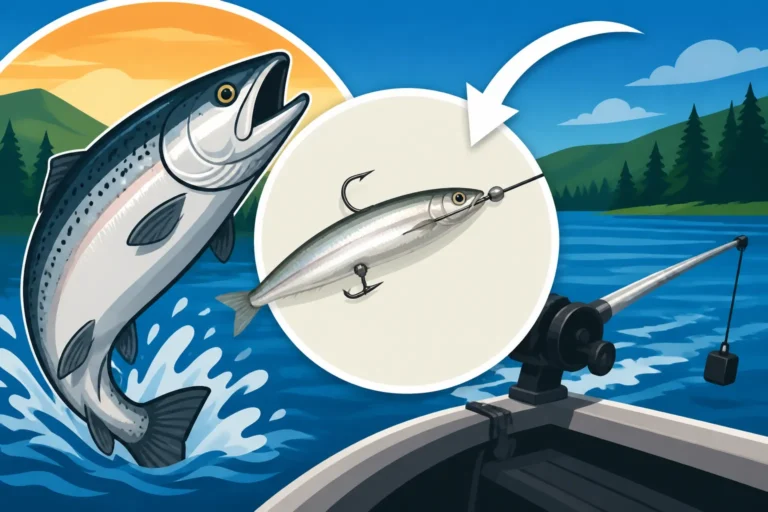
- Stickbaits/Minnow Baits: Long, slender plugs like Rapala Husky Jerks, X-Raps, or Rebel Minnows imitate smelt or other baitfish perfectly.
- Spoons: Thin trolling spoons, often with a slight wobble, are excellent. Brands like Mooselook Thinfish or Sutton Spoons are classic lake trout producers.
- Trolling Flies/Squids: Often used behind a dodger or flasher, these imitate baitfish schools.
- Targeting Structure: Use your sonar and GPS to meticulously troll along deep contours, over submerged humps, and around points. Mark any areas where you get a bite or see significant baitfish schools. Precision is key.
| Technique | Ideal Conditions | Lure Types | Pros | Cons |
|---|---|---|---|---|
| Vertical Jigging | Marked fish, concentrated schools | Spoons, tube jigs, blade baits | Highly interactive, precise targeting, can feel light bites | Covers less water, requires accurate fish location |
| Slow Trolling | Scattered fish, searching for schools | Stickbaits, spoons, trolling flies | Covers large areas, consistent depth presentation | Less interactive, requires more gear (downriggers) |
Both techniques demand patience and attention to detail. Remember that even in the open water, fish can be found in Lake Winnipesaukee Lake Trout Fishing spots where vertical jigging from a boat over deep structure can be just as effective as trolling.
Bait and Lure Selection for Cold Water Success
The old adage "match the hatch" is never more true than when targeting cold-water lake trout. Their metabolism is slow, and they're not going to expend precious energy chasing down something that doesn't look or smell like an easy meal. Your bait and lure choices should reflect this reality.
Mimicking Forage
In New Hampshire's lakes, the primary forage for lake trout is often the rainbow smelt. These small, slender baitfish are the cornerstone of the lake trout diet in many waters, especially in larger lakes like Winnipesaukee, Winnisquam, and Newfound. Therefore, your lures should closely imitate smelt in size, shape, and color.
- Size: Focus on lures in the 3-6 inch range. While lake trout can grow quite large, a smaller, more manageable meal is often preferred when they're lethargic.
- Shape: Look for slender, minnow-profile lures. Stickbaits, slender spoons, and tube jigs are excellent choices.
- Color: Silver, white, pearl, and light blue are classic smelt colors and often the most effective. Chrome and glow-in-the-dark options are also invaluable, especially in deep, dark water or during low-light conditions. Sometimes, a subtle chartreuse or pink accent can provide just enough contrast to grab attention without being too aggressive. You can often find a good selection of Best Lures for Lake Trout Trolling that perfectly mimic smelt.
Don't be afraid to experiment with different shades. On some days, a dull silver might be ignored, while a flashy chrome or a subtle pearl will elicit strikes. Having a variety of these smelt-imitating options in your tackle box, easily found on Amazon or at your local tackle shop like S&R Sport Center in Laconia, is crucial. Remember to use high-quality, sharp hooks, as bites can be light, and you'll need every advantage to set that hook in tough mouths. Understanding What lake trout eat in New Hampshire lakes is fundamental to making the right lure choices.
Scent and Attraction
In cold water, a fish's sense of smell becomes even more important. Their vision might be reduced in deep, dark conditions, and their lateral line might not detect the subtle vibrations of your slowly moving lure. This is where scent comes into play as a powerful attractant.
Many anglers will tip their jigs or spoons with a small piece of cut bait, such as a smelt head, a piece of shiner, or even a small strip of belly meat from a previously caught fish. The natural oils and scent trail that this creates can draw in hesitant lake trout from a distance and encourage them to commit to a bite.
Alternatively, there are many commercially available scent attractants on the market. These often come in gels or sprays and are designed to mimic natural fish oils, garlic, or other attractants. Brands like Pro-Cure or Smelly Jelly offer a range of options. Apply these liberally to your spoons, tube jigs, or even stickbaits. The idea is to create a scent plume that travels through the water, enticing curious lake trout to investigate. Even if they don't immediately strike, the scent might draw them close enough to visually detect your lure, at which point your subtle presentation can seal the deal. This added layer of attraction can be the difference between a slow day and a successful outing, validating the effort you put in.
Fishing for lake trout in cold water is a marathon, not a sprint. It requires patience, attention to detail, and the right tools and techniques. By understanding their behavior, equipping yourself properly, and employing these proven methods, you'll be well on your way to enjoying the thrill of landing one of New Hampshire's most prized cold-water fish.
Disclaimer
Fishing inherently carries risks, including but not limited to environmental hazards, equipment malfunction, and personal injury. This guide provides general information and recommendations; however, conditions can change rapidly, and individual situations vary. Always prioritize safety, adhere to all local and state fishing regulations (including those detailed in the New Hampshire Fishing Regulations Explained and New Hampshire Bag and Possession Limits by Species), and exercise good judgment. The author and publisher are not responsible for any accidents, injuries, or legal infractions that may occur from following the advice in this article. Always check the latest regulations from the New Hampshire Fish and Game Department before heading out.