Best Lures for Lake Trout Trolling
Trying to dial in the perfect spread for New Hampshire's elusive lake trout can feel like a never-ending quest. With deep, cold lakes and varied forage, knowing which lures to tie on before dropping your lines is half the battle. This guide will dive deep into the best lures for lake trout trolling, offering insights into why they work and how to present them effectively across the Granite State's magnificent waters.
Understanding Lake Trout and Their Forage
Lake trout, often called "lakers," are apex predators in New Hampshire's deeper, colder lakes. They thrive in environments where water temperatures remain cool, typically preferring temps in the low to mid-50s Fahrenheit, which often means they're found in the thermocline or deeper during warmer months. Understanding what these fish eat is crucial to selecting the right lures to tempt them into striking.
The Lake Trout Diet in New Hampshire
New Hampshire's lake trout are opportunistic feeders, but their primary diet revolves around baitfish species abundant in their habitat. The most important forage fish by far are rainbow smelt. These small, silvery fish are a staple in many of New Hampshire's premier lake trout fisheries, including Lake Winnipesaukee, Winnisquam, Newfound, and Squam Lake. Smelt are rich in fat and protein, providing the lakers with the energy they need to grow to impressive sizes. When you're selecting a lure, thinking like a smelt is a great starting point.
Beyond smelt, lake trout will also key in on other baitfish like alewives, particularly in lakes where these are introduced or naturally present. Ciscoes, also known as lake herring, are another important food source in some of the deeper, oligotrophic lakes. Even smaller yellow perch or sculpins can end up on a laker's menu, especially if other baitfish are scarce. The key takeaway here is to choose lures that mimic the size, shape, and color of these prevalent baitfish. Larger lakers will absolutely smash a bigger offering, but don't underestimate the appeal of a smaller, more subtle presentation, especially when the fish are finicky.
How Water Temperature Influences Feeding Behavior
Water temperature is arguably the single most important factor dictating where lake trout will be and how aggressively they'll feed. As surface waters warm up through spring and into summer, lake trout retreat to deeper, cooler areas, often congregating around the thermocline – the layer where water temperature changes rapidly. This is where they find their preferred temperatures and where baitfish often suspend.
In the spring, right after ice-out, lake trout can be found relatively shallow, sometimes even near the surface, as the entire water column is still cold. This is an excellent time for targeting them with lures that run shallower. However, as summer progresses, you'll need to employ strategies like using Best Trolling Gear for New Hampshire Lake Trout with downriggers or lead core line to get your lures down to the cooler depths, sometimes 50, 80, or even over 100 feet. In the fall, as surface temperatures cool again, lakers might move shallower once more, making them accessible with less specialized gear. Understanding these seasonal movements and their relationship to water temperature is vital for placing your lures where the fish are actively feeding. You'll find that their activity levels can vary greatly from aggressive bites in cooler temps to more lethargic, subtle takes in very cold, deep water.
Classic Spoon Lures for Lake Trout
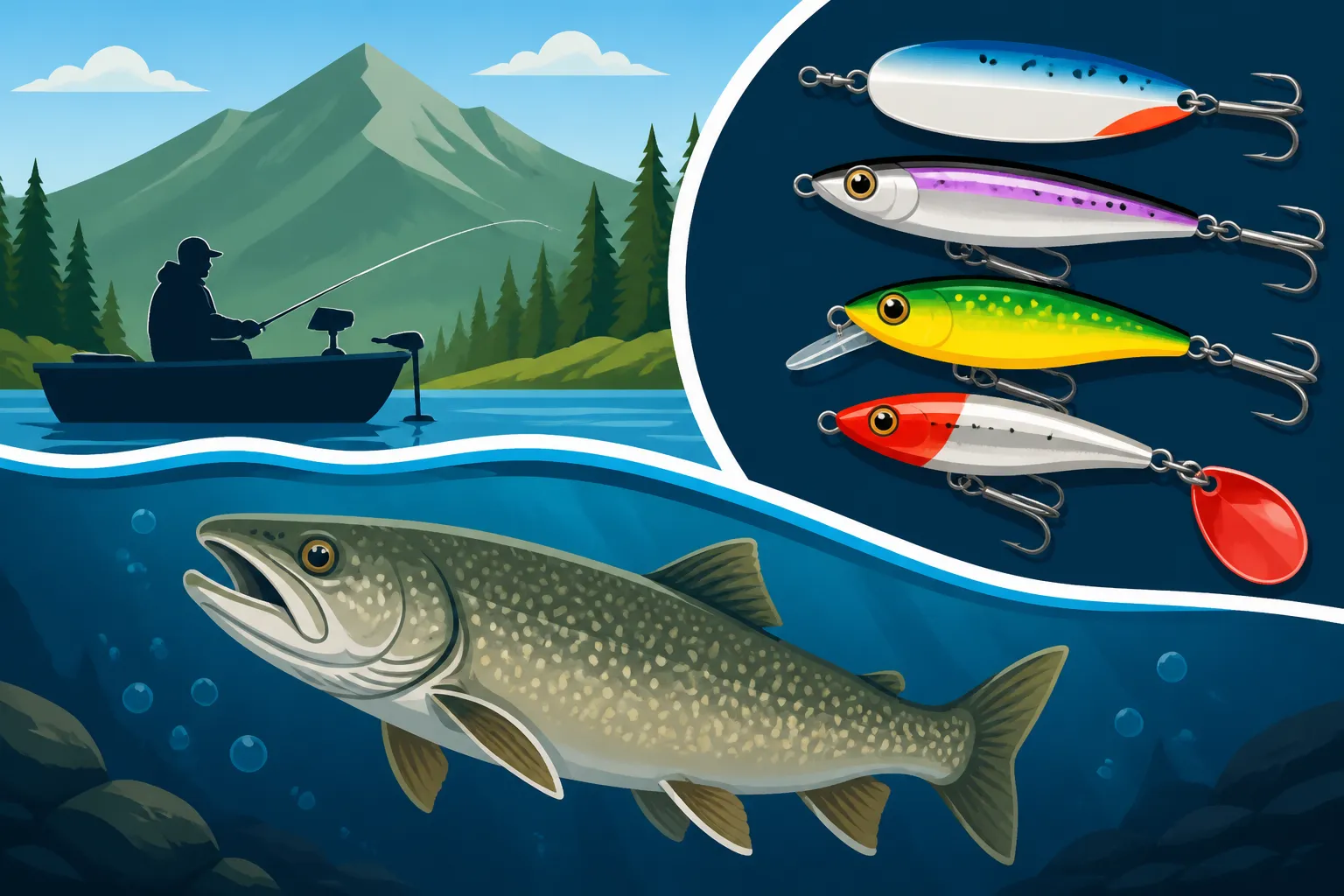
Spoon lures are a tried-and-true staple in any lake trout angler's tackle box, and for good reason. Their wobbling, flashing action perfectly imitates wounded or fleeing baitfish, making them irresistible to hungry lakers. The sheer variety of spoons available means you can effectively target fish at different depths and in various water conditions.
The Flutter Spoon Advantage
Flutter spoons are characterized by their thin, lightweight design, which gives them an erratic, almost dying-fish action in the water. They don't have a strong, consistent wobble like some other spoons; instead, they dart, flutter, and flash with subtle movements, especially effective at slower trolling speeds or when paused momentarily. This delicate action can be incredibly enticing to lake trout that are a bit more hesitant or feeding on smaller, injured prey. Think of them as imitating a smelt that's just barely hanging on.
When rigging flutter spoons, a light leader of fluorocarbon can help them achieve their natural action without impedance. Sizes typically range from 2.5 to 4 inches for general lake trout applications in New Hampshire, though larger profiles can be effective for trophy fish. For instance, brands like Pro-Troll or Dreamweaver often produce flutter spoons that are exceptionally popular among serious lake trout anglers, and you can find a huge selection on Amazon. They are particularly effective when How to Catch Lake Trout in New Hampshire involves targeting fish suspending in the water column, as their slow fall and erratic action can trigger strikes even when passed directly over a fish.
Wobbling Spoons and Their Effectiveness
In contrast to flutter spoons, wobbling spoons possess a more pronounced, consistent side-to-side swimming action. These spoons are generally thicker and heavier, allowing them to track more predictably at higher trolling speeds. The robust wobble creates more vibration and flash, which can be crucial for attracting aggressive lake trout from a distance, especially in low-light conditions or slightly turbid water. They mimic a healthy, fleeing baitfish, triggering a chase response.
Popular wobbling spoons for New Hampshire lake trout include iconic options like the Daredevle and Little Cleo, or Sutton Spoons, which have caught countless lakers over the decades. These spoons come in a wide array of sizes, from smaller 1/4 ounce models to larger 1 ounce or more, designed to reach greater depths or provide a bulkier profile. The key is to match the hatch – if the lake trout are feeding on larger smelt, a bigger wobbling spoon will likely be more effective. When selecting colors, consider bright chrome, gold, or silver for sunny days, and patterns with orange, red, or chartreuse for overcast conditions or deeper water where color penetration is limited.
Essential Spoon Colors and Sizes for New Hampshire Lakes
Choosing the right color and size for your spoons can significantly impact your success. As a rule of thumb, always consider what the lake trout are naturally feeding on in your specific lake.
- Silver/Chrome: Mimics the flash of a rainbow smelt. This is a go-to color, especially on bright, sunny days in clear water. Many anglers will opt for spoons with a plain silver finish or one with a touch of blue or green.
- Gold: Excellent for overcast days, stained water, or when fishing deeper. Gold offers a different kind of flash that can stand out when silver doesn't.
- Copper: A classic choice, especially effective when lake trout are keyed into sculpins or other darker baitfish.
- Patterns (Tape/Paint): Spoons often come with reflective tape or painted patterns on one side, such as blue/silver, green/silver, chartreuse/silver, or even black/silver. These patterns break up the flash and add a visual appeal that can be very effective. Blue and silver combinations are particularly popular for imitating smelt.
- Orange/Red: While less natural for baitfish, these colors can trigger aggressive strikes, especially in deeper water where reds appear as muted tones. They can also mimic injured prey.
Sizing: Most anglers will start with spoons in the 2.5 to 4-inch range for general lake trout trolling. If you're specifically targeting trophy-sized fish on a lake known for them, don't hesitate to go larger, up to 5 or 6 inches. Conversely, if the bite is tough, or the fish are focused on very small bait, scaling down to smaller spoons can make a difference. Always have a variety of sizes and colors on hand to experiment, especially when fishing unfamiliar waters. Keeping a few different types ready can really make a difference, and it's always good to check what’s available on Amazon before your trip to ensure you have a diverse selection.
| Lure Type | Action Profile | Primary Depth Range (Trolling) | Key Features | Ideal Conditions |
|---|---|---|---|---|
| Flutter Spoons | Erratic, subtle | Mid-to-Deep (w/ weight) | Thin, light, wounded baitfish mimicry | Slower speeds, finicky fish, clear water |
| Wobbling Spoons | Strong, consistent | Mid-to-Deep (w/ weight) | Thicker, heavier, fleeing baitfish mimicry | Faster speeds, aggressive fish, low light |
| Jointed Stickbaits | Wide, S-curve | Mid-to-Deep (w/ weight) | Exaggerated movement, jointed sections | Moderate speeds, active fish, varied depths |
| Straight Stickbaits | Tight wiggle | Mid-to-Deep (w/ weight) | Subtle action, streamlined profile | Faster speeds, wary fish, precise depth |
| Dodger & Fly/Squid | Attractant & small | Deep (rigged with downrigger) | Large flash, small trailing offering | Very deep water, schooling baitfish |
Stickbaits and Plugs: Mimicking Baitfish
Stickbaits and plugs are indispensable for lake trout trolling, offering a different profile and action compared to spoons. These lures are designed to closely resemble various baitfish, from slender smelt to chunkier alewives, and their diving capabilities make them excellent for targeting specific depths.
Jointed vs. One-Piece Stickbaits
When it comes to stickbaits, you'll primarily encounter two types: jointed and one-piece (or straight). Each has its own unique action and ideal application.
Jointed Stickbaits are characterized by having two or more segments connected by hinges, typically metal pins. This segmented design gives them an exaggerated, wider swimming action, often described as an S-curve or a broken-back wobble. The extra movement and vibration can be a powerful attractant, especially for active fish. They can imitate a wounded or struggling baitfish very effectively, making them a top choice when lake trout are aggressive or when fishing in slightly murkier conditions where more "thump" is needed to get noticed. Brands like Rapala (particularly their Jointed Shad Rap or Jointed Minnow models) and Storm make excellent jointed plugs. These are often best trolled at moderate speeds to allow their full action to develop.
One-Piece (Straight) Stickbaits are solid, unsegmented lures. Their action is generally much tighter and more subtle, a refined wiggle rather than a broad sweep. This stealthier profile can be incredibly effective on wary lake trout, particularly in clear water or during periods of high fishing pressure. They excel at higher trolling speeds, maintaining their natural baitfish imitation without washing out. Classic examples include the original Rapala Original Floater (when weighted to dive), Reef Runner, or Bomber Long A. Their streamlined shape also means they typically dive deeper than jointed baits of similar size and lip design. For New Hampshire Lake Trout Ice Fishing Season Dates you wouldn't be trolling, but the principles of matching baitfish size and profile still apply to jigging.
Dive Curves and Optimal Trolling Speeds
Understanding a lure's dive curve and the optimal trolling speed is paramount for successful lake trout fishing. Not all lures are created equal when it comes to depth. The size and angle of the diving lip, the lure's body shape, and its weight all contribute to how deep it will run on a given amount of line at a particular speed. Many lure manufacturers provide approximate dive curves for their products, often printed on the packaging or available online. These charts typically show the depth achieved with various line lengths and speeds.
For lake trout, you'll often be targeting depths well beyond what most plugs can reach on their own. This is where specialized gear like downriggers, Dipsy Divers, or lead core line comes into play. These tools allow you to present your plugs at precise depths, even 50, 80, or 100 feet down. When using plugs, a good starting point for trolling speed is usually between 1.8 and 2.5 miles per hour. However, lake trout can be particular, so experimenting with speeds from 1.5 mph up to 3 mph can make a huge difference. A slight increase or decrease in speed can alter a plug's action, causing it to dart or wobble differently, which might be just what it takes to trigger a strike. Pay attention to your rod tip – a steady wobble indicates the lure is running correctly.
Popular Models and Finishes for New Hampshire Conditions
New Hampshire's deep, clear lakes mean that lure choice often leans towards realistic baitfish imitations. Here are some popular models and finishes that consistently produce lake trout:
- Rapala Deep Husky Jerk: Available in various sizes, this lure dives well and has a tight, irresistible wobble. Silver/blue, smelt, and perch patterns are excellent choices.
- Reef Runner 800 Series: Known for their aggressive dive and wide wobble, these are lake trout magnets. Try colors like "Green Perch," "Pink Lemonade," or "Watermelon" in addition to traditional baitfish patterns.
- Bomber Long A: A classic, slender profile that mimics smelt perfectly. Silver/blue and silver/black are staples.
- Michigan Stinger Spoons: While technically spoons, these often behave more like plugs with their darting action. Many of these are great for imitating smelt.
- Yo-Zuri Crystal Minnow Deep Diver: These lures have a brilliant internal holographic finish that throws off intense flash, making them highly visible in deep water.
When selecting finishes, prioritize those that imitate the local forage. Silver, blue, and green hues are usually winners for mimicking smelt. For deeper water or low light, holographic patterns, glow-in-the-dark options, or those with hints of orange or chartreuse can provide added attraction. Always check your local bait and tackle shops in areas like Laconia or Meredith for what's currently hot, as local knowledge is invaluable.
Dodger and Fly/Squid Combos for Deep Water
When lake trout are holding deep and aren't responding to traditional spoons or plugs, a dodger and fly/squid combo can be a game-changer. This setup isn't about the lure itself having an enticing action; it's about the dodger creating a "thump" and flash to attract fish, with the trailing fly or squid providing the actual offering.
The Attracting Power of Dodgers
Dodgers are essentially large, curved metal plates designed to wobble and flash erratically when trolled. They don't have hooks themselves; their sole purpose is to create commotion in the water. This strong, rhythmic thumping and flashing action acts as a beacon, drawing lake trout in from a considerable distance. Think of it like a noisy dinner bell calling them to the table. The dodger's movement also imparts a subtle, enticing action to whatever is trailing behind it.
Dodgers come in various sizes and colors, typically ranging from 4 to 8 inches for lake trout. Larger dodgers create more vibration and flash, making them suitable for deeper water or when you need to cover a lot of ground. Smaller dodgers offer a more subtle presentation. Popular colors include polished chrome, hammered silver, gold, and often those with reflective tape in blue, green, or even UV patterns. The flash and vibration mimic a school of baitfish or a large, injured prey item, making them highly effective. You can often find a great selection of these on Amazon or at local shops.
Pairing Flies and Squids with Dodgers
The dodger is the attractor, but the fly or squid is the bait. These small, often translucent, offerings are tied on a short leader (typically 12-24 inches) behind the dodger. The dodger's motion makes the fly or squid dart and weave, mimicking a small, confused baitfish.
- Flies (Trolling Flies): These are often tied on single hooks and feature Mylar, tinsel, or synthetic materials that shimmer and pulsate in the water. Common colors include green, blue, white, or silver, often with reflective accents. They are generally smaller, ranging from 1 to 3 inches. Examples include "Peanut Flies" or "Smelt Flies."
- Squids (Hoochies): These are soft plastic skirts, usually 2 to 4 inches long, designed to imitate small squid or juvenile baitfish. They come in a vast array of colors, from natural baitfish patterns to vibrant glow-in-the-dark or UV options. Often, a small piece of bait (like a piece of real smelt or a Berkley Gulp! Alive! minnow) is inserted into the head of the hoochie for added scent and appeal.
The key to successful pairing is to ensure the fly or squid is small enough not to impede the dodger's action but large enough to be seen and considered a meal by the lake trout. The leader length between the dodger and the fly/squid is also critical. Too long, and the action might be too subtle; too short, and the dodger might spook the fish. Experimentation is key to finding the sweet spot, but 18 inches is a common starting point. This setup is particularly effective for Landlocked Salmon Fishing in New Hampshire as well, given their similar forage and habitat preferences to lake trout.
Rigging and Presentation Techniques
Rigging a dodger and fly/squid combo correctly is essential for it to perform as intended. Here's a basic setup:
- Main Line to Dodger: Attach your main trolling line (which could be monofilament, fluorocarbon, or braid) directly to the front swivel of the dodger.
- Leader to Fly/Squid: Use a high-quality fluorocarbon leader, typically 15-25 lb test, to connect the back swivel of the dodger to your fly or squid. The length is crucial – start with 18 inches and adjust.
- Hooks: Flies typically come pre-rigged with a single hook. For squids, you might need to insert a small, sharp single or treble hook, ensuring it's positioned to maximize hookups. Many anglers prefer to use tandem hooks on their flies to increase the chances of a solid hookset.
Presentation: Dodgers and flies are almost always trolled using downriggers, lead core line, or similar depth-controlling devices because they are designed for deep-water presentations. When you're monitoring your Best Fish Finders for New Hampshire Lakes, and you see schools of baitfish or lake trout at specific depths, you can deploy your dodger-and-fly combos right into that zone. Trolling speeds are generally slower for dodgers, often in the 1.0 to 2.0 mph range, allowing the dodger to really wobble and "kick" and the trailing offering to swim naturally. Pay attention to how the dodger is vibrating on your rod tip – you should feel a distinct throb. If it's not throbbing, adjust your speed until it does.
Soft Plastics and Jigs for Deeper Presentations
While hard baits like spoons and plugs dominate trolling conversations, soft plastics and jigs have carved out a significant niche for themselves, especially when targeting lake trout in deeper water or when a more subtle, natural presentation is required. These versatile lures can be trolled, jigged, or even drifted, offering flexibility in different fishing scenarios.
Paddle Tail Swimbaits and Grubs
Paddle tail swimbaits and grubs are soft plastic lures that imitate various baitfish, from slender minnows to chunkier juvenile fish. Their key feature is a paddle-shaped tail that creates a natural swimming action and vibration when retrieved or trolled. This subtle, undulating movement can be incredibly effective on lake trout, particularly when they are finicky or feeding on smaller prey.
- Swimbaits: These are typically more realistic in their body shape, mimicking smelt or other forage fish. They come in various sizes, often from 3 to 6 inches for lake trout. You'd rig them on a weighted swimbait hook or a jig head, which allows them to be trolled or retrieved at specific depths. Brands like Keitech or Storm make fantastic paddle tail swimbaits. When you're trying to figure out What Lake Trout Eat in New Hampshire Lakes, these can be a dead ringer for natural prey.
- Grubs: Grubs usually have a more generic, worm-like body with a curly or paddle tail. They are excellent for a more compact presentation. Single-tail grubs are common, but double-tail grubs offer even more action. They are typically rigged on a plain jig head.
When trolling swimbaits or grubs for lake trout, you'll need to use some form of weight, whether it's the jig head itself, an inline sinker, or a downrigger. Trolling them at slower speeds (1.0-2.0 mph) allows the paddle tail to kick naturally without over-spinning. Color choices should again lean towards natural baitfish patterns like pearl white, silver, chartreuse, or even darker greens and browns if lake trout are feeding on sculpins or perch.
Tube Jigs and Vertical Jigging Applications
Tube jigs are another excellent soft plastic option, particularly for deep-water lake trout. These lures consist of a hollow, cylindrical body with tentacles or skirts at one end, designed to imitate crayfish, sculpins, or even small baitfish. When jigged, they spiral and dart, creating an erratic, dying-prey action that lake trout find hard to resist.
While tube jigs can be trolled slowly, often with a small weight to get them down, they truly shine in vertical jigging applications. This technique is particularly effective when you've located a school of lake trout on your sonar, especially when they are suspended in open water or hugging specific bottom structures.
How to Vertical Jig with Tube Jigs:
- Locate Fish: Use your fish finder to pinpoint lake trout or baitfish schools.
- Position: Position your boat directly over the fish.
- Drop: Drop your tube jig (rigged on an appropriate jig head, typically 1/2 oz to 2 oz depending on depth and current) to the desired depth.
- Action: Once at depth, use a series of short, sharp rod tip lifts and drops, allowing the jig to fall on a semi-slack line. This makes the tube spiral enticingly. Vary the cadence and intensity until you find what triggers bites.
- Watch Sonar: Keep an eye on your sonar for fish reacting to your lure. Sometimes a fish will rise up to inspect it. If they follow but don't commit, try changing your jigging action or color.
Tube jigs often come in white, smoke, green pumpkin, or black, with flecks of glitter. A touch of scent (like a Gulp! or PowerBait scent) can further enhance their appeal. This method is incredibly effective for active lake trout and can also coax strikes from more lethargic fish that might not chase a trolled offering. For those interested in Best Techniques for Ice Fishing Lake Trout, tube jigs are also a top choice through the ice.
Trolling Strategies for Maximizing Lure Effectiveness
Having the best lures is only half the battle; knowing how to present them effectively is what truly maximizes your success. Lake trout trolling is a nuanced art that combines gear, technique, and a deep understanding of fish behavior.
Using Downriggers and Lead Core Line
When lake trout retreat to the deeper, colder waters of New Hampshire's lakes, getting your lures down to them requires specialized equipment. The two most common and effective methods are downriggers and lead core line.
Downriggers allow you to present lures at extremely precise depths. A heavy ball (cannonball) is deployed on a steel cable to a desired depth, and your fishing line is attached to this cable with a special release clip. When a fish strikes, the line pops free from the clip, allowing you to fight the fish directly without the weight of the cannonball. This means you can use lighter lines and get a more natural lure action. Downriggers are ideal for targeting specific thermocline depths or structure identified on your sonar. They offer unparalleled depth control and allow you to instantly change depths if you see fish moving. They are a core component of Best Trolling Gear for New Hampshire Lake Trout.
Lead Core Line is a specially designed fishing line with a lead filament woven into its core, making it heavy and causing it to sink. The line is "metered" with different colors (typically 10 yards per color), allowing you to estimate how much line is out and, therefore, how deep your lure is running. A general rule of thumb is that each color (10 yards) will get your lure down roughly 5 feet at typical trolling speeds, but this varies significantly with lure type and speed. Lead core is less precise than downriggers but offers a simpler, often more affordable, way to reach deep fish. You'll typically run a long fluorocarbon leader (50-100 feet) at the end of your lead core to connect to your lure, providing stealth and shock absorption. For more specific details on depth and speed, checking Best Line Weight for Lake Trout Trolling would be beneficial.
Varying Speed and Depth
Lake trout can be incredibly sensitive to lure speed and depth. What works one day might not work the next, making experimentation crucial.
- Speed Variations: As mentioned earlier, a typical trolling speed for lake trout is between 1.8 and 2.5 mph. However, don't be afraid to experiment. Sometimes, slowing down to 1.5 mph can entice finicky fish with a more subtle presentation. Other times, speeding up to 3.0 mph can trigger aggressive chase strikes from active lakers. The "S-turn" technique is also highly effective: periodically make wide turns with your boat. Lures on the inside of the turn will slow down and drop, while lures on the outside will speed up and rise, often triggering strikes as the action changes.
- Depth Adjustments: Even a few feet can make a difference. If you're marking fish at 60 feet, try running one lure at 55 feet and another at 65 feet. Pay close attention to where strikes occur and adjust your other lines accordingly. The thermocline, where the temperature changes rapidly, is often a prime zone for lake trout, so understanding your How Deep Lake Trout Go in Summer behavior is key. Fish can also be found hugging bottom structure or suspended in open water, so be prepared to target all these areas.
Reading Sonar for Structure and Fish
Your fish finder is your most important tool when trolling for lake trout. Learning to read it effectively will put you on fish consistently.
- Identifying Structure: Lake trout often relate to underwater structure – humps, ledges, points, sunken islands, and even deep-water rock piles. Use your sonar to map out these features. Look for sharp drop-offs or areas where contours change significantly. Trolling along the edges of these structures, or right over their tops, can be highly productive. Many of New Hampshire's popular lake trout fisheries, like Lake Winnipesaukee, are rich with such underwater topography.
- Locating Baitfish: Lake trout follow their food. If you see dense schools of baitfish (which will appear as clouds or masses on your screen), assume lake trout are nearby or will be soon. Target these areas with lures that mimic the size and color of the bait you're seeing.
- Marking Individual Fish: Your sonar can often distinguish individual fish, especially larger ones. If you're marking what looks like lake trout, try to get your lures to that exact depth. Watch for "arches" indicating fish moving through your sonar cone. Some advanced fish finders can even show you your downrigger balls and sometimes even your lures, allowing for incredibly precise placement.
- Water Temperature Graph: Many modern fish finders have a water temperature graph that shows the thermocline. This visual representation is invaluable for knowing the exact depth range where lake trout are likely to be most active. Understanding Lake Trout Fishing in New Hampshire effectively relies heavily on leveraging modern electronics to find these deep water predators.
Disclaimer
The information provided in this guide is for general informational purposes only. Fishing regulations, seasons, and licensing requirements in New Hampshire can change frequently. Always consult the most current New Hampshire Fish and Game Department regulations before heading out on the water. Fishing inherently carries risks, and safety precautions should always be taken.