How to Catch Lake Trout in New Hampshire
There's nothing quite like the thrill of chasing lake trout in New Hampshire's deep, pristine waters. But let's be honest, these powerful, enigmatic fish can be incredibly frustrating to find, let alone catch, especially if you're not equipped with the right knowledge or gear. This comprehensive guide is here to unravel the mysteries of lake trout fishing, sharing proven strategies and insights to help you land more lakers, whether you're trolling, jigging, or dropping a line through the ice.
Understanding New Hampshire's Lake Trout
Before you can even think about hooking into one of these magnificent fish, you need to understand them. Lake trout are not your average pond dwellers; they have very specific preferences and behaviors that dictate where and when you'll find them.
Lake Trout Habits and Habitat
Lake trout ( Salvelinus namaycush ) are truly a fish of the deep, cold, and clear waters that characterize many of New Hampshire's most stunning lakes. They are a native species to many northern regions, including parts of the Granite State, and they thrive in environments where water temperatures rarely creep above 50-55°F for extended periods in their primary haunts. This means that as soon as the surface waters begin to warm in late spring and summer, lake trout will retreat to the deeper, cooler sections of the lake. We're talking depths that can easily exceed 50, 70, or even 100 feet in some of the larger bodies of water.
Their diet largely consists of other fish, particularly baitfish like rainbow smelt and cisco (also known as lake herring). These smaller fish form the backbone of the lake trout's food chain, and finding dense schools of baitfish is often the key to locating actively feeding lakers. If you're marking a ton of bait on your sonar, you can bet that hungry lake trout aren't far behind. This is why having good electronics is almost non-negotiable when targeting these fish in the warmer months. You're trying to find a needle in a haystack, and that needle usually has a bunch of smaller needles swimming around it.
Seasonally, lake trout will make distinct movements. In the early spring, right after ice-out, they can often be found much shallower, even in the top 20-30 feet of the water column. This is when the entire lake is cold, and the trout haven't yet been forced deep by warming surface temperatures. This short window offers fantastic opportunities for casting or shallower trolling. As summer progresses, they move deeper, following the cold water and their food source. Then, in the fall, they'll often return to shallower rocky areas to spawn, sometimes in as little as 10-30 feet of water, though you'll typically find them slightly deeper than most other species. And of course, in winter, they're active under the ice, often suspended or near structure in a range of depths depending on the specific water body and forage. It can feel like a guessing game, but understanding these general patterns can give you a real edge.
Key New Hampshire Lake Trout Waters
New Hampshire is blessed with some incredible lake trout fisheries, each with its own unique characteristics and challenges. Knowing which lakes hold a healthy population and what makes them special is your first step.
- Lake Winnipesaukee: Without a doubt, Winnipesaukee is the crown jewel for lake trout fishing in New Hampshire. It's immense, deep, and has an abundant smelt population that supports a thriving laker fishery. Here, you'll find lake trout of all sizes, with trophy potential always present. The sheer size of Winnipesaukee can be intimidating, but focusing on areas with deep structure, humps, and ledges, particularly those that attract baitfish, will increase your odds. For more specific insights into this legendary body of water, check out our guide on Lake Winnipesaukee Lake Trout Fishing.
- Squam Lake: Known for its breathtaking beauty and relatively undeveloped shoreline, Squam Lake is another fantastic destination for lake trout. While not as deep as Winnipesaukee in all areas, it offers plenty of cold, oxygenated water for lakers to thrive. It's often a bit quieter than Winnipesaukee, providing a more serene fishing experience.
- Newfound Lake: This is one of the clearest lakes in the world, and its deep, cold waters are perfect for lake trout. Newfound is known for producing some truly big lakers, but its exceptional clarity means these fish can be very wary. Longer leaders and more subtle presentations are often key here.
- Lake Sunapee: Nestled in the Dartmouth-Lake Sunapee region, this lake is also famous for its landlocked salmon, but it boasts a robust lake trout population too. Its deep basins and clear waters make it another prime location for cold-water species.
Beyond these giants, other lakes like Merrymeeting Lake, Winnisquam Lake, and even some smaller, deeper ponds can hold excellent lake trout populations. Each of these bodies of water has distinct depths, forage bases, and structural features that influence how and where lake trout will be found. It’s always a good idea to research specific regulations for each lake you plan to fish, as rules can vary. For a broader look at where to wet a line, you might find our guide on the Best Fishing Lakes in New Hampshire incredibly helpful.
Essential Gear for Lake Trout Success
Chasing lake trout isn't like casting for sunfish off a dock. These are powerful, deep-dwelling fish that require specialized gear to effectively locate, hook, and bring to the surface. Trying to tackle them with inadequate equipment will only lead to frustration and lost fish.
Rods, Reels, and Line
Getting the right rod and reel combo for lake trout fishing is paramount. You need something that can handle heavy weights, deep depths, and the strong, sustained runs of a big laker.
- Rods: For trolling, a medium-heavy to heavy action rod, typically 7 to 9 feet in length, is ideal. These rods have enough backbone to handle the drag of heavy weights (like downrigger balls or lead core line) and can absorb the shock of a strike without tearing the hook out of the fish's mouth. Look for rods designed for trolling or deep-sea applications, as they offer the necessary strength and flexibility. Brands like Ugly Stik and Daiwa offer durable, affordable options available on Amazon that stand up to the abuse of trolling. For jigging, you might opt for a slightly shorter, more sensitive rod, perhaps 6 to 7 feet, with a fast or extra-fast tip to detect subtle bites in deep water, but still with a good amount of power in the butt section.
- Reels: A good quality baitcasting or conventional reel is almost a necessity for lake trout. You'll need a reel with a high line capacity to hold hundreds of yards of line, especially for deep trolling or dropping to significant depths. A smooth, reliable drag system is crucial to fight these hard-pulling fish without breaking your line. Look for models with a strong retrieve ratio to help you reel in quickly when needed, but also with the cranking power to battle a large fish from the depths. Shimano and Penn are reputable brands that offer excellent choices.
- Line: Your choice of line is critical. Many anglers opt for braided line as their main line because it has virtually no stretch, offering incredible sensitivity to feel bites and detect changes in lure action. Its thin diameter for its strength also helps cut through the water, reducing drag. However, braid is visible, so you'll almost always want to attach a fluorocarbon leader. Fluorocarbon is nearly invisible underwater, extremely abrasion-resistant, and has enough stretch to act as a shock absorber. A 10-20 lb test fluorocarbon leader, 10-20 feet long, is common. For lead core trolling, the lead core itself is the main line, and you'll tie a shorter fluorocarbon leader to that. We go into even more detail on specific setups in our guide to Best Trolling Gear for New Hampshire Lake Trout.
Sonar and Navigational Tools
In the vast, deep waters of New Hampshire, fishing for lake trout without proper electronics is like trying to navigate a dense forest blindfolded. You might get lucky, but your chances are drastically reduced.
- Fish Finders (Sonar): A high-quality fish finder is your absolute best friend when targeting lake trout. It allows you to see the bottom contour, identify structures like humps, drop-offs, and rock piles, and most importantly, locate schools of baitfish and individual lake trout. Modern units with CHIRP sonar, Down Imaging, and Side Imaging capabilities provide incredibly detailed views of the underwater world. Look for units from brands like Humminbird or Garmin that offer excellent clarity and depth penetration. Being able to mark a group of suspended fish at 75 feet and then precisely drop a jig or run a downrigger through them is a game-changer. Without sonar, you're just guessing where the fish might be, and that's a quick way to get frustrated.
- GPS and Mapping: Integrated GPS with detailed lake mapping (like Navionics or LakeMaster charts) is equally important. This allows you to mark waypoints for productive spots, navigate safely, and understand the underwater topography. You can pinpoint submerged islands, sharp breaks, and thermoclines where lake trout are likely to be holding. Being able to return to a precise spot where you caught fish yesterday or last week is invaluable. These systems help you identify transitions, which are often key holding areas for predators. For an in-depth look at what to look for in these crucial tools, check out our insights on the Best Fish Finders for New Hampshire Lakes.
| Gear Type | Key Features | Recommended Use Case |
|---|---|---|
| Trolling Rod | 7-9 ft, Medium-Heavy/Heavy action, moderate flex | Downriggers, lead core, wire line, flat-lining large lures |
| Jigging Rod | 6-7 ft, Fast/Extra-Fast tip, powerful butt | Vertical jigging spoons, tubes in deep water |
| Conventional Reel | High line capacity, smooth drag, strong retrieve | Trolling, deep drop jigging |
| Braid Line | No stretch, high sensitivity, thin diameter | Main line for trolling/jigging (with fluorocarbon leader) |
| Fluorocarbon Leader | Low visibility, abrasion resistant, good shock absorption | Leader material for braid main lines, various techniques |
| Sonar/Fish Finder | CHIRP, Down/Side Imaging, GPS mapping | Locating fish, bait, structure, depth, and navigation |
This table highlights the fundamental gear you'll need. Investing in quality equipment from the start will pay dividends in terms of performance and durability, helping you minimize lost fish and maximize your time on the water.
Mastering the Art of Trolling for Lake Trout
Trolling is arguably the most popular and effective method for catching lake trout in New Hampshire's larger lakes. It allows you to cover vast amounts of water, present lures at specific depths, and adapt to the lakers' movements throughout the season.
Deep Water Trolling Techniques
When lake trout retreat to the depths, you need specialized gear to get your lures down to them. This is where the magic of deep water trolling comes into play.
- Downriggers: These are the most precise tools for deep water trolling. A downrigger uses a heavy cannonball weight (often 6-12 pounds) on a wire cable to get your lure to an exact depth. Your fishing line is then clipped into a release mechanism on the downrigger cable. When a fish strikes, the line releases from the clip, allowing you to fight the fish directly without the weight of the cannonball. This setup is incredibly effective for targeting suspended fish or hugging specific depth contours. You can run multiple downriggers off a boat, each at a different depth or distance from the boat, to cover more of the water column. The precise depth control is a huge advantage, especially when you've located fish on your sonar.
- Lead Core Line: Lead core line is another popular method, particularly if you don't have downriggers. This line has a lead core encased in a braided nylon sheath, which causes it to sink. The general rule of thumb is that one color (which is typically 10 yards or 30 feet) of lead core will get your lure down about 5 feet at a trolling speed of 2-2.5 mph. So, if you need to be at 50 feet, you might deploy 10 colors of lead core. The beauty of lead core is that you can precisely count out the colors, making it a relatively repeatable system. However, it’s not as precise as a downrigger, as trolling speed and lure action will influence the actual depth. You'll attach a fluorocarbon leader to the end of the lead core, usually 20-50 feet long, to present your lure.
- Wire Line: Sometimes called "braided wire" or "monel" wire, this is a very thin, dense wire line that sinks incredibly well with minimal resistance. It’s often used with heavy-duty trolling rods and reels, and it allows you to get deep with lighter weights or even just the lure itself. Wire line has its own learning curve, as it can be prone to kinking if not handled carefully, but it offers excellent feel and depth control for experienced anglers.
- Dipsy Divers and Planer Boards: While less common for the deepest lake trout, Dipsy Divers can be used to achieve moderate depths without added weight on your main line. Planer boards are used to get your lines out to the sides of the boat, covering a wider swath of water, which is useful when fish are scattered or boat traffic is high. These are more often employed for shallower salmon or bass, but can have their place in certain lake trout scenarios.
The key to success with any of these techniques is understanding how much line to let out, the speed of your boat, and the action of your specific lure. It's a constant dance of adjusting variables to put your offering right in front of the fish.
Trolling Speed and Patterns
Trolling for lake trout is rarely about just driving in a straight line at one speed. These fish are often stimulated by changes in lure action and presentation, so varying your speed and direction can be incredibly effective.
- Speed Control: Lake trout typically prefer slower trolling speeds, generally between 1.5 and 3.0 mph. However, the optimal speed can vary greatly depending on the time of year, water temperature, the specific lake, and even the type of lure you're using. If you're using a spoon designed for a fast flutter, you might need a bit more speed. If you're running a slow-wobbling stickbait, a slower speed might be better. It’s crucial to experiment. Pay attention to how your lure is performing at different speeds. Watch your rod tip; it should have a rhythmic pulse indicating the lure's action. If it's just dead, your lure isn't swimming right.
- "S-Turns" and Direction Changes: This is a classic trick for a reason! Instead of driving in a perfectly straight line, make gradual S-turns with your boat. As your boat turns, the lures on the inside of the turn will slow down and drop slightly, while the lures on the outside of the turn will speed up and rise. This change in speed and depth can often trigger a strike from following fish that might have been hesitant. It creates an erratic, injured baitfish presentation that lake trout find irresistible. Similarly, speeding up or slowing down for short bursts can also be highly effective.
- Reading Your Electronics: Your fish finder isn't just for locating fish; it's also your feedback system for your presentation. Watch your graph to ensure your lures are running at the correct depth relative to the fish or structure you're targeting. If you're marking fish at 70 feet, and your downrigger ball is at 60 feet, adjust accordingly. Observing baitfish schools and understanding their depth and movement will inform your trolling patterns. If bait is scattered, you might need to cover more water with wider S-turns. If they're tightly schooled near a specific depth or structure, a more precise, focused pass might be in order. The more you learn to interpret what your sonar is telling you, the more effective your trolling will become. For those looking to upgrade their trolling game, you can find a vast selection of downriggers and lead core lines on Amazon.
Vertical Jigging and Downlining Strategies
While trolling covers water efficiently, sometimes lake trout are concentrated in a specific area, or they’re suspended in the water column where trolling might spook them. This is when vertical jigging and downlining come into their own. These techniques allow for a more precise presentation, often leading to more strikes when done correctly.
Jigging Techniques for Stationary Boats
Vertical jigging can be incredibly effective when lake trout are holding tight to structure or schooled up in a specific depth range. It requires a different skillset than trolling, focusing on precise lure manipulation and keen bite detection.
- Lure Selection: Heavy jigging spoons (like the Acme Kastmaster, Luhr-Jensen Crippled Herring, or Swedish Pimple), tube jigs, and blade baits are staples for lake trout jigging. The weight of these lures helps them get down quickly in deep water and allows you to maintain contact with them. Colors can vary, but metallic finishes (silver, gold), white, chartreuse, and natural baitfish patterns are often productive.
- Presentation: Once you've marked fish on your sonar, position your boat directly over them. Drop your jig to the desired depth. The retrieve can vary wildly. Sometimes a subtle lift-and-drop, just enough to make the spoon flutter, is all it takes. Other times, a more aggressive rip-and-fall, mimicking a panicked baitfish, will get their attention. Pay close attention to your sonar: are fish reacting to your jig? Are they moving towards it? If they're shy, try a more subtle approach. If they're aggressive, speed it up. Often, the strike will come on the fall, so feeling for that slight slack in your line or a sudden tap is critical. Keep a tight line, even on the drop, to detect these subtle bites. It can be surprisingly challenging to feel a bite in 80 feet of water, especially if there's any current or boat movement.
- Maintaining Position: This is crucial. In any kind of wind or current, your boat will drift, pulling your jig away from the fish you've marked. A good electric trolling motor with a "spot-lock" or "anchor" feature (like those from Minn Kota or Motorguide) is a lifesaver here, allowing you to hold your position precisely over the fish. If you don't have one, deploying a drift sock or using your main motor to periodically reposition can help. Without good boat control, you'll spend more time chasing fish than actually fishing.
Downlining Live Bait
Sometimes, nothing beats live bait, and downlining is the preferred method for presenting a lively meal to deep-dwelling lake trout. This technique is often used when fish are particularly finicky or when you've located a precise depth where they're feeding.
- Bait Selection: Live rainbow smelt are hands-down the best bait for lake trout in New Hampshire. If smelt aren't available, other baitfish like golden shiners or suckers can also work. The key is to keep your bait lively, as its natural movements are what attract the fish.
- Rigging: A typical downlining rig consists of a heavy pencil or egg sinker (often 1-3 ounces, depending on depth and current) tied directly to your main line. Then, a short fluorocarbon leader (2-4 feet) is tied to the sinker, with a small, sharp circle hook or J-hook at the end. You want to hook your baitfish lightly through the nose or dorsal fin to keep it swimming naturally. Some anglers use a three-way swivel, with the sinker on one dropper line and the leader to the bait on another. The weight gets your bait down quickly, and the short leader allows the baitfish to swim enticingly just above the bottom or at the target depth.
- Targeting Suspended Fish: Use your fish finder to locate schools of lake trout or baitfish. Drop your live bait rig directly down to that depth. The goal is to keep your bait in the strike zone for as long as possible. If you're marking a pod of fish at 65 feet, send your bait down to 65 feet and let it swim. Because lake trout can be slow to commit to live bait, it’s not uncommon to watch them on sonar approaching your bait, sometimes for minutes, before they strike. This is where patience pays off. When you feel a bite, avoid the urge to set the hook immediately, especially with circle hooks. Instead, just slowly reel in, allowing the fish to fully take the bait and the hook to set itself in the corner of its mouth.
Whether you're aggressively jigging or subtly presenting live bait, these stationary boat techniques offer a more intimate and focused approach to catching New Hampshire's elusive lake trout. For those looking for the right tools to get started, a quick search on Amazon will reveal a wide array of jigging spoons and terminal tackle perfect for deep water tactics. You can also find more detailed recommendations on Best Baits for Lake Trout in Deep Water.
Ice Fishing for New Hampshire Lake Trout
When New Hampshire's lakes freeze over, a whole new world of lake trout fishing opens up. Ice fishing for lakers is a cherished winter tradition for many, offering a unique challenge and reward, but it requires specific gear and tactics to stay safe and successful.
Essential Ice Fishing Setup
Ice fishing isn't just about drilling a hole; it's about creating a comfortable, safe, and effective fishing environment on a frozen lake.
- Heavy Ice Rods and Tip-Ups: For jigging, you'll want a heavy-action ice fishing rod, typically 28-40 inches long, with a sensitive tip but plenty of backbone. These rods are designed to handle the weight of deep-water jigs and the powerful runs of a hooked lake trout. Paired with a sturdy spinning reel spooled with strong braided line and a fluorocarbon leader, you're ready to jig. Tip-ups are also crucial. These devices sit over a hole and "tip up" a flag when a fish takes the bait, allowing you to spread out multiple lines and cover more area. They're typically spooled with heavy braided or Dacron line, with a monofilament or fluorocarbon leader attached, often baited with live smelt or shiners. For a deeper dive into ice fishing gear, check out our guide on Best Ice Fishing Gear for New Hampshire.
- Ice Augers: To get through New Hampshire's thick winter ice, you'll need a good auger.
- Hand Augers: Great for thinner ice (under 12 inches) or for those looking for a quiet, low-cost option. They're good for a few holes, but can be exhausting for many.
- Power Augers: Gas, propane, or electric augers are the way to go for thick ice and drilling multiple holes. Electric augers, like those from Strikemaster or Ion, are becoming incredibly popular due to their quiet operation, lack of fumes, and easy starting in cold weather. They make drilling a dozen holes for a spread of tip-ups and jigging easy work.
- Insulated Shanties and Heaters: New Hampshire winters can be brutal. An insulated ice fishing shanty (often called a shanty, shelter, or pop-up tent) provides much-needed protection from the wind and cold. Pair it with a portable propane heater, and you can fish in relative comfort for hours, even on the coldest days. Brands like Clam and Eskimo offer excellent shanties.
- Safety Equipment: Ice safety is paramount. Always carry a spud bar to test ice thickness as you walk, especially early and late in the season. Ice picks, worn around your neck, are essential for self-rescue if you do fall through. A throw rope and a flotation suit also add layers of safety. Never venture out alone, and always let someone know your plans. Understanding How Thick Ice Needs to Be Before New Hampshire Anglers Fish It is critical for your safety.
Ice Fishing Techniques and Tactics
Once you have your gear and safety measures in place, it's time to focus on putting fish on the ice.
- Jigging Through the Ice: This is an active method that often produces the most aggressive strikes. Use your heavy ice rod and drop a jigging spoon or blade bait down to the desired depth. Work it with a series of lifts, drops, and pauses. Again, watch your electronics (a portable flasher or fish finder is invaluable here) to see how fish are reacting to your presentation. Subtle movements often work best for wary lakers, but don't be afraid to experiment with more aggressive rips to attract attention from a distance. The flash and vibration of a good jigging spoon, like the Johnson Silver Minnow or even a smaller Amazon-sourced tube jig, can be irresistible.
- Setting Tip-Ups with Bait: Tip-ups allow you to cover a wider area, effectively serving as passive lines while you actively jig another hole. Set them up with live smelt or large shiners, suspended anywhere from just off the bottom to halfway up the water column, depending on where you're marking fish or bait. Deploy several tip-ups at varying depths and locations around your jigging hole to maximize your chances. The natural swimming action of a lively baitfish under a tip-up is often what entices larger, more cautious lake trout.
- Hole Spacing and Depth: Don't be afraid to drill multiple holes. Lake trout often relate to specific contours or structures, and a few feet can make all the difference. Spread your holes out, test different depths, and use your electronics to map out the underwater topography. On some of the larger, deeper lakes, lake trout might be found suspended 30-50 feet down over 100+ feet of water, while on other days, they could be cruising near a deep rocky point in 20-40 feet. The more you explore, the more you'll learn about specific winter patterns. Always remember to check New Hampshire Lake Trout Ice Fishing Season Dates to ensure you're fishing within legal parameters.
Ice fishing for lake trout is a true test of patience, persistence, and proper technique. The rewards, however, are well worth the effort, offering access to some of New Hampshire's most challenging and prized winter catches.
Seasonal Considerations and Best Practices
Lake trout are cold-water fish, but their behavior and location shift dramatically with the seasons. Understanding these movements is key to consistent success.
Spring and Fall Opportunities
These shoulder seasons often provide some of the best and most accessible lake trout fishing, as the fish are more active and often found in shallower water than during the oppressive heat of summer.
- Spring After Ice-Out: As soon as the ice melts, the entire lake water column is cold and oxygenated. This means lake trout can be found much shallower, often from the surface down to 40-50 feet. This is a fantastic time for aggressive trolling with spoons or stickbaits, or even casting from shore or a boat in certain areas. Look for them around rocky points, shallow humps, and even just cruising the open water where baitfish are abundant. Lures like spoons (Mooselook Wobblers, Suttons) and crankbaits (Rapala Deep Tail Dancers, Storm ThunderSticks) trolled at 2-3 mph are very effective. The fish are often hungry after a long winter and willing to chase. This is also a good time to target them with large streamers if you're a fly angler, particularly on big lakes that mimic salt water environments.
- Fall Pre-Spawn and Spawn: As water temperatures cool down in late September and October, lake trout begin to move back towards shallower, rocky spawning grounds. While it's generally discouraged to target them heavily during their spawning period, the pre-spawn can offer excellent fishing. They'll be feeding aggressively to build up energy for spawning. Look for them around rocky shoals, reefs, and points, often in depths of 15-40 feet. Trolling or jigging these areas can be productive. After spawning, they might be a bit lethargic, but they'll resume feeding as winter approaches. Understanding Lake Trout Spawning Season in New Hampshire is important, as regulations often reflect these sensitive times.
Summer Deep Water Tactics
Summer in New Hampshire means warm surface water, which drives lake trout into their deep, cold sanctuaries. This is where precision and specialized gear become absolutely essential.
- Seeking the Thermocline: The thermocline is a layer in the lake where water temperature changes rapidly. Lake trout will typically orient themselves just above, below, or directly within this layer, seeking optimal temperatures (usually in the 45-55°F range) and often finding their primary forage fish here. Your fish finder is critical for identifying the thermocline, which usually shows up as a distinct band on your sonar screen.
- Targeting Deep Structure: Don't just look for cold water; look for cold water and structure. Deep humps, offshore reefs, sharp drop-offs, and deep ledges that provide cover and ambush points are prime real estate for summer lake trout. These areas often concentrate baitfish, which in turn attracts the lakers. Mark these spots on your GPS and repeatedly troll or jig over them.
- Downriggers are Paramount: For consistently reaching summer lake trout, downriggers are your most effective tool. They allow you to place your lure precisely at the depth of the thermocline or just above a deep-lying structure, regardless of your trolling speed. Without them, it's incredibly challenging to keep your lure in the narrow strike zone that summer lakers often occupy. Lead core line can also work, but requires more experimentation to dial in the depth. We covered How Deep Lake Trout Go in Summer in more detail earlier, but reiterating the importance of getting to these depths is crucial.
Catch and Release Best Practices
Lake trout are a valuable resource, and practicing responsible catch and release helps ensure a healthy fishery for years to come.
- Minimize Handling: Reduce the time the fish is out of the water. Have your camera ready if you want a photo, but prioritize getting the fish back into its environment quickly.
- Use Proper Tools: A large, knotless rubber landing net is ideal. The rubber material is much gentler on the fish's slime coat and fins than knotted nylon nets, which can strip away protective slime and cause damage. Long-nosed pliers or forceps are excellent for quickly removing hooks, especially if they're deeply set.
- Deep-Water Considerations: When bringing lake trout up from significant depths (especially over 40-50 feet), they can suffer from barotrauma (swim bladder expansion). This makes it difficult for them to swim back down. If you notice a distended belly or bulging eyes, consider using a descending device (like a fish descender or "fizzing" needle, though fizzing should only be done by experienced anglers) to help the fish return to depth. However, the best practice is to avoid catching more fish than you intend to keep when fishing very deep, as the survival rate of released fish can decrease significantly. Always adhere to New Hampshire Bag and Possession Limits by Species and local regulations.
Lure and Bait Selection for Lake Trout
The right lure or bait can make all the difference when targeting lake trout. While preferences can vary from lake to lake and day to day, there are some tried-and-true options that consistently produce.
Top Trolling Lures
When you're covering water with your boat, these are the lures that demand attention.
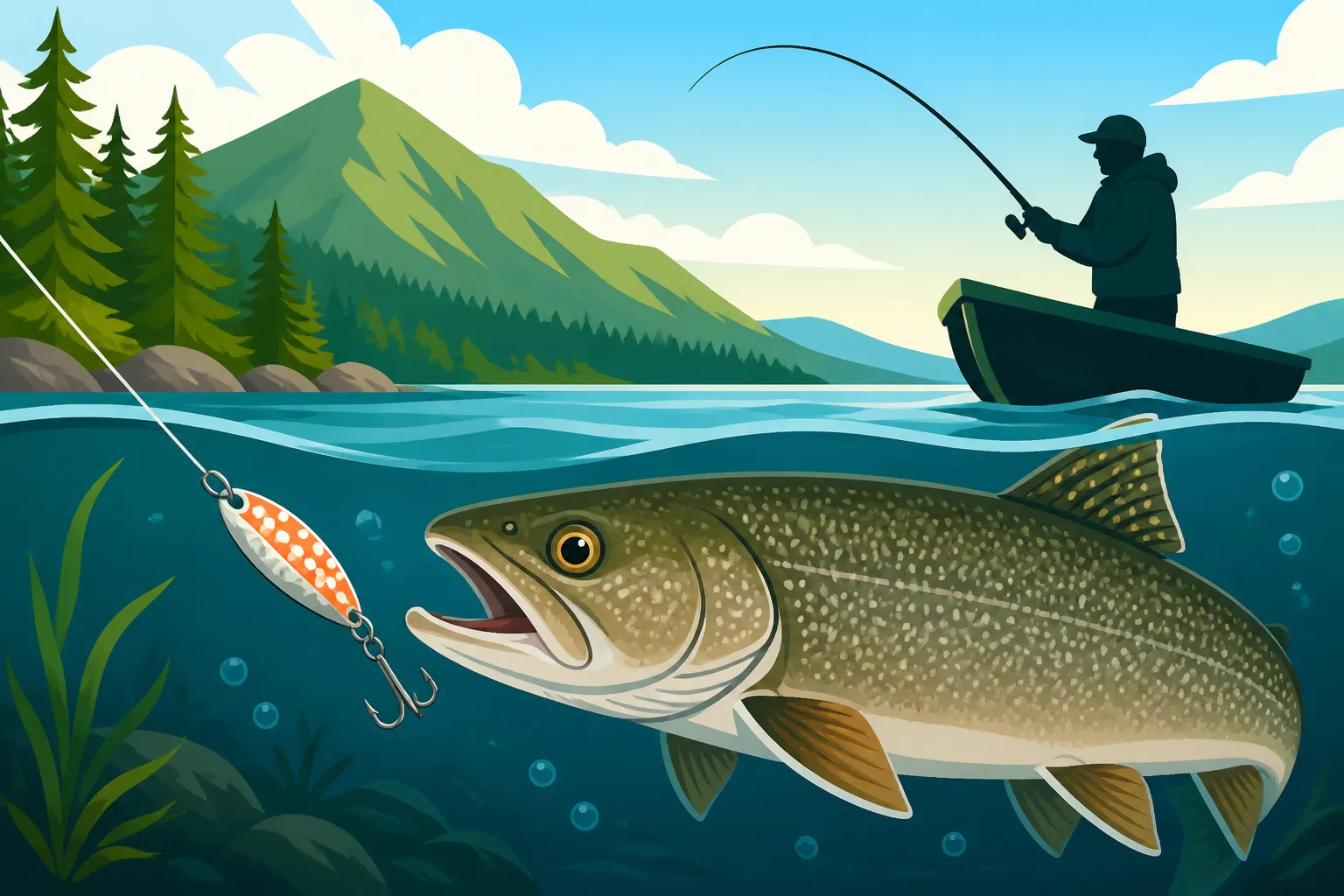
- Spoons: Spoons are probably the most versatile and consistently effective lake trout lures for trolling. Their wobbling, fluttering action mimics an injured baitfish, which is irresistible to lakers.
- Mooselook Wobblers: These classic New England spoons are legendary for a reason. Their unique bend gives them an erratic, enticing wobble.
- Sutton Spoons: Another classic, known for their elegant flutter and thin profile.
- DB Smelt: Excellent for mimicking smelt, especially in silver or blue/silver patterns.
- Colors: Silver, blue/silver, copper, and chartreuse are perennial favorites. On cloudy days or in stained water, brighter colors or those with orange/red accents can stand out. In clear water and bright sun, natural finishes or polished silver often excel. Sizes typically range from 2.5 to 5 inches.
- Stickbaits (Crankbaits/Jerkbaits): Long, slender stickbaits, particularly those designed to dive deep, are excellent choices.
- Rapala Deep Tail Dancers: These are fantastic for reaching depths without much added weight and have a strong wobbling action.
- Storm ThunderSticks: Another reliable option, often fished in natural baitfish patterns.
- Presentation: These are generally trolled at slightly faster speeds than spoons, often 2.5-3.5 mph, to get their full action.
- Dodgers/Flashers with Flies: This combination is incredibly effective, especially when lake trout are keyed in on small baitfish. A dodger or flasher is a large, metallic attractant that wobbles and flashes, drawing fish in. Behind it, on a short leader (12-24 inches), you'll tie a small fly, often a streamer or Mylar-winged fly, that mimics a smelt. The flash of the dodger gets attention, and the subtle action of the fly seals the deal. Brands like Apex and Luhr-Jensen make popular dodgers.
Best Jigging Baits
When you're hovering over a school of fish, these baits will call them in.
- Heavy Jigging Spoons: As mentioned earlier, these are the workhorses of vertical jigging.
- Acme Kastmaster: Known for its erratic, darting action on the fall.
- Swedish Pimple: A classic for ice fishing, but also effective from a boat.
- Colors: Silver, gold, white, and firetiger are great starting points.
- Tube Jigs: Soft plastic tube jigs, often 3-5 inches long, can be deadly, especially in white, smoke, or pearl colors. Insert a jig head into the tube, and it will spiral enticingly on the drop. A slow, subtle twitch of the rod tip makes the tentacles undulate, mimicking a squid or injured baitfish.
- Soft Plastics: Grubs, paddle tails, or Berkley Gulp! minnows on a heavy jig head can also be very effective, offering a more natural profile and scent. The key here is presenting it directly in the face of the fish you're marking. You can find a huge variety of these lures and colors on Amazon, allowing you to experiment and find what works best on your local waters. Our guide to Best Lures for Lake Trout Trolling offers even more specifics.
Live Bait and Scent
Sometimes, the natural appeal of a live offering or an added scent is what's needed to seal the deal.
- Smelt and Shiners: As mentioned in the downlining section, live rainbow smelt are king. Their natural scent and vibrant swimming action are irresistible. If smelt are difficult to source, golden shiners or even small suckers can be good alternatives, especially in areas where they are part of the natural forage base. Always check bait regulations for the specific body of water you're fishing.
- Scent Applications: Even with artificial lures, adding a scent can dramatically improve your strike rate, particularly when fish are hesitant. Commercial scent attractants (like those from Pro-Cure or Mike's Lures) can be applied to spoons, stickbaits, or soft plastics. These scents can mask human odors, entice fish with a "flavor" profile, and often encourage them to hold onto the lure longer, giving you more time to set the hook. This can be especially effective when fish are "short-striking" or just nipping at the tail of your lure.
Navigating Regulations and Conservation
Fishing responsibly means understanding and adhering to the rules designed to protect New Hampshire's valuable fish populations. Lake trout, being a popular sport fish, often have specific regulations.
Understanding New Hampshire Lake Trout Regulations
Navigating fishing regulations can sometimes feel like trying to solve a puzzle, but it's essential for both legality and conservation.
- Bag and Possession Limits: These specify how many lake trout you can keep per day and how many you can have in your possession. These limits can vary not only by species but also by individual water body. For instance, Lake Winnipesaukee might have different limits or slot limits (where fish within a certain size range must be released) than Newfound Lake. Always consult the most current New Hampshire Freshwater Fishing Digest. Our guide on New Hampshire Bag and Possession Limits by Species is an excellent resource, but always cross-reference with the official digest.
- Season Dates and Closures: Lake trout seasons are often open year-round, but there might be specific closures or restrictions, particularly during spawning periods on certain lakes. Ice fishing seasons for lake trout also have set dates. You need to know when you can legally target and harvest these fish. Ignoring season dates can lead to significant penalties. Make sure to check New Hampshire Fishing Season Dates and Closures before you head out.
- Specific Water Body Rules: This is where it gets tricky. Many of New Hampshire's larger lakes and certain smaller ponds have special regulations that supersede the general statewide rules. These special rules might involve different size limits, bag limits, gear restrictions (e.g., fly fishing only, single hook artificials), or even bait restrictions. Always look up the specific rules for the lake you plan to fish in the annual fishing digest. For example, some lakes might have a slot limit to protect intermediate-sized fish, allowing harvest of smaller fish and larger trophy fish, but requiring mid-sized ones to be released. This is a common management tool to foster healthy age structures in fish populations.
Contributing to Lake Trout Conservation
As anglers, we have a responsibility to contribute to the health and sustainability of the fisheries we enjoy.
- Understanding Stock Assessments: The New Hampshire Fish and Game Department conducts regular stock assessments to monitor lake trout populations. These assessments inform management decisions, including stocking efforts, bag limits, and size restrictions. Understanding that these regulations are based on scientific data, rather than arbitrary rules, can help anglers appreciate their importance.
- Reporting Violations: If you witness any fishing violations, such as someone exceeding bag limits, fishing out of season, or using illegal gear, report it to the New Hampshire Fish and Game Department. Enforcement is critical to protecting the resource from those who would exploit it.
- Sustainable Fishing Practices: Beyond legal compliance, adopting a mindset of conservation is key. This includes:
- Practicing Catch and Release Effectively: As discussed, minimize handling, use appropriate tools, and release fish quickly and gently, especially deep-caught fish.
- Limiting Harvest: Even if you're within legal limits, consider if you truly need to keep your limit every time. Releasing larger, older fish can help maintain a healthy breeding population.
- Preventing the Spread of Invasive Species: Always clean, drain, and dry your boat, trailer, and fishing gear thoroughly after each outing to prevent the spread of aquatic invasive species that can harm native fish populations and their habitats.
By understanding and respecting these regulations and adopting a conservation-minded approach, we can all play a part in ensuring that New Hampshire's lake trout fisheries remain strong and vibrant for generations to come.
Disclaimer
Please note that fishing regulations can change frequently. While this guide provides comprehensive information, it is crucial to always consult the official New Hampshire Fish and Game Department's Freshwater Fishing Digest or website for the most current rules and regulations before heading out on the water. This content is for informational purposes only and does not constitute legal advice.