How to fish a jerkbait for early spring bass
Early spring bass fishing in New Hampshire can be a real head-scratcher. The fish are often lethargic, still recovering from winter, and not yet in their aggressive summer feeding patterns. Trying to coax a strike out of a cold-water bass can feel like an impossible task, but that's precisely where the magic of a jerkbait comes into play. This guide will walk you through exactly how to fish a jerkbait effectively, turning those early season frustrations into successful fishing trips.
Why Jerkbaits Excel for Early Spring Bass in New Hampshire
When the ice has just melted off our beautiful New Hampshire lakes and ponds, and the water temperatures are still hovering in the low 40s to low 50s, traditional fast-moving baits often fall flat. Bass are cold-blooded creatures, and their metabolism is still quite slow. They aren't going to chase down a rapidly retrieved spinnerbait or a scorching crankbait. This is where the unique action of a jerkbait truly shines.
Mimicking Lethargic Baitfish
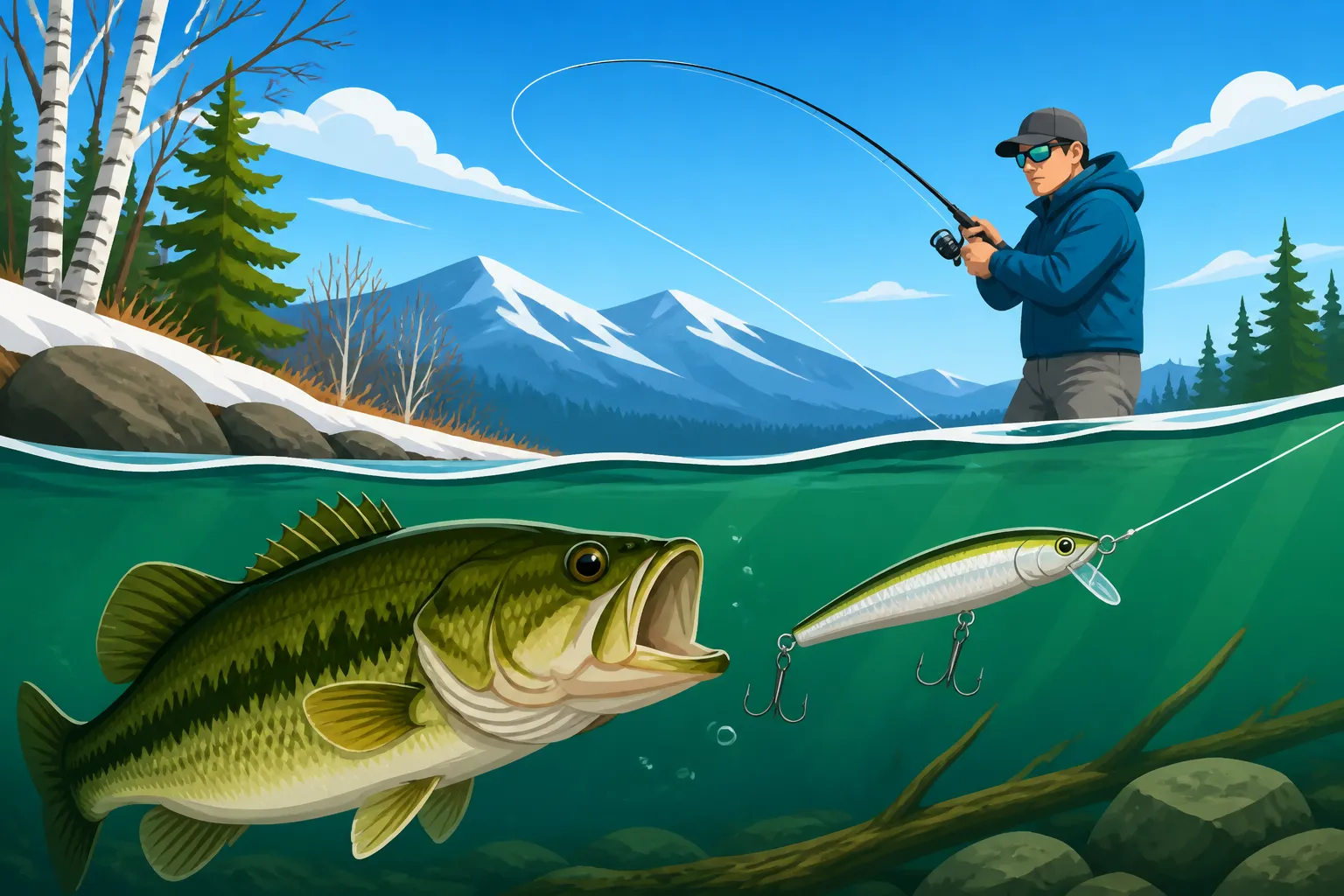
Think about what baitfish are doing in early spring. They're often sluggish themselves, maybe a little disoriented, and definitely not zipping around like they would in warmer water. A jerkbait, particularly a suspending model, perfectly imitates this behavior. When you pause a jerkbait after a series of jerks, it hangs motionless in the water column, just like a cold-stunned or dying baitfish. This vulnerable presentation is incredibly appealing to a bass that's looking for an easy meal, something it doesn't have to expend a lot of energy to catch. It's a subtle yet deadly imitation that cold-water bass simply can't ignore.
Imagine a small school of smelt or shiners, barely moving just off a rocky point on Lake Winnipesaukee. A bass might watch them for a long time, unwilling to commit to a full chase. But if one of those baitfish stops, quivers, and then just hangs there, it becomes an irresistible target. That's the visual trigger you're creating with a jerkbait. It’s not about speed; it's about deception and capitalizing on a bass’s instinct for an easy meal during a time when food is often scarce and their energy is low.
Triggering Reaction Strikes in Cold Water
Beyond mimicking natural prey, jerkbaits are masters at triggering "reaction strikes." Even when bass aren't actively feeding, they have an innate predatory instinct. The erratic, darting motion of a jerkbait, followed by that tantalizing pause, can irritate or surprise a bass into striking. It's a psychological game you're playing with the fish. The sudden stop often happens directly in a bass's strike zone, giving it a split second to react before the "baitfish" moves away again.
This is especially effective when you're targeting areas where bass might be holding tight to cover, like around submerged timber or rocky ledges. A jerkbait flashing past their nose, then suddenly stopping, can elicit an aggressive, territorial strike even if they weren't planning on eating. It's not about hunger; it's about instinct. This is a critical factor when trying to get bites in those early spring conditions where the bass bite can be notoriously tough. Understanding Cold Front Fishing Tactics for New Hampshire Bass can further enhance your approach in these challenging scenarios.
Essential Jerkbait Selection for New Hampshire Waters
Choosing the right jerkbait can make all the difference. Walk into any tackle shop or browse online at Amazon, and you'll find an overwhelming array of options. But for early spring bass in New Hampshire, you want to narrow your focus to a few key characteristics. It’s not just about what looks good to you; it’s about what looks good and behaves correctly for a cold, finicky bass.
Size and Profile Considerations
In early spring, the forage base is usually made up of smaller baitfish that are still growing. Think about the size of young smelt, shiners, or juvenile perch that bass would be feeding on. This means you generally want to lean towards jerkbaits in the 3.5 to 5-inch range. Larger baits can sometimes work, especially for bigger fish, but smaller profiles are often more consistent when the bass are less aggressive.
The profile of the bait also matters. You want something slender that accurately mimics a baitfish. Brands like Megabass, Lucky Craft, and Rapala offer excellent jerkbaits that have that realistic, slender body shape. When you're fishing in clear New Hampshire waters, a realistic profile can be the difference between a curious follow and an actual strike. Don't be afraid to experiment a little, but start with the more common baitfish sizes. This approach applies to both Smallmouth Bass Fishing in New Hampshire and Largemouth Bass Fishing in New Hampshire, as both species will be keying in on similar forage.
Color Patterns for Varied Conditions
Color is crucial, especially in the often-clear waters of New Hampshire's early spring lakes and rivers. A good rule of thumb is to "match the hatch" – imitate the natural forage in the water you're fishing. For New Hampshire, this often means colors that mimic shiners, smelt, or perch. Chrome, silver, and gold sides with black or blue backs are classic baitfish patterns that work almost everywhere.
However, don't be afraid to throw in some curveballs. On cloudy days or in stained water, a more opaque or chartreuse pattern can sometimes stand out better. Firetiger or other brighter colors can also provoke those reaction strikes we talked about earlier. A natural, translucent color can be dynamite on those super-clear, sunny days. It’s always smart to have a few options in your tackle box, including natural baitfish patterns and a couple of brighter, more aggressive choices. This ties into the advice in guides like Best Jerkbait Color for Early Spring Bass.
Suspending vs. Floating/Sinking
For early spring bass, a suspending jerkbait is generally your best friend. Why? Because it stays at the depth you stopped it, hovering motionlessly during the pause. This is critical for getting those long, tempting pauses that cold-water bass crave. Floating jerkbaits will rise during the pause, and sinking jerkbaits will fall, both of which are less effective when you need that "dead stick" presentation.
There are situations where a floating or sinking jerkbait might have a niche. A floating jerkbait can be useful if you're fishing over very shallow cover and want it to rise slightly to avoid snags, or if you want to twitch it on the surface like an injured minnow. Sinking jerkbaits can be good for getting down quickly in deeper water or strong current, but the controlled suspend is almost always preferred for early spring conditions. Invest in good quality suspending jerkbaits; they are worth their weight in gold during this tough time of year.
Mastering the Jerkbait Retrieve in Early Spring
The retrieve is the heart and soul of jerkbait fishing. It's not just about casting it out and reeling it in; it's about creating an illusion of life, then vulnerability, that convinces a bass to strike. And in early spring, the key word is slow. Forget your power fishing instincts; this is finesse.
The Jerk-Jerk-Pause Rhythm
The classic jerkbait retrieve involves a series of sharp rod twitches or "jerks," followed by a pause. The rhythm is usually something like "jerk-jerk-pause," "jerk-jerk-jerk-pause," or even just "jerk-pause." The important thing is that the jerks come from your rod tip, not by reeling. Point your rod tip down towards the water, give it a sharp snap to the side or downwards, take up any slack with a turn or two of the reel handle, and then pause.
This is where the magic happens. The jerks make the bait dart erratically, mimicking an injured or fleeing baitfish. The pause is when the bass often hits. It's the moment of vulnerability that triggers the strike. Experiment with the number of jerks – sometimes two short jerks are best, other times a more aggressive three-jerk sequence. The bass will tell you what they prefer on any given day. Remember that in colder water, a less aggressive jerk and a longer pause are usually more effective.
Adjusting Pause Duration for Water Temperature
This is perhaps the most critical aspect of early spring jerkbait fishing. The colder the water, the longer your pause needs to be. When water temperatures are in the low 40s, your pauses might need to be anywhere from 10 to 30 seconds long. Yes, that feels like an eternity, but it gives those lethargic bass ample time to eye the bait and decide to strike. As the water warms into the upper 40s and low 50s, you can shorten those pauses to 3-10 seconds.
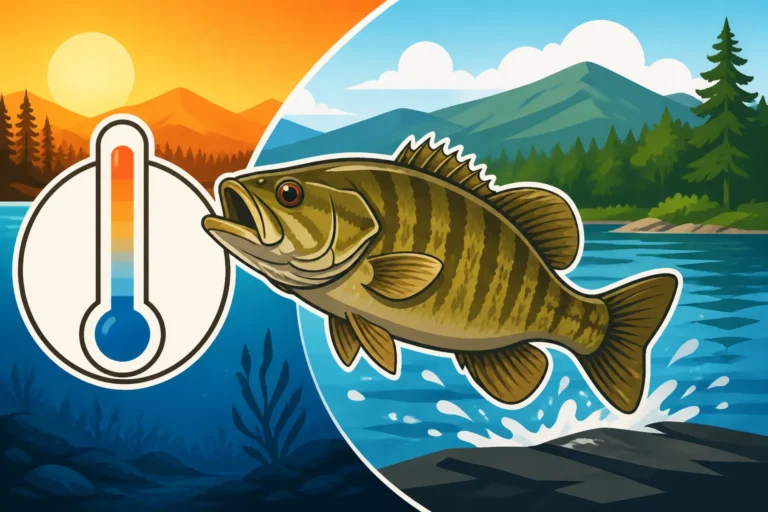
Think about it from the bass's perspective. What water temperature smallmouth bass prefer in their comfort zone is higher than what you'll find in early spring. They're sluggish. They need time. I've often seen anglers get impatient, shortening their pauses, and then wonder why they aren't catching fish. Resist the urge to reel it in too quickly. The pause is your deadliest weapon. On a particularly tough day, even try a "dead stick" where you cast it out, give it a few jerks, and then let it sit completely motionless for a very long time – sometimes minutes – before giving it another twitch.
Depth Control and Target Zones
Controlling the depth of your jerkbait is essential for consistently catching bass. Different jerkbaits are designed to run at different depths. Some might only dive a few feet, while others can get down to 8-10 feet or more. Match your bait's diving depth to the depth where you expect the bass to be holding. In early spring, bass are often found shallower than you might think, especially on sunny days when they push up to absorb warmth, or near transitions from deep to shallow water.
Focus on key structures like rocky points, secondary points, transitions from hard bottom to soft bottom, and the edges of any remaining weed lines. Bass will often position themselves ambushing prey that passes by. If you’re fishing a jerkbait that dives to 5 feet, ensure you’re fishing it in areas where the bass are likely to be at that depth. Vary your casting angles and retrieve paths to cover different parts of the structure. If you notice baitfish on your fish finder, try to work your jerkbait just above or through that school. Understanding these target zones can greatly improve your success, whether you're fishing Best Bass Fishing Lakes in New Hampshire or a smaller, local pond.
Optimal Gear Setup for Jerkbait Fishing
Having the right equipment doesn't just make fishing more enjoyable; it makes you more effective. For jerkbait fishing, a specialized setup helps you impart the right action to the bait and detect those subtle cold-water bites. You can find a good range of options at retailers like Amazon, from budget-friendly choices to high-end gear.
Rod, Reel, and Line Choices
For jerkbaits, a medium-light to medium power rod with a fast to extra-fast action is generally ideal. This action allows for those sharp, crisp jerks that give the bait its erratic motion, while still having enough backbone to handle a fighting bass. A rod length between 6’6” and 7’ will give you excellent control and casting accuracy. Many anglers prefer a baitcasting setup for jerkbaits, as it offers more control for repetitive casting and retrieving, but a good spinning setup can also work, especially for lighter jerkbaits. For instance, Best Spinning Rods for Smallmouth Bass would be a good reference.
When it comes to reels, a gear ratio in the 6.0:1 to 7.0:1 range is perfect. This allows you to quickly take up slack line after each jerk, ensuring you maintain contact with the bait and can detect bites. For line, fluorocarbon is the hands-down winner for jerkbait fishing. Its low stretch provides excellent feel and helps impart that sharp jerking action, while its near invisibility underwater is crucial in clear New Hampshire lakes. A line test of 8-12 lb fluorocarbon is usually sufficient. Avoid monofilament if possible, as its stretch will dampen your lure's action. While we are discussing bass, the general principles of line choice, like those in Best Line Weight for Lake Trout Trolling, highlight the importance of material and strength.
| Gear Component | Recommended Specifications | Why It Matters for Jerkbaits |
|---|---|---|
| Rod | 6'6" – 7' Medium-Light to Medium Power, Fast to Extra-Fast Action | Allows for crisp jerks, good control, and accurate casting. |
| Reel | 6.0:1 – 7.0:1 Gear Ratio | Quickly takes up slack after jerks, maintains contact with bait. |
| Line | 8-12 lb Fluorocarbon | Low stretch for action & feel, low visibility in clear water. |
| Leader (Optional) | 10-15 lb Fluorocarbon (if main line is braid) | Adds abrasion resistance and stealth. |
Essential Accessories and Terminal Tackle
Beyond your rod, reel, and line, a few other accessories can make your jerkbait fishing more productive and enjoyable. A good pair of polarized sunglasses is indispensable for spotting submerged structure and even following your bait in clear water. A reliable pair of pliers or forceps will help you remove hooks quickly and safely, especially when practicing catch-and-release during the New Hampshire Bass Catch-and-Release Season, Explained.
Always carry extra treble hooks in various sizes (typically #6 or #4 for most jerkbaits) because they can get dull or bent from snags or aggressive fish. Split ring pliers are also handy for quickly replacing those hooks. Finally, don't forget a small assortment of snap swivels or duo-lock snaps. While some anglers prefer tying direct, a quality snap allows for quick lure changes without retying and can sometimes enhance the bait's action slightly. Ensure whatever snaps you use are small and lightweight so they don't impede the bait's natural suspending qualities. For any gear needs, browsing the fishing section of Amazon can yield many of these useful tools.
Fishing a jerkbait for early spring bass in New Hampshire might require a bit more patience and a slower approach, but the rewards are absolutely worth it. By understanding why these baits work so well in cold water, selecting the right size and color, mastering the retrieve, and using appropriate gear, you'll be well on your way to catching some fantastic early season bass. Get out there, embrace the pause, and enjoy those first signs of spring on the water!
Disclaimer
This article is for general informational purposes only and does not constitute professional advice. Laws, prices and regulations vary by location and change over time. Consult a qualified professional for guidance on your specific situation.