Best drop shot rig for New Hampshire smallmouth
There's nothing quite like the thrill of targeting New Hampshire smallmouth bass, but let's be honest, these bronzebacks can be incredibly frustrating. Especially on clear, pressured lakes, they often follow baits without committing, or they'll scatter at the first sign of a heavy presentation. If you've ever felt like you're doing everything right but still coming up short, this guide is for you. We're going to dive deep into the best drop shot rig for New Hampshire smallmouth, exploring how this finesse technique can transform those challenging days into productive ones, helping you fool even the wariest of fish.
Why the Drop Shot Shines for New Hampshire Smallmouth
New Hampshire's waters, from the vast expanse of Lake Winnipesaukee to the deep, clear depths of Squam Lake, are renowned for their challenging yet rewarding smallmouth bass fishing. These fish are smart, they've seen a lot of lures, and they live in environments that demand a nuanced approach. This is precisely where the drop shot rig steps in as an absolute game-changer.
The Frustration of Finicky Fish
Picture this: you're out on a beautiful New Hampshire morning, the sun is just coming up, and your fish finder is lit up like a Christmas tree with arcs of fish. You throw your favorite jig or crankbait, maybe even a spinnerbait, right into the school. You reel it back, confident, only to have nothing. No bites, no bumps, just fish watching your lure swim by, perhaps even following it right to the boat, before turning away with what feels like a smirk. It’s an incredibly common scenario in our clear, cold waters, especially when the fish are suspended or feeling the pressure from other anglers.
This frustration is real. You know the fish are there, you've located them, but they just aren't eating what you're throwing. Traditional moving baits can be too aggressive, too fast, or simply not present themselves naturally enough to tempt a hesitant smallmouth. Even dragging a jig can sometimes feel too heavy-handed for fish that are just not in an active feeding mood. This is where the subtle art of finesse fishing becomes not just an option, but often, the only solution to breaking the code of these finicky bronzebacks.
The Drop Shot's Unique Presentation Advantage
The magic of the drop shot rig lies in its ability to present a soft plastic bait in a completely suspended, horizontal, and utterly natural manner. Unlike a Texas rig or a jig, where the bait is always in direct contact with the weight, the drop shot allows your lure to hover tantalizingly in the water column, often several inches or even feet above the bottom. This means you can keep your bait right in the strike zone, whether that's suspended over a rocky point, above a deep weed line, or nestled among submerged timber.
What makes this presentation so effective for New Hampshire smallmouth? It mimics dying baitfish or invertebrates that are struggling to stay afloat – an easy meal that doesn't require the fish to chase or exert much energy. With the weight resting on the bottom, you can impart subtle shivers, shakes, and twitches to your bait without actually moving it from the fish's face. This tantalizing dance can trigger an aggressive reaction strike from even the most lethargic or wary smallmouth. It's a method that screams "easy meal" without the commitment of a fast-moving, aggressive lure, making it incredibly effective when fish are pressured or simply not feeling overly active.
Essential Components of a New Hampshire Smallmouth Drop Shot Rig
To effectively fish a drop shot rig for New Hampshire smallmouth, you need to pay close attention to your gear. This isn't a technique where you can just grab any old rod and reel. Finesse fishing demands specific tools that enhance sensitivity and allow for precise bait control. Getting the right components can make all the difference between a frustrating day and one filled with solid hook-ups.
Rod, Reel, and Line Selection for Finesse
Your rod, reel, and line are the triumvirate of sensitivity and control when drop shotting. For New Hampshire's hard-fighting smallmouth, you need gear that balances finesse with enough backbone to land a strong fish.
When it comes to rods, you'll want a spinning rod that is typically 6'6" to 7'2" in length, with a light to medium-light power and a fast or extra-fast action tip. The longer rod provides better casting distance and leverage for fighting fish, while the fast tip is crucial for detecting those subtle bites and for imparting delicate action to your bait. The light power ensures that the rod loads properly with the light weights and baits used, allowing for accurate casts and a forgiving fight. You can find an excellent selection of these specialized rods on Amazon, often with reviews that speak to their drop shot performance.
For your reel, a 1000-2500 series spinning reel is ideal. A smaller, lighter reel balances well with the finesse rod, reducing fatigue during long days on the water. Look for a reel with a smooth, consistent drag system, as New Hampshire smallmouth can make powerful runs, especially in open water. A quality drag will prevent break-offs when a big fish suddenly decides to dive.
The line setup is perhaps the most critical for sensitivity and stealth. Most experienced anglers opt for a braided mainline with a fluorocarbon leader. A 6-10 lb test braided line, like PowerPro or Seaguar, is excellent for its zero-stretch properties, which transmit even the faintest tap directly to your hands. Braid also casts incredibly well, helping you reach distant humps or points. Since braid is visible in clear water, you'll want to tie on an 8-15 foot section of 6-10 lb test fluorocarbon leader. Fluorocarbon is nearly invisible underwater, extremely abrasion-resistant (perfect for rocky New Hampshire bottoms), and has very little stretch, maintaining good sensitivity. Learning to tie a strong knot, like an FG or a double uni, to connect your braid to fluorocarbon leader is a crucial skill for this technique. If you're wondering about other line types, our guide on Best Fluorocarbon Line for Clear Lake Water delves deeper into this topic.
Hooks and Weights: Small Details, Big Impact
The right hook and weight are vital for the drop shot's effectiveness, impacting both your presentation and your hook-up ratio. Skimping on these components can lead to lost fish and endless frustration.
For hooks, light wire, sharp hooks are key. Popular choices include straight shank, octopus, or wide gap styles. Sizes typically range from #2 up to 1/0, depending on the size of your soft plastic bait. For example, a #1 or #2 hook is great for smaller straight-tail worms, while a 1/0 might be better for a small minnow imitation. Brands like Gamakatsu and Owner are highly favored for their sharpness and strength. Nose-hooking your bait (inserting the hook only through the very tip of the soft plastic) provides the most natural action, while Texas rigging can be used if you're fishing around more snags. The light wire ensures easy penetration on hook sets, even with minimal pressure.
When selecting weights, consider both shape and material. Weights typically range from 1/8 oz to 1/2 oz. Cylindrical (pencil) or tear-drop shaped weights are excellent for navigating through rocks and light cover, as they are less likely to snag than round weights. Tungsten weights, while more expensive, are a favorite for serious anglers because they are much denser and smaller than lead weights of the same size, offering superior sensitivity and a more compact profile. The extra sensitivity allows you to feel subtle changes in bottom composition and detect the lightest bites. You can often find a good variety of tungsten drop shot weights on Amazon.
Here's a quick guide to drop shot weight selection:
| Weight Size | Ideal Depth Range | Conditions | Bottom Type Preference | Material Advantage (Tungsten vs. Lead) |
|---|---|---|---|---|
| 1/8 oz | Shallow (5-15 ft) | Calm, light wind, minimal current | Soft bottom, light rocks | Maximum finesse, subtle feel |
| 3/16 – 1/4 oz | Medium (10-30 ft) | Moderate wind/current, general purpose | Varied, moderate cover | Good balance of feel & drop rate |
| 3/8 – 1/2 oz | Deep (25+ ft) | Strong wind, heavy current, deep water | Heavy rock, steep ledges | Fast sink, maintains bottom contact |
Choosing the right weight depends on the depth you're fishing, the wind, and any current present. You want just enough weight to maintain bottom contact and feel your presentation without it being so heavy that it spooks the fish or creates too much unnatural drag.
Choosing the Best Baits for New Hampshire Smallmouth
The drop shot rig can make almost any soft plastic look irresistible, but some baits consistently outperform others for New Hampshire smallmouth. The key is to select baits that have subtle action and mimic the natural forage found in our lakes and rivers.
Straight-tail worms are a staple for drop shotting. Brands like Berkley Gulp! Minnows, Yamamoto Senko (cut down), or Roboworms are incredibly effective. Their slender profiles and quiver-inducing tails are perfect for nose-hooking, allowing them to shimmy and dance with the slightest twitch of the rod tip. Colors like watermelon, green pumpkin, brown, and natural shad or minnow patterns are usually top producers in New Hampshire's clear waters. Sometimes, a touch of chartreuse on the tail can make a difference.
Minnow imitations are also deadly, especially when smallmouth are feeding on smelt or other baitfish. Small flukes or realistic soft plastic minnows, rigged horizontally, are fantastic. Look for baits with a paddle tail or a subtle fork tail that can generate a little extra vibration or movement. Again, natural baitfish colors like silver, white, and translucent blues are excellent choices.
Small creature baits or tubes can also be effective, particularly if the smallmouth are feeding on crayfish or other bottom-dwelling invertebrates. These offer a slightly bulkier profile and more erratic action when shaken. Rigging these can sometimes involve Texas-rigging them on a small hook, especially if you anticipate getting into some heavier cover. The key across all bait choices is usually a more subtle, natural look rather than something overly aggressive or flashy. Consider the time of year and what forage might be present – if you're targeting smallmouth in the spring, they might be more interested in crayfish patterns; later in the summer, minnows might be key.
Mastering Drop Shot Techniques for New Hampshire Waters
Once you have your rig assembled, knowing how to properly present it is paramount. The drop shot isn't just a matter of casting and reeling; it's a finesse technique that requires a deliberate approach to rigging, casting, and retrieval to unlock its full potential, especially when dealing with the astute smallmouth of New Hampshire.
Rigging and Casting: Getting it Right
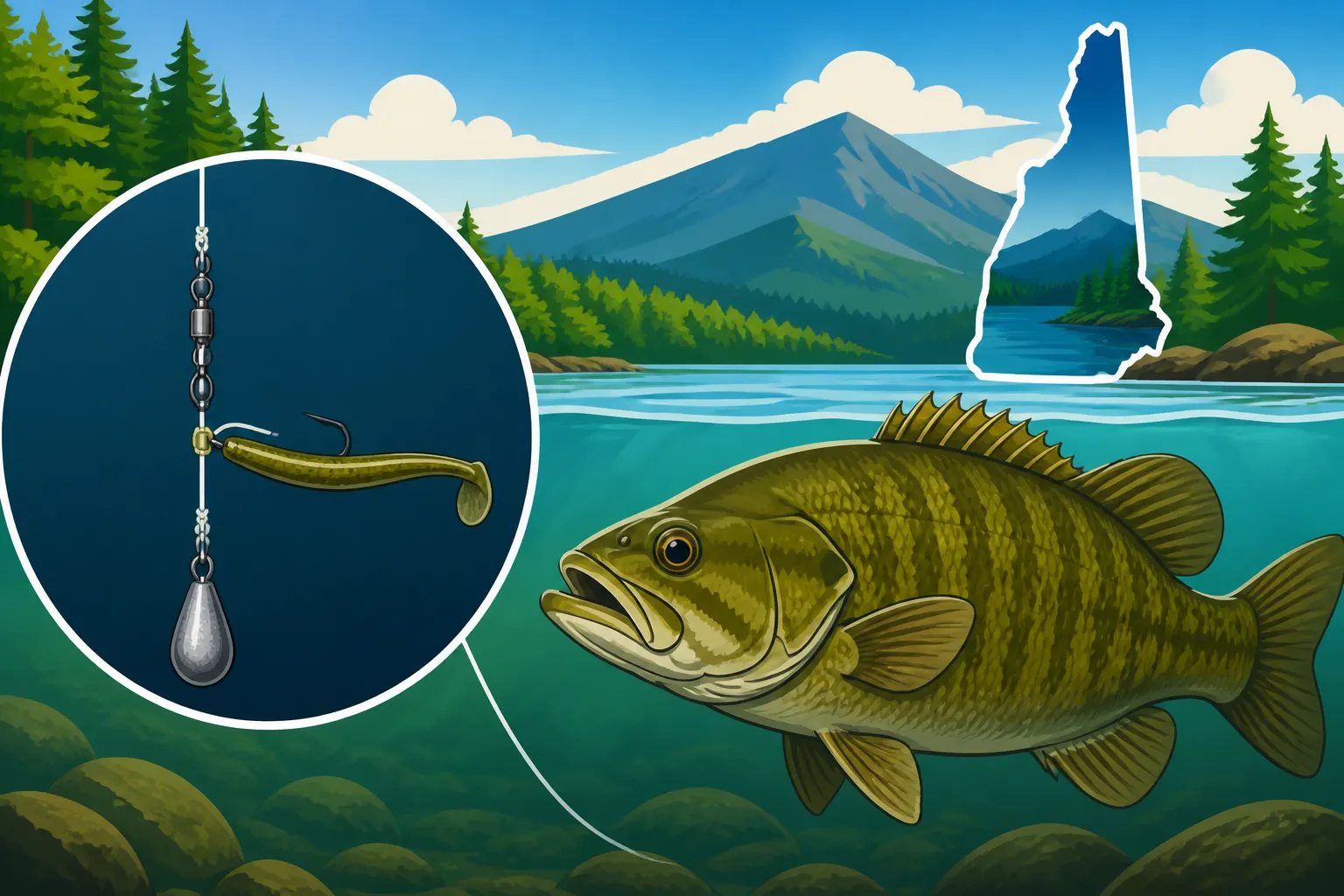
The foundation of a successful drop shot presentation begins with proper rigging. Tying your hook is critical. The most common and effective way is to use a Palomar knot. After tying the knot, pass the tag end of the line back through the eye of the hook from the top down. This makes the hook stand out horizontally from the main line, ensuring your bait presents perfectly. Then, tie your drop shot weight to the tag end. This can be done with a simple overhand knot or a specialized clip if your weight has one.
The distance between your hook and your weight, often called the "leader length," is incredibly important. If smallmouth are suspended a few feet off the bottom, you'll want a longer leader. If they're hugging the bottom contour, a shorter leader is better. A good starting point is usually 12-18 inches, but don't be afraid to experiment. When fishing deeper water, sometimes a leader of 3-4 feet can be effective. This allows you to present your bait precisely at the depth the fish are holding, as indicated by your fish finder.
When it comes to casting, a gentle, controlled lob cast is generally preferred over a hard, aggressive overhead cast. This minimizes tangles (which are common with drop shot rigs if not cast smoothly) and allows the bait and weight to settle more naturally in the water. For optimal results, aim to cast beyond your target structure or fish, and then let the rig sink to the bottom. Maintaining a semi-slack line as it sinks can help prevent the bait from spinning, ensuring a clean descent.
Key Presentations and Retrievals
The beauty of the drop shot is the multitude of ways you can work your bait, each designed to entice a strike without moving the weight from the fish's immediate vicinity.
For vertical presentations, this is where the drop shot truly excels from a boat or kayak over deep structure. Once your weight hits the bottom, keep a relatively tight line and simply hover your rod tip over the water. Impart subtle twitches with your wrist, making the bait dance and quiver. Your weight stays put, but the bait above it looks alive. This is incredibly effective when you've pinpointed fish on your fish finder relating to a rock pile, a submerged hump, or a deep ledge on a lake like Lake Winnipesaukee. Our guide to Best Fish Finders for New Hampshire Lakes can help you locate these sweet spots.
Dragging or drifting is another powerful technique, especially when covering broader areas or from a kayak. Allow your weight to drag along the bottom as you slowly retrieve or drift with the wind/current. Every now and then, pause and give the rod tip a few shakes to activate the bait. This can be particularly effective on flatter breaks or shelves where smallmouth might be spread out, looking for food.
The "shaking" or "wiggling" retrieve is the classic drop shot move. With the weight on the bottom, maintain tension on your line and gently shake your rod tip. The goal is to make your soft plastic bait quiver and pulsate without moving the weight. Think of it as vibrating the bait in place. Pause frequently, allowing the bait to rest and then resume its enticing dance. This subtle action often triggers bites from hesitant fish that might ignore a faster-moving lure.
Remember to adapt your technique to the conditions. In high water or during a cold front, a more subtle, slower presentation might be necessary. In contrast, during warmer periods or when fish are more aggressive, you might get away with more pronounced twitches. Being versatile with your retrieve is key to unlocking consistent success on New Hampshire waters.
Where to Deploy Your Drop Shot Rig in New Hampshire
The drop shot rig is not a catch-all solution, but it is exceptionally effective in specific scenarios and locations that are abundant throughout New Hampshire. Knowing where and when to use it will greatly increase your success rate.
The drop shot shines brightest in clear, deep water lakes that are common in the Granite State. Think about the gin-clear waters of Squam Lake, Newfound Lake, or parts of Lake Sunapee. In these environments, fish can be spooky and see traditional presentations from a distance. The stealth of fluorocarbon and the natural presentation of a drop shot are paramount. Smallmouth bass in these lakes often relate to deep structure.
Target rocky points, humps, ledges, and steep drop-offs. These are classic smallmouth haunts where they ambush baitfish. On a lake like Winnipesaukee, finding a deep rock pile or a transition from sand to rock can be a goldmine. Use your electronics to identify these structures and look for baitfish or arcs of fish suspended around them. The drop shot allows you to precisely position your bait right in their feeding zone. You can learn more about these spots in our Best Fishing Lakes in New Hampshire guide.
Another prime location is around deep weed lines. While smallmouth prefer hard bottom, they will often patrol the edges of deeper grass beds, particularly if baitfish are hiding there. The drop shot can be rigged to hover just above the weeds, preventing snags while still presenting the bait naturally to passing bass. Look for areas where the weeds transition to a hard bottom or where there are breaks in the weed growth.
Finally, don't overlook marinas or bridge pilings in deeper water. These man-made structures provide cover and ambush points, and the vertical presentation of a drop shot is perfect for working around them, especially if you're targeting fish holding tight to the pilings. Remember that New Hampshire fishing regulations explained specify rules for fishing around structures, so always be aware of your surroundings and local laws.
Common Pitfalls and Troubleshooting
While the drop shot rig is incredibly effective, it's not foolproof. Like any finesse technique, there are common mistakes that anglers make which can lead to frustration. Understanding these pitfalls and knowing how to troubleshoot them will help you refine your technique and increase your success on New Hampshire's smallmouth waters.
Avoiding Common Drop Shot Mistakes
Even seasoned anglers can fall victim to common errors when drop shotting. The key to consistency is being aware of these traps and proactively avoiding them.
One of the most frequent mistakes is using too heavy a line or weight. While it might feel safer to use heavier line, a thick fluorocarbon leader (above 10 lb test in clear water) can be visible to wary smallmouth and reduce the natural action of your bait. Similarly, an overly heavy weight can make your presentation feel unnatural, cause too much disturbance when it hits the bottom, and reduce your ability to feel subtle bites. Stick to the recommended line and weight sizes for finesse fishing. Remember, the goal is stealth and a delicate presentation. If you find yourself frequently snagging, consider a lighter wire hook that will bend out, or experiment with different weight shapes like the cylindrical "pencil" weights which are designed to slide through rocks.
Another common pitfall is overworking the bait. The drop shot is about subtlety. Many anglers, used to more aggressive techniques, will shake the rod too hard or retrieve the bait too quickly. This can make the bait look unnatural and can spook fish. Focus on minimal movements: gentle shivers, tiny twitches, and long pauses. Let the water movement and the inherent action of your soft plastic do most of the work. Smallmouth often pick up the bait on the pause, so resist the urge to constantly move it.
Ignoring fish finder feedback is another mistake. Your fish finder is your best friend when drop shotting, especially on large, deep lakes. If you're marking fish suspended at 20 feet, but your bait is set for 12 inches off the bottom in 30 feet of water, you're not in the strike zone. Pay attention to the depth the fish are holding, and adjust your leader length accordingly. Also, watch for baitfish schools, as smallmouth are often nearby. For more on using this crucial tool, check out our guide on Best Fish Finders for New Hampshire Lakes.
Finally, poor knot tying can lead to devastating break-offs, especially with the powerful runs of New Hampshire smallmouth. Practice your Palomar knot for the hook and your braid-to-fluoro connection (like an FG or double uni knot) until they are consistently strong and clean. Always wet your knots before tightening to prevent line damage, and trim your tag ends cleanly. Regularly inspect your line for nicks and abrasions, especially after fishing around rocks, and re-tie as needed. A few minutes of prevention can save you from losing a trophy fish.
When the Drop Shot Isn't the Answer
While the drop shot is a phenomenal technique, it's not a silver bullet for every situation. There are definitely times when other presentations will be more effective, and being adaptable is a hallmark of a successful New Hampshire angler.
For instance, if smallmouth are aggressively chasing baitfish on the surface during low light conditions or a hot summer morning, a topwater lure like a popper or a walking bait will often outperform a drop shot. The excitement of a topwater strike is hard to beat, and when fish are feeding actively, they want to chase. Similarly, if you're seeing fish attacking schools of bait in open water, a crankbait or a swimbait might be a better choice to cover water quickly and appeal to those actively feeding fish. Our guide on Best Crankbaits for New Hampshire Smallmouth Bass provides great options for these scenarios.
Another situation where the drop shot might not be optimal is in heavy, thick cover. While you can Texas rig a drop shot bait, it's generally a finesse presentation. If you're trying to extract bass from dense lily pads, thick cattails, or extremely brushy areas, a heavier jig, a punch rig, or a weedless frog might be more appropriate. These presentations are designed to penetrate and pull fish out of tough cover without snagging repeatedly.
Finally, during certain times of the year, fish might be concentrated in very shallow water, or they might prefer a moving bait. For example, during the early post-spawn period when bass are guarding fry, or in the fall when they are aggressively feeding up for winter, a faster retrieve with a different lure could be more productive. Understanding Best Time of Year to Fish in New Hampshire for specific species can help you decide when to switch up your tactics. The drop shot is a tool in your arsenal; knowing when to pick it up and when to put it down is crucial for consistent success on New Hampshire's diverse waters.
Disclaimer
This article is for general informational purposes only and does not constitute professional advice. Laws, prices and regulations vary by location and change over time. Consult a qualified professional for guidance on your specific situation.