Best streamer patterns for New Hampshire brown trout
There’s nothing quite like the thrill of chasing wild brown trout, especially here in New Hampshire. They're often the most elusive and challenging of our trout species, known for their cunning and their preference for holding in tricky lies. If you've spent hours casting dries or nymphs only to come up empty-handed for those bigger, more aggressive browns, you’re not alone. This guide is dedicated to unlocking the secret to consistently hooking into those beautiful, often trophy-sized brown trout using one of the most exciting and effective methods: streamer fishing.
Understanding Brown Trout Behavior in New Hampshire Rivers
Brown trout are, by nature, predators. While they'll certainly sip tiny midges or slurp up a well-presented Caddis if the opportunity arises, their primary diet, especially as they grow larger, shifts towards bigger protein. Think baitfish, crayfish, and even smaller mammals or amphibians that might fall into the water. This predatory instinct is what makes streamer fishing so incredibly effective for them.
Why Streamers are So Effective for Browns
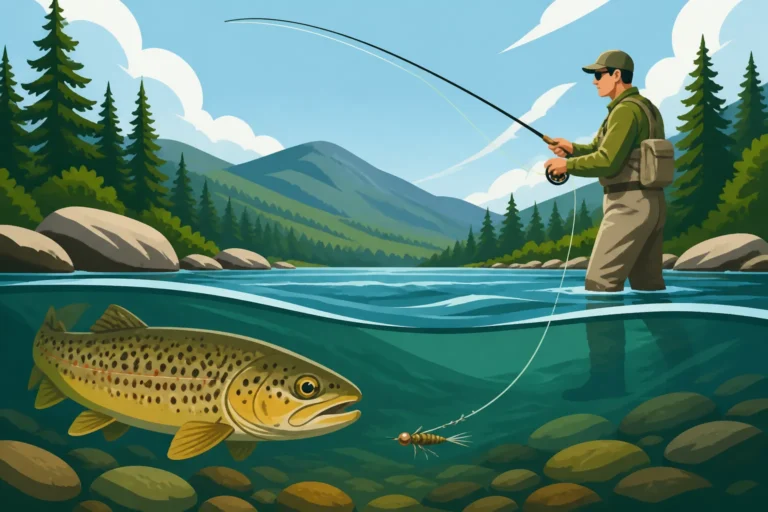
Imagine a chunky, territorial brown trout tucked under an undercut bank on the Pemigewasset River, or lurking in the deep pools of the Connecticut River. They're not actively cruising the surface for subtle insects. Instead, they’re waiting, conserving energy, ready to ambush anything that looks like a substantial meal. A streamer, designed to imitate fleeing or injured baitfish, crayfish, or other aquatic creatures, triggers this aggressive, territorial response. It’s less about mimicking a specific bug and more about provoking a "kill or be killed" reaction. When a streamer darts erratically through their strike zone, it often draws out a savage strike that's hard to replicate with other fly fishing methods.
Key Forage in New Hampshire Waters
To pick the right streamer, you need to think like a brown trout. What are they eating in our New Hampshire waters?
- Baitfish: This is huge. Smaller fish like sculpins, dace, juvenile suckers, and even tiny trout are a staple in many brown trout diets. In larger rivers or those connected to lakes, even rainbow smelt can be a critical food source, especially for bigger browns and landlocked salmon. Understanding these local baitfish species can inform your color and size choices for streamers.
- Crayfish: Many of our New Hampshire rivers and lakes have healthy populations of crayfish. These crustaceans are high-protein meals, and brown trout absolutely gorge on them when available. Look for dark, rocky bottoms – classic crayfish habitat – and you’ll likely find brown trout keying in on them.
- Leeches: Often overlooked, leeches are another easy meal for a hungry brown. They’re slow, dark, and present a significant caloric intake without much effort.
- Other Opportunistic Meals: Mice, frogs, salamanders – these can all become brown trout food, particularly during higher water or at night. While specialized patterns exist for these, many general baitfish or bugger patterns can effectively suggest them.
Understanding what's on the menu helps you select patterns that imitate these critical food sources, increasing your chances of success.
Top Streamer Patterns for New Hampshire Brown Trout
When it comes to streamer patterns for our New Hampshire brown trout, versatility and imitation are key. Here are some tried-and-true favorites that should always have a place in your fly box.
The Wooley Bugger: A Versatile Workhorse
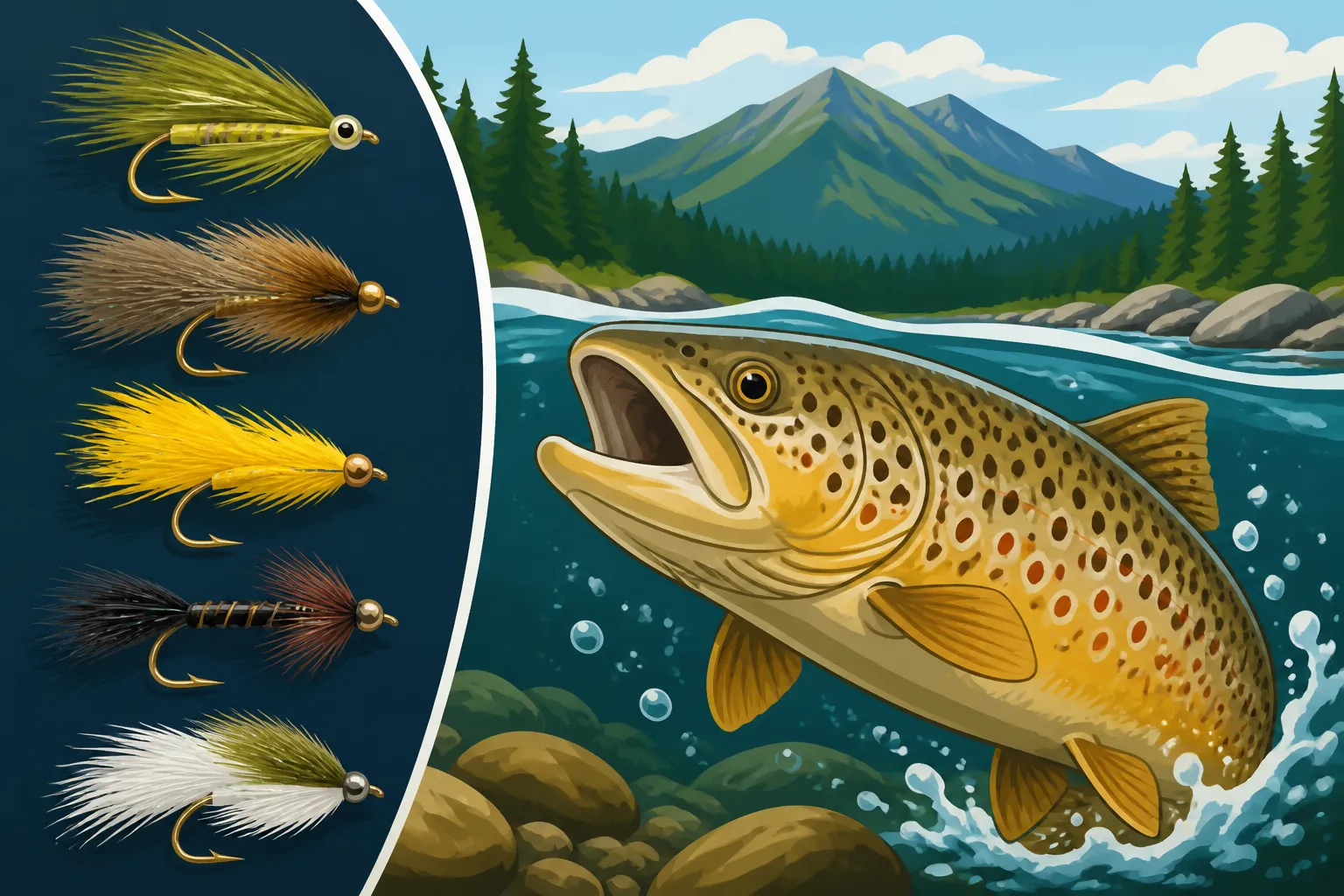
Ah, the Wooley Bugger. If you only had one streamer pattern, this would be it. It’s simple, effective, and can imitate an astonishing array of prey: leeches, crayfish, sculpins, aquatic insects, and even small baitfish. Its pulsating marabou tail and hackled body give it an irresistible, lifelike action in the water.
- Why it works: Its impressionistic design allows it to suggest many different food sources without being an exact imitation of any one. The soft, flowing materials undulate with every twitch and pause, making it look alive. The addition of a bead head or lead wraps ensures it sinks quickly to the desired depth where brown trout often hold.
- Color variations: Black is perhaps the most classic and universally effective color, excellent for imitating leeches or dark baitfish, especially in stained water or low light. Olive is fantastic for sculpins and other green-hued forage. Brown and tan are great for crayfish and bottom-dwelling baitfish. White or grey can be deadly for imitating small baitfish in clear water. Consider throwing a black bugger after dark – it's a proven big-fish catcher.
- Retrieve techniques: The beauty of the Wooley Bugger is its adaptability. You can strip it quickly to mimic a fleeing baitfish, dead drift it through a current seam like a wounded critter, or jig it along the bottom like a crayfish. Experiment with varying strip lengths and pauses. Often, a longer pause will trigger a strike as the marabou settles.
You can find excellent Wooley Bugger assortments on Amazon, often in multi-packs covering various sizes and colors, which is a great way to start building your collection.
Sculpin Patterns: Imitating Bottom Dwellers
Sculpins are a vital food source for brown trout in many New Hampshire rivers, particularly those with rocky bottoms like sections of the Swift River or Ellis River. These small, bottom-hugging fish are an easy, high-calorie meal, and patterns that mimic them are incredibly effective.
- Why they work: Sculpins are squat, camouflaged fish that dart and hide among rocks. Streamers designed to imitate them often have a broad, flat head, a mottled body, and a short, stout profile. They're typically fished on or near the bottom, mimicking a sculpin trying to evade a predator.
- Key patterns: The Muddler Minnow is a classic sculpin pattern, with its spun deer hair head creating a disturbance and shedding water in a lifelike way. Other great options include the Sculpin Helmet patterns, which use weighted heads to quickly get down and bounce along the bottom, and various Zoo Cougar or Dally's Lama variations which offer a more modern, articulated take on the sculpin profile. Colors like olive, brown, and natural mottled grey are best.
- How to fish them: These patterns are best fished with short, erratic strips and pauses, allowing them to "hop" or "swim" along the riverbed. Focus on current seams, deep pockets, and around large rocks or logjams. Brown trout will often be tucked right next to structure, waiting for such a meal to come by.
Smelt and Baitfish Imitations
For larger brown trout, especially in our bigger rivers and lakes where baitfish like rainbow smelt are prevalent, streamers that accurately imitate these forage fish are essential. Think about the big fish in Lake Winnipesaukee or Sunapee Lake, or even the Connecticut River – they are absolutely keyed into smelt.
- Why they work: These patterns are designed to mimic the slender profile and flash of common baitfish. The flash can come from Mylar, Krystal Flash, or reflective materials incorporated into the tie. Their design often allows for quick, darting retrieves, simulating a baitfish trying to escape.
- Classic patterns: The Gray Ghost and Black Ghost are iconic New England streamer patterns, originally designed for landlocked salmon but equally effective for large brown trout. The Mickey Finn is another vibrant, flashy pattern that triggers aggressive strikes. More modern patterns like the Clouser Minnow or Flashtail Whitenose also excel at mimicking baitfish. Consider checking out local fly shops in areas like Lincoln or Meredith; they often have great regional patterns tied to imitate local forage.
- Best conditions: These patterns shine in clear to slightly stained water, especially when fished at depths where baitfish are schooling. They are particularly effective during times when baitfish are active, such as early morning or late evening, or during specific baitfish runs. When you're thinking about Landlocked Salmon Fishing in New Hampshire, many of the same smelt imitations will cross over effectively for brown trout.
- Retrieval: A varied retrieve is often best. Try a few quick strips, then a pause, then a slow retrieve. This stop-and-go motion mimics an injured or disoriented baitfish, which is often too tempting for a brown trout to pass up.
Crayfish Patterns: The Underrated Meal
Many anglers overlook crayfish patterns, but New Hampshire brown trout absolutely love them. These crustaceans are a rich source of protein and are found in abundance in many of our rocky, cool-water environments.
- Why they work: Crayfish are bottom-dwellers, and brown trout will actively search them out. Patterns are typically dark (brown, olive, black) with a bulky profile and often feature rubber legs that provide subtle movement even when the fly is paused. They are tied to sink quickly and be fished along the bottom, where crayfish live.
- Common patterns: The NearEnough Crayfish or various rubber-legged buggers tied with a more substantial, segmented body can be excellent. Even a standard Wooley Bugger in brown or olive, fished with a jigging motion, can effectively imitate a crayfish.
- Where and how to fish them: Target areas with rocky bottoms, submerged logs, and undercut banks. Crayfish patterns are best fished with short, sharp jigs that make them "crawl" or "dart" along the bottom, followed by pauses. Most strikes will occur on the pause as the fly settles. Don't be afraid to let it sit on the bottom for a few seconds before retrieving again.
Essential Techniques for Fishing Streamers in New Hampshire
Having the right streamer patterns is only half the battle. Knowing how to present them effectively is what truly unlocks their potential for New Hampshire brown trout.
Reading the Water and Targeting Brown Trout Lies
Brown trout are ambush predators, and they'll choose their lies carefully to maximize their chances of catching food while minimizing energy expenditure.
- Structure is King: Look for anything that breaks the current or offers cover: large rocks, submerged logs, fallen trees, undercut banks, and bridge abutments. These are prime ambush points. Cast your streamer upstream of the structure and allow it to swing past, or strip it directly through the cover.
- Current Seams and Eddies: Where fast water meets slow water, baitfish and other food items often become disoriented or swept into the softer currents. Brown trout will sit in the slower water, darting out into the seam to intercept prey. Target these transition zones.
- Deep Pools and Runs: Don't overlook the deep, dark pools. Larger brown trout often hold in these areas, especially during bright conditions or when water temperatures are higher. Ensure your streamer gets down to their depth.
- Tailouts and Riffles: While often associated with smaller trout, the tailout of a pool (where the water speeds up before a riffle) can be a fantastic spot for browns, especially if there's structure. Baitfish often get pushed through these areas.
Remember, brown trout can be incredibly spooky. Approach your target water carefully, making your first cast count, and try not to wade directly into obvious holding water.
Retrieve Techniques for Different Conditions
The way you retrieve your streamer can be as important as the pattern itself. Vary your retrieve until you find what the fish are keying into.
- The Strip-Strip-Pause: This is perhaps the most common and effective retrieve. Make a cast, allow the streamer to sink to the desired depth, then use short (6-12 inch) strips of your fly line, followed by a brief pause. The pause is critical – many strikes occur as the streamer flutters or sinks. Vary the length and speed of your strips.
- The Swing: Often used in rivers, especially with a sink-tip line. Cast quartering downstream, mend your line to control the swing speed, and let the current do the work, sweeping your streamer across the current. As the fly swings, it looks like a baitfish struggling across the current. Keep a tight line so you can feel the subtle takes.
- Dead Drifting (with a twitch): While streamers are typically "active" flies, sometimes a dead drift with occasional twitches can be deadly, especially for crayfish or sculpin imitations in slower water. Let the fly drift naturally, but impart a subtle jig or twitch every few feet to make it look alive.
- The Jigging Retrieve: Particularly effective with weighted patterns or bead-head Wooley Buggers. After casting, let the fly sink to the bottom. Then, use your rod tip and short strips to make the fly hop or "dance" along the bottom, mimicking a crayfish or sculpin. This is especially good in deeper pools or along rocky ledges.
Gear Considerations for Streamer Fishing
Having the right equipment makes a big difference in successfully presenting and fighting those aggressive brown trout.
- Rod Weight: For most New Hampshire trout fishing with streamers, a 5 or 6-weight fly rod is ideal. A 5-weight offers enough backbone to cast larger streamers and fight bigger fish, while a 6-weight provides even more power for really big flies or windy conditions. If you're consistently throwing very large, heavy patterns, a 7-weight might be justified. For some specific recommendations, you might want to look into Best Fly Rods for New Hampshire Trout Streams.
- Fly Line: This is crucial. A weight-forward floating line will work for smaller, unweighted streamers in shallow water, but to effectively fish most streamers, you'll want something that gets your fly down.
- Sink-Tip Lines: These have a short section (10-15 feet) of sinking line at the front, attached to a floating running line. They are incredibly versatile for rivers, allowing you to get your streamer down quickly in moderate depths without dragging the entire line underwater.
- Full Sinking Lines: For deep pools, lake fishing, or strong currents, a full sinking line (various sink rates, e.g., Type III, Type IV, Type VI) will get your fly to the desired depth and keep it there throughout the retrieve.
- Leader Setup: Simplicity is often best. A 4-6 foot leader of 0X to 2X fluorocarbon is a good starting point. Fluorocarbon sinks faster than monofilament and is more abrasion-resistant, which is key when fishing around structure. You want something strong enough to turn over larger flies and withstand the violent headshakes of a big brown. Consider adding a small tippet ring if you frequently change flies, as this saves your leader material.
- Streamer Boxes: A good fly box that can accommodate larger, bulkier streamers without crushing them is essential. Many companies, including those found on Amazon, offer robust, waterproof fly boxes with slotted foam inserts perfect for streamers.
Seasonal Considerations for Streamer Success
Brown trout behavior changes throughout the year, and understanding these seasonal shifts can significantly improve your streamer fishing success in New Hampshire.
Spring Runoff and Post-Spawn Aggression
Spring in New Hampshire brings higher water levels and often colder temperatures from snowmelt. This can be a challenging but rewarding time for streamer fishing.
- High Water Tactics: Brown trout will often move out of the main current into slower seams, eddies, and flood channels to avoid the strong flow and to find food that's been dislodged. Fish heavier, darker streamers to get down through the turbulent water. Large Wooley Buggers in black or olive, or substantial sculpin patterns, are excellent.
- Post-Spawn Recovery: If you're fishing later in spring, after the browns have recovered from their fall spawning activities, they can be incredibly aggressive as they look to pack on weight. Their metabolism is increasing, and they're willing to chase a meal.
- Timing: Focus on periods when water levels are dropping or stabilizing, and avoid fishing immediately after heavy rain when rivers are blown out and muddy. Overcast days can be particularly good for streamer fishing in spring.
Summer Low Water and Nocturnal Hunts
New Hampshire summers can mean lower, clearer water, and warmer temperatures, making brown trout more wary during the day.
- Early Morning/Late Evening: These are prime times. As the sun rises and sets, browns become more active, moving out of their deep, cool lies to feed. Fish smaller baitfish patterns or Wooley Buggers in natural colors during these low-light periods.
- Targeting Deep Pools and Oxygenated Water: During the heat of the day, brown trout will seek out the deepest, coolest, most oxygenated water. Concentrate your efforts in the largest pools, under deep undercut banks, or near tributary junctions where cooler water enters the main stem. Full sinking lines are often necessary to reach these fish.
- The Nocturnal Hunt: For truly trophy-sized brown trout, summer nights are often the best time. Large browns are predominantly nocturnal feeders, venturing out under the cover of darkness to hunt bigger prey. Fish large, dark streamers (e.g., black Wooley Buggers, articulated baitfish patterns) that create a strong silhouette against the night sky. Cast close to the bank and strip aggressively. Be extra cautious if fishing at night – safety first!
Fall Spawning Runs and Prime Time Fishing
Fall is arguably the absolute best time for streamer fishing for brown trout in New Hampshire. As water temperatures drop and the spawning urge kicks in, browns become incredibly aggressive.
- Aggressive Males: Male brown trout, in particular, become highly territorial and protective of their spawning areas. They will readily attack any perceived intruder, including a well-presented streamer. Use larger, flashier patterns.
- Targeting Spawning Areas (Ethically): While browns will move onto redds (spawning beds) to reproduce, it is generally considered unethical and often illegal to target actively spawning fish on redds. Instead, focus on fish holding in deeper water adjacent to known spawning grounds, or in the staging areas where they congregate before moving onto the redds.
- Baitfish Blitzes: Fall also often sees baitfish schooling up, which can trigger intense feeding frenzies. Smelt and baitfish imitations shine during these periods.
- Color Choices: While natural colors are always good, don't shy away from brighter colors like orange or red in fall, which can mimic eggs or simply trigger an aggressive response from territorial fish.
| Streamer Pattern | Primary Imitation | Best Conditions | Retrieve Style | Common Sizes (Hook) |
|---|---|---|---|---|
| Wooley Bugger | Leeches, Sculpins, Crayfish, Baitfish | All-around, especially versatile | Strip-strip-pause, jig, dead drift | #4 – #10 |
| Muddler Minnow | Sculpins, Small Baitfish | Rocky bottoms, clear to stained water | Short strips, jigging, swing | #4 – #10 |
| Gray Ghost | Smelt, Slender Baitfish | Larger rivers, lakes, clear water | Quick, erratic strips, swing | #2 – #8 |
| Black Ghost | Dark Baitfish, Leeches | Stained water, low light, night | Steady strip, swing | #2 – #8 |
| Clouser Minnow | Baitfish (various) | All water types, especially effective | Erratic strips, quick jigs | #4 – #8 |
| NearEnough Crayfish | Crayfish | Rocky bottoms, near structure | Short hops along bottom, pauses | #4 – #8 |
| Articulated Streamers | Larger Baitfish | Trophy hunting, high water, night | Aggressive strips, stop-and-go | #2 – #1/0 |
Streamer fishing for New Hampshire brown trout is an exhilarating and often rewarding experience. It requires a different mindset than traditional dry fly or nymph fishing, focusing on aggression and presentation of a larger meal. By understanding brown trout behavior, stocking your fly box with effective patterns, and mastering various retrieve techniques, you'll be well on your way to hooking into some truly memorable fish across the Granite State. Don't be afraid to experiment with different patterns and retrieves—sometimes the browns tell you exactly what they want!
Disclaimer
Please remember that fishing regulations, including bag limits, season dates, and specific rules for certain water bodies, can change. Always consult the most current New Hampshire Freshwater Fishing Digest published by the New Hampshire Fish and Game Department before heading out on your trip. This guide is for informational purposes only and should not replace official regulations.