Best technique for tailwater trout below a dam
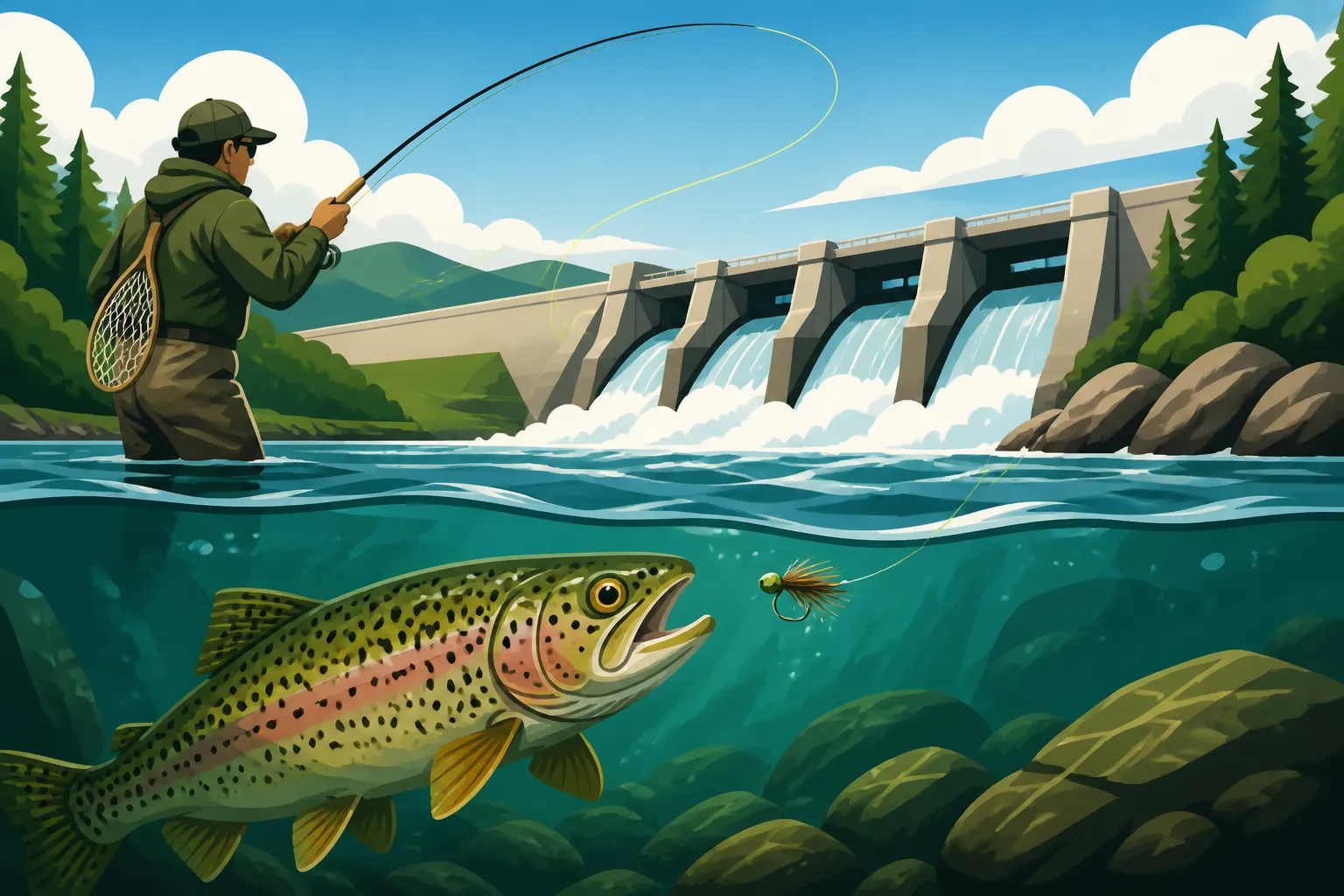
Fishing below a dam in New Hampshire can be one of the most rewarding, yet frustrating, experiences for an angler. These "tailwater" fisheries present a completely different challenge compared to freestone rivers or stillwater ponds, often boasting consistent cold water and robust trout populations, but also extremely savvy fish that have seen every fly in the book. If you've found yourself scratching your head after a day on a tailwater, wondering why those beautiful trout are ignoring your offerings, this guide is for you. We'll break down the unique dynamics of these environments and equip you with the best techniques to trick those finicky tailwater trout.
The Unique Ecosystem of New Hampshire Tailwaters
Tailwaters, the sections of rivers immediately below dams, are unique aquatic environments sculpted by human intervention. Unlike natural rivers that experience fluctuating temperatures and flows throughout the year, tailwaters often have a more stable, cold, and often nutrient-rich environment. This consistency creates prime habitat for trout, but also breeds a highly specialized fishing scenario that requires a different approach.
Consistent Flow and Temperature: A Double-Edged Sword
One of the most defining characteristics of a tailwater is its consistent flow and water temperature. Dams release water from the bottom of their reservoirs, which tends to be much colder and more stable than surface water, especially during warmer months. This creates an ideal year-round habitat for cold-water species like trout, allowing them to thrive even when upstream sections might be too warm. However, this consistency can also be a challenge. The steady flow often means strong currents that can make presenting a fly naturally difficult. Moreover, sudden changes in water release schedules can drastically alter the fishing conditions in minutes, turning a calm drift into a raging torrent or vice-versa. Understanding the dam's release schedule, if publicly available, can be a game-changer for planning your trip.
Think about a hot summer day. While many of New Hampshire's smaller streams might be too warm for trout to be active, a tailwater below a large dam, like those on the Contoocook or Pemigewasset rivers, could still be pumping out frigid water, keeping the trout happy and hungry. This stability means that tailwaters often offer some of the best fishing during otherwise difficult seasons, but it also means the fish rarely have to move far for food, making them less willing to chase a poorly presented offering.
Abundant Micro-Invertebrates: The Tailwater Buffet
Tailwaters are often teeming with an incredible abundance of aquatic insects and other small organisms, largely due to the stable conditions and nutrient-rich water released from the reservoir. Midges, scuds, sowbugs, and various mayfly and caddisfly nymphs often form the base of the food chain here, with occasional influxes of worms or other terrestrial invertebrates washed in from upstream. Trout in these environments become highly selective feeders, keying in on specific insect life cycles, sizes, and colors. This phenomenon is often referred to as "matching the hatch," but in tailwaters, it often means matching the subsurface drift of incredibly tiny insects.
Imagine standing on the banks of a tailwater, watching trout rise subtly. You might think they're taking small dries, but often, they're actually sipping tiny midges or emergers just beneath the surface film. This level of selectivity means that having a diverse fly box, especially with a strong collection of small nymphs and midge patterns, is absolutely crucial. Trout in these waters aren't looking for a meal; they're looking for the meal, the exact size and shape of whatever is currently drifting by in abundance.
Educated Trout: Adapting to Pressure
Let's face it, New Hampshire's tailwaters are popular for a reason – they hold fish. And with popularity comes pressure. The trout in these sections often see a lot of anglers and a lot of flies. They become incredibly wary, developing a keen ability to discern natural drifts from artificial presentations. A fly that's dragging, tied on too heavy of a tippet, or simply the wrong size or color can be ignored instantly, or worse, spook the fish. This makes stealth, precision, and a natural presentation paramount.
It's not uncommon to witness a trout ignore dozens of flies before finally taking one, or to see them spook from a shadow or a sudden movement on the bank. This means approaching the water carefully, making accurate casts, and perfecting your drift is more important here than almost anywhere else. You're not just casting; you're trying to fool an intelligent, well-fed predator that has seen it all. Think of it as a chess match, not a brawl. You'll need to develop your Fly Fishing for Trout in New Hampshire skills to a high degree.
Essential Gear for Tailwater Success
Successfully tackling New Hampshire's tailwaters requires a thoughtful approach to your gear. These fish are smart, the currents can be tricky, and the conditions demand precision. Having the right tools for the job can make all the difference between a frustrating day and a memorable one.
Rods, Reels, and Lines: Sensitivity is Key
For tailwater nymphing, which is often the most productive method, a longer fly rod is incredibly advantageous. Think 9 to 10.5 feet in length, typically in a 3- to 5-weight. The extra length helps with line control, allowing for longer, drag-free drifts and easier mending over complex currents. It also helps keep your line off the water, reducing drag. A sensitive rod tip is also vital for detecting the subtle takes of a tailwater trout that might just breathe on your fly. For reels, a simple, smooth drag system is all you need, as these fish aren't typically making blistering runs that spool you.
Your fly line choice is equally important. For traditional indicator nymphing, a weight-forward floating line that loads your rod well is standard. If you're delving into Euro nymphing, a specialized Euro nymphing line or a thin running line with a long leader is preferred, as it maximizes sensitivity and minimizes sag. You can find some excellent deals on specialized fly lines and rods on Amazon if you're looking to upgrade your setup without breaking the bank. Don't forget, matching your rod, reel, and line weight correctly is critical for balance and casting efficiency, especially when delivering those small flies accurately.
Leaders and Tippet: Going Fine and Long
Tailwater trout are notoriously leader-shy. You'll need to use longer leaders, often 9 to 12 feet, tapered down to incredibly fine tippet material, typically 5x, 6x, or even 7x. Fluorocarbon tippet is often preferred due to its low visibility in clear water and its faster sink rate, which helps get your flies down quickly. The longer leader helps keep your fly line further from the fish, minimizing the chance of spooking them, and the fine tippet allows for a more natural, unimpeded drift of your small flies.
Think about it this way: if a trout is seeing dozens of natural insects drift by on a daily basis, any unnatural element, like a thick, shiny piece of monofilament, will instantly tip them off. Tying on a fresh, knot-free leader and a long section of fine fluorocarbon tippet before each outing is a good habit to get into. If you're consistently getting refusals, try going down a tippet size. These small changes can make an enormous difference. Having spools of various tippet sizes readily available in your Best Tackle Bag for Bank Fishing is a smart move.
Waders, Boots, and Accessories: Safety and Comfort
Wading in tailwaters can be treacherous due to strong and often fluctuating currents, as well as slippery, rocky bottoms. A good pair of breathable chest waders is essential, especially given the typically cold water. Pair these with sturdy wading boots that have excellent grip. Many anglers prefer felt soles for maximum traction on slippery rocks, though rubber soles with studs are also a popular and environmentally friendly choice. A reliable wading staff is not just a recommendation; it's a safety imperative in many tailwater environments. It provides crucial stability and helps you test depths and footing before taking a step.
Beyond safety, consider accessories that enhance your fishing experience. A good quality polarized sunglass (like those you can find on Amazon) will cut glare, allowing you to spot subtle takes and even sight-fish for trout in clear water. A landing net with a rubberized mesh is also vital for the gentle handling of trout, especially if you're practicing catch and release. Remember, the longer you can stay comfortable and safe on the water, the more focused you'll be on your fishing. Getting the right Best Waders for New Hampshire Trout Streams is a critical investment.
Reading the Water and Targeting Tailwater Trout
Tailwaters often look like a simple stretch of river, but beneath the surface lies a complex tapestry of currents, eddies, and structure that trout utilize for feeding and holding. Learning to "read the water" in a tailwater environment is perhaps even more crucial than in a freestone stream, as the fish are often more concentrated and highly selective about their lies.
Current Seams and Eddies: Prime Holding Lies
Just like any river, current seams are goldmines in tailwaters. These are the lines where faster currents meet slower currents. Trout will often position themselves in the slower water, just out of the main force of the current, allowing them to conserve energy while waiting for food to be delivered to them by the faster flow. Look for subtle differences in water speed and surface texture – a slick line where fast water meets slower water, or an eddy where the current actually reverses. These areas create natural conveyor belts for food.
Targeting these seams requires precise casting and expert line management to ensure your fly drifts naturally along that specific line. A small adjustment in your casting angle or a timely mend can mean the difference between your fly drifting perfectly and being dragged unnaturally. Pay attention to the subtle currents and how they interact with the river bottom. Trout are masters of energy conservation, and they will always hold in places where food is plentiful but the effort required to obtain it is minimal.
Depth and Structure: Where the Big Ones Hide
Tailwaters often have a varied bottom contour, featuring deeper pools, submerged boulders, gravel beds, and ledges. These structures provide vital cover and holding lies for trout, especially the larger, more cautious individuals. Deeper water offers a sense of security from predators and changing light conditions, while submerged rocks and logs break up the current and create pockets of slack water where trout can rest.
When fishing, mentally map out the underwater landscape. Cast to the upstream side of large rocks, allowing your flies to tumble naturally over and around them. Focus on the transition zones between deep and shallow water, or where the current pushes against an obstruction. Often, the biggest fish will hold in the most protected, yet food-rich, spots. Getting your flies down to the correct depth and keeping them there through the drift is absolutely paramount, as trout will rarely rise significantly to take a subsurface offering in a strong current. Understanding how to gauge and adjust your weight and indicator depth is a skill that takes practice, but it's essential for success.
Observing the Trout's Behavior
Tailwater trout, being highly educated, often give subtle clues about what they're doing and what they're eating. Spend some time simply observing the water before making your first cast. Are you seeing any rises? If so, are they subtle sips (often midges or emergers), or more aggressive splashes (perhaps a caddisfly or mayfly hatch)? Are fish holding in specific parts of the current, or tucked tightly against structure? Pay attention to any insects you see drifting on the surface or flying in the air.
Even if you don't see fish, look for signs of feeding. Sometimes, you'll see a slight flash under the water as a trout tilts to take a nymph, or a disturbance on the bottom as they root around for scuds. This observation period can help you select the right fly pattern, adjust your leader length, or refine your presentation. The more you watch, the more you learn about the specific characteristics of that particular tailwater and the habits of its trout. Remember, trout are creatures of habit, and understanding their routines can unlock incredible fishing opportunities.
Proven Techniques for Tricky Tailwater Trout
Alright, you've got the gear, you understand the water, now it's time to put it all together. Fishing New Hampshire's tailwaters effectively often boils down to precise presentations with the right fly, and there are a few techniques that consistently produce results.
Nymphing Strategies: The Bread and Butter
Nymphing is, without a doubt, the most consistently productive method for tailwater trout. These fish spend the vast majority of their lives feeding on aquatic insects beneath the surface. There are several ways to nymph, and mastering a few will significantly increase your success.
Indicator Nymphing for Consistent Depth
Traditional indicator nymphing involves suspending one or more weighted nymph patterns under a strike indicator. The indicator serves two purposes: it helps you detect subtle takes and controls the depth of your flies. When fishing tailwaters, you often need to get your flies deep and keep them drifting naturally for an extended period. This means adjusting your indicator depth frequently until you find where the fish are holding, which could be anywhere from a few inches off the bottom to several feet down. Using a small, sensitive indicator that doesn't create a lot of drag is crucial.
Your leader setup might include a heavier "point fly" at the bottom to act as an anchor, with a lighter, smaller "dropper fly" tied off the bend of the hook or via a small tag. This allows you to present two different flies at slightly different depths and with varied profiles. When a fish takes, the indicator will dip, stop, or move unnaturally – a prompt hookset is key. The biggest challenge here is getting a truly drag-free drift in complex currents. Practice mending your line to keep your indicator and flies moving at the exact same speed as the current. Many anglers use a general guideline of setting their indicator 1.5 times the depth of the water, but be prepared to adjust constantly.
Euro Nymphing for Ultimate Sensitivity
Euro nymphing (also known as tight-line nymphing or contact nymphing) has exploded in popularity for a reason: it offers unparalleled sensitivity and control in nymphing situations, making it incredibly effective in tailwaters. Instead of an indicator, you use a specialized leader that allows for direct contact with your flies. You hold your rod tip high, keeping most of your line off the water, and follow your flies through their drift, feeling for subtle taps or changes in line tension. This method is fantastic for detecting the softest takes that an indicator might miss.
With Euro nymphing, weighted flies are essential to get down quickly. Often, tungsten-beaded nymphs are used. The technique requires excellent rod control and the ability to "lead" your flies through the current, maintaining a tight line without introducing drag. While it has a steeper learning curve than indicator nymphing, the rewards in terms of fish caught, especially in pressured waters, are immense. It's particularly effective when fishing pocket water or distinct current seams below a dam. For more on this, check out our guide on How to euro nymph a mountain freestone stream, which provides principles applicable here.
Midge Fishing: Tiny Flies, Big Rewards
Midges are arguably the most important food source in many tailwaters, present year-round and in incredible numbers. These tiny, two-winged insects can make up a significant portion of a trout's diet. Because they are so small, fishing them requires finesse and patience, but the rewards can be incredible.
Subsurface Midge Patterns
Most midge fishing in tailwaters is done subsurface, targeting larval and pupal stages. Patterns like Zebra Midges, Top Secret Midges, and various Brassies are staples. These flies are often tied on hooks as small as size 18, 20, 22, or even 24. They can be fished individually, often with a tiny split shot or a larger, weighted nymph as a "dropper" to get them down. The key is to match the size and color (often black, olive, or cream) of the natural midges present.
When fish are "micro-feeding" – rising subtly in slow, slick sections – they are often taking midge pupae or emergers just in or below the surface film. This requires an ultra-delicate presentation. A very small, light strike indicator, or even fishing without an indicator on a long, fine leader, can be effective. Patience is key, as bites can be incredibly subtle, often just a slight hesitation or twitch of your line.
Dry Fly Midge Fishing
While less common than subsurface presentations, dry fly midge fishing can be incredibly exciting when a strong hatch is on. This usually occurs during stable weather, often on overcast days. Trout will rise rhythmically to tiny adult midges on the surface. You'll need minuscule dry fly patterns (e.g., griffith's gnats, tiny parachute adams) presented on incredibly fine tippet (7x or 8x).
The challenge with dry fly midge fishing is twofold: seeing such a tiny fly on the water, and detecting the equally subtle takes. Your fly will look like a speck, and the "rise" might be nothing more than a dimple. This is where those polarized sunglasses really earn their keep. It’s a game of patience and precision, but successfully hooking a solid trout on a size 24 dry fly is one of fly fishing’s greatest triumphs.
Streamer Fishing: Aggressive Takes for Larger Trout
While nymphs and midges are generally the most consistent producers, don't overlook streamer fishing, especially for targeting larger, more aggressive trout in tailwaters. Streamers imitate baitfish, sculpins, and other larger prey items that bigger trout will key in on for a more substantial meal. This technique can be especially effective during periods of higher or off-color water, or when fishing during low light conditions like dawn or dusk.
Retrieving Streamers with Purpose
Streamer fishing is a more active method. You'll cast your streamer across or slightly upstream, let it sink, and then retrieve it with various strips, pauses, and twitches to mimic a struggling baitfish. Popular patterns include Woolly Buggers, sculpin imitations, and various baitfish patterns in sizes from 6 to 2. Color choices can vary, but black, olive, brown, and white are common starting points. Experiment with different retrieve speeds and pauses. Sometimes a slow, steady retrieve works, other times aggressive strips.
The key is to generate an "attack" response from the trout. Often, they won't just gently sip a streamer; they'll hammer it. This method can also be highly effective when the dam releases increase, stirring up the bottom and disorienting baitfish, making them easy targets for hungry trout. This is often when a truly trophy fish might come out to play, making it a great technique for anglers looking for a big one.
Dry Fly Opportunities: When Conditions Align
While tailwaters are often known for their nymphing, don't rule out dry fly fishing entirely. When the conditions are just right, and a legitimate hatch of mayflies or caddisflies occurs, dry fly fishing can be spectacular. This typically happens during more stable weather periods, often in late spring or early fall.
Matching the Hatch on the Surface
If you see trout consistently rising to specific adult insects, then matching that hatch with a dry fly can be incredibly effective. This means identifying the insect (size, shape, color), selecting a corresponding dry fly pattern, and presenting it with a perfect, drag-free float over the rising fish. Common tailwater dry fly hatches include various mayfly species (BWO's, PMD's) and caddisflies. Best dry fly patterns for summer trout hatches can provide some inspiration here.
Even if there isn't a huge hatch, sometimes a well-presented attractor dry fly (like a small stimulator or an elk hair caddis) with a small nymph dropper suspended underneath can tempt a trout. The dry fly acts as your indicator and a potential target, while the nymph below covers the subsurface feeding zone. Again, stealth and presentation are paramount; tailwater trout are not easily fooled by a dry fly that drags or lands with a splash.
Table: Tailwater Trout Techniques at a Glance
| Technique | Primary Target | Best Conditions | Key Gear | Advantages | Challenges |
|---|---|---|---|---|---|
| Indicator Nymphing | Subsurface feeders | Consistent flow, moderate depth, various hatches | Floating line, weighted nymphs, strike indicator | Consistent, covers diverse depths | Drag-free drift, subtle takes, depth adjustment |
| Euro Nymphing | Subsurface feeders | Fast currents, deep runs, pocket water | Specialized leader, weighted nymphs, long rod | Maximum sensitivity, direct contact | Steep learning curve, limited casting distance |
| Midge Fishing | Selective feeders | Slow slicks, technical water, year-round | Tiny nymphs/dries, fine tippet (7x/8x) | Effective for finicky fish, year-round | Seeing tiny flies/takes, delicate presentation |
| Streamer Fishing | Aggressive, larger trout | High water, low light, off-color water | Heavier rod (6-7wt), sinking line, large streamers | Triggers aggressive strikes, targets big fish | Can be tiring, less consistent |
| Dry Fly Fishing | Surface feeders | Active hatches, calm surface, stable weather | Matched dry flies, fine tippet | Visually exciting, specific hatch matching | Short windows, requires precise presentation |
Successfully fishing New Hampshire's tailwaters requires a blend of knowledge, patience, and adaptability. These are dynamic environments where the trout are intelligent and discerning. By understanding the unique characteristics of tailwaters, equipping yourself with the right gear, learning to read the subtle clues the water provides, and mastering these proven techniques, you'll be well on your way to enjoying some incredible trout fishing experiences in the Granite State. Remember to always check New Hampshire Fishing Regulations Explained before you head out. Happy fishing!
Disclaimer
This article is for general informational purposes only and does not constitute professional advice. Laws, prices and regulations vary by location and change over time. Consult a qualified professional for guidance on your specific situation.