Best line for lake trout deep trolling
Fishing for lake trout in New Hampshire can be an exhilarating experience, especially when you’re targeting those magnificent lunkers that hold in the deep, cold reaches of our pristine lakes. But getting your lure down to their strike zone, often 80, 100, or even 150 feet below the surface, presents a unique set of challenges. One of the most critical decisions you'll make for successful deep trolling is selecting the right fishing line, as it directly impacts your ability to reach depth, detect subtle bites, and land that trophy fish. This guide will walk you through everything you need to know to choose the best line for lake trout deep trolling.
The Unique Challenges of Deep Trolling for Lake Trout
Deep trolling isn't just about dropping a lure and hoping for the best. It's a calculated dance with hydrodynamics, depth, and the incredible power of a deep-water fish. Understanding these challenges is the first step toward selecting the right line.
Overcoming Water Resistance and Maintaining Depth
When you’re trying to fish 100 feet down, every inch of line in the water acts as a drag chute. Water resistance, often called "line drag," puts upward pressure on your line, making your lure run shallower than you intend. The thicker your line, the more surface area it exposes to the water, and thus, the more drag it creates. This constant fight against drag means you're either forced to add more weight or deploy more line to achieve your target depth, which can be inefficient and make it harder to react to bites. Imagine trying to precisely target a thermocline or a specific piece of structure with your lure constantly being lifted – it's incredibly frustrating and often unproductive.
The Critical Need for Sensitivity and Hook-Setting Power
Lake trout, especially the larger, more experienced ones, can have incredibly subtle takes, sometimes feeling like nothing more than a slight "tick" or added weight on your line. When you have a hundred feet or more of line out, traditional monofilament's inherent stretch can absorb these vital signals, leaving you wondering if you just bumped a rock or had a bite. This lack of sensitivity means missed opportunities. Furthermore, that same stretch makes it difficult to achieve a solid hookset at depth. You're essentially trying to stretch a long rubber band before the hook even begins to penetrate the fish's tough mouth, leading to lost fish right at the start of the battle.
Navigating Rocky Structure and Avoiding Break-Offs
New Hampshire's deep lakes are rarely featureless basins. They're often filled with rugged underwater landscapes: rocky ledges, submerged humps, old stumps, and gravel bottoms where lake trout love to ambush prey. As your lure bounces along these structures, your line is constantly exposed to abrasive surfaces. A line that can't withstand this abuse is a recipe for disaster. A single nick or fray can compromise the entire line, leading to a snap when you least expect it – usually when you've finally connected with a powerful laker. This is a common frustration, especially when you've put in hours trying to locate the fish. Many anglers find themselves checking their line constantly, dreading that tell-tale rough patch.
Decoding Your Deep Trolling Line Options
Given the unique demands of deep trolling, not all fishing lines are created equal. Let's break down the main types of line and how they perform in the deep.
Braided Line: The Zero-Stretch Powerhouse
When it comes to the main line on your reel for deep trolling, braided line (often called "superline") is, for many, the undisputed champion. Its construction, multiple strands woven together, gives it virtually zero stretch. This characteristic is a game-changer for deep-water applications. You feel everything: every flutter of your spoon, every bump against the bottom, and those incredibly subtle lake trout bites, no matter how deep you're fishing.
Beyond sensitivity, braided line boasts an incredibly thin diameter relative to its breaking strength. A 20-pound test braid, for instance, might be the same diameter as 6-pound monofilament. This thin profile is crucial because it significantly reduces water resistance, allowing your lures to dive deeper with less weight and maintain depth more easily. It's also incredibly strong and durable, holding up well to the stresses of deep trolling. Many anglers find a good quality braid, like PowerPro or Sufix, to be an indispensable tool, readily available from online retailers like Amazon.
Lead Core Line: Depth Control Without Downriggers
For those who prefer a simpler, more hands-on approach to depth control, or when downriggers aren't part of the setup, lead core line is an excellent choice. This specialized line consists of a braided nylon sheath with a thin lead wire running through its core. The lead provides the weight, allowing the line to sink without additional sinkers on your main line.
The genius of lead core lies in its color-coded system. Typically, every 10 yards of line is a different color. This allows anglers to precisely gauge how much line they've deployed and, consequently, how deep their lure is running at a given speed. For example, if you know a certain lure runs at 10 feet per color at 2 MPH, letting out 5 colors gets you to 50 feet. It's a fantastic way to target specific depths, especially when you're trying to hit a particular thermocline or follow a contour. Lead core does have more stretch than straight braid, but it’s still very effective for putting lures in front of deep fish. When thinking about your setup, you might consider how lead core integrates with your general Trolling Techniques for New Hampshire Lake Trout.
Fluorocarbon Leaders: The Unseen Connection
While braided line is superb for its strength and sensitivity, it can be quite visible underwater, especially in the clear waters of many New Hampshire lakes. This is where a fluorocarbon leader becomes absolutely essential. Fluorocarbon's refractive index is very close to that of water, making it nearly invisible once submerged. This stealth factor can be the difference between a fish hitting your lure and shying away.
Beyond its invisibility, fluorocarbon is also incredibly abrasion resistant, which is a huge advantage when your lure is bouncing off rocky bottom or structure. It acts as a sacrificial buffer between your main line and the lure, protecting your valuable braid from nicks and frays. Typically, anglers will use a 6- to 12-foot fluorocarbon leader (12-20 lb test) tied directly to their braided main line with a strong, low-profile knot like an FG knot or an Albright knot. The combination of braid and fluorocarbon gives you the best of both worlds: unbeatable sensitivity and strength from the braid, and critical stealth and abrasion resistance from the fluorocarbon. For finding just the right leader material, browsing Amazon for popular brands can yield good results.
When Monofilament Still Has a Place
While often overshadowed by braid and fluorocarbon for deep trolling, traditional monofilament line still has its specific applications, especially for beginners or those fishing shallower depths for other species. Monofilament offers a good balance of knot strength, stretch, and abrasion resistance at a more budget-friendly price point. Its stretch can sometimes be beneficial as a shock absorber during violent head shakes, potentially preventing hooks from tearing out.
However, for deep lake trout trolling, monofilament's significant stretch and thicker diameter are generally considered disadvantages. The stretch makes it hard to detect subtle bites and achieve solid hooksets, and its thickness creates excessive drag, hindering your ability to reach and maintain deep fishing depths. You’d need significantly more weight or line out to get to the same depth as a thinner, braided line. It’s important to match your line choice to what you're targeting and the conditions, as covered in a New Hampshire Fishing Regulations Explained.
Selecting the Perfect Line for Your Setup
Choosing the "best" line isn't a one-size-fits-all answer. It depends on your specific gear, the depths you're targeting, and even your personal fishing style.
Balancing Strength, Diameter, and Reel Capacity
When picking your main line, you're constantly juggling these three factors. For braided line, a common choice for lake trout deep trolling is 20-30 lb test. This range offers incredible breaking strength, handles the biggest lake trout New Hampshire has to offer, and maintains a very thin diameter for minimal water resistance. This thin diameter also means you can spool more line onto your reel, which is essential when you're letting out hundreds of feet to reach the fish. If you're using lead core, you'll find different tests, usually measured in pounds, which correspond to different sinking rates. Match the lead core test to your rod's capabilities. Remember, the stronger the line, the more confidence you’ll have when battling a large fish, but don't overdo it to the point where diameter becomes a hindrance to depth. The Best Trolling Gear for New Hampshire Lake Trout will often recommend balancing these factors.
The Role of Line Color in Deep Water Tactics
For braided main lines, color is largely a matter of personal preference or practical application above water. Many anglers prefer high-visibility colors (like yellow or green) because it makes it easier to see your lines, especially when running multiple rods or making wide turns. This visual aid can help prevent tangles and allow you to monitor your line angles. Some believe darker colors blend in better, but deep underwater, light penetration is minimal, making overall visibility less of a concern for the main line itself.
As discussed, the critical factor for stealth is your fluorocarbon leader, which should be clear. For lead core, the distinct color changes are a feature, helping you manage depth. There’s no stealth benefit to one color over another in lead core; it’s purely functional.
Integrating Line Choice with Downriggers and Other Gear
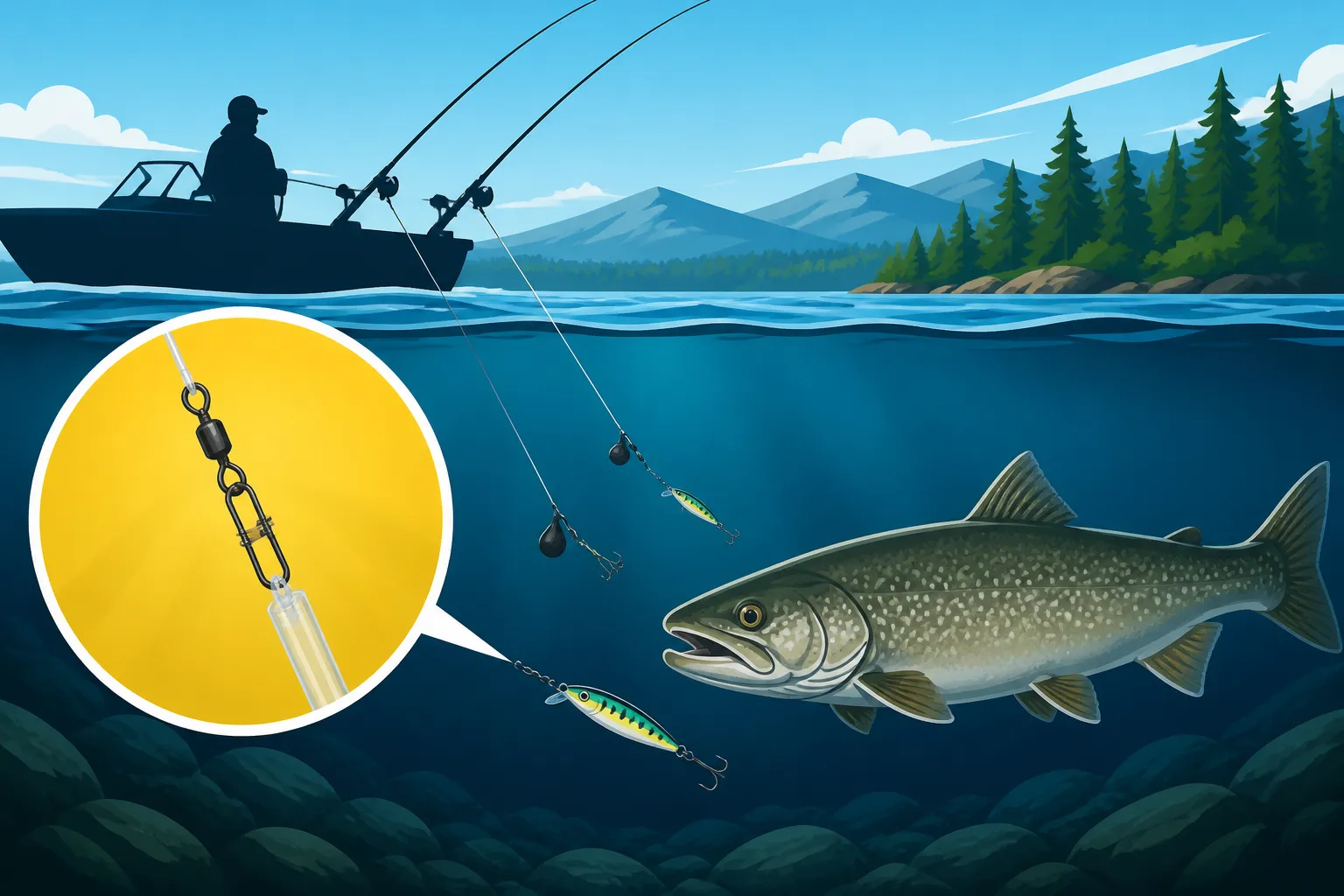
Your line choice is inextricably linked to your overall trolling setup. If you're running downriggers, which are mechanical devices that use heavy weights to take your lure down to a specific depth, then a thin, strong braided line is often the ideal main line. The downrigger ball does the work of getting your lure deep, and the braid provides sensitivity and direct control without adding much drag itself. This is especially useful when fishing spots like Lake Winnipesaukee Lake Trout Fishing, where downriggers are common.
If you’re not using downriggers and relying on line type to get deep, lead core becomes a prime candidate. It eliminates the need for heavy inline sinkers that can dampen feel and collect weeds. For other techniques like flat-lining or using planer boards, lead core can also be effective, but again, consider the depth you need to reach. The key is to choose a line that complements your gear and helps you execute your chosen Trolling Techniques for New Hampshire Lake Trout effectively.
Mastering Line Management and Longevity
Even the best line won't perform if it's not spooled, tied, and maintained correctly. These crucial steps ensure your investment in quality line pays off on the water.
The Art of Proper Spooling
Properly spooling your line is paramount. Incorrect spooling can lead to line twist, poor casting performance, tangles, and reduced line capacity on your reel. When spooling braid, ensure you apply consistent, firm tension. Many anglers will feed the line through a book or under their foot with a towel to create tension as it goes onto the reel. Avoid overfilling your spool; leave a small lip (about 1/8 inch) to prevent coils from jumping off the spool, especially with braided line. If you're unsure, many local tackle shops offer professional spooling services, ensuring your line is perfectly laid under consistent tension. This small detail can make a huge difference, particularly for deep trolling, where hundreds of feet of line are constantly coming on and off the reel.
Fortifying Your Connections: Essential Knots
Your fishing line is only as strong as its weakest link – the knot. For deep trolling with a braided main line and a fluorocarbon leader, mastering a few key knots is non-negotiable. The FG knot is incredibly strong, very slim, and passes through rod guides smoothly, making it ideal for connecting braid to fluorocarbon. The Albright knot and Double Uni knot are also reliable alternatives. Practice these knots at home until you can tie them quickly and confidently, even with cold hands.
When attaching your lure to the fluorocarbon leader, a Palomar knot or an Improved Clinch knot are excellent choices. Always moisten your line with saliva before tightening any knot. This lubrication prevents friction burn, which can weaken the line significantly. A perfectly tied knot retains much of the line's breaking strength, giving you confidence when that big lake trout finally hits your Best Lures for Lake Trout Trolling.
Prolonging Line Life Through Regular Maintenance
Deep trolling puts your line through a lot of abuse. It's constantly under stress, rubbing against rod guides, and potentially scraping against submerged structure. After every fishing trip, take a few minutes to inspect the last 10-20 feet of your line, especially the leader. Run your fingers along it, feeling for any nicks, abrasions, or rough spots. If you find any damage, cut off the affected section and re-tie your leader or lure. It’s always better to lose a few feet of line than to lose a trophy fish and your lure to a compromised line.
Store your reels out of direct sunlight, as UV rays can degrade and weaken fishing line over time, even braided line. If your line starts to show signs of excessive wear or loses its feel, don't hesitate to replace it. A fresh spool of line is a small investment compared to the potential heartbreak of a lost fish. Buying bulk spools of your preferred line on Amazon can be a cost-effective way to keep your reels fresh. Regular checks, especially when fishing areas like Best Lake Trout Spots on Lake Winnipesaukee, will serve you well.
Summary of Line Types for Deep Trolling
Here's a quick overview to help you compare your options for deep trolling:
| Line Type | Primary Use | Key Advantages | Key Disadvantages | Ideal Scenarios |
|---|---|---|---|---|
| Braided Line | Main Line | Zero stretch, high sensitivity, thin diameter, strong | Visible, can be expensive, requires leader | Downrigger fishing, maximum feel for subtle bites |
| Lead Core Line | Main Line | Self-sinking, depth-coded, good depth control | Bulkier, less sensitive than braid, more stretch | Flat-lining without downriggers, specific depth targeting |
| Fluorocarbon | Leader Material | Nearly invisible, high abrasion resistance, moderate stretch | More expensive, stiffer than mono | Attaching lures to braid, clear water conditions |
| Monofilament | N/A (generally) | Economical, good knot strength, shock absorption | High stretch, thick diameter, high drag | Not ideal for deep trolling due to stretch/drag |
Choosing the best line for lake trout deep trolling truly comes down to understanding the environment, the fish, and how each line type performs. By opting for a quality braided main line paired with a fluorocarbon leader, or by leveraging the depth-controlling power of lead core, you'll significantly increase your chances of getting your lure into the strike zone and putting more New Hampshire lake trout in your net. Remember, the right line is your direct connection to the fish, and a strong, sensitive connection is key to success.
Disclaimer
This article is for general informational purposes only and does not constitute professional advice. Laws, prices and regulations vary by location and change over time. Consult a qualified professional for guidance on your specific situation.