Best leader for striped bass in Great Bay
Few things are more frustrating than hooking into a strong, acrobatic striped bass in New Hampshire's Great Bay, only for your line to snap at the leader connection, leaving you with a story of "the one that got away." The challenging currents, oyster beds, and powerful surges of a striper demand a leader setup that can withstand the abuse. This guide will help you understand the critical role of your leader and how to choose the best material, strength, and length to land those feisty Great Bay stripers.
Understanding Striped Bass and Great Bay Dynamics
Fishing for striped bass in Great Bay isn't just about finding the fish; it's about being prepared for a serious battle. These are strong, hard-fighting fish, and the environment they live in presents its own set of challenges that can quickly expose weaknesses in your tackle.
The Fight of a Great Bay Striper
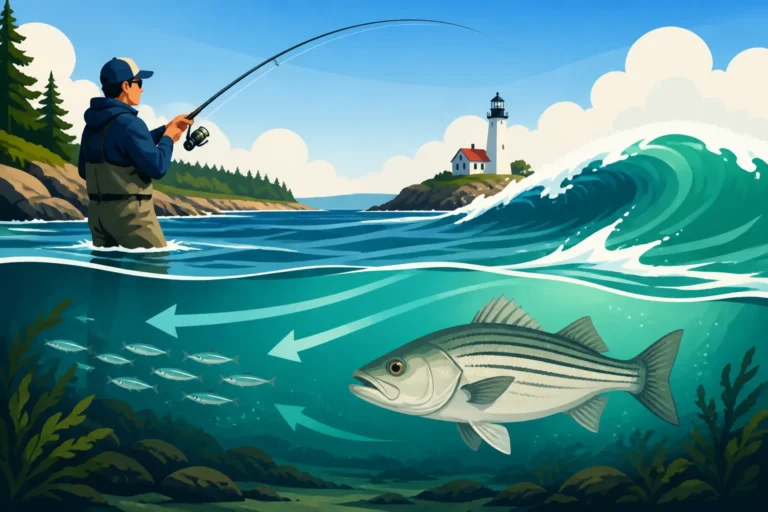
Striped bass are renowned for their powerful runs and head shakes. When you hook a striper, especially a larger one, it's not uncommon for them to make several blistering runs, testing your drag and the integrity of your line. They'll often try to dive into structure like rocks, oyster beds, or submerged snags, which are abundant in an estuary like Great Bay. These evasive maneuvers put immense strain on your leader, rubbing it against abrasive surfaces and pushing its knot strength to the limit. Imagine a 30-inch striper making a last-ditch effort to wrap your line around a barnacle-encrusted pilings near Portsmouth—that's exactly why your leader needs to be up to snuff.
Their sheer power, coupled with their often unpredictable behavior, means that every component of your terminal tackle, from your hook to your main line, gets a rigorous workout. A weak link, literally, will lead to heartbreak. You need to be confident that when that fish makes its final surge, your leader will hold.
Why Your Leader Matters More Than You Think
While your main line gets most of the attention, the leader is arguably the most crucial piece of line in your entire setup, as it's the section directly exposed to the fish and any potential abrasions. First, the leader provides a level of stealth. Striped bass, especially in clearer water or during the day, can be line-shy. A nearly invisible leader material can make the difference between a timid sniff and a confident strike. Second, and perhaps most importantly, is abrasion resistance. Great Bay is full of structure – rocky shorelines, mussel beds, docks, and bridge pilings. A striper's rough mouth and gill plates can also wear down softer lines quickly. Your main line, often braid, offers incredible strength but can be highly susceptible to cuts and nicks from abrasion.
Furthermore, the leader acts as a shock absorber. While some stretch in the main line is desirable, the leader can take the initial shock of a hard strike or a sudden head shake, protecting your main line from direct, intense pressure. It's the sacrificial lamb of your fishing line, designed to be easily replaced after damage, protecting your more expensive main line and, of course, helping you land that fish. For a deeper dive into general striper behavior and tactics, check out How to Catch Striped Bass in Great Bay.
Choosing the Right Leader Material for Great Bay Stripers
When it comes to leader material, anglers fishing for striped bass in Great Bay generally have two main contenders: fluorocarbon and monofilament. Each has its strengths and weaknesses, making them suitable for different situations.
Fluorocarbon: The Gold Standard
For many experienced striper anglers, fluorocarbon is the undisputed champion for leaders, and for good reason. Its primary advantage is its low visibility underwater. Fluorocarbon has a refractive index very close to that of water, making it virtually invisible to fish. This stealth factor is incredibly beneficial when fish are wary, which Great Bay stripers can certainly be, especially during high sun or in clearer sections of the bay. You can often find spools of high-quality fluorocarbon leader material on Amazon from reputable brands.
Beyond its invisibility, fluorocarbon boasts excellent abrasion resistance. It's a much denser material than monofilament, meaning it can withstand more rubbing against rocks, shell beds, and even the abrasive parts of a striper's mouth. This toughness is crucial in Great Bay's rugged environment. It also has less stretch than monofilament, offering greater sensitivity and direct contact with your lure or bait, allowing you to feel subtle bites and detect structure more effectively. The main downsides? Fluorocarbon can be stiffer, which can sometimes make knot tying a bit more challenging if you're not used to it, and it tends to be more expensive than monofilament. However, the benefits for serious striper fishing often outweigh the increased cost.
Monofilament: A Viable Alternative
Monofilament leaders, often referred to as "mono," have been around forever and still have a place in a striper angler's tackle box. Its biggest advantage is its stretch. This inherent elasticity acts as a shock absorber, which can be beneficial when a fish makes a sudden, powerful run, preventing hooks from tearing out of a fish's mouth or lighter main lines from snapping under sudden pressure. Monofilament is also generally easier to tie knots with, and those knots tend to cinch down reliably without the slippage sometimes associated with fluorocarbon if not tied carefully.
Mono is also significantly more affordable, making it a budget-friendly option, especially if you go through a lot of leader material. The trade-offs, however, are noteworthy. Monofilament is more visible underwater than fluorocarbon, which might deter finicky fish. It also has less abrasion resistance, making it more prone to nicks and cuts from sharp rocks or oyster shells. While it can certainly land fish, it requires more frequent inspection and replacement, particularly if you're fishing around a lot of structure. Many anglers still prefer monofilament for topwater presentations where visibility might be less of a concern, or when fishing live bait where a little stretch can be beneficial during a fish's initial take.
Braid Leaders: A Niche Application
While braided line is an incredibly popular choice for a main line due to its extreme strength-to-diameter ratio and lack of stretch, it's generally not recommended for use as a dedicated leader material for striped bass. The primary reason is its high visibility underwater. Unlike fluorocarbon, braid absorbs and reflects light, making it easily seen by fish, which can significantly reduce your strike rate, especially with wary stripers.
Furthermore, braid is highly susceptible to abrasion. Despite its strength, individual braided fibers can fray and break much more easily when rubbed against rough surfaces like rocks, oyster shells, or even a striper's sandpaper-like mouth. A single nick can compromise the entire line, leading to unexpected break-offs. While some anglers might use a very short piece of heavy braid when fishing extremely heavy cover where ultimate strength is paramount and fish aren't line-shy, it's far from the standard for Great Bay striped bass. It's best to reserve your braid for your main line and connect a more appropriate leader material to it.
Optimal Leader Strength and Length for Great Bay Stripers
Deciding on the perfect leader strength and length is a delicate balance. Go too light, and you risk break-offs; go too heavy, and you might spook fish or hinder lure action. The key is to match your leader to the conditions, the size of fish you expect, and your main line.
The Sweet Spot: Leader Strength
For striped bass in Great Bay, a leader strength of 20 to 50 pounds is generally a good range, with most anglers gravitating towards 30 or 40 pounds. Here's how to think about it:
- 20-30 lb Leader: This lighter end of the spectrum is excellent for clear water conditions, when stripers are particularly finicky, or when you're using smaller lures that demand a subtle presentation. It's also suitable if you're targeting smaller "schoolie" stripers. The reduced line diameter means less drag in the water, giving your lure more natural movement. However, it offers less abrasion resistance and less brute strength for pulling fish out of heavy cover. You'll need to be extra vigilant checking for nicks and frays.
- 40 lb Leader: This is a fantastic all-around choice for Great Bay. It provides a good balance of strength, abrasion resistance, and acceptable stealth. It's robust enough to handle most average-sized stripers, offers decent protection against structure, and doesn't usually deter fish. This is often the go-to for many anglers throwing artificial lures or chunk bait.
- 50 lb Leader: When you're actively targeting larger, trophy-sized stripers, or fishing in extremely snaggy areas like around heavy bridge pilings or dense rock fields, stepping up to 50-pound leader makes sense. It offers maximum abrasion resistance and stopping power, which is crucial for turning a big fish away from trouble. The trade-off is slightly increased visibility and potentially a more compromised lure action, especially with lighter lures. It's often favored when fishing larger live baits or big plugs.
Remember to consider your main line's breaking strength as well. You generally want your leader to be equal to or slightly less than your main line. This way, if you get a serious snag, the leader is more likely to break, allowing you to save your main line. For specific regulations on what you can keep, you might want to review New Hampshire striped bass slot limit.
Finding the Ideal Leader Length
Leader length also plays a significant role in your fishing success, influencing casting, lure presentation, and fish fighting.
- Short Leaders (18 inches to 3 feet): Shorter leaders are excellent for casting efficiency, especially with heavier lures or when you're making repeated casts. They reduce tangles (wind knots) and allow for a smoother transfer of energy from your main line to your lure. This length is often preferred when fishing artificial lures like bucktail jigs or soft plastics, where a direct connection and crisp action are important. However, a shorter leader means less line is available for abrasion resistance, so if you're battling a fish in heavy cover, you have less room for error.
- Medium Leaders (3 to 5 feet): This is a versatile length for many Great Bay scenarios. It offers a good balance between casting manageability and providing enough line for abrasion resistance, especially when fishing near rocky shorelines or around docks. It also gives a bit more stealth than a very short leader, as the connection knot to your main line is further from the lure.
- Long Leaders (6 feet or more): Longer leaders provide the maximum in stealth and abrasion resistance. They're often favored when fishing live bait or chunk bait, particularly in very clear water or when fish are extremely wary. The longer section of virtually invisible fluorocarbon can make a big difference. They also give you more flexibility to re-tie knots after fraying without significantly shortening your leader. The main drawback is casting. Longer leaders can be unwieldy to cast, especially with spinning gear, and can lead to more tangles around your rod tip. If you're using a long leader, ensure your connection knot (like an FG knot) can pass smoothly through your rod guides. If you're wondering about other general fishing techniques, consider reading Best Techniques for Striped Bass in Great Bay.
Essential Knots and Connections for Striped Bass Leaders
A leader is only as strong as its weakest knot. Choosing the right knots and tying them correctly is paramount when targeting powerful striped bass. A poorly tied knot can be the reason you lose that fish of a lifetime.
Connecting Main Line to Leader
This connection is arguably the most critical knot in your entire setup, as it joins two different types of line, often with varying diameters and properties (e.g., braided main line to fluorocarbon leader).
- FG Knot: This is widely considered the strongest and most streamlined knot for connecting braided main line to a fluorocarbon or monofilament leader. It's a friction knot, meaning the braid literally "grips" the leader material, creating an incredibly strong, smooth connection that passes through rod guides effortlessly. It does take practice to tie correctly, but the effort is well worth it for its near 100% breaking strength. Many anglers find instructional videos helpful for mastering this one.
- Albright Knot: A popular and relatively easy-to-tie knot for joining two lines of different diameters or materials. While not as streamlined as the FG knot, a well-tied Albright is very strong and reliable. It's a good alternative if you find the FG knot too challenging. Just make sure to moisten the knot thoroughly before cinching it down to prevent friction damage to the line.
- Double Uni Knot: Another solid choice for connecting main line to leader, especially if the line diameters aren't drastically different. It's simple to tie, and its strength is generally very good. However, it can create a slightly bulkier knot than the FG or Albright, which might snag on rod guides during casting, especially with longer leaders. It's a reliable option, but perhaps not the absolute best for maximum casting distance.
Always moisten your knots with saliva before tightening them. This lubricates the line, allowing the knot to cinch down properly without friction-burning the line, which can significantly weaken it.
Attaching Lures and Baits
Once your leader is connected to your main line, you need a strong, reliable way to attach your lure or hook.
- Palomar Knot: Simple, incredibly strong, and very reliable. The Palomar knot is a go-to for many anglers, especially when using braided line to attach to a hook or swivel. It works well with both mono and fluorocarbon leaders too. Just be sure to pass the entire lure or hook through the loop before cinching for strength.
- Improved Clinch Knot: A classic and widely used knot for attaching hooks, swivels, and lures to your leader. It's relatively easy to tie and offers good strength. Just remember to make enough wraps (5-7 for most leader materials) and cinch it down slowly and firmly.
- Loop Knots (e.g., Rapala Knot, Non-Slip Mono Loop): If you're fishing lures that require maximum freedom of movement for their intended action (like some plugs or jigs), a loop knot is excellent. It creates a small, non-cinching loop at the eye of your lure, allowing it to move more naturally in the water. While they can be slightly less strong than a Palomar or Clinch, the improved lure action often makes up for it, particularly in slower presentations.
- Swivels and Snaps: Sometimes, direct knotting isn't the best option.
- Barrel Swivels: Used to prevent line twist, especially when trolling or fishing with bait that spins.
- Snap Swivels: Offer a quick and easy way to change lures without retying. They add a connection point, which can be a potential failure point, so always choose high-quality, appropriately sized snaps.
- Interlock Snaps (without swivel): These are great for quickly changing lures and adding minimal bulk. Many anglers prefer these for artificial lures to maximize lure action and reduce hardware.
When selecting swivels or snaps, always opt for black or dark finishes to minimize flash and spooking fish. For other general tackle tips that can apply to striped bass, consider reading Best Tackle Box Setup for New Hampshire Anglers.
Practical Tips and Considerations for Great Bay Striper Leaders
Beyond choosing materials and tying knots, there are several practical considerations that can greatly enhance your success and prevent frustrating break-offs when fishing for striped bass in Great Bay.
Inspecting and Replacing Your Leader
This is perhaps the most overlooked, yet critical, aspect of leader management. After every fish, or even after a few casts in snaggy territory, run your fingers carefully along your leader. Feel for any nicks, abrasions, or rough spots. These seemingly minor imperfections are major weak points that can lead to a sudden break under pressure. You might even want to visually inspect it in good light.
If you detect any damage, no matter how small, cut off the damaged section and re-tie your lure or, if the damage is extensive, replace the entire leader. It's a small investment of time compared to the heartbreak of losing a big fish. Similarly, if you've been fishing in areas with a lot of oysters or sharp rocks, even if you haven't felt a strike, it's wise to regularly check and consider replacing your leader every few hours. A fresh, uncompromised leader is your best defense against the powerful runs of a Great Bay striper.
Preparing for Different Conditions
The conditions in Great Bay can change rapidly, and being prepared with different leader options can make a big difference.
- Clear Water vs. Murky Water: In very clear water, especially on sunny days, stealth is paramount. Opt for a high-quality fluorocarbon leader, possibly on the lighter side of your chosen strength range (e.g., 20-30 lb), and ensure it's a good length (4-6 feet) to keep your main line away from the fish. In murky or stained water, visibility is less of a concern, so you can often get away with a heavier fluorocarbon (40-50 lb) or even monofilament leader, especially if abrasion resistance is more important due to heavy cover.
- Structure vs. Open Water: When fishing around docks, bridge pilings, rock piles, or oyster beds, prioritize abrasion resistance. A heavier fluorocarbon leader (40-50 lb) is almost always the best choice here. The extra strength and toughness can mean the difference between landing a fish and cutting off on structure. In open water, where there's less risk of abrasion, you can lean towards lighter leaders for better presentation and stealth.
- Night Fishing: Striped bass are often more active and less line-shy at night. While stealth is still a good idea, you can often use a slightly heavier leader at night without impacting your catch rate. The primary concern becomes abrasion resistance in the dark. Many anglers stick with 40lb fluorocarbon for consistency. For more on the Great Bay Striped Bass Fishing Rules, make sure to consult the latest regulations.
Carrying Leader Material
Staying organized is key to efficient leader management on the water. It's a good idea to carry extra spools of your preferred leader materials and strengths in your tackle box or bag. Many brands, including those found on Amazon, offer small, convenient spools of leader material that fit easily into a small compartment.
Consider pre-tying a few leaders with your preferred knots and attaching them to small leader wheels or foam spools. This way, if you experience a break-off, you can quickly snip off your damaged main line and tie on a ready-made leader, getting you back in the action faster. Keep a sharp pair of line cutters or fishing scissors easily accessible for quick re-ties. Whether you're fishing from shore, a boat, or a kayak (for which you might use a Best Dry Bag for Kayak Fishing to protect your gear), having your leader materials organized and at hand makes all the difference.
Leader Material Comparison for Great Bay Stripers
To summarize the key characteristics and help you make a quick decision, here's a comparison of the most common leader materials used for striped bass in Great Bay:
| Feature | Fluorocarbon | Monofilament | Braid (Leader Application) |
|---|---|---|---|
| Visibility | Very Low (nearly invisible) | Moderate (more visible than fluoro) | High (easily seen by fish) |
| Abrasion Resistance | Excellent (dense, tough material) | Good (less than fluoro, prone to nicks) | Poor (fibers fray easily on structure) |
| Stretch | Very Low (high sensitivity) | Moderate (good shock absorption) | None (maximum sensitivity) |
| Knot Strength | Excellent (if tied correctly, can slip) | Excellent (easy to tie, reliable) | Excellent (but difficult to tie smoothly) |
| Cost | Higher | Lower | Moderate (often expensive, but for main line) |
| Best Use | All-around, clear water, heavy structure | Murky water, topwater, live bait (with care) | Generally not recommended as a leader |
Ultimately, having a solid, abrasion-resistant leader that's stealthy enough not to spook fish is your best bet for consistently catching striped bass in Great Bay. Invest in good quality leader material, learn your knots, and always inspect your line. These simple steps will drastically improve your success rate and prevent those frustrating "what if" moments on the water. You might also find general gear recommendations helpful, like those in Best Fishing Rods for New Hampshire Lakes, though keep in mind specific needs for saltwater.
Disclaimer
This article is for general informational purposes only and does not constitute professional advice. Laws, prices and regulations vary by location and change over time. Consult a qualified professional for guidance on your specific situation.