Best rod setup for lake trout trolling
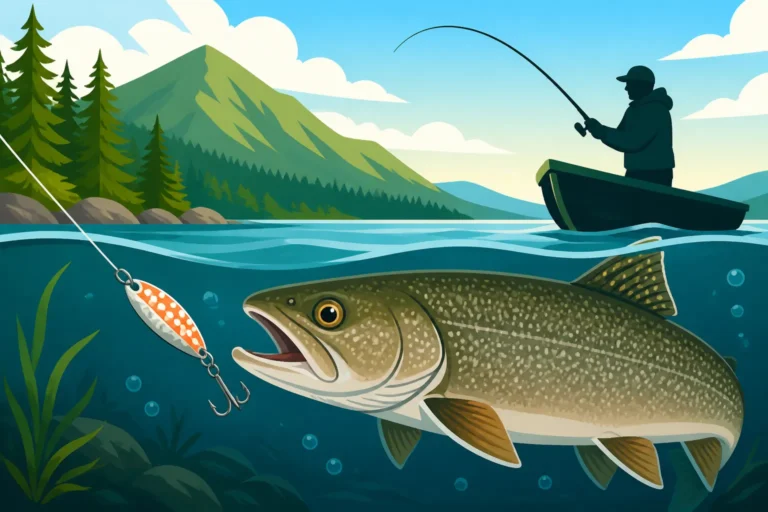
If you've ever tried to troll for lake trout in New Hampshire's vast, deep lakes, you know the frustration of feeling disconnected from your lure, or worse, losing a big fish because your gear wasn't up to the challenge. It's a sport that demands a specific kind of dedication and, crucially, the right equipment. This guide is all about cutting through the noise and helping you assemble the best possible rod setup for tackling those elusive, hard-fighting lake trout that lurk in the cold depths of our beautiful Granite State waters.
Understanding the Demands of New Hampshire Lake Trout Trolling
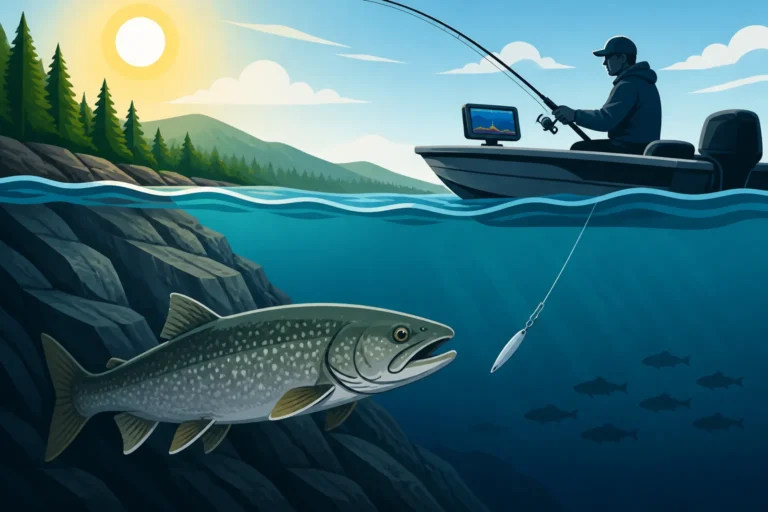
Trolling for lake trout isn't like casting for bass in a shallow pond. These are fish that often reside in deep, cold water, sometimes hundreds of feet down, and they can grow to impressive sizes. Think about battling a powerful fish while trying to keep your line in a very specific strike zone, often at considerable depth and distance from the boat. This isn't a task for flimsy gear; it requires a robust, sensitive, and well-balanced setup that can withstand the strain and provide the necessary feedback.
Why a Specialized Setup Matters for Lake Trout
Many anglers, especially those new to trolling or coming from other types of fishing, often try to make do with general-purpose rods and reels. While you might catch a small laker this way, it's rarely efficient or enjoyable. A specialized setup is designed to manage the unique stresses of deep-water trolling, from the drag created by long lengths of line and heavy weights (or downriggers) to the powerful runs of a trophy-sized lake trout. Without the right rod, you'll struggle to detect subtle bites, maintain proper lure action, and ultimately, land those big fish reliably. It’s the difference between guessing what’s happening at the end of your line and truly feeling connected to the action, something every serious angler craves.
Common Frustrations with Inadequate Gear
I’ve been there, staring at a rod tip that shows no movement, wondering if a fish is on or if it’s just my weight dragging. It's frustrating to invest hours on the water only to find your gear isn't giving you the feedback you need. A rod that's too stiff might rip the hook from a light-biting fish, while one that's too soft won't have the backbone to properly set the hook deep or turn a charging laker away from structure. And don't even get me started on reels with insufficient drag – that's a recipe for snapped lines and broken hearts when a large lake trout decides to make a run for it. The right setup minimizes these headaches, turning potential frustrations into successful catches.
Components of Your Ideal Lake Trout Trolling Rod Setup
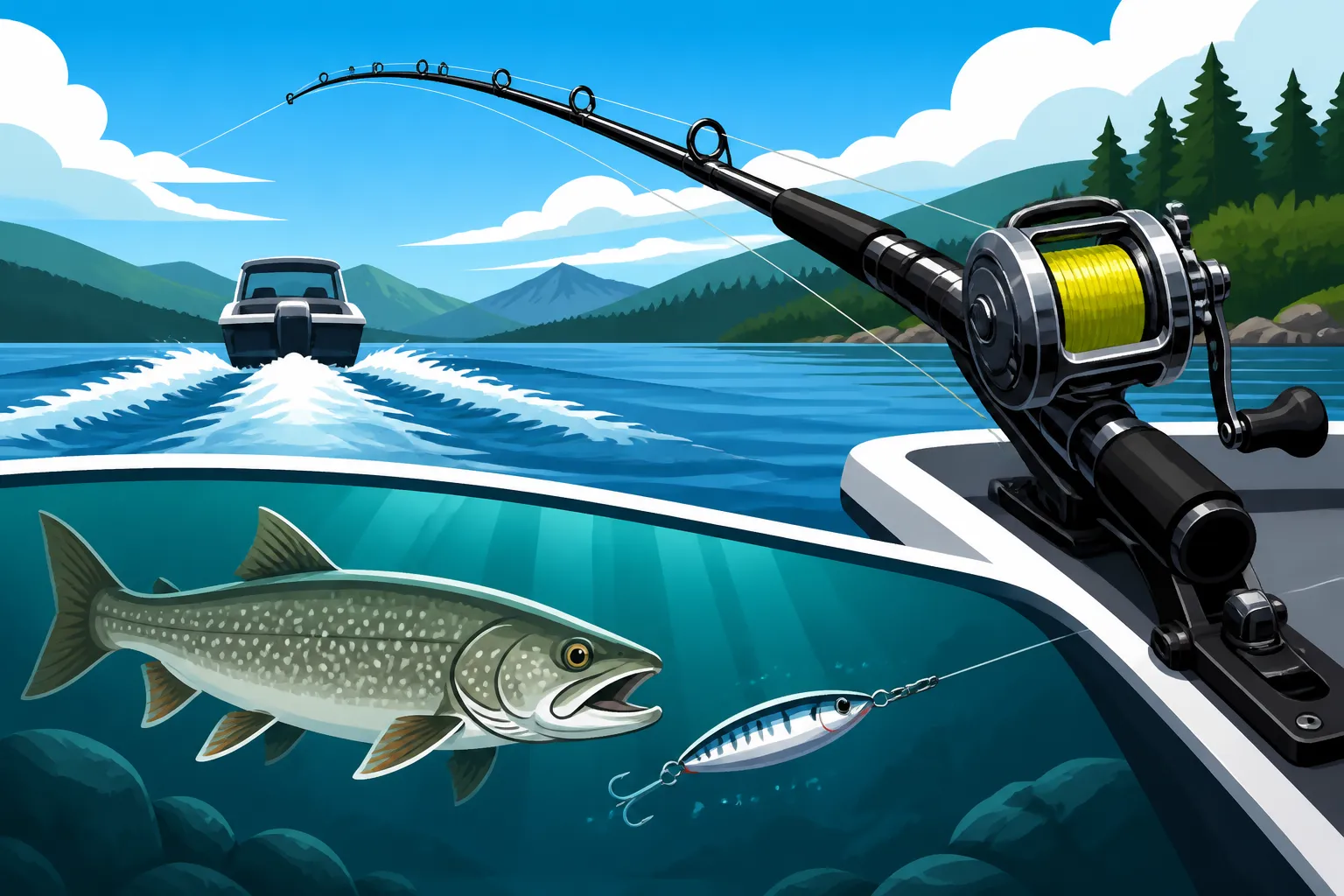
Building the perfect rod setup for lake trout trolling involves careful consideration of three main components: the rod, the reel, and the line. Each plays a critical role in the overall effectiveness and feel of your system. You want these three elements to work in harmony, creating a balanced and responsive unit that can handle the specific challenges of deep-water laker fishing.
Choosing the Right Trolling Rod
When it comes to rods for lake trout trolling, you're generally looking for something different than your typical spinning or casting rod.
Rod Length and Action
For most New Hampshire lake trout trolling, a rod length between 7 and 9 feet is usually ideal. This length provides several advantages: it helps spread your lines when running multiple rods from the boat, it offers a good shock absorber for sudden strikes, and it keeps your line angles more acute, which can be helpful when clearing obstacles or guiding fish.
- Length: Shorter rods (around 7 feet) are excellent for smaller boats or when space is limited, offering good control. Longer rods (8-9 feet) excel at spreading lines, making them great for running a diverse spread of lures, and provide a softer, more forgiving action for larger fish.
- Action: You'll want a moderate to moderate-fast action rod. This means the rod will bend predominantly in the upper third or half of its blank, rather than just the tip. This allows the rod to absorb the shock of a strike without pulling the lure out of the fish's mouth, and it also helps maintain a consistent bend when pulling heavy weights or fighting a strong fish. A moderate action also provides excellent "give" when a big fish surges, reducing the chances of straightening hooks or breaking line.
- Power: Look for a medium-heavy to heavy power rating. This indicates the rod's backbone or lifting power. Lake trout are strong, and you need a rod that can apply serious pressure to turn their heads and bring them to the net, especially when you're dozens of feet above them in the water column. A good power rating ensures you can handle both the trolling weight and the fish.
Material and Handle
Most quality trolling rods are made from fiberglass or a composite blend of fiberglass and graphite.
- Fiberglass: Offers excellent durability and a very forgiving, parabolic bend that's perfect for absorbing powerful runs. It's often preferred for heavy-duty trolling.
- Composite: Blends the sensitivity and lighter weight of graphite with the durability of fiberglass, offering a good all-around option.
- Handle: A comfortable, durable handle is crucial, especially for long days on the water. EVA foam or cork are common. A longer butt section is beneficial for leverage, especially when fighting bigger fish or placing the rod in a rod holder. Ensure the handle design allows for secure placement in your boat's rod holders. Many dedicated trolling rods will have a gimbal butt, which can be locked into specific rod holders or fighting belts.
Selecting the Perfect Trolling Reel
The reel for lake trout trolling needs to be a workhorse, capable of holding a lot of line, enduring constant pressure, and providing a smooth, consistent drag.
Conventional Reels vs. Spinning Reels
For serious lake trout trolling, a conventional (baitcasting) reel is almost always the preferred choice over a spinning reel.
- Conventional Reels: These reels are designed for power, durability, and high line capacity. They excel at handling heavy lines, big lures, and the constant strain of trolling. Their direct drive system often provides more cranking power, and their drag systems are typically more robust and consistent, which is paramount when a large lake trout decides to make a powerful run. Many models also feature a line counter, an invaluable tool for precise depth control when you're trying to replicate a successful trolling pass.
- Spinning Reels: While you could use a heavy-duty spinning reel for light trolling, they generally aren't built for the continuous stress of dragging heavy weights or the immense torque involved in fighting large, deep-dwelling fish. Their drag systems can also be less consistent under prolonged heavy loads.
Gear Ratio and Line Capacity
- Gear Ratio: A moderate gear ratio (e.g., 4.1:1 to 5.2:1) is generally preferred for trolling. This provides a good balance of cranking power and retrieval speed. You're not typically trying to retrieve lures quickly when trolling; instead, you need the torque to smoothly reel in a fish or heavy setup against water resistance.
- Line Capacity: This is critical. Lake trout can be found very deep, and you might need a substantial amount of line out, especially if you're not using downriggers and relying on lead core or copper line. Aim for a reel that can comfortably hold at least 200-300 yards of your chosen main line, plus any backing. Many popular trolling reels, easily found on platforms like Amazon, offer varying capacities to suit your preference.
Drag System
The drag system is perhaps the most important feature of your trolling reel. It must be smooth, consistent, and capable of applying significant pressure without binding or becoming jerky. A quality drag system allows the fish to pull line only when it exceeds a predetermined force, protecting your line from breaking and tiring out the fish. Look for reels with carbon fiber or similar high-performance drag washers. Test the drag before you head out; it should pull smoothly at various settings.
Line Choices for Lake Trout Trolling
The line is your direct connection to the fish, and its choice greatly impacts your ability to get lures to depth, detect bites, and successfully land fish.
Monofilament, Fluorocarbon, or Braid?
Each line type has its place in lake trout trolling.
- Monofilament (Mono): A traditional choice, mono offers good knot strength, shock absorption (due to stretch), and is relatively inexpensive. It's a forgiving line, but its stretch can make bite detection difficult at extreme depths, and it has more diameter for its strength, leading to more water resistance and requiring more weight to get deep. For top-lining or shallow-water trolling, a good quality mono (15-25 lb test) can be effective.
- Braided Line (Braid): Braid has virtually no stretch, offering incredible sensitivity for detecting light bites and a strong, direct connection to your lure. Its thin diameter for its breaking strength also means less water resistance, allowing lures to run deeper or requiring less weight. However, braid is highly visible and has no shock absorption, so a fluorocarbon or monofilament leader is almost always necessary to prevent fish from seeing the line and to absorb the shock of a strike. Common braid strengths for lake trout trolling range from 30-50 lb test. You can find excellent braided lines from various brands, often with detailed reviews on sites like Amazon, helping you select the best option.
- Fluorocarbon: While rarely used as a main line for trolling due to its cost and stiffness, fluorocarbon is an excellent leader material. It's nearly invisible underwater, extremely abrasion-resistant, and has minimal stretch, offering a good blend of stealth and sensitivity. Use 15-25 lb fluorocarbon leaders, typically 6-10 feet long.
Specialty Trolling Lines (Lead Core and Copper)
For reaching significant depths without downriggers, specialty lines are invaluable.
- Lead Core Line: This line consists of a lead wire core encased in a braided nylon sheath. The lead core causes the line to sink, with each "color" (section, usually 10 yards) sinking approximately 5-7 feet at typical trolling speeds. By letting out a certain number of colors, you can precisely control your lure's depth. Lead core is often spooled with a monofilament or braided backing, and a fluorocarbon or monofilament leader. This is a fantastic way to reach fish at moderate depths, and understanding how to effectively use it is key to successful Trolling Techniques for New Hampshire Lake Trout.
- Copper Line: Even heavier than lead core, copper line sinks much faster and is used to reach extreme depths (often 40-50+ feet per 100 feet of line out). It's typically used with heavy-duty conventional reels and requires specific trolling setups due to its weight and unique handling characteristics. Copper line offers an alternative method for targeting those truly deep-dwelling lake trout.
Advanced Considerations for Lake Trout Trolling
Beyond the basic rod, reel, and line, several other pieces of equipment and strategies can significantly enhance your lake trout trolling success, helping you fine-tune your approach and precisely target fish.
The Role of Downriggers
For anglers serious about consistently hitting specific depths, particularly for fish that suspend at certain levels, downriggers are a game-changer. These devices allow you to deploy a heavy weight (called a cannonball) to a precise depth, with your fishing line clipped to the weight. When a fish strikes, the line releases from the clip, allowing you to fight the fish directly without the weight of the cannonball.
- Precision Depth Control: This is the primary advantage. Fish finders can tell you where the fish are, and downriggers let you put your lure right in front of them, whether it's 30 feet down or 100 feet down. This is especially important when targeting lake trout, which often stack up in specific thermal layers.
- Running Lighter Tackle: Because the downrigger takes care of depth, you can run lighter main lines (like braid or thin mono) and smaller, more natural-looking lures that wouldn't typically get to depth on their own. This can lead to more strikes from finicky fish.
- Key Components: A downrigger setup includes the downrigger unit itself (manual or electric), a cannonball weight, release clips, and a sturdy mounting system for your boat. Many experienced anglers fishing places like Lake Winnipesaukee for lake trout swear by their downriggers.
Fish Finders and Sonar
You can have the best rod setup in the world, but if you're trolling in barren water, you won't catch anything. A quality fish finder is essential for locating lake trout, identifying baitfish schools, and understanding the underwater topography.
- Identifying Structure: Lake trout often relate to underwater structure like humps, ledges, and drop-offs. Your fish finder will help you map these areas and troll effectively around them.
- Locating Fish and Bait: Modern sonar units can clearly display individual fish, schools of baitfish, and even the thermocline (the layer where water temperature changes rapidly), which is often where lake trout will be found. This information is crucial for determining your trolling depth and pattern.
- GPS and Mapping: Integrated GPS allows you to mark waypoints, track your trolling passes, and return to productive spots. This is especially useful on large bodies of water, and many of the Best Fish Finders for New Hampshire Lakes now come with robust mapping features.
Rod Holders and Boat Setup
Trolling means running multiple lines, and safely and effectively doing so requires a well-thought-out boat setup.
- Rod Holders: Sturdy, adjustable rod holders are non-negotiable. They need to securely hold your rods, absorb the strain of trolling and striking fish, and allow for easy removal when you have a fish on. Consider flush-mount, clamp-on, or rail-mount styles, ensuring they are positioned to create a wide spread of lures to avoid tangles.
- Spreading Boards/Planer Boards: For covering even more water and getting lures away from the boat's prop wash, planer boards can be used. These devices clip to your line and pull it out to the side of the boat, essentially extending your lure spread. While less common for deep lake trout trolling compared to salmon or walleye, they can be useful in certain shallower scenarios or for targeting suspended fish on the surface.
- Choosing the Right Boat: While not part of the rod setup itself, the type of boat you use will influence your rod holder placement and overall trolling strategy. From dedicated fishing boats to Best Boats for New Hampshire Lakes and Rivers, knowing your vessel's capabilities is key.
Putting It All Together: Your Trolling Strategy
Having the right gear is only half the battle; knowing how to deploy it effectively is what truly leads to success. Lake trout trolling is as much about strategy and technique as it is about the equipment.
Matching the Hatch and Depth
One of the most critical aspects of successful lake trout trolling in New Hampshire is presenting your lure at the right depth and making sure it imitates what the fish are actually eating.
- Forage Fish: In many New Hampshire lakes, rainbow smelt are a primary food source for lake trout. This means using lures that mimic the size, shape, and color of smelt can be highly effective. Spoons, stickbaits, and even flies can be deadly when presented correctly. Learn about the smelt populations in the lake you're fishing.
- Depth is Key: As mentioned, lake trout are often depth-oriented. Use your fish finder to identify where the fish are holding, then use your lead core, copper, or downriggers to get your lure into that strike zone. Remember, even a few feet can make all the difference. Sometimes, lake trout will be hugging the bottom; other times, they'll suspend over deeper water. Adjust your depth constantly based on what your electronics are telling you. The exact depth can also vary by season, with fish often shallower during the cooler spring months and deeper in the summer.
- Lure Speed and Action: Trolling speed directly affects lure action and depth. Experiment with different speeds until you find what triggers strikes. Watch your rod tip; it should have a steady, rhythmic pulse if your lure is swimming correctly. Too fast, and the lure might blow out; too slow, and it might not have enough action. Your choice of Best Lures for Lake Trout Trolling will also influence the optimal speed.
| Rod Component | Recommended Specs | Why it Matters for Lake Trout Trolling |
|---|---|---|
| Rod Length | 7-9 feet | Spreads lines, shock absorption, line angle |
| Rod Action | Moderate-Fast | Absorbs strikes, consistent bend, proper hook sets |
| Rod Power | Medium-Heavy to Heavy | Backbone for big fish, handles weights |
| Reel Type | Conventional | Power, durability, line capacity, strong drag |
| Gear Ratio | 4.1:1 – 5.2:1 | Balance of cranking power and retrieval speed |
| Line Capacity | 200-300+ yards | Accommodates deep fishing and long runs |
| Drag System | Smooth, consistent | Prevents line breaks, tires fish efficiently |
| Main Line (Braid) | 30-50 lb test | Sensitivity, thin diameter, less water resistance |
| Main Line (Lead Core) | 18-30 lb test | Depth control without downriggers |
| Main Line (Copper) | 30-45 lb test | Reaches extreme depths |
| Leader (Fluorocarbon) | 15-25 lb test | Stealth, abrasion resistance, minimal stretch |
Experimentation and Adaptation
New Hampshire's lakes are diverse, and what works on one might not work on another. Lake Winnipesaukee, for example, is a very different beast from Squam Lake, each with its own nuances in terms of depth, structure, and forage. Be prepared to experiment with different lure colors, sizes, depths, and speeds until you find the winning combination for that particular day and body of water.
- Vary Your Spread: Don't run all your lures at the same depth or distance. Use downriggers, lead core, and perhaps some top-lined presentations to cover various depths simultaneously. This helps you quickly pinpoint where the fish are actively feeding.
- Note the Conditions: Pay attention to weather patterns, water temperature (if you have a probe), light levels, and even boat traffic. All these factors can influence where and how lake trout feed. A calm, sunny day might call for deeper, more subtle presentations, while an overcast, choppy day could bring fish shallower or make them more aggressive.
- Keep a Log: Many veteran anglers keep detailed logs of their trips, noting everything from location, depth, lure, speed, and catch results. This information becomes invaluable over time, helping you establish patterns and make informed decisions on future outings. Even the time of year and specific regulations can impact your strategy, so keeping an eye on things like New Hampshire Fishing Season Dates and Closures is always a good idea.
Maintain Your Gear
Your trolling setup is an investment, and proper maintenance will ensure it performs reliably for years to come.
- Rinse After Use: Especially if fishing in brackish areas like Great Bay (though not for lake trout, the principle applies to all fishing gear), always rinse your rods and reels with fresh water after each outing to remove salt, dirt, and grime.
- Lubricate Reels: Periodically clean and lubricate your reels according to the manufacturer's instructions. Pay attention to the drag washers, ensuring they remain smooth and free of debris.
- Check Line: Inspect your line regularly for nicks, abrasions, or twists, especially the last 10-20 feet that see the most action. Re-tie knots frequently and replace line as needed. Nothing is more heartbreaking than losing a big fish due to old, weak line. A little preventative care goes a long way in ensuring your next trophy lake trout makes it to the net.
Building the best rod setup for lake trout trolling in New Hampshire is a rewarding process that combines thoughtful gear selection with strategic fishing. By understanding the demands of these powerful, deep-dwelling fish and choosing your rod, reel, and line wisely, you'll be well-equipped to experience the thrill of battling a Granite State laker.
Disclaimer
This article is for general informational purposes only and does not constitute professional advice. Laws, prices and regulations vary by location and change over time. Consult a qualified professional for guidance on your specific situation.