Best Boats for New Hampshire Lakes and Rivers
New Hampshire is a true gem for anglers, offering an incredible variety of fishing experiences from expansive, deep lakes to meandering rivers and even a stunning coastline with tidal estuaries. But this very diversity can make choosing the right fishing boat feel like navigating a maze. This comprehensive guide will cut through the confusion, helping you understand the best boat types and features to match your fishing adventures across the Granite State.
Navigating New Hampshire's Waters: A Boating Overview
Before you even start thinking about specific boat models, it's crucial to understand the distinct characteristics of New Hampshire's fishing grounds. The challenges and opportunities presented by a vast body of water like Lake Winnipesaukee are vastly different from those of a tranquil, shallow pond or a swiftly flowing river. Your ideal boat is going to be a reflection of where you plan to spend most of your time wetting a line.
The Grand Lakes: Winnipesaukee, Squam, and Beyond
When we talk about New Hampshire's grand lakes, we're talking about bodies of water that can feel like inland seas on a breezy day. Lake Winnipesaukee, Squam Lake, Newfound Lake, and Lake Sunapee are just a few examples of these expansive, deep, and often choppy environments. These lakes are famous for species like landlocked salmon, lake trout, and big smallmouth bass, which often inhabit deeper, cooler waters or hide among submerged structures.
Fishing these larger lakes demands a boat that prioritizes stability, seaworthiness, and often, speed to cover ground. You'll encounter boat wakes from other recreational users, sudden wind shifts that kick up significant chop, and the need to travel considerable distances between fishing spots. Anglers looking to troll for salmon or lake trout will spend hours on the open water, making comfort and a stable platform paramount. Think about boats that can handle a bit of a pounding and keep you dry.
Rivers and Smaller Ponds: Navigating Current and Shallowness
Away from the big lakes, New Hampshire's landscape is crisscrossed by countless rivers, streams, and smaller ponds. Rivers like the Merrimack, Connecticut, and Pemigewasset offer fantastic opportunities for smallmouth bass, trout, and panfish. These waters often feature varying depths, strong currents, submerged rocks, and overhanging trees. Access points can be limited, and navigating requires agility and a boat that can handle shallow drafts without getting stuck.
Smaller ponds, on the other hand, might offer quiet solitude, perfect for targeting largemouth bass, pickerel, and panfish from shore or a small boat. These environments often have limited or no boat ramps, requiring a vessel that can be easily launched by hand or from a simple cartop. Stealth is often a major advantage in these intimate settings, especially for species that are easily spooked. The ability to motor slowly or paddle effectively becomes more important than raw speed.
The Tidal Zone: Great Bay and Coastal Access
While often overlooked when thinking about "New Hampshire fishing," the state boasts a vibrant coastal fishery, primarily centered around Great Bay and the Piscataqua River estuary. Here, anglers target striped bass, bluefish, and other saltwater species. This environment presents its own unique set of challenges: tidal currents, oyster beds, marshy shores, and the potential for much larger boat traffic from commercial vessels and pleasure craft.
Boats for this area need to handle both the brackish waters of the bay and the occasional foray into the open ocean near the Isles of Shoals. Durability, stability in choppy estuarine conditions, and the ability to operate in areas with fluctuating tides are key. A boat that can take the bumps and scrapes of navigating oyster-laden shallows at low tide, while also offering a comfortable ride through a chop, is ideal.
Top Boat Choices for New Hampshire's Major Lakes
When you're dreaming of reeling in a trophy lake trout on Sunapee or chasing smallmouth bass across the broad expanses of Winnipesaukee, you need a boat built for the task. These larger, often deeper waters demand vessels that offer stability, power, and comfort.
Deep-V Hull Boats: The Workhorses of Big Water
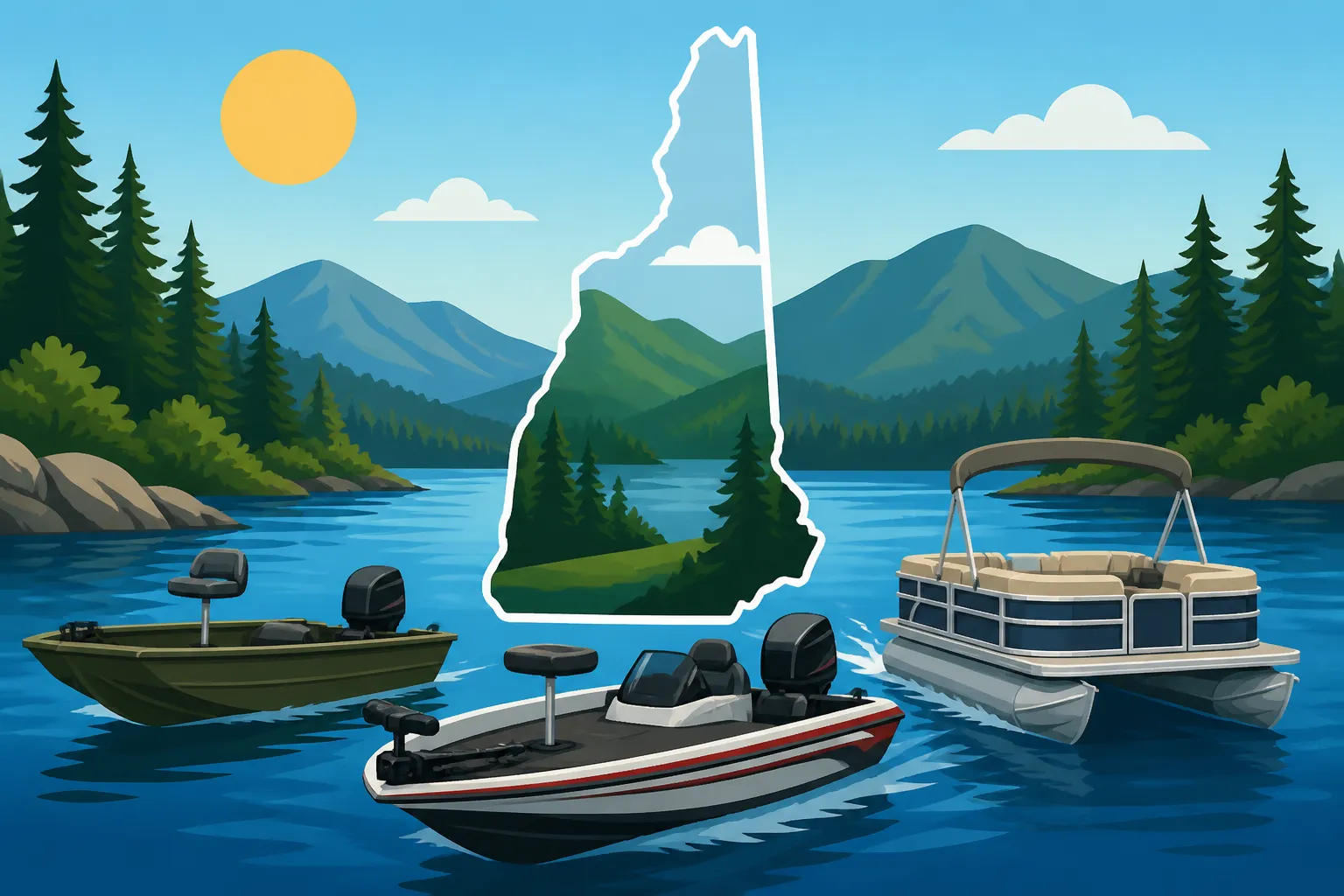
Deep-V hull fishing boats are arguably the most versatile and popular choice for New Hampshire's major lakes. Their distinctive V-shaped hull slices through chop, providing a much smoother and drier ride than flatter-bottomed boats, especially when the wind picks up or boat traffic creates a washing machine effect. These boats are designed for serious fishing, offering ample space for multiple anglers, rod storage, livewells, and often, comfortable seating for long days on the water. Brands like Lund, Alumacraft, and Ranger are well-known in this category, offering robust designs.
Whether you're trolling dozens of lines for landlocked salmon or chasing schools of smallmouth bass across open water, a deep-V provides the stability and control you need. Their higher freeboard (the distance from the water to the top of the boat's side) also adds an extra layer of safety when dealing with larger waves or when you're bringing a thrashing fish into the boat. Many come equipped with powerful outboard motors, allowing you to quickly reach distant fishing grounds. You'll see a lot of these boats at public boat launches around Lake Winnipesaukee, ready for anything the lake throws at them.
These vessels are also generally built to be durable, often constructed from aluminum or fiberglass, standing up well to years of use. While they can be a significant investment, their longevity and performance on big water make them a worthwhile consideration for dedicated lake anglers. They are also often designed with plenty of integrated storage, which is a huge plus when you're carrying multiple rods, tackle boxes, and safety gear. The ability to withstand heavy use and the elements is a major advantage for New Hampshire's often unpredictable weather.
Pontoon Boats: Comfort, Stability, and Family Fun
Pontoon boats might not be the first image that comes to mind when you think of serious fishing, but they have carved out a significant niche on New Hampshire's lakes, especially for families or those who prioritize comfort and space. Modern pontoon boats come in highly specialized "fish and cruise" configurations that combine the best of both worlds. They offer incredible stability due to their wide, flat deck supported by two or three pontoons, making them ideal for still-fishing, jigging, or even a bit of light trolling in calmer conditions.
Imagine a beautiful summer day on Squam Lake, with friends and family gathered, casting lines off a spacious pontoon. There's plenty of room for coolers, snacks, and everyone to comfortably move around without bumping elbows. Many fishing-specific pontoons include amenities like swiveling fishing chairs, aerated livewells, rod holders, and even dedicated tackle storage areas. While they aren't built for speed or battling massive waves, their stability makes them exceptionally safe and comfortable for children and older anglers.
While a pontoon boat won't be skimming across the lake at 60 mph, they are more than capable of getting you to your favorite fishing spots at a comfortable pace. Their wide decks are also fantastic for fly fishing, providing an unobstructed casting platform. For those who want to blend serious fishing with family outings, offering swimming, cruising, and sunbathing options alongside angling, a pontoon boat is a surprisingly effective and enjoyable choice for the larger, calmer sections of New Hampshire's lakes.
Fiberglass Bass Boats: Speed and Precision on the Big Lakes
For the hardcore bass angler, particularly those who participate in tournaments or simply demand the ultimate in performance, a fiberglass bass boat is the pinnacle. These boats are designed for one thing: getting to the best bass spots faster than anyone else and fishing them with surgical precision. Brands like Skeeter, Nitro, and Bass Pro Shops offer highly engineered bass boats that are instantly recognizable by their sleek, low-profile designs, often vibrant colors, and powerful outboard motors.
Fiberglass bass boats are optimized for speed, stability at high speeds, and efficient casting. They feature expansive, flat casting decks at both the bow and stern, often covered with marine-grade carpet for comfort and traction. Essential features include multiple large livewells to keep tournament-caught fish healthy, powerful bow-mounted trolling motors with GPS spot-lock capabilities, and state-of-the-art electronics. If your primary goal is to target largemouth and smallmouth bass on Winnipesaukee or other major lakes with unparalleled efficiency, this is the boat for you.
While these boats excel at bass fishing, their design means they are less suited for rough, choppy water or trolling for deep-dwelling species. Their low freeboard can make them wet in big waves, and the focus is on casting, not long-line trolling. However, for getting to those shallow weed beds or rocky points quickly, making hundreds of casts throughout the day, and confidently handling high-speed runs between spots, nothing beats a dedicated fiberglass bass boat. They represent a significant investment but deliver specialized performance for competitive or highly dedicated bass anglers. How to Catch Smallmouth Bass in New Hampshire Lakes is a great resource if you're planning on focusing on bass.
Optimal Boats for Rivers, Ponds, and Backcountry Access
New Hampshire's fishing isn't just about the big lakes. Many of the most rewarding and serene experiences are found on its quieter rivers, hidden ponds, and hard-to-reach backcountry waters. For these adventures, you need a boat that's lighter, more agile, and often easier to transport and launch.
Aluminum Jon Boats: Shallow Water Masters
Jon boats are the unsung heroes of shallow water fishing, making them ideal for many of New Hampshire's rivers, smaller ponds, and backwater areas. Their flat or modified-V bottoms allow them to float in extremely shallow water, letting you access areas where deeper-V boats would run aground. Typically constructed from lightweight aluminum, they are incredibly durable, able to withstand bumps and scrapes from rocks and logs without major damage. This ruggedness makes them perfect for exploring less-developed areas.
You'll often see jon boats powered by small outboard motors, electric trolling motors, or even just oars. Their open interior provides a versatile platform that can be customized with pedestals, fishing seats, or gear boxes. They are easy to trailer, and many smaller models can even be transported in the back of a pickup truck or on a car-top carrier, opening up a world of remote fishing possibilities. For rivers like the Merrimack or for exploring the nooks and crannies of smaller ponds, a jon boat offers an unbeatable combination of accessibility and durability.
While not designed for speed or rough water, their stability in calm, shallow conditions is excellent, providing a solid platform for casting. If your fishing adventures take you to places where you might encounter rocks, stumps, or fluctuating water levels, the forgiving nature and shallow draft of an aluminum jon boat make it a smart and economical choice. They are the go-to vessel for many who prefer to fish away from the crowds.
Fishing Kayaks and Canoes: Stealth, Portability, and Intimate Experiences
For the angler who craves silence, stealth, and intimate connections with nature, fishing kayaks and canoes are unparalleled. New Hampshire's countless small ponds, quiet rivers, and remote brook trout streams are perfectly suited for these paddle-powered vessels. Their lightweight and compact nature allows for easy transport, often simply strapped to a roof rack or slid into the bed of a truck, eliminating the need for a trailer or formal boat launch.
Modern fishing kayaks, in particular, are highly specialized, offering features like stable standing platforms, multiple rod holders, integrated tackle storage, and even pedal drives for hands-free propulsion. This allows anglers to maintain precise boat positioning while actively casting or fighting a fish. Canoes, while offering more carrying capacity for gear or a fishing partner, provide a similarly quiet and low-impact way to access hidden gems. Imagine quietly paddling into a secluded cove on a pond, or drifting downstream on a gentle river, casting to untouched banks. You can find excellent options from brands like Old Town and Hobie, readily available through retailers like Amazon.
The benefits of kayaks and canoes extend beyond access; they offer a unique perspective on the water. Being so close to the surface, you feel more connected to the environment, and the quiet glide allows you to observe wildlife without disturbance. For fly fishing, particularly on smaller streams Best Fly Fishing Rivers in New Hampshire, a canoe or kayak provides a stable and easily maneuverable platform. If you're looking to explore the hidden corners of New Hampshire's fisheries and prefer an active, self-propelled approach, a fishing kayak or canoe is an excellent investment. For more in-depth information, check out Best Kayaks for New Hampshire Fishing.
Small Multi-Species Aluminum Boats: Versatile Explorers
Bridging the gap between the specialized jon boat and the larger deep-V, small multi-species aluminum boats (often 14-16 feet in length) are fantastic all-arounders for New Hampshire's diverse medium-sized lakes, larger rivers, and protected bays. These boats typically feature a modified-V hull, offering a better ride in a chop than a jon boat, but still retaining a relatively shallow draft for accessing thinner waters.
These versatile boats are designed to handle a variety of fishing styles and species. They usually come equipped with casting decks, livewells, storage compartments, and often have a transom capable of handling a modest outboard motor (say, 15-40 horsepower) as well as a bow-mounted trolling motor. This allows them to function effectively for bass fishing, trolling for smaller trout, or still-fishing for panfish. Brands like Lowe, Tracker, and Crestliner offer many popular models in this category, and you can often find a wide selection at a local Bass Pro Shops.
Their manageability on the trailer and relatively easy launch characteristics make them a favorite among anglers who might fish a different body of water every weekend. One day it might be a small lake like Northwood Lake for bass and pickerel, and the next, a trip up the Connecticut River for smallmouth. They offer a good balance of durability, performance, and affordability, making them a solid choice for the angler who doesn't specialize in one type of fishing but enjoys all the Granite State has to offer.
Key Considerations Before You Buy: Matching Boat to Angler
Choosing a fishing boat is a big decision, and it's about more than just finding a pretty hull. It's about matching the vessel to your unique fishing habits, practical constraints, and long-term goals. Taking the time to consider these factors will save you headaches and ensure you invest in the right craft.
Understanding Your Primary Fishing Style
Before you even start looking at boat models, honestly assess how and where you primarily fish. Are you a dedicated lake trout troller on Lake Winnipesaukee, spending hours covering open water with multiple lines out? Then a stable, deep-V hull boat with plenty of space for downriggers and rod holders will be paramount. Perhaps you're an avid fly angler who loves to wade and float small, clear mountain streams. In that case, a compact canoe or fishing kayak might be your best friend.
Consider the species you target most frequently. Bass anglers often prioritize casting platforms and powerful trolling motors for precise boat control, while panfish enthusiasts might be content with a stable jon boat for still-fishing. Think about how many people typically fish with you. A solo angler has different needs than someone who regularly takes out two or three friends, or their kids. The boat that's perfect for a solo expedition to a remote pond might feel cramped and inadequate on a choppy day with four people on a large lake. Your fishing style should dictate the boat, not the other way around.
Storage, Transport, and Launch Access
A beautiful boat is useless if you can't store it or get it to the water. Storage is a huge consideration. Do you have a garage or driveway space for a trailer? If you live in an apartment or have limited space, a boat that can be stored vertically, on a small trailer, or even car-topped (like a kayak or canoe) becomes far more practical. The size and weight of the boat and trailer will also determine what kind of vehicle you need to tow it. A large bass boat requires a robust truck or SUV, while a small aluminum boat can be towed by many mid-sized cars.
Then there's launch access. New Hampshire has numerous public boat ramps on its larger lakes and rivers, but smaller ponds might only have informal access points, or require hand-launching. If you're planning to explore remote ponds or rivers with portages, portability is key, leaning you towards kayaks, canoes, or very small jon boats. Think about the entire process from leaving your home to getting on the water and back again. If any part of that process is overly complicated or stressful, you might find yourself fishing less.
Budgeting for the Full Package: Purchase, Maintenance, and Operation
The sticker price of a boat is just the beginning. You need to consider the full cost of ownership. This includes the initial purchase price of the boat, motor, and trailer, but also ongoing expenses. Factor in registration fees, insurance, fuel (especially with today's powerful outboards), oil, and regular maintenance like winterization and spring commissioning. Don't forget the cost of essential safety gear, electronics, and fishing accessories like rod holders, anchors, and tackle storage. You can find many of these accessories on Amazon.
Smaller, simpler boats like kayaks, canoes, and jon boats generally have much lower upfront costs and significantly reduced operating expenses. Larger, more complex boats with powerful engines will naturally cost more to buy, fuel, and maintain. There's also the time commitment for maintenance and cleaning. Be realistic about what you can afford, not just at the point of purchase, but over the lifespan of the boat. A cheaper boat that gets you on the water regularly is far better than a dream boat that sits in the driveway because it's too expensive to use.
Navigating Regulations: Safety, Registration, and Licensing
Before hitting the water, it's absolutely critical to understand New Hampshire's boating laws and regulations. These rules are in place for everyone's safety and to protect the environment. Most motorized boats, regardless of size, will require registration with the New Hampshire Department of Safety. There are also specific requirements for titling certain vessels. New Hampshire Boating Laws for Anglers is an essential read for any new boat owner.
Beyond registration, there are critical safety requirements. Every person on board needs access to a U.S. Coast Guard-approved personal flotation device (PFD), and there are specific Life Jacket Requirements for New Hampshire Boaters, especially for children. Depending on the length and type of your vessel, you might also need visual distress signals, a sound-producing device (like a horn or whistle), navigation lights, and a fire extinguisher. Additionally, operators of motorboats over a certain horsepower may need a safe boating certificate. Make sure to consult the official New Hampshire Fish and Game Department resources or the Department of Safety to ensure your vessel is fully compliant before your first launch. This will help you avoid penalties for Fishing Without a License in New Hampshire: Penalties or other violations. For a comprehensive overview, review the New Hampshire Required Boat Safety Equipment Checklist.
Equipping Your New Hampshire Fishing Vessel for Success
Once you've chosen the perfect boat, the next step is outfitting it with the right gear. A well-equipped boat not only enhances your fishing success but also significantly increases safety and comfort on the water. From propulsion to navigation, every piece of gear plays a vital role in your New Hampshire fishing adventures.
Powering Your Adventure: Outboard and Trolling Motors
The heart of most fishing boats is its motor. For larger lakes, a powerful outboard motor is essential for covering long distances quickly and safely, especially when conditions get choppy. Modern outboards offer incredible reliability, fuel efficiency, and quiet operation, making long runs to distant fishing spots far more enjoyable. The horsepower needed will depend on your boat's size and intended use, but always ensure your motor's rating doesn't exceed your boat's maximum recommended horsepower.
In addition to the main outboard, a bow-mounted electric trolling motor has become almost indispensable for serious anglers. These silent powerhouses allow for precise boat positioning, stealthy approaches to fishing spots, and effortless hands-free control, especially with GPS-enabled features like "spot-lock" that hold your boat in place regardless of wind or current. For bass anglers, they are crucial for working weed lines and structure. Even on smaller jon boats or kayaks, a transom-mounted electric trolling motor can extend your range and save your arms from endless paddling. Consider the power (thrust) and battery life you'll need for a full day on the water. For more information, read Best Trolling Motor for a Fishing Kayak.
Electronics for Edge: Fish Finders and Navigation
Modern marine electronics have revolutionized fishing, giving anglers an incredible advantage. A quality fish finder is no longer a luxury but a necessity for locating fish and understanding underwater structure. Devices with side-imaging, down-imaging, and traditional 2D sonar can reveal everything from schools of baitfish to individual trophy bass lurking near submerged timber or rocky ledges. For deep-water species like lake trout and salmon, understanding depth contours and thermal layers is paramount, making a good fish finder invaluable.
GPS units, often integrated into fish finders, allow you to mark productive waypoints, navigate safely in unfamiliar waters, and return to your favorite spots with pinpoint accuracy. This is particularly useful on vast lakes like Winnipesaukee, where features can look similar. Chartplotters with detailed lake maps can show depth changes, navigation hazards, and popular fishing areas. These tools help you spend less time searching and more time fishing. A good fish finder can significantly improve your odds of success, especially when you're exploring new water. Best Fish Finders for New Hampshire Lakes provides more details.
Essential Safety and Convenience Gear
Beyond propulsion and electronics, a well-stocked boat has a host of other essential items. Safety should always be your top priority. In addition to mandatory PFDs and safety equipment mentioned earlier, consider carrying a first-aid kit, a throw cushion or ring, a paddle (even on motorized boats), and a reliable anchor system appropriate for the waters you fish. A good anchor is crucial for holding your position while fishing, especially in wind or current.
Convenience items also make a big difference. Rod holders, whether flush-mounted or clamp-on, keep your rods secure and organized. A quality cooler keeps your catch fresh and your drinks cold. Storage solutions like dry bags, tackle organizers, and dedicated compartments help keep your gear tidy and protected from the elements. Don't forget basics like a boat hook, fenders for docking, and a marine battery charger. Having the right convenience items can transform a good fishing trip into a great one, allowing you to focus on the fishing rather than fumbling for gear or worrying about safety.
Beyond the Basics: Specialized Boating for New Hampshire Anglers
New Hampshire's diverse fisheries mean that some anglers will have very specific needs that go beyond a general-purpose fishing boat. Catering to these specialized interests can unlock unique and highly rewarding experiences.
Trolling Setups for Lake Trout and Salmon
For those dedicated to pursuing the elusive lake trout and landlocked salmon in New Hampshire's deep, cold lakes, a specialized trolling setup is key. These fish often inhabit deeper water, requiring specific gear to get your lures down to their level. A boat designed for trolling usually means ample deck space, particularly around the stern, for mounting downriggers. Downriggers are essential mechanical devices that lower heavy weights to carry your lures to precise depths, allowing you to target fish holding at 50, 80, or even 100+ feet.
Many deep-V boats and even some larger multi-species aluminum boats can be effectively rigged for trolling. Rod holders become critical, often specialized "cannonball" holders for downrigger rods, alongside numerous other holders for flat-lining or using planer boards. You'll want a boat with strong, stable gunwales to mount all this equipment securely. A good fish finder with excellent depth capabilities and GPS is also vital for marking schools of baitfish (like rainbow smelt, their primary forage) and tracking contours where these predatory fish lurk. For successful trolling, boat speed control is also paramount, often achieved with a small kicker motor or the main outboard running at very low RPMs. If you’re serious about this, learning How to Catch Lake Trout in New Hampshire is a must.
Fly Fishing Specific Vessels for Rivers and Ponds
While many fly anglers prefer to wade, a boat can significantly expand your access and opportunities on New Hampshire's fly-fishing waters. For larger rivers like the Connecticut or the Pemigewasset, a drift boat or a specialized raft can provide an unparalleled experience. These boats are designed to be rowed or guided downstream, allowing the angler to cast to prime lies from a stable platform. They are characterized by their open design, comfortable seating for the angler, and excellent maneuverability in current.
For smaller ponds and quiet lake coves, a highly stable fishing kayak or a compact canoe becomes the ideal fly-fishing vessel. The ability to glide silently into position, often with hands-free propulsion from a pedal drive, allows for stealthy approaches to wary fish. The open deck space of a kayak or the unobstructed interior of a canoe provides plenty of room for backcasts without snagging gear. These boats are particularly useful for reaching areas inaccessible from shore or wading, opening up new opportunities for targeting bass, pickerel, and panfish on the fly, or even prospecting for holdover trout. If you want to refine your fly fishing skills, definitely check out Best Fly Fishing Rivers in New Hampshire.
Coastal and Estuary Boats: Tackling Stripers in Great Bay
Fishing New Hampshire's coastal and estuarine waters, particularly for striped bass in Great Bay, demands a boat that can handle a mix of conditions. Tidal currents can be strong, and the bay itself can get choppy with wind or boat traffic. These waters also feature extensive oyster beds and rocky shorelines, so a durable hull is a definite advantage. Center console boats are very popular in this environment due to their open layout, 360-degree fishability, and ability to handle various conditions.
A boat for Great Bay striper fishing needs to be stable enough to safely navigate chop, yet have a draft shallow enough to access productive flats and creek mouths at varying tides. Features like ample rod storage, a livewell for baitfish, and robust navigation electronics are crucial. A good anchor and anchor rode are also essential for holding position in strong currents. While you won't need a boat built for offshore ocean fishing, a sturdy hull and reliable motor are non-negotiable for safety and effectiveness in the dynamic estuarine environment. Learning the Great Bay Striped Bass Fishing Rules is also vital. Whether you're casting lures to breaking fish or soaking bait on the bottom, the right boat makes all the difference in New Hampshire's unique saltwater-influenced fisheries.
Disclaimer
This article is for general informational purposes only and does not constitute professional advice. Laws, prices and regulations vary by location and change over time. Consult a qualified professional for guidance on your specific situation.