Best ultralight rod for panfish
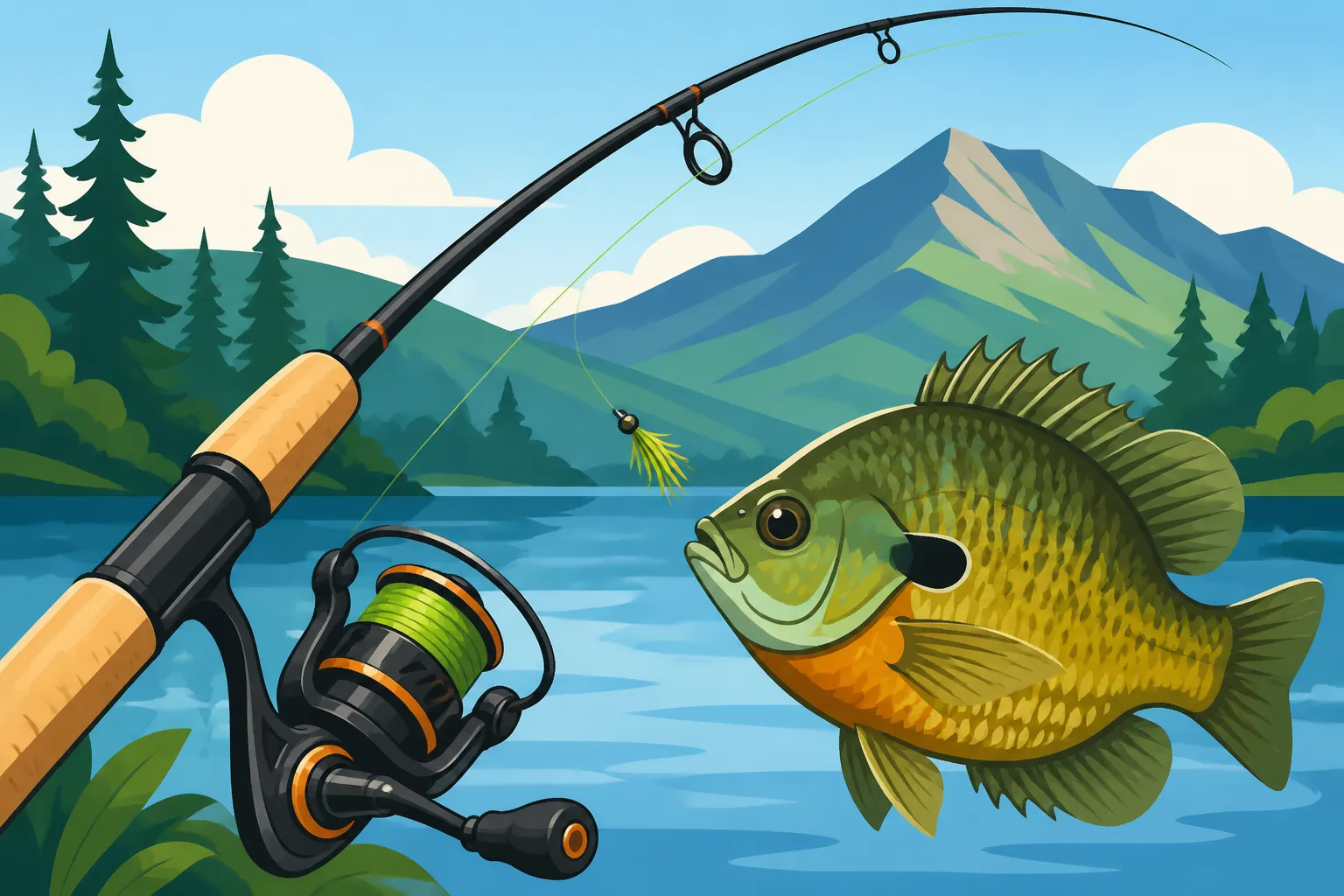
There's a common frustration among anglers: you head out, specifically targeting those feisty panfish like bluegill, crappie, and perch, but your gear feels entirely too heavy. You're missing those subtle nibbles, and when you do hook one, it feels like reeling in a wet rag rather than experiencing a fight. It takes all the fun out of it! This guide is going to change that for you, helping you discover how an ultralight rod can transform your panfish adventures across New Hampshire's ponds and lakes into a truly engaging and rewarding experience.
Why Go Ultralight for Panfish? The Unseen Advantage
Let's be honest, for many years, panfish were often considered "kid's fish" or something you caught while waiting for a bigger bite. Anglers often used whatever rod they had lying around – often a medium-action rod meant for bass or even a catfish rig. While that works in the sense that you can physically land a panfish, it strips away all the joy and challenge. Using an ultralight rod for panfish isn't just a preference; it's a strategic choice that dramatically enhances your fishing experience, making every little sunfish feel like a true trophy.
When you hold an ultralight rod, you immediately notice its delicate feel, but don't let that fool you. These rods are engineered for precision and sensitivity, allowing you to detect the most timid bites that a heavier rod would completely mask. This isn't about landing the biggest fish; it's about maximizing the fun and skill involved in enticing and fighting these smaller, often abundant, species. From the subtle tap of a bluegill investigating your bait to the aggressive strike of a hungry crappie, an ultralight setup ensures you feel every single interaction.
The Thrill of the Fight: Turning a Nibble into a Battle
Imagine hooking a respectable eight-inch crappie on a stout bass rod. You might feel a slight tug, reel it in, and it's on the bank in seconds. Now, imagine that same crappie on an ultralight rod. The rod bends, the drag sings, and suddenly that eight-inch fish feels like a pound-and-a-half fighter! The lightweight, flexible blank of an ultralight rod absorbs the head shakes and short runs of a panfish, turning what would be a non-event into a genuinely exciting battle. It's truly a blast.
This magnified fighting experience is incredibly addictive, especially when you're targeting cooperative schools of panfish in a New Hampshire pond or a quiet cove on Lake Winnipesaukee. Each fish presents a unique challenge, and you learn to appreciate the subtle nuances of their fight. It also teaches you proper fish-fighting techniques on lighter line, which can translate to better angling skills when you do step up to bigger game. Plus, it's perfect for introducing new anglers, especially kids, to the sport, as they get to experience the thrill of a bending rod and a fish on the line without needing to muscle in a trophy.
Unmatched Sensitivity for Finicky Biters: Detecting the Undetectable
Panfish, especially in pressured waters or during colder months, can be incredibly finicky eaters. Sometimes, their "bite" is barely a whisper on the line—a tiny tick, a subtle pause in the retrieve, or just a slight change in the weight of your bait. With a standard medium-action rod, these subtle indications often go unnoticed, leading to missed fish and frustration. An ultralight rod, however, is designed to transmit every single vibration and touch straight to your hands.
This heightened sensitivity comes from the rod's lighter blank materials and often a fast or extra-fast action tip. You'll feel the grass your jig brushes, the bottom structure your tiny spoon bounces off, and most importantly, the almost imperceptible "inhale" of a cautious crappie. This allows you to react instantly, setting the hook before the fish has a chance to spit the bait. It makes you a more effective angler, turning those "slow days" into productive ones, and it's particularly vital when fishing with small jigs, micro-spoons, or tiny pieces of bait. Mastering this sensitivity is a rewarding skill in itself, giving you a competitive edge and making you feel truly connected to what's happening beneath the surface. For deep dives into panfish habits, check out our guide on Yellow Perch in New Hampshire Lakes or Black Crappie in New Hampshire Waters.
Key Characteristics of the Best Ultralight Panfish Rod
Choosing the "best" ultralight rod isn't about picking the most expensive option; it's about understanding the specific characteristics that make a rod excel for panfish. These rods are a balance of delicate touch and surprising backbone, designed to handle tiny lures and baits while still being able to bring in a decent-sized fish without undue strain. You'll find a wide array of options out there, but focusing on a few core elements will guide you to the perfect stick for your New Hampshire panfishing adventures.
A truly great ultralight panfish rod feels like an extension of your arm. It should be light enough to cast all day without fatigue, yet strong enough to handle unexpected encounters. The components, from the guides to the reel seat, are just as important as the blank itself, contributing to the overall balance and performance. This isn't just about catching fish; it's about enjoying the process, and the right rod will make every cast, retrieve, and fight a pleasure.
Rod Length and Action: Finding Your Sweet Spot
When it comes to ultralight panfish rods, length typically ranges from 4 feet 6 inches up to around 6 feet 6 inches. Shorter rods (4'6" to 5'6") are fantastic for tight quarters, like fishing small streams, beaver ponds, or from a kayak where casting room is limited. They offer incredible accuracy for pinpoint casts around docks or lily pads. However, they reduce casting distance. If you're often fishing from the bank or need to reach those fish further out, a rod in the 5'6" to 6'6" range will provide better casting distance and leverage for fighting fish. A longer rod can also help with line management, especially when trying to keep your light line off the water for a better drift.
Rod action refers to where the rod bends when pressure is applied. For panfish, you'll generally look for a "fast" or "moderate-fast" action.
- Fast action rods bend mostly in the upper third of the blank. This gives you maximum sensitivity to detect those light bites and allows for quick, precise hook sets. It's excellent for jigs and finesse techniques.
- Moderate-fast action rods bend closer to the middle of the blank. These offer a bit more give, which can be helpful for casting lighter baits and for preventing hooks from tearing out of a panfish's delicate mouth during a fight. They also tend to cast small lures a bit further.
An "extra-fast" action might be too stiff in the tip for truly tiny baits, making casting difficult, while a "slow" or "parabolic" action might lack the sensitivity needed.
Power and Lure Weight Rating: The Delicate Balance
The "power" of a rod describes its lifting strength or stiffness. For panfish, you're obviously looking for "ultralight" power. This means the rod is designed to bend significantly under minimal load. A true ultralight rod will feel very whippy compared to a bass rod, but this is exactly what you want to feel every head shake and make those small fish exciting. Going too light on the power can lead to broken rods on larger fish, while too heavy will defeat the purpose of "ultralight."
The lure weight rating tells you the optimal weight range of lures and baits the rod is designed to cast effectively. For panfish, this rating is usually incredibly low, often ranging from 1/32 ounce to 1/8 ounce, or even down to 1/64 ounce for some specialized models. It's crucial to match your baits and lures to this rating. Trying to cast a 1/4 ounce lure on a rod rated for 1/32 oz max will severely hinder casting performance and could even damage the rod. Conversely, a rod designed for 1/8 oz might struggle to effectively cast a tiny 1/64 oz jig. Pay close attention to these ratings to get the most out of your ultralight setup, especially when fishing for species like crappie which often prefer very small presentations.
Handle Design and Comfort: Long Days on the Water
When you're out chasing panfish, especially on those beautiful New Hampshire summer days, you might find yourself making hundreds of casts. That's why the handle design and overall comfort of your ultralight rod are paramount. A poorly designed handle can lead to hand fatigue, cramping, and ultimately, cut your fishing trip short.
Most ultralight rods feature either cork or EVA foam handles.
- Cork is classic, lightweight, provides excellent grip even when wet, and has a natural feel. It also tends to transmit vibrations very well, enhancing sensitivity. High-quality cork can last a very long time.
- EVA foam is durable, often more affordable, and provides a comfortable, non-slip grip. It's less susceptible to damage than cork but might not offer the same level of vibration transfer.
Beyond the material, consider the length and ergonomics of the handle. A shorter handle is often preferred for ultralight rods as it reduces weight and allows for easier maneuvering. However, if you like to tuck the rod butt under your forearm for added stability, a slightly longer handle might be beneficial. Make sure the reel seat comfortably cradles your ultralight spinning reel without any wobbling. Ultimately, hold the rod, feel its balance, and imagine yourself casting for hours. A comfortable rod means more time enjoying the tugs of panfish on the other end.
Pairing Your Ultralight Rod with the Right Reel and Line
An ultralight rod is only as good as the reel and line you pair it with. The synergy between these three components is what truly defines a high-performing ultralight setup. You can have the most sensitive rod in the world, but if it's paired with a heavy, unbalanced reel or line that's too thick, you'll negate all the advantages you sought in the first place. The goal is a lightweight, balanced system that allows for delicate presentations and maximizes the fun of fighting smaller fish. Think of it like a finely tuned instrument – each piece needs to work in harmony for the best performance. If you're just starting, consider looking at a guide on Best Rod and Reel Combo for Beginners to get a broader overview before diving into ultralight specifics.
Ultralight Spinning Reels: Balancing the System
For ultralight panfish rods, you'll almost exclusively be looking at small spinning reels. The key is to choose a reel that balances the rod perfectly. A common mistake is to put a reel that's too heavy on an ultralight rod, making the setup feel tip-heavy and uncomfortable to cast. Look for reels in the 500 to 1000 size range (sometimes labeled as 05, 10, or 1000). These are designed to hold light line capacities and weigh very little.
When selecting an ultralight spinning reel, consider a few features:
- Smooth Drag System: This is paramount. Panfish have delicate mouths, and a sticky or jerky drag will lead to pulled hooks or broken lines on an ultralight setup. Look for a reel with a consistently smooth drag that allows line to peel off without hesitation, especially when a larger panfish (or an unexpected bass!) decides to make a run.
- Lightweight Construction: Materials like graphite composite bodies and rotors help keep the weight down without sacrificing too much durability. Aluminum spools are often preferred for their strength and smooth line lay.
- Gear Ratio: While not as critical as for bass fishing, a moderate gear ratio (e.g., 5.0:1 or 5.2:1) is generally fine for panfish. It allows for steady retrieves of small jigs and spinners.
- Bearings: More bearings generally mean smoother operation, but don't get hung up on a high number. Quality of bearings matters more than quantity. A reel with 4-6 good quality bearings will often outperform a cheaper reel with 10 inferior ones.
Light Line Choices: The Invisible Connection
The line you spool onto your ultralight reel is the direct connection to the fish, and its choice is critical. Using too heavy a line will completely nullify the delicate presentation and sensitivity benefits of your ultralight setup. You want line that is nearly invisible, casts smoothly, and offers enough strength to handle your target.
Here are the primary choices for ultralight panfish fishing:
- Monofilament (Mono): This is the traditional choice and still a great one for panfish. It's affordable, has some stretch (which helps cushion runs and prevent hooks from tearing out), and is relatively easy to manage. For panfish, stick to 2 to 4-pound test. Its buoyancy can also be an advantage when fishing topwater or suspended baits.
- Fluorocarbon: While often used as a leader, some anglers spool their entire ultralight reel with 2 to 4-pound fluorocarbon. It's nearly invisible underwater, offers excellent abrasion resistance, and sinks, which can be beneficial when fishing deeper or needing your bait to get down quickly. However, it can be stiffer than mono, leading to more memory and coiling on smaller spools.
- Braided Line: A growing number of ultralight anglers are turning to super-thin braided lines (4 to 8-pound test, with a diameter equivalent to 1-2 pound mono). Braid offers incredible sensitivity due to zero stretch and exceptional casting distance. The downside is its visibility and lack of abrasion resistance in certain situations. It's almost always recommended to tie a 2-4 foot fluorocarbon or monofilament leader to your braid for stealth. This combination gives you the best of both worlds: sensitivity and casting distance from the braid, and stealth from the leader. Many anglers find great ultralight braided lines on platforms like Amazon or at local Bass Pro Shops.
For a deep dive into specific lure and bait choices that pair well with these lines, you might find our guide on Best Tackle for Panfish helpful.
| Rod Characteristic | Ultralight Panfish Rod | Standard Medium Action Rod |
|---|---|---|
| Power | Ultralight | Medium |
| Action (Typical) | Fast to Moderate-Fast | Moderate-Fast to Fast |
| Length Range | 4'6" to 6'6" | 6'0" to 7'6" |
| Lure Weight | 1/64 oz to 1/8 oz | 1/4 oz to 3/4 oz |
| Line Weight | 2 lb to 6 lb | 6 lb to 12 lb |
| Sensitivity | Very High | Medium to High |
| Target Fish | Panfish, Small Trout | Bass, Pickerel, Larger Trout |
| Fight Feel | Every Head Shake | Solid Pull |
Recommended Ultralight Rods for New Hampshire Panfish Anglers
Navigating the world of fishing rods can feel overwhelming, especially with so many brands and models on the market. But when you're looking for the best ultralight rod for panfish, the field narrows down to those that truly prioritize sensitivity, light weight, and a delicate touch. Whether you're a seasoned angler looking to refine your panfish game or a beginner eager to experience the joy of ultralight fishing, there's a perfect rod out there for you, available at places like Bass Pro Shops or through online retailers like Amazon.
The key is to remember that "best" is often subjective and depends on your budget, fishing style, and the specific panfish you're targeting. However, we can highlight categories that consistently deliver excellent performance and value, ensuring you make a smart investment in your New Hampshire fishing adventures.
Entry-Level Options for Beginners: Getting Started Right
If you're new to ultralight fishing or just want to try it out without breaking the bank, there are fantastic entry-level options that offer surprisingly good performance. These rods are usually a great value, allowing you to experience the benefits of ultralight fishing without a significant financial commitment. They might not have the absolute cutting-edge materials or the most refined feel of premium rods, but they are more than capable of providing endless fun on the water.
Look for models from reputable brands that offer combo packages, often pairing a decent ultralight rod with a matching small spinning reel. These combos are usually balanced well right out of the box. For example, brands like Ugly Stik (with their popular Elite or GX2 ultralight series) and Daiwa (such as the Crossfire or Presso series) offer durable and sensitive rods that are perfect for panfish. These rods typically feature sensitive graphite or fiberglass blanks and come in lengths between 5 to 6 feet with ultralight power. They're robust enough to withstand the occasional knock but sensitive enough to detect those subtle bites. They’re excellent for fishing small jigs, crickets, or worms for bluegill and perch in local ponds or smaller New Hampshire lakes.
Mid-Range Performers for Avid Anglers: Stepping Up Your Game
Once you've experienced the joy of ultralight fishing and are ready to invest a bit more for enhanced performance, the mid-range category offers a significant jump in sensitivity, lighter weight, and improved component quality. These rods are often constructed with higher-modulus graphite blanks, which makes them noticeably lighter and more sensitive than their entry-level counterparts. This increased sensitivity allows you to feel even the most delicate takes, translating into more hookups and a deeper connection to the fish.
Brands like St. Croix (with their Triumph or Premier series) and Fenwick (like the Eagle or HMG series) are fantastic choices in this price bracket. You'll often find features like better quality cork handles, more durable and lighter guide systems (like stainless steel with ceramic inserts), and more refined actions. A mid-range ultralight rod is perfect for anglers who spend a good amount of time targeting crappie, larger yellow perch, or even small stream trout in New Hampshire's various waters. The improved backbone in these rods also gives you more confidence when an unexpected bass or larger fish decides to take your ultralight offering, allowing you to effectively manage the fight without feeling completely outmatched. Consider these if you're looking for a noticeable upgrade in feel and functionality. For those interested in New Hampshire Trout Stocking and Fishing Rules, a good mid-range ultralight rod is ideal.
Premium Choices for the Dedicated: The Ultimate Experience
For the truly dedicated ultralight enthusiast, or those who simply demand the absolute best in sensitivity, lightest weight, and top-tier craftsmanship, premium ultralight rods deliver an unparalleled fishing experience. These rods often feature advanced graphite technologies, specialized resin systems, and the highest quality components, resulting in rods that are incredibly light in hand, exceptionally sensitive, and exquisitely balanced. They are designed to transmit every vibration and nuance from your line, making you feel completely dialed into the underwater world.
High-end options from brands such as Shimano (like the Expride or Zodias series in ultralight ratings), G. Loomis (especially their Trout Series or some GLX models), and even some boutique Japanese domestic market (JDM) brands accessible via Amazon, offer features like titanium guides, custom reel seats, and proprietary blank designs that minimize weight and maximize sensitivity. While they come at a higher price point, the difference in feel, casting performance, and the sheer pleasure of fishing with such a finely tuned instrument is often worth it for serious anglers. If you want to feel every tiny tap, every bottom contour, and turn every panfish into an epic battle, a premium ultralight rod is the way to go. It's an investment in the pure joy of fishing, especially when you're targeting those elusive crappie or working finesse presentations in clear water. When exploring these options, consider how they might complement other specialized gear, perhaps even your Best Ice Fishing Gear for New Hampshire.
Disclaimer
This article is for general informational purposes only and does not constitute professional advice. Laws, prices and regulations vary by location and change over time. Consult a qualified professional for guidance on your specific situation.