Best Tackle for Panfish
If you've ever stood in the fishing aisle, utterly overwhelmed by the sheer number of tiny hooks, colorful bobbers, and micro-lures, you're not alone. It's easy to feel like you need a degree in fishing gear just to figure out what you need for panfish! But chasing down a mess of New Hampshire's bluegill, perch, or crappie doesn't require a complicated setup. This guide is here to cut through the confusion and walk you through the very best tackle choices to make your panfishing adventures simple, successful, and incredibly fun.
The Joy of Panfishing: Accessible and Rewarding
There's something uniquely satisfying about panfishing. Maybe it's the sheer abundance of fish in most New Hampshire lakes and ponds, or perhaps it's the relatively simple approach needed to catch them. Whatever the reason, panfish like yellow perch, bluegill, and black crappie offer fantastic action for anglers of all ages and skill levels. They're often eager to bite, put up a surprisingly spirited fight on light tackle, and let's be honest, they make for some excellent table fare.
Panfishing is a wonderful gateway into the broader world of fishing, especially for beginners or young anglers. It teaches fundamental skills like casting, setting the hook, and handling fish, all without the pressure of trying to land a trophy-sized lunker right out of the gate. Plus, you don't need a fancy boat or expensive electronics to find them; panfish are often found close to shore, making them incredibly accessible. Understanding Panfish Species Identification Guide for New Hampshire can also help you target specific fish and choose the right tackle.
Essential Rod and Reel Setups for Panfish
When it comes to panfish, finesse is often the name of the game. You're not trying to haul in a giant tuna; you're looking for sensitivity to detect subtle bites and a balanced setup that makes even a small bluegill feel like a champion fighter. The right rod and reel combination will elevate your panfishing experience from simply catching fish to truly feeling the fish.
Ultralight Spinning Combos: The Gold Standard
For most panfish enthusiasts, an ultralight spinning combo is the absolute best choice, and it's what I recommend starting with. These setups are designed to handle light line and small baits, offering maximum sensitivity. Imagine holding your rod, feeling a slight tick, and knowing instantly that a curious perch is investigating your bait – that's the kind of feedback an ultralight setup provides.
Look for a rod in the 5 to 6.5-foot range with a "light" or "ultralight" power rating and a "fast" or "moderate-fast" action. The length provides enough leverage for casting those tiny lures but isn't so long it becomes cumbersome in tight spots. The light power means the rod bends easily, protecting your delicate line, while the action determines how much of the rod bends. A fast action means only the tip bends, giving you excellent sensitivity and quick hook sets, while a moderate-fast bends a bit more into the blank, offering a bit more forgiveness. Pair this with a small spinning reel, typically a 500, 1000, or even 2000 series size. These reels are compact, light, and perfectly matched to the thin lines you'll be using. You can often find excellent budget-friendly ultralight combos at outdoor retailers like Bass Pro Shops or even through online vendors like Amazon.
Rod Power and Action Explained
Understanding rod power and action can feel a bit like learning a secret language, but for panfish, it’s quite simple. "Power" refers to how much force it takes to bend the rod. An ultralight rod, as the name suggests, bends with very little force, which is ideal for light lines and small fish. It prevents you from breaking off a fish if you set the hook too hard, absorbing the shock of the fight.
"Action" describes where the rod bends. A fast action rod will bend mostly in the top third or quarter of the blank. This gives you incredible sensitivity to feel those subtle nibbles that panfish are famous for. It also allows for quick, precise hook sets with minimal movement, which is crucial when you're dealing with a fish that might just be mouthing the bait. A moderate-fast action rod bends a bit further down, offering a more parabolic bend. This can be more forgiving for beginners, as it absorbs head shakes better and reduces the chances of tearing a small hook out of a panfish's soft mouth. For Best ultralight rod for panfish, these details are paramount.
Line Choices for Panfish: Light and Stealthy
The line you choose for panfishing is almost as important as your rod and reel. Panfish, especially in clear New Hampshire waters, can be surprisingly wary, and a heavy, visible line can be a major deterrent. You want something thin, strong enough to handle their spirited fight, and ideally, low-visibility.
Monofilament: The All-Around Workhorse
For most panfish applications, monofilament line is a fantastic choice. It's affordable, easy to tie knots with, and offers a good amount of stretch, which acts as a shock absorber. This stretch is a real benefit when panfish make sudden runs or head shakes, helping to prevent hooks from pulling out or thin lines from snapping.
For panfish, stick to very light test weights, typically 2 to 6 pounds. Many seasoned panfish anglers swear by 4-pound test monofilament as the sweet spot. It's thin enough to be nearly invisible in the water, yet surprisingly strong for the average crappie or bluegill. The slight buoyancy of mono also helps keep your bait suspended just a bit, which can be ideal when using a small jig under a bobber. When considering where to stock up, check out the fishing sections at stores like Bass Pro Shops for a wide selection of reputable monofilament brands.
Fluorocarbon Leader and Braid (Optional)
While monofilament is excellent, some anglers opt for a braid main line with a fluorocarbon leader, particularly when fishing in very clear water or for larger crappie. Braid is incredibly strong for its diameter and has virtually no stretch, offering even greater sensitivity. You'll feel everything that happens at the end of your line.
However, braid is highly visible and can be expensive. This is where a fluorocarbon leader comes in. Fluorocarbon is nearly invisible underwater because it refracts light similarly to water, making it a great choice for spooky fish. It also has less stretch than mono, adding to sensitivity. You can tie a 2-4 foot section of 4-pound fluorocarbon leader to your braided main line using a small swivel or a knot like the FG knot or Albright knot. This gives you the strength and sensitivity of braid with the stealth of fluorocarbon. This setup is particularly effective when you're fishing deeper water or when you need to feel the lightest of bites, which can happen when chasing panfish in winter.
Terminal Tackle: Hooks, Sinkers, and Bobbers
Terminal tackle is all the little bits and pieces at the end of your fishing line that actually present your bait or lure to the fish. Getting these right is crucial for panfish, as their mouths are small and their bites can be subtle.
Hooks: Small and Sharp is Key
When fishing for panfish, think small, sharp, and light. A hook that's too large will deter bites, and a dull hook will result in missed fish. Sizes vary depending on the specific panfish you're targeting, but generally, you'll be looking at hook sizes from #8 down to #14. For average bluegill and perch, a #10 or #12 hook is usually perfect. For larger crappie, you might go up to a #8.
Many anglers prefer Aberdeen style hooks for panfish. These hooks have a long shank, which makes them easier to remove from a fish's mouth without tearing it, and they are typically light wire, which can bend out of snags rather than breaking your line. Circle hooks are another excellent option, especially for catch-and-release, as they are designed to hook fish in the corner of the mouth, minimizing deep hooking. When you’re browsing for tackle, remember that a good selection of small, sharp hooks is a cornerstone of any effective panfish kit.
Sinkers: Just Enough Weight
The goal with panfish sinkers is to use just enough weight to get your bait down to the fish. Too much weight can make your presentation unnatural, spooking fish, and can make it harder to feel bites. Most panfish setups rely on split shot sinkers, which are small, round weights that you crimp onto your line.
Keep a variety of sizes on hand, from tiny BB shot up to #3 or #4 sizes. Start with the lightest possible weight and only add more if your bait isn't sinking effectively or staying in the strike zone. You might use one or two small split shots a foot or so above your hook, or you might use several tiny ones spread out along your line to create a more natural, slow-sinking presentation. For fishing with a bobber, you'll also want to make sure your sinker is just heavy enough to "cock" the bobber properly without dragging it under, indicating a bite.
Bobbers: Visualizing the Bite
Bobbers are iconic for panfishing, offering a clear visual cue of a bite. There are two main types: fixed bobbers and slip bobbers. Fixed bobbers are attached directly to your line at a set depth. These are great for shallow water or when you know the fish are holding at a specific depth very close to the surface. Small, round plastic bobbers or traditional red-and-white models work perfectly here.
Slip bobbers, on the other hand, slide freely on your main line. You use a bobber stop (a small knot or piece of string) to set the depth, allowing you to fish much deeper water while still being able to reel your rig all the way up to the rod tip for casting. This is incredibly versatile for reaching panfish suspended at various depths in a lake or pond. Slip bobbers are especially useful when you're fishing in lakes with a lot of structure or varying depths, giving you the flexibility to adapt on the fly. You can find excellent options for both types of bobbers at any outdoor store, and online retailers like Amazon offer convenient multi-packs.
Baits and Lures for Hungry Panfish
Panfish aren't usually picky eaters, which is part of what makes them so much fun to catch! However, having a variety of baits and lures can help you adapt to different conditions and preferences. From natural offerings to tiny artificials, there's a world of options.
Live Bait: Irresistible Natural Offerings
When in doubt, live bait is almost always a winner for panfish. Its natural scent, texture, and movement are hard for any fish to resist. Worms are probably the most classic and effective panfish bait. Small pieces of nightcrawlers or entire red worms threaded onto a small hook are deadly for bluegill, perch, and crappie. They’re easy to find and store, too.
Other excellent live bait options include mealworms, wax worms, and maggots (often called "spikes" by ice anglers). These tiny morsels are perfect for jigging under a bobber or on a small jig head. Small minnows, though a bit larger, can be extremely effective for bigger crappie and perch, especially when rigged just below a slip bobber. Just remember to check New Hampshire's regulations regarding baitfish use, as some waters have restrictions to prevent the spread of invasive species. Knowing New Hampshire Fishing Regulations Explained can save you a lot of trouble.
Artificial Jigs: Tiny Temptations
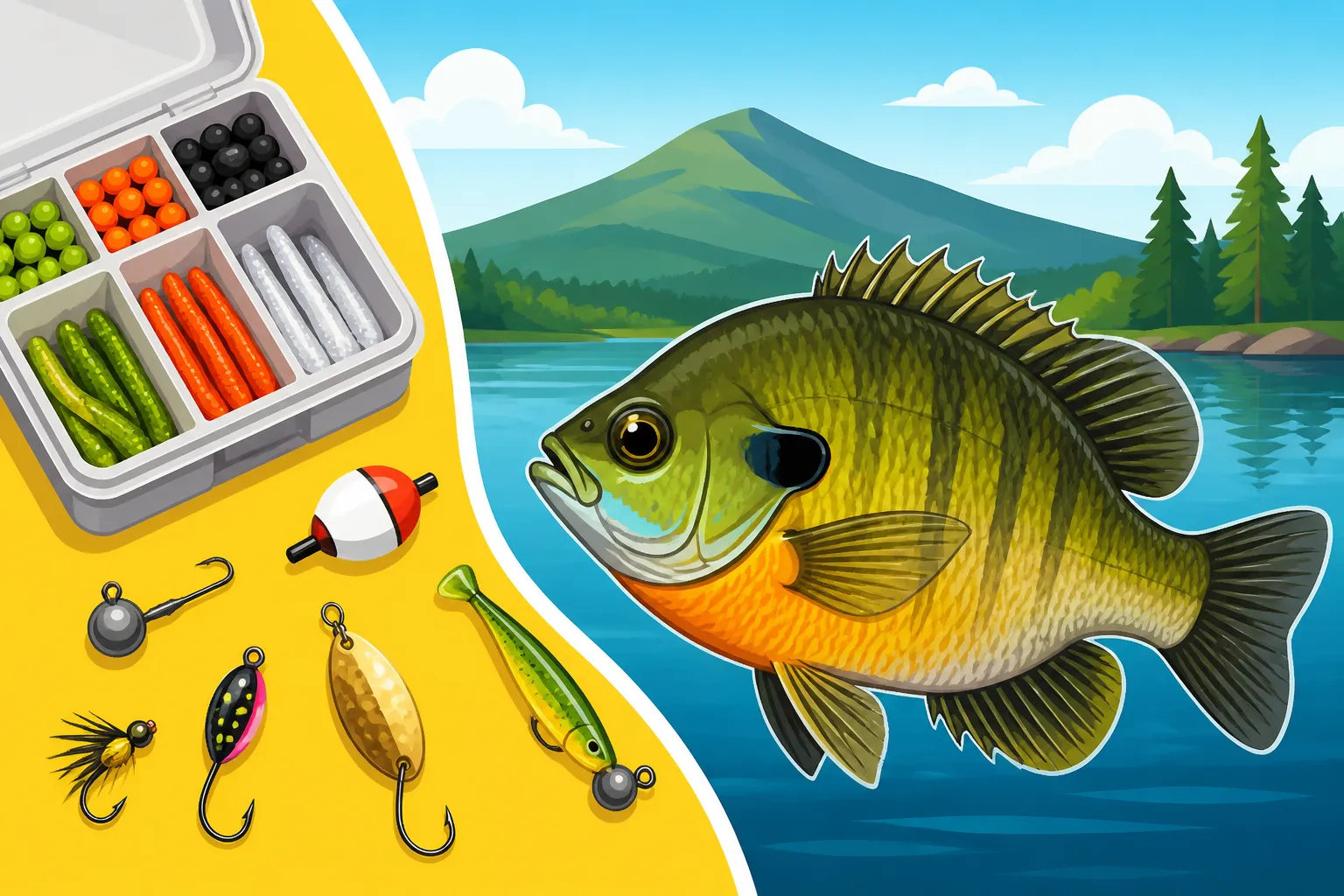
Artificial jigs for panfish are usually tiny, often no more than 1/32 or 1/64 of an ounce, sometimes even smaller. These are fantastic for when fish are aggressive or when you prefer not to deal with live bait. They come in an incredible array of colors and shapes, often mimicking small insects, crustaceans, or baitfish.
Soft plastic grub tails, tube jigs, and small marabou jigs are incredibly effective. Chartreuse, white, black, and pink are perennial favorites, but don't be afraid to experiment. The key is often a slow, subtle retrieve with plenty of pauses and slight twitches. You can fish them under a bobber, tight-lining, or even slowly jigging them vertically from a boat or through the ice. Many anglers find these jigs, sometimes tipped with a small piece of worm or a wax worm, to be an unbeatable combination for crappie, especially in stained water where their visibility can stand out.
Small Spinners and Spoons: Flash and Vibration
For actively feeding panfish, especially yellow perch and larger bluegill, small inline spinners and spoons can be incredibly effective. The flash and vibration these lures produce can trigger aggressive strikes, mimicking small baitfish or fleeing insects.
Look for spinners in sizes #0 to #2, often with a single or double blade configuration. Mepps and Panther Martin are popular brands that have produced countless panfish catches over the years. Small casting spoons, usually no more than an inch or two long, can also be deadly. These are great for covering a bit more water, especially if you're shore fishing and trying to locate schools of fish. They can be cast and retrieved steadily, or jigged with short hops and drops. These lures often work best in slightly deeper water or when panfish are actively chasing bait.
| Tackle Item | Common Use Case | Key Features (Panfish Specific) | Pros | Cons |
|---|---|---|---|---|
| Ultralight Rod | All-around panfishing | 5-6.5 ft, Light/Ultralight power, Fast action | Highly sensitive, makes fish fights fun | Less power for larger incidental catches |
| Small Spinning Reel | Paired with ultralight rod | 500-2000 series | Lightweight, balances rod, handles light line | Limited line capacity for big fish |
| Monofilament Line | General purpose panfishing, bobber fishing | 2-6 lb test, low visibility | Affordable, good stretch, easy to handle | More visible than fluorocarbon, less sensitive |
| Fluorocarbon Leader | Clear water, finicky fish | 4 lb test, tied to braid or mono | Nearly invisible, good abrasion resistance | Can be stiff, more expensive |
| Braid Main Line | Enhanced sensitivity, long casts, deep water | 4-10 lb test, thin diameter | Extremely sensitive, strong, no stretch | Highly visible, can tangle, requires leader |
| Aberdeen Hooks | Live baiting, minimizing gut hooks | Sizes #8-#14, long shank, light wire | Easy removal, less fish damage, bends from snags | Can bend out on stronger fish/snags |
| Circle Hooks | Catch & Release, passive bait fishing | Sizes #10-#14 | Hooks in mouth corner, safer for fish | Requires different hook-set technique |
| Split Shot Sinkers | Weighting baits, adjusting depth | BB to #4 sizes, removable | Versatile, easy to add/remove, inexpensive | Can damage line if over-crimped |
| Fixed Bobbers | Shallow water, specific depth fishing | Small plastic or foam | Simple, highly visible for close-up bites | Limited to shallow depths, can't reel in fully |
| Slip Bobbers | Deeper water, variable depth fishing | Various sizes, requires bobber stop | Versatile depth control, easier casting | Requires bobber stop, more setup time |
| Live Worms/Grubs | All panfish, especially bluegill, perch | Red worms, mealworms, wax worms | Natural scent/action, highly effective | Requires storage, messy, not always available |
| Soft Plastic Jigs | Crappie, perch, bluegill, aggressive/finicky fish | 1/32-1/64 oz, various colors | Versatile, reusable, no storage issues | No natural scent unless added |
| Small Spinners/Spoons | Active panfish, covering water | #0-#2 spinners, 1-2 inch spoons | Flash and vibration attracts fish | Less effective for passive/finicky fish |
Panfish Accessories: Making the Experience Better
While the core rod, reel, line, and terminal tackle are essential, a few thoughtful accessories can significantly improve your panfishing trips. These aren't just luxuries; they can make your day more comfortable, safer, and ultimately, more successful.
Pliers and Hook Removers: Safety First
Panfish, especially crappie and perch, have surprisingly sharp gill plates and fin spines. Nothing ruins a fun fishing trip faster than a hook embedded in your finger. A good pair of needle-nose pliers or a dedicated hook remover is an absolute must-have. These tools allow you to safely and quickly extract hooks from the fish's mouth, minimizing stress on the fish if you're releasing it, and protecting your hands.
They also come in handy for cutting line, crimping split shot, or making small adjustments to your tackle. Look for models with a comfortable grip and a long enough nose to reach into small mouths. You can find robust options at Bass Pro Shops or even a simple pair on Amazon will do the trick for panfish. Having these on hand means less fumbling and more time enjoying the fishing.
Small Landing Net: Protecting Your Catch
While panfish aren't massive, a small, soft-mesh landing net can be incredibly helpful, especially for larger crappie or if you're trying to keep the fish from flopping onto the bank or boat deck. A net helps you safely land the fish without putting undue stress on your light line or the hook in its mouth, reducing the chances of a last-minute escape right at your feet.
For panfish, a net with a rubberized or knotless mesh is ideal. This type of mesh is much gentler on the fish's delicate fins and slime coat, which is crucial for their survival if you plan on releasing them. It also prevents hooks from getting tangled in the netting, a frustration every angler knows. A compact, lightweight net that's easy to deploy and store is perfect for panfishing.
Tackle Box or Bag: Organization is Key
Nothing is more frustrating than fumbling through a disorganized mess when you're trying to quickly change a hook or tie on a new jig. A small tackle box or bag designed for panfish-sized gear will keep your hooks, sinkers, bobbers, and small lures neatly organized and readily accessible.
Many tackle boxes have small compartments specifically for these smaller items, preventing them from mixing together. A tackle bag, on the other hand, often offers more flexibility with pockets and soft storage, which can be great for carrying spools of leader material, small pliers, and maybe a snack. Choose something durable and waterproof, especially if you're fishing from a kayak or in unpredictable New Hampshire weather. Best Tackle Box Setup for New Hampshire Anglers can help you find the right fit for your needs.
Essential Considerations for New Hampshire Panfishing
Beyond the tackle itself, a few other things are worth keeping in mind to make your New Hampshire panfishing trips enjoyable and successful. Remember that regulations can vary, and being prepared goes a long way.
Knowing the Seasons and Regulations
Even for panfish, it’s always a good idea to be aware of New Hampshire's fishing seasons and specific regulations. While many panfish species have generous seasons, some waters might have specific rules, and it’s always best practice to check the current New Hampshire Freshwater Fishing Digest. This will give you up-to-date information on bag limits, length limits, and any special regulations for the body of water you plan to fish.
You don't want to accidentally violate a rule, especially when it's so easy to check beforehand. The New Hampshire Fish and Game Department website is an excellent resource. Plus, knowing the prime seasons for various panfish can help you plan your trips for maximum success. For example, understanding New Hampshire Fishing Season Dates and Closures will tell you when crappie are most active in the spring or when perch are biting consistently through the ice.
Licensing and Youth Exemptions
Before you even think about casting a line, make sure you have the proper fishing license. In New Hampshire, most anglers aged 16 and older need a valid fishing license. It's easy to purchase one online, at a local license agent, or through the New Hampshire Fish and Game Department. Carrying your license, whether a physical copy or a digital one, is important.
For younger anglers, New Hampshire offers some fantastic exemptions. Children under a certain age (check current regulations for the precise age) generally do not need a fishing license, making panfishing an incredibly accessible and affordable family activity. This is a wonderful opportunity to introduce kids to the outdoors and the joys of fishing. Check out New Hampshire youth fishing license age cutoff for specifics. Taking a child fishing for panfish with a simple setup is a memory in the making, and New Hampshire makes it easy to do.
Finding the Best Spots
New Hampshire is blessed with an abundance of lakes, ponds, and slow-moving rivers that are teeming with panfish. These fish often congregate around structure like submerged logs, weed beds, docks, lily pads, and rock piles. When looking for a spot, keep an eye out for these features.
Many state parks offer fantastic shore access to panfish-rich waters, often with amenities that make it easy for families to spend a day fishing. Public boat launches also provide access to larger lakes where you can explore coves and flats. Don't be afraid to try different areas until you find where the panfish are holding. Even small, overlooked ponds can hold surprising numbers of cooperative panfish. For those looking for great places, consider searching for Best family-friendly fishing spots in New Hampshire.
Disclaimer
This article is for general informational purposes only and does not constitute professional advice. Laws, prices and regulations vary by location and change over time. Consult a qualified professional for guidance on your specific situation.