Best Kayak for River Fishing in New Hampshire
One of the biggest frustrations for New Hampshire anglers who love river fishing is figuring out what kind of kayak can actually handle our diverse waterways. From the swift currents of the White Mountain streams to the broader, more sedate flows of the Merrimack, a standard lake kayak often feels clunky, unstable, or just plain unsuitable. This guide is here to cut through the confusion and help you pinpoint the best kayak for navigating New Hampshire's rivers, ensuring your next fishing trip is less about wrestling your boat and more about reeling in that catch.
Why River Kayak Fishing is Different in New Hampshire
You might think a kayak is a kayak, but once you paddle New Hampshire's rivers, you quickly realize they demand something entirely different from what you'd use on a calm lake like Winnipesaukee. The dynamic nature of river systems presents unique challenges and opportunities that influence every aspect of your kayak choice.
The Challenge of Currents and Eddies
New Hampshire rivers are rarely still. Even seemingly placid sections often have subtle currents, and many boast legitimate rapids and swift-moving stretches. This constant motion means your kayak needs to be able to respond quickly and predictably. On a lake, stability often reigns supreme, allowing you to stand and cast with ease. On a river, however, a boat that's too wide or has too much "hull drag" can become a liability. You need a kayak that can cut through the current, track well enough to hold a line, but also spin on a dime to avoid obstacles or position yourself in an eddy.
Think about trying to hold your position against a moderate current while casting. A kayak designed for open water might want to weather-vane or get pushed downstream uncontrollably. A river-specific design, with its emphasis on maneuverability and sometimes a bit more rocker (the curve of the hull from bow to stern), allows you to use the current to your advantage, slipping into fishy seams and holding steady in pockets without fighting the river every second. It's a dance, not a wrestling match, and your kayak needs to be a good partner.
Rocky Bottoms and Obstacles
Our New Hampshire rivers are beautiful, but they're also rugged. You'll encounter everything from submerged rocks and fallen trees to shallow gravel bars and sharp ledges. A kayak that's meant for pristine lake bottoms might not hold up to the abuse. This environment demands durability, and often, a material that can take a scrape or two without catastrophic damage. Dragging over a shallow section or bumping into a hidden rock is an inevitable part of river fishing.
Beyond just material strength, the hull design plays a huge role. A flatter-bottomed boat might draw less water, making it easier to glide over shallow spots, but it might also be more prone to spinning out in a strong current. A boat with a slightly more V-shaped hull or chine can cut through the water better, but might hang up more easily in skinny water. It's a constant trade-off, and finding a balance that suits the typical rivers you fish is key. For example, the Pemigewasset River has stretches that are relatively clear and deep, but also long, rocky riffles where you'll be scraping bottom.
Tight Spaces and Varying Depths
Unlike the wide-open expanses of our larger lakes, many New Hampshire rivers are characterized by narrower channels, overhanging branches, and sudden changes in depth. You might be paddling through a deep pool one moment, then scraping over a gravel bar the next. This requires a kayak that's not only agile but also has a relatively shallow draft. Long, sleek touring kayaks that excel at covering distance on open water become unwieldy in these environments.
Imagine trying to navigate a tight bend around a fallen log on a river like the Saco. A longer kayak would need multiple paddle strokes and constant correction, potentially spooking fish or even getting caught up. A shorter, more nimble kayak allows for quick pivots and precise movements, letting you work around obstacles and get into those secluded fishing spots that are inaccessible to larger boats. The ability to pull up onto a bank easily for a short portage or to fish a tricky spot on foot is also a huge advantage, and a heavy, bulky kayak makes that a chore.
Key Features to Look for in a River Fishing Kayak
When you're sifting through all the options out there, from the big box stores to specialty shops, it can feel overwhelming. But for New Hampshire river fishing, there are a few core features that really make a difference. Focusing on these will help narrow down your choices considerably.
Hull Design and Stability
The hull is the heart of any kayak, and its design dictates how the boat behaves on the water, especially in dynamic river conditions. You'll often hear about "primary" and "secondary" stability. Primary stability is that initial feeling of steadiness when you first get in – how stable it feels sitting flat. Secondary stability kicks in when the boat is leaned over, describing its resistance to capsizing. For river fishing, you need a good balance of both.
Many river fishing kayaks will feature a flatter, wider hull for excellent primary stability, which is great for standing to cast in calmer sections. However, too flat a bottom can make a kayak feel "tippy" when hitting a wave or an eddy line. Boats with a slight V-hull or pronounced chines (sharp edges along the bottom) offer better secondary stability, allowing you to lean into turns or turbulent water with more confidence. Additionally, look for "rocker," which is the amount of curve from bow to stern. More rocker means greater maneuverability, making it easier to spin and turn, which is crucial for navigating tight river bends and obstacles. Less rocker means better tracking on straighter stretches but can feel sluggish when you need to turn quickly.
Length, Width, and Maneuverability
These dimensions are probably the most immediate indicators of how a kayak will perform on a river. Generally, shorter kayaks (under 12 feet) are much more maneuverable, easier to turn, and lighter to portage. This makes them ideal for smaller, winding rivers, or those with frequent obstacles and rapids. You'll appreciate this nimble quality when you're trying to sneak into a tight pocket water on a stream like the Swift River or navigating around logjams.
Wider kayaks (30 inches or more) offer increased stability, which is fantastic for standing and casting. However, a very wide boat can be slower, harder to paddle against a current, and more challenging to squeeze through narrow channels. A good compromise for many New Hampshire rivers might be a kayak in the 10-12 foot range with a width around 30-34 inches. This provides a blend of stability for fishing and enough maneuverability to handle moderate currents without becoming a barge. Longer boats (13+ feet) are generally better for covering long distances on wider, slower rivers, or for lake fishing, where straight-line tracking is more important than quick turns.
Durability and Materials
New Hampshire rivers are not gentle on gear. You're going to scrape, bump, and maybe even occasionally drag your kayak over rocks and shallow areas. This is why material choice is paramount. The vast majority of fishing kayaks are made from rotomolded polyethylene. This material is incredibly durable, resistant to abrasions, and can withstand significant impact. It's also relatively inexpensive to produce, which keeps kayak costs down. While it can scratch, it's remarkably resilient and can often be repaired if a deeper gouge occurs.
Other materials exist, like thermoformed ABS, which is lighter and stiffer, offering better performance but often at a higher price and with less impact resistance. Inflatable kayaks, which we'll discuss more later, use heavy-duty PVC or similar materials that are surprisingly tough against punctures, though sharp hooks are always a concern. For the average New Hampshire river angler, a rotomolded polyethylene kayak is often the best balance of durability, cost, and performance. You don't want to be constantly worrying about every bump or scrape when you should be focused on the fish.
Storage and Rigging Options
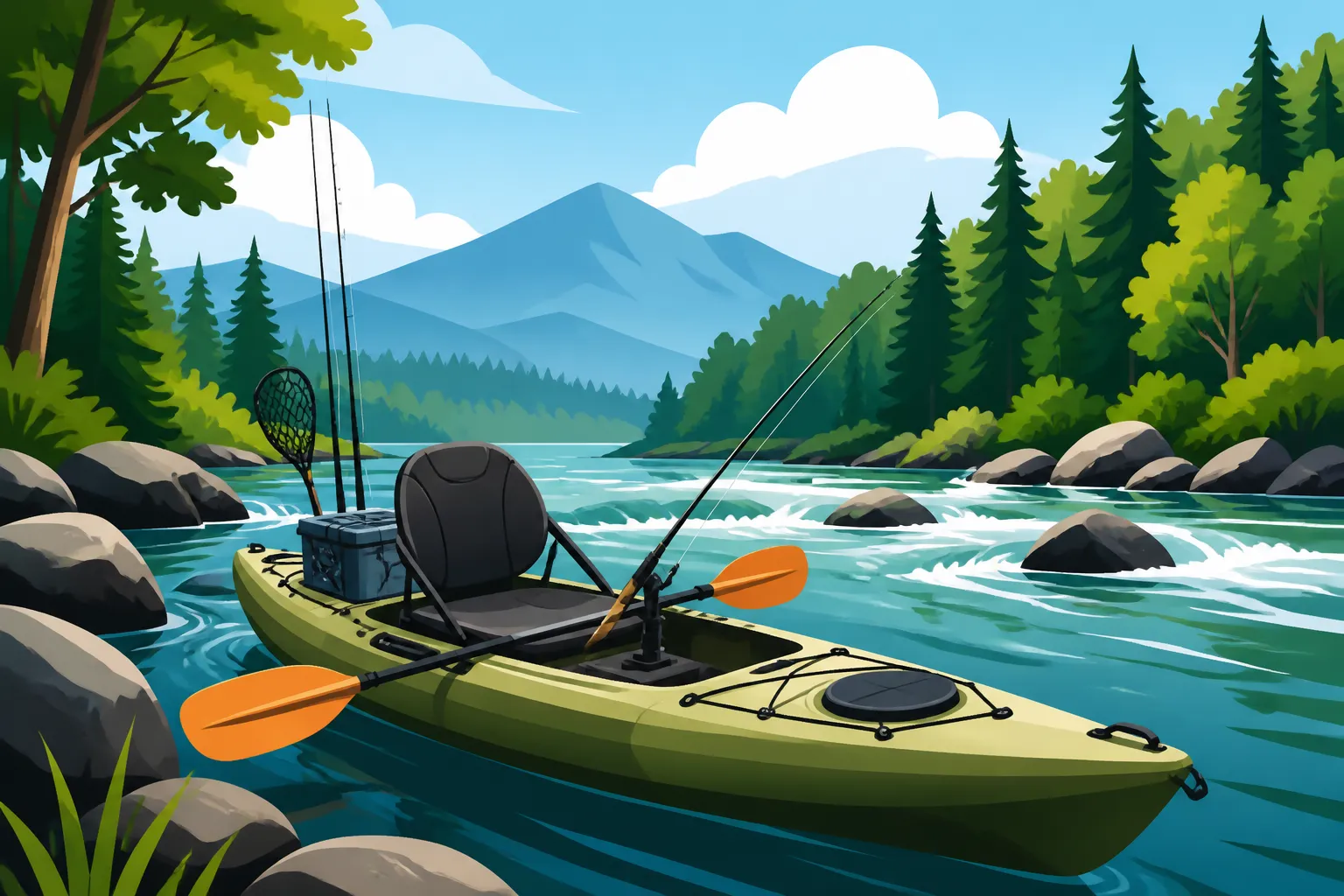
Fishing from a kayak requires careful organization, especially on a river where you might be constantly moving or bracing against current. Ample, accessible storage is a must. Look for features like spacious stern tanks or bow hatches with bungees to secure coolers, tackle boxes, and dry bags. Many river fishing kayaks come with molded-in rod holders, which are incredibly handy for transporting rods or temporarily stowing one while you're paddling or re-tying.
Beyond basic storage, the ability to customize your kayak with accessories is a huge plus. Modern fishing kayaks often feature universal mounting tracks (like those from RAM Mounts or YakAttack) that allow you to easily add or remove rod holders, fish finders, camera mounts, and other gear without drilling permanent holes. This modularity means you can adapt your setup for different types of fishing or even different rivers. Think about where you'll place your tackle, a small cooler for drinks and snacks, and your net. Best Tackle Box Setup for New Hampshire Anglers will give you some ideas for organizing your gear. Easy access to essential items, like pliers or a knife, can make a big difference when you've got a fish on the line and the current is tugging.
Types of Kayaks Best Suited for New Hampshire Rivers
With so many kayaks on the market, understanding the different types and how they perform in a river environment can help you narrow down your search. Each has its own set of advantages and disadvantages.
Sit-on-Top (SOT) Kayaks for Rivers
Sit-on-top kayaks are incredibly popular for fishing, and for good reason. They are generally more stable, easier to get in and out of, and allow for a wider range of movement, including standing up to cast. For river fishing in New Hampshire, these attributes can be a game-changer. The open deck design means you don't feel as "trapped" as you might in a sit-inside, and if you do happen to capsize, re-entry is often much simpler. Water drains directly out through scupper holes, keeping your seating area relatively dry, which is a major comfort on a long day of fishing.
However, SOTs can be heavier and are sometimes less efficient to paddle than their sit-inside counterparts, especially when battling a strong headwind or current on a larger river like the Connecticut. The wind can also catch the exposed deck and push you around more. For smaller, more intimate rivers with moderate currents, an SOT kayak in the 10-12 foot range offers an excellent balance of stability, fishability, and maneuverability. Many models offer fantastic rigging options and comfortable seating, making them a top choice for dedicated river anglers. You can find a wide selection of these at retailers like Bass Pro Shops or even online at Amazon.
Sit-Inside (SINK) Kayaks for Rivers
While sit-on-top kayaks dominate the fishing kayak market, sit-inside kayaks still have a place, particularly for river fishing. A sit-inside can offer better protection from the elements, keeping you warmer and drier on cooler New Hampshire days or when dealing with splashy rapids. They are often lighter and more efficient to paddle, which can be a huge advantage if you're covering long distances or battling strong currents. Their lower profile also makes them less susceptible to wind, which can be a factor on wider river sections.
The main drawback for fishing is the more confined space and the difficulty of getting in and out, especially if you need to quickly exit for a portage or wade a shallow section. Standing to cast is generally not an option, which limits visibility. However, some recreational SINKs with larger cockpits can be outfitted for fishing, especially for those who prefer to remain seated and prioritize paddling efficiency and weather protection. If you're primarily fishing smaller, calmer rivers for trout and don't need to stand, a compact, stable sit-inside could be a viable, more efficient option. Just remember, for safety on rivers, having a spray skirt might be a good idea, but also ensure you practice wet exits.
Inflatable Kayaks: A Niche for River Anglers
Inflatable kayaks have come a long way from the flimsy pool toys of yesteryear. Modern fishing inflatables are built with rugged, multi-layer PVC or similar materials, making them surprisingly durable and resistant to punctures. Their key advantages for river fishing are portability and stability. When deflated, they can be packed down to fit in a car trunk, eliminating the need for roof racks or trailers, a huge plus for anglers with limited storage or smaller vehicles. Once inflated, their wide, often pontoon-like design provides exceptional stability, making them incredibly difficult to flip and very comfortable for fishing.
On rivers, their flexibility allows them to absorb impacts from rocks and obstacles rather than deflecting them, potentially reducing the risk of damage. However, they can be slower and more susceptible to wind than hardshell kayaks. Paddling against strong currents can be a workout, and their tracking isn't always as precise. While durable, sharp hooks and exposed fishing knives require careful handling. For anglers who prioritize ease of transport and storage, and who primarily fish moderate, slower rivers, a quality inflatable fishing kayak could be an excellent choice. Some even feature rigid floor inserts that further enhance stability and allow for standing. They are often a great option for exploring new access points on rivers like the Contoocook where vehicle access might be limited.
Hybrid and Specialized River Fishing Kayaks
The kayak market is always innovating, and you'll find hybrid designs that try to blend the best features of different types. Some companies now produce specialized river fishing kayaks that are shorter, wider, and built with extreme durability to handle rougher waters and constant abuse. These boats often feature enhanced rocker for maneuverability, robust skid plates, and integrated anchor systems perfect for holding position in a current.
Then there are personal pontoon boats or float tubes, which, while not strictly kayaks, serve a similar purpose for individual anglers. These are often used on smaller, less swift rivers and offer exceptional stability and a very elevated seating position for casting. They're typically propelled with fins or short oars. While they offer superb access to very tight spots, they are usually slower and less efficient for covering long distances compared to even a short fishing kayak. Consider these if you're targeting very specific, smaller river sections or slow-moving flows where stealth and stability are paramount, perhaps for chasing native brook trout in the White Mountains. Best Fly Fishing Rivers in New Hampshire are often prime spots for such specialized craft.
Important Considerations Beyond the Kayak Itself
Getting the right kayak is a big step, but it's only part of the equation for a successful New Hampshire river fishing experience. There are other crucial elements to consider that impact safety, convenience, and overall enjoyment.
Transport and Storage Solutions
A common oversight for new kayak buyers is how they're actually going to get their boat to and from the river, and where they'll keep it. A 12-foot, 70-pound fishing kayak might seem manageable in the showroom, but wrestling it onto a roof rack after a long day of fishing, especially in a remote spot, can be exhausting. Consider your vehicle: Do you have a roof rack? Can your car handle the weight and length? Kayak carts or dollies are invaluable for getting your boat from the car to the water, particularly on rivers where access points might involve a bit of a walk.
For storage, do you have garage space, a shed, or even an outdoor area where it can be securely stored away from direct sunlight and harsh weather? Prolonged exposure to UV rays can degrade polyethylene over time. If space is limited, an inflatable kayak's ability to pack down becomes a massive advantage. If you're going with a hardshell, invest in quality tie-downs and maybe even a simple trailer if you have multiple boats or frequently travel long distances to various river access points. Remember, the easier it is to transport and store your kayak, the more often you'll actually use it!
Essential Safety Gear for River Kayak Fishing
Safety on the river is non-negotiable. Currents, unseen obstacles, and cold water can turn a fun day into a dangerous situation quickly. A properly fitted Personal Flotation Device (PFD) is the absolute most important piece of gear. Always wear it, no exceptions. New Hampshire has specific regulations regarding PFDs, especially for children, so be sure to check those. Life Jacket Requirements for New Hampshire Boaters provides more details. Beyond the PFD, a whistle is a simple, effective way to signal for help.
For river fishing, a rescue throw bag containing a length of floating rope can be a lifesaver for yourself or others in distress. A good knife, preferably one that floats, is essential for cutting tangled lines or ropes in an emergency. If you're venturing into colder waters, consider a wetsuit or dry suit, as immersion can quickly lead to hypothermia even in seemingly mild conditions. Always let someone know your float plan – where you're putting in, where you're taking out, and when you expect to be back. Cell service can be spotty along many of New Hampshire's rivers, so don't rely solely on your phone for communication.
Must-Have Accessories for River Anglers
While the kayak is the vessel, the right accessories turn it into a true fishing machine. A good paddle is surprisingly important; don't skimp here. A lightweight, durable paddle that fits your body and stroke style will save you a lot of energy, especially when paddling against current or covering ground. Consider a paddle leash so you don't lose it if you drop it or capsize.
An anchor system is crucial for holding your position in a current or over a prime fishing spot. A small drag chain or grappling anchor with a cleat or anchor trolley system allows you to precisely position your kayak without fighting the current. Dry bags are essential for keeping your phone, keys, wallet, and any electronics safe and dry. A quality pair of polarized sunglasses will help you spot fish and submerged structure, while a wide-brimmed hat and sun protective clothing are vital for long days under the New Hampshire sun. A first-aid kit is always a good idea. For those interested in electronics, a compact, waterproof fish finder can be a huge asset, helping you identify depth changes and fish holding spots. For more gear ideas, check out Best Trolling Motor for a Fishing Kayak if you're considering powered options, or Best Dry Bag for Kayak Fishing.
Understanding Your Budget and Investment
The cost of getting into kayak fishing can vary wildly. You can find entry-level recreational kayaks for a few hundred dollars, while fully rigged, specialized fishing kayaks can run well over a thousand. Remember, the kayak itself is often just the starting point. You'll also need to budget for:
- Paddle: Quality paddles range significantly.
- PFD: A good, comfortable fishing PFD is worth the investment.
- Safety Gear: Whistle, knife, throw bag.
- Transport: Roof rack system, kayak cart.
- Accessories: Rod holders, anchor, dry bags, tackle storage, fish finder (if desired).
- Clothing: Appropriate layers, sun protection.
Don't feel pressured to buy everything at once. Start with the essentials and add more specialized gear as you gain experience and identify your specific needs. Many excellent kayaks are available at various price points, and even used kayaks can be a fantastic value. Stores like Bass Pro Shops and online retailers like Amazon offer a wide range of options across different budgets. Consider the type of fishing you'll do most often and the rivers you frequent when weighing your investment. Sometimes, spending a little more upfront for quality and durability can save you money and headaches in the long run.
Navigating New Hampshire's Diverse River Waters
New Hampshire offers an incredible variety of river fishing experiences, from the wild mountain streams to wide, slower-moving waterways that resemble small lakes. Understanding these different environments helps tailor your kayak choice for optimal performance and enjoyment.
Fast-Flowing Mountain Streams
When we talk about fast-flowing mountain streams, think about the classic trout waters of the White Mountains, like the upper sections of the Ellis River, the Swift River, or many smaller tributaries. These waters are characterized by frequent rapids, tight turns, rocky sections, and often shallow depths. Anglers targeting brook trout or small brown trout here usually prioritize extreme maneuverability and durability.
For these technical waters, a shorter (8-10 foot), very nimble kayak with good rocker is ideal. It needs to turn quickly, navigate around boulders, and often be light enough to easily portage over shallow sections or around challenging rapids. Stability is still important, but the ability to quickly react to the current trumps standing-and-casting stability in most cases. Some anglers even prefer specialized "creek boats" from the whitewater kayaking world, which are incredibly robust and agile, though not typically designed with fishing features in mind. You might find yourself doing more paddling and less stationary fishing in these environments, making paddling efficiency and control paramount. Swift River Trout Fishing is a prime example of where such a kayak shines.
Wider, Slower Rivers and Flats
On the other end of the spectrum are New Hampshire's wider, often slower-moving rivers, such as the Merrimack River, the lower sections of the Connecticut River, or the larger stretches of the Pemigewasset. These rivers can have significant currents, but they also feature long, open stretches, wider pools, and sometimes resemble small lakes with their expanse. Here, covering distance efficiently and maintaining stability for comfortable casting becomes more important.
For these larger rivers, a slightly longer kayak (11-13 feet) can be beneficial, offering better tracking and speed over distance. A good balance of primary and secondary stability is key, as you might encounter boat wakes, wind, or larger eddies. The ability to stand and cast can be a huge advantage for spotting fish or making longer presentations. These are also the types of rivers where a small trolling motor might become a practical addition to your kayak, helping you cover more water with less effort. Think about bass fishing on the Merrimack River Fishing Spots or targeting carp and smallmouth on the Connecticut River Fishing Access in New Hampshire. These wider rivers can still be challenging with currents and submerged structure, but the scale of the water allows for a slightly different approach to kayak selection.
Navigating Obstacles and Portages
No matter which New Hampshire river you fish, you're bound to encounter obstacles. Fallen trees, beaver dams, shallow riffles, or even small waterfalls can necessitate a portage – getting out of your kayak and carrying it around the obstruction. This is where the weight of your kayak becomes a critical factor. A 60-70 pound kayak might be fine for a short drag, but if you have to carry it any significant distance, especially through uneven terrain, that weight quickly becomes a burden.
For frequent portages, a lighter kayak is always preferred. This might mean sacrificing some stability or length, but the trade-off is often worth it for the ease of access. Inflatable kayaks also shine here, as they can be deflated, packed, and carried much more easily. Even for hardshell kayaks, a good kayak cart is a vital accessory. Look for kayaks with integrated grab handles or scupper holes that double as cart attachment points, making the process smoother. The easier it is to get around obstacles, the more remote and untouched fishing spots you can explore, turning potential frustrations into exciting opportunities.
Here's a quick comparison of kayak types for river fishing:
| Kayak Type | Pros for NH Rivers | Cons for NH Rivers | Best for NH River Type |
|---|---|---|---|
| Sit-on-Top (SOT) | Stable, easy entry/exit, good for standing, open deck for gear. | Heavier, less efficient paddling against strong current, more wind-affected. | Moderate currents, wider rivers, bass fishing, comfort. |
| Sit-Inside (SINK) | Efficient paddling, lighter, better weather protection, less wind-affected. | Harder to re-enter if capsized, no standing, less open storage. | Smaller, calmer rivers, cold weather, efficiency, trout fishing. |
| Inflatable | Highly portable, very stable, durable against bumps, comfortable. | Slower, less precise tracking, susceptible to wind, hooks can be a concern. | Moderate currents, easy transport, camping trips, casual fishing. |
Ultimately, the best kayak for river fishing in New Hampshire is the one that best matches the specific rivers you plan to fish, your fishing style, and your personal preferences for comfort and convenience. Take your time, do your research, and perhaps even try paddling a few different types before making your investment. There's a perfect river rig out there for every Granite State angler!
Disclaimer
This article is for general informational purposes only and does not constitute professional advice. Laws, prices and regulations vary by location and change over time. Consult a qualified professional for guidance on your specific situation.