Best streamer color for muddy water trout
We've all been there: you wake up excited for a day on your favorite New Hampshire trout stream, only to find the water is running high and muddy after a heavy rain or spring snowmelt. It can be incredibly frustrating to see that chocolate milk current, leaving you wondering if it's even worth casting a line. But don't despair! Muddy water doesn't mean the fishing is off; it just means your approach needs to shift. This guide will help you understand how trout behave in murky conditions and, crucially, reveal the best streamer colors and techniques to make those challenging days successful.
Understanding Muddy Water and Trout Behavior
When the rivers and streams of New Hampshire swell and churn with sediment, it creates a completely different environment for our finned friends. What might look like a lost cause to us is simply a change in conditions that trout are adapted to, and understanding their response is the first step to choosing the right streamer color.
Why Muddy Water is a Challenge
The most obvious impact of muddy water is drastically reduced visibility. Trout, while possessing excellent eyesight, rely heavily on it for feeding and avoiding predators. When the water turns cloudy, their world shrinks considerably. Imagine trying to hunt for food in a dense fog – that's often what it's like for a trout in a turbid stream. This reduction in visibility not only makes it harder for them to see your carefully presented fly but also makes it harder for them to spot their natural prey.
Many of New Hampshire's popular trout rivers, like sections of the Pemigewasset River or the Contoocook, are particularly prone to getting muddy after significant precipitation. Runoff from surrounding land carries silt and debris, clouding the water and often increasing flow rates. This combination means trout might be less inclined to move far for a meal and will likely hold closer to the bottom or structure to conserve energy and escape the main current. It’s a challenging scenario, but not an impossible one for the angler who adapts.
How Trout Adapt to Low Visibility
While trout can't magically gain X-ray vision in murky water, they do have other senses they rely on more heavily. Their lateral line system is incredibly sophisticated, allowing them to detect subtle vibrations and pressure changes in the water. This is like a sixth sense, helping them "feel" prey moving nearby, even if they can't see it. Think of it as feeling the thrum of footsteps on the floor above you – you know something is there, even if you can't see it.
Additionally, trout have a keen sense of smell, which becomes more important when their vision is compromised. They can detect dissolved odors from prey items, helping them home in on a potential meal. Their feeding behavior often shifts from actively chasing visual cues to ambushing prey that drifts by or creates significant disturbance. This means that a streamer that creates strong vibrations or is presented slowly and deliberately through a likely holding lie has a much better chance of being intercepted. Understanding this sensory shift is key to selecting not just the right color, but also the right type of streamer and presentation. After a heavy rain, the river dynamics change dramatically, and trout will be much more sensitive to subtle disturbances. Fishing after a heavy rain on New Hampshire rivers is a great resource to learn more about how these conditions affect the fishing overall.
Top Streamer Colors for Muddy Water in New Hampshire
When the water's murky, your goal is to make your streamer as visible and detectable as possible, leveraging both sight (what little there is) and vibration. Certain colors cut through stained water better than others, creating a silhouette or contrast that trout can pick up on.
High-Contrast Colors: Black, Purple, and Chartreuse
These three colors are often hailed as the muddy water champions for a good reason: they create maximum contrast and visibility.
- Black: This might seem counterintuitive at first – black for low light? But think about a dark object against a slightly lighter, muddy background. Black creates an incredibly strong silhouette. In heavily stained or turbid water, especially during dawn, dusk, or heavily overcast days, a black streamer stands out because it absorbs what little light is present, creating a defined shape that trout can detect. It's a classic choice, and patterns like a black Wooly Bugger or a black Clouser Minnow are absolute workhorses in these conditions. When fishing the lower sections of the Merrimack River after a storm, a black streamer can often be the difference between a skunk and a successful outing.
- Purple: This is an often-underestimated color in the trout world, but it absolutely shines in stained water. Purple provides a unique contrast that fish seem to key into, perhaps because it's less common than natural browns and olives, or because it appears darker at depth than other colors. It’s particularly effective in waters with a brownish, tannic stain, which is common in many New Hampshire ponds and some river sections. A deep purple streamer can mimic a variety of baitfish or even a leech and can elicit aggressive strikes when other colors fail.
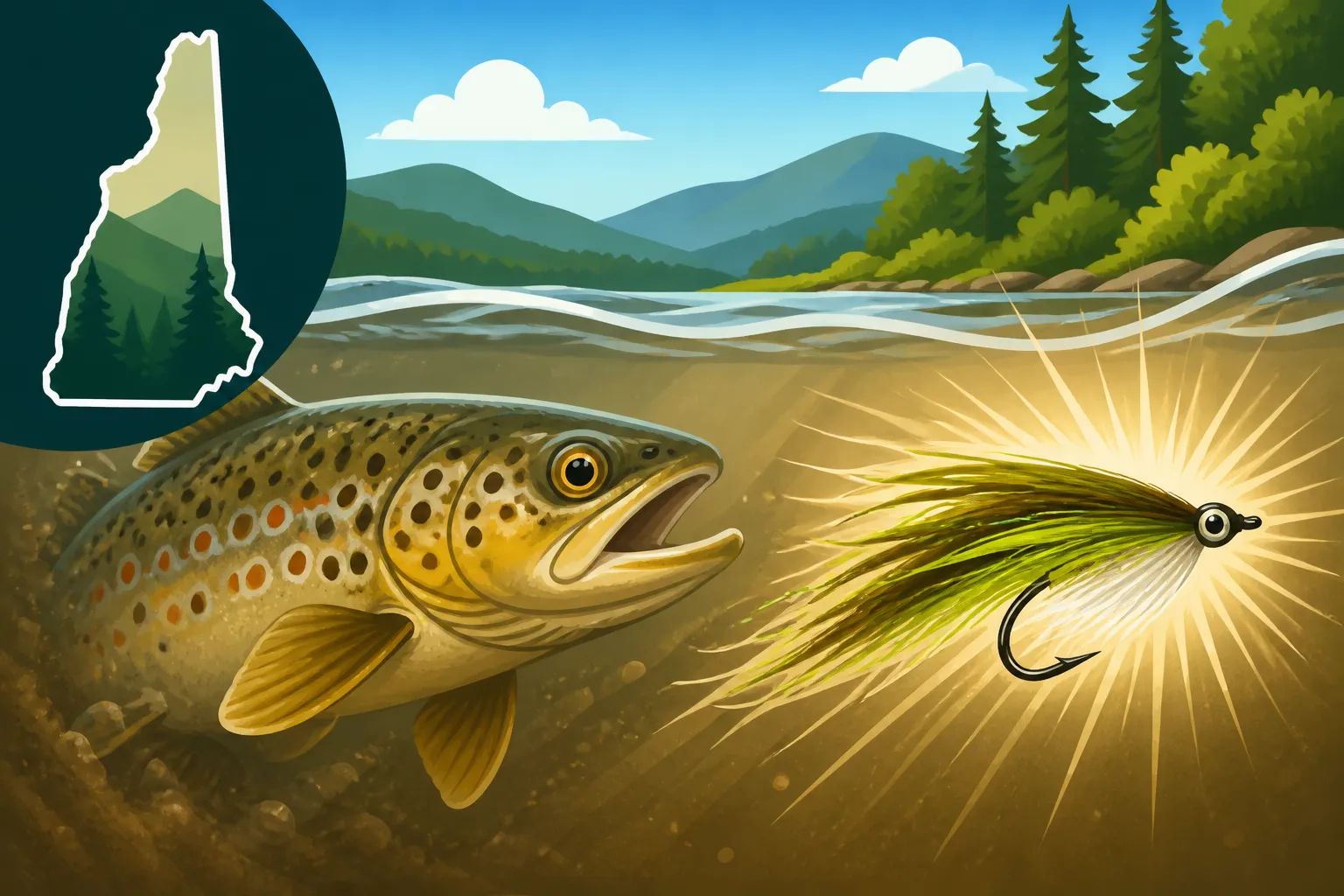
- Chartreuse: Now we're talking about high visibility! Chartreuse is a fluorescent color that practically glows underwater. It's fantastic for cutting through murk and getting noticed. It doesn't necessarily imitate any natural prey item perfectly, but its purpose is to trigger a reaction strike based purely on its vivid presence. Many anglers swear by chartreuse when fishing for aggressive trout in off-color water. It can be used alone or as an accent in a streamer pattern to provide that extra pop.
Natural-But-Visible Tones: Olive and Brown
While the super-brights are great, sometimes a slightly more natural look is still preferred, even in muddy water, especially if the clarity is only moderately stained rather than completely opaque.
- Olive: A perennial favorite for trout, olive remains a strong contender even when the water is a bit off-color. It's a natural color that imitates a wide range of baitfish, leeches, or even aquatic insects. In moderately stained water, olive provides enough contrast against the murk to be seen, while still maintaining a believable profile. If the water isn't quite chocolate milk but more like cloudy tea, an olive streamer is often a perfect choice. Consider carrying various shades of olive, from dark to lighter, to match conditions.
- Brown: Similar to olive, brown is a very natural color that can imitate sculpins, crayfish, or darker minnows, all common prey items for New Hampshire trout. In rivers where the bottom itself is muddy or silty, a brown streamer can blend in just enough to be natural while still providing a darker profile that trout can detect. If you're fishing a slower moving, muddy bottomed pond or river, a brown streamer can be incredibly effective, especially when paired with materials that offer a lot of movement.
Many anglers find that stocking up on these versatile colors, especially various shades of olive and brown, from reputable retailers like Bass Pro Shops ensures they have a wide selection for any condition. For specific or hard-to-find patterns, browsing options on Amazon can also yield excellent results.
The Power of Flash
Beyond the base color, don't underestimate the power of flash. Materials like Krystal Flash, Flashabou, or Mylar woven into your streamer pattern can make a huge difference in muddy water. Even in low light, these materials catch and reflect any ambient light, creating glints and shimmers that can attract a trout's attention from a greater distance. It's like adding a tiny beacon to your fly. A streamer that might otherwise disappear in the murk can become detectable with just a few strands of well-placed flash. Just be careful not to overdo it; a subtle hint of flash is usually more effective than an entire "disco ball" streamer. This is especially true for stream-dwelling trout, where a more natural presentation is often key, even in off-color water. For targeting bigger trout like brown trout, which are often more aggressive, incorporating flash can be incredibly effective. Check out Best streamer patterns for New Hampshire brown trout for more ideas.
Here's a quick reference table for choosing your streamer colors in muddy water:
| Color | Primary Benefit in Muddy Water | Best Conditions | Visibility Level in Water |
|---|---|---|---|
| Black | Strong Silhouette, High Contrast | Very dark, heavily stained, low light | Lowest Visibility |
| Purple | Unique Contrast, Cuts Through Stains | Tannic or moderately muddy water | Low to Medium Visibility |
| Chartreuse | High Visibility, Reaction Strike | Moderately to heavily stained, cloudy | Medium to High Visibility |
| Olive | Natural Contrast, Versatile | Slightly stained to moderately murky | Medium Visibility |
| Brown | Imitates Crayfish/Dark Baitfish | Muddy bottom rivers, stained, slower flow | Medium Visibility |
| Flash Accents | Reflective Glimmer, Added Attraction | All muddy water conditions | Enhances Any Color |
Streamer Characteristics Beyond Color for Muddy Water
While color is a critical first step, it's far from the only factor in muddy water success. When trout can't see, they rely more on their other senses, particularly their lateral line. This means the physical attributes of your streamer—its size, profile, and how much water it displaces—become incredibly important.
Size and Profile: Making it Stand Out
In clear water, a smaller, more refined presentation often works best. In muddy water, you need to go bigger and bolder. A larger profile streamer creates a more substantial presence in the water, generating more vibration and pushing more water as it moves. This makes it easier for a trout's lateral line to detect, even if they can't make out the details visually. Think about the difference between a small pebble dropping in a pond versus a large rock – the ripple effect is much greater with the rock.
Consider patterns tied with bulky materials or those designed to have a larger overall profile when wet. This doesn't necessarily mean just longer; it can mean fatter, wider, or more "fluffy" flies. Patterns like Zonkers, or even larger variations of the classic Wooly Bugger, are excellent choices. They move a lot of water and create a distinct signature that fish can feel. Don't be shy about upsizing your flies in these conditions. A 3-inch streamer might seem large for typical trout, but in dirty water, it's often exactly what's needed to get noticed. Matching your rod setup for these larger patterns is also important; a stout fly rod is key for casting and controlling these larger flies, especially when targeting larger trout that tend to hang in deeper water. Best streamer rod setup for big brown trout can offer some guidance on appropriate gear.
Vibration and Movement: The Lateral Line Advantage
This is where the materials used in your streamer really shine. When trout are relying on their lateral line, you want a fly that screams "I'm here!" through vibration and enticing movement, even with minimal retrieval.
- Materials: Look for streamers tied with soft, mobile materials like marabou, rabbit strip (zonker strips), or soft chenille. These materials have incredible natural movement. They "breathe" and pulse in the water, even when barely moving, sending out subtle vibrations that can be picked up by a trout's lateral line from a surprising distance. A marabou-tailed streamer, for instance, will undulate and pulsate with the slightest current or retrieve, mimicking a live, injured baitfish struggling in the current.
- Weighted Streamers: Heavy or weighted streamers serve a dual purpose in muddy water. First, they help you get your fly down quickly to the strike zone, especially in higher, faster flows typical of post-rain conditions. Trout in these situations often hug the bottom to avoid the main current. Second, the added weight can contribute to a more pronounced jigging or darting action during your retrieve, creating more vibration. Bead-head or cone-head streamers, or those tied with lead wire wraps, are excellent for this. This ability to get deep quickly is also crucial for lake fishing when targeting species like lake trout; understanding your line's sinking capabilities can make a big difference. Best line for lake trout deep trolling provides more insight into lines that can help you reach those depths.
Scent: The Often Overlooked Factor
While often associated more with conventional gear fishing, scent can play a significant role in fly fishing for trout in muddy water. Remember, trout's sense of smell becomes heightened when their vision is impaired. Incorporating scent into your streamer can provide an extra layer of attraction, giving the trout yet another reason to home in on your offering.
There are many commercially available fish attractant gels and sprays that are designed to be applied directly to your flies. These typically contain powerful fish-attracting pheromones or food scents. A quick dab or spray on your streamer can leave a scent trail in the water, helping trout locate your fly even if they can't quite see or feel it clearly. Just be mindful of local regulations regarding scent use, though in most trout fisheries, it's perfectly legal and can dramatically improve your hook-up rate on tough days.
Techniques for Fishing Streamers in Murky Conditions
Choosing the right streamer color and type is only half the battle. How you present that fly in muddy water is equally, if not more, important. Your techniques need to compensate for the trout's reduced visibility and increased reliance on other senses.
Slow and Low: The Retrieval Strategy
In clear water, trout might dart out from cover to chase a fast-moving streamer. In muddy water, their hunting strategy shifts. They're less likely to expend energy chasing something they can barely perceive.
- Slow, Deliberate Retrieve: This is paramount. Give the trout ample time to locate your fly by its vibration and, hopefully, its silhouette. A slow strip-and-pause retrieve, or even just letting the current work the fly while you mend, is often much more effective than a fast, erratic retrieve. Think of a wounded baitfish struggling and drifting – that's the natural movement you want to emulate.
- Getting Down to Their Level: Trout will often hug the bottom or hold deep in muddy, high flows. Your streamer needs to be in their strike zone. This might mean using heavier flies, adding split shot to your leader, or employing a sinking fly line. Experiment with different weights and lines until you feel your fly bumping the bottom or drifting at the appropriate depth. The goal is to put the fly right in front of the fish's nose, giving it minimal opportunity to refuse.
Focus on Structure and Current Seams
When the river is a raging torrent of mud, trout aren't going to be holding in the open current. They'll seek refuge and ambush points where they can conserve energy and find disoriented prey.
- Target Cover: Look for classic trout holding lies: log jams, large boulders, undercut banks, and deep pools. These areas provide current breaks and shelter, making them prime locations for trout to wait out the high water. Cast your streamer as close to these structures as possible.
- Current Seams and Eddies: The transition zone between fast and slow water (a current seam) is always a productive area, but especially so in muddy conditions. Trout will sit in the slower water, waiting for food to be swept past them in the faster current. Similarly, eddies behind large obstacles concentrate food and offer a respite from the main flow. Fan cast these areas thoroughly, hitting all potential holding lies from different angles. Mastering how to effectively fish a river with distinct features like runs and pools is crucial. For more detailed insights into this, check out How to fish a run and pool trout stream.
Up-Sizing and Aggressive Presentations
Sometimes, even with all the right colors and slow retrieves, you need to be a little more assertive to get a trout's attention in muddy water.
- Go Bigger: Don't be afraid to use a larger streamer than you might typically. If you're usually throwing a size 6, try a size 4 or even a 2. The increased size means more displacement and a bigger profile for the trout to sense.
- Aggressive Strips (Sometimes): While a slow retrieve is generally best, there are times when an aggressive, erratic strip-and-pause can trigger a reaction strike, almost out of surprise or irritation. This works particularly well if the trout are somewhat active but still struggling with visibility. The sudden darting motion and strong vibration can sometimes be enough to provoke an instinctive bite. It's a riskier strategy, but worth trying if the slow-and-low approach isn't yielding results. This is similar to how you might approach fishing after a significant weather event like a cold front, where fish behavior can be unpredictable. Best time to fish after a cold front offers more context on these dynamic situations.
Remember, patience and persistence are key. Muddy water fishing often requires more casts to the same spot, allowing the trout multiple chances to detect and react to your fly. A classic pattern like the Wooly Bugger, with its mobile marabou tail, is exceptionally versatile and can be fished in countless ways in muddy water. Learning How to fish a wooly bugger for trout effectively will give you a significant advantage. For those looking for specific weighted streamers or a wider selection of scent attractants, local fly shops are a treasure, but online retailers like Amazon also offer convenience and often a broader selection. Many anglers find great deals on specialty items at Bass Pro Shops, which can outfit you for almost any New Hampshire fishing scenario. The general rule of thumb when dealing with high, murky water from runoff is that you need to be able to penetrate that murk and present something substantial. Best technique for fishing muddy runoff conditions is a must-read for anyone serious about improving their success in these challenging conditions.
Fishing for trout in New Hampshire during periods of muddy water can certainly be a test of an angler's adaptability. But by understanding how trout perceive their environment in low visibility and adjusting your streamer color, characteristics, and presentation accordingly, you can turn what seems like an impossible day into a memorable one. Don't let a little mud deter you; embrace the challenge, make those strategic adjustments, and you might just find some of the most aggressive trout of the season.
Disclaimer
This article is for general informational purposes only and does not constitute professional advice. Laws, prices and regulations vary by location and change over time. Consult a qualified professional for guidance on your specific situation.