Best streamer rod setup for big brown trout
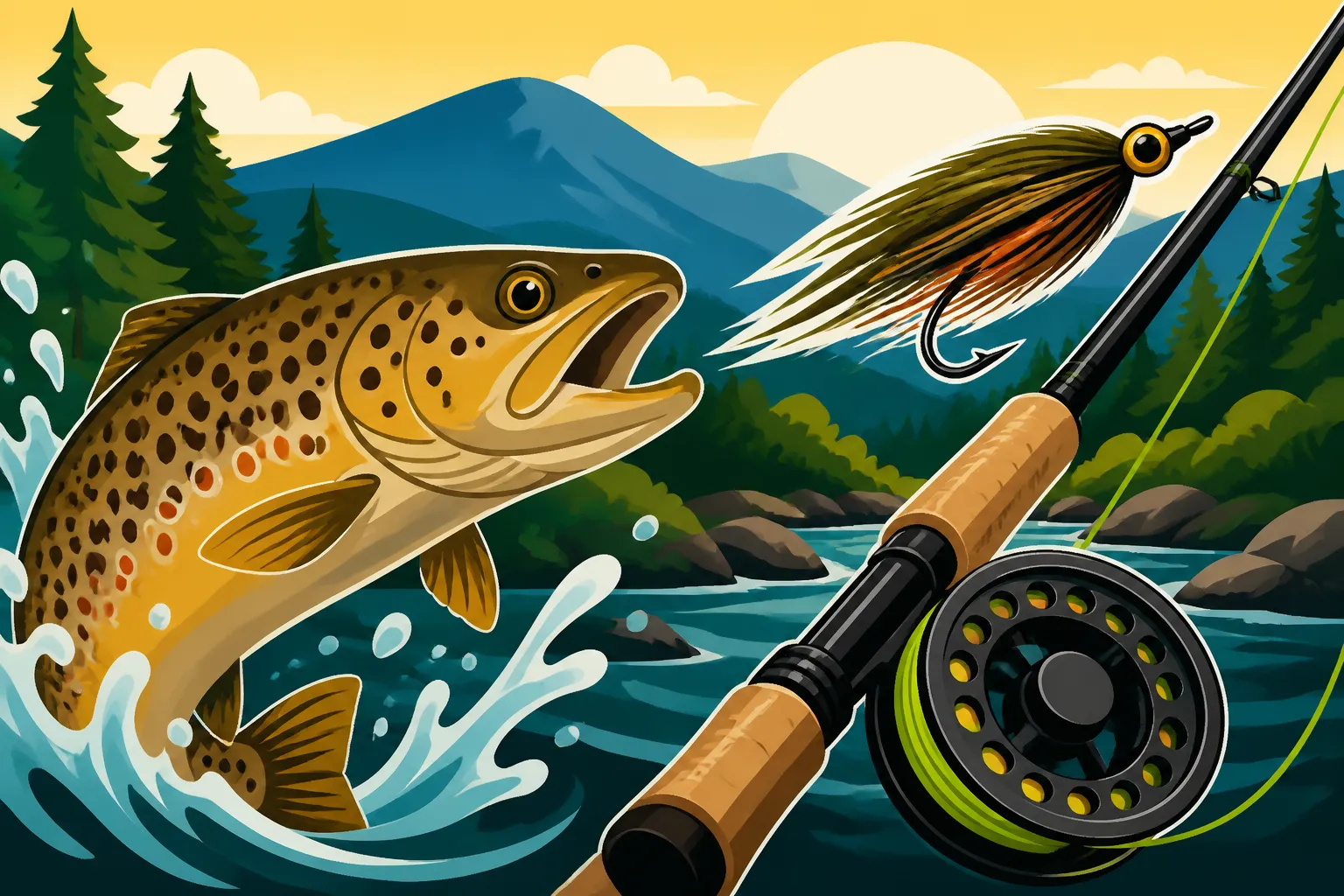
There's nothing quite like the thrill of chasing a genuinely big brown trout in New Hampshire, especially when you're doing it with streamers. That moment when a hefty brown slams your fly in a strong current or from a deep lake pocket can be heart-stopping. But many anglers find themselves frustrated, losing fish or struggling with presentations because their gear simply isn't up to the task. This guide is all about helping you overcome those challenges by detailing the very best streamer rod setup to reliably hook, fight, and land those elusive New Hampshire bruiser brown trout.
The Allure and Challenge of Streamer Fishing for New Hampshire's Big Brown Trout
Streamer fishing is a dynamic, exciting way to target larger trout, especially brown trout, which are known for their aggressive, predatory nature. Unlike delicate dry fly presentations or subtle nymphing, streamer fishing often feels more like bass fishing with a fly rod, requiring heavier gear and a more active retrieve. It’s a method that consistently puts you in contention for the biggest fish in the system.
Why Streamers Entice Big Browns
Brown trout, particularly the older, larger specimens, become increasingly piscivorous, meaning they prefer to eat other fish. This dietary shift makes streamers incredibly effective. Streamers are designed to imitate baitfish like smelt, sculpins, dace, or even smaller trout, which are all prevalent food sources in many New Hampshire lakes and rivers. Think about a chunky brown trout lurking in a shadowy undercut bank on the Pemigewasset River, waiting for an easy meal to drift by. A well-presented streamer, stripped with erratic movements, perfectly mimics that unsuspecting prey. When that fly darts through their strike zone, it triggers an instinctual, often violent, strike that can make your rod double over instantly. This isn't just about catching fish; it's about connecting with the raw, predatory side of one of New Hampshire's most coveted game fish.
Understanding Brown Trout Behavior in New Hampshire
To effectively fish for big browns with streamers, it's crucial to understand their habits within New Hampshire's diverse aquatic environments. In rivers like the Connecticut or Merrimack, large brown trout often hold in deeper pools, behind large boulders, under cut banks, or near submerged logs where they have cover and access to current-borne food. These are ambush points, and presenting a streamer accurately into these zones requires a rod with enough power to cast heavy flies and enough backbone to steer a big fish away from snags. In lakes such as Sunapee or Winnipesaukee, big browns might patrol drop-offs, rocky points, or areas where baitfish congregate. Here, longer casts and the ability to get your streamer down to depth are paramount. Their territorial nature means they're often alone, and a well-placed streamer can provoke a fierce defense of their chosen lie. Understanding these behaviors helps tailor not just your fly choice, but also the nuances of your entire rod setup to give you the best chance of success. For more on what these fish are up to, check out Brown Trout Habits in New Hampshire Streams.
Constructing Your Ideal Streamer Rod Setup
A proper streamer rod setup isn't just a collection of components; it's an integrated system designed for power, durability, and precise delivery of larger, heavier flies. Each piece plays a crucial role in enabling you to effectively cast, retrieve, and ultimately land those trophy brown trout. Skimping on one component can compromise the entire system, leading to frustrating failures when it matters most.
Choosing the Right Fly Rod for Power and Precision
For chasing big brown trout with streamers in New Hampshire, you'll want a fly rod that can handle the job. Forget the delicate 3-weight for small brookies; we're talking about a rod with some serious muscle. A 7-weight or 8-weight rod is generally the sweet spot. A 7-weight offers a good balance of power for casting larger flies and fighting bigger fish, while still being enjoyable to cast all day. An 8-weight provides even more backbone, which can be beneficial when you're slinging truly enormous streamers, fishing in heavy wind, or targeting fish in strong currents where you need to apply maximum pressure.
The length of the rod is also important. A 9-foot rod is standard and offers excellent versatility for most situations, from river banks to boat decks. However, some anglers prefer a 9.5-foot or even 10-foot rod, especially when fishing from a boat on large lakes, as the extra length aids in line management, mending, and achieving longer casts. As for rod action, a fast-action rod is typically preferred for streamers. This means the rod bends mostly in the tip section, providing the power needed to punch heavy, wind-resistant flies through the air and generate high line speed. This stiffness also gives you the leverage to quickly set the hook into a powerful brown trout's jaw and control it during a fierce fight. You'll find a wide selection of suitable rods at specialized retailers like Bass Pro Shops or various options easily accessible online through Amazon. When you're looking for that perfect rod, consider how it feels in your hand – does it have enough power for those big flies, but still feel responsive?
Matching Your Reel and Fly Line for Optimal Performance
The reel for a streamer setup needs to be more than just a line holder; it's a critical tool for fighting big fish. A large arbor reel is highly recommended. The large arbor design means a wider spool, which retrieves line faster and reduces line memory, preventing coils and snags. Look for a reel with a smooth, reliable drag system, as it will be your best friend when a powerful brown trout decides to make a blistering run. You need that drag to be consistent and capable of putting the brakes on a determined fish without binding or jerking. Ensure your reel is appropriately sized to balance with your 7 or 8-weight rod.
Your fly line is arguably one of the most crucial elements of a streamer setup. A weight-forward (WF) line is standard, as it concentrates weight at the front, helping to turn over heavy flies. However, for streamer fishing, you’ll often want specialized lines. Full sinking lines (like a Type IV or Type V) are fantastic for getting your streamers deep in lakes or fast rivers, allowing you to present flies near the bottom where big browns often lurk. Alternatively, a sinking tip line, which has a floating running line but a fast-sinking front section, offers versatility. It allows you to cast easier and maintain a more direct connection to your fly while still getting your fly down to the strike zone. The sinking tip can range from a short, moderately sinking section to a long, very fast-sinking segment, often called an "integrated shooting head" line. These lines are designed to cast heavy flies with minimal false casting and maximum efficiency. Consider checking out different line profiles and sink rates at your local fly shop or on Amazon to find what best suits your target waters and retrieve style. For more information on different line choices, see Best Line Weight for Lake Trout Trolling which shares some overlap in principles for heavy flies.
The Critical Role of Leaders and Tippet
When chasing big browns, your leader and tippet setup need to be robust enough to handle aggressive strikes and powerful fights, yet subtle enough not to spook wary fish. A standard 9-foot tapered leader designed for freshwater will work as a base, but many streamer anglers modify their leaders for optimal performance. You'll often want to shorten your leader considerably, especially when using full-sinking or heavy sinking tip lines. A leader length of 4-6 feet is common, as it helps transfer casting energy more efficiently to heavy flies and keeps the fly at the same depth as your sinking line.
Constructing a butt section of 20-30 lb monofilament or fluorocarbon, tapering down to a 15-20 lb section, and then a 10-12 lb tippet section is a strong approach. Fluorocarbon tippet is almost universally preferred for streamer fishing. It's more abrasion-resistant than monofilament, which is a huge advantage when fishing around rocks and submerged timber, and its low visibility underwater makes it less likely to spook fish. For big brown trout, an 8 lb to 12 lb fluorocarbon tippet is generally appropriate. If you're fishing in exceptionally clear water or for very wary fish, you might drop down to 6 lb, but going too light risks breaking off a trophy. The strength of your tippet needs to match the size and fighting power of the fish you expect to encounter, as well as the weight of the fly you're casting. A good knots are essential; consider strengthening your knot-tying skills for these critical connections.
Selecting Your Arsenal of Streamer Flies
The beauty of streamer fishing lies in the incredible variety of patterns available, each designed to imitate different baitfish or aquatic creatures. Having a well-stocked fly box with a range of sizes, colors, and profiles is key to success on New Hampshire waters. You can never predict exactly what the big browns will be keying in on, so versatility is your friend.
Go-To Streamer Patterns for New Hampshire
When you're out there on the Swift River or perhaps exploring the deeper sections of Lake Winnipesaukee, certain streamer patterns consistently produce results for brown trout. The Woolly Bugger is an absolute classic for a reason. Its pulsating marabou tail and hackled body make it incredibly lifelike in the water. Carry them in black, olive, brown, and white, in sizes from #4 to #10. They imitate everything from sculpins to leeches and are effective in almost any condition. Another must-have is the Sculpzilla or other sculpin imitations. Sculpins are a primary food source for big brown trout in many New Hampshire rivers, and these weighted, cone-headed flies dive quickly and mimic their bottom-hugging movements perfectly. Darker colors like olive, black, or natural brown are typically best.
For those moments when you need to imitate smelt or other larger baitfish in lakes, patterns like the Grey Ghost, Black Ghost, or various Clouser Minnow variations (especially in white/chartreuse or olive/white) are incredibly effective. These patterns often have a sleek profile and flash that can provoke aggressive strikes from territorial browns. Don't shy away from bigger, articulated streamers like the Sex Dungeon or Drunk & Disorderly. These flies are designed to have incredible movement and profile in the water, looking like a substantial meal to a large predator. While they can be challenging to cast, the reward of hooking a true monster on one of these is unforgettable. For more ideas on what to tie on, check out Fly Patterns for New Hampshire Trout Streams.
Presenting Streamers Effectively
Having the right fly is only half the battle; knowing how to present it effectively is just as crucial. The retrieve is key. Often, brown trout respond well to an erratic retrieve – think strip, strip, pause, strip, strip, fast strip! Varying your strip speed and length can make your streamer appear like a wounded baitfish, an easy target for a hungry brown. In rivers, casting across and slightly upstream, letting the fly swing, and then stripping it back can be deadly. This technique covers a lot of water and allows the fly to present naturally with the current before you animate it. Don't be afraid to cast into tight spots like undercut banks, around logjams, or next to large rocks. That's where the big boys hang out.
In lakes, consider trolling streamers behind a boat or kayak, especially for landlocked salmon and lake trout, but also for large brown trout. When retrieving from shore or a drifting boat, allow your fly to sink to the desired depth before beginning your retrieve. Often, the strike will come on the pause, as the fly flutters and looks vulnerable. When you feel that aggressive tug, set the hook hard with a strip-strike – pulling the line sharply with your stripping hand – rather than just lifting the rod. This ensures a solid hook set, especially with a strong leader and powerful rod, directly into the tough jaw of a large brown trout.
Essential Accessories and Considerations for the Streamer Angler
Beyond the core rod, reel, and line, a few key accessories can significantly enhance your streamer fishing experience in New Hampshire, increasing both your comfort and your chances of success. Thinking ahead about these items can make a good day on the water great, and a challenging day manageable.
Must-Have Gear for Safety and Success
First and foremost, a reliable pair of waders and wading boots is indispensable if you're fishing rivers and streams. New Hampshire's river bottoms can be rocky, slippery, and uneven, so sturdy boots with good traction are a must. Many anglers prefer felt soles for grip on slick rocks, though rubber soles with studs are also popular. Breathable chest waders are ideal for comfort in varying temperatures. A wading staff is another non-negotiable safety item, providing stability in swift currents and on uneven terrain. This can prevent a nasty fall and keep you dry. You can explore options for these essentials at outdoor retailers like Bass Pro Shops.
A large, rubber-mesh landing net is also crucial. Big brown trout can be quite substantial, and a net makes landing them much easier and safer for both you and the fish. Rubber mesh is gentler on their scales and slime coat, helping ensure a healthy release. For specific recommendations, see Best Landing Net for Trout. Polarized sunglasses are also vital. They cut glare, allowing you to see into the water, spot structure, and sometimes even see the fish before it sees you. Finally, a well-organized fly box that can accommodate large streamers is important. You want quick access to your patterns when the bite is on, and a durable, waterproof box will protect your valuable flies.
Adapting Your Setup for Diverse New Hampshire Waters
New Hampshire offers a diverse range of fishing environments, from the fast-flowing, rock-strewn rivers of the White Mountains to the vast, deep lakes of the Lakes Region. Your streamer setup, while generally robust, might need minor adaptations depending on where you're casting.
- For Large Rivers (like the Connecticut or Androscoggin): In these wider, often deeper rivers with stronger currents, you might lean towards the heavier end of your rod choice (an 8-weight) and utilize full sinking lines or aggressive sinking tip lines to get your flies down quickly. Longer rods (9.5 to 10 feet) can also be advantageous for better line control and mending in powerful currents. When you're dealing with big water and potentially big fish, having that extra backbone and sinking power is incredibly beneficial.
- For Smaller Streams and Rivers (like the Swift or Ellis): While you're still targeting big browns, the environments are often tighter. A 7-weight, 9-foot rod might be more maneuverable, allowing for more precise casts into smaller pockets and around overhanging branches. Here, a shorter sinking tip line, or even an intermediate sinking line, might be sufficient to get your streamer into the strike zone without constantly dragging the bottom. Consider stealthier approaches and presentations to avoid spooking fish in clearer, shallower sections.
- For Lakes (like Winnipesaukee or Sunapee): In these expansive waters, casting distance can be paramount, especially when fishing from shore or a small craft. A 9-foot 7 or 8-weight rod is still excellent, but if you're primarily trolling, a slightly longer rod (like a 9.5-foot) can help spread lines. Full sinking lines are often critical to reach fish holding in deep water or near submerged structures. Using a boat with a fish finder can help you locate baitfish schools and deep-water structure where big browns will be lurking, allowing you to target your casts or troll your streamers more effectively.
Understanding these subtle differences and being willing to adjust your leader length, line type, or even the size of your streamer can make all the difference between a frustrating day and a memorable one.
Common Pitfalls and How to Avoid Them
Even with the best gear, streamer fishing for big brown trout in New Hampshire can have its challenges. Knowing what common mistakes to avoid can save you a lot of frustration and increase your success rate. It's often the subtle details that make the biggest difference in this demanding style of fly fishing.
The Dangers of Being Undergunned
One of the most frequent errors anglers make when streamer fishing for big brown trout is using gear that is too light. Bringing a 5-weight trout rod to a brown trout streamer fight is like bringing a butter knife to a steak dinner – it's just not going to cut it. Lighter rods struggle to cast heavy, often weighted streamers effectively, leading to sloppy presentations and quickly fatiguing the angler. More critically, when you hook a powerful 20-inch brown trout in a strong current, a light rod might not have the backbone to turn its head or keep it from diving into snags. You risk breaking off the fish, or worse, leaving a hook in its mouth because you couldn't control the fight.
Similarly, an inadequate reel with a weak drag or a leader that's too light can lead to immediate heartache. A big brown trout can spool a reel with a faulty drag in seconds, or snap a flimsy tippet as soon as it feels the hook. Always err on the side of caution with your gear choice. If you're debating between a 6-weight and a 7-weight for streamers, choose the 7-weight. If you're unsure about 8lb vs. 10lb tippet, go with the 10lb fluorocarbon. Investing in robust, quality gear pays dividends when you're targeting truly big fish. Think about it: you want to be able to dictate the fight, not just react to it.
Maximizing Your Chances: Practice and Patience
Beyond the gear, successful streamer fishing for big brown trout relies heavily on technique and mindset. Don't expect to cast a big, wind-resistant streamer perfectly on your first try. These flies are often heavy and can be awkward to cast compared to delicate dry flies. Practice your casting, particularly double-hauling, which helps generate the line speed needed to throw big flies long distances with accuracy. Work on varying your retrieve speeds and learning to feel the subtle takes that sometimes occur even on an aggressive strip. Accuracy is paramount; putting that streamer right against a log or under an overhanging branch is often what triggers the strike from a wary brown.
Patience is another virtue. Big brown trout are not always active. There will be days when they simply aren't interested, or you might have to make dozens of casts into prime water before eliciting a strike. Don't get discouraged. Keep moving, trying different retrieves, and swapping out fly patterns. Pay attention to how the current affects your fly, and learn to read the water to identify likely holding spots. Sometimes, the fish are there, but you just haven't presented the offering in the way they want it, or at the right depth. Observing other anglers, watching instructional videos, and even hiring a guide for a day can rapidly accelerate your learning curve. Remember, every cast is a lesson, and every fish is a triumph, especially those hard-earned big brown trout on streamers.
Streamer Rod Setup Comparison for New Hampshire Brown Trout
| Component | Small Rivers/Streams (e.g., Swift River) | Medium-Large Rivers (e.g., Pemigewasset, Merrimack) | Large Lakes (e.g., Winnipesaukee, Sunapee) |
|---|---|---|---|
| Rod Weight | 6-7 weight | 7-8 weight | 7-8 weight (occasionally 9 for big flies/wind) |
| Rod Length | 8.5-9 feet | 9-10 feet | 9-10 feet |
| Rod Action | Fast-Mid-Fast | Fast | Fast |
| Reel Type | Large Arbor with smooth, reliable drag | Large Arbor with strong, reliable drag | Large Arbor with strong, saltwater-ready drag |
| Backing | 20lb Dacron, 100-150 yards | 20lb Dacron, 150-200 yards | 20-30lb Dacron, 200+ yards |
| Fly Line | WF Floating with Sinking Tip (5-10ft, 100-200gr) | WF Sinking Tip (15-25ft, 200-300gr) or Full Sinking | Full Sinking (Type IV-VI) or Integrated Shooting Head |
| Leader Length | 4-6 feet | 4-6 feet | 4-8 feet |
| Leader Material | Fluorocarbon or Monofilament, tapered | All Fluorocarbon, heavy butt section | All Fluorocarbon, heavy butt section |
| Tippet Strength | 6-8lb Fluorocarbon | 8-12lb Fluorocarbon | 10-15lb Fluorocarbon (for large flies/fish) |
| Streamer Size | #6-#10 (Woolly Buggers, small Sculpzillas) | #2-#8 (Clousers, Sculpzillas, Articulated) | #2-4/0 (Large Clousers, Articulated, Ghost patterns) |
| Key Advantage | Maneuverability, delicate presentation when needed | Power for casting, fighting in strong currents | Distance casting, depth control, trolling ability |
Disclaimer
This article is for general informational purposes only and does not constitute professional advice. Laws, prices and regulations vary by location and change over time. Consult a qualified professional for guidance on your specific situation.