Brown Trout Habits in New Hampshire Streams
Stepping into the crisp, cool waters of a New Hampshire stream, you're immediately immersed in a world of subtle beauty and wild challenge. But what about the elusive brown trout that call these waters home? Understanding their habits is key to unlocking the secrets of a successful day on the water, and we're here to dive deep into exactly how these wily fish live, feed, and thrive in our beautiful Granite State waterways.
Brown Trout: An Introduced Species Thriving in New Hampshire
Brown trout, with their distinctive spotted flanks and aggressive nature, are a cornerstone of many New Hampshire fisheries. While they feel perfectly at home here now, it's easy to forget that these aren't our native trout. Their story in New Hampshire is a fascinating one of introduction and adaptation, proving just how resilient and successful these fish can be.
European Roots and Global Spread
The brown trout ( Salmo trutta ) actually hails from Europe and parts of Asia, a true global traveler among fish species. Their natural range spanned from Iceland and Norway down to the Mediterranean, and eastwards into Russia. They're incredibly adaptable, which is precisely why they've been successfully introduced to almost every continent except Antarctica. Think about it: a fish that can thrive in everything from cold, clear mountain streams to brackish estuaries has a real survival advantage. Their hardiness and ability to tolerate a wider range of water temperatures and conditions than many native trout species made them an attractive candidate for fisheries managers looking to enhance angling opportunities across the world.
Stocking History and Establishment in New Hampshire
Brown trout made their way to North America in the late 19th century, with the first successful stockings in New Hampshire occurring shortly after. Initially, they were brought over to fill niches where native brook trout might struggle, or simply to provide another robust game fish for anglers. Our state's abundant cold-water streams and lakes, mimicking some of their European ancestral homes, proved to be excellent habitat. The New Hampshire Fish and Game Department recognized their potential and continued stocking them in suitable waters over the decades. Today, while some populations are maintained through stocking, many of New Hampshire's brown trout have become "wild" or "naturalized," meaning they are reproducing successfully on their own in various streams and rivers. This blend of stocked and wild populations makes for a dynamic and exciting fishery, offering diverse opportunities whether you're chasing freshly released fish or a truly wild, stream-born specimen. You can often find details about where and when they stock by checking the New Hampshire Trout Stocking Report and Map.
Habitat Preferences in New Hampshire Streams
If you want to find brown trout in a New Hampshire stream, you need to think like a brown trout. They have very specific preferences when it comes to their living arrangements, driven by their need for food, safety, and comfort. Understanding these preferences will help you pinpoint their likely hideouts.
Water Temperature and Flow Dynamics
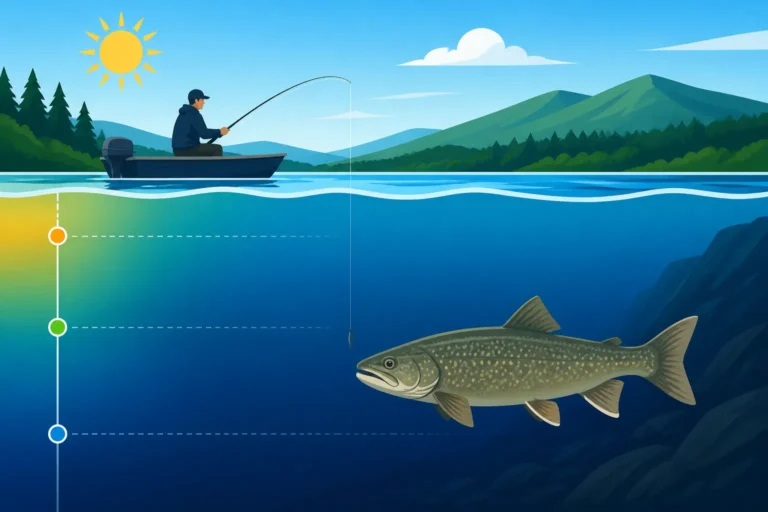
Brown trout are famous for being a bit more tolerant of warmer water than their brook trout cousins, but "tolerant" doesn't mean they prefer it hot. They thrive in cool, well-oxygenated water, typically preferring temperatures between 55°F and 65°F (13°C to 18°C). When stream temperatures start to climb above this range, especially in the heat of summer, brown trout will actively seek out colder pockets. This might mean congregating near the mouths of cooler feeder streams, deeper pools where thermal stratification can occur, or areas where groundwater seeps into the stream bed.
Flow is equally important. Brown trout love a good current, but not one that forces them to constantly fight against it. They're masters of energy conservation, positioning themselves in "holding lies" just out of the main current, where food is swept to them with minimal effort. Think of the seams where fast water meets slow water, the edges of eddies, or behind boulders and logs. These spots offer a conveyor belt of insects and baitfish while providing a break from the relentless flow. During high water events, they'll often move closer to the banks or seek slower, more sheltered areas to avoid being swept downstream.
Structure, Cover, and Concealment
Brown trout are incredibly wary and constantly seek refuge from predators, both avian and terrestrial. This means they are almost always found near some form of structure or cover. Overhanging banks, undercut banks, submerged logs, fallen trees (snags), large boulders, and dense aquatic vegetation are all prime real estate for a brown trout. These features provide shade, concealment from overhead predators like eagles and ospreys, and protection from fishing pressure.
Imagine a large, old log spanning a section of the river. Below that log, the current has carved out a deep pool with an undercut bank on one side. That's a five-star hotel for a brown trout! They'll tuck themselves into the dark recesses, waiting for an unsuspecting insect to drift by, feeling safe and secure. The more complex and varied the stream bottom and banks, the more holding lies there are, and the better the brown trout fishing tends to be. Many anglers look for these kinds of features when fly fishing, knowing that a well-placed cast near such cover can often elicit a strike. You can learn more about specific techniques in articles like Wading Techniques for New Hampshire Trout Streams.
Substrate Preferences for Foraging and Spawning
The material that makes up the stream bed, known as the substrate, is another critical factor for brown trout. For foraging, they prefer a mix of gravel, cobble, and small rocks, which provides excellent habitat for the aquatic insects they feed on. These varied textures create nooks and crannies where nymphs and larvae can cling, providing a rich food source. Sand or silt bottoms, while present in some areas, generally aren't as productive for foraging brown trout, though they might hold different types of food.
When it comes to spawning, gravel is absolutely essential. Brown trout are "redd" builders, meaning the females dig shallow depressions in the gravel to lay their eggs, which are then fertilized by the males and covered with more gravel. This process requires clean, loose gravel with good water flow through it to oxygenate the eggs and carry away waste. Areas with excessive silt or sand can smother eggs, leading to poor spawning success. Therefore, streams with healthy gravel beds are vital for sustaining wild brown trout populations in New Hampshire. Protecting these critical spawning habitats is a key part of ensuring healthy fisheries for generations to come.
Diet and Feeding Habits of Stream Brown Trout
Brown trout are notoriously opportunistic eaters, willing to feast on almost anything that presents itself, which is part of what makes them such a fun and challenging fish to pursue. Their diet shifts with the seasons, water conditions, and their own growth, but it's always rooted in efficiency and opportunity.
Insectivorous Nature: The Aquatic Menu
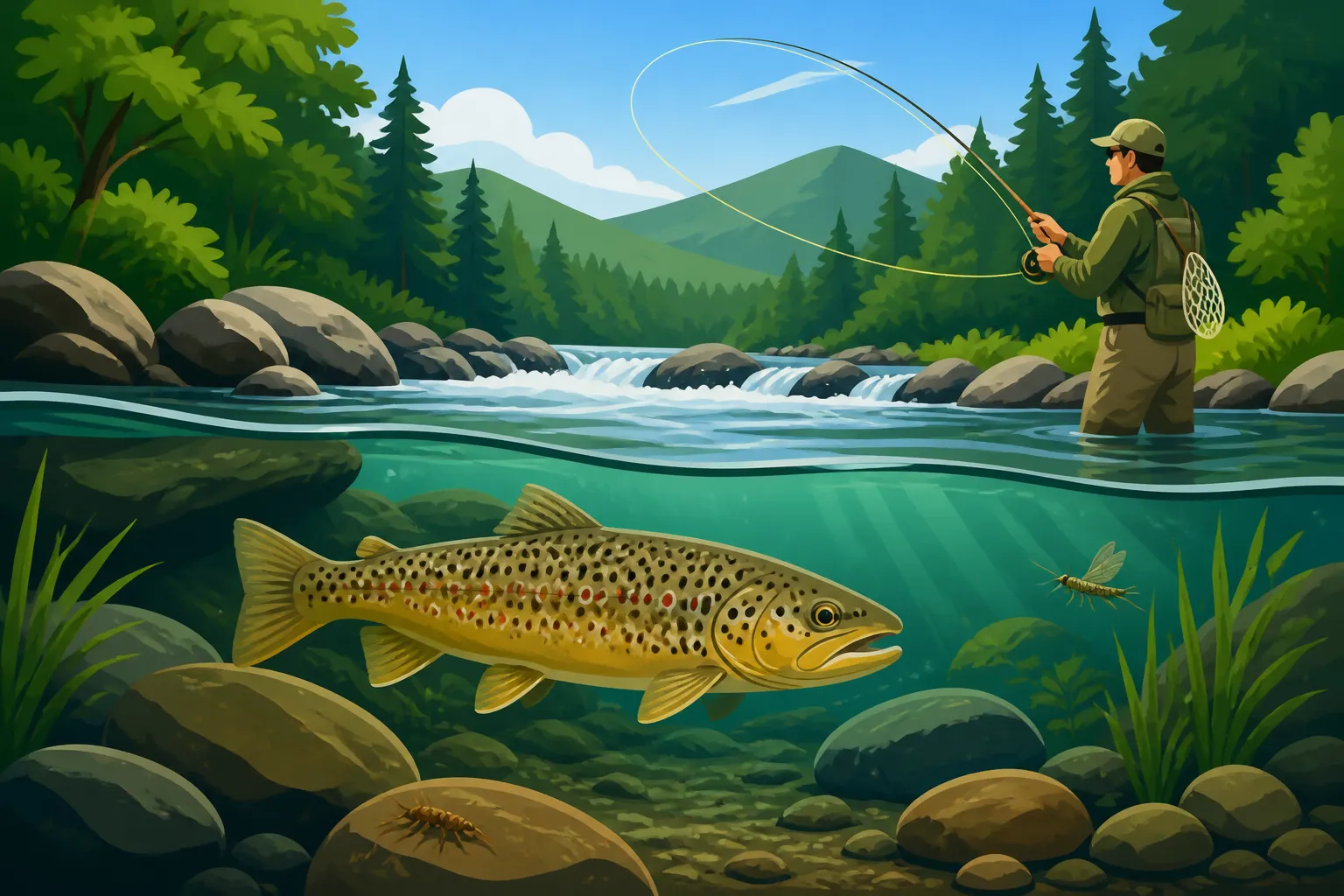
For most of their lives in New Hampshire streams, especially when they're smaller, brown trout are primarily insectivores. This means they feed heavily on aquatic insects, including nymphs, larvae, pupae, and adult stages of creatures like caddisflies, mayflies, stoneflies, and midges. They also readily consume terrestrial insects that fall into the water, such as ants, grasshoppers, beetles, and crickets. This wide-ranging insect diet is why fly fishing is so effective for trout; anglers mimic these natural food sources with artificial flies.
Brown trout often position themselves in feeding lanes, waiting for the current to deliver a meal right to their mouths. They'll actively "hold" in a current seam or behind a rock, darting out to intercept a drifting insect before returning to their safe haven. Their keen eyesight allows them to distinguish even tiny morsels in the water, making them discerning diners when the hatches are abundant, but incredibly aggressive when food is scarce. Understanding the prevalent insect hatches in a given stream can give anglers a significant edge, helping them choose the right flies. A good resource for understanding these patterns can be found in Fly Fishing for Trout in New Hampshire.
Opportunistic Predators: Beyond the Bugs
As brown trout grow larger, their diet often expands beyond just insects. They become increasingly opportunistic predators, willing to consume a variety of larger prey. This includes small baitfish like sculpins, dace, and juvenile trout (including their own kind!). They'll also gobble up crayfish, leeches, mice, and even small salamanders if the opportunity arises. This shift towards piscivory (eating fish) is a major reason why trophy brown trout often have such substantial girth and impressive size.
This predatory nature means that larger browns can be targeted with different types of lures and flies. Streamer patterns that imitate baitfish, crankbaits, and even larger nymphs become incredibly effective. It's not uncommon for a large brown trout to strike a lure almost as big as itself, showcasing their aggressive and territorial instincts. If you're looking for larger fish, focusing on areas where baitfish congregate or where larger prey items might be found is a smart strategy. Many anglers purchase specialized streamer flies and larger lures for these situations, often finding a wide selection on platforms like Amazon.
Foraging Strategies: Stealth and Ambush
Brown trout employ a variety of foraging strategies, all designed to maximize caloric intake while minimizing energy expenditure and risk. In riffles and runs, they'll typically face upstream, waiting for food to drift down to them. They'll make quick, precise strikes, often from a protected lie behind a rock or in a current seam. In deeper, slower pools, they might cruise slowly, actively hunting for larger prey or inspecting the bottom for crayfish.
During low-light conditions, such as dawn, dusk, or even throughout the night, brown trout become particularly active and bold. This is when they are most likely to move into shallower water to feed on larger prey, as the reduced light offers them greater cover from predators. Trophy browns are often caught at night by anglers who understand this nocturnal feeding pattern, casting large streamers or mice patterns along stream banks. Their adaptability in feeding, from delicate sipping of tiny midges to aggressive strikes on large baitfish, is a testament to their survival prowess in diverse stream environments.
Spawning Behavior and Reproduction
The cycle of life for brown trout culminates in a spectacular, instinct-driven event each year: spawning. Understanding their reproductive habits is crucial for appreciating the health of a stream's brown trout population and for respecting these fish during their most vulnerable time.
Fall Spawning Season
Unlike rainbow trout, which typically spawn in the spring, brown trout are fall spawners in New Hampshire. Their spawning season generally begins in late September and can extend through November, sometimes even into early December, depending on water temperatures and specific stream conditions. As the days shorten and water temperatures begin to drop, adult brown trout are triggered to begin their migration to suitable spawning grounds. These grounds are usually upstream, often in smaller tributaries or shallower, gravel-bottomed sections of the main stream where conditions are just right for egg development.
During this period, male brown trout develop more vibrant colors, often becoming darker with more intense reds and yellows, and some may develop a distinctive hooked jaw, called a "kype," used in competition with other males for females. Females become heavy with eggs. It’s a truly magnificent sight, if you're lucky enough to witness it, to see these fish, sometimes quite large, making their way upstream, driven by an ancient imperative. Many regulations, such as those covered in New Hampshire Fishing Season Dates and Closures, take these spawning periods into account to protect the fish.
Redd Building and Fertilization
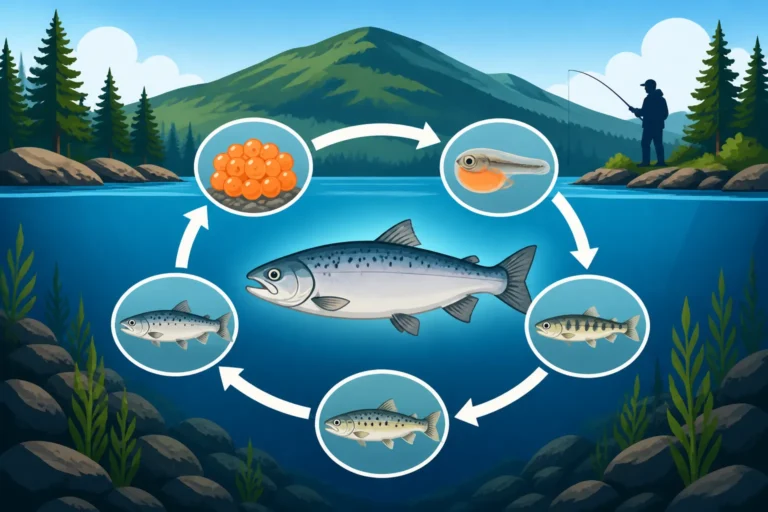
Once the female brown trout reaches a suitable spawning site, she begins the arduous process of "redd" building. A redd is a saucer-shaped depression dug into the gravel bed of the stream. Using her tail, she churns the gravel, displacing smaller stones and silt, creating a clean, oxygen-rich nest for her eggs. This is why clean, un-silted gravel is so vital for successful reproduction. During this process, one or more male brown trout will typically attend her, vying for the opportunity to fertilize her eggs.
When the redd is ready, the female deposits her eggs, and the male simultaneously releases milt to fertilize them. Immediately afterward, the female will move slightly upstream and begin digging again, kicking gravel back over the fertilized eggs to cover and protect them. This process can be repeated several times, creating a series of egg pockets within the redd. The eggs then incubate over the winter, hatching in the early spring as "alevins" (newly hatched trout with a yolk sac) and eventually emerging from the gravel as "fry." This delicate incubation period is why it's so important for anglers to avoid wading directly on suspected redds during the spawning season, as stepping on them can destroy hundreds of future trout.
Factors Affecting Spawning Success
The success of brown trout spawning in New Hampshire streams is influenced by a number of environmental factors. Water quality is paramount; clean, cold, oxygenated water free of excessive siltation or pollutants is essential for egg survival and development. Intense spates or flash floods during the incubation period can scour redds, washing away or burying eggs too deeply. Conversely, extremely low water levels can expose redds to freezing temperatures or predators.
Habitat degradation, such as bank erosion, deforestation leading to increased water temperatures, or improper culvert installations that block fish passage, can severely impact spawning success. Stream connectivity is also vital, allowing brown trout to migrate freely to their preferred spawning grounds. Efforts to restore stream habitats, maintain riparian buffers, and manage water flow can significantly boost natural reproduction. These considerations are a big part of why organizations dedicated to habitat conservation are so important, working to ensure the future of species like the brown trout.
Seasonal Movements and Activity Patterns
Brown trout in New Hampshire streams aren't static residents; their lives are a constant dance with the seasons, driven by changes in temperature, food availability, and the urge to reproduce. Understanding these movements can dramatically improve your chances of finding them throughout the year.
Spring: Post-Spawn Recovery and High Activity
As the ice recedes and spring runoff swells New Hampshire's streams, brown trout enter a period of recovery from their arduous fall spawning. During this time, which can coincide with the opening of trout season, they're often hungry and eager to feed, making them highly active. Water temperatures are rising, stimulating insect hatches, and the increased flow helps distribute food. Brown trout will often spread out from their overwintering areas, moving into riffles and runs to actively feed on emerging aquatic insects like caddisflies and mayflies.
This is a prime time for anglers to target them, using a variety of techniques. They might be found in pocket water, behind larger rocks, or along current seams, intercepting drifting nymphs. As the water warms further, topwater activity increases, and they'll readily rise to dry flies. Early spring fishing can be exceptional, though the trout can also be a bit sluggish in very cold, fresh meltwater. Knowing the best techniques for early spring is crucial, and you might find useful tips in articles like Best Techniques for Early Spring Trout.
Summer: Seeking Cooler Refuges
Summer in New Hampshire can present challenges for stream brown trout, especially during prolonged heat waves. As water temperatures climb, brown trout become increasingly stressed and will actively seek out cooler water. This often means retreating to deeper pools, areas shaded by overhanging trees, or congregating around the mouths of cold feeder streams or groundwater springs. Their activity levels might decrease during the brightest, hottest parts of the day, with feeding becoming more concentrated during the cooler dawn and dusk hours, or even at night.
During these warmer periods, brown trout can be particularly vulnerable to stress from being caught and released. It's often advisable to use heavier tackle to land them quickly, minimize handling, and release them immediately. Fishing during the coolest parts of the day or in streams known to maintain cold temperatures (often spring-fed or high-elevation streams) can be more productive and kinder to the fish. When fishing during these times, consider using longer leaders to avoid spooking the fish in clearer, lower flows, a good fluorocarbon leader for clear lake water might also be effective.
Fall: Pre-Spawn Aggression and Spawning Migrations
As autumn paints the New Hampshire landscape with vibrant colors, brown trout undergo another significant shift in their behavior. This is the pre-spawn period, characterized by increased feeding and aggressive behavior as they bulk up for the upcoming spawning season. They'll actively chase baitfish, larger insects, and anything else that provides a good caloric boost. This can lead to some of the most exciting and productive fishing of the year, as large browns become more susceptible to streamers and larger lures.
Following this feeding frenzy, brown trout begin their spawning migrations, moving upstream into smaller tributaries or shallower, gravelly stretches of the main river. During this time, their focus shifts entirely to reproduction, and while they may still strike a fly or lure out of aggression or territoriality, catching them on redds or actively spawning can disrupt their vital reproductive cycle. Many anglers choose to avoid targeting actively spawning fish to help conserve the resource.
Winter: Low Activity and Overwintering
When winter sets in, and New Hampshire streams become icy and cold, brown trout activity slows considerably. They typically seek out deeper pools, areas with stable flows, or locations with overhead ice cover that provides protection from predators and insulates them from the harshest cold. Their metabolism slows down, and feeding becomes much less frequent and less aggressive. They will still eat, but often only if food is presented directly and requires minimal effort.
During winter, brown trout are typically found holding close to the bottom, conserving energy. Anglers targeting them might use slow-moving nymphs or small jigs fished very deliberately. While challenging, winter fishing can yield some surprising results, as large, hungry trout might take an unexpected offering. However, ice fishing on streams is generally not as common as it is on lakes, but these fish are still there, simply biding their time until the warmth of spring returns.
Identifying Stream Brown Trout vs. Other Species
In New Hampshire, you're likely to encounter a few different trout species in streams, and sometimes they can look quite similar at first glance. Knowing the key differences can not only help you identify your catch but also understand the specific regulations that might apply to each species.
Key Physical Characteristics of Brown Trout
Brown trout have several distinguishing features that set them apart. Their overall body color can vary widely depending on their habitat and diet, ranging from olive-brown to golden-brown on their backs, fading to yellowish or creamy white on their bellies. The most characteristic feature is their spotting pattern: they have prominent dark spots on their back and sides, often encircled by a pale "halo," which can be red, orange, or yellow. Crucially, these spots typically extend down below their lateral line and often onto their caudal (tail) fin. The tail fin itself is usually square or slightly forked.
Another distinguishing feature is their adipose fin (the small, fleshy fin on their back near the tail). While all true trout have an adipose fin, in brown trout, it's often more pronounced and sometimes has an orange or reddish hue, though this can vary. Their mouth is relatively large, extending back beyond the eye, indicating their predatory nature. They tend to have a more streamlined, torpedo-shaped body adapted for living in moving water.
Distinguishing from Brook Trout and Rainbow Trout
Here's where it gets interesting, as New Hampshire is home to both native brook trout and introduced rainbow trout, both of which can share the same waters as brown trout.
| Feature | Brown Trout | Brook Trout | Rainbow Trout |
|---|---|---|---|
| Native Status | Introduced | Native (NH State Fish) | Introduced |
| Spots | Dark spots (often with light halos), some red/orange spots, extend onto tail. | Light "worm-like" squiggles (vermiculations) on back, red spots with blue halos on sides. | Small, dark spots, usually evenly distributed, on body and tail. |
| Tail Fin | Square to slightly forked, often spotted. | Square to slightly emarginate. | Moderately forked, heavily spotted. |
| Leading Edge of Lower Fins | Usually plain or slightly yellowish. | White leading edge on lower fins (pectoral, pelvic, anal), with a black stripe behind it. | Plain, often dusky. |
| Lateral Stripe | No distinct stripe, though colors can vary. | No distinct stripe. | Pinkish-red stripe along lateral line (most pronounced in adults). |
| Overall Color | Olive-brown to golden, yellowish belly. | Dark green to almost black, mottled, red/orange belly in males. | Silvery to olive green, whitish belly. |
The white leading edge on the lower fins of a brook trout is perhaps the most reliable field mark to differentiate it from a brown or rainbow. For brown trout, those haloed spots, especially extending onto the tail, are key. Rainbows, conversely, tend to be very heavily spotted over their entire body and tail, and have that characteristic pinkish stripe when mature. For more details on identification, check out Trout Species Identification Guide for New Hampshire.
Size and Age in New Hampshire Streams
The size and age of brown trout in New Hampshire streams can vary significantly depending on whether they are wild, stocked, or "holdover" fish (stocked fish that have survived for more than one season and grown larger). Stocked browns, often released at a catchable size, might be anywhere from 8 to 14 inches. Wild brown trout in smaller, less productive streams might remain on the smaller side, perhaps reaching 12-16 inches over several years.
However, in larger, more fertile streams or those connected to lakes where they have access to an abundant food supply (especially baitfish), brown trout can grow to impressive sizes. It's not uncommon to hear of brown trout exceeding 20 inches in certain New Hampshire rivers, and occasional monsters pushing past that mark are caught each year. These larger fish are often older, maybe 5-7 years old or more, having survived multiple seasons and learned to evade predators and anglers alike. Their longevity and potential for significant growth contribute to their allure as a premier game fish in New Hampshire. When you're fishing for these larger specimens, having appropriate gear is essential. Many anglers will purchase their heavier lines and larger lures from reputable online retailers like Amazon to ensure they're prepared for whatever a big brown trout might throw at them.
Disclaimer
This article is for general informational purposes only and does not constitute professional advice. Laws, prices and regulations vary by location and change over time. Consult a qualified professional for guidance on your specific situation.