Best two-handed rod for winter steelhead-style swinging
Let's talk about something a little bit specialized, something that really gets the blood pumping for a dedicated angler even when the temperatures drop: winter steelhead-style swinging in New Hampshire. If you've ever found yourself bundled up, watching the frigid currents of a New England river, wishing you could cast further, control your swing better, and effectively present a fly to those cold-nosed fish, you've likely felt the frustration of inadequate gear. This guide is all about diving deep into the world of two-handed rods, specifically tailored to help you conquer New Hampshire's winter waters and chase those elusive, hard-fighting fish in a truly engaging way.
Understanding the Appeal of Two-Handed Rods for Winter Swinging in New Hampshire
When most folks think of "swinging flies," their minds often drift to the Pacific Northwest, to chrome-bright steelhead or massive salmon. But what many don't realize is that the principles of that technique—presenting a fly on a controlled arc through challenging currents to fish that are often holding deep and tight to the bottom—are incredibly effective and exhilarating right here in New Hampshire, especially in the colder months. It's not about catching actual steelhead, but about adopting a highly effective, dynamic approach for our larger resident species when conditions are tough.
Why "Steelhead-Style" Applies to New Hampshire's Cold-Water Fisheries
Think about it: winter fishing in New Hampshire often means high, cold, powerful water. Our larger rivers and even some bigger lake outflows can mimic the conditions you'd find in a classic steelhead river. We might not have the anadromous runs in the same way, but we certainly have the fish that behave similarly. Lake trout, landlocked salmon, and even big brown trout or robust smallmouth bass in certain systems become lethargic and hunker down. They're not actively chasing; they're waiting for an easy meal to drift by. This is where the beauty of a swung fly comes in.
A two-handed rod allows you to cast heavy lines and big flies with minimal effort, covering vast stretches of water that would be impossible with a traditional single-handed rod. You're not casting at the fish; you're casting to the water, letting the current do the work to present your fly naturally. It's a dance with the river, feeling the swing, anticipating the take. It’s a completely different mindset from nymphing or stripping streamers, offering a methodical approach that can unlock bites from otherwise uninterested fish. Many of the techniques and principles you'd find in a guide like How to Catch Landlocked Salmon in New Hampshire or How to Catch Lake Trout in New Hampshire can be adapted to a two-handed setup for ultimate efficiency.
The Unique Challenges of Winter Fishing in the Granite State
Winter fishing in New Hampshire is not for the faint of heart. You're battling biting cold, often icy rod guides, numb fingers, and frequently fast, murky water from snowmelt or winter rains. These conditions make accurate casting with a single-handed rod incredibly difficult, especially when you need to turn over heavy sink tips and large, weighted flies.
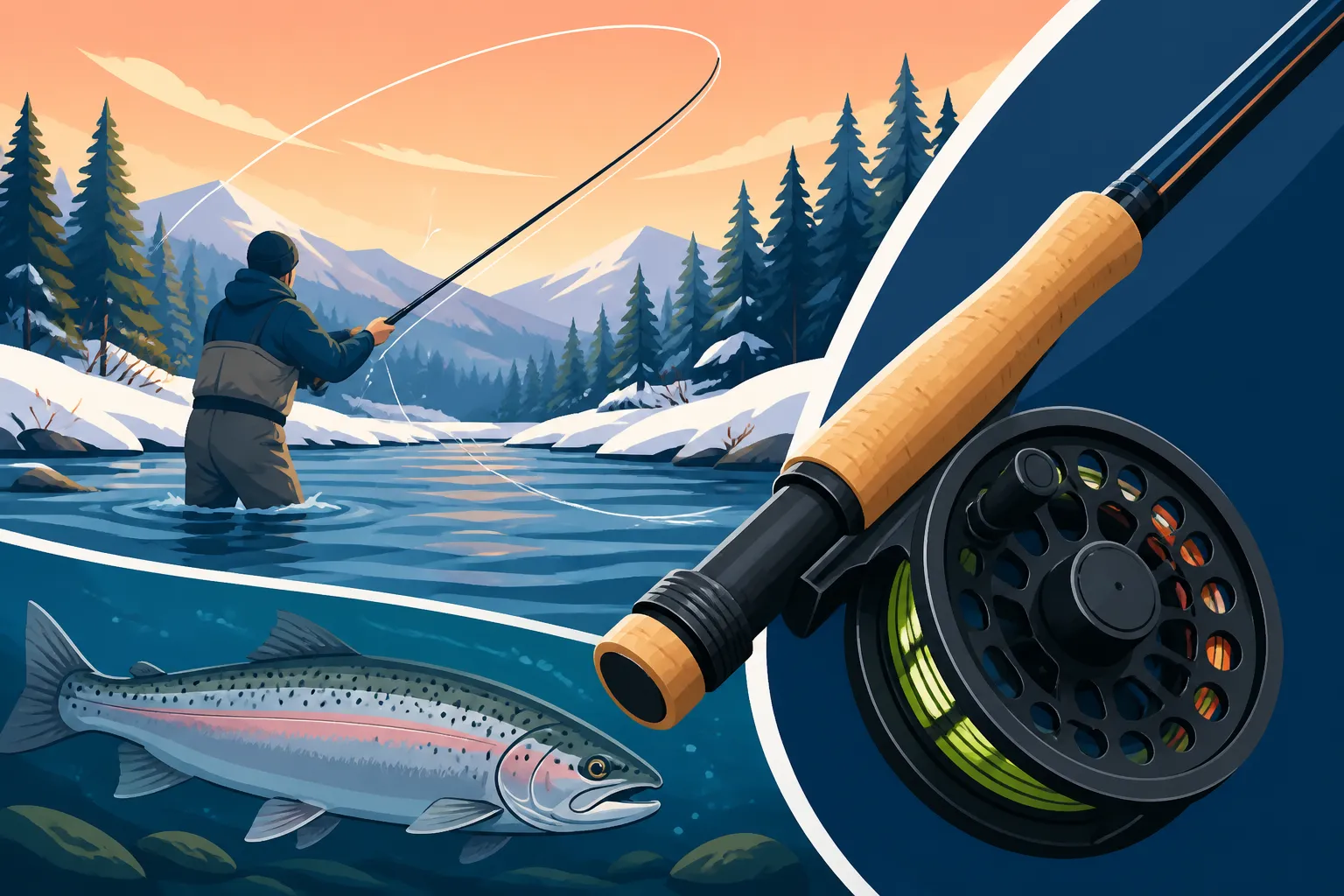
Imagine trying to cast a 10-foot T-14 sink tip and a bulky Intruder fly across a wide, swift river like the Connecticut or Merrimack with a 9-foot, 6-weight single-handed rod. It’s a struggle. You'll fatigue quickly, your casts will be sloppy, and you'll spend more time untangling than fishing. A two-handed rod, whether it's a "switch" rod or a full "spey" rod, completely changes this dynamic. The leverage provided by the longer rod and the two-handed casting stroke (often a "D-loop" or "water-borne" cast) allows you to effortlessly launch heavy payloads, even with limited backcasting room. This means you can stay comfortable, cast effectively, and cover more water, increasing your chances when every bite is hard-earned. It truly transforms what would otherwise be a grueling day into a meditative, productive experience.
Key Characteristics of a Great Two-Handed Rod for Winter Swinging
Choosing the right two-handed rod isn't just about grabbing the longest, heaviest stick you can find. It's about matching the rod's specifications to the types of water you'll be fishing and the conditions you expect to encounter in New Hampshire during the colder months. It's a delicate balance that impacts casting efficiency, fish-fighting power, and overall enjoyment.
Rod Length and Weight for New Hampshire's Rivers
When we talk about two-handed rods, we're usually looking at two main categories: switch rods and spey rods.
- Switch Rods: These typically range from 10 to 12 feet in length and are often rated for 5 to 8-weight lines. They're called "switch" rods because you can comfortably cast them single-handed for lighter work or traditional overhead casting, but they really shine when used two-handed for short spey casts. For many of New Hampshire's medium-sized rivers or even larger streams, a switch rod in the 7- or 8-weight class and around 11 to 11.5 feet is incredibly versatile. It offers enough power to handle heavy sink tips and larger flies, yet it's nimble enough for tighter casting situations found on rivers like parts of the Pemigewasset or Saco. If you're fishing smaller sections of water or targeting slightly smaller fish, an 11-foot 6-weight could be a fantastic choice.
- Spey Rods: These are generally longer, starting around 12.5 feet and going up to 15 feet or more, with line ratings from 6 to 10-weight. A true spey rod is designed exclusively for two-handed casting and excels at covering vast distances on wide rivers with minimal effort. For the truly big waters, such as the main stem of the Connecticut River or wide-open stretches where you need to reach out, a 13-foot 7-weight or 8-weight spey rod can be an absolute cannon. The extra length provides superior line control, allowing you to mend line and control your swing perfectly, which is crucial for maximizing your fly's time in the strike zone. Think about areas where you might normally try to reach out for a big cast, or when fishing from a boat, as covered in New Hampshire Boating Laws for Anglers, where the extra length won't be a hindrance.
The choice really comes down to the specific water you frequent. If you primarily fish smaller, more intimate rivers with overhead obstructions, a switch rod will be your friend. If you're on wide, open stretches of our larger river systems, a dedicated spey rod will give you the range and control you need.
Action and Power for Casting Heavy Lines and Fighting Fish
The "action" of a rod refers to where it bends under load, while "power" describes its resistance to bending. For winter swinging, you'll generally want a rod with a medium-fast to fast action and sufficient power.
- Casting Heavy Lines: Winter swinging often involves Skagit-style lines, which are short, heavy bellies designed to launch equally heavy sink tips (like T-11, T-14, or even T-17) and large, weighted flies. A medium-fast action rod will load deeply and smoothly, generating the power needed to turn over these heavy setups efficiently. Too fast of an action can make it feel stiff and less forgiving, while too slow might feel sluggish and struggle to lift heavy tips out of the water. The rod needs enough backbone to handle the weight of the line and the fly, essentially acting as a lever to propel your offering.
- Fighting Fish: Once you hook into a substantial fish—be it a thick landlocked salmon, a powerful lake trout, or a brute of a brown trout—the rod's power comes into play. You need a rod that can absorb the shock of powerful runs, protect lighter tippets, and apply consistent pressure to turn the fish. A powerful butt section is essential for leveraging a strong fish in current, helping you guide it to the net without over-stressing your arms or the leader. This power is especially important when you consider the average size of fish discussed in articles like Landlocked Salmon Growth Rate to Trophy Size or Lake Trout Average Size in New Hampshire Lakes.
Handle Design and Ergonomics for All-Day Cold-Weather Comfort
Don't underestimate the importance of a well-designed handle, especially when you're out in the biting New Hampshire cold. You'll be holding this rod for hours, making hundreds of casts, and hopefully fighting some strong fish.
- Upper and Lower Grips: Two-handed rods feature an upper grip and a lower grip, allowing for the two-handed casting stroke. Both should be comfortable and provide good purchase, even when wet or cold. High-quality cork or composite cork handles are generally preferred for their durability and grip. The length of the grips is also important; too short, and you won't get the leverage you need; too long, and it can feel cumbersome.
- Reel Seat: A sturdy, reliable reel seat is crucial. It needs to hold your often heavier spey reel securely, preventing any wobble or loosening during casting or fighting fish. Given the cold, make sure it's easy to tighten and loosen even with slightly numb fingers or gloves.
- Balance: A well-balanced two-handed setup feels lighter than it actually is. The reel weight plays a significant role here, counteracting the rod's length. A properly balanced rod reduces fatigue, making those long winter days more enjoyable and keeping your casting stroke consistent. When browsing at a Bass Pro Shops or online, remember that the "feel" of balance with a reel attached is key.
Pairing Your Two-Handed Rod with the Right Line System
A two-handed rod is only as good as the line system you pair it with. This is where things get a bit more technical, but understanding the basics of Skagit and Scandi lines is fundamental to effective winter swinging. The line is your connection to the water and the fish, influencing everything from casting distance to presentation depth.
Skagit vs. Scandi Lines for Winter Swinging
These are the two primary types of "shooting heads" used with two-handed rods, each with distinct advantages for different situations.
| Feature | Skagit Lines | Scandi Lines |
|---|---|---|
| Head Length | Very Short (around 12-25 ft) | Longer (around 30-40 ft) |
| Taper | Heavily Forward Tapered, Thicker | Longer, More Graceful Front Taper |
| Casting Style | Best for sustained anchor casts (e.g., Perry Poke, Double Spey) | Best for touch-and-go casts (e.g., Snake Roll, Single Spey) |
| Tips | Designed for heavy, fast-sinking "T" material tips (T-8, T-11, T-14, T-17) | Designed for lighter, tapered poly leaders or intermediate tips |
| Fly Size | Ideal for large, weighted streamers, intruders, articulated flies | Better for smaller, unweighted or lightly weighted flies, traditional wet flies |
| Conditions | Excellent for deep, fast, turbulent water; turning over heavy flies; limited backcast room | Great for clear, slower water; delicate presentations; good backcast room |
| Primary Use | Winter/Spring, targeting deep fish, high water | Summer/Fall, targeting active fish, lower water |
For winter swinging in New Hampshire, Skagit lines are often the hero. Their short, powerful taper is designed specifically to cast heavy sink tips and bulky, weighted flies, exactly what you need to get down to lethargic fish in deep, cold currents. They excel in situations with limited backcasting room, allowing you to make powerful casts with minimal effort by using the water's surface to load the rod (sustained anchor casts). If you're fishing a strong current on a larger river or trying to probe deep pools, a Skagit setup will give you the best chance to put your fly in the zone.
Scandi lines, on the other hand, have a longer, more delicate taper. They are fantastic for smoother, more graceful casts (touch-and-go casts) and for presenting smaller, unweighted, or lightly weighted flies with finesse. While less common for the heavy-duty winter work, a Scandi line can be deadly in early spring or late fall when fish are more active and shallower, or when you need a delicate presentation for spooky trout in clearer water. You might use a Scandi line if you are targeting holdover trout in specific "fly fishing only" waters listed in articles like New Hampshire Catch and Release Fly Fishing Only Waters. Most anglers hitting the rivers in December, January, or February for true "steelhead-style" swinging will lean heavily on Skagit.
Both Skagit and Scandi lines attach to a thin "running line" that shoots through the guides after the head is cast. This combination allows for maximum casting distance.
Understanding Tips, Leaders, and Fly Selection
Once you've chosen your rod and shooting head, the next crucial components are your sink tips, leaders, and flies.
- Sink Tips (for Skagit): These are short sections of line (usually 10-15 feet) made of tungsten powder or other dense materials that sink rapidly. They come in various weights (e.g., T-8, T-11, T-14, T-17), with the number indicating grains per foot. A T-14 tip, for example, sinks faster and carries a heavier fly better than a T-8. You'll switch these out based on water depth and current speed. In fast, deep pools on the Connecticut River, a T-14 or T-17 might be necessary, while in shallower runs, a T-11 could be perfect. The heavier the tip, the more aggressive the rod and line system need to be to turn it over.
- Poly Leaders (for Scandi): These are tapered leaders with a monofilament or fluorocarbon core coated in PVC, available in different sink rates (floating, intermediate, slow sink, fast sink, super fast sink). They offer a more subtle transition from the Scandi head to your fly.
- Leaders: For Skagit setups, your leader will typically be very short, often just 2-4 feet of strong fluorocarbon or monofilament (10-20 lb test) tied directly to your sink tip. This short leader maintains the sinking properties of your tip and ensures direct contact with your fly. For Scandi, you might use a longer, tapered leader attached to a poly leader.
- Fly Selection: For winter swinging, you're generally looking for larger, weighted flies that have a lot of movement in the current. Think "Intruders," "Leeches," "Sculpins," and big "Woolly Buggers" in black, purple, olive, or white. Flies with coneheads, beadheads, or lead wrap help them get down quickly. The profile and movement are more important than exact imitation in cold, dark water. You're trying to trigger an aggressive strike from a fish looking for a substantial meal, not necessarily a subtle sip. You can often find a good selection of these types of flies at local fly shops or online at places like Amazon.
Recommended Rod Brands and What to Look For When Buying
Investing in a two-handed rod system can feel like a big step, but with the right research, you can find a setup that will bring you years of enjoyable winter swinging on New Hampshire's waters.
Top Brands Known for Quality Two-Handed Rods
While I can't recommend specific models or current prices, I can tell you that several reputable fly rod manufacturers consistently produce high-quality two-handed rods. These brands are known for their craftsmanship, warranty support, and performance in various conditions. When you're looking, you'll often encounter names like Sage, Scott, Orvis, Hardy, Redington, and Echo.
- Sage and Scott are often considered premium brands, known for their innovative designs and high-performance actions. They typically offer a wide range of spey and switch rods that are incredibly light, responsive, and powerful. If you're looking for a top-tier experience and plan to fish this way extensively, these are excellent choices.
- Orvis and Hardy bring a rich tradition to fly fishing, offering beautifully crafted rods with classic actions that are a joy to cast. They often have a good balance of performance and aesthetics.
- Redington and Echo are fantastic options for anglers looking for excellent performance without the premium price tag. They often provide exceptional value, with rods that cast well, are durable, and are backed by solid warranties. These brands are often a great entry point into two-handed casting, allowing you to experience the technique without a massive initial investment.
The best way to find the right rod is to try a few if you can. Visit a dedicated fly shop, and they might have demo rods or offer casting clinics. Even swinging a rod in the shop can give you a feel for its balance and action.
Budgeting and Finding the Right Value
Let's be real: quality fly fishing gear, especially specialized items like two-handed rods, can be an investment. A good two-handed rod, reel, and line system can certainly add up. However, there are excellent options at various price points, and finding the "right value" is about balancing your budget with your frequency of use and performance expectations.
- Entry-Level Systems: If you're just getting into two-handed casting, brands like Redington and Echo offer superb starter kits or individual rods and reels that perform far above their price point. You can often piece together a very capable Skagit or Scandi system for a reasonable cost. Keep an eye on sales at large outdoor retailers like Bass Pro Shops or online platforms like Amazon, especially outside of peak fishing seasons. You might find last year's models at a discount.
- Mid-Range Options: Moving up, you'll find more refined actions, lighter blanks, and higher-quality components. This is where many anglers settle, getting significant performance improvements without hitting the very top tier. Look for rods that feel good in your hand, have a smooth casting action, and are built to last through the rigors of winter fishing.
- Premium Systems: For the devoted angler who plans to spend significant time winter swinging, a top-end rod offers benefits in terms of reduced weight, increased sensitivity, and often superior casting characteristics. These rods are often a joy to fish, providing an almost effortless casting experience that can make long days on the water less fatiguing.
Remember to factor in not just the rod, but also the reel (which needs to be appropriately weighted for balance and have ample backing capacity), the shooting head, running line, and a variety of sink tips. It’s a complete system, and each component plays a vital role. No matter your budget, focus on getting a rod that feels balanced, has the right action for casting heavy lines, and is robust enough to handle the conditions and the fish you'll encounter in New Hampshire.
Embracing the two-handed rod for winter steelhead-style swinging is a journey into a different, deeply rewarding facet of fly fishing. It opens up new possibilities for targeting big fish in challenging conditions, transforming cold, seemingly unproductive days into memorable angling adventures. So, bundle up, brave the elements, and embrace the swing!
Disclaimer
This article is for general informational purposes only and does not constitute professional advice. Laws, prices and regulations vary by location and change over time. Consult a qualified professional for guidance on your specific situation.