Best Kayak for Winnipesaukee
Lake Winnipesaukee, with its vast expanse and sometimes challenging conditions, presents a unique dilemma for kayak anglers: how do you choose a kayak that offers stability, efficiency, and safety while still allowing for productive fishing? Many paddlers find themselves overwhelmed by the sheer variety on the market, wondering which features truly matter when facing the open waters and occasional chop of the "Big Lake." This comprehensive guide will walk you through the essential considerations for selecting the best fishing kayak for Lake Winnipesaukee, ensuring your time on the water is both enjoyable and successful.
Understanding Lake Winnipesaukee's Unique Challenges for Kayak Anglers
Before we dive into kayak features, it's crucial to appreciate what makes fishing on Lake Winnipesaukee different from paddling a small pond or a gentle river. This isn't your average calm water fishing trip; Winnipesaukee demands a certain level of preparedness and the right equipment.
Navigating Large, Open Water and Boat Traffic
Winnipesaukee is one of New England's largest lakes, and its sheer size means open stretches of water that can quickly become choppy. Unlike smaller lakes or protected coves, you're exposed to wind, waves, and significant boat traffic, especially during peak season. Powerboats, cruisers, and even the occasional ferry can create wakes that feel substantial in a small craft. A kayak that might feel perfectly stable on a calm millpond could feel like a bobbing cork on a busy Saturday afternoon on Winnipesaukee. This environment necessitates a kayak designed for stability and tracking, capable of handling these conditions without making you feel constantly on edge. It's about finding that balance where you can fish comfortably without expending all your energy just staying upright.
Dealing with Wind, Waves, and Weather Changes
The weather on Winnipesaukee can shift dramatically and quickly. A perfectly calm morning can give way to strong winds and whitecaps in a matter of hours, making a long paddle back to shore a genuine challenge. These conditions demand a kayak that can cut through chop efficiently, offer good secondary stability (how stable it feels when leaned on its side), and allow you to cover distance if you need to beat an approaching storm. Kayaks that are too short, too wide, or have a flat bottom can be easily pushed around by the wind, leading to exhaustion and potentially dangerous situations. You also need to consider how your chosen kayak will perform when loaded down with fishing gear, which can alter its handling characteristics. Always check the forecast, but also be prepared for the unexpected when you're out on the big lake.
Types of Fishing Kayaks Best Suited for Big Water
When it comes to tackling the vastness of Winnipesaukee, not all fishing kayaks are created equal. You'll want to lean towards designs that prioritize stability, efficiency, and safety. Let's explore the most common types and how they stack up for this unique environment.
Sit-on-Top Kayaks for Stability and Accessibility
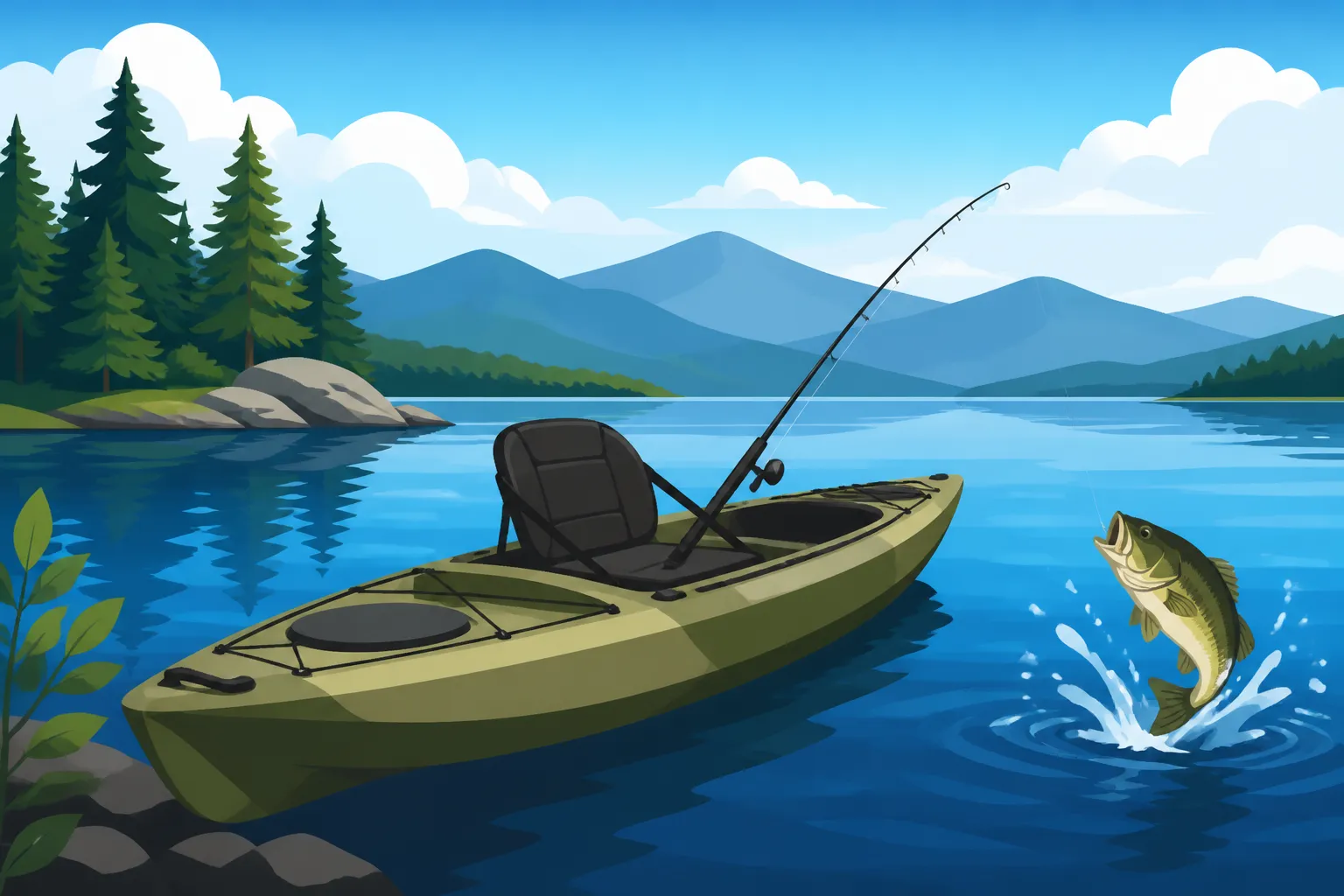
Sit-on-top kayaks are overwhelmingly popular for fishing, and for good reason, especially on a lake like Winnipesaukee. Their open deck design makes it easy to get in and out, which is a huge plus if you need to stretch your legs, take a quick swim, or even re-enter the kayak from the water if you capsize. More importantly, most fishing-specific sit-on-tops are designed with exceptional primary stability – how stable it feels when sitting still. This is crucial when you're casting, fighting a fish, or reaching for tackle.
The scupper holes in the hull allow water that comes over the deck to drain out, keeping you relatively dry even if you take on some spray from boat wakes. Many models also offer a flatter, wider platform, sometimes even allowing for stand-up fishing, which can be a game-changer for spotting fish or getting a better casting angle. Brands like Wilderness Systems and Hobie often feature robust sit-on-top designs that handle big water well. You'll often find these models offering ample storage, integrated rod holders, and accessory mounting options right off the shelf, making them ideal for a dedicated angler.
Pedal-Drive Kayaks for Hands-Free Propulsion
For serious anglers on a lake like Winnipesaukee, pedal-drive kayaks are a huge advantage. Imagine being able to propel yourself across the lake, troll your lure, or hold position against the wind or current, all while keeping your hands free to cast, reel, or adjust your tackle. This isn't just a luxury; it's a significant improvement in efficiency and effectiveness. Systems like Hobie's MirageDrive or Native Watercraft's Propel Drive allow you to use your powerful leg muscles, which are far less prone to fatigue than your arms over a long day.
This hands-free operation is particularly valuable when you're trying to stay on a school of smallmouth bass or troll for lake trout in a specific depth range. The ability to subtly adjust your position without putting down your rod means more time fishing and less time paddling. While pedal-drive kayaks tend to be heavier and more expensive, the benefits on a large, windy lake like Winnipesaukee often outweigh the drawbacks for dedicated anglers. They are also typically designed with excellent stability to accommodate the pedaling motion, further enhancing their suitability for big water.
Inflatable Kayaks: Portability vs. Performance
Inflatable kayaks have come a long way, offering surprising rigidity and performance, but they present a trade-off on Lake Winnipesaukee. Their main advantage is portability; they pack down small, making transport and storage a breeze if you don't have a roof rack or much garage space. For anglers living in apartments or those who travel frequently, an inflatable can be a great option for getting out on the water. However, for a lake as large and trafficked as Winnipesaukee, you need to consider their limitations carefully.
While many modern inflatables are incredibly durable, they can feel less secure in choppy conditions compared to their rigid counterparts. Wind can also push them around more easily due to their lighter weight and higher profile. You might sacrifice some tracking ability and overall speed, which can be taxing on long paddles. That said, some high-pressure drop-stitch inflatables offer impressive stability and can be quite capable for inshore fishing or calmer days on Winnipesaukee. If portability is your absolute top priority, look for models with strong reviews for rigidity and tracking. For instance, some of the more robust fishing-specific inflatables found on Amazon might be suitable for specific uses, but always prioritize safety and performance on a large body of water.
Key Features to Prioritize for Winnipesaukee Kayak Fishing
When you're out on a lake the size of Winnipesaukee, a few specific kayak features become non-negotiable. These aren't just about comfort; they're about efficiency, safety, and ultimately, your success on the water.
Stability, Length, and Width Considerations
Stability is king on Winnipesaukee. You'll be casting, retrieving, maybe even standing up to sight fish, all while contending with potential boat wakes or wind chop. A wider kayak (typically 32 inches or more) will offer greater primary stability, meaning it feels very solid when you're sitting still. However, extreme width can sometimes sacrifice speed and tracking. Look for kayaks that balance width with a well-designed hull that still glides through the water. Length also plays a significant role: longer kayaks (12 feet or more) generally track straighter and are more efficient at covering distance, which is crucial on a large lake. Shorter kayaks might be more maneuverable in tight spaces, but they'll make you work harder on long paddles across open water and can be more susceptible to wind. A good rule of thumb for Winnipesaukee is to prioritize kayaks in the 12-14 foot range for a blend of stability, speed, and tracking.
| Kayak Length (feet) | Typical Width (inches) | Primary Use Case on Winnipesaukee | Pros for Winnipesaukee | Cons for Winnipesaukee |
|---|---|---|---|---|
| 10-11 | 30-34 | Calm coves, shorter trips | Highly maneuverable | Struggles with chop, slow over distance |
| 12-14 | 32-38 | General fishing, most conditions | Good balance of stability, speed, tracking | Can be heavy to transport |
| 14+ | 30-35 | Long-distance trolling, open water | Excellent tracking, efficient for covering ground | Less maneuverable, heavier |
Storage and Gear Management
Fishing gear adds up quickly, and on a long day on Winnipesaukee, you'll want space for tackle boxes, a cooler for drinks and your catch, a dry bag for electronics, and maybe even an extra rod. Look for kayaks with ample storage, both open and watertight. Large tank wells in the stern with bungee cords are perfect for coolers or dry bags. Dedicated hatches, especially those with watertight seals, are essential for storing valuables like your phone, car keys, and extra layers of clothing.
Rod holders are another critical feature. Most fishing kayaks come with flush-mount rod holders, but consider models that offer track systems (like those from YakAttack or Ram Mounts) that allow you to customize the placement of additional rod holders, fish finders, or camera mounts. Being able to secure your gear and keep it organized and easily accessible means less frustration and more time fishing. Having everything within reach, yet safely stowed, is paramount when you're trying to net a spirited smallmouth bass while drifting over structure.
Comfort and Ergonomics for Long Days
A day of fishing on Winnipesaukee can easily stretch for many hours, especially if the fish are biting. An uncomfortable kayak seat can quickly turn an enjoyable outing into a miserable one. Prioritize kayaks with adjustable, framed seats that offer good back support and cushioning. Many higher-end fishing kayaks feature stadium-style seats that resemble small chairs, providing excellent comfort and a higher seating position for better visibility and easier casting.
Adjustable foot braces are also key for maintaining proper posture and transferring power efficiently if you're paddling. The ability to shift your position slightly throughout the day can prevent aches and pains. Think about the overall ergonomics – is the deck uncluttered? Are the controls (if it's a pedal drive) easy to reach? Can you easily access your tackle without awkward stretching? These seemingly small details contribute significantly to your endurance and enjoyment over a long day on the water. Best Life Jacket for Lake Kayak Fishing is another crucial comfort and safety item.
Rudder Systems and Tracking
Given Winnipesaukee's open water and potential for wind, a rudder system is almost a necessity for kayak anglers. A rudder allows you to steer and correct your course with your feet, freeing your hands for paddling or fishing. This is incredibly helpful when you're trying to hold a specific line while trolling, or if a crosswind is constantly trying to blow you off course. Without a rudder, maintaining a straight line, especially in windy conditions or when dealing with boat wakes, can be exhausting and frustrating.
Pedal-drive kayaks almost always come with integrated rudder systems, which is one of their major benefits. For paddle kayaks, a factory-installed or aftermarket rudder can significantly improve tracking and reduce fatigue. It allows you to focus on your retrieve or the fish finder display instead of constantly making corrective paddle strokes. When assessing a kayak, inquire about its rudder system and how easily it can be deployed and controlled. This feature makes a world of difference on big, open water.
Choosing the Right Kayak for Your Fishing Style on Winnipesaukee
Your personal fishing style and priorities will heavily influence the best kayak choice for your adventures on Lake Winnipesaukee. No single kayak is perfect for everyone, so let's consider a few common scenarios.
Angling for Smallmouth and Largemouth Bass
If your primary target on Winnipesaukee is bass, you'll likely be moving around quite a bit, casting to rocky points, submerged structure, or along weed lines. For this style, maneuverability, stability for casting, and the ability to cover ground are key. A sit-on-top kayak in the 12 to 14-foot range with good primary stability is often ideal. Pedal-drive kayaks truly shine here, allowing you to quietly approach a bassy cove, hold your position with subtle foot movements while casting repeatedly, and then quickly move to the next promising spot. Brands like Hobie, Old Town, and Native Watercraft offer excellent pedal-drive options that are tailor-made for bass fishing.
You'll want plenty of accessible storage for multiple tackle boxes filled with various lures – crankbaits, jigs, soft plastics – and perhaps a livewell if you plan on participating in tournaments or keeping fish alive for release. Track systems for mounting additional rod holders or a fish finder become indispensable for optimizing your setup. Consider a kayak that allows for stand-up fishing, as spotting bass on beds or around shallow cover can greatly improve your success rate. For more on catching these elusive fighters, check out How to Catch Smallmouth Bass in New Hampshire Lakes and How to Catch Largemouth Bass in New Hampshire.
Trolling for Lake Trout and Landlocked Salmon
For anglers who love to troll the deep, cold waters of Winnipesaukee for lake trout and landlocked salmon, efficiency, speed, and the ability to maintain a consistent pace are paramount. Longer kayaks (13-14+ feet) with good tracking and a streamlined hull design will be beneficial for covering vast distances and holding a straight line. Again, pedal-drive kayaks are a huge asset here, as they allow for continuous, hands-free propulsion, making it much easier to manage multiple rods and adjust your trolling speed precisely.
You'll need ample space for specialized trolling gear, including rod holders (often four or more), a fish finder with deep-water capabilities, and potentially a cooler large enough for big fish. Many serious trollers might also consider adding a small electric trolling motor for hands-free propulsion or to supplement a pedal drive, especially if running multiple lines or using downriggers. For specific strategies, explore Trolling Techniques for New Hampshire Lake Trout or How to Catch Landlocked Salmon in New Hampshire. Ensuring your chosen kayak can handle the weight of this gear, plus yourself, without compromising stability is vital.
General Recreation and Family-Friendly Fishing
Perhaps you're not a hardcore angler, but you want a versatile kayak that can handle occasional fishing trips on Winnipesaukee while also being suitable for leisurely paddles with family. In this scenario, you might prioritize ease of use, comfort, and general stability over highly specialized fishing features. A stable sit-on-top kayak in the 11-12 foot range, even a paddle-only model, can be a great choice. Look for models with comfortable seats and enough open deck space for a child to sit in front or for a small cooler.
These kayaks are often a bit lighter and easier to manage off the water, which can be a big plus if you're loading and unloading by yourself. While they might not have all the bells and whistles of a dedicated fishing rig, they can still be outfitted with basic rod holders and a small cooler. The key is to find a balance that serves both your fishing and recreational needs without being overly complex or expensive. Many recreational sit-on-tops can be found at retailers like Bass Pro Shops or online on Amazon and can easily be adapted for light fishing duties.
Essential Safety Gear and Practices for Big Lake Kayaking
Paddling and fishing on a large body of water like Lake Winnipesaukee comes with inherent risks. Unlike a small pond, conditions can change rapidly, and boat traffic adds another layer of complexity. Prioritizing safety is not just good practice; it's absolutely essential.
Personal Flotation Devices PFDs and Visibility
Wearing a U.S. Coast Guard-approved Personal Flotation Device (PFD) is non-negotiable every single time you're on the water, regardless of your swimming ability. New Hampshire law also has specific Life Jacket Requirements for New Hampshire Boaters, especially for children. Modern fishing PFDs are designed for comfort, with ample pockets for gear and a high back that won't interfere with your kayak seat. They are your first line of defense if you capsize or fall overboard, keeping you buoyant and making it easier for rescuers to spot you.
Speaking of spotting, visibility is critical on Winnipesaukee, especially with significant powerboat traffic. Always choose brightly colored kayaks if possible. Beyond that, consider adding a safety flag or light, particularly if you're fishing at dawn, dusk, or in low-light conditions. A bright orange or lime green flag mounted on a pole above your kayak makes you much more noticeable to other boaters. A 360-degree white light is required for any vessel (including kayaks) operating after sunset or before sunrise. Don't assume other boaters see you; actively make yourself visible.
Navigational Tools and Communication Devices
On a lake as expansive as Winnipesaukee, it's easy to lose your bearings, especially on an overcast day or when navigating unfamiliar areas. A reliable navigational tool is vital. This could be a waterproof GPS unit, a smartphone with a marine navigation app (ensure it's in a waterproof case and fully charged), or even a simple compass and a physical map. Knowing where you are, where you're going, and how to get back is crucial.
Equally important is a way to communicate in an emergency. A fully charged cell phone in a waterproof dry bag is a minimum. However, for true offshore capability, consider a VHF marine radio. It allows you to communicate directly with other boats, marine patrols, and the Coast Guard. A whistle or air horn is also required by New Hampshire Boating Laws for Anglers and is invaluable for signaling to nearby vessels. Always tell someone your float plan – where you're launching, where you intend to fish, and when you expect to return. This simple step can be a lifesaver if something goes wrong.
Emergency Gear and Preparation
Beyond the essentials, a few other items can make a big difference in an emergency. A paddle leash can prevent your paddle from floating away if you capsize. A spare paddle, securely stowed, is also a smart idea. A small first-aid kit, kept in a dry bag, should be part of your standard gear. Sunscreen, a hat, and plenty of water are vital for preventing dehydration and sunstroke, especially on long summer days.
Consider a bilge pump or a large sponge to remove any water that accumulates in your kayak, which can happen from waves or rain. Finally, practice self-rescue techniques. Knowing how to re-enter your kayak from the water, even when you're tired and wet, is a skill that could save your life. Before heading out on Winnipesaukee, especially into open water, ensure you're comfortable with these safety measures and your gear is in good working order. It's better to be overprepared than caught off guard by the unpredictable nature of the lake.
Maintenance, Storage, and Transport Tips for Your Winnipesaukee Kayak
Taking care of your fishing kayak ensures its longevity, maintains its performance, and makes your life easier on and off the water. Proper handling, storage, and transport are key, especially for a larger, heavier fishing kayak suited for Winnipesaukee.
Cleaning and Post-Trip Care
After every trip on Lake Winnipesaukee, a little post-trip care goes a long way. Start by rinsing your kayak thoroughly with fresh water, both inside and out. This helps remove any lake grime, algae, sand, and especially zebra mussel larvae, preventing the spread of invasive species to other water bodies. Pay extra attention to scupper holes, rudder cables, and any pedal drive mechanisms, as these areas can collect debris.
For tougher stains or to keep the plastic looking good, a mild soap and soft brush can be used. If you have a pedal drive, follow the manufacturer's specific cleaning and lubrication instructions – often a simple fresh water rinse and a light spray of a silicone-based lubricant on moving parts. Make sure to open all hatches and allow the inside of your kayak to thoroughly dry before storing it. This prevents mildew and unpleasant odors. A quick clean-up after each trip will keep your kayak in prime condition for years to come.
Proper Storage for Longevity
Where and how you store your kayak has a huge impact on its lifespan. Ideally, kayaks should be stored indoors, or at least under cover, away from direct sunlight and extreme temperatures. UV rays are the enemy of plastic kayaks, causing them to degrade, fade, and become brittle over time. If outdoor storage is unavoidable, invest in a good quality UV-resistant kayak cover.
Store your kayak on its side or upside down (depending on the hull shape and manufacturer recommendations) using proper kayak cradles or slings that support the hull evenly. Avoid storing it flat on the ground or on narrow bars, as this can lead to flat spots or deformities in the hull over time, which will negatively impact its performance on the water. For pedal-drive kayaks, ensure the drive unit is removed, cleaned, and stored separately according to its specific instructions. Proper storage isn't just about aesthetics; it's about preserving the structural integrity of your vessel.
Transporting Your Fishing Kayak to the Lake
Fishing kayaks, especially larger sit-on-tops and pedal drives, can be heavy and cumbersome. Safe and efficient transport is crucial. A good roof rack system with kayak-specific saddles or J-cradles is often the best solution for vehicle transport. Always use bow and stern tie-downs in addition to cam straps over the hull. This prevents the kayak from shifting or lifting at highway speeds. For particularly heavy kayaks, a load-assist system on your roof rack can be a back-saver.
Alternatively, a dedicated kayak trailer is an excellent investment, especially if you have multiple kayaks or a very heavy model. Trailers make loading and unloading a breeze, often allowing you to launch directly from the trailer at Best Kayak Launch Points on Winnipesaukee or other public access points. On the ground, a kayak cart or dolly can save you a lot of effort when moving your kayak from your vehicle to the water's edge. Knowing your kayak's weight and dimensions will help you choose the best transport method, ensuring you get to and from Winnipesaukee safely and without strain.
Disclaimer
This article is for general informational purposes only and does not constitute professional advice. Laws, prices and regulations vary by location and change over time. Consult a qualified professional for guidance on your specific situation.