Best Life Jacket for Lake Kayak Fishing
It's a common frustration among New Hampshire anglers: you've finally got your kayak loaded, your rods rigged, and you're ready to hit a beautiful lake like Winnipesaukee or Squam, only to realize your life jacket is either too bulky, rides up uncomfortably, or simply isn't designed for the unique demands of fishing from a small craft. Finding the best life jacket for lake kayak fishing isn't just about safety; it's about comfort, functionality, and ensuring you can actually enjoy your time on the water without constantly adjusting your gear. This guide is here to help you navigate the sea of options and pick the perfect personal flotation device (PFD) that truly enhances your New Hampshire kayak fishing adventures.
Why a Specialized Life Jacket Matters for Kayak Fishing
When you're out on a New Hampshire lake, whether you're chasing smallmouth bass on Newfound Lake or trolling for landlocked salmon on Sunapee, your PFD isn't just a regulatory requirement; it's a vital piece of fishing equipment. Standard life jackets, while perfectly safe for other activities, often fall short for the specific movements and needs of a kayak angler.
Beyond Basic Safety: Comfort and Maneuverability
Think about how you sit in a kayak. You're often reclined, with a high seat back. A traditional bulky life jacket can push up around your ears, creating annoying friction and restricting your head movement. This isn't just uncomfortable; it's distracting. Imagine trying to make a precise cast with a spinnerbait into a lily pad field, or fighting a strong smallmouth, only to have your PFD digging into your chin or bunching up. A specialized kayak fishing PFD is designed with a high back, sometimes even with mesh or minimal flotation in that area, to integrate seamlessly with your kayak seat. This thoughtful design means you can lean back, paddle efficiently, and cast without feeling constrained, making your time on the water much more enjoyable. It's about feeling unencumbered, not imprisoned, by your safety gear.
The Specific Challenges of Lake Kayak Fishing in New Hampshire
New Hampshire lakes, while stunning, can present a variety of challenges that a good life jacket should help you mitigate. Take a large body of water like Lake Winnipesaukee, for instance. One moment it can be glass-smooth, and the next, a sudden squall can whip up significant wind and waves. A PFD designed for kayak fishing often offers more robust flotation than a minimalist model, providing greater confidence should you capsize far from shore. Moreover, New Hampshire waters, even in summer, can be surprisingly cold, especially in deeper lakes. In the event of an unexpected swim, your PFD's buoyancy helps conserve energy, which is crucial when dealing with cold water immersion. The ability to stay afloat easily means you can focus on self-rescue or signaling for help, rather than fighting to keep your head above water. Life Jacket Requirements for New Hampshire Boaters delves deeper into these critical safety aspects.
Understanding PFD Types and Their Ratings
The U.S. Coast Guard classifies PFDs into different types, each suited for various situations. For lake kayak fishing, you'll primarily be looking at Type III (Flotation Aid) and Type V (Special Use Device) PFDs.
- Type III PFDs: These are the most common type for recreational activities like kayaking and fishing. They're designed for continuous wear and offer good freedom of movement. They provide at least 15.5 pounds of buoyancy, which is enough to keep a conscious person afloat in calm waters. The key here is "conscious," as they require the wearer to tilt their head back to keep their face out of the water. Many fishing-specific PFDs fall into this category, focusing on comfort and features for active users.
- Type V PFDs: These are considered "special use" devices and are approved for specific activities, often when worn. They might include hybrid inflatables or deck suits. While some Type V PFDs offer more buoyancy, their approval is contingent on being worn for the activity they're designed for. For a kayak angler, an inflatable PFD, which we'll discuss more, often falls under the Type V designation when it's manually or automatically activated. These are generally very comfortable because they're less bulky until inflated.
Understanding these types helps you make an informed decision based on your fishing habits, the specific New Hampshire waters you frequent, and your personal comfort level with different levels of buoyancy and design.
Key Features to Look for in a Kayak Fishing Life Jacket
A good kayak fishing PFD isn't just a floatation device; it's a wearable tackle box, a comfort aid, and a critical piece of safety gear all rolled into one. Paying attention to these key features will make a world of difference when you're spending hours on the water.
High Back Design for Kayak Seats
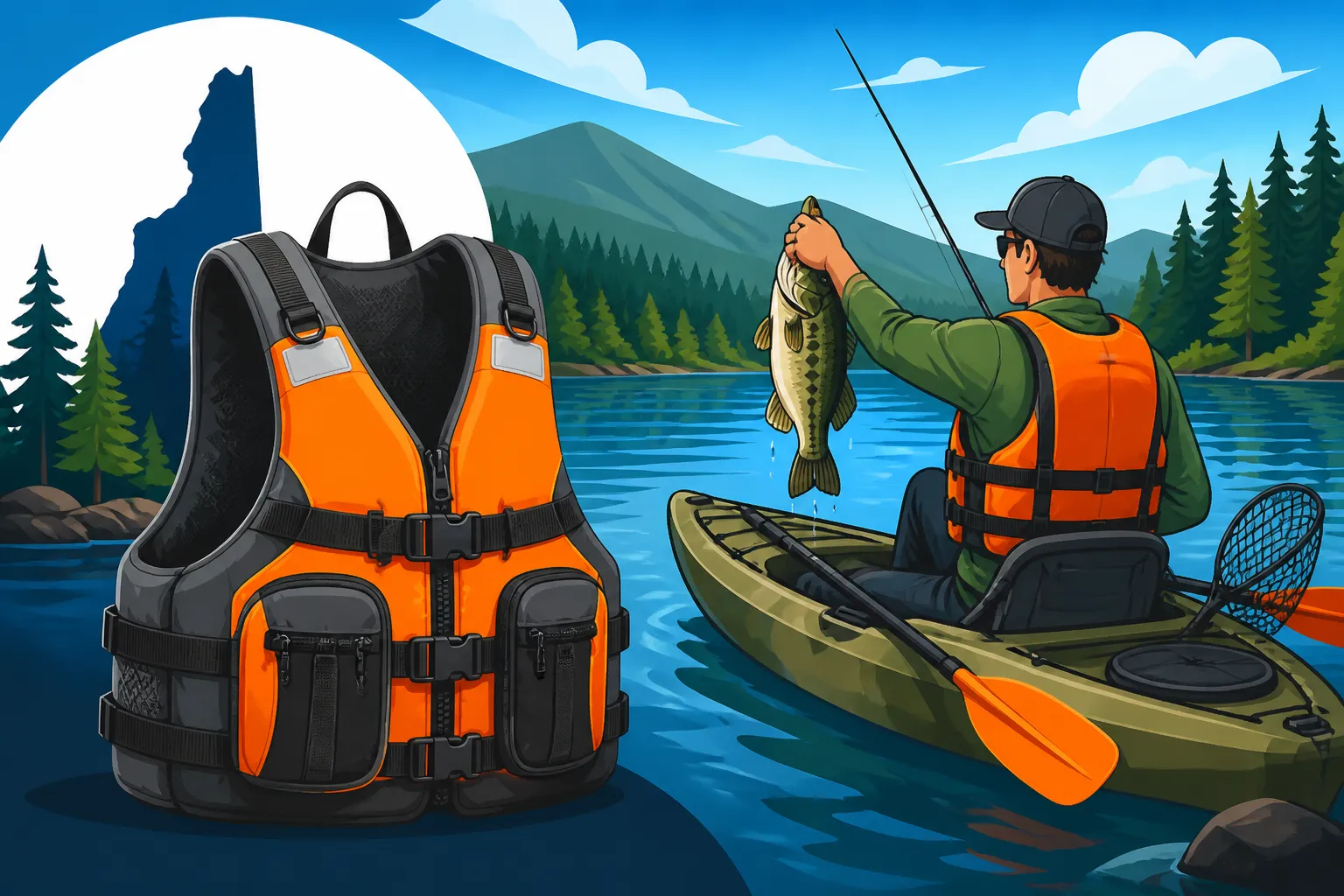
This is arguably the most crucial feature for any serious kayak angler. Traditional life jackets often have thick foam padding across the entire back. While fine for powerboats or standing on shore, this design is a nightmare in a kayak, pushing up against the seat back, riding up your torso, and making you feel like your chin is constantly being nudged. A high-back PFD, however, strategically places the flotation higher on the back, or uses thinner material or mesh in the lower back area. This ensures that the PFD's back panel sits above the top of your kayak seat, allowing you to recline comfortably without any bulk or ride-up. This ergonomic design means you can paddle, cast, and sit for extended periods without discomfort, making those long days fishing the Squam Lakes for largemouth bass far more enjoyable.
Pockets, Attachment Points, and Gear Management
Kayakers, especially those fishing, are always looking for ways to maximize space and keep essential gear accessible. This is where a well-designed kayak fishing PFD truly shines. Look for jackets with multiple pockets, ideally zippered, to securely hold small tackle boxes, pliers, line clippers, or your phone in a waterproof case. Many PFDs feature specific tool pockets with drainage, designed for quick access to your favorite fishing tools. Beyond pockets, attachment points like D-rings, loops, and lash tabs are incredibly useful. You can attach a whistle, a small first-aid kit, a rescue knife, or even a leash for your fishing net. Some PFDs even come with integrated rod holders, which can be a game-changer for switching rods or briefly stowing one while paddling. Bass Pro Shops and Amazon often carry a wide variety of PFDs with these angler-specific features, allowing you to compare different configurations that fit your style. Being able to organize your essentials on your person reduces clutter in your kayak and ensures you have what you need at your fingertips.
Fit and Adjustability: Your Personal Comfort Zone
No matter how many features a PFD boasts, if it doesn't fit correctly, it's essentially useless for comfort and potentially compromised for safety. A good fit means the PFD is snug but not restrictive, allowing for a full range of motion in your arms and shoulders. It shouldn't ride up when you lift your arms, nor should it feel loose enough to shift around as you paddle or lean. Most PFDs feature multiple adjustment straps – at the shoulders, sides, and waist – allowing you to customize the fit to your body shape. When trying one on, make sure to sit down in a chair (or even a kayak, if possible!) to mimic your fishing posture. Lift your arms above your head; if the PFD rides up significantly, it's either too big or not designed correctly for your use. Remember, a properly fitted PFD is one you'll actually want to wear, increasing your safety and enjoyment. It’s like finding the right pair of Best Waders for New Hampshire Trout Streams – comfort makes all the difference for a long day.
Inflatable vs. Foam PFDs: Pros and Cons for Lake Kayak Anglers
The choice between an inflatable PFD and a traditional foam-filled PFD is one of the biggest decisions kayak anglers face. Both have distinct advantages and disadvantages, and the "best" option often comes down to personal preference, the type of fishing you do, and the conditions you expect on New Hampshire's lakes.
The Appeal of Inflatables: Streamlined and Cool
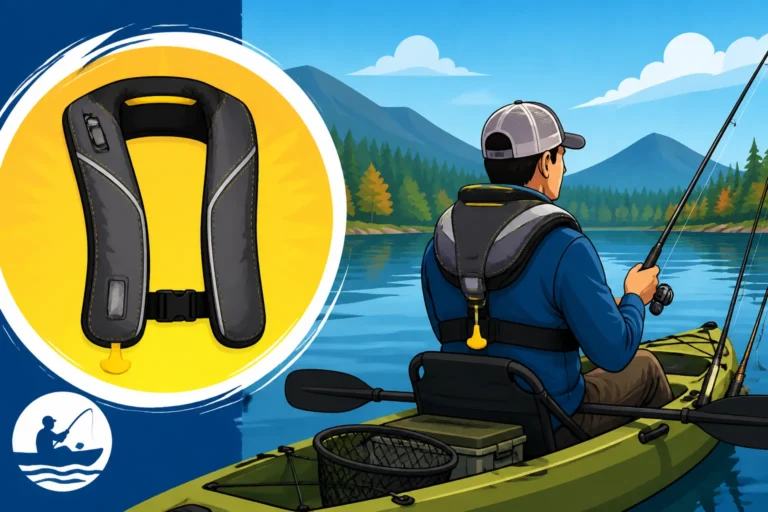
Inflatable PFDs, whether manual or automatic, have gained significant popularity, especially among anglers who prioritize maximum freedom of movement and minimal bulk. Their primary appeal lies in their streamlined profile; they feel less like a bulky vest and more like a minimalist harness or belt. This can be a huge advantage on hot summer days on lakes like Pawtuckaway, where a foam PFD might feel stifling. They come in two main types:
- Manual Inflatables: These require you to manually pull a cord to deploy the CO2 cartridge and inflate the vest. They're great if you want complete control, ensuring it only inflates when you decide. However, this means you must be conscious and able to perform the action.
- Automatic Inflatables: These deploy automatically upon immersion in water. This is a significant safety advantage if you're knocked unconscious or incapacitated. However, they can sometimes inflate accidentally if they get wet from heavy rain or splash, which can be a costly nuisance as they require a re-arming kit to reset.
Both types need regular inspection and maintenance, including checking the CO2 cartridge and ensuring the inflation mechanism is in working order. While incredibly comfortable for active casting and paddling, the initial cost and the ongoing expense of re-arming kits (if deployed) are considerations.
The Reliability of Foam: Always Ready
Foam-filled PFDs are the traditional workhorses of personal flotation. Their biggest advantage is their inherent buoyancy – they are always inflated and ready to go. There are no CO2 cartridges to check, no mechanisms to fail, and no re-arming kits needed. This makes them incredibly reliable and low-maintenance. If you accidentally fall overboard, they instantly provide flotation without any action on your part, which can be crucial in sudden situations or if you hit your head.
Modern foam PFDs, especially those designed for kayak fishing, have come a long way in terms of comfort. They often feature segmented foam panels that conform better to the body, and as discussed, high-back designs to accommodate kayak seats. While they will always be bulkier than an un-inflated inflatable, their robust construction can offer additional protection against bumps and scrapes, and their integrated pockets for gear management are often more extensive. For anglers who value straightforward reliability and don't mind a bit more bulk for the assurance of constant flotation, especially when fishing cold or turbulent waters, foam PFDs are an excellent choice. Best Gear for New Hampshire Trout Fishing often highlights the reliability of traditional gear.
Choosing Based on Your New Hampshire Lake Fishing Style
Your decision between inflatable and foam should really be tailored to your specific New Hampshire fishing habits.
- For the "Active Angler" (frequent casting, long paddles, warm weather): If you're constantly paddling, standing (if your kayak allows), or making many casts in warmer conditions on calm lakes, an inflatable might be your preferred choice. Its minimal bulk allows for unrestricted movement, reducing fatigue and maximizing comfort. Just remember the added cost and maintenance.
- For the "Safety-First Angler" (cold water, rough conditions, solo trips): If you frequently venture onto larger, colder New Hampshire lakes like Winnipesaukee, particularly during spring and fall, or if you often fish alone, a foam PFD offers immediate, unquestionable flotation. The peace of mind that comes from knowing it's always working, without needing activation, can be invaluable. It's also a great choice for beginner kayak anglers or those who prefer fewer moving parts.
- For the "Gear-Heavy Angler": If you like to carry a lot of tools, tackle, and accessories readily accessible on your person, many foam PFDs tend to offer more and larger integrated pockets and attachment points. While some inflatable models have limited pockets, the nature of foam PFDs allows for more robust storage solutions.
Consider the Best Kayak for Winnipesaukee you own; a larger, more stable kayak might make a foam PFD feel less restrictive, while a smaller, sleeker kayak might benefit more from an inflatable.
| Feature | Inflatable PFD | Foam PFD |
|---|---|---|
| Buoyancy | ~22.5 to 35 lbs (when inflated) | ~15.5 to 22 lbs (always active) |
| Comfort/Bulk | Very low bulk, highly comfortable when not inflated | Moderate to high bulk, can feel restrictive if not specialized |
| Activation | Manual (pull cord) or Automatic (water sensor) | Always active, no activation needed |
| Maintenance | Requires regular CO2 cartridge checks, re-arming kits after deployment | Low maintenance, periodic inspection for wear and tear |
| Cost | Higher initial cost, ongoing cost for re-arming kits | Lower initial cost, no recurring costs |
| Storage | Often fewer pockets/attachment points | Typically more pockets/attachment points, especially specialized fishing models |
| Water Type | Excellent for calm to moderate waters | Excellent for all water types, including rough/cold |
| Situational Use | Best for conscious, active users | Best for all users, including those potentially unconscious |
Essential Considerations for New Hampshire Lake Kayak Fishing
Beyond the type of PFD, there are several practical considerations specifically for New Hampshire's unique environment and regulations that should influence your choice. Ignoring these could impact your safety, comfort, and even compliance with the law.
Weather and Water Conditions: Preparing for the Unexpected
New Hampshire weather, especially in the mountains and around our larger lakes, can be famously unpredictable. A sunny, calm morning can quickly turn into a windy, choppy afternoon with a sudden thunderstorm rolling in. This is particularly true on expansive bodies of water like Lake Winnipesaukee or Lake Sunapee.
- Cold Water Immersion: Even in summer, the deep waters of many New Hampshire lakes can be dangerously cold below the surface, and early spring or late fall water temperatures are downright frigid. Should you capsize, a PFD's primary role isn't just to keep you afloat, but to help you conserve energy and stay warm by keeping you out of the water as much as possible. Consider PFDs that offer good coverage or are designed to be worn over layers of clothing that provide thermal protection. The ability to easily re-enter your kayak (or to stay afloat until help arrives) becomes critical in these conditions. Best Time of Year to Fish in New Hampshire highlights these seasonal challenges.
- Wind and Waves: Kayaks are inherently susceptible to wind and waves. On open lakes, strong winds can create whitecaps that can swamp a smaller kayak or make paddling extremely difficult. A well-fitting PFD won't hinder your paddling stroke when you need to fight against the elements, and its reliable buoyancy will be your best friend if you take on water or capsize.
New Hampshire Regulations and Compliance
It's absolutely critical to understand the local rules. New Hampshire boating laws, enforced by the Marine Patrol and local authorities, specifically address PFD requirements. While the general rule is to have a Coast Guard-approved PFD on board for every person, for smaller vessels like kayaks, there are additional considerations.
- Under 13 Requirement: New Hampshire law states that anyone under 13 years of age MUST wear a Coast Guard-approved PFD at all times while underway on a recreational vessel. This is non-negotiable for families fishing with children. Do Kids Need a Fishing License in New Hampshire? also covers age-related regulations.
- Kayak Specifics: For all other ages, while you don't always legally have to wear your PFD in a kayak, having it readily accessible is paramount. However, consider this: if you capsize suddenly, especially in cold water or if you hit your head, having the PFD on is the only way it will save your life. Many experienced kayakers and safety experts strongly recommend wearing your PFD at all times, regardless of the legal minimum. It’s far easier to wear it than to try and put it on in an emergency. Being compliant with these rules means both carrying and wearing your PFD responsibly. Always check the latest New Hampshire Fishing Regulations Explained and New Hampshire Boating Laws for Anglers to ensure you're up to date.
Durability and Maintenance for Longevity
Investing in a quality life jacket means you want it to last. New Hampshire's environment, with its sun, water, and occasional salt (if you venture to Great Bay), can take a toll on gear.
- Materials: Look for PFDs made from durable, quick-drying materials like nylon or polyester. These resist UV degradation better than some cheaper fabrics and can stand up to the abrasion of sitting in a kayak. Quality zippers and buckles are also crucial for longevity.
- Cleaning and Storage: After a day on the water, especially if you've been in saltwater or have gotten it particularly dirty, rinse your PFD with fresh water and hang it to air dry completely out of direct sunlight. Never store it wet, as this can lead to mold and mildew, which degrade the fabric and foam. Store it in a well-ventilated area, away from extreme temperatures and pests. Proper care will ensure your investment lasts for many seasons of Kayak Fishing Techniques for New Hampshire Lakes. Regularly inspect all straps, buckles, and zippers for wear and tear, and for inflatable models, always check the CO2 cartridge and inflation indicator before each outing.
Top Recommendations and Where to Find Them
Choosing the right life jacket often comes down to balancing features, comfort, and budget. While I can't give you exact model numbers that might change, I can certainly describe the types of options you'll find at various price points and where to look for them. Remember, the best PFD is the one you'll actually wear!
Entry-Level Options for the Casual Angler
If you're just getting into kayak fishing or only head out a few times a year on calm, small ponds in New Hampshire, an entry-level PFD can be a great starting point. These will typically be foam-filled, Type III PFDs that prioritize basic safety and comfort over extensive features.
- What to expect: You'll find models with a more basic, but still functional, high-back design to accommodate kayak seats. They might have one or two simple pockets, enough for a small box of lures or your keys. The focus here is on reliable flotation and basic adjustability. The materials will be durable, but perhaps not as lightweight or quick-drying as higher-end options.
- Where to find them: Major outdoor retailers are your go-to. You'll find many solid options from brands like Old Town and NRS at stores like Bass Pro Shops. They'll have a range of sizes to ensure a proper fit. Online, platforms like Amazon also offer a vast selection of entry-level PFDs, often with customer reviews that can help guide your decision. They are perfectly adequate for a leisurely day on a quiet spot like Silver Lake or Northwood Lake.
Mid-Range for Serious Enthusiasts
For the angler who spends significant time on New Hampshire's lakes, venturing out frequently and for longer durations, a mid-range PFD offers a significant upgrade in comfort, features, and durability without breaking the bank.
- What to expect: These PFDs usually offer more advanced high-back designs, sometimes with padded shoulder straps and more refined adjustability systems for a truly custom fit. You'll see more robust pocket configurations, often including specialized tool pockets with drainage, multiple D-rings, and maybe even a dedicated attachment point for a VHF radio or a hydration pack. The materials will generally be lighter, more breathable, and quicker-drying, enhancing comfort on longer trips. You might also start seeing some entry-level inflatable PFDs in this price range, offering that streamlined profile for active fishing.
- Where to find them: Again, Bass Pro Shops is an excellent resource, often carrying specific kayak fishing PFDs from brands like Onyx, Kokatat, or Astral. Online, Amazon continues to be a strong contender, offering a wider array of brands and models. This tier of PFD is ideal for someone fishing larger, more demanding waters regularly, such as the Merrimack River or even some of the more active areas of Winnipesaukee. These PFDs allow you to carry more of your essential Best Tackle for New Hampshire Smallmouth Bass directly on your person.
Premium Choices for All-Day Comfort and Features
If you're a dedicated kayak angler who demands the absolute best in comfort, innovation, and specialized features, then premium PFDs are worth the investment. These are designed for all-day wear, often in challenging conditions, and integrate seamlessly with your fishing style.
- What to expect: Expect top-tier materials that are exceptionally lightweight, breathable, and incredibly durable, often with advanced moisture-wicking properties. The fit will be highly anatomical, with numerous adjustment points to create a "second skin" feel. Storage will be extensive and intelligently organized, perhaps with multiple chest pockets, a large rear pocket for a hydration reservoir, and specialized features like a retractable lanyard or a built-in pliers holder. This category is where you'll find the most sophisticated inflatable PFDs, including those with advanced automatic inflation systems and super-compact designs. These PFDs are engineered for maximum performance and minimize fatigue, even during grueling tournaments or multi-day kayak camping and fishing trips.
- Where to find them: Specialty paddling and fishing shops, both brick-and-mortar and online, are great places to explore premium options from brands like Astral, Kokatat, NRS, and Mustang Survival. Bass Pro Shops will carry some of the higher-end options from leading fishing PFD manufacturers. While Amazon also lists these, sometimes a specialized dealer can provide more in-depth advice on fitting and features. These PFDs are made for the angler who wants every advantage when pursuing trophy fish in places like the Connecticut River or spending long days targeting Lake Winnipesaukee Lake Trout Fishing.
No matter your budget or fishing style, remember that the most important thing is to choose a PFD that fits well, is comfortable enough to wear all day, and provides the necessary flotation for your safety. Happy fishing, and stay safe out there on New Hampshire's beautiful lakes!
Disclaimer
This article is for general informational purposes only and does not constitute professional advice. Laws, prices and regulations vary by location and change over time. Consult a qualified professional for guidance on your specific situation.