Best kayak cart for portaging between ponds
Dragging your fishing kayak from one hidden New Hampshire pond to another can really take a toll on your back and your gear. Those short carries, often just a few hundred yards, can feel like miles when you're lugging a heavy boat solo, especially with all your tackle. This guide is all about making those treks easier and more enjoyable by helping you find the perfect kayak cart for portaging between our beautiful, sometimes hard-to-reach, waters.
Why a Kayak Cart is a Game Changer for New Hampshire Anglers
If you've spent any time exploring the myriad of ponds and smaller lakes dotted across the Granite State, you know the feeling. You've just finished a fantastic morning of catching bass on one pond, but you can see another, seemingly pristine, body of water just a short walk through the woods or across a dirt road. The thought of rigging up your vehicle, driving a few minutes, finding another parking spot, and then launching all over again can be exhausting. More often than not, it means you just stay put, missing out on what could be the next great fishing adventure. This is where a kayak cart steps in, transforming a daunting task into a manageable part of your day.
The Struggle of Manual Portaging
Let's be honest, trying to carry a modern fishing kayak, especially a sit-on-top packed with gear, is no small feat. These boats are designed for stability and storage, not for being hoisted onto a shoulder. You end up awkwardly dragging it, scraping the hull over rocks and roots, or attempting a clumsy two-person carry that often ends with someone's back aching. The uneven terrain, narrow trails, and sometimes muddy or sandy paths typical of New Hampshire's backcountry fishing spots only exacerbate the problem. You arrive at your destination already tired, your energy zapped before you've even made your first cast. This physical toll isn't just a mood killer; it can genuinely limit how many spots you're willing to explore in a day. It can also lead to frustration when you're forced to leave a promising area because the thought of getting your kayak out again is just too much.
Protecting Your Gear and Your Back
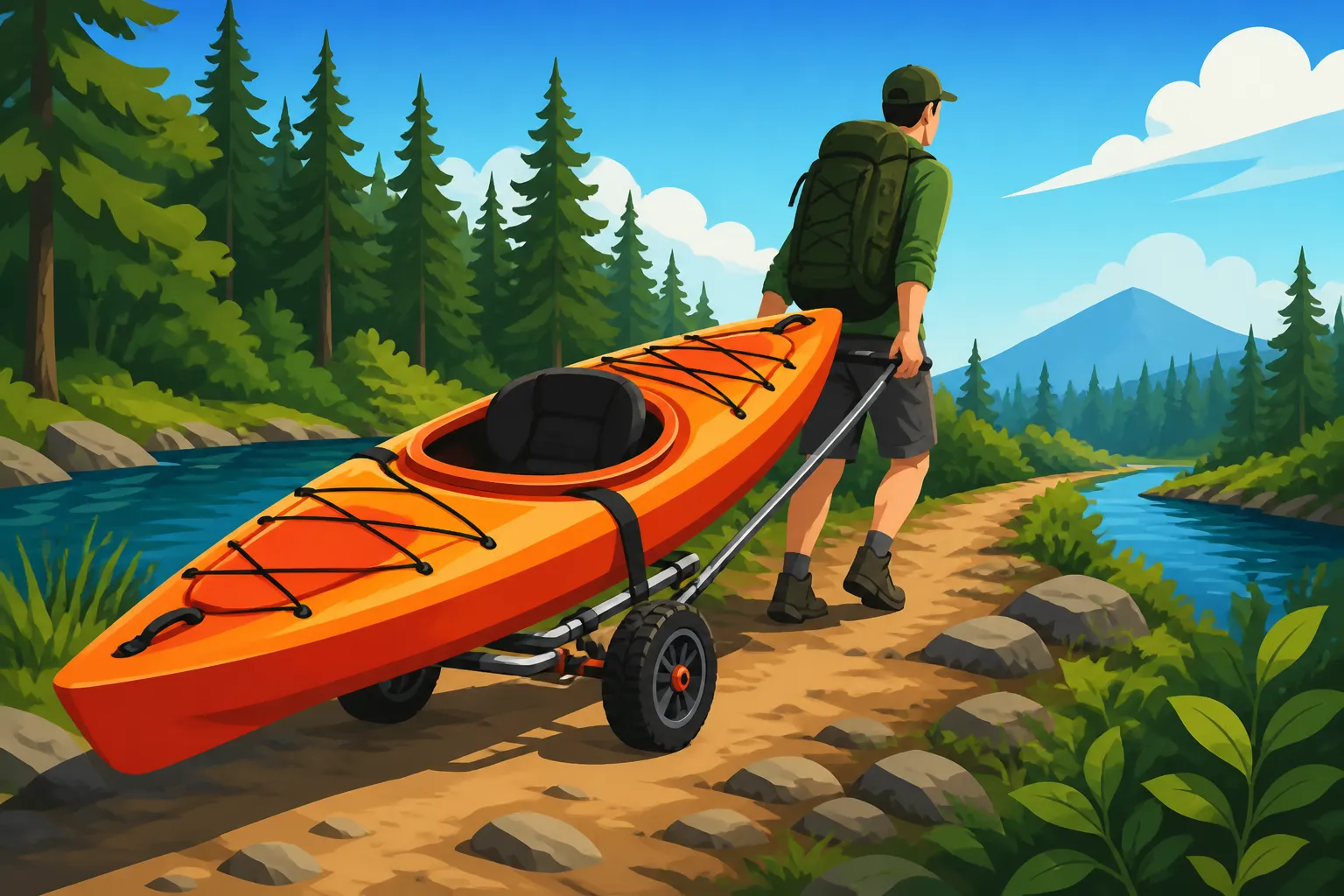
Beyond the sheer exhaustion, manually moving a kayak across land poses significant risks to both your expensive equipment and your own body. Dragging a kayak across asphalt, gravel, or rocky trails can cause severe abrasion to the hull, compromising its integrity and lifespan. One wrong snag on a sharp rock or stump could lead to a costly repair or even ruin your day on the water. A good kayak cart elevates your boat, keeping it safe from these hazards. It ensures your investment in a quality kayak, like those discussed in Best Kayaks for New Hampshire Fishing, is protected for years to come. More importantly, it protects you. Chronic back pain is a real concern for many anglers, and repeatedly lifting and dragging heavy loads is a surefire way to aggravate or develop such issues. A cart allows you to simply roll your kayak, distributing the weight evenly and turning a strenuous lift into a leisurely stroll.
Expanding Your Fishing Horizons
Perhaps the most exciting benefit of a kayak cart is the freedom it grants. New Hampshire is full of hidden gems—small, remote ponds and lakes that are often inaccessible by traditional boat ramps but are perfectly suited for kayak exploration. Many of these waters hold incredible fishing opportunities for species like brook trout or even trophy bass, precisely because they see less pressure. With a reliable kayak cart, a short carry of a few hundred yards or even a half-mile across a logging road is no longer a barrier. Suddenly, those "impossible" ponds are within reach. Imagine hitting a productive spot on one lake, then easily portaging to an adjacent pond for a completely different angling experience. You can effectively link together multiple fishing spots, turning a single-pond outing into a multi-water adventure, discovering the Best Remote Backcountry Trout Ponds in New Hampshire or exploring areas previously thought unreachable.
Key Features to Look for in a New Hampshire Kayak Cart
Choosing the right kayak cart isn't a one-size-fits-all decision, especially when you consider the diverse landscapes and fishing opportunities New Hampshire offers. From sandy shores on Lake Winnipesaukee to rocky riverbanks along the Pemigewasset, and even muddy trails leading to remote ponds, your cart needs to be up to the task. Paying attention to specific features will ensure you get a cart that truly performs when you need it most.
Wheel Type and Terrain Suitability
The wheels are arguably the most critical component of any kayak cart, as they dictate where your cart can effectively go.
- Pneumatic (Air-Filled) Tires: These are fantastic for soft, uneven surfaces like deep sand (common on beach launches or lake shores), mud, and loose gravel. They offer excellent shock absorption, making for a smoother ride over roots and rocks. The downside is that they can go flat, and some require more maintenance. If your typical portage involves crossing a sandy beach to get to the water or traversing muddy tracks, these are your best bet. Think about the shores of Silver Lake or some of the access points around Great Bay where the ground can be quite soft.
- Solid Rubber (Puncture-Proof) Wheels: These wheels are virtually indestructible and require no maintenance. They excel on harder, rockier terrain, pavement, and firm dirt paths. They won't go flat if you roll over a sharp rock or thorn. However, they don't offer the same floatation on soft ground and can sink into deep sand or mud, making your effort much harder. If you're primarily moving your kayak over gravel roads, paved paths, or firmly packed dirt trails, such as those leading to some state park ponds, solid wheels might be ideal.
- "Balloon" Wheels: A specialized type of pneumatic tire, these are extra-wide and low-pressure, specifically designed to glide over very soft sand without sinking. They're a dream for true beach access but are often overkill and bulkier for inland trails.
Consider the common ground you'll be covering. If you're venturing to multiple spots with varied terrain, a cart with robust pneumatic tires might offer the best all-around performance.
Frame Material and Durability
The frame of your kayak cart needs to be strong enough to support your kayak, often laden with gear, and resilient enough to withstand the elements.
- Aluminum: Lightweight and corrosion-resistant, aluminum frames are popular for their ease of transport and durability, particularly if you're frequently in and around water, especially saltwater. They won't rust, making them a great choice for coastal New Hampshire fishing or if your cart will often get wet.
- Stainless Steel: Extremely strong and highly resistant to corrosion, stainless steel frames offer superior durability. They can be heavier than aluminum but are often preferred for larger, heavier kayaks, like a fully rigged Best Kayak for Winnipesaukee fishing machine. They might cost a bit more but offer peace of mind.
- Powder-Coated Steel: While strong, regular steel frames benefit greatly from a powder coating for rust resistance. However, if the coating chips or scratches, rust can eventually set in, especially in New Hampshire's humid summers or if exposed to road salt during transport.
Beyond the material, look at the overall construction. Welded joints are generally stronger than bolted assemblies. A higher weight capacity rating on the cart gives you a buffer, ensuring it can handle not just your kayak, but also your tackle, cooler, and other essentials.
Securing Your Kayak to the Cart
No matter how great your wheels or frame are, a cart is useless if your kayak slips off halfway through a portage. Effective securing mechanisms are vital for stability and safety.
- Cam Buckle Straps: These are the most common and versatile method. Look for long, durable straps with sturdy cam buckles that allow for easy tightening and quick release. The straps should be threaded around the kayak and the cart frame, ensuring a snug fit. It's often helpful to have multiple attachment points or even a second strap for very long or uneven kayaks.
- Scupper Posts: Many sit-on-top kayaks have scupper holes, and some carts are designed with posts that fit directly into these holes. This offers a very secure, integrated fit that prevents lateral movement. However, it's crucial to ensure the posts match your kayak's scupper hole diameter and spacing. Misaligned posts or excessive weight can sometimes stress or even damage the scupper holes over time, especially with heavier kayaks.
- Rubber Grips/Pads: The contact points between the kayak and the cart frame should have soft, non-slip rubber padding. This protects your hull from scratches and helps prevent the kayak from sliding around, particularly when navigating sloped terrain or rough patches.
Ultimately, the goal is a stable, secure connection that allows you to move your kayak with confidence, whether you're rolling it across a smooth path or carefully maneuvering it over a rocky incline. Don't underestimate the importance of a good strapping system; it’s key to making your portage truly effortless and worry-free.
Different Types of Kayak Carts for Various Scenarios
Just like fishing kayaks themselves come in different designs for different purposes, kayak carts also vary in their fundamental construction. Understanding these differences will help you select a cart that not only fits your kayak but also suits your preferred method of fishing and the types of water bodies you frequent in New Hampshire. Each design has its own set of advantages and potential drawbacks, making the "best" choice highly personal.
Scupper Hole Carts (Pros and Cons)
Scupper hole carts are designed specifically for sit-on-top kayaks, which feature self-draining holes through the hull. These carts utilize two posts that insert directly into a pair of scupper holes, essentially lifting the kayak from its center of gravity.
Pros:
- Simplicity and Speed: They are incredibly easy and fast to attach. Just line up the posts, drop your kayak onto them, and you're ready to roll. There's no fumbling with straps or trying to find the perfect balance point. This can be a huge time-saver when you're moving between small ponds or making quick adjustments to your launch spot.
- Compact Storage: Many scupper carts have removable wheels and foldable frames, making them very compact. They can often be stored inside the kayak's hull or strapped onto the deck while you're fishing, keeping them out of the way. This is ideal if you're paddling long distances and need to carry the cart with you for a future portage.
- Secure Fit: When properly matched to your kayak, scupper carts offer a very snug and stable fit. The kayak becomes an extension of the cart, minimizing wobble and movement, which is great for navigating uneven terrain.
Cons:
- Kayak Specificity: This is the biggest drawback. Scupper carts only work with sit-on-top kayaks that have appropriately spaced and sized scupper holes. If you have a sit-in kayak or your scupper holes don't match, this type of cart is useless.
- Potential for Hull Stress: While generally safe, if a heavy kayak is loaded unevenly or pulled over very rough terrain, the scupper posts can put stress on the scupper holes, potentially leading to cracks or deformation over time. Anglers with particularly heavy fishing kayaks, especially those packed with gear for a day out on Lake Winnipesaukee, should be mindful of this.
- Obstruction in Water: If you leave the cart in the scupper holes while launching or retrieving, it can sometimes drag or create resistance, particularly in shallow water.
Strap-Style Carts (Pros and Cons)
Strap-style carts, also known as "bunk" or "frame" carts, are arguably the most versatile type. They feature a frame with two "bunks" or pads that cradle the kayak, secured by one or more straps that wrap around the hull and the cart.
Pros:
- Universal Compatibility: This is their standout feature. Strap-style carts work with virtually any kayak, whether it's a sit-on-top, sit-in, or even a canoe. This makes them a great choice if you own multiple types of boats or frequently paddle with friends who have different kayaks.
- Even Weight Distribution: Because the kayak rests on a broader surface (the bunks) and is secured by straps, the weight is distributed more evenly across the hull. This reduces stress points compared to scupper carts and is generally safer for your kayak's integrity, especially with heavier models or those with thinner hulls.
- Adjustability: Many strap carts are adjustable, allowing you to change the width of the bunks to perfectly cradle different kayak hull shapes. This helps create a stable platform no matter if you're hauling a sleek touring kayak or a wider fishing platform.
Cons:
- Slower Setup: Attaching a strap-style cart takes a bit more time and effort. You need to position the kayak on the cart, thread the straps, and tighten them securely. This can be a minor inconvenience if you're frequently portaging short distances.
- Less Compact Storage: While many models fold down, strap carts often remain bulkier than scupper carts due to their larger frame. Storing them inside smaller kayaks during paddling can be challenging, though many can be strapped to the deck.
- Potential for Slippage: If the straps aren't tightened correctly or if the kayak's hull is particularly slick, there's a slight chance of the kayak shifting or slipping, especially on very uneven terrain. Using high-quality straps and ensuring they are genuinely tight is crucial.
Frame Carts and Specialty Carts
Beyond the two main categories, there are also more specialized frame carts designed for specific needs.
- Heavy-Duty Frame Carts: These are often larger, more robust versions of strap-style carts, built with stronger materials and higher weight capacities. They are ideal for extremely heavy fishing kayaks, tandem kayaks, or even small johnboats that need to be moved short distances. They often feature larger wheels to handle the extra load.
- End Carts: These carts support just one end of the kayak, requiring you to lift the other end and pull it like a wheelbarrow. They are typically compact and easy to store but require more physical effort from the user, making them less ideal for long portages or very heavy kayaks.
- Canoe Carts: While similar to strap-style kayak carts, canoe carts are usually wider and designed to fit the deeper hull of a canoe, often with a different strapping mechanism to accommodate the open top. If you paddle a canoe in New Hampshire's rivers, a dedicated canoe cart will perform much better than a generic kayak cart.
Consider your primary kayak, its weight, and the frequency and distance of your portages when deciding between these cart types. Each has its niche, and the right choice will significantly enhance your New Hampshire fishing adventures.
Choosing the Right Cart for Your New Hampshire Adventures
With so many options out there, narrowing down the perfect kayak cart can feel a bit overwhelming. But by focusing on a few key factors specific to your individual kayak and the unique New Hampshire landscapes you plan to explore, you can make an informed decision that will serve you well for many seasons to come. It’s all about matching the tool to the task, and our diverse waters demand a thoughtful approach.
Considering Your Kayak's Weight and Shape
The first and most crucial step is to know your kayak. How much does it weigh, not just empty, but fully loaded with your rods, tackle box, cooler, and other gear? A small, lightweight recreational kayak that weighs 40 pounds is a vastly different proposition from a 100-pound beast of a fishing kayak, especially once you've loaded it up for a day targeting bass. A cart's stated weight capacity is a critical number to check. Always err on the side of caution and choose a cart with a capacity well above your kayak's maximum loaded weight to ensure safety and durability.
Next, consider your kayak's shape.
- Sit-on-top kayaks with scupper holes might be candidates for scupper carts, but remember the potential for stress on the holes with heavier boats. For a fully rigged Best Kayak for Winnipesaukee that tips the scales, a robust strap-style cart might offer better hull protection and stability.
- Sit-in kayaks, by their nature, don't have scupper holes that can be used for a cart. For these, a strap-style or frame cart that cradles the hull is the only practical option. Look for carts with adjustable bunks that can conform to the V-shape or flatter bottom of your specific sit-in model.
- Wider fishing kayaks generally benefit from carts with a wider base and stable bunks to prevent tipping. Conversely, a very narrow touring kayak might sit better on a cart with adjustable, closer-set supports.
Don't forget the length of your kayak. While most carts are designed to handle standard lengths, an exceptionally long kayak might require you to be more precise with your balance point on the cart to prevent the ends from dragging.
Matching the Cart to New Hampshire's Varied Terrain
New Hampshire is a state of incredible natural beauty, which also means incredibly varied terrain. A cart that's perfect for a short carry over pavement to a small pond might be utterly useless when trying to navigate a rocky, rooted path to a remote trout stream.
- Sandy Shores: If your portages often involve launching from sandy beaches, like those found on some of our larger lakes or along the seacoast, carts with large, wide pneumatic "balloon" tires will be your best friend. These tires distribute weight over a larger surface area, preventing them from sinking into soft sand.
- Rocky Trails and Gravel Roads: For the rugged, rocky trails of the White Mountains or the gravel access roads leading to many of our less-developed fishing spots, solid, puncture-proof wheels or heavy-duty pneumatic tires are ideal. They can withstand sharp rocks and roots without going flat. A sturdy frame with good ground clearance is also a plus here.
- Muddy Paths and Wet Ground: After a good rain, many trails leading to ponds can become muddy. Pneumatic tires again shine here, offering better traction and flotation. Corrosion-resistant materials like aluminum or stainless steel for the frame are also important if your cart will frequently be exposed to mud and water.
- Paved or Smooth Paths: If your typical portage is across a smooth, paved trail or a short grassy section, almost any decent cart will work. However, you still want comfortable handling and a secure fit for your kayak.
Think about your usual stomping grounds. Do you stick to well-maintained state park access points, or do you bushwhack to those hidden gems? Your cart's wheels and frame construction should be chosen to handle the toughest conditions you anticipate encountering regularly.
Budget and Storage Considerations
Finally, consider your budget and how you plan to store and transport your cart. Kayak carts range widely in price, from entry-level models that are perfectly functional for occasional use to premium, feature-rich carts designed for heavy-duty, frequent adventures.
- Budget-Friendly Options: You can find perfectly adequate carts that will handle most light to moderate use cases without breaking the bank. These are great for new anglers or those who only portage infrequently. Many anglers find good value and a wide selection from online retailers like Amazon, often with plenty of user reviews to help guide their choice.
- Premium Carts: Higher-end carts often boast superior materials (e.g., marine-grade aluminum, stainless steel), advanced wheel designs, higher weight capacities, and more refined attachment systems. If you're a serious angler who portages often, hauls a heavy kayak, or demands maximum durability, investing in a premium cart might be worthwhile. Retailers like Bass Pro Shops often have a range of these more robust options, allowing you to compare quality in person.
Storage is another practical consideration.
- Foldability: Many carts are designed to fold flat or have removable wheels, making them easier to stow in your car trunk, garage, or even inside your kayak's hull or strapped to its deck while you're on the water. This is especially important if you're exploring Best Kayak Fishing Spots in New Hampshire that require you to paddle away from your launch point.
- Weight of the Cart Itself: A lightweight cart is easier to lift and store, and if you plan to carry it with you in your kayak, every pound matters.
By weighing these factors—your kayak's specifics, New Hampshire's diverse terrain, and your budget/storage needs—you can confidently select a kayak cart that will enhance your fishing experiences, allowing you to access more water with less effort. Whether you're exploring the remote ponds of the North Country or moving between coves on a large lake, the right cart makes all the difference.
Disclaimer
This article is for general informational purposes only and does not constitute professional advice. Laws, prices and regulations vary by location and change over time. Consult a qualified professional for guidance on your specific situation.