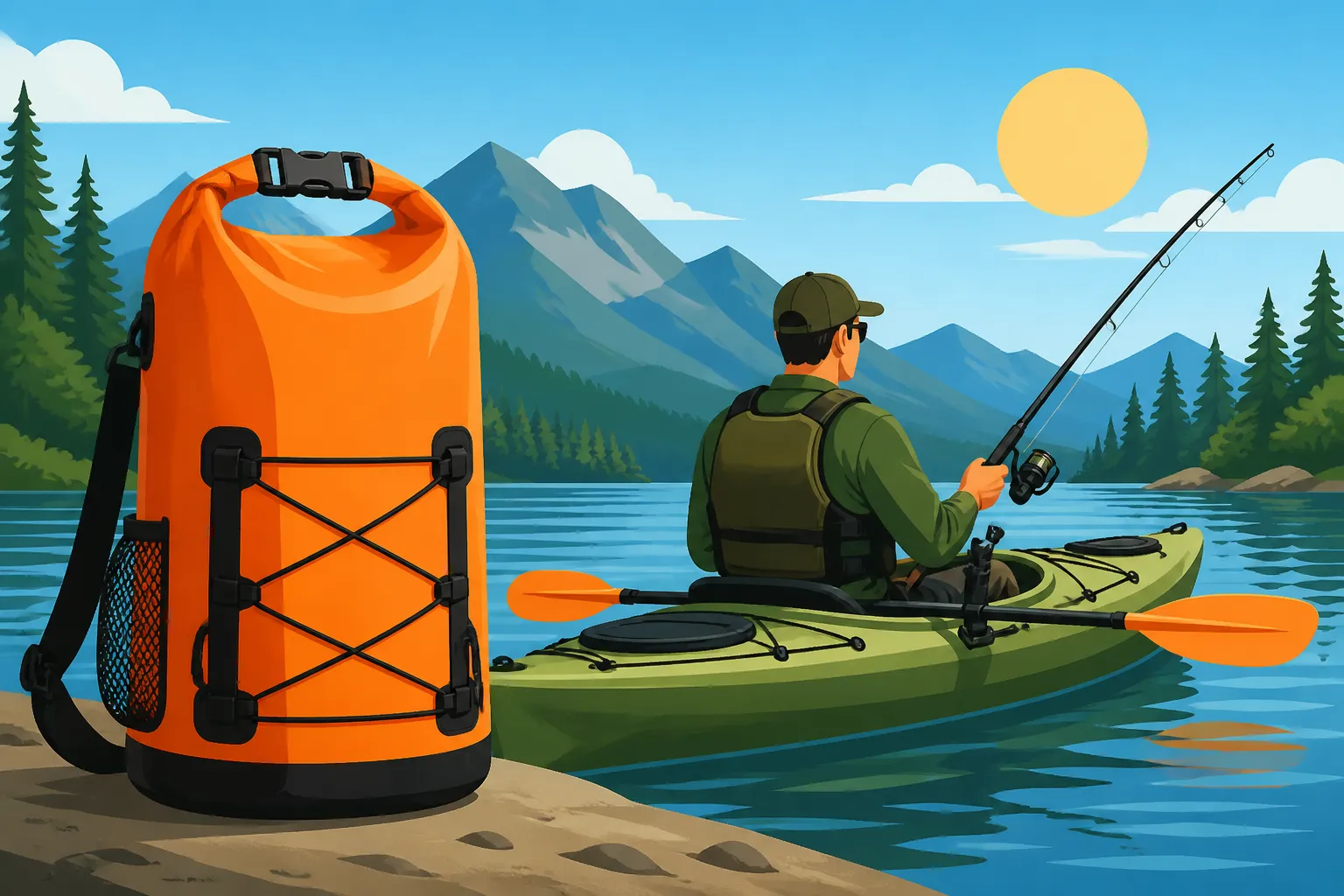
Best dry bag size for a full day kayak trip
If you've ever found yourself paddling across a New Hampshire lake, worried sick about your phone getting soaked, or struggling to fit your lunch, extra layers, and tackle into a flimsy backpack, you know the frustration. Kayak fishing in our beautiful state offers incredible serenity, but it also means dealing with water, and keeping your essentials dry is paramount. This guide is all about helping you figure out the absolute best dry bag size for your full-day kayak fishing adventures, ensuring everything stays safe and dry.
Understanding Your Kayak Trip Needs
Before you even think about dry bag sizes, it's crucial to take a moment and honestly assess what your "full day" actually entails. A full day on a small, calm pond is very different from a full day battling currents on the Connecticut River or crossing the expanse of Lake Winnipesaukee. What you plan to bring, the conditions you might face, and even the type of kayak you paddle all play a significant role in determining your ideal dry bag setup.
Essential Gear for a Full Day Trip
Consider everything you absolutely cannot do without. For many New Hampshire anglers hitting the water for a full day, this list goes beyond just your rod and reel. You'll likely need food and drinks to sustain you through hours of casting, especially if you're out from dawn till dusk targeting smallmouth bass. An extra layer of clothing, perhaps a rain jacket or a fleece, is a must-have, given how quickly New England weather can change, even on a sunny summer day. Don't forget your wallet, keys, phone, and any other critical personal items that absolutely must stay dry. Think about your first aid kit, sunscreen, bug spray, and maybe even a small tackle box with essential lures or flies, especially if you're traveling light without a dedicated tackle storage system on your kayak.
You might also have specific fishing electronics, like a portable fish finder, that need protection, or a camera to capture those stunning sunrise shots over Squam Lake. Remember, these aren't just "nice-to-haves"; they're often what make a full day on the water comfortable, safe, and productive. Trying to cram all these things into a standard backpack just won't cut it when a rogue wave or an unexpected splash could ruin your day, or worse, your expensive electronics. This is where a dedicated dry bag really shines, offering peace of mind so you can focus on the fishing.
Considering New Hampshire Weather and Conditions
New Hampshire's weather is famously unpredictable. A calm, sunny morning can quickly turn into a windy, choppy afternoon with a sudden downpour. When you're out on the water, you're exposed. This means your dry bag needs to protect against more than just an accidental splash. It needs to be capable of withstanding prolonged rain, spray from waves, and potentially even being submerged if your kayak were to capsize (though we always hope that doesn't happen!). The size you choose might even be influenced by the season. A summer trip might require less bulky clothing, allowing for a slightly smaller bag for layers, while a spring or fall outing could demand significant extra insulation like a puffy jacket and wool socks, pushing you towards a larger capacity.
Think about the specific waterways you frequent. Are you paddling calm rivers like sections of the Pemigewasset, or are you venturing onto the larger, often wind-swept lakes like Winnipesaukee or Newfound Lake? Larger bodies of water generally mean more potential for waves and spray, requiring more robust waterproofing and potentially more storage for emergency gear. Planning for the worst-case scenario, even if you never encounter it, is a smart move for any angler. Having your emergency supplies, spare clothes, and communication devices safe and dry could make all the difference.
Kayak Type and Storage Capacity
Not all kayaks are created equal when it comes to storage. Some fishing kayaks come equipped with large, watertight hatches or generous tankwells that can accommodate bigger bags. Others, especially smaller recreational kayaks or sit-inside models, might have limited accessible storage space. Before you buy a dry bag, take a good look at your kayak. Where will the bag sit? Will it be secured in a bungee-covered tankwell, tucked into a bow or stern hatch, or strapped to the deck? The physical dimensions of your storage areas will dictate the maximum size and shape of the dry bag you can comfortably use.
A long, slender dry bag might fit better in a narrow hatch, while a wider, shorter one could be perfect for a tankwell. You also need to consider accessibility. For a full-day trip, you'll likely need to access food, water, or a specific piece of tackle throughout the day. A bag that's too large or awkwardly shaped might be a nightmare to get into and out of while on the water. Many anglers find that multiple smaller dry bags are more practical than one giant one, allowing them to organize items and easily access just what they need without exposing everything else to the elements. This also distributes weight better and makes loading and unloading a breeze. You want your gear to complement your Best Kayaks for New Hampshire Fishing, not hinder it.
Dry Bag Sizing: The Goldilocks Principle
Finding the "just right" dry bag size is a bit like Goldilocks trying out chairs and beds. Too small, and you'll be leaving essential gear behind or risking it to the elements. Too big, and you'll have a bulky, unwieldy bag taking up valuable space, flopping around, and potentially becoming a nuisance when you're trying to cast. The goal is to match the dry bag's capacity to the actual volume of the gear you need to carry for a comfortable and safe full day on the water.
Common Dry Bag Sizes and Their Uses
Dry bags come in a wide range of sizes, typically measured in liters. Here's a general breakdown to give you an idea of what different capacities are usually good for on a kayak fishing trip:
| Dry Bag Size (Liters) | Typical Contents for Kayak Fishing (Full Day) | Ideal Scenario |
|---|---|---|
| 5-10 Liters | Phone, wallet, keys, small first aid kit, camera, sunscreen, GPS, headlamp, snacks, small tackle box. | Protecting absolute essentials; often used as a "grab bag" or for electronics. |
| 15-20 Liters | All 5-10L items PLUS light rain jacket, light fleece, lunch, extra water bottle, larger tackle box. | Single person, mild weather, minimalist packing for a full day. |
| 25-30 Liters | All 15-20L items PLUS heavier layers, small cooking stove/fuel, additional food, small camp chair (if deflatable). | Single person, cooler weather, more comfort items, potentially overnight. This is often a sweet spot for a comprehensive full day. |
| 35-40 Liters | All 25-30L items PLUS bulkier layers, small sleeping bag (for overnight), larger food supply, small tent. | Larger gear for a single person, more robust cold-weather layers, or minimalist overnight trips. |
| 50+ Liters | All 35-40L items PLUS larger overnight gear, extensive food, or communal gear for multiple people. | Multi-day trips, carrying bulky camping gear, or sharing a bag among several people. |
For a full-day kayak trip, most anglers will find themselves looking in the 15-liter to 30-liter range. A 20-liter bag is a very common and versatile choice, offering enough space for all your critical personal items, a hearty lunch, and a solid extra layer or rain gear. If you're heading out in chillier weather and need bulkier layers, or just like to bring more comfort items, a 25-30 liter bag gives you that extra wiggle room without becoming overly cumbersome. Consider what you’d put in a bag for Best Ice Fishing Gear for New Hampshire in the winter, and adjust down for warmer weather.
The "What Fits" Test
The best way to figure out your ideal dry bag size is to do a dry run (pun intended!). Gather all the gear you plan to take on a typical full-day kayak fishing trip. Lay it out. Then, try to envision packing it into different sized dry bags. Better yet, if you can, borrow a few different sizes from friends or head to a local outdoor store like Bass Pro Shops or even browse options on Amazon to get a feel for the capacities. Physically putting your items into a bag, even if it's just a regular backpack, can help you visualize the space.
Remember that dry bags, especially roll-top ones, lose some usable volume at the top because you need to roll them down at least three times for a proper seal. So, a 20-liter bag won't perfectly hold 20 liters worth of solid, uncompressible items. Always factor in that lost space for the roll-down closure. If you find yourself consistently stuffing a 20-liter bag to its absolute maximum, barely able to get the rolls closed, you're better off sizing up to a 25 or 30-liter bag. Overstuffing a dry bag can compromise its waterproof seal and put undue stress on the material. You want enough space to pack comfortably and confidently.
The Benefits of Layering Dry Bags
Sometimes, one large dry bag isn't the most efficient or convenient solution. Many seasoned kayak anglers actually prefer to use several smaller dry bags, each dedicated to a specific category of gear. For example, a small 5-liter bag might hold just your phone, keys, and wallet – your absolute "must-not-get-wet-ever" items. A 10-liter bag could hold your lunch and snacks. And a 15-20 liter bag could be for your extra layers and a small first aid kit. This "bag-within-a-bag" or "multiple small bags" approach offers several key advantages.
Firstly, it helps with organization. Instead of rummaging through one large bag to find your sunscreen, you know exactly which smaller bag it's in. Secondly, it reduces risk. If you open one bag to grab a snack, only that small bag's contents are exposed to the elements, minimizing the chance of water getting into your other essentials. Thirdly, it can make packing your kayak more flexible. You can tuck smaller bags into various nooks and crannies, or distribute weight more evenly, which can be particularly helpful for smaller kayaks or those with limited storage. When you're looking for Best Kayak for River Fishing in New Hampshire, you'll appreciate how easily a system of smaller bags can be adapted to tight spaces or odd compartments. This strategy helps ensure that if one bag accidentally gets compromised, not all your gear is ruined.
Features to Look for Beyond Size
While size is crucial, a dry bag is more than just its liter capacity. The materials it's made from, how it seals, and how you can secure it to your kayak are equally important considerations. These features contribute significantly to the bag's durability, reliability, and overall user-friendliness on your New Hampshire fishing adventures.
Material and Construction Matters
The durability and waterproof integrity of a dry bag largely depend on its material and how it's constructed. Most quality dry bags are made from PVC (polyvinyl chloride) or TPU (thermoplastic polyurethane).
-
PVC Dry Bags: These are often more affordable and incredibly tough. They tend to be a bit heavier and stiffer, especially in colder temperatures. PVC is excellent for abrasion resistance, making it a good choice if your bag will be frequently dragged over rocks or stored in a high-wear area of your kayak. They are usually welded together, creating strong, waterproof seams. For many anglers looking for a reliable, no-frills option, PVC dry bags are a fantastic choice available at retailers like Bass Pro Shops.
-
TPU Dry Bags: Generally lighter, more flexible, and often more expensive than PVC bags. TPU offers good puncture resistance and remains pliable in colder weather, which can be a real plus when you're fishing New Hampshire's shoulder seasons. They often have a softer feel and pack down a bit smaller when empty. While perhaps not as overtly "heavy-duty" in terms of abrasion as some thick PVC options, their flexibility and lighter weight make them appealing for those who prioritize ease of packing and reduced bulk.
Regardless of material, look for bags with welded seams rather than stitched seams. Stitched seams, even if taped, can eventually leak under pressure or with age. Welded seams create a solid, continuous waterproof barrier that is much more reliable for serious water exposure. Also, check the thickness of the material, often measured in denier. Higher denier ratings (e.g., 500D or 700D) indicate a thicker, more durable fabric, which is great for longevity but adds weight.
Closure Systems: Roll-Top vs. Zippers
The type of closure system is paramount for a dry bag's performance. The two most common types are roll-top closures and waterproof zippers.
-
Roll-Top Closures: This is the most common and generally most reliable system. You simply roll the top edge down at least three times, then clip the buckles together. This creates a highly effective, watertight seal that can withstand immersion. The beauty of the roll-top is its simplicity and proven effectiveness. It's less prone to failure than a zipper and is easier to maintain. The main "downside" is that it takes a few seconds longer to open and close, and the top portion of the bag is dedicated to the rolling mechanism, slightly reducing the effective internal volume. Most of the reliable dry bags you'll find, from small 5L bags for your phone to larger expedition bags, will use this system.
-
Waterproof Zippers: Less common, but growing in popularity, are dry bags with fully submersible, waterproof zippers (like those used in dry suits). These offer quick and easy access to your gear without unrolling or unclipping. This can be a huge convenience when you need to grab something quickly while on the water. However, these zippers are usually much more expensive, can be stiffer to operate, and require regular lubrication to maintain their seal and function. They also add a potential point of failure that a simple roll-top doesn't have. If you opt for a zippered dry bag, make sure it's a truly submersible, high-quality waterproof zipper from a reputable brand, not just a water-resistant one. For securing sensitive Best Fish Finders for New Hampshire Lakes or a camera, this quick access can be very appealing, but know the trade-offs.
Securing Your Dry Bag in a Kayak
A dry bag isn't much good if it floats away the moment you tip over or gets knocked out by a large wake. Secure attachment points are a must. Look for dry bags that have:
- D-rings or attachment loops: These are crucial for strapping your dry bag to your kayak. Most kayaks have bungee cords or attachment points in the tankwell or on the deck. Make sure your chosen dry bag has sturdy D-rings, ideally reinforced, that you can thread a bungee or strap through. For example, if you're using a Best Kayak for Winnipesaukee, you'll want to ensure your dry bag is firmly secured against the possibility of large boat wakes.
- Grab handles: Even if you plan to keep your bag strapped down, a sturdy grab handle makes it much easier to carry the bag from your vehicle to the launch, or to pull it out of your kayak at the end of the day.
- Shoulder straps: For larger bags, removable or padded shoulder straps can be a game-changer if you have to portage your kayak or walk a significant distance to your launch point. This is especially true if you're exploring some of New Hampshire's more remote fishing spots where vehicle access is limited.
When securing your dry bag, always use quality straps or bungees. Don't rely on the dry bag's handle alone if it's not designed for heavy lifting when full. The goal is to make sure your dry bag stays with your kayak, even if the unexpected happens. This helps keep your vital gear, like spare clothes or a Best Life Jacket for Lake Kayak Fishing (if you're using an inflatable one stored in the bag, though usually worn!), close at hand.
Packing Smart for a Wet Environment
Getting the right dry bag size is a great first step, but how you pack it is just as critical for keeping your gear dry and accessible. Even the best dry bag can fail if you pack it improperly or don't take precautions with your most sensitive items. Thoughtful packing can make your full-day New Hampshire fishing trip much smoother and more enjoyable.
Grouping Items for Easy Access
One of the biggest frustrations on the water can be digging blindly through a dry bag for a specific item. Combat this by grouping similar items together. Use smaller, color-coded dry bags (often called stuff sacks, though they may not be fully waterproof on their own) or even sturdy Ziploc bags inside your main dry bag.
For instance:
- Electronics bag: Phone, power bank, camera, Best Fish Finders for New Hampshire Lakes (if portable), all in a dedicated small dry bag or very robust waterproof pouch within the main bag.
- Clothing bag: Your extra socks, a dry shirt, and your rain gear tucked neatly together.
- Food bag: All your snacks, lunch, and any cooking utensils for a mid-day shore lunch.
- First aid/essentials bag: All your medical supplies, sunscreen, bug spray, and perhaps a headlamp if you plan to be out late.
This organization not only makes it easier to find what you need but also allows you to pull out just one smaller bag without exposing the entire contents of your main dry bag to potential water intrusion or rain. Imagine needing a band-aid for a hook prick; you don't want to expose your dry change of clothes to a sudden shower just to get it. This level of organization is especially helpful for full-day trips where you'll be accessing items multiple times.
Protecting Electronics and Valuables
While a dry bag offers excellent protection, for truly sensitive electronics and essential valuables like your wallet, phone, and car keys, an extra layer of defense is highly recommended. Think of your dry bag as the primary fortress, and these additional measures as the reinforced vault inside.
- Waterproof Cases/Pouches: Invest in dedicated, submersible waterproof cases for your phone and camera. These are designed to be completely airtight and can often float. Even inside a dry bag, having your phone in one of these means you can pull it out to quickly check a map or take a photo without worrying about a stray splash. Many anglers find durable, clear pouches from brands like Nite Ize or basic heavy-duty versions available on Amazon to be invaluable.
- Silica Gel Packs: Toss a few silica gel packs (often found in new shoes or electronics packaging) into your dry bag, especially with electronics. These absorb any residual moisture or condensation that might accumulate, adding an extra layer of protection against humidity.
- Layering: When packing your main dry bag, place the most sensitive items in their secondary waterproof containers, then bury them deeper inside the bag, surrounded by less sensitive, bulkier items like extra clothing. This provides cushioning and further buffers them from direct contact with water if the outer bag were ever compromised. For instance, your Best Tackle Box Setup for New Hampshire Anglers with its lures and weights isn't nearly as sensitive as your phone.
Always double-check the seals on your waterproof phone cases and your dry bag's roll-top before heading out. A quick test at home, submerging an empty dry bag for a few minutes, can give you immense peace of mind.
Post-Trip Care for Your Dry Bag
Your dry bag works hard for you out on the water, and a little care after your trip will ensure it lasts for many New Hampshire fishing adventures to come. Neglecting it can lead to odors, mildew, and premature wear.
- Empty and Air Out: As soon as you get home, completely empty your dry bag. Turn it inside out if possible, or at least open it wide and hang it upside down in a well-ventilated area. This allows any residual moisture or condensation to evaporate, preventing mildew growth. Never store a dry bag rolled up or sealed if it's damp inside.
- Clean When Needed: If your dry bag gets particularly dirty or smelly (say, from fish slime or spilled bait), wash it with mild soap and water. A gentle scrub brush can help with stubborn grime. Rinse it thoroughly and ensure all soap residue is gone, then air dry completely.
- Inspect for Damage: Periodically check your dry bag for small punctures, abrasions, or cracks in the material, especially near the seams. Small holes can sometimes be repaired with specialized patches. Pay attention to the D-rings and buckles to make sure they're not damaged. If your bag is showing significant wear and tear, it might be time for a replacement to ensure your gear remains protected. A well-maintained dry bag is an essential part of your Best Rain Gear for New Hampshire Anglers system, keeping you and your belongings comfortable and ready for whatever the day brings.
Taking care of your gear, including your dry bag, extends its lifespan and ensures it's always ready for your next outing, whether you're targeting brook trout in a remote stream or chasing bass on a large lake.
Disclaimer
This article is for general informational purposes only and does not constitute professional advice. Laws, prices and regulations vary by location and change over time. Consult a qualified professional for guidance on your specific situation.