Best downrigger cable for deep lake trout
If you've ever spent a beautiful New Hampshire morning out on a deep lake, searching for those elusive lake trout, you know the frustration of getting your lures down to where the fish are hiding. It’s not just about the downrigger itself; the cable you choose can make or break your day, leading to snags, break-offs, or simply poor lure presentation. This guide will dive deep into selecting the best downrigger cable for those chilly, deep waters and the powerful trout that call them home.
Why Your Downrigger Cable Matters for Deep Lake Trout
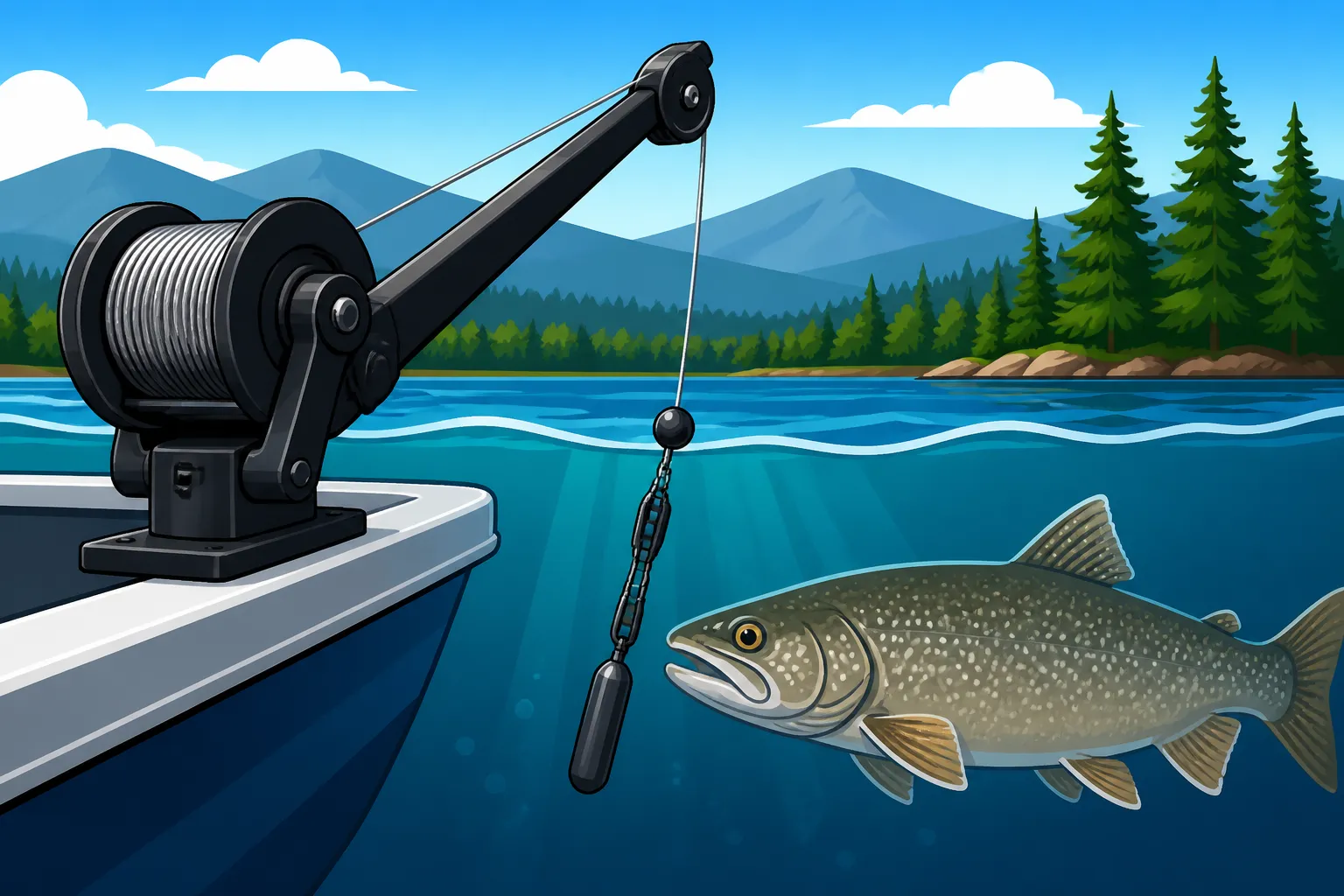
When you're chasing lake trout in the vast, cold waters of New Hampshire's deeper lakes like Winnipesaukee, Newfound, or Sunapee, getting your gear to the right depth is paramount. Lake trout often hold in very specific temperature zones, sometimes hundreds of feet down. Your downrigger cable is the unsung hero that takes your lure on that journey, and its characteristics play a massive role in your success. Neglecting its importance can lead to a lot of wasted time and missed opportunities.
The Frustration of Cable Kinks and Breakages
There's nothing quite like the heart-sinking feeling of reeling in your downrigger ball only to find a nasty kink in your cable, or worse, discovering it snapped mid-troll, taking your expensive downrigger ball and potentially a valuable fish with it. This isn't just an annoyance; it’s a genuine headache that costs time, money, and can absolutely ruin a fishing trip. These issues often stem from using a cable that's either too old, too weak for the demands of deep water, or simply the wrong material for the job. You’re battling heavy lead weights, constant drag from deep water, and the occasional snag on submerged structure. A weak or compromised cable is a recipe for disaster.
Beyond the immediate loss, a cable that constantly kinks or frays needs frequent replacement, which adds up over time. It’s not just about the cost, but the hassle of re-spooling and rigging when you'd rather be fishing. Think of those crisp mornings on Lake Winnipesaukee; you want to be focused on your sonar and rod tips, not worrying about your downrigger system failing. Ensuring your cable is robust and well-suited for the task means less time troubleshooting and more time landing fish.
How Cable Type Affects Presentation and Sensitivity
Believe it or not, the type of downrigger cable you use can significantly impact how your lure behaves deep underwater and how well you can detect subtle bites. Different materials have different diameters and stiffness, which directly influence water resistance. A thicker cable creates more drag, causing it to "blow back" further behind your boat, making it harder to maintain a precise depth. This is especially critical when fish are suspended at a very specific level, and you need your lure right in their strike zone.
Furthermore, some cables transmit vibrations better than others, which can be surprisingly helpful. While you're not feeling a bite directly through the downrigger cable, a more sensitive connection to your downrigger ball can give you a better feel for the bottom, especially when you're trying to keep that ball just off the lakebed. It also affects the "release" of your line from the clip. A smooth, consistent cable ensures your line releases cleanly when a fish strikes, giving you the best chance to set the hook. This nuanced connection between your boat and your lure is a key factor in successful deep-water trolling for species like lake trout and even Landlocked Salmon Fishing in New Hampshire.
The Deep Water Challenge in New Hampshire Lakes
New Hampshire boasts some truly magnificent deep lakes, presenting unique challenges and opportunities for lake trout anglers. Lake Winnipesaukee, for example, plunges to depths of over 200 feet in some areas, while Lake Sunapee and Newfound Lake also offer substantial deep-water habitat. These depths mean long cable runs, increased water pressure, and often stronger subsurface currents than you might encounter in shallower waters. These factors put immense stress on your downrigger cable.
The sheer length of cable deployed in these situations exacerbates any issues with stretch or fraying. You also need to consider the impact of these conditions on your Best Lures for Lake Trout Trolling. The colder, darker water means you're relying on your downrigger system to consistently deliver your offering to fish that might only have a narrow window for feeding. Using a cable that can withstand the rigors of these deep, cold environments is non-negotiable for serious New Hampshire lake trout enthusiasts. It’s not just about getting deep; it's about getting deep reliably, consistently, and without compromising your lure’s action.
Understanding Your Downrigger Cable Options
When you walk into a tackle shop or browse online for downrigger cables, you'll quickly realize there's more than one choice available. Each type has its own set of advantages and disadvantages, making the "best" choice highly dependent on your specific fishing style, the depths you typically fish, and your personal preferences. It's not a one-size-fits-all situation, and understanding the differences will help you make an informed decision for your New Hampshire adventures.
Stainless Steel Cable: The Traditional Choice
For decades, stainless steel cable has been the workhorse of downrigger systems, and for good reason. It's incredibly strong, has virtually no stretch, and is very resistant to abrasion. This strength and low stretch mean that when you're cranking down a heavy downrigger ball, you know it's going exactly where you want it to be. The minimal blowback due to its density and usually smaller diameter (for its strength) is a huge plus, especially when trying to pinpoint fish holding tight to structure or a specific depth contour. Many anglers trust stainless steel because of its proven track record in tough conditions, from the Great Lakes to the deep fjords of the Pacific Northwest, and it performs admirably in the depths of New Hampshire.
However, stainless steel isn't without its quirks. It can be prone to kinking, especially if it's handled improperly or if you get a tangle. A kinked section is a weak point and almost guarantees a break. It can also be harder on your hands if you're manually managing the cable, and it can hum or "sing" in the water, which some anglers believe might spook fish (though this is debated). Corrosion, while slow with stainless steel, is still a factor, especially if you also occasionally dabble in New Hampshire Saltwater Fishing License, Explained with the same equipment. Regular inspection and maintenance are key to prolonging its life and preventing those frustrating mid-troll failures.
Braided Line/Superline: A Modern Alternative
In recent years, modern braided superlines have emerged as a popular alternative to traditional stainless steel downrigger cable. These lines, often made from synthetic fibers like Spectra or Dyneema, offer incredible strength-to-diameter ratios. This means you can get a line that's much thinner than stainless steel for the same breaking strength, which translates to significantly less water resistance and less blowback. Less blowback means your downrigger ball stays more directly beneath your boat, making it easier to track and ensuring your lure is at the exact depth you intend, even in strong currents or when trolling faster. This precision can be a game-changer when fishing specific thermoclines or structures in places like Lake Winnipesaukee Fishing Guide.
Another major advantage of braided line is its complete lack of memory and resistance to kinking. You won't suffer from the frustrating kinking issues that can plague stainless steel. It’s also much quieter in the water, which some believe leads to more strikes. However, braided lines are not as resistant to abrasion as steel, and they can be more susceptible to cuts from sharp objects or even from certain downrigger components if not properly rigged. They can also be a bit more expensive upfront than steel, though their longevity if cared for can balance this out. Many anglers find the improved depth control and lack of kinks well worth the investment, often sourcing these high-tech lines from retailers like Bass Pro Shops or Amazon.
Hybrid Cables and Specialized Options
Beyond the two main types, the market also offers some hybrid and specialized downrigger cable options, aiming to combine the best features of both worlds or address specific niche needs. Some manufacturers offer stainless steel cables with a special coating or a slightly different weave designed to reduce kinking or improve abrasion resistance. These can be a good middle-ground for anglers who prefer the inherent strength and density of steel but want to mitigate some of its drawbacks.
You might also encounter specialized braided lines designed specifically for downrigger use, often incorporating a tougher outer sheath to enhance abrasion resistance. Some lines are even pre-rigged with thimbles and crimps, ready to go. When exploring these options, always consider the maximum depth you plan to fish in New Hampshire and the size of your downrigger weights. A heavier weight demands a robust cable, regardless of material. Don't forget that your leader material, often fluorocarbon, will connect your main fishing line to your downrigger clip, so considering Best Fluorocarbon Line for Clear Lake Water is also part of the complete deep-water system.
Here's a quick comparison of the common downrigger cable types:
| Feature | Stainless Steel Cable | Braided Superline (e.g., Spectra/Dyneema) |
|---|---|---|
| Strength | Excellent | Excellent (higher strength-to-diameter) |
| Kinking | Prone to kinking if mishandled | Highly resistant to kinking |
| Abrasion Res. | Very good | Good (can be susceptible to sharp cuts) |
| Stretch | Minimal (virtually none) | Minimal (virtually none) |
| Diameter | Thicker for comparable strength | Thinner for comparable strength |
| Blowback | Moderate to low | Very low (less water resistance) |
| Sensitivity | Good | Excellent (better feel for bottom/tackle) |
| Cost | Generally lower upfront | Generally higher upfront |
| Corrosion Res. | Good (stainless steel) | Excellent (synthetic, no rust) |
| Noise in Water | Can "sing" at times | Very quiet |
| Maintenance | Inspect for kinks/frays, occasional rust | Inspect for fraying/cuts |
Choosing the Right Cable for Your New Hampshire Adventures
Making the final decision on your downrigger cable doesn't have to be overwhelming. By considering a few key factors and thinking about your specific fishing habits and the local New Hampshire waters you frequent, you can narrow down the choices and select a cable that will serve you well for many seasons to come. Remember, the goal is reliability and effective presentation, allowing you to focus on the thrill of the catch rather than gear malfunctions.
Factors to Consider: Strength, Diameter, and Visibility
First and foremost, strength is non-negotiable. Your downrigger cable needs to be strong enough to handle the combined weight of your downrigger ball (which can range from 8 to 15 pounds or more) plus the drag of your line and lure, all while battling deep water pressure. While exact breaking strengths vary by manufacturer, aiming for a minimum of 150-200 pound test for steel or a comparable strength in braided line is a solid baseline for lake trout fishing in New Hampshire. Anything less, and you're inviting trouble.
Diameter is the next critical factor. As discussed, a thinner cable means less water resistance, which translates to less blowback and more accurate depth control. If you're a stickler for precision and want your lure exactly at 75 feet when your sonar marks fish at 75 feet, a thinner braided line might be your best bet. If you primarily troll slower or aren't as concerned with pinpoint accuracy in shallower deep water (say, under 50 feet), a slightly thicker stainless steel cable might be perfectly adequate. For places like the deepest sections of Winnipesaukee, optimizing for minimal blowback can make a real difference.
Finally, consider visibility. For downrigger cables, visibility isn't usually a major concern for the fish themselves, as the cable is far removed from the lure. However, it can matter for you, the angler, when you're checking your lines or retrieving. Most stainless steel cables are silver, while braided lines come in various colors, from green to yellow to black. A high-visibility braided line might be easier to see against the water or when reeling in, which can be a small but helpful advantage. This factor is more about angler preference and safety than fish-spooking.
Maintenance and Longevity: Protecting Your Investment
No matter which type of downrigger cable you choose, proper maintenance is crucial for maximizing its lifespan and preventing unexpected failures. For stainless steel cables, the biggest enemies are kinks and corrosion. Always handle the cable carefully to avoid putting sharp bends in it. After each trip, especially if you've been in saltwater or brackish water like Great Bay (though not for lake trout, it's good practice for general gear), rinse your downrigger spool and cable with fresh water. Periodically, unspool a good portion of your cable, inspect it closely for any frays, kinks, or rust spots, and wipe it down with a rust preventative.
For braided superlines, the focus shifts to abrasion and cuts. While they don't kink, they can fray or get cut by sharp edges on your boat, downrigger parts, or even from contact with the lake bottom. Inspect your line regularly, especially the last few feet near the downrigger ball. If you see any significant fraying, it's wise to cut back that section or replace the line entirely. Keep your downrigger pulleys clean and free of grit, as this can abrade your line over time. Storing your downriggers properly, out of direct sunlight and elements, will also contribute to the longevity of your cable. Treating your equipment with care, whether bought from Bass Pro Shops or Amazon, will save you headaches and money in the long run.
Practical Tips for Rigging and Fishing
Getting your downrigger cable rigged correctly is just as important as choosing the right one. When spooling new cable, ensure it's wound tightly and evenly on the spool. Loose winding can lead to tangles and premature wear. Use proper crimps and thimbles to create a strong, secure loop at the end of your cable where your downrigger ball attaches. Don't skimp on quality here; a cheap crimp or a poorly executed crimp job is a weak link waiting to fail.
When fishing, always monitor your downrigger cable for any signs of trouble. Listen for unusual noises, look for excessive vibration, and keep an eye on your depth readings. If you hit bottom or snag, retrieve your downrigger ball slowly and carefully, checking the cable for damage as it comes in. When deploying your downrigger, lower the ball smoothly; don't free-spool it rapidly as this can cause tangles and increase the risk of kinking with steel cable. Developing good habits and attention to detail will help you keep your downrigger system running smoothly, allowing you to focus on How to Catch Lake Trout in New Hampshire or even Trolling Techniques for New Hampshire Lake Trout.
Where to Find Quality Downrigger Cable and Accessories
Once you’ve got a handle on the different types of downrigger cable and what to look for, the next step is actually getting your hands on it. You have a few options, each with its own benefits, and stocking up on a few key accessories can make your deep-water trolling experience much smoother. Remember, investing in quality here pays off in fewer headaches and more fishing time.
Local Shops vs. Online Retailers
For many New Hampshire anglers, supporting local tackle shops is a great way to get personalized advice and see the products firsthand. Shops like those in Laconia, Meredith, or other lakeside communities often carry brands and specific cables that are popular with local lake trout fishermen. The staff there can offer valuable insights based on their own experiences on waters like Winnipesaukee or Sunapee. You can feel the cable, compare diameters, and ask specific questions about rigging. Plus, if you need a specific crimping tool or a replacement thimble right before a trip, they're often your quickest resource.
However, online retailers like Amazon and larger outdoor stores such as Bass Pro Shops offer an unparalleled selection. You might find a wider variety of brands, specific breaking strengths, or specialized braided lines that aren't readily available locally. Online shopping can also be convenient for comparing prices and reading reviews from other anglers. Just be sure to double-check the specifications and ensure you're getting exactly what you need. Whichever route you choose, prioritize reputable brands known for quality in downrigger components. Don't just grab the cheapest option; your downrigger ball and your fishing success depend on it.
Essential Accessories for Downrigger Cable Management
Beyond the cable itself, a few accessories can make a big difference in your downrigger setup. Spare downrigger balls are practically a necessity. Snags happen, and losing a ball can end your day if you don't have a backup. Consider different weights (e.g., 10lb and 12lb) for varying depths and conditions.
Good quality crimps and a proper crimping tool are non-negotiable if you plan to rig your own cable or make repairs. Using pliers to "crimp" a connection is a recipe for failure. Invest in a dedicated crimping tool that creates a strong, consistent connection. Thimbles are also crucial, protecting the loop of your cable from wear and tear where it connects to the downrigger ball.
Finally, think about downrigger release clips. While not directly part of the cable system, they are the vital link between your fishing line and the downrigger ball. Having a variety of clips with different tension settings allows you to fine-tune your release based on lure size, trolling speed, and target species. Whether you’re learning How to Catch Smallmouth Bass in New Hampshire Lakes with a downrigger or focusing purely on deep lake trout, having the right clips means a better hookset when a fish strikes. Keeping these accessories on hand will ensure you’re always prepared for a productive day on the water.
Disclaimer
This article is for general informational purposes only and does not constitute professional advice. Laws, prices and regulations vary by location and change over time. Consult a qualified professional for guidance on your specific situation.