Best trolling motor battery for a fishing kayak
One of the biggest headaches for kayak anglers in New Hampshire, especially those venturing out onto larger bodies of water, is making sure their trolling motor has enough juice to last the entire day. There's nothing worse than being miles from your launch point on Lake Winnipesaukee, fighting a headwind, and hearing that disheartening sputter as your motor dies. This guide is all about helping you understand the different types of batteries available and what factors to consider so you can pick the best trolling motor battery for your fishing kayak, ensuring you stay powered up and productive on the water.
Why Your Trolling Motor Battery Matters for Kayak Fishing in New Hampshire
You might think any old battery will do, but for kayak fishing, especially in a state like New Hampshire with its diverse waters, your choice of battery is absolutely critical. It’s not just about powering your motor; it’s about safety, convenience, and maximizing your time chasing fish.
The Demands of New Hampshire Waters on Batteries
New Hampshire offers an incredible variety of fishing environments, from the vast expanses of Lake Winnipesaukee and Squam Lake to the winding currents of the Connecticut River. Each presents unique challenges for your trolling motor battery. Imagine a breezy day on Newfound Lake; your small kayak trolling motor is constantly working against the wind and waves, drawing consistent power. Or picture yourself navigating the strong currents of the Merrimack River while trying to hold a position for smallmouth bass. Your motor is running hard, and if your battery isn't up to snuff, you'll feel it fade fast. Cold water temperatures, especially during early spring trout fishing or late fall smallmouth expeditions, can also significantly impact battery performance, reducing its effective capacity. You need a battery that can handle these varied and sometimes demanding conditions without leaving you stranded or paddling hard against the elements.
Portability and Weight: Kayak-Specific Concerns
Unlike a traditional bass boat with ample space and structural support, a fishing kayak has severe limitations when it comes to carrying extra weight and bulk. Every pound matters. A heavy battery can drastically alter your kayak's balance, making it less stable, harder to paddle if the motor gives out, and a nightmare to load and unload from your vehicle. You're often dealing with shore launches, slippery banks, or portaging around obstacles. Dragging a bulky, lead-acid battery up a hill to your car after a long day of New Hampshire Bass Limits and Slot Rules fishing is a real back-breaker. Kayak anglers prioritize lightweight, compact solutions that don't eat up precious deck space needed for tackle boxes, coolers, or other essential gear. The ease of transport and the overall impact on your kayak's performance are paramount considerations.
Types of Trolling Motor Batteries: What's Under the Hood?
When you start looking for a battery, you'll quickly encounter a few main types. Understanding the differences between them is key to making an informed decision that suits your budget and fishing style.
Lead-Acid Batteries: The Traditional Choice
For a long time, lead-acid batteries were the only practical option for powering trolling motors. They're still widely available and often the most budget-friendly upfront. Within the lead-acid family, you'll typically find two main types suitable for deep-cycle applications:
- Absorbed Glass Mat (AGM) Batteries: These are a step up from traditional flooded lead-acid batteries. They're sealed, maintenance-free, and much more resistant to vibration and leaks, which is a huge plus in a kayak where splashes are inevitable. They can be mounted in more orientations and offer decent deep-cycle performance. However, they are heavy – often the heaviest option – and their usable capacity tends to drop off as they discharge, meaning your motor might feel weaker towards the end of the day. They're also sensitive to overcharging and can be damaged if discharged too deeply too often.
- Gel Batteries: Similar to AGMs in being sealed and maintenance-free, gel batteries use a silica gel to suspend the electrolyte. They are generally more tolerant of deep discharges than AGMs but can struggle with high current draw applications like a trolling motor, potentially leading to voltage sag. They are also quite heavy and can be more expensive than AGMs.
Many casual anglers or those with smaller, less powerful motors still find lead-acid options, particularly AGMs, to be sufficient. They're readily available at places like Bass Pro Shops or even local auto parts stores, making them easy to replace if needed. However, their weight and comparatively shorter lifespan (in terms of charge cycles) can be a significant drawback for serious kayak anglers covering a lot of water.
Lithium-Ion (LiFePO4) Batteries: The Modern Powerhouse
In recent years, Lithium Iron Phosphate (LiFePO4 or LFP) batteries have completely revolutionized the trolling motor battery market, especially for kayak and small boat applications. While the initial cost is higher, the advantages for a kayak angler are profound.
- Lightweight: This is perhaps the biggest selling point. LiFePO4 batteries are typically 50-70% lighter than equivalent lead-acid batteries. A 50Ah LiFePO4 battery might weigh 12-15 pounds, while an equivalent AGM could easily be 30-40 pounds. This weight saving directly translates to a more stable, easier-to-handle kayak, and a much less strenuous experience loading and unloading your gear. This alone can be a game-changer when you're exploring Best Kayak Fishing Spots in New Hampshire.
- Long Cycle Life: LiFePO4 batteries can handle thousands of charge cycles, far outlasting lead-acid batteries (which might only get a few hundred). This means that despite the higher upfront cost, they can actually be more economical in the long run, as you won't be replacing them nearly as often.
- Consistent Power Output: Unlike lead-acid batteries that see a significant voltage drop as they discharge, LiFePO4 batteries maintain a much more consistent voltage throughout their discharge cycle. This means your trolling motor will perform with steady power from the moment you leave the launch until the moment you return, giving you predictable performance throughout your day of How to Catch Smallmouth Bass in New Hampshire Lakes.
- Faster Charging: They can accept a charge much faster than lead-acid batteries, often fully charging in a few hours with a dedicated charger, compared to 8-12 hours for lead-acid.
- Safety and Maintenance: LiFePO4 batteries are inherently safer than other lithium-ion chemistries and come with built-in Battery Management Systems (BMS) that protect against overcharging, over-discharging, over-current, and short circuits. They are also completely maintenance-free.
- Cold Weather Performance: While all batteries experience some performance drop in extreme cold, many LiFePOPO4 batteries have better cold weather capabilities or even built-in heating elements for charging in freezing temperatures, which is important for New Hampshire's shoulder seasons.
For serious kayak anglers who rely heavily on their trolling motor and value portability and long-term reliability, the investment in a LiFePO4 battery is almost always worth it. You can find a great selection and read reviews on Amazon or specialty outdoor retailers.
Key Factors When Choosing a Battery for Your Fishing Kayak
Beyond the type of battery, there are specific specifications and features you need to pay close attention to when making your selection. These will directly impact your on-water experience.
Voltage and Amp-Hours Ah: Matching Power to Needs
First, you need to match the battery voltage to your trolling motor. Most kayak trolling motors are designed for 12-volt systems. Larger, more powerful boat motors might use 24V or even 36V, but for kayaks, 12V is the standard.
More critically, consider the Amp-Hours (Ah). This rating tells you how much energy the battery can store. The higher the Ah rating, the longer your trolling motor will run. To estimate what you need, look at your trolling motor's maximum amp draw (usually found in its specifications) and consider how long you typically run it.
For example, a typical 30-45 lb thrust kayak trolling motor might draw 20-40 amps at full power. If you have a 50Ah battery and your motor draws 25 amps, theoretically, it could run for 2 hours at full power (50 Ah / 25 Amps = 2 hours). However, this is rarely how you use it. Most anglers use their motor intermittently or at lower speeds, which draws less power.
Consider your typical fishing trip:
- Short trips (2-4 hours) in calm water: A 20-30Ah LiFePO4 or a 50-75Ah AGM might suffice.
- Moderate trips (4-6 hours) with some wind/current: A 30-50Ah LiFePO4 or a 75-100Ah AGM is a safer bet.
- All-day trips (6-8+ hours), wind, current, or heavy usage: A 50-100Ah LiFePO4 battery is highly recommended, or a substantial 100Ah+ AGM if you can handle the weight.
Remember, a LiFePO4 battery provides almost all of its rated Ah, while a lead-acid battery should only be discharged to about 50% of its capacity to prolong its life. So, a 50Ah LiFePO4 battery is roughly equivalent to a 100Ah lead-acid battery in terms of usable power. This is a critical distinction when comparing specs and costs.
Weight and Size: The Kayak Angler's Dilemma
As we touched on earlier, weight is a massive factor for kayak fishing. A lighter battery makes your kayak easier to launch, load, and paddle. It also affects the performance and stability of your kayak on the water. A heavy battery can sink your stern, making your bow ride high and causing discomfort or even reducing maneuverability.
- LiFePO4 batteries excel here, often weighing less than half of their lead-acid counterparts for the same usable capacity. This significant weight reduction directly impacts how far you can paddle, how easily you can transport your kayak, and the overall balance of your vessel. Many kayak anglers who switch to lithium marvel at the difference it makes in their overall fishing experience.
- Lead-acid batteries, particularly larger Ah models, can be incredibly heavy. While they might fit in a battery box, their sheer mass can be problematic for smaller kayaks or anglers with physical limitations.
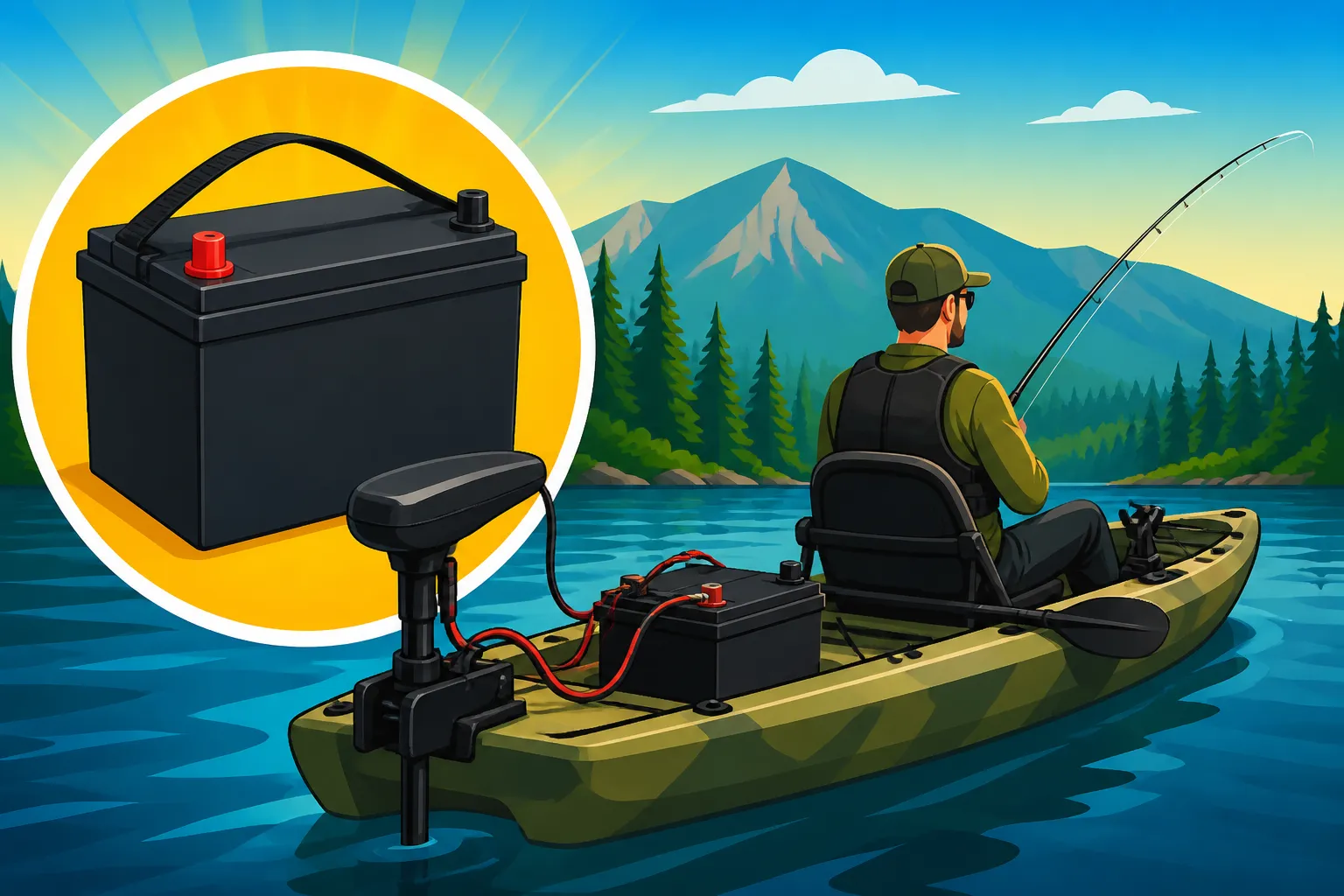
Before buying, measure the space available in your kayak for the battery. Do you have a dedicated battery well, or will it sit on the deck? Consider a battery box to protect it and keep it secure. You want a battery that fits snugly and doesn't shift around, especially when you're battling a big fish or navigating choppy waters.
Durability and Water Resistance
Kayaks are inherently wet environments. Splashes, rain, and accidental drops are all part of the game. Your trolling motor battery needs to be built to withstand these conditions.
- Look for batteries with robust, sealed casings. While most deep-cycle batteries are designed to be somewhat durable, not all are fully waterproof or highly shock-resistant.
- Many LiFePO4 batteries are designed with a high IP (Ingress Protection) rating, indicating their resistance to dust and water. An IP67 rating, for instance, means it's dust-tight and can withstand immersion in water up to 1 meter for 30 minutes. This kind of protection offers peace of mind when you're out on the water, especially in waters like the Great Bay where saltwater splashes could be an issue.
- Even with a water-resistant battery, investing in a good battery box is always a wise decision. A battery box not only adds another layer of protection from moisture and impact but also provides terminals for easy wiring and can help secure the battery in your kayak. You can find rugged battery boxes at most outdoor retailers or on Amazon.
Charging and Maintenance Considerations
Charging your battery is an important part of its life cycle. You'll need a charger that is compatible with your battery type.
- Lead-acid batteries require specific deep-cycle chargers, and it's crucial not to overcharge them. They also benefit from being kept fully charged when not in use, especially during the off-season. Failing to do so can lead to sulfation and permanent capacity loss. Some anglers use smart chargers that can maintain the battery over long periods.
- LiFePO4 batteries require dedicated LiFePO4 chargers. Using a charger designed for lead-acid batteries can damage a lithium battery or prevent it from charging fully. However, LiFePO4 batteries typically don't suffer from memory effects and can be left at a partial state of charge for extended periods without harm, though keeping them at 50-70% for long-term storage is often recommended. Their built-in BMS also manages the charging process, making them virtually maintenance-free once you have the right charger.
Think about where and how you'll charge your battery. Do you have access to an outlet near where you store your kayak? How long will it take to recharge between trips? Faster charging times offered by lithium batteries can be a huge advantage for frequent anglers or those with limited charging windows.
Practical Considerations for New Hampshire Kayak Anglers
Beyond the technical specs, there are real-world considerations that will affect your everyday fishing experience in New Hampshire.
Managing Battery Life on the Water
Even with the best battery, responsible power management extends your time on the water. It's like managing your fuel tank – you wouldn't keep the pedal to the metal if you wanted to go the distance!
- Throttle Management: This is probably the biggest factor. Running your trolling motor at full blast constantly will drain any battery quickly. Instead, use just enough thrust to maintain your desired speed or position. Often, a lower setting is perfectly adequate for covering water or holding against a gentle current, significantly extending your battery life.
- Paddle Assist: If you have a pedal-drive kayak or just a good paddle, use it! Paddle or pedal to supplement your motor, especially when covering long distances or fighting a strong headwind on a large lake. This gives your battery a break and conserves power.
- Current and Wind Awareness: On rivers like the Androscoggin or the Pemigewasset, currents can be strong. On big lakes, wind can turn a calm day into a choppy grind. Anticipate these conditions and factor them into your battery usage. If you're drifting a section, turn off the motor and only use it for course corrections.
- Monitor Voltage: If your battery doesn't have a built-in display, consider adding a simple, waterproof voltage meter to your kayak. This allows you to keep an eye on your battery's charge level and avoid surprises. A sudden drop in voltage can indicate it's time to head back to the ramp or switch to paddle power.
Safely Installing and Securing Your Battery
Proper installation isn't just about functionality; it's about safety. A loose battery can be a hazard, especially in rough water.
- Battery Box: As mentioned, a marine-grade battery box is highly recommended. It protects the battery from splashes, dirt, and impact, and helps contain any potential leaks (though less of a concern with sealed AGM or LiFePO4). Many come with external terminals, making wiring easier and safer.
- Secure Fastening: Use straps or bungee cords to firmly secure the battery box (and thus the battery) within your kayak. You want it to be immovable, even if you capsize. This prevents it from becoming a projectile and protects your wiring connections.
- Proper Wiring: Ensure all wiring connections are clean, tight, and protected from corrosion. Use marine-grade connectors and heat shrink tubing to prevent shorts and ensure reliable power delivery. If you're unsure about wiring, it's always best to consult someone experienced or watch some reputable how-to videos.
- Placement: Position the battery in a spot that maintains the kayak's balance. Often, this is behind the seat or in a designated battery well. Keep it away from areas where it could be tripped over or easily submerged.
Cold Weather Performance
New Hampshire's fishing seasons can stretch into the colder months, meaning you'll often be fishing in chilly or even freezing conditions. Batteries are less efficient in the cold.
- Lead-Acid: These batteries generally perform poorly in cold weather. Their capacity can be significantly reduced, and charging them when they are below freezing can damage them. If you're ice fishing New Hampshire Lake Trout Ice Fishing Season Dates or early spring fishing, keeping lead-acid batteries insulated or indoors until just before launch is crucial.
- LiFePO4: While LiFePO4 batteries also see a slight reduction in capacity in extreme cold, they generally perform better than lead-acid batteries. Crucially, many modern LiFePO4 batteries come with low-temperature cutoff protection, preventing damage if you try to charge them below freezing. Some even have built-in heating elements that activate during charging to warm the cells, allowing safe charging even in sub-freezing conditions. This feature is a huge benefit for anyone extending their New Hampshire Fishing Season Dates and Closures into the colder parts of the year. Always check the manufacturer's specifications for operating and charging temperature ranges.
| Feature | Lead-Acid (AGM/Gel Deep Cycle) | Lithium-Ion (LiFePO4) |
|---|---|---|
| Initial Cost | Lower | Higher |
| Weight | Heavy (30-70 lbs for 75-100Ah) | Lightweight (10-25 lbs for 50-100Ah) |
| Usable Capacity | ~50% of rated Ah (to prolong life) | ~80-100% of rated Ah |
| Power Output | Decreases with discharge (voltage sag) | Consistent throughout discharge |
| Cycle Life | 300-500 cycles | 2000-5000+ cycles |
| Charging Speed | Slow (8-12+ hours) | Fast (2-5 hours with dedicated charger) |
| Maintenance | Keep fully charged, monitor terminals (AGM/Gel minimal) | Maintenance-free (BMS manages) |
| Cold Weather | Significant capacity loss, sensitive to charging below freezing | Better performance, often with low-temp charging protection |
| Safety | Generally safe, less prone to thermal issues | Very safe with built-in BMS |
| Portability | Difficult for kayak anglers | Excellent for kayak anglers |
Choosing the best trolling motor battery for your fishing kayak involves balancing budget, performance, and the unique demands of kayak fishing in New Hampshire. For many, the initial higher cost of a LiFePO4 battery is quickly offset by its lightweight design, consistent power, and long lifespan, making it an invaluable investment for extending your adventures on the water. Whether you're quietly stalking New Hampshire Trout Stocking and Fishing Rules in a remote pond or battling the wind on Lake Winnipesaukee, having reliable power will make all the difference.
Disclaimer
This article is for general informational purposes only and does not constitute professional advice. Laws, prices and regulations vary by location and change over time. Consult a qualified professional for guidance on your specific situation.