New Hampshire Bass Limits and Slot Rules
Navigating the myriad of fishing regulations can feel like a maze, especially when you're just trying to enjoy a peaceful day chasing bass on one of New Hampshire's beautiful lakes or rivers. It's frustrating to constantly worry if you're measuring correctly, keeping the right number of fish, or if that specific pond has its own unique rules. This comprehensive guide is designed to cut through that confusion, giving you a clear, empathetic breakdown of New Hampshire's bass limits and slot rules so you can fish with confidence and peace of mind.
Understanding New Hampshire's Bass Regulations: Why They Exist
Before we dive into the nitty-gritty of numbers and dates, it’s helpful to understand why these regulations are in place. It’s not just about making things complicated for anglers; it’s about ensuring that the fantastic bass fishing New Hampshire offers today will still be here for future generations. We all want to catch big bass, and the New Hampshire Fish and Game Department works tirelessly to balance that desire with the long-term health of the fishery.
The Importance of Sustainable Bass Management
New Hampshire's waters are home to both largemouth and smallmouth bass, cherished by anglers for their fighting spirit and the sheer thrill of the catch. But without proper management, these populations could easily be overfished, leading to fewer fish, smaller sizes, and a decline in the overall quality of the fishery. Think about it: if everyone kept every legal-sized bass they caught, certain lakes could quickly see their populations dwindle. Sustainable management practices, including bag limits and length restrictions, are crucial tools to prevent this. They ensure enough bass survive to reproduce and grow, maintaining a healthy age structure and genetic diversity within the populations.
These regulations aren't arbitrary; they're based on scientific research, population surveys, and a deep understanding of bass life cycles in New Hampshire's specific aquatic environments. For instance, protecting larger, more prolific spawning bass through slot limits can lead to more successful spawns and, ultimately, more fish for everyone to enjoy in the long run. It's a delicate dance between giving anglers opportunities and safeguarding the resource.
Balancing Angler Opportunity and Conservation Efforts
It’s a constant challenge for wildlife agencies to strike the right balance between providing ample fishing opportunities and ensuring the conservation of the resource. Anglers are passionate, and rightfully so! We want to get out on the water as often as possible and bring home a meal or a trophy fish. However, the New Hampshire Fish and Game Department has to consider the cumulative impact of thousands of anglers across countless water bodies. This means looking at data, listening to feedback, and sometimes making tough decisions that prioritize the long-term health of the fish over short-term gratification.
For example, implementing a catch-and-release season for bass during their spawning period might seem inconvenient, but it drastically reduces mortality during a vulnerable time, ensuring that the next generation of bass gets a strong start. This is a prime example of how conservation efforts directly benefit angler opportunity down the road. You can learn more about the broader rules by checking out our guide on New Hampshire Fishing Regulations Explained.
How Regulations Evolve: A Community Effort
You might wonder how these rules are decided. It's not a secret committee making decisions in a vacuum! The New Hampshire Fish and Game Department actively engages with anglers, conservation groups, and local communities. They hold public meetings, gather data from creel surveys (where they interview anglers about their catches), and continuously monitor fish populations. This feedback loop is essential. If you’re seeing declining catch rates in your favorite spot, or if you have observations about bass health, sharing that information with Fish and Game can contribute to future regulation adjustments.
Fisheries biologists study growth rates, reproductive success, and angler harvest data to make informed recommendations. Sometimes, new regulations are implemented as a result of a clear conservation need, while other times, they might be adjusted to enhance a particular type of fishing, like promoting trophy bass opportunities in specific lakes. It’s a dynamic process, and understanding that helps us appreciate the rules we follow.
General Statewide Bass Limits and Seasons
Let's get down to the brass tacks: what are the standard rules that apply to most of New Hampshire's waters? While special regulations exist, knowing the statewide limits is your first line of defense against accidental violations. These rules primarily focus on daily bag limits and minimum length requirements for both largemouth and smallmouth bass.
Daily Bag Limits for Largemouth and Smallmouth Bass
Across most of New Hampshire, the statewide daily bag limit for bass is quite straightforward: you can keep a maximum of 5 bass per person, per day. This limit applies to a combined total of both largemouth and smallmouth bass. It doesn't mean you can keep 5 largemouth and 5 smallmouth; it's 5 total. This regulation is designed to distribute the harvest among many anglers and prevent any single individual from removing too many fish from the ecosystem.
It’s important to remember that "daily" means from midnight to midnight. So, if you go out fishing late into the evening and catch your limit, and then head out again early the next morning, you start fresh with a new limit. However, possession limits can sometimes differ from daily limits, especially on multi-day trips. Always be mindful of the total number of bass you possess, which should not exceed the daily limit at any given time while on the water or in transit from your fishing location. This distinction is critical for anglers taking longer trips, so make sure to review the New Hampshire Bass Possession Limit to stay compliant.
Statewide Minimum Length Requirements
Beyond the number of fish you can keep, there's also a rule about how big they need to be. For both largemouth and smallmouth bass, the statewide minimum length requirement is 12 inches. This means any bass you intend to keep must measure at least 12 inches from the tip of its snout to the end of its tail (with the tail compressed). The purpose of a minimum length limit is primarily to protect juvenile fish, allowing them to grow to maturity and spawn at least once before they are harvested. This contributes significantly to the population's reproductive success.
Measuring fish accurately is paramount. A simple ruler or measuring tape permanently affixed to your boat or tackle box can be a real lifesaver. You can find robust, easy-to-read measuring boards on platforms like Amazon, which are ideal for quickly checking your catch and releasing undersized fish with minimal stress. Some anglers even mark their net handles or boat gunwales for quick checks. Always measure carefully; being off by half an inch could lead to a violation if you keep an undersized fish. For more specific details on smallmouth bass, you can check out New Hampshire Smallmouth Bass Minimum Length Limit.
Key Dates for the New Hampshire Bass Season Opener
New Hampshire has a distinct bass season, broken into two main phases. The general open season for bass harvest (keeping fish) typically runs from June 15th through October 15th. During this period, the statewide daily bag limit of 5 bass and the 12-inch minimum length limit apply. This season opener is a highly anticipated event for many bass anglers, marking the time when they can finally keep their legal-sized catches.
However, it's crucial to understand that fishing for bass is allowed year-round in New Hampshire, but with different rules outside of this harvest season. From January 1st through June 14th, bass fishing is strictly catch-and-release only, using only artificial lures or flies and a single barbless hook. This specific period protects bass during their pre-spawn and spawning phases when they are most vulnerable and concentrated. Missing these dates can lead to serious penalties, so always double-check the current regulations annually. You can find a comprehensive overview of dates in the New Hampshire Fishing Season Dates and Closures guide.
Navigating the Catch-and-Release Only Season
The catch-and-release only season for bass in New Hampshire is a critical component of conservation, ensuring that bass populations thrive. But it also comes with its own set of rules and best practices that every angler should understand to minimize stress on the fish.
Understanding the Pre-Season Catch-and-Release Rules
As mentioned, from January 1st to June 14th, all bass fishing is strictly catch-and-release. This means you cannot possess any bass, even if it meets the minimum length requirement, during this period. The rule also specifies the tackle you can use: artificial lures or flies only, equipped with a single barbless hook. This is a significant detail often overlooked by new anglers or those unfamiliar with the nuanced regulations. Using live bait or a lure with multiple hooks or barbed hooks during this period is a violation.
The rationale behind these specific tackle restrictions is to reduce harm to the fish. Barbless hooks are far easier to remove, minimizing tissue damage and handling time, which are critical factors in a fish's survival post-release. Artificial lures tend to be less likely to be deeply swallowed compared to live bait, further aiding in safe release. This entire period is designed to let bass do their thing – recovering from winter, moving to spawning grounds, and successfully reproducing – without the added pressure of harvest. It’s an investment in future bass fishing opportunities. Our New Hampshire Bass Catch-and-Release Season, Explained article goes into even greater detail.
Proper Catch-and-Release Techniques for Bass Survival
Successfully releasing a bass means more than just unhooking it and tossing it back. To give the fish the best chance of survival, a few key practices are essential:
- Minimize Handling Time: The less time a fish is out of the water, the better. Have your camera ready (if you plan to take a quick photo), and work efficiently.
- Wet Hands: Always wet your hands before touching a fish. Dry hands can remove the protective slime layer, leaving the fish susceptible to disease.
- Support the Fish: If you must hold the fish for a photo, support its body horizontally, especially larger bass. Avoid holding a big bass vertically by the jaw alone, as this can damage its internal organs and jaw structure.
- Gentle De-hooking: Use a pair of pliers or a de-hooking tool to quickly and gently remove the hook. If the hook is deeply swallowed, it’s often best to cut the line as close to the hook as possible rather than trying to rip it out, which can cause fatal damage.
- Revive if Necessary: If a fish seems lethargic after release, gently hold it upright in the water, facing into a mild current, until it regains its strength and swims away on its own.
Practicing these techniques makes a huge difference in post-release survival rates, ensuring that the bass you release today can grow bigger and be caught again tomorrow.
Gear Considerations for Responsible Catch-and-Release
Having the right gear makes practicing good catch-and-release much easier and more effective. Consider investing in a few key items:
- Pliers/Forceps: A good pair of long-nose pliers or hemostats is indispensable for quickly and safely removing hooks, especially if they’re lodged in awkward spots. You can find durable, rust-resistant fishing pliers on Amazon, often with integrated line cutters.
- Barbless Hooks or Debarbing Tool: While the regulations only require single barbless hooks during the catch-and-release season, using them year-round is a fantastic practice. You can buy barbless hooks or easily crimp down the barbs on your existing hooks with a pair of pliers.
- Net with Rubber Mesh: A landing net with knotless rubber or silicone mesh is far superior to traditional knotted nylon nets for catch-and-release. The soft, smooth mesh protects the fish’s scales and fins, and hooks rarely get tangled, speeding up the release process.
- Measuring Device: As discussed earlier, a fixed measuring board is excellent. For quick checks, some nets or boat decals have integrated measuring tapes.
Equipping yourself with these tools shows respect for the fish and significantly increases their chances of survival, contributing to a healthier fishery for everyone. This is especially true during the When New Hampshire Bass Season Reopens for Harvest period, ensuring you're ready for anything.
Special Regulation Waters and Their Unique Bass Rules
While the statewide regulations provide a baseline, New Hampshire has numerous "Special Regulation Waters" where bass rules differ significantly. These unique regulations are put in place for specific conservation goals, often to protect unique genetic strains, promote trophy fisheries, or manage populations in waters with particular environmental characteristics.
Identifying Lakes and Rivers with Unique Bass Rules
It's critical for anglers to not assume statewide rules apply everywhere. The New Hampshire Fish and Game Department's annual Freshwater Fishing Digest is your Bible for all regulations, and it meticulously lists all special regulation waters. These often include well-known lakes like Lake Winnipesaukee, Squam Lake, or certain stretches of major rivers like the Connecticut River or Merrimack River, but they can also apply to smaller, lesser-known ponds.
The specific regulations might include different minimum or maximum length limits, the implementation of "slot limits," or even different daily bag limits. For example, some waters might have a "no kill" rule for bass, making them permanent catch-and-release areas. Always, and I mean always, check the most current Fishing Digest for the specific water body you plan to fish. You can usually find the digest online as a PDF, or pick up a physical copy at most bait and tackle shops or Fish and Game offices. A good practice is to download the PDF to your phone for easy access while on the water.
Specific Slot Limits and Exceptions
One of the most common special regulations you'll encounter for bass is the slot limit. Unlike a simple minimum length, a slot limit specifies a range of sizes within which bass cannot be kept. For example, a common slot limit might be "no bass between 16 and 19 inches may be kept." This means you could keep bass under 16 inches and bass over 19 inches, but anything in the slot must be released.
The purpose of a slot limit is usually to protect the prime breeding stock – those healthy, mature bass that are most effective at reproducing. By protecting the fish in the slot, fisheries managers aim to increase the number of large, quality fish in the population and ensure strong spawns each year. Conversely, allowing harvest of smaller fish can help thin out overpopulated younger fish, leading to better growth rates for the remaining population. Allowing harvest of fish above the slot often targets older, slower-growing fish that might be past their peak reproductive years, making room for younger, more vigorous breeders. It's a nuanced management tool that requires careful attention from anglers.
Staying Informed About Localized Regulations
Given the variability of special regulations, staying informed is paramount. Here are a few ways to do it:
- Read the Digest Annually: The official Reading the New Hampshire Freshwater Fishing Digest is updated every year. Even if you think you know the rules, changes can occur, so always get the latest version.
- Check Online Resources: The New Hampshire Fish and Game website is an invaluable resource. They often have specific pages dedicated to popular water bodies or species.
- Visit Local Bait and Tackle Shops: Owners and staff at local shops are usually incredibly knowledgeable about the specific regulations for nearby waters. They often hear about changes quickly and can offer practical advice.
- Join Fishing Forums/Groups: Online communities for New Hampshire anglers can be a great place to ask questions and share information, though always cross-reference with official sources.
Never rely on hearsay. A quick check of the regulations before you head out can save you from a costly and embarrassing violation. It's also worth noting that some waters, especially those managed by the state park system, might have their own nuanced rules beyond the general fishing digest; for example, see our New Hampshire State Park Fishing Guide.
Identifying Bass Species and Measurement Guidance
To comply with New Hampshire's bass regulations, you first need to accurately identify the fish you've caught. While largemouth and smallmouth bass share some similarities, they have distinct features, and knowing these differences is crucial, especially if regulations vary by species in certain waters.
Largemouth vs. Smallmouth: Knowing Your Catch
Distinguishing between largemouth and smallmouth bass is typically quite straightforward once you know what to look for:
- Jaw Line: The most reliable indicator. For a largemouth bass, when its mouth is closed, the corner of its jaw extends past the back of its eye. For a smallmouth bass, the corner of its jaw typically stops underneath or just barely reaches the middle of its eye. This difference is usually very clear.
- Dorsal Fin: Largemouth bass have a deeply separated dorsal fin, almost looking like two distinct fins. Smallmouth bass have a continuous dorsal fin with a less pronounced dip.
- Coloration and Pattern: Largemouth bass typically have a distinct, dark, horizontal band or blotchy pattern running along their sides, often appearing greenish to dark green. Smallmouth bass, in contrast, usually have vertical bars or splotches, often brownish, bronze, or golden-green, with a noticeably lighter belly.
- Body Shape: Largemouth bass tend to be chunkier and more football-shaped, while smallmouth bass are often more streamlined and torpedo-like.
Knowing these features ensures you're correctly applying the right regulations. For example, if a specific lake has a slot limit only for largemouth, you need to be confident you can tell the difference. Dive deeper into these distinctions with our Largemouth Bass vs Smallmouth Bass Identification guide.
Accurate Measurement for Compliance
Accurately measuring your catch is non-negotiable for legal compliance. Here's how to do it properly:
- Lay the Fish Flat: Place the fish on a flat surface, ideally a measuring board with a built-in bumper.
- Snout to Tail: Position the fish so its snout is pressed firmly against the bumper of the measuring device.
- Compress the Tail: Gently squeeze or compress the tail fin lobes together.
- Read the Measurement: Read the length at the farthest tip of the tail.
Do not measure along the curve of the fish's body; always a straight line. If there's any doubt about whether a fish meets the minimum length, it's always best to err on the side of caution and release it. Remember, an inch short could be the difference between a legal catch and a hefty fine. When using a measuring board, which you can easily purchase on Amazon, make sure it's clearly marked and reliable.
Handling Bass for Safe Release and Measurement
Proper handling is crucial whether you're releasing a trophy or an undersized fish. Here’s how to do it carefully:
- Avoid the Gills: Never put your fingers into a bass's gills. This is incredibly damaging to the fish and can easily kill it.
- Lip Grips: If you use lip grips, use them sparingly and for short periods. They can be helpful for control but can cause jaw damage if the fish thrashes.
- Keep it Wet: If you must take a photo, prepare your camera beforehand and hold the fish over the water or a wet surface. Get the shot quickly and return the fish to the water immediately.
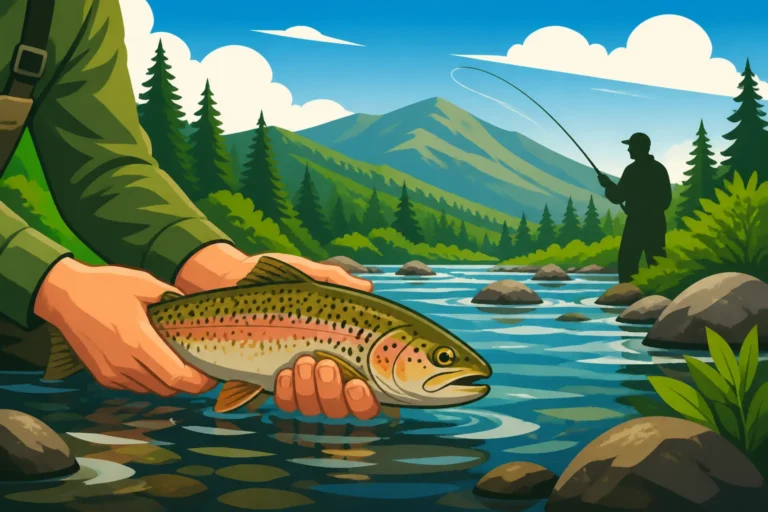
- One Hand on the Jaw, One on the Belly: For larger bass, support the weight of the fish by placing one hand under its belly, just forward of the anal fin, while gently gripping its lower jaw with the other hand. This distributes the weight and prevents injury to its jaw or spine.
By following these handling guidelines, you ensure that the fish you release has the best possible chance of recovery and continued life in New Hampshire's waters, contributing to its health and growth for future catches.
Consequences of Not Following Bass Regulations
Ignorance of the law is never an excuse, especially when it comes to fishing regulations. The New Hampshire Fish and Game Department takes its conservation mandate seriously, and violations of bass limits and slot rules can lead to significant penalties. It's not just about the monetary fine; it's about the impact on the resource and your reputation as a responsible angler.
Penalties for Exceeding Bag Limits or Size Restrictions
The penalties for violating New Hampshire fishing regulations, including those for bass, can vary depending on the severity of the offense and whether it's a first-time or repeat offense. However, you can generally expect:
- Fines: Monetary fines are common and can range from hundreds to thousands of dollars. Each illegally kept fish might be considered a separate offense, multiplying the fine quickly.
- License Suspension/Revocation: Beyond fines, your New Hampshire fishing license could be suspended for a period or even permanently revoked. This means you wouldn't be able to legally fish in New Hampshire, which for many passionate anglers, is a far greater punishment than a fine.
- Confiscation of Gear: In some serious cases, your fishing gear, including your rod, reel, and even your boat, could be confiscated.
- Criminal Charges: While less common for minor infractions, serious or repeated violations, especially those involving commercial poaching or gross disregard for regulations, could lead to criminal charges.
Imagine catching a limit of bass, only to realize one is an inch too short, resulting in a fine and a tarnished record. It’s simply not worth the risk. Always check the official New Hampshire Freshwater Fishing Digest PDF for the most up-to-date penalty information.
The Impact of Violations on Fisheries
Beyond the personal consequences, violating fishing regulations has a tangible negative impact on the very fisheries we all love.
- Depletion of Fish Stocks: Every fish kept outside the legal limits contributes to overharvest. If enough people do this, it can deplete bass populations, especially vulnerable age classes or spawning fish. This leads to fewer fish, smaller average sizes, and a decline in the quality of fishing for everyone.
- Disruption of Ecosystems: Bass are apex predators in many New Hampshire lakes and rivers. Their populations are intricately linked to baitfish and other species. Disrupting bass populations can have cascading effects throughout the aquatic ecosystem, potentially impacting other species that rely on them for food or as competitors.
- Undermining Conservation Efforts: The regulations are based on scientific data and carefully planned management strategies. Violations undermine these efforts, making it harder for fisheries biologists to maintain healthy, sustainable populations. It’s like trying to fill a bucket with a hole in it.
Ultimately, respecting and adhering to the regulations is a collective responsibility that directly impacts the future of New Hampshire fishing. Every angler plays a role in conservation, and compliance is the easiest way to contribute.
Where to Report Violations and Ask Questions
If you witness a fishing violation, or if you simply have questions about the rules, knowing where to turn is important.
- Report Violations: The New Hampshire Fish and Game Department has a dedicated hotline for reporting poaching or other violations. You can call their Operation Game Thief hotline at 1-800-344-4262. Your call can be anonymous, and reporting suspicious activity is crucial for protecting the state's natural resources. It’s not about being a "tattletale," it's about being a responsible steward of our shared outdoors.
- Ask Questions: For questions about regulations, licenses, or specific water bodies, you can contact the New Hampshire Fish and Game Department directly. Their website often has contact forms or phone numbers for various divisions. You can also reach out to local conservation officers; their contact information is usually available in the Fishing Digest or on the Fish and Game website.
- Local License Agents: Many local bait shops and outdoor stores are official license agents for NH Fish and Game. They can often answer common questions about regulations and licensing. You can find a list of these agents via the New Hampshire Fish and Game license agent list.
Being proactive in understanding and upholding the rules ensures a vibrant fishing future for New Hampshire.
Table of Statewide Bass Regulations vs. Common Special Rules
To help you visualize the differences and quickly reference key information, here's a table comparing the general statewide bass regulations with some common types of special regulations you might encounter. Always remember to consult the official NH Fish and Game Digest for the specific water body you plan to fish, as these are just examples.
| Regulation Type | Statewide (Most Waters) | Example Special Regulation (Hypothetical) | Impact/Purpose |
|---|---|---|---|
| Daily Bag Limit | 5 bass (combined Largemouth & Smallmouth) | 2 bass (combined), only one over 18 inches | Restricts overall harvest, protects larger fish. |
| Minimum Length Limit | 12 inches | 15 inches | Allows more fish to reach reproductive maturity before harvest. |
| Slot Limit | None (only minimum length) | No bass between 16-19 inches may be kept | Protects prime breeding stock, encourages harvest of smaller/larger fish. |
| Catch & Release Season | Jan 1 – June 14 (Artificial lures/flies, single barbless hook only) | Jan 1 – June 30 (Extended C&R season) | Extends protection during spawning, reduces mortality. |
| Allowed Harvest Season | June 15 – Oct 15 | July 1 – Oct 15 (Shorter harvest window) | Adjusts harvest period based on local bass population dynamics. |
| Tackle Restriction | Artificial lures/flies, single barbless hook (C&R season) | Artificial lures/flies only, year-round | Minimizes deep hooking and mortality, promotes specific fishing methods. |
| General Species Rules | Largemouth and Smallmouth treated equally for limits | Largemouth: 12" min; Smallmouth: 15" min | Tailors rules to specific species needs in that water body. |
This table highlights why it’s so important to not make assumptions. What works for one lake might be a violation in another just a few miles away.
Disclaimer
The information provided in this guide is for general informational purposes only and is based on current understanding of New Hampshire fishing regulations. Regulations can and do change. Always consult the official New Hampshire Fish and Game Department's most current Freshwater Fishing Digest or their website for the precise and up-to-date rules before you go fishing. Failure to do so could result in penalties.