New Hampshire catch and release only trout streams
It’s a common scenario: you’ve spent countless hours honing your cast, understanding stream dynamics, and dreaming of fooling a truly wild New Hampshire trout. But then you hear whispers of "catch and release only" waters, and suddenly you're wondering where these special places are, what the rules truly mean, and how to fish them responsibly. This guide is dedicated to demystifying New Hampshire's designated catch and release only trout streams, ensuring you have all the information to enjoy these unique fisheries while protecting their precious inhabitants.
Understanding New Hampshire's Catch and Release Philosophy
The concept of "catch and release only" can sometimes feel restrictive, especially if you're used to keeping a few fish for dinner. But in New Hampshire, these special regulations are put in place for very good reasons, creating unparalleled angling opportunities and safeguarding the future of our most cherished wild trout populations. It’s not just about throwing a fish back; it’s about a deeply rooted commitment to conservation and creating truly exceptional fishing experiences.
Why Catch and Release Only Zones Exist
Imagine a pristine mountain stream, its cold, clear waters harboring generations of native brook trout or robust wild brown trout. These fish are often survivors, adapted to their environment, and vital to the ecosystem. New Hampshire's catch and release only zones are primarily established to protect these delicate wild populations from overharvesting. Unlike hatchery-raised fish, wild trout are self-sustaining, but their numbers can be easily depleted if too many are removed. By mandating catch and release, the New Hampshire Fish and Game Department ensures that these fish can reproduce, grow to larger sizes, and provide a sustainable fishery for years to come.
These zones also serve as living laboratories, allowing biologists to study fish populations under minimal human impact. Furthermore, they offer anglers a unique chance to target more abundant, often larger, and incredibly wary fish that have seen many flies and lures. It elevates the challenge and the reward, fostering a deeper appreciation for the fish and their habitat. It's about providing a quality angling experience where the thrill of the catch isn't diminished by the pressure to fill a creel. Understanding the intent behind these rules is the first step toward becoming a truly ethical angler in these special places. For a broader look at all the rules, be sure to consult the official guide on New Hampshire Fishing Regulations Explained.
General Rules for Catch and Release
While the core principle is simple – put the fish back – the how of it is critical to the fish’s survival. A poorly handled fish, even if released, might not make it. This is why these zones often come with specific gear restrictions, like requiring single, barbless hooks. The goal is minimal stress and minimal physical damage.
Here are the general best practices you should always adhere to:
- Wet Hands: Always wet your hands thoroughly before touching a fish. Dry hands can remove the fish's protective slime layer, leaving it vulnerable to infections.
- Minimize Handling Time: The less time a fish is out of the water, the better. Try to keep the fish in the water as much as possible, even when removing the hook.
- De-Barb Your Hooks: This is non-negotiable in many catch and release waters, and it’s a good practice everywhere. You can easily pinch down the barb on any hook with a pair of pliers. This makes hook removal quick and causes far less tissue damage. You can find excellent de-barbing pliers on
Amazonspecifically designed for anglers. - Use Proper Tools: Carry a pair of hemostats or long-nose pliers to quickly and safely remove hooks, especially if the fish has swallowed the hook a bit deeper.
- Avoid Nets (if possible) or Use Rubberized Nets: Knotted nylon nets can strip away a fish's protective slime and damage fins. If you must use a net, opt for a rubberized mesh net, which is much gentler on the fish.
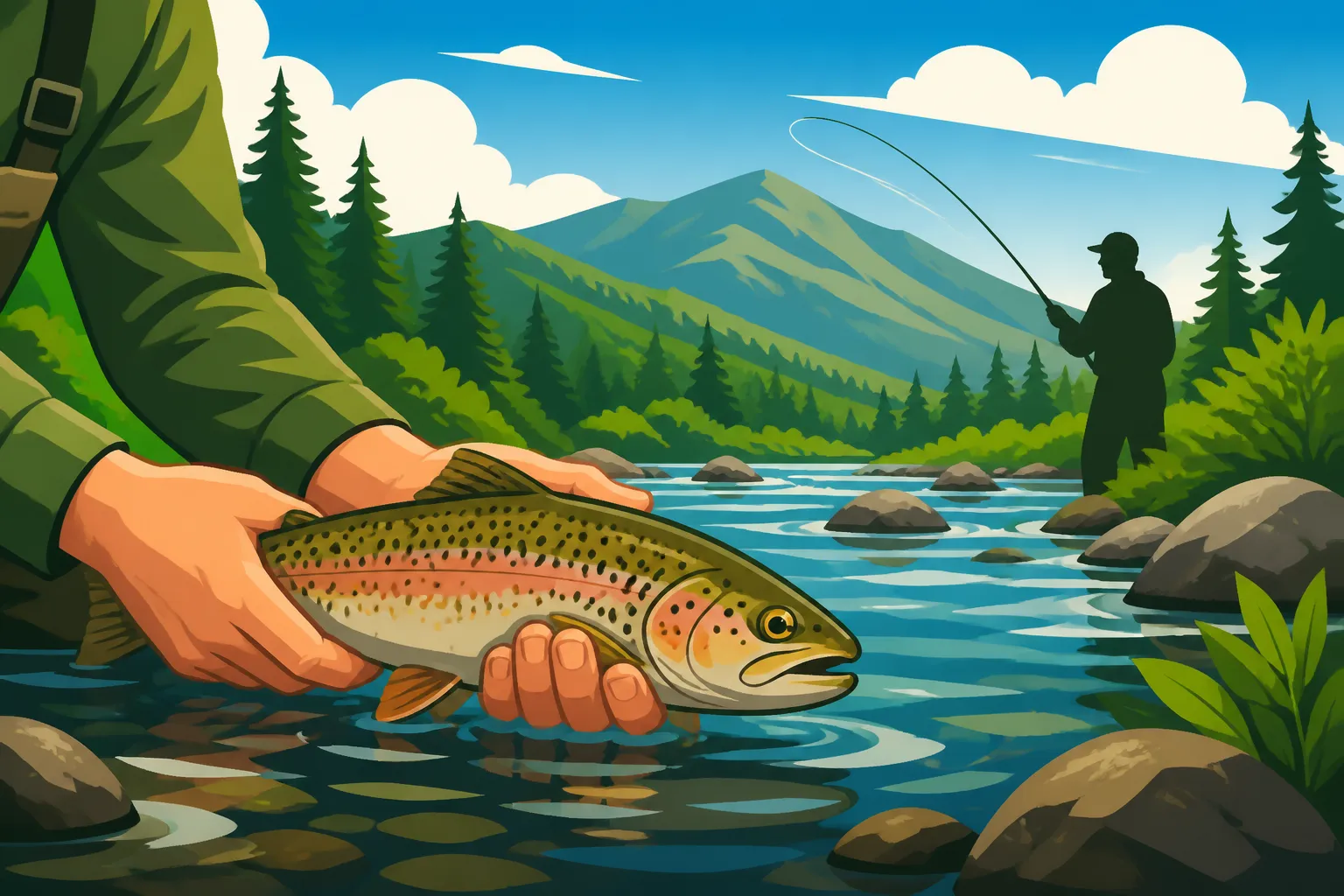
- Support the Fish: If you need to lift the fish for a quick photo, support its body horizontally with both hands, especially under its belly. Never hold a fish vertically by the jaw or gill plates, as this can severely damage its internal organs and spine.
- Revive, Don't Just Release: Gently hold the fish in the water, facing upstream into the current, allowing water to flow over its gills. Don't push it back and forth. When it starts wiggling strongly and can hold itself upright, then you know it's ready to swim away.
Adhering to these practices ensures that the fish you release has the best possible chance of survival, contributing to the health and vitality of these special fisheries.
Identifying New Hampshire's Designated Catch and Release Only Trout Streams
New Hampshire is blessed with an abundance of beautiful waterways, but specific "catch and release only" designations for trout tend to focus on particular river sections or smaller, wilder brooks known for their self-sustaining trout populations. These areas are often managed to preserve the genetic integrity of wild strains or to foster trophy-sized fish through reduced angling pressure.
Key Regions and Specific Stream Names
The New Hampshire Fish and Game Department meticulously designates these special regulation waters. While the list can occasionally be updated, several key areas are consistently managed for catch and release only, particularly for fly fishing. These are often found in the more remote or mountainous regions of the state where wild trout thrive.
Here are some prominent examples:
- The Upper Pemigewasset River: Often referred to by locals simply as "The Pemi," specific stretches of this iconic river, particularly above Lincoln, are designated for catch and release. This area flows through some breathtaking White Mountain scenery and is a prime spot for wild brook and brown trout. Anglers often frequent the sections that are easily accessible yet still hold that wild feel. It’s a fantastic place to practice Fly Fishing for Trout in New Hampshire.
- Swift River: Another gem in the White Mountains, the Swift River near Conway also has sections under catch and release regulations. Known for its clear, cold water and picturesque setting, it's a favorite for fly anglers targeting brook and rainbow trout. The accessibility along the Kancamagus Highway makes it popular, but don't let that fool you; the fish here are wild and require skill.
- Ammonoosuc River: Flowing out of the White Mountains, sections of the Ammonoosuc River, especially its upper reaches, are managed as wild trout waters with catch and release requirements. This river offers a diverse experience, from pocket water to wider runs, holding a mix of brook and brown trout.
- Saco River: While much of the Saco is open to general fishing, certain tributaries or upper sections in the North Country may have catch and release designations to protect wild populations. Always double-check the latest regulations for specific stretches.
- Wild Trout Ponds: Beyond rivers, New Hampshire also manages specific "Wild Trout Ponds" where special regulations, including catch and release, apply. These are typically remote, sometimes requiring a hike, and offer incredible opportunities for native Brook Trout New Hampshire's Native Trout. Examples include places like Conner Pond or specific backcountry ponds within larger state forests.
It’s crucial to remember that these regulations are often section-specific. One part of a river might be catch and release, while another section upstream or downstream might have different rules. This is why consulting the official digest is paramount before wetting a line.
How to Confirm Regulations for a Specific Water Body
Trust me, you do not want to rely solely on hearsay or an old fishing forum post when it comes to regulations. The rules can and do change, sometimes annually, and ignorance is no excuse when it comes to a Fish and Game Warden. The single most authoritative source for all New Hampshire freshwater fishing regulations is the New Hampshire Freshwater Fishing Digest.
Here’s how to ensure you're always fishing legally and ethically:
- The Official Digest: The New Hampshire Fish and Game Department publishes an annual Freshwater Fishing Digest. This document is your bible. It details all general rules, species-specific limits, and, most importantly for this topic, a list of "Special Regulation Waters." Within this section, you will find explicitly stated "Catch and Release Only" waters, "Fly Fishing Only" waters (which often imply catch and release), and other unique regulations.
- NH Fish and Game Website: The most up-to-date version of the digest, along with interactive maps and specific regulation search tools, is usually available on the official New Hampshire Fish and Game website. This is often the quickest way to check a specific water body on your phone before you head out.
- Local Bait and Tackle Shops: These shops are often excellent resources. The owners and staff usually have an encyclopedic knowledge of local waters and regulations and can provide clarification. They also often have physical copies of the digest.
- Signage at Access Points: While not always comprehensive, some popular access points for special regulation waters will have signage indicating the specific rules for that stretch of water. Always read these carefully.
I cannot stress enough the importance of checking the current year's digest before every trip to an unfamiliar water body, or if it's been a while since you last fished a particular spot. This small step can save you from potential penalties, which can be significant, as detailed in Fishing Without a License in New Hampshire Penalties. It’s also crucial for understanding things like New Hampshire daily trout limit versus the complete prohibition of harvest in C&R zones.
Essential Gear and Techniques for Catch and Release Fishing
Fishing catch and release only waters is more than just a regulatory requirement; it's a specialized art form that prioritizes the fish's well-being above all else. This means your gear choices and fishing techniques should reflect that commitment to minimizing harm and maximizing the chance of a successful release.
Appropriate Tackle and Lures
In catch and release zones, your gear should be designed for quick hook sets, efficient fighting to reduce fish exhaustion, and easy, damage-free hook removal.
- Rods and Reels:
- Fly Fishing: Many catch and release streams in New Hampshire are specifically designated "Fly Fishing Only – Catch & Release," particularly for sections of the Ammonoosuc or Pemigewasset Rivers. For these, a 3-weight to 5-weight fly rod is ideal, paired with a matching reel and floating fly line. This setup offers the sensitivity needed for delicate presentations and the backbone to fight fish efficiently without over-stressing them. When fly fishing, consider checking out specific patterns in Fly Patterns for New Hampshire Trout Streams.
- Spin Fishing (where permitted): If spin fishing is allowed (always check the digest!), opt for light to ultralight spinning rods (5’6” to 6’6”) paired with a small, smooth spinning reel. Spool it with 4-6 pound monofilament or fluorocarbon line. This lighter tackle provides sport for smaller trout and minimizes the chance of overpowering and injuring the fish.
- Hooks:
- Barbless is Best: As mentioned, barbless hooks are often required in these zones. If your hooks aren't barbless out of the package, pinch down the barb with pliers. This is the single most critical gear modification for catch and release.
- Single Hooks: Many regulations for these special waters also mandate single hooks. Replace treble hooks on lures with appropriate-sized single, barbless hooks. This significantly reduces the chance of multiple hook points tearing a fish's mouth or gills.
- Lures and Flies:
- Fly Fishing: For fly anglers, standard trout patterns like nymphs (e.g., Pheasant Tail, Hare's Ear), dry flies (e.g., Caddis, Adams), and small streamers (e.g., Woolly Bugger) are excellent choices. Again, ensure they are tied on barbless hooks. You can often find a great selection of quality barbless hooks and fly tying materials on
Amazon. - Spin Fishing: Small inline spinners (e.g., Panther Martin, Mepps) with replaced single barbless hooks, small spoons, or soft plastic baits rigged on jig heads with single barbless hooks are effective. Avoid large, aggressive lures with multiple trebles unless explicitly allowed and modified for C&R.
- Fly Fishing: For fly anglers, standard trout patterns like nymphs (e.g., Pheasant Tail, Hare's Ear), dry flies (e.g., Caddis, Adams), and small streamers (e.g., Woolly Bugger) are excellent choices. Again, ensure they are tied on barbless hooks. You can often find a great selection of quality barbless hooks and fly tying materials on
The focus here is always on gear that allows for a quick, clean hook set and an easy, non-damaging release. For a deep dive into what gear to bring, consider reading Best Gear for New Hampshire Trout Fishing.
Best Practices for Handling and Release
Successfully releasing a fish unharmed is arguably more challenging than catching it. It requires deliberate action, patience, and a deep understanding of fish physiology.
- Keep 'Em Wet: This is the golden rule. Try to unhook fish while they are still in the water. If you absolutely must lift them, do so only for a brief second or two for a quick photo, then immediately return them to the water.
- Minimize Squeeze: Never squeeze a fish, especially around its belly or gills. This can damage internal organs. Hold them gently but firmly.
- Hook Removal:
- Hemostats or Pliers: These are essential tools. They allow you to grasp the hook firmly and back it out cleanly with minimal fuss. For deeply hooked fish, sometimes it's better to cut the line as close to the hook as possible rather than tearing internal organs trying to retrieve it. This is rare with barbless hooks, but it can happen.
- Gently Reverse Direction: Most hooks come out easily by gently reversing the path they went in. With barbless hooks, a slight twist and push can often free them.
- Revival: Once unhooked, hold the fish gently in the current (facing upstream) and allow water to flow over its gills. Don't pump it back and forth; this can actually hinder oxygen intake. Be patient. When the fish starts to kick and resist, and can hold itself upright without assistance, it’s ready. Let it swim away on its own power.
- Avoid the "Death Grip": That classic picture of someone holding a fish by its lip vertically, especially a trout, can do serious damage to its jaw and spine. Always support the fish horizontally.
These techniques, combined with the right gear, are what make "catch and release only" waters truly sustainable and enjoyable. For anglers serious about exploring these areas, investing in proper Best Waders for New Hampshire Trout Streams is also a smart move, as you'll often be wading directly into the stream to ensure minimal impact on the fish.
Reading the Water and Approaching Wild Trout
Wild trout in catch and release streams are generally much warier and more attuned to their environment than their hatchery-reared cousins. This makes the hunt more challenging but also incredibly rewarding. Your approach needs to be stealthy, and your understanding of trout behavior paramount.
- Stealth is Key: Wild trout are easily spooked. Approach the water slowly, keeping a low profile. Avoid heavy footsteps on the bank or casting shadows over the water. Wear subdued clothing that blends with the natural environment. These fish see everything!
- Understanding Trout Lies: Trout will position themselves in areas that offer cover, food, and a break from strong currents. Look for:
- Current Seams: Where fast water meets slow water. Trout sit in the slower water, waiting for food to be delivered by the faster current.
- Pocket Water: Small, calmer areas behind rocks or other obstructions in fast-moving streams.
- Deep Pools: Especially during brighter parts of the day, trout will retreat to the cooler, deeper sections for safety.
- Undercut Banks and Overhanging Vegetation: These provide excellent overhead cover and ambush points.
- Structure: Submerged logs, boulders, and fallen trees are prime hiding spots.
- Upstream Approach: Generally, it's best to fish upstream in moving water. This allows you to approach the fish from behind (their blind spot), and your lure or fly will drift naturally downstream towards them, presenting a more realistic offering.
- Casting Accuracy and Presentation: Pinpoint casting is essential. You often only get one good drift or retrieve before a wild trout is alerted. Practice accurate casting to hit those specific lies without splashing or disturbing the water too much. Focus on a natural, drag-free drift for flies, or a smooth, consistent retrieve for lures.
- Observe the Hatch (Fly Fishing): If fly fishing, pay attention to any insects flying around or on the water. "Matching the hatch" – selecting a fly that mimics the prevalent insect – can be incredibly effective on wild trout.
By combining respectful angling practices with a keen understanding of trout behavior and their environment, you’ll not only increase your chances of success but also deepen your connection to these incredible New Hampshire wild trout fisheries. Remember, these are special waters, and fishing them is a privilege that comes with the responsibility of careful stewardship. For more information on special regulations, you might want to look into New Hampshire Catch and Release Fly Fishing Only Waters specifically.
| Stream Section (Example) | Primary Species Targeted | General Location | Special Notes |
|---|---|---|---|
| Upper Pemigewasset River | Brook, Brown Trout | Lincoln area (White Mountains) | Fly Fishing Only in designated sections; check specific boundaries. |
| Swift River | Brook, Rainbow Trout | Conway area (White Mountains) | Popular access points; wild and stocked trout; specific C&R zones. |
| Ammonoosuc River | Brook, Brown Trout | Upper reaches (White Mountains) | Known for scenic beauty and challenging wild trout fishing. |
| Wild Trout Ponds (Various) | Brook Trout | Remote backcountry locations | Often require hiking; regulations vary by pond, always check. |
Disclaimer
Please remember that fishing regulations, including specific catch and release designations, can change. Always consult the most current New Hampshire Freshwater Fishing Digest or the New Hampshire Fish and Game Department's official website before heading out on any fishing trip. This guide is for informational purposes only and should not be considered a substitute for official regulations.