Best inflatable life jacket for kayak anglers
Navigating New Hampshire's stunning lakes and rivers by kayak to chase bass, trout, or even landlocked salmon is an experience unlike any other. But let's be honest, wearing a bulky, traditional life jacket can feel like a straitjacket, especially when you're trying to make that perfect cast or paddle against a strong current. It restricts your movement, feels hot on a summer day, and often ends up shoved under a bungee cord on the deck, which defeats the whole purpose. This guide is all about finding the perfect solution for dedicated kayak anglers: the inflatable life jacket, offering superior comfort and safety so you can focus on the fish, not the bulk.
Why an Inflatable Life Jacket is a Game Changer for Kayak Anglers
For years, many of us kayakers, especially those who spend hours on the water fishing, have begrudgingly worn traditional personal flotation devices (PFDs) or, let's admit it, sometimes just hoped we wouldn't need one. The constant chafing, the limited arm movement during a powerful paddle stroke or an aggressive cast, and the sheer heat buildup on a sunny August afternoon near Lake Winnipesaukee made them feel more like an obstacle than a safety device. It’s a legitimate frustration that has led many to seek alternatives, and thankfully, the evolution of inflatable life jackets has truly answered the call.
Comfort and Mobility: The Kayaker's Dream
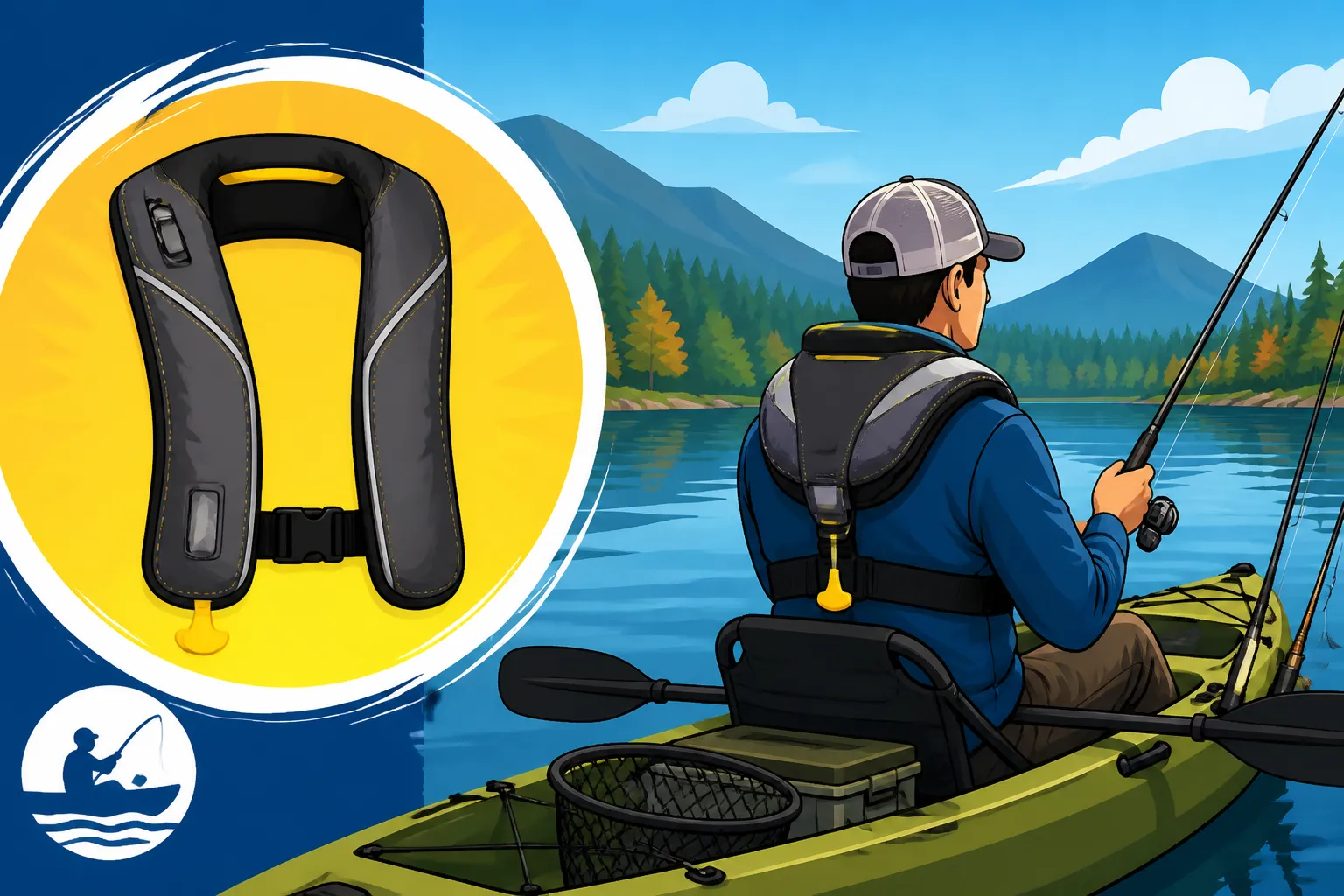
Imagine having nearly unrestricted movement for your arms and torso. That’s precisely what an inflatable life jacket offers. Unlike a traditional foam PFD that wraps around your entire upper body, an inflatable PFD, when uninflated, is incredibly compact. It often consists of a small, lightweight pouch or belt that sits comfortably out of the way, either around your waist or over your shoulders. This minimal design means you can paddle with full range of motion, cast without feeling hindered, and even reel in a feisty smallmouth bass without battling against a cumbersome vest. The difference in comfort, especially after several hours of fishing, is simply astounding.
Think about those moments when you're trying to reach for a specific lure in your tackle bag, or you're maneuvering your kayak into a tight fishing spot. With a traditional PFD, every move feels like a minor wrestling match. With an inflatable PFD, it's almost like you're not wearing anything at all, yet you have the ultimate safety net discreetly available. This enhanced mobility directly translates to a more enjoyable and ultimately more effective fishing experience. You’ll find yourself less fatigued and more focused on the subtle takes and nuances of the water.
Safety Without the Bulk: A Different Kind of Confidence
The core purpose of any life jacket is safety, and inflatable PFDs deliver on this front with a critical advantage: they provide substantial buoyancy when you need it. Many traditional PFDs offer a fixed amount of flotation that, while always present, can sometimes feel like overkill when you're in calm waters or simply trying to stay cool. Inflatables, on the other hand, typically offer a higher amount of buoyancy than standard Type III vests once deployed, providing excellent flotation to keep your head well above water. This can be a huge confidence booster, especially when you're fishing alone on larger bodies of water like Lake Winnipesaukee or the deeper sections of the Connecticut River.
This "safety on demand" approach helps overcome the common excuse of not wearing a PFD because it’s uncomfortable. Since it’s so much more pleasant to wear, you’re far more likely to keep it on consistently throughout your trip, rather than stashing it away. This simple fact dramatically increases your actual safety on the water. Whether you accidentally flip your kayak on a tricky river bend or unexpectedly find yourself overboard in a quiet pond, the inflatable is there to save the day. You just need to ensure it's functioning correctly, which brings us to the different types and their mechanisms. You can also explore options at major retailers like Bass Pro Shops, which often have a good selection to try on in person, or browse a wider variety on Amazon.
Types of Inflatable Life Jackets: Manual vs. Automatic
When you start looking into inflatable life jackets, you’ll quickly discover there are two primary categories: manual and automatic. Both offer incredible comfort and safety, but they operate differently, and understanding these differences is key to choosing the right one for your specific kayak fishing adventures in New Hampshire. Your choice will largely depend on your fishing style, the waters you frequent, and your personal preference for activation.
Manual Inflatables: Control in Your Hands
Manual inflatable PFDs are activated by the wearer. Typically, this involves pulling a tab or cord that punctures a CO2 cartridge, instantly inflating the vest. The beauty of a manual PFD is that you have complete control over when it inflates. This can be a huge advantage for kayak anglers who often encounter splashing water from paddle strokes, reeling in a fish, or even a sudden rain shower. With a manual PFD, you don't have to worry about accidental inflation triggered by these everyday occurrences.
For those who are confident swimmers and primarily fish in relatively calm, warm waters where the risk of losing consciousness upon entering the water is low, a manual PFD is an excellent choice. It’s often lighter and less bulky than its automatic counterpart, further enhancing that feeling of freedom. However, the critical caveat is that you must be conscious and physically able to pull the cord for it to inflate. If you hit your head, or get knocked unconscious, a manual PFD won't deploy on its own. This is a crucial point to consider when assessing your personal risk factors and fishing conditions. Many experienced anglers prefer manual vests because they are less prone to false alarms caused by spray, allowing them to focus entirely on Kayak Fishing Techniques for New Hampshire Lakes.
Automatic Inflatables: Hands-Free Safety
Automatic inflatable PFDs, as the name suggests, inflate automatically when submerged in water. These PFDs typically have a dissolvable bobbin or a water-sensing mechanism that triggers the CO2 cartridge to inflate the vest almost instantly upon contact with water. This "hands-free" activation is their greatest strength, offering a vital layer of safety, especially if you were to fall overboard and become incapacitated, perhaps due to a head injury or the shock of cold water.
For anglers fishing alone, in cold water, or in areas with strong currents like parts of the Connecticut River or larger lakes such as Squam Lake, an automatic inflatable PFD provides superior peace of mind. The immediate inflation means you don't have to think about pulling a cord; the vest does the work for you, potentially saving precious seconds in an emergency. The downside is that they can sometimes be prone to accidental inflation from heavy rain, splash from a big wave, or even sweat that activates the sensor if the jacket gets thoroughly soaked. While these accidental inflations are rare with quality models and proper care, they do require a re-arming kit to reset, which adds a bit of cost and effort. Nevertheless, for maximum safety, especially in challenging conditions, the automatic model is often the preferred choice.
Here's a quick comparison of the two types:
| Feature | Manual Inflatable PFD | Automatic Inflatable PFD |
|---|---|---|
| Activation | User pulls a cord | Automatically inflates upon water immersion |
| Accidental Infl. | Low risk from splashing, rain | Moderate risk from heavy splash, rain, sweat, or submersion |
| Best Use Cases | Confident swimmers, calm waters, active casting/paddling | Anglers fishing alone, cold water, risk of incapacitation |
| Buoyancy | High (once inflated) | High (once inflated) |
| Comfort | Excellent, minimal bulk | Excellent, minimal bulk (slightly more complex mechanism) |
| Re-arming Cost | Same as automatic (CO2 cartridge + bobbin) | Same as manual (CO2 cartridge + bobbin) |
| Primary Benefit | User control, avoids false alarms | Hands-free safety, crucial for unconsciousness |
Key Features to Look For in an Inflatable PFD for Kayak Fishing
Choosing the best inflatable life jacket isn't just about picking manual or automatic; there are several other critical features that will enhance your safety, comfort, and overall fishing experience. Ignoring these details can lead to discomfort or, worse, a PFD that doesn't perform when you need it most. Since kayak fishing demands specific gear, it’s worth taking the time to evaluate these aspects carefully.
USCG Approval and Type Rating
First and foremost, any life jacket you consider must be approved by the U.S. Coast Guard (USCG). This isn't just a suggestion; it's a legal requirement for PFDs carried on vessels in New Hampshire and across the country. A USCG-approved PFD has met rigorous safety standards, ensuring it will provide the flotation it promises. Look for the approval stamp clearly visible on the jacket's label. This is non-negotiable for your safety and to avoid potential fines, as covered in New Hampshire Boating Laws for Anglers.
Inflatable PFDs typically fall under a Type V rating, which means they are special-use devices that must be worn to be counted as a legal PFD. Some Type V inflatables may also carry a performance equivalency to a Type III (flotation aid) or Type II (near-shore buoyant vest) PFD once inflated. What this essentially means for you is that while they are incredibly comfortable, they aren't generally considered a "throwable" device and must be donned to fulfill the PFD requirement. Always check the specific USCG rating and instructions for any model you're considering. Remember, if you’re fishing in a kayak, the law states you need a wearable PFD for each person on board, and it must be readily accessible.
Ergonomics and Fit: Designed for Anglers
The whole point of an inflatable PFD for kayak fishing is comfort and unrestricted movement. Therefore, pay close attention to ergonomics and fit. Look for models with adjustable shoulder straps and waist belts that allow you to customize the fit to your body. A well-fitting PFD won't ride up, chafe, or impede your paddling and casting motions. Some models are designed specifically with anglers in mind, featuring a cut that allows for maximum arm rotation. When trying one on, simulate casting and paddling movements to ensure it doesn't rub or restrict.
Beyond the basic fit, consider angler-specific features. Are there D-rings or attachment points for tools like clippers, a net lanyard, or a whistle? Some premium models even include small pockets, perfect for a fishing knife, a spare CO2 cartridge, or a small box of flies. While not essential for basic flotation, these features can significantly enhance your convenience on the water. Brands available at places like Bass Pro Shops or online platforms like Amazon often highlight these angler-friendly details, so keep an eye out for them in product descriptions and reviews. For example, some specialized PFDs for Best Kayaks for New Hampshire Fishing will have unique storage solutions.
Re-Arming Kits and Maintenance
An inflatable PFD is a mechanical device, and like any gear, it requires occasional maintenance. The most important aspect is understanding how to re-arm it after it's been deployed. Each time an inflatable PFD inflates, the CO2 cartridge is spent, and in the case of automatic models, the water-sensing bobbin also needs replacement. Re-arming kits, which typically include a new CO2 cylinder and a replacement bobbin (for automatic models), are readily available. It’s a good idea to always have at least one spare re-arming kit on hand, especially if you plan multi-day trips or frequent the water.
Beyond re-arming, regular inspection is crucial. Check your PFD before each season, and periodically throughout the year. Look for any signs of wear and tear, tears in the fabric, or corrosion on the metal components. Ensure the CO2 cylinder is tightly screwed in and shows no signs of damage. For automatic models, check the indicator window to confirm the bobbin is in good condition and ready for deployment. If you have a manual PFD, practice pulling the cord once in a controlled environment so you know exactly what to expect. Proper care ensures your inflatable PFD will be ready to perform reliably when you need it most.
Top Considerations for New Hampshire Kayak Anglers
New Hampshire offers an incredible diversity of fishing experiences, from the cold, deep waters of Lake Winnipesaukee to the fast-moving currents of the Pemigewasset River, and the unique tidal environment of Great Bay. This variety means that while a good inflatable PFD is always a smart choice, there are some specific factors New Hampshire kayak anglers should keep in mind to ensure they choose the absolute best option for their local waters and conditions.
Water Conditions and Seasons
New Hampshire is known for its distinct seasons, and these can significantly impact your PFD choice. Inflatable PFDs are generally comfortable in warm weather, reducing the likelihood of overheating. However, New Hampshire waters can be notoriously cold for much of the year, even into late spring and early fall. When water temperatures drop below 60 degrees Fahrenheit (and especially below 50 degrees), cold water shock becomes a real and immediate danger.
In such conditions, an automatic inflatable PFD offers a significant advantage. If you were to unexpectedly fall into cold water, the shock could quickly incapacitate you, making it difficult or impossible to manually pull a cord. An automatic PFD would inflate on its own, ensuring you stay afloat and your head remains out of the water while you recover from the initial shock. Even if you're a strong swimmer, the physiological response to cold water is powerful and can overwhelm even the most prepared angler. For serious cold-weather kayak fishing, perhaps chasing lake trout through the open water season or targeting early spring bass, the automatic option provides an unparalleled layer of safety. This is especially true if you are exploring deeper, colder lakes like Lake Sunapee or focusing on Lake Winnipesaukee Lake Trout Fishing.
Local Regulations and Safety
While inflatable PFDs offer fantastic comfort and specialized safety, it's vital to remember that all USCG-approved PFDs must adhere to Life Jacket Requirements for New Hampshire Boaters. This means ensuring your inflatable PFD is indeed USCG-approved, in good serviceable condition, and readily accessible (or worn, in the case of inflatables) for every person on board your kayak. It's not enough to simply have it; it must meet the criteria.
Beyond the PFD itself, always prioritize overall boating safety. Check the weather forecast before you head out, especially if you're on a large lake like Winnipesaukee, where conditions can change rapidly. Inform someone of your float plan – where you're going and when you expect to return. Carry essential safety gear such as a whistle, a rescue throw bag, a knife, and perhaps a Best Dry Bag for Kayak Fishing for your phone and other valuables. While an inflatable PFD is a fantastic piece of gear, it's just one component of a comprehensive safety strategy on the water. For instance, if you're considering a Best Trolling Motor for a Fishing Kayak, remember that any motorized vessel might have additional safety requirements.
Disclaimer
This article is for general informational purposes only and does not constitute professional advice. Laws, prices and regulations vary by location and change over time. Consult a qualified professional for guidance on your specific situation.