Best bucktail jig for smallmouth bass
Anyone who's spent time chasing smallmouth bass in the clear, rocky waters of New Hampshire knows the frustration of lures that just don't cut it. You cast, you retrieve, and nothing. It can feel like you're throwing everything but the kitchen sink at them, and they're just not biting. This guide is all about cutting through that frustration and introducing you to a truly classic, incredibly effective weapon for smallmouth: the bucktail jig. We’ll dive deep into why these simple-looking lures are so deadly and how to pick and fish the best ones for our Granite State bronze backs.
Understanding the Allure of Bucktail Jigs for Smallmouth
There's something incredibly satisfying about catching a feisty New Hampshire smallmouth, especially when you've outsmarted them with a well-presented lure. While modern plastics and fancy crankbaits certainly have their place, the bucktail jig stands as a timeless classic, consistently producing when other lures fall short. It's not just nostalgia; there's a real science to why these jigs are so effective, especially in our region's diverse fisheries.
Why Smallmouth Bass Can't Resist a Bucktail
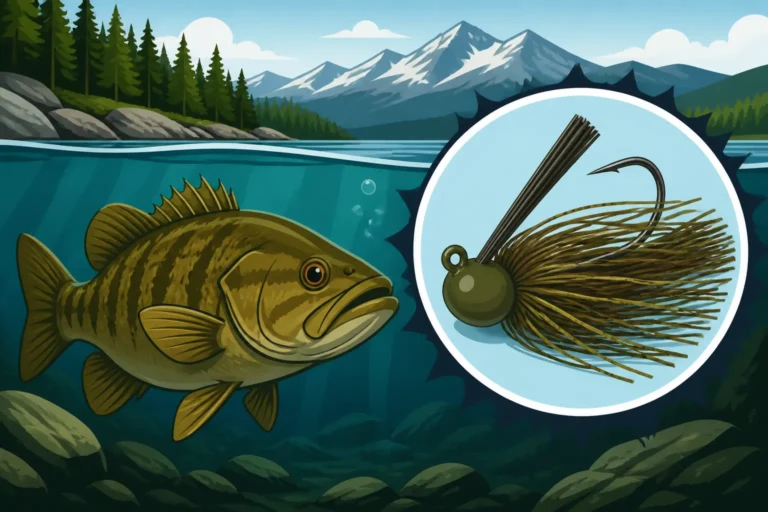
Smallmouth bass are opportunistic predators, always on the lookout for a meal, but they can be finicky. What makes a bucktail jig so irresistible? It's all about natural presentation and mimicry. The real deer hair, or bucktail, that adorns these jigs has an unparalleled ability to pulse and breathe in the water, even with the slightest movement. This isn't stiff plastic; it's fluid, lifelike motion that perfectly imitates fleeing baitfish, crawfish scuttling along the bottom, or even leeches.
Think about it: many of New Hampshire's smallmouth haunts, from the deep clear lakes to the rocky rivers, are teeming with natural forage. A bucktail jig, especially one tied with natural colors and sparse hair, just looks right. When retrieved correctly, it creates subtle vibrations and an undulating profile that triggers those predatory instincts without alarming the fish. It's not overly aggressive; it's simply a tempting, easy meal that looks, feels, and acts like part of their natural world. That subtle, lifelike quiver can often be the difference between a follow and a strike, especially when fish are pressured or lethargic.
The Magic of Bucktail in New Hampshire Waters
New Hampshire offers an incredible variety of smallmouth bass habitats, from the vast, deep expanses of Lake Winnipesaukee to the current-swept ledges of the Connecticut River. The beauty of the bucktail jig is its adaptability across these different environments. In the clear, cold waters of our bigger lakes, where smallmouth often feed on smelt or sculpins, a bucktail provides that translucent, subtle profile that doesn't scream "fake." Its natural materials allow light to pass through, giving it an ethereal quality that blends into the water column. You can check out more details on Smallmouth Bass Habits on Winnipesaukee.
Consider a sunny summer day on a rocky point on Squam Lake. The water is gin clear, and the smallmouth are spooky. A bulky, brightly colored plastic might send them scattering. But a small, white or olive bucktail jig, subtly worked along the bottom, can often tempt those wary fish. The hair flares and collapses, mimicking a crawfish or small baitfish seeking refuge in the rocks.
Similarly, in our state's rivers like the Merrimack or Pemigewasset, where current is a factor, the bucktail's hydrodynamic design allows it to cut through the water efficiently. It doesn't get swept away as easily as some bulkier lures, allowing for precise presentations in eddies, current breaks, and behind submerged boulders. The natural movement of the hair is accentuated by the flowing water, making it even more appealing to river smallmouth that are accustomed to natural food drifting by. It’s truly a versatile tool for various How to Fish a River for Smallmouth Bass scenarios.
Key Features of an Effective Bucktail Jig for New Hampshire Smallmouth
Choosing the right bucktail jig isn't just about grabbing the first one you see. There are specific characteristics that make certain jigs shine when targeting smallmouth bass, especially given the varied conditions we experience here in New Hampshire. Pay attention to these details, and you'll dramatically increase your chances of success.
Jig Head Design and Weight Considerations
The head of your bucktail jig is the foundation of its action and how it interacts with the water. Different shapes are designed for different presentations and environments.
- Round Head: This is your classic, all-around performer. A round head jig sinks at a consistent rate and has a natural, subtle wobble on the fall. It's excellent for situations where you want a moderate sink rate and a good, balanced presentation. Many anglers prefer a simple round head for vertical jigging or when casting into deeper water and allowing the jig to fall through the water column. They're a staple for general-purpose smallmouth fishing.
- Football Head: As the name suggests, this head is shaped like a football. Its wider, flatter bottom makes it incredibly stable when dragged or hopped along the bottom. This is your go-to for fishing rocky bottoms, gravel flats, and any structure where crawfish might hide. The football shape helps the jig resist snagging by letting it rock over obstacles rather than wedging into them. When you impart a twitch or hop, it tends to stand up, presenting the bucktail enticingly.
- Stand-Up Head: These jigs are designed to literally stand up on the bottom when at rest, allowing the bucktail hair to splay out and mimic a feeding or defensive crawfish. This can be absolutely deadly on clear, rocky lakes where smallmouth are heavily feeding on crustaceans. The upright presentation gives it a unique action that can trigger strikes from cautious fish.
Weight is another critical factor. It determines your sink rate and how well you maintain contact with the bottom or desired depth.
| Weight Range | Typical Application in New Hampshire |
|---|---|
| 1/16 – 1/8 oz | Shallow water (under 5 feet), light current, clear calm conditions, targeting wary fish. Excellent for streams and smaller ponds. |
| 1/4 – 3/8 oz | Most common, versatile for 5-20 feet of water, moderate current, casting. Great for general lake and river fishing. |
| 1/2 – 3/4 oz | Deeper water (20+ feet), stronger current, windy conditions, covering water quickly. Ideal for large lakes like Winnipesaukee or the Connecticut River. |
Choosing the right weight is a delicate balance. You want just enough weight to get to your desired depth and maintain contact, but not so much that it kills the natural action of the bucktail. If you're constantly snagging, go lighter. If you can't feel the bottom or your line is bowing too much in the wind or current, go heavier. On lakes like Winnipesaukee, where smallmouth can suspend over deep structure, a slightly heavier jig might be needed to reach them effectively.
Bucktail Hair Quality and Color Selection
The hair itself is where the magic truly happens. Not all bucktail is created equal, and the quality directly impacts the jig's action and durability.
- Hair Quality: Look for jigs tied with fine, vibrant bucktail hair that has a natural taper. High-quality bucktail will be lively, pulsing and breathing with minimal water movement. It shouldn't be too stiff or clumped together. Some manufacturers also incorporate a small amount of flashabou or synthetic fibers for added attraction, especially in murky water or low light. The way the hair is tied is also important; it should be sparse enough to allow for maximum movement but dense enough to hold its profile.
- Color Selection: Smallmouth bass, particularly in New Hampshire's often clear waters, are incredibly color-sensitive. Matching the hatch is often key.
- White/Pearl: This is your absolute staple. It mimics a wide variety of baitfish, from smelt to shiners, which are primary forage in many New Hampshire lakes. It's fantastic in clear water and on sunny days.
- Olive/Green Pumpkin: Excellent for imitating crawfish, especially when fished on the bottom. These natural tones blend well with rocky and weedy environments.
- Black/Dark Brown: Great for low light conditions, murky water, or when you want a strong silhouette. It can imitate leeches or darker baitfish.
- Yellow/Chartreuse: While not always natural, these bright colors can be excellent attractors, especially in stained water, overcast conditions, or when fish are aggressive. A chartreuse bucktail can sometimes trigger reaction strikes when nothing else will.
- Crawfish Patterns (Orange/Red/Brown mixes): Specific crawfish patterns with mottled colors are extremely effective when bass are keying in on crawfish, especially during molting periods when crawfish are softer and more vulnerable.
A good rule of thumb is to start with natural colors like white, olive, or black, and then experiment with brighter colors if the bite is slow. Having a selection of these fundamental colors in your tackle box from brands available at places like Bass Pro Shops or Amazon is a solid strategy.
Hook Size and Sharpness: Don't Compromise
You can have the most perfectly designed bucktail jig, but if the hook isn't up to par, you'll be missing fish. Smallmouth bass have bony mouths, and a strong, sharp hook is crucial for solid hooksets and keeping fish pinned.
- Hook Size: The hook size should be appropriate for the size of the jig and the target fish. For smallmouth, a good quality, strong wire hook in sizes from #1 up to 2/0 is generally ideal. Too small, and you risk bending or losing fish. Too large, and it can impede the jig's action or make it look unnatural.
- Hook Sharpness: This is non-negotiable. Always check the sharpness of your jig hooks right out of the package and before each fishing trip. A dull hook will simply slide off a bony jaw. Carry a small hook sharpener with you and give your hooks a quick touch-up if they feel even slightly dull. Some manufacturers offer jigs with premium, super-sharp hooks (often referred to as "needlepoint" or "laser sharp"), which can make a noticeable difference in your hookup ratio. Don't be afraid to pay a little extra for jigs with better quality hooks; it's an investment that pays off in landed fish.
Retrieving and Presenting Bucktail Jigs for Success
Mastering the retrieve for bucktail jigs is less about brute force and more about finesse and understanding how the lure interacts with the water. The goal is always to make it look as natural and irresistible as possible. This is where the art of jig fishing truly comes into play, and it's what separates a good bucktail angler from a great one.
Mastering the Hop-and-Drag Technique
The hop-and-drag, sometimes called a lift-and-drop, is perhaps the most classic and effective retrieve for bucktail jigs, especially when smallmouth are holding tight to the bottom or structure. It's all about mimicking a crawfish scurrying along the bottom or a baitfish poking around the rocks.
Here’s how you do it:
- Cast it Out: Make a long cast to your target area, allowing the jig to sink all the way to the bottom. Keep a close eye on your line – sometimes a strike will happen on the initial fall.
- Feel the Bottom: Once it hits bottom, take up any slack in your line. You should feel a distinct "thump" or see your line go slack.
- The Hop: Use your rod tip to lift the jig sharply, about 6 inches to 2 feet off the bottom. This "hop" is achieved with a quick flick of the wrist, not a massive sweep of the rod.
- The Drop/Drag: Immediately drop your rod tip back down towards the water, allowing the jig to fall back to the bottom. As it falls, keep just enough tension on the line to feel the jig and detect a strike, but not so much that it impedes the fall. You can also lightly drag it a few inches before letting it fall. The key here is the fall. The bucktail hair flares and collapses on the drop, creating a lifelike action that often triggers a strike.
- Repeat: Once it hits bottom again, pause for a second or two (this pause is crucial, as many strikes occur when the jig is completely still), then repeat the hop-and-drag.
Vary the height of your hops and the length of your pauses until you find what the fish prefer. On colder days or when fish are sluggish, longer pauses are often more effective. On warmer, more active days, a quicker, more aggressive retrieve might be the ticket. This technique is deadly around How to fish rocky points for smallmouth where crawfish are prevalent.
The Swim and Glide: Mimicking Baitfish
While the hop-and-drag is excellent for bottom-oriented fish, the swim and glide retrieve is perfect for mimicking baitfish higher in the water column or when fish are suspended. This technique is particularly effective in open water or over submerged humps and rock piles in our larger lakes.
- Cast and Count: Cast out and let the jig sink to a desired depth. You can use a "count-down" method (e.g., count to 5 for a shallow retrieve, count to 10 for deeper) to consistently hit the same depth.
- Steady Retrieve: Begin a steady, slow to moderate retrieve with your reel. The speed will depend on the jig's weight and the desired depth. You want the jig to have a consistent swimming action.
- Rod Twitches: Every few seconds, give your rod tip a subtle twitch or two. This imparts a darting, injured baitfish action to the jig, making the bucktail hair flare out, then collapse. This momentary flash and change in direction can be a powerful strike trigger.
- Pause and Fall: Occasionally, stop your retrieve for a second or two, allowing the jig to flutter and fall slightly. Again, many strikes happen on this brief, vulnerable fall.
This retrieve works wonders for smallmouth that are chasing schools of baitfish, especially in the early morning or late evening when they are actively feeding near the surface or just below. A white or silver bucktail jig with a bit of flash can be incredibly effective here.
Bucktail Jigs in Different New Hampshire Scenarios
One of the greatest strengths of the bucktail jig is its versatility across the diverse fishing scenarios we have in New Hampshire.
- Rocky Shoals and Drop-offs: These are smallmouth havens! Use a football or stand-up head jig in weights from 1/4 to 1/2 oz. The hop-and-drag is king here. Work the jig right along the transitions where the rocky bottom meets deeper water. Smallmouth often patrol these edges, ambushing unsuspecting prey. Colors like olive, black, or natural crawfish patterns are excellent. Consider locations like the many rocky islands and shorelines of Lake Winnipesaukee or Newfound Lake.
- River Eddies and Current Breaks: In rivers, smallmouth love to tuck into spots where the current is broken, conserving energy while waiting for food to wash by. Use a slightly heavier round or football head jig (3/8 to 5/8 oz) to maintain bottom contact in the current. Cast upstream and across, letting the current carry the jig down into the eddy. Use short hops and drags, letting the current impart much of the action. A black or brown bucktail can mimic leeches and dark stoneflies common in river systems. This is particularly useful on rivers like the Pemigewasset or the Connecticut.
- Deep Water Structure: On our larger, deeper lakes, smallmouth often school up on submerged humps, rock piles, or old roadbeds in 20-40 feet of water. A heavier bucktail jig (1/2 to 3/4 oz) is necessary to reach these depths efficiently. Use your electronics to locate these structures and the fish. Position your boat directly over the fish and vertically jig with short, sharp hops, followed by a controlled fall. The Best Techniques for Deep Water Summer Lake Trout article, while about lake trout, shares principles for targeting deep-holding fish that apply here too. A fish finder like those found at Bass Pro Shops can be invaluable. This can also be a prime technique during cooler months when smallmouth retreat to deeper haunts.
Complementary Gear for Bucktail Jigging
Having the right bucktail jigs is just one part of the equation. To truly unlock their potential and maximize your success on New Hampshire waters, you need to pair them with the appropriate rod, reel, line, and even consider adding a few enhancements.
Rod, Reel, and Line for Optimal Feel
When you're fishing a bucktail jig, especially on the bottom, sensitivity is paramount. You need to feel every subtle "thump," "tick," or "mushy" feel that indicates a strike.
- Rod: A medium-light to medium power spinning rod, typically 6'6" to 7'6" in length, with a fast or extra-fast action is ideal. The fast tip allows for excellent sensitivity to detect those subtle bites and impart subtle twitches to the jig, while the backbone provides enough power to drive the hook home and fight a strong smallmouth. Graphite rods are preferred for their superior sensitivity. Many great options exist for Best Spinning Rods for Smallmouth Bass that would be perfect for bucktail jigging.
- Reel: A quality spinning reel in the 2000-3000 size range, known for its smooth drag and reliable operation, is your best bet. A smooth drag is essential for fighting strong smallmouth, especially if you hook into a trophy.
- Line: This is perhaps the most critical component for sensitivity.
- Main Line (Braid): Many experienced jig fishermen prefer a main line of 8-15 lb test braided line. Braid has virtually no stretch, which transmits every bump and bite directly to your rod tip. Its thin diameter also allows for longer casts and cuts through the water better, reducing current drag.
- Leader (Fluorocarbon): Because braid is highly visible, especially in New Hampshire's clear lakes and rivers, it's almost always paired with a fluorocarbon leader. Fluorocarbon is nearly invisible underwater, has excellent abrasion resistance (great for rocky areas), and offers some stiffness to help prevent tangles with the jig. A 6-10 lb test fluorocarbon leader, tied with a strong knot like an FG or Alberto knot, is a fantastic choice. The Best Fluorocarbon Line for Clear Lake Water provides more insights into this essential connection. The length of your leader can vary, but 4-8 feet is a good starting point.
Adding Trailers and Scents
While bucktail jigs are effective on their own, adding a trailer or scent can often boost their appeal, especially when the bite is tough or you want to give the fish something extra to key in on.
- Trailers:
- Pork Rind: This classic addition, though less common now, provides a natural, undulating action that many smallmouth find irresistible. It adds bulk and a lifelike profile.
- Soft Plastic Craws/Grubs: A small soft plastic crawfish imitation (like a 2-3 inch YUM Crawbug or Zoom Super Chunk Jr.) or a subtle grub tail (such as a Kalin's Grub or Mister Twister) added to the hook can significantly enhance the jig's profile and action. The plastic adds extra bulk, vibration, and visual appeal. Match the color of your trailer to your bucktail jig for a cohesive look. For example, pair a white bucktail with a clear/sparkle grub, or an olive bucktail with a green pumpkin craw.
- Swimbaits: A small paddle tail swimbait (2-3 inches) can be threaded onto the hook, giving the bucktail jig a more pronounced swimming action. This is great for active fish or when you want to cover water quickly with a swim-and-glide retrieve.
- Scents: Fish, especially smallmouth, rely heavily on their sense of smell. Adding a fish attractant scent can significantly increase the number of bites and encourage fish to hold onto the lure longer, giving you more time to set the hook. Brands like Berkley PowerBait MaxScent or Pro-Cure offer effective gels and sprays designed to mimic natural forage. Apply a generous amount to the bucktail hair and any plastic trailer you're using. Reapply regularly, especially after catching a fish or if you haven't had a bite in a while.
These small additions can sometimes be the difference-maker, turning a slow day into a productive one. Experiment with different trailers and scents until you find what the smallmouth are responding to on a given day. You'll find a wide variety of these accessories at any well-stocked tackle shop or online retailers like Amazon.
Conclusion
Chasing smallmouth bass in New Hampshire is a fantastic experience, and arming yourself with the right tools makes it even better. The bucktail jig, with its natural action, versatility, and subtle appeal, is truly one of the unsung heroes of the smallmouth angler's tackle box. It might not be the flashiest lure, but its consistent ability to entice even the most cautious bronze backs is undeniable.
From the crystal-clear depths of Lake Winnipesaukee to the spirited currents of the Connecticut River, understanding how to select and effectively fish these classic jigs will undoubtedly add more strikes and more memorable catches to your fishing log. So, next time you're gearing up for a New Hampshire smallmouth adventure, remember the bucktail. Give it a hop, a drag, or a swim, and prepare to feel that unmistakable thump of a hungry smallmouth on the line.
Disclaimer
This article is for general informational purposes only and does not constitute professional advice. Laws, prices and regulations vary by location and change over time. Consult a qualified professional for guidance on your specific situation.