Best Fluorocarbon Line for Clear Lake Water
One of the most frustrating experiences for any angler, especially here in the clear, pristine waters of New Hampshire, is seeing fish shy away from your lure or bait. You’ve put in the time, studied the maps, found the perfect spot, but those wary fish seem to have eyes like a hawk, spotting your line before they even consider biting. This guide is all about tackling that exact problem, showing you why fluorocarbon fishing line is often the unsung hero for success in clear lake conditions, and how to choose and use the best options to fool even the most finicky fish.
Why Clear Water Demands Specialized Line
Fishing in the crystal-clear lakes and ponds of New Hampshire is a beautiful experience, but it comes with its own unique set of challenges. Unlike murky rivers or stained reservoirs, where fish often rely more on scent and vibration, clear water means visibility is high, and fish have a much better chance of spotting anything unnatural. Your line, therefore, becomes a critical factor in whether you get a bite or just a frustrating "look-away."
The Visibility Challenge and Spooky Fish
Imagine yourself standing on the shore of Lake Winnipesaukee on a calm, sunny day. You can see straight down into the water, sometimes for dozens of feet. If you can see that far, rest assured, the fish can see even better. Many of New Hampshire's most sought-after species, like smallmouth bass, lake trout, and landlocked salmon, thrive in these clear environments. However, they've also evolved to be incredibly wary. A thick, opaque fishing line is like a flashing neon sign to them, screaming "danger!"
When fish are "spooky," it means they're highly aware of their surroundings and easily scared off by anything out of the ordinary. This is especially true after a cold front passes through, or during periods of high fishing pressure. If you're casting a lure with brightly colored monofilament, or even braided line directly to your lure, you might be surprised how many fish simply follow your presentation without striking, only to turn away at the last second. It's not necessarily your bait or lure choice that's the problem; it's often the visible connection to your rod. This is where understanding light refraction and line properties becomes crucial for success. For more tips on targeting wary fish, check out our guide on Best Techniques for Finesse Fishing Clear Water Bass.
Understanding Light Refraction in Water
Light behaves differently when it passes from air into water. This phenomenon, called refraction, is why a spoon in a glass of water looks bent. Different materials have different refractive indices – essentially, how much they bend light. Monofilament line, for example, has a refractive index that's quite different from water, making it more visible. It reflects and disperses light in a way that makes it stand out against the underwater backdrop.
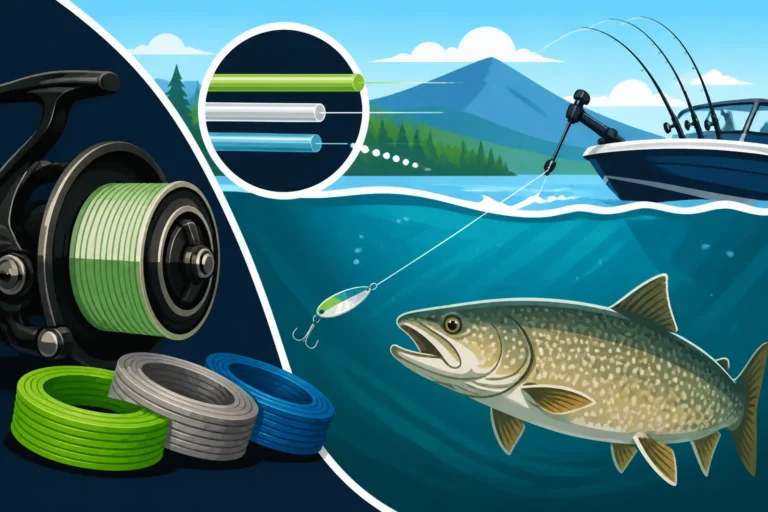
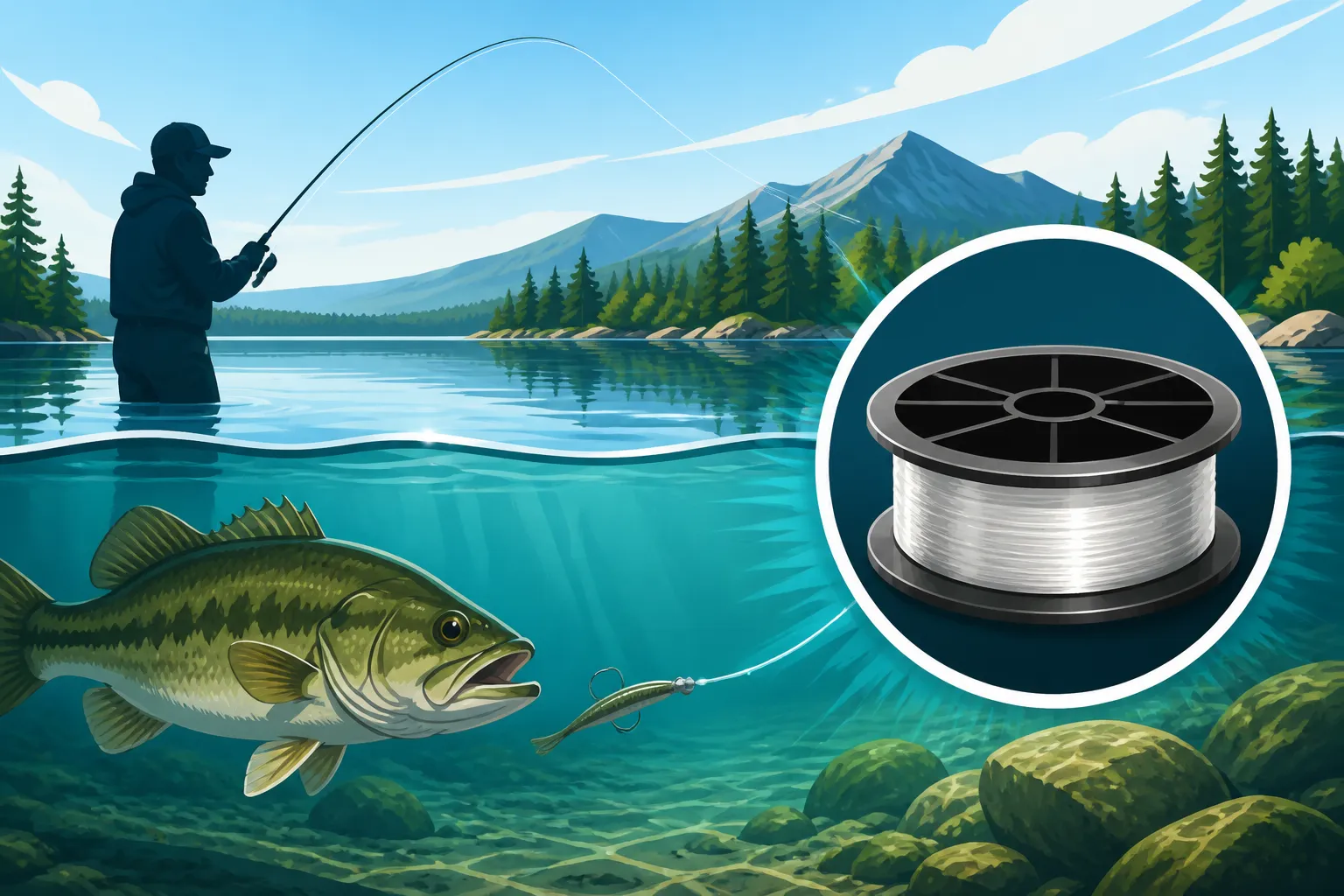
Fluorocarbon, on the other hand, boasts a refractive index incredibly close to that of water. This is its secret weapon. When light hits fluorocarbon line underwater, it passes through with minimal bending or reflection, making the line appear almost invisible to the fish. Think of it like a piece of clear glass submerged in water compared to a piece of frosted glass – the clear glass virtually disappears. This optical property is precisely why fluorocarbon has become such a game-changer for anglers fishing clear lakes and ponds throughout New Hampshire, from the deep waters of Newfound Lake to the rocky shores of Lake Sunapee.
What Makes Fluorocarbon the Best Choice
Fluorocarbon has steadily risen in popularity over the years, and for good reason. It's not just about invisibility; it brings a host of other benefits that directly address the challenges of fishing in clear water conditions. Understanding these characteristics will help you appreciate why it's such a valuable tool in your tackle box.
Low Visibility and Near-Invisible Properties
As we touched on earlier, the primary advantage of fluorocarbon is its low visibility underwater. Its refractive index is so similar to water that light passes through it with minimal distortion. This optical trick makes the line appear much thinner, or even completely disappear, to the keen eyes of a fish. This stealth factor is incredibly important when you're targeting pressured fish in clear New Hampshire lakes.
Consider a scenario where you're dropshotting for smallmouth bass on a clear flat in Lake Winnisquam. These fish often suspend just off the bottom, and they have ample time to scrutinize your bait and the line connected to it. Using a monofilament leader in this situation could easily result in those bass refusing to commit. A fluorocarbon leader, however, makes your bait appear to be floating naturally, unattached, significantly increasing your chances of a bite. This near-invisibility gives you a crucial edge, especially when fishing for wary species or in heavily fished areas where fish have learned to associate thick lines with danger.
Sensitivity and Stretch Characteristics
Beyond its invisibility, fluorocarbon line offers excellent sensitivity, which is a huge benefit for detecting subtle bites, especially when fishing deeper or in windy conditions. Unlike monofilament, which has a fair amount of stretch, fluorocarbon has very little. This lack of stretch means that vibrations and changes in tension are transmitted much more efficiently from your lure or bait directly to your rod tip.
Imagine jigging for lake trout in 60 feet of water on Lake Winnipesaukee. A slight tap from a lake trout might be completely absorbed by a stretchy monofilament line, but with fluorocarbon, you'll feel every single subtle take. This heightened sensitivity allows for quicker hooksets and a better understanding of what your lure is doing beneath the surface. While some stretch can be beneficial for certain applications, absorbing powerful strikes, for finesse techniques and detecting those light bites common in clear water, fluorocarbon's low stretch is a distinct advantage.
Abrasion Resistance and Durability
New Hampshire lakes are beautiful, but they're not without their hazards. Rocky bottoms, submerged timber, sharp mussel beds, and even ice can wreak havoc on fishing line. This is another area where fluorocarbon truly shines: its superior abrasion resistance. Fluorocarbon is a denser, harder material than monofilament, making it much more resilient against nicks, scrapes, and cuts.
This durability is incredibly important when you're fishing around structure for species like largemouth bass or chain pickerel. If you're flipping jigs into brush piles on Pawtuckaway Lake, your line is constantly rubbing against rough surfaces. A robust fluorocarbon line, either as a main line or a leader, will withstand this abuse much better than other line types, preventing frustrating break-offs and lost fish. This added toughness means you can fish with more confidence in challenging environments, knowing your line can handle the friction. When you're looking for Best Tackle for New Hampshire Smallmouth Bass or Best Gear for New Hampshire Trout Fishing, don't forget the importance of line that can stand up to these tough conditions.
Key Considerations When Choosing Fluorocarbon Line
While fluorocarbon offers significant advantages, it's not a "one-size-fits-all" solution. To truly get the most out of it in New Hampshire's clear waters, you need to understand the nuances of choosing the right type and weight for your specific fishing situation.
Line Weight and Breaking Strength
Choosing the correct line weight (often expressed in pounds of breaking strength) is paramount, and it's a balance between strength, casting distance, and stealth. Heavier line is stronger and more abrasion-resistant, but it's also thicker and more visible, and it can hinder casting performance with lighter lures. Lighter line is less visible and casts better, but it's more prone to breaking.
For finesse applications in super clear water, like drop-shotting for smallmouth bass or trout, you might opt for a lighter fluorocarbon, perhaps 4-8 lb test. This allows for maximum stealth and presentation. However, if you're targeting larger lake trout with heavy spoons in deep water, or wrestling largemouth out of heavy cover, you'll need something more substantial, perhaps 10-20 lb test, as a main line or a robust leader. Always consider the species you're targeting, the size of the lures or baits you're using, and the potential for snags when making your selection. A good rule of thumb is to go as light as you dare without sacrificing confidence in landing a fish. For specific advice on Best Line Weight for Lake Trout Trolling, you'll find similar considerations about depth and lure weight.
Diameter vs. Visibility vs. Casting Performance
The diameter of your fluorocarbon line directly impacts its visibility and casting performance. A thinner diameter line is inherently less visible and typically casts further and more smoothly, especially with lighter lures. However, thinner line also means less breaking strength and less abrasion resistance. This is a classic trade-off in fishing.
When fishing ultralight lures for brook trout in a clear mountain stream like the Swift River, a 4 lb fluorocarbon leader with a very fine diameter will give your presentation a natural look and allow for delicate casts. If you're pitching jigs for bass in heavy cover, where the cover itself provides some visual obstruction, you might opt for a slightly heavier, thicker line that prioritizes abrasion resistance. Some anglers find that heavier fluorocarbon main lines can feel a bit stiff or have more memory, which can affect casting. This is why many anglers prefer to use fluorocarbon specifically as a leader, attached to a main line of braided or monofilament, combining the benefits of both. This allows them to maintain casting distance with a thin braid, while still achieving invisibility at the business end. You can find excellent selections of fluorocarbon main lines and leader materials at places like Bass Pro Shops or even online through Amazon, often with details on diameter specifications.
Spooling and Handling Tips
Fluorocarbon can sometimes be a bit more challenging to work with than monofilament, primarily due to its stiffer nature and tendency to retain "memory" from the spool. Proper spooling is crucial to avoid kinks and twists, which can lead to frustrating tangles and diminished casting performance.
When spooling fluorocarbon onto a spinning reel, it's generally recommended to lay the spool of line on the floor with the label facing up, allowing the line to come off the spool in coils that match the direction it will wrap onto your reel. This minimizes line twist. For baitcasting reels, you can usually spool directly. Always fill your reel to the recommended level – not too little, which hinders casting, and not too much, which leads to tangles and "wind knots."
Once spooled, it's important to wet your knots thoroughly before cinching them down. Fluorocarbon generates more friction than monofilament when tightened, and friction creates heat, which can weaken the line. Using a knot like the double uni knot or an FG knot for connecting fluorocarbon leaders to braided main lines is highly recommended for its strength and low profile. Learning to tie these knots reliably is a key skill when incorporating fluorocarbon into your setup.
Top Brands and Types of Fluorocarbon for New Hampshire Lakes
The market is flooded with various fluorocarbon options, and while the core properties remain similar, there are definitely differences in quality, suppleness, and specific applications. Knowing the difference between dedicated fluorocarbon main lines and leader material is essential for effective rigging.
Dedicated Fluorocarbon vs. Fluorocarbon Leaders
The first distinction to make is between fluorocarbon designed to be used as a main line (spooled directly onto your reel) and fluorocarbon designed specifically for leaders.
Dedicated Fluorocarbon Main Lines: These are typically more supple and designed to be spooled onto your reel. They offer the full benefits of fluorocarbon throughout your entire line system. While they provide excellent sensitivity and invisibility, some anglers find them a bit stiffer than monofilament or braid, which can impact casting distance with certain setups. They are also generally more expensive than monofilament. They are fantastic for techniques where direct contact and stealth are paramount, like cranking or jigging in clear, deep water.
Fluorocarbon Leaders: This is by far the most popular application for fluorocarbon. Anglers will spool their reel with braided line (known for its incredible strength, zero stretch, and casting distance) and then tie a length of fluorocarbon (typically 3-10 feet) to the end of the braid. This gives you the best of both worlds: the strength and sensitivity of braid for the main line, and the invisibility and abrasion resistance of fluorocarbon where it matters most – at the business end, closest to your lure or bait. This setup is incredibly versatile and is widely used for everything from bass fishing on Squam Lake to targeting landlocked salmon on Lake Sunapee.
Popular Choices for Different Fishing Styles
When it comes to specific brands, several have established themselves as industry leaders, known for their quality and performance.
- Seaguar: Often considered the pioneer in fluorocarbon technology, Seaguar offers a wide range of options, from supple main lines like InvizX to super-strong leader material like AbrazX and Gold Label. Their products are consistently praised for their low visibility and abrasion resistance. If you're looking for top-tier performance for targeting sensitive species, Seaguar is a go-to.
- Berkley Vanish: A more budget-friendly option, Berkley Vanish is a good entry point for anglers looking to experiment with fluorocarbon. It offers decent invisibility and abrasion resistance, making it a solid choice for many general fishing applications. You can often find this brand readily available at local tackle shops or larger retailers like Bass Pro Shops.
- Daiwa J-Fluoro: Known for its quality fishing tackle, Daiwa's fluorocarbon offerings, like J-Fluoro, provide excellent strength-to-diameter ratios and good suppleness. They are a favorite among serious anglers who demand high performance.
- Sunline FC Sniper: Another premium option, Sunline FC Sniper is a favorite among bass tournament anglers for its excellent castability, knot strength, and overall reliability. It's a great choice when you need every edge possible to land that critical fish.
Choosing the "best" often comes down to personal preference and budget. Many anglers will experiment with different brands and types until they find the one that performs best on their specific reels and with their preferred techniques. Remember, for purchasing, online retailers like Amazon offer a vast selection, often with customer reviews that can help guide your decision.
Here's a quick comparison of general fluorocarbon characteristics:
| Feature | Fluorocarbon Main Line | Fluorocarbon Leader |
|---|---|---|
| Visibility | Very Low (entire line) | Very Low (at business end) |
| Sensitivity | High (direct contact) | High (when paired with braid) |
| Abrasion Resistance | Excellent | Excellent |
| Stretch | Very Low | Very Low |
| Casting Performance | Can be stiffer; some memory | Excellent (paired with braid for main line) |
| Cost | Higher (per spool) | Moderate (per leader spool, typically smaller) |
| Ideal For | Crankbaits, jigs, deep water presentations, direct contact | Nearly all techniques with braid; finesse, clear water |
| Typical Length Used | Full spool on reel | 3-10 feet (attached to main line) |
Rigging and Maintenance for Optimal Performance
Getting the right fluorocarbon is only half the battle; knowing how to properly rig it and maintain it will ensure you get the most out of its unique properties and prevent frustrating failures on the water.
Knot Tying for Fluorocarbon
This is perhaps the most critical aspect when using fluorocarbon, especially as a leader material. Because fluorocarbon is stiffer and slicker than monofilament, some knots that work perfectly fine with mono can slip or break when tied with fluorocarbon. Heat is also a major enemy of fluorocarbon knots, as the friction generated during tightening can weaken the line significantly.
For connecting your hook or lure to your fluorocarbon leader, standard knots like the Palomar knot or the improved clinch knot can work, but you must lubricate them thoroughly with saliva before cinching down. For larger diameter fluorocarbon, a San Diego Jam knot or a Uni knot can also be very effective.
When connecting a fluorocarbon leader to a braided main line, the strength of this connection is paramount. A weak knot here means lost lures and lost fish. The FG Knot is widely considered the strongest and lowest-profile knot for this connection, passing through rod guides with minimal friction. However, it can be tricky to tie initially. Other reliable options include the Double Uni Knot or the Alberto Knot, which are a bit easier to learn. Whichever knot you choose, practice it at home until you can tie it quickly and reliably. A strong knot is often the difference between landing a trophy fish and a heartbreaking snap. Consider checking out resources on tying the Best Leader for Striped Bass in Great Bay as the principles of strong leader knots for powerful fish apply broadly.
Storage and Longevity of Fluorocarbon
Even the best fishing line can degrade over time if not stored and maintained properly. Fluorocarbon is relatively resistant to UV light compared to monofilament, but it’s still best to store your spools in a cool, dark place away from direct sunlight and extreme temperatures. This helps maintain its strength and suppleness.
When you're out on the water, be mindful of how your line is handled. Avoid letting it rub against sharp edges on your boat or tackle box. After a day of fishing, especially if you've been in areas with a lot of cover or rocks, it's a good practice to run your line through your fingers, checking for any nicks or abrasions. If you find any damaged sections, it’s best to cut them off and re-tie your leader or re-spool your reel if the damage is extensive. Remember, a small nick can lead to a big break-off.
Also, be aware of line memory. Fluorocarbon, especially in heavier test, can retain the shape of the spool. This can lead to coils and tangles, particularly on spinning reels. Some anglers will stretch their line gently before fishing to reduce memory. With proper care and attention to detail, your fluorocarbon line will provide you with the stealth, sensitivity, and strength you need to succeed in the clear waters of New Hampshire. For a comprehensive overview of how to maximize your fishing success, you might want to look at New Hampshire Fishing Seasons by Month to align your gear with the right time of year.
Disclaimer
This article is for general informational purposes only and does not constitute professional advice. Laws, prices and regulations vary by location and change over time. Consult a qualified professional for guidance on your specific situation.