Best wading staff for fast mountain streams
There's nothing quite like the rush of a New Hampshire mountain stream, especially when you're wading through its crystal-clear, often fast-moving waters in pursuit of elusive trout. But anyone who's spent time navigating these wild waterways knows the immense challenge and sometimes the outright fear that comes with slippery rocks, unseen drop-offs, and powerful currents that seem determined to knock you off your feet. This guide is all about giving you the confidence and stability you need to tackle those challenging conditions safely and effectively, focusing on one indispensable piece of gear: the wading staff.
Why a Wading Staff is Your Essential Companion on Swift New Hampshire Streams
Let's be honest, we've all been there. You're focused on that perfect seam where a native brook trout might be holding, or you're trying to cross to the other side of a promising run, and suddenly, your foot slips. Your heart leaps into your throat as you fight for balance, your gear threatening to go for an unexpected swim. That moment of panic? It's why a wading staff isn't just a "nice-to-have" accessory; it's a critical piece of safety equipment, especially in the unpredictable, rock-strewn environment of New Hampshire's mountain streams.
The Treacherous Beauty of Mountain Waterways
New Hampshire is blessed with an abundance of stunning freestone rivers and streams, from the legendary waters of the Pemigewasset River to the smaller, wilder brooks tumbling out of the White Mountains. These waterways are incredibly dynamic. A sunny morning can turn into a torrential afternoon, swelling the rivers and increasing the current strength dramatically. The bottom can be a constantly shifting mosaic of slick, algae-covered rocks, loose gravel, and sudden, unexpected deep pockets. Visibility can change, too, making it impossible to see what lies beneath the surface. Without proper support, even an experienced angler can find themselves in a precarious situation. A good wading staff provides that crucial third point of contact, acting like a sturdy extension of your body, giving you stability against the current and confidence to navigate tricky terrain. It's truly a game-changer for anyone who loves to get out and explore our state's wild trout waters. When you’re pushing into unfamiliar territory, that staff is your scout, your anchor, and your peace of mind.
Enhanced Stability and Balance: Your Third Leg in the Current
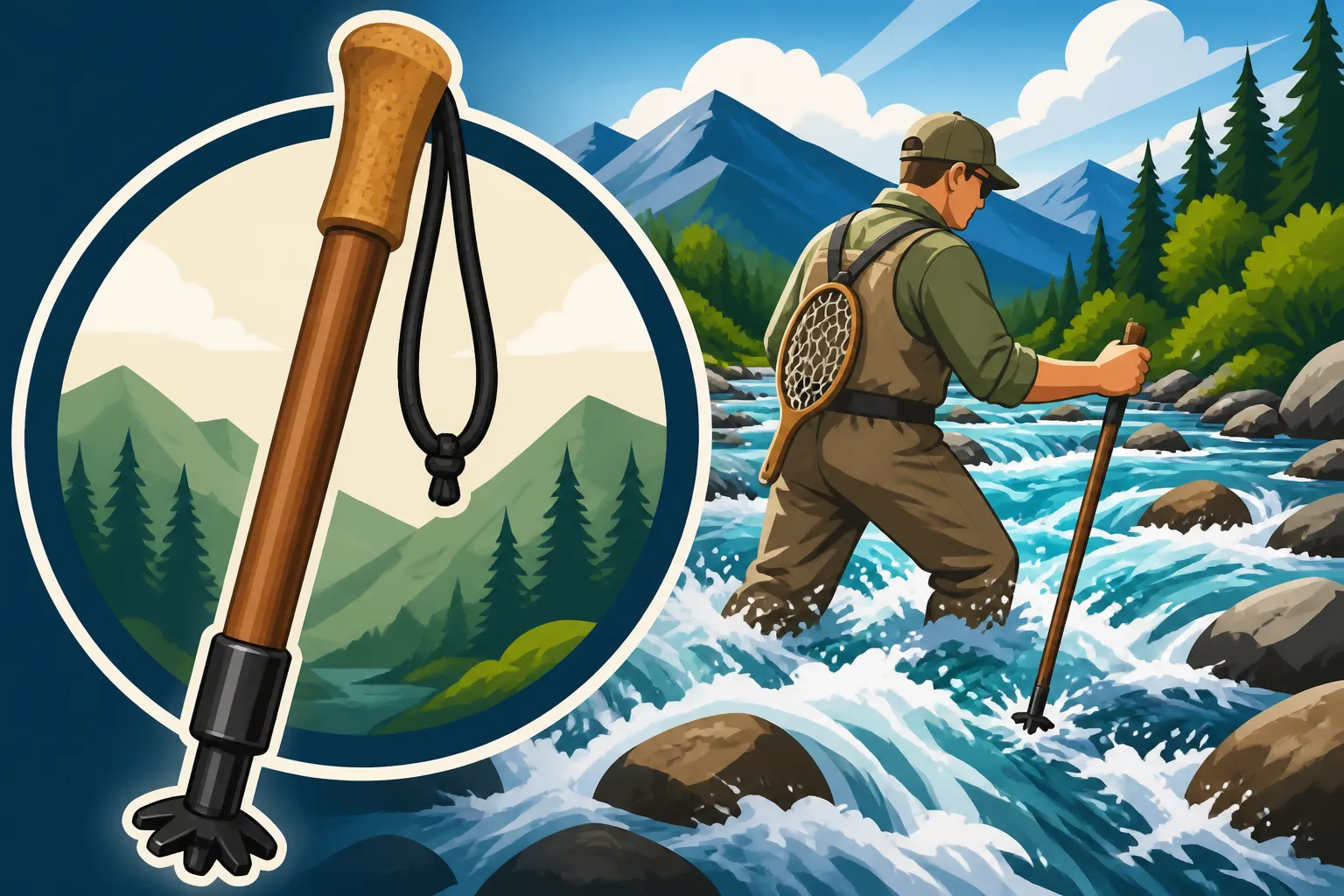
Imagine trying to walk across a bowling alley floor covered in marbles, all while a strong fan is blowing at you. That's a bit what wading a fast mountain stream can feel like without a staff. When you have two points of contact (your feet), your balance is inherently less stable. Introduce a third point—your wading staff—and suddenly, you create a much more secure tripod. This simple principle is incredibly effective. As you move, you can place the staff firmly downstream, leaning into it, allowing the current to push against the staff rather than your body directly. This small shift in balance can prevent countless stumbles and falls.
Think about it: when you're moving upstream against a strong flow, each step requires immense effort to maintain footing. With a staff, you can brace yourself, take smaller, more deliberate steps, and distribute your weight more effectively. It reduces muscle strain and fatigue, too, meaning you can stay on the water longer and enjoy your fishing rather than constantly fighting to stay upright. This is particularly vital when you're crossing deeper sections or contending with a really powerful surge of water, common after a spring thaw or a heavy summer rain. Having that extra point of contact can mean the difference between a successful crossing and an unplanned, cold swim that might damage your gear or even lead to injury.
Probing for Safety: Unmasking Hidden Dangers
One of the most valuable, yet often overlooked, functions of a wading staff is its ability to probe the stream bed ahead of you. Those seemingly benign stretches of water can hide all sorts of hazards: unexpected drop-offs, large submerged boulders, slick moss-covered ledges, or unstable gravel beds. Trying to step blindly into these unknown conditions is an invitation for disaster. Your wading staff becomes your eyes and your feelers, extending your reach and senses below the surface.
Before committing your foot to a new spot, you can use the staff to gently tap and feel out the bottom. Is it solid rock, loose sand, or a pile of slick pebbles? Is there a sudden depth change you weren't expecting? Is there a submerged log or branch that could trip you up? By doing this, you're not only checking for depth and bottom composition but also assessing the current's strength at that specific point. You can find the path of least resistance, or at least the path of known resistance. This proactive approach to wading minimizes surprises and significantly boosts your confidence, allowing you to focus more on your fishing and less on potential spills. It's like having a sonar system for your feet, a crucial advantage in the dynamic environment of a place like the Ellis River or the Swift.
Key Features to Look For in a Reliable Wading Staff
When you're out there, relying on your wading staff to keep you upright and safe, you want one that's going to stand up to the challenge. Not all staffs are created equal, and understanding the key features will help you pick one that truly suits the rigors of New Hampshire's fast mountain streams. You're looking for a balance of durability, portability, and user-friendliness.
Material and Durability: Carbon Fiber vs. Aluminum
The material of your wading staff directly impacts its weight, strength, and overall durability. The two most common options you'll encounter are aluminum and carbon fiber.
-
Aluminum Staffs: These are generally more budget-friendly and offer excellent strength for their weight. They can take a beating and are quite rigid, which is important when you're leaning heavily into a strong current. While robust, they can be a bit heavier than carbon fiber options and might feel colder in your hand during chilly days. An aluminum staff is a fantastic, reliable choice for most anglers who need a solid, dependable tool without breaking the bank. They're resilient to impacts and abrasions, which you'll definitely encounter when you're bumping against rocks or scraping along the stream bed in places like the Ammonoosuc River.
-
Carbon Fiber Staffs: These are the lightweight champions. If you're hiking long distances to reach those remote, high-mountain trout ponds or want to minimize every ounce of gear, carbon fiber is your friend. It offers an incredible strength-to-weight ratio, is naturally warmer to the touch than aluminum, and absorbs vibrations well. The trade-off, however, is often the price. Carbon fiber staffs tend to be more expensive, and while strong, they can be more susceptible to catastrophic failure (i.e., snapping) if subjected to a sharp, hard impact in just the wrong spot, compared to an aluminum staff which might bend but hold together. For the serious backcountry angler who prioritizes minimizing pack weight, a carbon fiber staff is an excellent investment.
Foldability and Portability: Fixed, Collapsible, or Telescopic
How you plan to carry your staff when not in use is just as important as how it performs in the water.
-
Fixed Staffs: These are typically a single, solid piece, offering maximum rigidity and reliability. However, they are cumbersome to transport, especially if you're hiking through dense brush or flying to a destination. They're best suited if you're mostly fishing close to your vehicle and don't need to pack it away often.
-
Collapsible/Folding Staffs: This is perhaps the most popular style for fly anglers. These staffs fold down into multiple short sections, often connected by an internal shock cord, similar to tent poles. They can be deployed very quickly (sometimes with a flick of the wrist) and collapse into a compact package that can be tucked into a wading jacket pocket, backpack, or attached to a wading belt. This portability is key for accessing diverse New Hampshire fishing spots, from roadside pull-offs to deep wilderness. Brands available at places like Bass Pro Shops or online through Amazon often feature various folding mechanisms. The internal cord should be robust to withstand frequent use and tension.
-
Telescopic Staffs: These staffs slide within themselves, extending or retracting to adjust length. They offer good portability, though usually not as compact as folding staffs, and allow for easy length adjustment on the fly. They can be a good middle ground for those who want quick adjustability without the multiple segments of a folding staff. The locking mechanisms for the telescopic sections are critical – make sure they are sturdy and reliable to prevent unexpected collapse mid-wade.
When choosing, consider your typical fishing routine. Are you trekking miles, or staying close to the car? The more hiking involved, the more important portability becomes.
Grip and Strap Design: Comfort and Security
You'll be holding onto this staff for extended periods, often with wet hands or gloves, so the grip and strap design matter immensely for comfort, security, and quick access.
-
Grip: Look for an ergonomic grip that fits comfortably in your hand. Materials like cork, foam, or rubber provide good traction even when wet and can offer some insulation in cold weather. A slightly textured grip can also help prevent slippage. Test different grips if possible to see what feels best. Some staffs have a T-handle, others a more traditional hiking pole grip; it often comes down to personal preference.
-
Lanyard/Strap: A secure lanyard that attaches the staff to your person (usually your wading belt or D-ring) is non-negotiable. This prevents you from losing your staff if you drop it or if it gets pulled from your hand by a strong current. A quick-release or adjustable lanyard is a fantastic feature, allowing you to easily detach the staff if it gets snagged on something underwater, preventing you from being pulled off balance. You want it to be there when you need it, but also easily let go if it becomes a hazard. A well-designed strap also keeps the staff from dangling and interfering with your casting or retrieving line.
Tip Design for Traction: Gripping the Stream Bed
The very business end of your wading staff – the tip – is where the rubber (or carbide) meets the road, or rather, the rock. The effectiveness of your staff hinges on its ability to grip the varied surfaces of a stream bed.
-
Carbide Tips: Many high-quality wading staffs feature a carbide tip, which offers exceptional grip on slippery rocks, submerged wood, and even ice (if you're brave enough for late-season wading). Carbide is incredibly hard and sharp, digging into surfaces to provide a secure purchase. This is often the preferred choice for fast, rocky mountain streams where maximum traction is needed.
-
Rubber Tips: Some staffs come with a rubber tip, or offer one as an interchangeable accessory. Rubber tips are excellent for protecting delicate stream bottoms (like those with sensitive aquatic vegetation) or for reducing noise if you're trying to be stealthy. They also provide good grip on smoother, less abrasive surfaces. However, they can sometimes slip on extremely slick, algae-covered rocks where carbide would bite in.
-
Combination/Interchangeable Tips: The best solution for versatility is often a staff with an interchangeable tip system, allowing you to swap between carbide and rubber depending on the conditions. Some advanced designs might even incorporate a small basket near the tip, similar to a trekking pole, which helps prevent the staff from sinking too deep into soft mud or sand, a useful feature in variable streambeds. No matter the tip, ensure it's securely attached and durable enough to withstand constant impact against rocks and gravel.
Using Your Wading Staff Effectively for Maximum Safety
Having the best wading staff is only half the battle; knowing how to use it properly is what truly unlocks its potential for safety and confidence on the water. It’s an extension of your body, and like any tool, it performs best with good technique. Learning how to move with it, read the water, and maintain it will make all the difference in your New Hampshire fishing adventures.
The Tripod Method of Wading: Step-by-Step Stability
The core principle of safe wading with a staff is the "tripod method." This isn't just a fancy term; it's a fundamental technique that maximizes your stability and minimizes your risk of falling. Here’s how it works:
- Always Maintain Three Points of Contact: Before you move either foot, ensure you have two feet planted firmly on the stream bed, and your wading staff is securely braced. This forms your stable tripod.
- Move the Staff First: When you're ready to take a step, don't move your foot first. Instead, extend your staff downstream and slightly ahead of you, placing it firmly on the stream bed. Probe the area to ensure it's stable and not too deep.
- Step with One Foot: Once your staff is securely planted, you can then move one foot forward, maintaining your balance with the other foot and the staff. You are now momentarily back to two points of contact, but it's a controlled, brief transition.
- Re-establish the Tripod: As soon as your moving foot finds solid purchase, immediately bring your other foot forward, or if you're holding your ground, firmly plant both feet. Before moving your staff again, ensure you have both feet and the staff securely placed, recreating your stable tripod.
- Move Deliberately, Not Quickly: Resist the urge to rush. Every step should be intentional and slow. Feel the bottom, lean into the staff, and let the current push against it. Moving downstream, place your staff slightly upstream of your body, creating a brace against the current.
This method minimizes the amount of time you spend with only one foot (and no staff) on the bottom, which is your most vulnerable position. Practicing this in slower water will build your confidence for when you encounter faster flows or more challenging terrain, common when fly fishing rivers like the Contoocook or Pemigewasset.
Reading the Water with Your Staff: Beyond Just Support
Your wading staff isn't just for keeping you upright; it's an incredibly useful tool for interpreting the underwater environment. It helps you understand what's happening beneath the surface before you commit your weight to it.
- Assessing Current Strength: By placing the staff into the water, you can feel the current's true power at that specific depth and location. Some surface currents can be deceiving; what looks mild on top might be surprisingly strong down below. This helps you decide if a crossing is safe or if you need to find an alternative route.
- Locating Depth Changes: Probing ahead can reveal sudden drop-offs or deeper channels that aren't visible from above. This is crucial for avoiding an accidental plunge that could fill your waders and send you tumbling.
- Identifying Submerged Obstacles: Feel for large rocks, logs, or other debris that could trip you up. Sometimes a piece of wood can be covered in algae, making it extremely slick. Your staff will tell you it's there before your foot does.
- Checking Bottom Composition: Is the bottom firm and rocky, soft and sandy, or a mix of loose gravel? Different bottom types require different wading approaches. Loose gravel can shift unexpectedly, while slick bedrock demands careful, deliberate steps. The staff helps you map out a safe path.
Using your staff to actively "read" the water transforms it from a simple walking stick into a sophisticated navigation tool. This is particularly valuable in stained or turbulent water where visual cues are limited.
Maintenance and Care: Ensuring Longevity
Like all your fishing gear, a wading staff will serve you best if you take care of it. A little maintenance goes a long way in ensuring its reliability when you need it most.
- Rinse After Use: Always rinse your staff with fresh water after each outing, especially if you've been in silty or sandy rivers. This prevents grit from accumulating in joints (if it's a folding or telescopic staff) and helps extend the life of the material.
- Dry Thoroughly: Before storing, make sure your staff is completely dry. This prevents corrosion in aluminum staffs and mildew on grips and straps. If it's a folding staff, extend it fully and let it air dry before collapsing.
- Inspect Joints and Locks: Regularly check the locking mechanisms on telescopic staffs and the shock cord and ferrules on folding staffs. If the shock cord starts to fray or lose tension, it's often replaceable. Tighten any loose screws or components.
- Check the Tip: Examine the tip for excessive wear. Carbide tips will eventually wear down, and rubber tips can degrade or come loose. Replace them as needed to maintain optimal traction.
- Store Properly: Store your staff in a clean, dry place. If it's a folding staff, it's often best to store it loosely collapsed rather than tightly packed for extended periods, to ease tension on the shock cord.
Proper care of your wading staff ensures it will be ready to provide that critical stability and safety for countless fishing trips to come, protecting you whether you're chasing trout on the Swift River or navigating the currents of the Androscoggin.
Where to Find Your Perfect Wading Companion
Now that you know what to look for and how to use it, the final step is actually getting your hands on a quality wading staff. Finding the right one is a personal choice, but thankfully, there are plenty of options available.
Shopping for Wading Staffs: Online and In-Store Options
You have a couple of primary avenues for purchasing a wading staff, each with its own advantages.
-
Specialty Outdoor Retailers: Visiting a dedicated fishing or outdoor sports store, like a Bass Pro Shops, allows you to physically handle different models. This is invaluable for assessing grip comfort, deployment speed (for folding staffs), and overall feel. You can compare the weight of aluminum versus carbon fiber options in person and get a real sense of their portability. Plus, the staff at these stores are often experienced anglers themselves and can offer personalized advice based on the types of waters you plan to fish in New Hampshire. Trying before you buy, especially for something so critical to your safety, is always a smart move.
-
Online Retailers: For sheer variety and convenience, online marketplaces like Amazon offer an enormous selection of wading staffs from various manufacturers. You can easily compare features, read customer reviews, and often find competitive pricing. The downside, of course, is that you can't touch or feel the product before it arrives. If you go this route, pay close attention to detailed product descriptions, especially regarding materials, collapsed length, and grip design. Reading reviews from other anglers who fish similar conditions to New Hampshire's mountain streams can also be very helpful. Just make sure to check return policies in case the staff isn't quite what you expected when it arrives.
Investment in Safety: Understanding the Cost
The cost of a wading staff can vary quite a bit, ranging from more basic, entry-level models to high-end carbon fiber options with advanced features. While I can't give you specific price tags, it's important to understand the shape of the cost.
Entry-level aluminum staffs might be on the more affordable side, offering robust performance for a reasonable investment. Mid-range staffs, often folding aluminum models with improved grips and features, will naturally be a bit higher. At the top end, you'll find the lightweight carbon fiber folding staffs, often with quick-release lanyards and interchangeable tips, which represent a more significant investment.
Think of it this way: you're investing in your safety and confidence on the water. A good wading staff protects you from potential injury, prevents damage to your expensive fishing gear (like your waders or fly rod), and ultimately allows you to fish more challenging waters with greater peace of mind. When you weigh the cost of a potential emergency room visit, lost gear, or simply an end to your fishing day because of a fall, the price of a quality wading staff quickly seems like a worthwhile expenditure. It's a small price to pay for a big increase in safety and enjoyment on our beautiful, but sometimes treacherous, New Hampshire streams.
| Feature / Type | Aluminum Folding Staff | Carbon Fiber Folding Staff | Fixed Staff (Aluminum/Carbon) |
|---|---|---|---|
| Material | Aluminum alloy | High-modulus carbon fiber | Aluminum or carbon fiber |
| Weight | Moderate (can feel substantial in hand) | Very lightweight (excellent for hiking) | Varies by material, generally heavier due to lack of joints |
| Durability | Very tough, resistant to bending, good impact resistance | Excellent strength-to-weight, but can snap with sharp impact | Most rigid and strongest structurally |
| Portability | Excellent (folds into compact sections) | Excellent (folds into compact sections) | Poor (long, single piece, difficult to transport) |
| Deployment Speed | Fast (shock cord allows quick assembly) | Fast (shock cord allows quick assembly) | Instant (always ready) |
| Cost | Mid-range | High-range | Low to mid-range (depending on material) |
| Ideal Use Case | All-around angler, frequent use in varied terrain | Backcountry hiking, weight-conscious anglers, long trips | Anglers fishing close to vehicle, needing ultimate rigidity |
| Traction Tip Options | Carbide, rubber (often interchangeable) | Carbide, rubber (often interchangeable) | Carbide, rubber (may be fixed or interchangeable) |
It really comes down to your priorities and how you plan to use it. For the average angler exploring New Hampshire's diverse waterways, a well-made aluminum folding staff is often the sweet spot of performance and value. But if you're an avid hiker or simply want the lightest option, carbon fiber is tough to beat. Regardless of your choice, remember that the best wading staff is the one you actually use, every time you step into those inviting, yet potentially challenging, New Hampshire waters.
Disclaimer
This article is for general informational purposes only and does not constitute professional advice. Laws, prices and regulations vary by location and change over time. Consult a qualified professional for guidance on your specific situation.