Best Tackle for New Hampshire Smallmouth Bass
There's nothing quite like the thrilling fight of a New Hampshire smallmouth bass – those bronze beauties are renowned for their acrobatic jumps and dogged dives. But if you've ever felt frustrated by a lack of bites or overwhelmed by the sheer amount of tackle out there, you're not alone. Figuring out what gear truly works for these feisty fish in our varied New Hampshire waters can feel like a riddle. This comprehensive guide is designed to cut through the confusion, helping you assemble the perfect tackle box tailored for chasing smallmouth bass across the Granite State.
Understanding New Hampshire Smallmouth Bass Habits
Before we even talk about rods and reels, let's dive into what makes New Hampshire smallmouth tick. Knowing their behavior, preferred habitats, and what they eat is like having a secret weapon in your tackle box. These are smart fish, and adapting your approach to their tendencies is paramount to consistent success. Forget a one-size-fits-all approach; New Hampshire's lakes and rivers demand a nuanced understanding.
Preferred Habitats and Behavior
New Hampshire smallmouth bass are creatures of structure and transition. They love clear, cool water, making many of our deeper lakes and rivers prime territory. You'll often find them lurking around rocky points, submerged humps, ledges, boulder fields, and main lake points where baitfish congregate. Unlike their largemouth cousins who might bury themselves in dense weeds, smallmouth prefer hard bottoms and areas with current or wave action. Think about those windswept points on Lake Winnipesaukee or the rocky stretches of the Connecticut River; these are classic smallmouth havens. They're also incredibly visual predators, which means lure presentation and color can make a huge difference.
Their behavior changes drastically with water temperature. In the spring, they're shallow, pre-spawn, and aggressive, often hugging sun-drenched rocks. In summer, they might push deeper, seeking cooler thermoclines and concentrating on offshore structures. Come fall, they go on a feeding frenzy, bulking up for winter. Understanding these shifts is key to knowing where to cast and how to present your bait. If you're looking for more details on where to find these fish, check out our guide on How to Catch Smallmouth Bass in New Hampshire Lakes.
What They Eat: Forage Preferences
Smallmouth bass are opportunistic predators, but they definitely have preferences. In New Hampshire, their diet primarily consists of baitfish like rainbow smelt, alewives, and juvenile perch. Crayfish are another huge menu item, especially in rocky environments. Beyond that, they'll gobble up insects, leeches, and even smaller panfish. This diverse diet is fantastic news for anglers because it means a wide array of lures can be effective.
Matching the hatch, as fly anglers say, is incredibly important here. If you know the lake you're fishing has a strong smelt population, a lure that mimics a smelt's profile and color will likely outperform something that doesn't. Similarly, if you're working a rocky shoreline, a crayfish imitation is often a killer. Pay attention to what's in the water, and don't be afraid to experiment with your offerings. Observing the environment – looking for schooling baitfish or even flipping over rocks to see crayfish – can provide invaluable clues.
Seasonal Movements and Patterns
New Hampshire's distinct seasons dictate where smallmouth bass will be and how active they'll be. This is perhaps the most crucial factor in selecting your tackle.
- Spring (Ice-out to early June): Smallmouth move shallow, often to gravel flats, rocky points, and coves to spawn. They're hungry and aggressive, but can be finicky if cold fronts roll through. Slow presentations near spawning beds or staging areas are effective.
- Summer (June to August): They move to deeper, cooler water, often suspending over structure or relating to thermoclines. Early mornings and evenings might bring them shallow, but midday often requires targeting deeper humps and ledges. Fast, aggressive retrieves can work for active fish.
- Fall (September to November): This is prime time for trophy smallmouth. They stack up on offshore structures, main lake points, and channel swings, feeding heavily before winter. Reaction baits and soft plastics fished slowly can be deadly.
- Winter (December to March – Ice Fishing): While most smallmouth fishing happens in open water, they can be targeted through the ice, often found in deeper basins near structure. Vertical presentations with small jigs and spoons are key.
Understanding these patterns will guide your lure selection, retrieve speed, and even the type of line you choose. For a broader overview of when different species are biting, consult our guide on Best Time of Year to Fish in New Hampshire.
Essential Rod and Reel Setups for Smallmouth Bass
Your rod and reel are the foundation of your smallmouth bass tackle. Having the right combination allows for proper lure presentation, accurate casting, and the power to land those hard-fighting fish. Don't skimp here; a good quality rod and reel can truly elevate your fishing experience.
Spinning vs. Baitcasting Gear
This is a classic debate, and for New Hampshire smallmouth, both have their place.
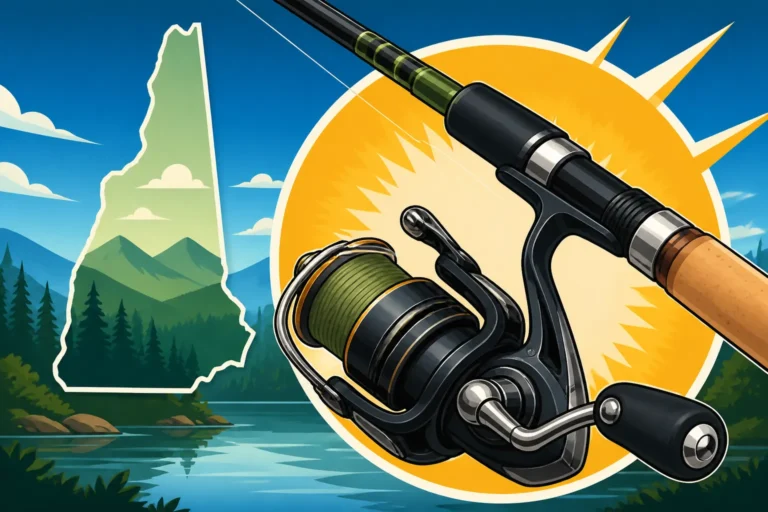
- Spinning Gear: For many anglers, especially beginners or those fishing lighter lures, spinning gear is the way to go. It excels with lighter lines, allows for effortless casting of small baits, and is incredibly versatile. A medium-light to medium power spinning rod with a fast action, paired with a 2500 or 3000 series reel, is a fantastic all-around setup. This is ideal for throwing small jerkbaits, Ned rigs, tubes, and wacky worms – finesse techniques that often shine in clear New Hampshire waters. You'll find a huge selection of excellent spinning gear at places like Bass Pro Shops or online at Amazon.
- Baitcasting Gear: Baitcasting setups offer more power, precision with heavier lures, and superior control for flipping and pitching. If you're throwing larger crankbaits, heavy jigs, or big swimbaits, a baitcaster is more efficient. A medium-heavy power rod with a fast action, paired with a reel featuring a decent retrieve ratio (around 7.1:1 to 8.1:1), will handle most power fishing applications. While it has a steeper learning curve, mastering a baitcaster opens up new possibilities for targeting bigger smallmouth with specific presentations.
Many seasoned anglers carry both, switching setups depending on the lure and technique they're employing. For a deeper dive into spinning setups specifically, check out Best Spinning Rods for Smallmouth Bass.
Rod Specifications: Length, Power, and Action
Choosing the right rod involves understanding these three key terms:
- Length: For most smallmouth fishing, rods between 6'6" and 7'6" are common. Shorter rods (6'6"-6'10") offer more accuracy for short casts and lighter lures, great for river wading or precise casts around docks. Longer rods (7'-7'6") excel at longer casts, managing line, and providing more leverage for fighting fish, especially when fishing from a boat. A 7-foot rod is often a fantastic all-around choice.
- Power: This refers to the rod's strength or backbone.
- Medium-Light (ML): Great for ultra-light baits, small jigs, and finesse presentations with light line.
- Medium (M): The most versatile power, excellent for a wide range of lures from crankbaits to soft plastics. A solid choice for an all-around smallmouth rod.
- Medium-Heavy (MH): Offers more power for heavier lures, battling larger fish, and pulling them out of cover. Ideal for heavier jigs, larger crankbaits, and spinnerbaits.
- Action: This describes where the rod bends.
- Fast Action: The rod bends mostly in the tip. This provides excellent sensitivity for detecting subtle bites and quick hook sets, making it ideal for jigs and soft plastics.
- Moderate-Fast Action: Bends from the tip into the middle of the blank. A good compromise for versatility, working well with many lure types.
- Moderate (or "Crankbait") Action: Bends smoothly throughout the top half of the rod. This softer bend allows fish to inhale moving baits (like crankbaits and jerkbaits) more easily and helps prevent hooks from tearing out.
For a general guide on choosing rods for any New Hampshire lake, our Best Fishing Rods for New Hampshire Lakes article has more information.
Reel Types and Line Choices
The reel needs to balance well with your rod and your chosen fishing style.
- Spinning Reels: Look for smooth drag systems, a comfortable retrieve, and a size that balances with your rod (typically 2500 or 3000 series for smallmouth). Gear ratios around 6.0:1 are versatile, offering a good balance of power and speed.
- Baitcasting Reels: Considerations include gear ratio (higher ratios for faster retrieves like topwaters, lower ratios for power applications like deep crankbaits), braking systems (magnetic or centrifugal for cast control), and line capacity.
Line Selection: This is critically important for smallmouth, especially in clear New Hampshire waters where fish can be line-shy.
- Fluorocarbon: Nearly invisible underwater, very sensitive, and sinks. Excellent for finesse techniques with jigs, worms, and jerkbaits. Use 6-10 lb test for most applications.
- Monofilament: More stretch, good knot strength, and floats. A good choice for topwater lures or crankbaits where a little stretch can be beneficial. Use 8-12 lb test.
- Braided Line: Extremely strong, no stretch, incredibly sensitive, and floats. Excellent for punching through weeds (though less common for smallmouth) or for long casts. Often paired with a fluorocarbon leader (6-10 lb) to reduce visibility. Use 10-20 lb test main line.
Many anglers use braided main line on spinning reels with a fluorocarbon leader for maximum sensitivity and invisibility. For baitcasters, straight fluorocarbon is a popular choice.
Top Lures and Baits for New Hampshire Smallmouth Bass
This is where the fun really begins! Smallmouth are aggressive, and they'll strike a huge variety of artificial lures. The key is presenting the right one at the right time and in the right place.
Crankbaits and Jerkbaits
These are essential for covering water and triggering reaction strikes.
- Crankbaits: These lipped lures dive to various depths depending on their design.
- Shallow Divers: Great for fishing over submerged grass, rocky flats, or along shorelines in spring and fall. Look for models that dive 2-6 feet.
- Medium Divers: Excellent for hitting submerged humps, points, and ledges in 6-12 feet of water.
- Deep Divers: Crucial for reaching smallmouth holding on offshore structures in 12-20+ feet, especially in summer.
Colors should mimic local baitfish (silver, chrome, chartreuse/blue) or crayfish (brown, orange, green pumpkin). The rattling sound many crankbaits emit can be a major draw for smallmouth.
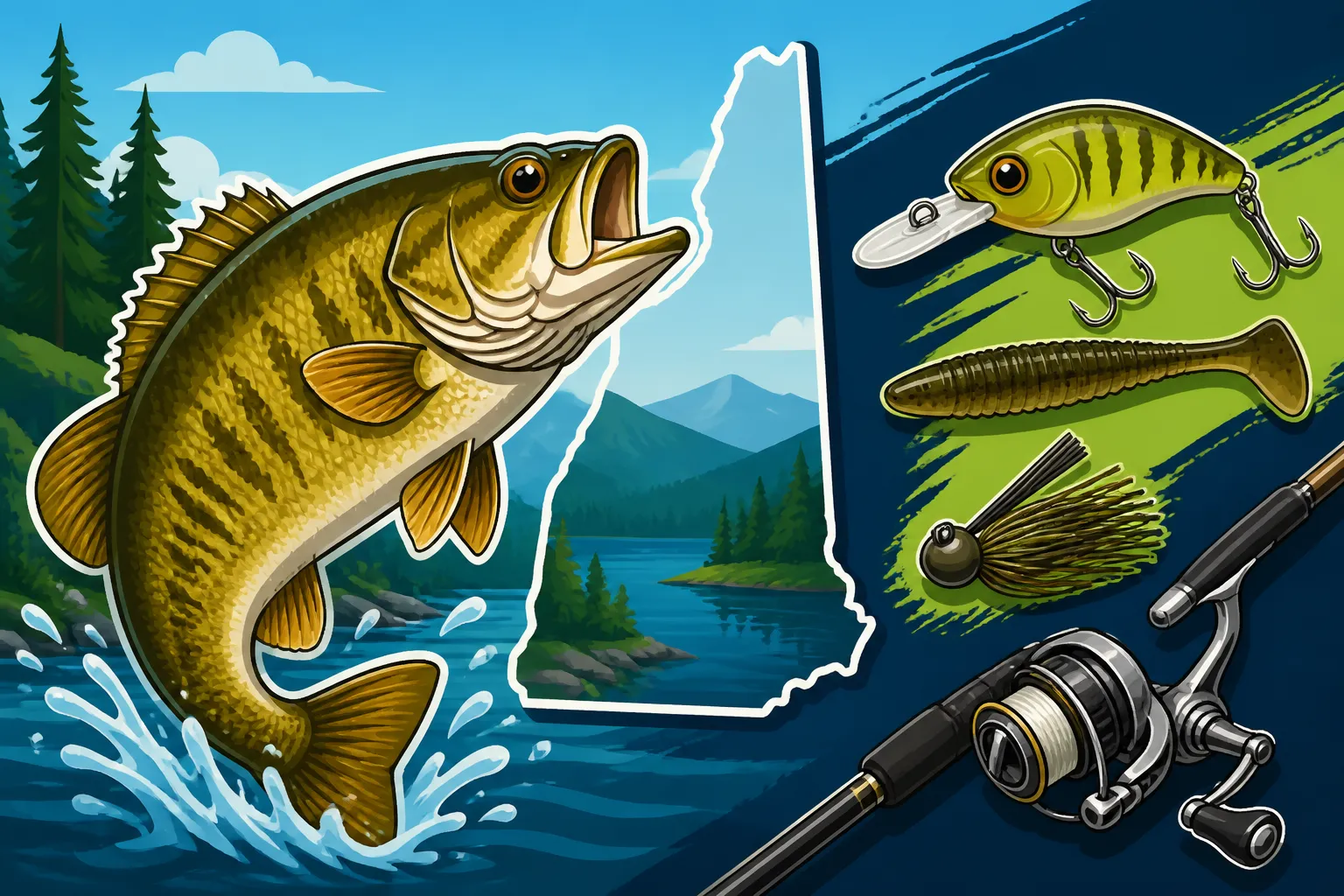
- Jerkbaits: These lures suspend or slowly float/sink and are worked with a "twitch, twitch, pause" retrieve, mimicking a wounded baitfish. They are absolutely deadly for smallmouth, particularly in cooler water (spring and fall). Brands like Rapala, Lucky Craft, and Megabass make excellent jerkbaits. Clear water and sunny days often call for natural baitfish patterns (perch, smelt), while cloudy days or stained water might allow for brighter colors. The key to jerkbait fishing is the pause – that's often when the strike occurs. Our article on Best Crankbaits for New Hampshire Smallmouth Bass offers more specific recommendations.
Soft Plastics and Jigs
When smallmouth are finicky or holding tight to structure, soft plastics and jigs are often the answer.
- Tube Jigs: Arguably one of the most consistent smallmouth lures. The hollow body allows for a jig head to be inserted, giving it an erratic, spiraling fall that perfectly imitates a dying baitfish or a crayfish. Green pumpkin, smoke, and watermelon are classic colors. Fish them by hopping, dragging, or shaking them along the bottom.
- Ned Rigs: A finesse presentation consisting of a small mushroom-style jig head paired with a small, buoyant soft plastic worm (often 2.5-3 inches). It stands straight up on the bottom, mimicking a foraging baitfish. Incredibly effective for pressured fish or when bites are tough.
- Grubs/Swimbaits: Single-tail grubs on a jig head are simple yet effective, especially when reeled steadily or bounced along the bottom. Small paddle-tail swimbaits (2-4 inches) can be rigged on a jig head and retrieved to imitate a schooling baitfish.
- Wacky Rigs/Drop Shot Rigs: These are ultra-finesse techniques. A wacky rig involves hooking a soft plastic worm through its middle, giving it a unique wobble on the fall. A drop shot rig presents a soft plastic bait suspended above a weight, allowing for precise depth control. Both are excellent for highly pressured fish or clear, cold water.
Common colors for soft plastics include green pumpkin, watermelon, black and blue, and various natural baitfish patterns.
Topwaters and Spinnerbaits
These lures offer explosive strikes and are fantastic when conditions are right.
- Topwater Lures: Nothing beats the thrill of a smallmouth blowing up on a topwater bait.
- Poppers: Create splashes and gurgles, imitating a struggling baitfish. Work them with short jerks and pauses.
- Walking Baits (e.g., Zara Spook): Walk side-to-side across the surface. Requires practice but can be incredibly enticing.
- Prop Baits: Have propellers that churn water, creating noise and disturbance.
Topwater fishing is best in low light conditions (dawn, dusk), on overcast days, or when the water is calm. Focus on points, rock piles, and transitions.
- Spinnerbaits: Excellent for covering water quickly and attracting aggressive smallmouth, especially in stained water or around moderate cover. The flash of the blades and the vibration they create are irresistible. Choose blade combinations (Colorado for thump, Willowleaf for flash) and skirt colors (white, chartreuse, natural baitfish) that match the conditions. They're particularly effective in spring and fall.
Terminal Tackle Essentials for Smallmouth Success
Your terminal tackle is the unsung hero of your setup. These small but crucial components connect your line to your lure and ensure you can land the fish. Quality here matters – don't let a cheap hook or knot cost you a trophy smallmouth.
Hooks and Weights
Matching your hook and weight to your lure and presentation is fundamental.
- Hooks:
- Jig Heads: Come in various weights and styles (round ball, mushroom, stand-up). The weight depends on depth and current, while hook size (usually #1 to 3/0) matches the soft plastic. For tubes, internal tube jig heads are essential. For Ned rigs, mushroom heads are standard.
- EWGs (Extra Wide Gap) Hooks: Ideal for Texas-rigging soft plastics, providing good hook-up ratios while being weedless. Sizes 1/0 to 3/0 are common for smallmouth worms and creatures.
- Drop Shot Hooks (e.g., Rebarb, Octopus): Small, sharp hooks designed to be nose-hooked through soft plastics, allowing the bait to hang horizontally. Sizes #2 to #1 are typical.
- Treble Hooks: Most crankbaits and topwater lures come equipped with trebles. Consider upgrading to sharper, stronger trebles from brands like VMC or Gamakatsu for better hook penetration and holding power, especially for larger smallmouth.
- Weights:
- Bullet Weights (Lead or Tungsten): Used for Texas-rigging. Tungsten is denser, more sensitive, and environmentally friendly, though more expensive. Sizes from 1/8 oz to 3/8 oz cover most smallmouth applications.
- Drop Shot Weights: Available in cylinder, round, or teardrop shapes, designed to be easily clipped onto the line. Sizes from 1/8 oz to 1/2 oz are common, depending on depth and current.
- Nail Weights: Small, slender weights inserted into soft plastics for subtle rigging (e.g., Neko rig).
Leaders and Swivels
Using leaders and swivels strategically can improve your presentation and prevent line twist.
- Leaders: When using braided main line, a fluorocarbon leader is almost always a good idea for smallmouth. Braided line is highly visible, while fluorocarbon is nearly invisible. Tie a 6-10 lb fluorocarbon leader (2-4 feet long) to your braid using an FG knot or an Alberto knot. This combination gives you the strength and sensitivity of braid with the stealth of fluorocarbon. This is particularly important in the clear waters of New Hampshire's popular smallmouth fisheries like Winnipesaukee and Squam Lake.
- Swivels: While not always necessary, swivels can prevent line twist, especially when using lures that spin (like some spinnerbaits or inline spinners). A small ball bearing swivel is generally preferred as it rotates more freely than a barrel swivel. When using a swivel, attach it above your leader connection to the main line, or use a small snap swivel to quickly change lures. For most finesse applications, however, tying directly to the lure or using a small snap without a swivel is often preferred to maintain the most natural presentation.
Line Choices Revisited for Specific Tactics
Let's reinforce line choices with a tactical bent.
- Finesse Fishing (Jigs, Tubes, Ned Rigs, Drop Shot): 6-8 lb fluorocarbon is hard to beat for direct tie-ins, offering stealth and sensitivity. If using braid, a 10-15 lb braid main line with a 6-8 lb fluorocarbon leader is ideal. The lack of stretch in braid makes detecting subtle bites easier.
- Moving Baits (Crankbaits, Jerkbaits): 8-12 lb fluorocarbon is a strong contender for its sensitivity and invisibility. However, some anglers prefer 8-12 lb monofilament for jerkbaits and shallow crankbaits because its stretch can help prevent hooks from pulling free, and its floating nature can slightly alter lure action. For deep diving crankbaits, the low stretch of fluorocarbon helps the bait achieve maximum depth.
- Topwaters and Spinnerbaits: 10-15 lb monofilament is excellent for topwater lures due to its buoyancy, which helps the lure stay on the surface and walk or pop effectively. Its stretch can also absorb the violent strikes. For spinnerbaits, 10-15 lb fluorocarbon or even a heavier mono can work well, depending on the cover you're fishing.
Electronics and Accessories to Elevate Your Smallmouth Game
Beyond the basics, certain tools and accessories can significantly increase your efficiency and success on the water, especially when targeting smallmouth bass in varied New Hampshire environments.
Fish Finders and GPS Mapping
Modern electronics have revolutionized fishing, and smallmouth anglers benefit immensely.
- Fish Finders (Sonars): These devices allow you to "see" underwater.
- 2D Sonar: The traditional view, showing fish arches and bottom contours. Essential for identifying baitfish schools and general depth.
- Down Imaging/Side Imaging: Provides photo-like views of structure and fish directly below or to the sides of your boat. This is incredibly valuable for locating those subtle rock piles, ledges, and transition areas where smallmouth ambush prey. Brands like Humminbird (with their MEGA Imaging) and Lowrance (with ActiveTarget) offer cutting-edge technology that can make a huge difference in finding those offshore smallmouth holding spots.
- GPS and Mapping: Integrated GPS allows you to mark waypoints, track your drifts, and navigate safely. Detailed lake mapping, often pre-loaded or available via subscription, shows depth contours, public access points, and specific underwater structures. This is crucial for returning to productive spots, understanding underwater topography, and planning your approach. On vast lakes like Winnipesaukee, having accurate mapping is indispensable. Our guide on Best Fish Finders for New Hampshire Lakes provides more details on choosing the right unit.
Rod Holders and Boat Setup
If you're fishing from a boat, thoughtful setup can make your day much more productive and enjoyable.
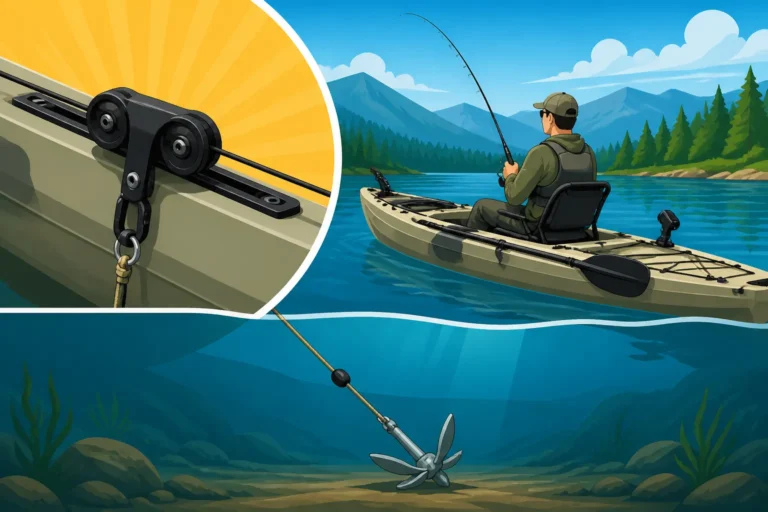
- Rod Holders: While not always used for active casting, rod holders are invaluable for trolling (especially for lake trout, but also sometimes for smallmouth with deep diving crankbaits), or for safely storing rods while moving or switching lures. For kayak anglers, specific rod holders designed for yak fishing are essential.
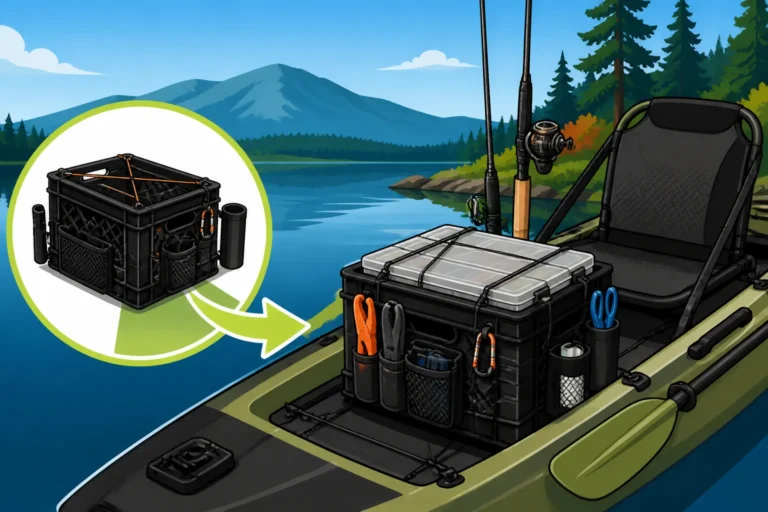
- Boat Accessories: Consider a good quality anchor system (especially important in windy New Hampshire lakes), a cooler for drinks and your catch, and comfortable seating. If you're using a kayak, a pedal drive system can free up your hands for fishing, and a dry bag for electronics and personal items is a must. For those exploring New Hampshire's diverse waterways, Best Kayaks for New Hampshire Fishing offers advice on choosing the right vessel.
Tools and Storage Solutions
Having the right tools at hand and keeping your tackle organized are keys to efficiency.
- Pliers/Forceps: Essential for safely removing hooks, especially from toothy fish or deep-hooked smallmouth. Long-nose pliers are versatile.
- Line Cutters: Small, sharp scissors or clippers for quick and clean line cuts.
- Measuring Tape/Scale: For checking legal lengths and weighing that trophy smallmouth. Always know the current New Hampshire Bass Limits and Slot Rules.
- Tackle Storage:
- Utility Boxes: Clear plastic utility boxes (like those from Plano or Bass Pro Shops) with adjustable dividers are excellent for organizing lures by type, size, or color.
- Tackle Bags/Backpacks: Provide portable storage for your utility boxes, tools, and other gear. A good tackle bag allows you to easily transport your essentials whether you're fishing from shore, a boat, or a kayak.
- Bait Binders: Specialized storage for soft plastics, keeping them organized and preventing them from melting or becoming a sticky mess.
Maintaining an organized tackle box prevents frustrating tangles and ensures you can find what you need when the bite is on. For more guidance on setting up your storage, explore Best Tackle Box Setup for New Hampshire Anglers.
Seasonal Tackle Adjustments for New Hampshire Smallmouth
As we discussed, New Hampshire's seasons dramatically influence smallmouth behavior. Smart anglers adjust their tackle accordingly, maximizing their chances throughout the year.
Spring: Post-Ice Out and Pre-Spawn Frenzy
Spring, especially post-ice out, is a phenomenal time for smallmouth. They are hungry and aggressive as they prepare for spawning.
- Rod & Reel: A medium-light to medium spinning setup is usually preferred for delicate presentations.
- Lures:
- Jerkbaits: Absolutely deadly. Suspending jerkbaits worked with long pauses near rocky points and shallow flats.
- Soft Plastic Tubes: Rigged on 1/8 to 1/4 oz jig heads, dragged and hopped slowly on bottom. Green pumpkin and watermelon are great.
- Blade Baits/Spoons: For vertical jigging in deeper staging areas.
- Small Crankbaits: Shallow to medium diving, in natural baitfish patterns.
- Key Approach: Focus on rocky areas, especially those that warm up first in the sun. Fish slowly; the water is still cold, and fish might be lethargic despite their hunger. Watch for any structure that might hold warmth or offer shelter.
Summer: Deep Water and Topwater Thrills
Summer can present a challenge as smallmouth often move deeper, but also offers exciting topwater action during certain times.
- Rod & Reel: A medium spinning setup for finesse, and a medium-heavy baitcasting setup for power techniques.
- Lures:
- Deep Diving Crankbaits: For targeting offshore humps, ledges, and drop-offs.
- Drop Shot Rigs: For vertically presenting soft plastics to suspended fish or those clinging to deep structure. Light line (6-8 lb fluorocarbon) is crucial.
- Tube Jigs/Ned Rigs: Still effective on deeper structure, especially if fished meticulously.
- Topwater Lures (early morning/late evening): Poppers, walk-the-dog baits for explosive surface strikes near points and shallow rock piles.
- Carolina Rigs: For dragging soft plastics over larger areas of deep structure.
- Key Approach: Use electronics to find bait and structure in deeper water. Focus on dawn and dusk for shallow feeding frenzies, otherwise, probe deeper areas. Keep an eye on Smallmouth Bass Habits on Winnipesaukee for lake-specific summer strategies.
Fall: The Feeding Blitz
Fall is arguably the best time to catch trophy-sized New Hampshire smallmouth as they gorge themselves before winter.
- Rod & Reel: Both spinning and baitcasting setups are valuable. A medium-heavy baitcaster for heavier reaction baits, and a medium spinning for finesse.
- Lures:
- Jerkbaits: Continue to be phenomenal, often larger sizes than in spring.
- Spinnerbaits/Swim Jigs: For covering water around points and submerged cover.
- Blade Baits/Spoons: When fish are schooled up on deep structure, vertical jigging is incredibly effective.
- Football Jigs/Soft Plastics: For dragging slowly along deep breaks and ledges.
- Larger Swimbaits: Mimicking the larger baitfish smallmouth are targeting.
- Key Approach: Smallmouth often school up tightly in the fall, so once you find one, you'll likely find more. Look for baitfish concentrations; the smallmouth won't be far behind. Often, a combination of covering water with reaction baits and then slowing down with jigs once fish are located is a winning strategy.
Here's a quick comparison of seasonal tackle considerations:
| Season | Preferred Lure Types | Typical Presentation | Key Tackle Notes |
|---|---|---|---|
| Spring | Jerkbaits, Tubes, Small Cranks | Slow retrieves, bottom contact | Finesse setups, fluorocarbon leaders. Focus on warming, rocky shallows. |
| Summer | Deep Cranks, Drop Shot, Topwaters | Fast retrieves, vertical jigging | Electronics crucial for deep fish. Topwater early/late. |
| Fall | Jerkbaits, Blade Baits, Jigs | Aggressive retrieves, bottom drag | Heavier gear for bigger fish. Target schooling baitfish on offshore structures. |
| Winter | Small Spoons, Jigging Raps | Vertical jigging through ice | Light ice fishing rods. Very subtle movements. Deep basin structure. |
Tips for Building Your Smallmouth Bass Tackle Box
Building a truly effective smallmouth tackle box isn't about buying everything under the sun, but rather selecting versatile, high-quality items that consistently catch fish in New Hampshire.
Prioritizing Versatility and Quality
When starting out, focus on lures and tackle that can be used in multiple situations or mimic various forage items. A quality 7-foot medium-power fast-action spinning rod, paired with a reliable 2500-series reel, can handle a significant portion of your smallmouth fishing needs. From there, you can expand.
- Versatile Lures: Green pumpkin tubes, natural colored jerkbaits, and small paddle-tail swimbaits are incredibly versatile and should be staples. They can imitate crayfish, smelt, perch, and panfish depending on how you work them.
- Quality Over Quantity: A few well-made lures from trusted brands will often outperform a box full of cheap imitations. High-quality hooks, sharp trebles, and durable soft plastics are worth the investment. Think about investing in lures that are proven fish catchers rather than buying every new fad.
Remember, you don't need to spend a fortune right away. You can find excellent value and choice at reputable retailers like Bass Pro Shops, or explore a wider range of brands and prices through online platforms like Amazon.
Essential Kit for New Hampshire Smallmouth
Let's break down a solid foundational kit for New Hampshire smallmouth bass fishing:
- Rods & Reels:
- One 6'9" to 7'2" Medium-Light to Medium Power, Fast Action Spinning Rod (e.g., St. Croix, Ugly Stik, Fenwick)
- One 2500-3000 series Spinning Reel (e.g., Shimano Sedona/Nasci, Daiwa Revros/Fuego)
- Optional: One 7'0" to 7'4" Medium-Heavy Power, Fast Action Baitcasting Rod
- Optional: One 7.1:1 Ratio Baitcasting Reel
- Line:
- Spool of 10-15 lb Braided Line (e.g., PowerPro, Sufix 832)
- Spool of 6-10 lb Fluorocarbon Leader Material (e.g., Seaguar InvizX, Berkley Vanish)
- Optional: Spool of 8-12 lb Monofilament (e.g., Trilene XL, Suffix Elite)
- Lures:
- Tubes: 3.5" to 4" tubes in green pumpkin, smoke, watermelon (10-15 count)
- Jerkbaits: One suspending jerkbait (3.5" to 5") in natural baitfish pattern (e.g., silver/blue, perch)
- Crankbaits: One shallow diver, one medium diver in natural baitfish or crayfish pattern
- Jig Heads: 1/8 oz, 1/4 oz, 3/8 oz round ball or mushroom heads (assorted, 5-10 each)
- Soft Plastics: 3" to 4" grubs/paddle-tail swimbaits, 2.75" Ned rig worms (e.g., Z-Man Finesse TRD), 5" wacky worms (green pumpkin, black, smoke)
- Topwater: One popper or walking bait (e.g., Rebel Pop-R, Heddon Zara Spook Jr.)
- Optional: One 3/8 oz Spinnerbait (white/chartreuse)
- Terminal Tackle:
- Assorted EWG hooks (1/0, 2/0), Drop Shot Hooks (#2, #1)
- Assorted Bullet Weights (1/8 oz, 1/4 oz), Drop Shot Weights (1/8 oz, 1/4 oz)
- Small barrel swivels or snap swivels (if preferred)
- Tools & Accessories:
- Long-nose pliers/forceps
- Line cutters
- Small ruler or measuring tape
- Polarized sunglasses
- Hat
- Sunscreen
- Small first-aid kit
- Dedicated tackle box/bag with clear utility boxes
This list provides a fantastic starting point. As you gain experience, you'll naturally fine-tune it to your specific fishing style and the New Hampshire waters you frequent.
Organization and Maintenance
A well-organized tackle box is a joy to use. Keep your lures separated by type, color, or size in clear utility boxes. Label them if it helps. Store soft plastics in their original bags or in dedicated bait binders to prevent them from reacting with other plastics.
Maintenance is also key. After each trip, especially if you've been in saltwater or rainy conditions (like fishing the Great Bay for stripers, though that's a different beast than smallmouth, it's good practice), wipe down your rods and reels. Inspect your line for nicks or abrasions, especially the first few feet, and re-tie knots if they look suspect. Check lure hooks for sharpness and rust, replacing them as needed. A little care goes a long way in ensuring your gear performs when that trophy smallmouth finally strikes.
Disclaimer
This article is for general informational purposes only and does not constitute professional advice. Laws, prices and regulations vary by location and change over time. Consult a qualified professional for guidance on your specific situation.