Best Ice Shanty for New Hampshire Lakes
There’s nothing quite like the crisp air and serene beauty of a New Hampshire winter day out on the ice, but let's be honest, those beautiful days can turn brutal in a heartbeat. The biting wind, the sudden snow squalls, and the relentless cold can quickly send even the most dedicated angler packing. This guide is all about helping you beat those elements by choosing the absolute best ice shanty for your New Hampshire adventures, ensuring you stay warm, comfortable, and out on the ice longer, no matter what the weather throws at you.
Why a Good Ice Shanty is a Game Changer for New Hampshire Winters
When you picture ice fishing in New Hampshire, you might envision bundled-up anglers huddled over holes, constantly stomping their feet to stay warm. And while that's certainly part of the experience for some, it doesn't have to be your reality. A well-chosen ice shanty transforms a potentially miserable day into an enjoyable, extended outing. It's not just about shelter; it's about comfort, safety, and maximizing your time chasing those elusive fish.
Battling the Elements: Wind, Cold, and Snow
New Hampshire winters are famously unpredictable. One minute you could have calm, sunny conditions, and the next, a fierce wind rips across the lake, driving the wind chill deep into negative territory. Standing exposed to these elements not only drains your energy but can make it incredibly difficult to focus on fishing. Your fingers go numb, your line freezes, and any joy quickly dissipates.
An ice shanty acts as your personal fortress against this onslaught. Even a simple pop-up model cuts out the wind chill entirely, immediately making the ambient temperature feel ten to twenty degrees warmer. Add a small heater, and you're in a whole new world of comfort. When the snow starts to fly, whether it's a light dusting or a full-blown blizzard, your shanty keeps you and your gear dry, preventing soggy clothes and frozen equipment. It’s like bringing a cozy cabin right out onto the frozen lake.
Enhancing Comfort and Extending Your Fishing Day
Beyond just protection, a good ice shanty significantly ups your comfort game. Imagine being able to take off your heavy outer layers, sit on a comfortable seat, and actually feel your fingers as you tie on a new jig. With a shanty, you can easily run a small propane heater, keeping the interior toasty warm, sometimes even warm enough to shed your jacket. This makes long waits between bites much more tolerable and enjoyable.
The added space means you can bring more gear, set up a small table for snacks and drinks, or even rig up a portable cookstove for a hot meal. For those who enjoy bringing friends or family along, a larger shanty creates a communal space where everyone can relax, chat, and share the experience without freezing. This extended comfort means you're not cutting your trip short because of the cold, giving you more hours to land that trophy New Hampshire lake trout limit on Winnipesaukee or a bucket full of perch.
Safety Considerations and Emergency Shelter
While often overlooked, the safety aspect of an ice shanty is paramount, especially on expansive and remote New Hampshire lakes. Being exposed to extreme cold for prolonged periods carries a real risk of frostbite and hypothermia, conditions that can develop surprisingly quickly without adequate protection. A shanty provides an immediate warm refuge if you or someone in your group starts to feel the effects of the cold, offering a place to warm up, rehydrate, and recover.
In the event of an unexpected change in weather, like a whiteout blizzard or a sudden drop in temperature, your shanty can serve as a critical emergency shelter. It provides visibility from afar and protection while you assess the situation or wait for assistance. For anyone venturing onto the ice, especially in unfamiliar territory or on larger bodies of water, having a reliable shelter is not just a convenience—it's a vital piece of safety equipment. Always remember to check How thick ice needs to be before New Hampshire anglers fish it before heading out.
Types of Ice Shanties: Finding Your Perfect Match
Choosing the right ice shanty is a bit like picking the right fishing rod; it depends on your style, needs, and how you plan to use it. There's no one-size-fits-all answer, especially with the diverse fishing opportunities across New Hampshire, from small, intimate trout ponds to vast, windswept lakes. Let's break down the main types you'll encounter.
Portable Pop-Up Shanties: Quick and Nimble
Portable pop-up shanties are a fantastic option for the angler who values mobility and ease of use. These shelters are essentially fabric cubes or rectangles with flexible poles that "pop" into shape much like a camping tent, but usually with an integrated floor or heavy skirting. They pack down into a relatively compact carrying bag, often resembling a large duffel. This makes them easy to transport by hand, on a sled, or even strapped to a snowmobile.
The main advantages of pop-ups are their lightweight nature and rapid deployment. Many can be set up by one person in just a few minutes, which is a huge plus when you're hopping from spot to spot looking for active fish. While some models offer decent insulation, they generally aren't as thermally efficient as flip-overs or permanent shelters, but they're still a massive improvement over open-air fishing. They're also often the most budget-friendly option, making them a great entry point for new ice anglers. You can often find a good selection of these at retailers like Bass Pro Shops or even online at Amazon.
Flip-Over Shelters: The Best of Both Worlds
Flip-over shelters are designed for anglers who want a balance of mobility and comfort. The genius of the flip-over design lies in its integrated sled base, which also serves as the seating and structural support for the fabric tent. When packed, the tent folds down into the sled, making for a streamlined unit that's easy to pull across the ice by hand, ATV, or snowmobile. When you arrive at your spot, you simply "flip" the frame and fabric over, and your shanty is instantly deployed.
These shelters typically offer better insulation than basic pop-ups, often featuring thicker, thermal fabrics. The sled base is incredibly practical for storing gear and provides a stable, low-profile footprint on the ice, which helps in windy conditions. While heavier than pop-ups, their quick setup and robust protection make them a favorite for serious anglers who move frequently but demand a higher level of comfort. They come in various sizes, from solo angler models to those accommodating two or three people, making them versatile for different trip types.
Hub-Style Shelters: Room for the Whole Crew
When you're planning a full day out with family or a group of friends, a hub-style shelter truly shines. These are similar to pop-ups in that they have fabric walls and flexible poles, but instead of packing down into a simple bag, the poles radiate out from central "hubs" to create expansive, often square or hexagonal interior spaces. They are designed for maximum volume and headroom, allowing multiple anglers to stand up, spread out their gear, and fish comfortably without feeling cramped.
Hub-style shelters typically feature excellent insulation, often with multiple layers of thermal fabric, making them incredibly warm even in severe cold. Their large footprint and tall walls make them less ideal for frequent repositioning, but if you're setting up a base camp for a long session or a weekend trip, they are unbeatable for comfort and capacity. They might take a few extra minutes to set up compared to a flip-over, as you're deploying multiple hubs, but the payoff in terms of space and warmth is significant. These are perfect for creating a cozy, social atmosphere on the ice for a New Hampshire senior combo hunting and fishing license eligibility outing with grandchildren or a fun day with fishing buddies.
Permanent or Skid Shanties: The True Ice House Experience
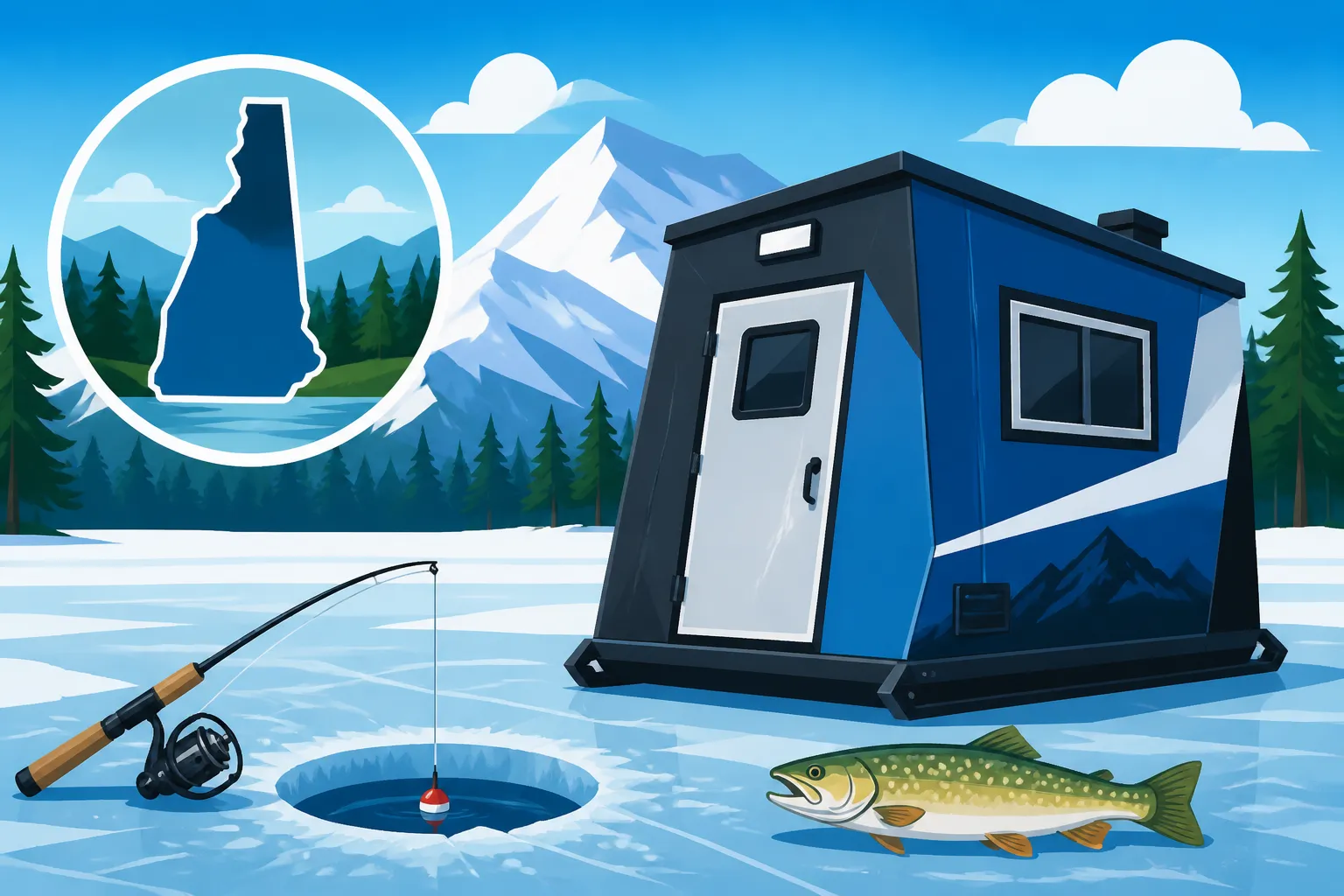
For the ultimate in comfort and customization, nothing beats a permanent or skid shanty, often referred to as an "ice house." These are essentially small, towable sheds built specifically for the ice. They typically feature rigid wooden or aluminum frames, hard-sided walls, windows, doors, and often include built-in benches, bunks, stoves, and even interior lighting. They can be incredibly well-insulated, offering a true "home away from home" experience on the ice.
The trade-off for this luxurious comfort is mobility. Permanent shanties are heavy and require a truck, ATV, or snowmobile for transport, often on a dedicated trailer or skis. Once deployed, they are not designed for frequent moves; anglers typically set them up for the season in a favored spot. They represent a significant investment in both cost and effort but provide unmatched protection from the elements, ample space for an entire family or large group, and the ability to leave gear securely inside between trips. They are the choice for dedicated ice anglers who frequent the same large New Hampshire lakes year after year, transforming ice fishing into a multi-day camping experience. Remember to be aware of New Hampshire ice shanty registration rules if you plan to use one of these.
| Shanty Type | Portability | Setup Time | Insulation Level | Capacity (Typical) | Ideal Use Case |
|---|---|---|---|---|---|
| Pop-Up | Excellent (lightweight) | Very Fast (1-5 min) | Good | 1-3 people | Solo anglers, short trips, frequent spot changes, budget-conscious |
| Flip-Over | Good (sled base) | Fast (2-7 min) | Very Good | 1-3 people | Mobile anglers wanting more comfort, small groups, moderate budgets |
| Hub-Style | Moderate (bulky bag) | Moderate (5-15 min) | Excellent | 2-8+ people | Family outings, group trips, longer stays, maximum space, base camp |
| Permanent/Skid | Poor (heavy, towed) | Slow (seasonal setup) | Superior | 4-10+ people | Dedicated anglers, seasonal base camp, ultimate comfort, highest budget |
Key Features to Consider for New Hampshire Conditions
New Hampshire's specific climate and the nature of its lakes demand certain considerations when selecting an ice shanty. It's not just about having a roof over your head; it's about having the right roof over your head, one that can stand up to the rigorous demands of a true northern winter.
Insulation: Staying Warm When it's Single Digits
This is arguably the most critical feature for any ice shanty in New Hampshire. When the temperatures plummet to single digits or below, and the wind howls, a non-insulated shelter is little more than a windbreak. Look for shanties advertised with "thermal" or "fully insulated" features. This typically means the fabric walls are constructed with multiple layers, often including a dark inner layer to absorb solar heat and reduce condensation, and a thicker, quilted insulation material in between.
The difference a good thermal barrier makes is astounding. An insulated shanty holds heat much more efficiently from a small heater, requiring less fuel and maintaining a much more comfortable interior temperature. This isn't just about feeling cozy; it's about minimizing the risk of exposure and allowing you to remain alert and focused on fishing for longer periods. Without proper insulation, a propane heater will be fighting a losing battle against the outside cold, wasting fuel and failing to provide consistent warmth.
Durability and Wind Resistance: Built to Last
New Hampshire lakes, especially the larger ones like Lake Winnipesaukee, can experience incredibly strong winds that seemingly come out of nowhere. A flimsy shanty won't just be uncomfortable; it could be torn apart or sent tumbling across the ice, potentially endangering you and your gear. Look for robust construction in both the frame and the fabric. Strong, oversized poles (fiberglass or aluminum) that resist bending are a must. Fabric denier (a measure of fabric thickness and durability) should be on the higher side, usually 600D or more, to resist tears and abrasions.
Additionally, pay attention to the quality of zippers and stitching. These are often failure points on lesser-quality shelters. Reinforced corners and stress points will add significantly to the shanty's lifespan. And don't forget the integrated anchor system – strong tie-down points and reliable ice anchors are non-negotiable for keeping your shanty firmly planted when the wind kicks up. You don't want to be chasing your shanty across the ice during a gust.
Size and Capacity: Who's Coming Along?
Before you even start looking, consider how many people you typically fish with and how much gear you bring. A solo angler might be perfectly happy with a compact 1-person flip-over that's easy to move, especially if they are frequently looking for active fish or targeting New Hampshire bass catch-and-release dates for 2026. However, if you're regularly bringing two fishing buddies, a spouse, or your kids, a 2-3 person flip-over or a larger hub-style shanty becomes essential.
Remember to factor in not just seating space, but also space for fishing holes, a heater, bait buckets, tackle boxes, and any other creature comforts. You don't want to feel like you're playing Jenga with your gear inside. Taller anglers will appreciate models with higher head clearance, allowing them to stand and stretch without hitting their head on the ceiling. A comfortable interior means happy anglers and more productive fishing.
Ventilation and Heating Options: Safety and Comfort
Heating your shanty is key to comfort, but it comes with a critical safety consideration: ventilation. Most popular ice fishing heaters, like those made by Mr. Heater, use propane and produce carbon monoxide (CO), which is odorless and deadly. Never, ever operate a heater in a completely sealed shanty. Look for shanties with integrated, closable ventilation flaps or windows that can be cracked open to allow for fresh air exchange.
Beyond the shanty's ventilation features, you must carry a battery-operated carbon monoxide detector inside your shanty. It's an inexpensive life-saving device. As for heaters, catalytic heaters are generally safer as they operate at lower temperatures and produce less CO, but propane radiant heaters are also widely used with proper ventilation. Consider the BTU output of the heater relative to the volume of your shanty to ensure efficient heating without overheating or wasting fuel. Proper ventilation also helps reduce condensation buildup, keeping the interior drier and more pleasant.
Transport and Setup: Getting Your Shanty on the Ice
Having the best ice shanty means little if you can't get it to your favorite New Hampshire fishing spot or if it takes an hour to set up. The practicalities of transport and deployment are just as important as the features of the shanty itself. After all, the quicker and easier it is to get settled, the more time you have with your line in the water.
Portability and Weight: Hauling Your Shelter
New Hampshire offers a vast array of ice fishing locations, from easily accessible state park ponds to remote backcountry lakes. How you plan to get your shanty to your chosen spot will heavily influence the type you should buy. If you primarily walk onto the ice, perhaps pulling a sled by hand, then a lightweight pop-up or a compact flip-over is ideal. Consider the packed weight and dimensions – can you comfortably carry it for a short distance, or does it fit easily on a small utility sled?
For anglers who use snowmobiles, ATVs, or even trucks to access the ice (where permitted, and always check conditions carefully), a heavier, larger flip-over or even a permanent skid shanty becomes a viable option. The integrated sled base of flip-overs makes them very convenient for towing. However, even with motorized assistance, navigating rough ice or deep snow can be challenging, so consider the overall bulk and weight. Think about your vehicle's capacity and whether you'll need a special trailer for larger units. Knowing New Hampshire boat registration requirements can be helpful if you plan on using a motorized vehicle on the ice.
Ease of Setup and Take Down: Time is Precious
When you're out in the biting cold, the last thing you want is a complicated, frustrating setup process. This is where different shanty types really diverge. Pop-up shelters are generally the quickest, often deploying in a minute or two by simply pulling out the hubs. Flip-overs are also incredibly fast, as they pivot into position. These quick setups are fantastic when you're moving frequently to stay on active fish, or when facing rapidly changing weather conditions.
Hub-style shelters, while offering more space, usually take a bit longer to set up because you're pulling out multiple hubs and securing more tie-down points. Still, most can be set up by one or two people in 5-15 minutes. Permanent shanties, of course, are a different beast altogether, often requiring a full "installation" for the season. Practice setting up and taking down your shanty at home a few times before your first trip. Doing it in comfort will make it much easier when your fingers are cold and the wind is blowing.
Anchor Systems and Stability: Don't Let it Blow Away
No matter how good your shanty's insulation or how spacious its interior, it's useless if it blows away. New Hampshire lakes are notorious for strong, sudden gusts of wind. A proper anchor system is non-negotiable. Most quality shanties come with ice anchors that screw directly into the ice, along with ropes or straps to secure the corners. Always use them, even on calm days, as conditions can change rapidly.
For hub-style and pop-up shanties, the skirting around the base is also important. This fabric extension at the bottom of the walls can be covered with snow or extra ice to create a seal, preventing wind from getting underneath and lifting the shanty. This also helps seal in heat. Some flip-over models have a lower profile that naturally resists wind better. Investing in extra or higher-quality ice anchors, especially in areas prone to high winds like parts of Lake Winnipesaukee, is a small price to pay for peace of mind and safety.
Essential Accessories and Maintenance for Your Ice Shanty
Having the best ice shanty is only part of the equation for a successful and comfortable day on a New Hampshire lake. A few key accessories can dramatically enhance your experience, and proper maintenance will ensure your investment lasts for many seasons.
Heating, Lighting, and Safety Gear
As we discussed, a reliable heater is paramount. Look for portable propane heaters designed specifically for ice shanties, such as those often found at Bass Pro Shops or online through Amazon. Don't forget extra propane cylinders! Absolutely critical is a battery-operated carbon monoxide detector. Place it low in your shanty where CO tends to accumulate. For lighting, LED lanterns or strip lights are excellent, providing bright, efficient illumination without much heat. A headlamp is also invaluable for rigging up bait or untangling lines in low light.
Beyond warmth and light, always carry a basic safety kit. This should include a first-aid kit, emergency blankets, and a small fire extinguisher if you're using a more powerful heater or a stove. Knowing New Hampshire Fishing Regulations Explained and having a copy of the digest on hand can also be a safety net for any questions about limits or special waterbody rules, helping you avoid legal trouble.
Ice Augers and Fishing Hole Management
An ice shanty provides a comfortable base, but you still need a way to get to the fish! A reliable ice auger is your best friend. Options range from manual hand augers (great for thinner ice or smaller holes for perch and panfish) to powerful gas-powered or electric augers (essential for thicker ice and quickly drilling multiple holes for larger species like lake trout). Consider an electric auger for quiet operation and no fumes inside your shanty. You can find more details on selecting the right one in our guide to Best Ice Auger for New Hampshire Lakes.
Once your holes are drilled, using hole covers or insulated hole sleeves can prevent them from freezing over, especially in colder conditions. A simple skimmer is also crucial for clearing slush and ice shards from your holes, ensuring a clear path for your line. These small tools make a big difference in maintaining your fishing setup inside the shanty.
Maintenance and Storage for Longevity
Your ice shanty is an investment, and proper care will extend its life significantly. The most important rule of ice shanty maintenance is to always dry it thoroughly after each use. Packing away a damp or wet shanty, especially in varying temperatures, is a recipe for mold, mildew, and foul odors that are incredibly difficult to remove. Unfold it in a garage, basement, or even outdoors on a warm, sunny day until it's completely dry.
Periodically clean the fabric walls with a mild soap and water solution to remove dirt and grime. Check zippers for smooth operation and lubricate them if necessary. Inspect the poles and frame for any cracks or damage, and repair them promptly. Store your shanty in a cool, dry place away from direct sunlight when not in use. Many shanties come with a storage bag, which is perfect for keeping it protected during the off-season. Taking these simple steps will ensure your shanty is ready for action when the ice returns next winter.
Disclaimer
This article is for general informational purposes only and does not constitute professional advice. Laws, prices and regulations vary by location and change over time. Consult a qualified professional for guidance on your specific situation.