New Hampshire ice shanty registration rules
There’s nothing quite like the solitude and thrill of ice fishing on a frozen New Hampshire lake or pond. You bundle up, drill your holes, and set up your cozy little shanty, a true home away from home on the ice. But here’s the rub that many folks overlook until it’s too late: those ice shanties, whether they’re elaborate wooden structures or simple pop-up tents, often come with specific registration requirements from the New Hampshire Fish and Game Department. This guide is going to cut through the confusion and lay out exactly what you need to know about New Hampshire ice shanty registration rules, helping you stay compliant and avoid a headache.
Understanding New Hampshire's Ice Shanty Regulations
The rules around ice shanties aren't just bureaucratic red tape; they're in place for very good reasons. As a seasoned angler who's seen a thing or two, I can tell you these regulations are crucial for safety, environmental protection, and ensuring fair use of our shared frozen waters. Many newcomers, and even some veterans, get tripped up on what exactly constitutes a "shanty" in the eyes of the law, and why it needs to be registered.
Why These Rules Exist: Safety, Environment, and Management
Imagine stepping out onto the ice in early spring, only to find a half-submerged wooden shanty slowly sinking, or worse, a derelict structure becoming a hazard for snowmobilers or other anglers. That's precisely the kind of scenario these regulations aim to prevent. Abandoned ice shanties pose significant risks. They can be navigational hazards once the ice melts, pollute our beautiful lakes and ponds with debris, and create an eyesore. New Hampshire Fish and Game is tasked with managing these incredible resources, and having a clear system for tracking and regulating shanties helps them do just that.
Beyond the obvious safety and environmental concerns, registration helps Fish and Game identify who is responsible for a structure. If a shanty is left behind, or if there's an emergency, having clear identification on the structure helps wardens act swiftly and hold individuals accountable. It's all part of ensuring that our frozen fishing opportunities remain safe and sustainable for everyone. It's similar to how they manage all other aspects of fishing, from New Hampshire Fishing Regulations Explained to specific rules for different species and water bodies.
What Qualifies as an "Ice Shanty" Under NH Law
This is where some of the common misunderstandings happen. When the New Hampshire Fish and Game Department talks about "ice shanties" requiring registration, they're generally referring to any structure placed on the ice for fishing purposes, designed to offer shelter from the elements. This includes:
- Permanent or Semi-Permanent Shanties: These are often homemade wooden or metal structures, sometimes built on skids, designed to be moved but are not easily collapsible.
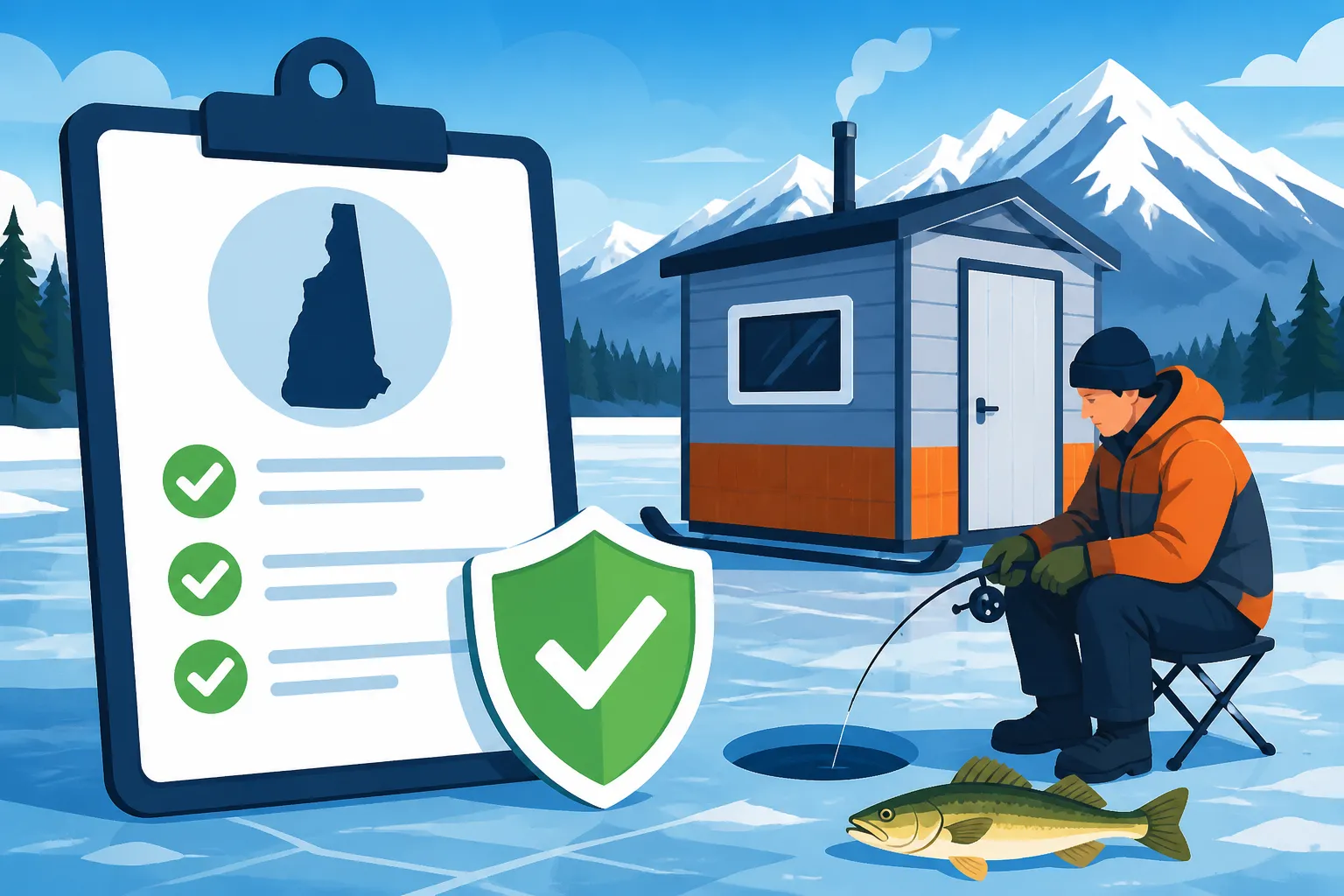
- Pop-Up or Portable Shelters: Many modern ice anglers use high-tech fabric shelters, like those from brands such as Eskimo or Clam, that pop up in minutes. While highly portable, if they're left on the ice unattended for any significant period, they still fall under the registration requirements.
Now, what doesn't always qualify? If you're out there for a short day trip, maybe just a few hours, and you're actively tending to a small, easily collapsible tent that you pack up and take with you at the end of the day, you might not need to register it. The key distinction often revolves around whether the structure is left on the ice overnight or unattended for extended periods. If you’re setting up shop for the season, even with a portable unit, you’ll definitely need to register it. The intent is to cover structures that could potentially become abandoned or difficult to identify. For the precise wording, it's always best to consult the official Reading the New Hampshire Freshwater Fishing Digest.
The Specifics of Registering Your Ice Shanty in New Hampshire
Once you understand why the rules are in place, the next step is to get down to the brass tacks of how to comply. It's not overly complicated, but missing a detail can lead to fines or even the state confiscating your shanty. It's also important to remember that these rules are distinct from your New Hampshire Fishing License Guide for 2026, which is a prerequisite for fishing itself.
When and Where to Display Your Registration Information
The visibility of your shanty's identification is paramount. You can't just slap a sticker on the inside; it needs to be clearly visible from the outside.
- Required Markings: Every registered ice shanty must clearly display the owner's name and address. Some anglers also include a phone number for extra measure, though it's not strictly mandated. This information needs to be legible, in block letters at least 2 inches high, and maintained in a good, visible condition. Weather, snow, and ice can obscure poorly written or faded markings, so use permanent markers or paint that will stand up to the elements. You can find durable markers and paint for this on
Amazonif you don't have them handy. - The Registration Tag: Just like a boat or a snowmobile, your shanty will be issued a registration tag or sticker. This tag must be securely affixed to the exterior of the shanty, usually near the door or on a prominent side, where it can be easily seen and verified by a New Hampshire Fish and Game warden. The tag itself will typically include an expiration date, so make sure it's current.
- Season Dates: Ice shanties cannot be placed on the ice before the water is safely frozen and must be removed by specific deadlines. Generally, the statewide deadline for removal is April 1st, but certain larger lakes, especially those with significant spring currents or deeper waters that thaw faster, might have earlier deadlines. For instance, on Lake Winnipesaukee, the removal deadline is often earlier than April 1st, varying by year and specific conditions. Always double-check the New Hampshire Fishing Season Dates and Closures for the latest information regarding shanty removal for specific water bodies, especially if you're targeting species like lake trout during New Hampshire Lake Trout Ice Fishing Season Dates.
The Registration Process and Associated Costs
Getting your shanty registered is a relatively straightforward process, designed to be accessible to anglers across the state.
- Where to Register: You can register your ice shanty through the New Hampshire Fish and Game Department. The easiest way for many is to do it online via the Fish and Game website. Alternatively, you can visit one of their authorized license agents, which are typically sporting goods stores, bait shops, or town clerks throughout New Hampshire. These agents also handle How to Buy a Fishing License Online in New Hampshire, so if you're already getting your license, it's a convenient one-stop shop.
- What You'll Need: When you register, you'll need to provide your personal identification (driver's license or state ID), proof of residency (if applicable), and some basic information about your shanty, such as its construction type (wood, canvas, etc.) and approximate dimensions. There isn't a complex title system for shanties like there is for boats, but they do want to know what kind of structure you're putting out there.
- Costs and Validity: The cost for an ice shanty registration is relatively inexpensive, usually a modest annual fee. It's valid for the current ice fishing season, typically from when the ice is safe until the spring removal deadline. It's not a multi-year registration, so you'll need to renew it each year you plan to put a shanty on the ice. This annual fee helps cover the administrative costs and enforcement efforts of Fish and Game.
- No Specific Shanty License for Kids: While kids generally have different fishing license requirements (see Do Kids Need a Fishing License in New Hampshire?), the shanty itself is registered by an adult owner, regardless of who primarily uses it. The responsibility lies with the adult whose name and address are on the shanty.
Here's a quick summary table for clarity:
| Requirement | Details |
|---|---|
| Eligibility | Any structure left on ice overnight or unattended for extended periods |
| Display Info | Owner's Name, Address (2-inch block letters, legible), and official NH Fish & Game registration tag. |
| Placement Dates | Not before safe ice conditions; general removal by April 1st, but earlier for specific lakes (e.g., Winnipesaukee, Squam, Newfound). |
| Registration Method | Online via NH Fish & Game website or in-person at authorized license agents. |
| Cost | Annual fee (check current year's schedule for exact amount). |
| Validity | For the current ice fishing season. |
Navigating Common Ice Shanty Challenges and Best Practices
Knowing the rules is one thing; putting them into practice and avoiding common pitfalls is another. From remembering those crucial removal deadlines to ensuring you're being a good steward of New Hampshire's natural beauty, there are a few extra tips that can save you a lot of hassle.
Ice Shanty Removal Deadlines: Don't Get Caught Off Guard
This is, hands down, the most common area where anglers get into trouble. The spring thaw can be unpredictable in New Hampshire, and what seems like solid ice one day can become treacherous slush the next. The Fish and Game Department is very strict about ice shanty removal deadlines, and for good reason. A shanty that falls through the ice becomes a serious pollution risk and a major safety hazard.
- Statewide Deadline: The general rule of thumb is that all ice shanties must be removed from public waters by April 1st each year.
- Specific Water Body Deadlines: However, and this is critical, certain larger lakes and bodies of water often have earlier removal deadlines. For example, lakes like Winnipesaukee, Squam Lake, and Newfound Lake frequently have deadlines set for mid-March, sometimes even earlier depending on ice conditions. These specific deadlines are posted by New Hampshire Fish and Game well in advance, usually on their website and through local media. It's your responsibility as the shanty owner to know and adhere to these dates.
- Consequences of Late Removal: If your shanty is still on the ice past the deadline, you face stiff penalties. You could be subject to fines, and the Fish and Game Department has the authority to remove the shanty at your expense. Trust me, the cost of the state contracting a crew to remove a sunken shanty is far greater than the minor registration fee and the effort of removing it yourself. Don't risk it! Set a calendar reminder, and always err on the side of caution if the ice looks questionable.
Best Practices for Safety and Environmental Stewardship
Beyond legal compliance, responsible ice fishing is about respecting the environment and ensuring everyone's safety.
- Secure Your Shanty: Wind storms can sweep across a frozen lake with incredible force, especially on large, open waters like Lake Winnipesaukee or Lake Sunapee. Even a registered shanty that blows across the ice can become a dangerous projectile, hitting other shanties, vehicles, or even people. Always anchor your shanty securely, especially if you're leaving it unattended. Snow anchors, ice screws, or heavy chains secured to the ice can prevent it from drifting. Don't forget, you can find robust ice anchors and tie-downs on
Amazonto keep your shanty safe and sound. - Leave No Trace: This goes for all outdoor activities in New Hampshire, but it's especially pertinent to ice fishing. Whatever you bring out onto the ice, take it home with you. This includes trash, bait containers, broken gear, and certainly your entire shanty. There's nothing more disheartening than seeing litter scattered across a thawing lake. For things like used bait, consider using an insulated bait bucket or cooler to keep it fresh and contained.
- Check Ice Thickness: While not directly a shanty registration rule, safe ice is fundamental to all ice fishing. Always check How thick ice needs to be before New Hampshire anglers fish it before venturing out, and continue to monitor conditions, especially around your shanty. Ice conditions can change rapidly due to currents, springs, or warm spells.
- Maintain Visibility: If you're using a shanty at night, consider adding reflective tape or a small, battery-operated light to its exterior. This increases visibility for snowmobilers or other anglers moving in low light conditions, preventing potential collisions. Again,
Amazonhas a wide selection of reflective tapes and portable LED lights perfect for this. - Consider a Portable vs. Permanent: While large, permanent shanties offer comfort, smaller, more portable units are often easier to manage, move, and remove by the deadline. If you're just starting out or only go a few times a season, a high-quality pop-up shanty might be a more practical and compliant option, especially for exploring Best Ice Fishing Lakes in New Hampshire where ice conditions might vary.
- Understand New Hampshire Ice Fishing Regulations by Water Body: Just as shanty removal dates can differ, so can the specific fishing regulations, including allowed gear, species limits, and times of day, from one lake to another. Always consult the official digest for the water body you plan to fish from your shanty.
By following these guidelines, you're not only staying within the letter of the law but also contributing to a safer, cleaner, and more enjoyable ice fishing experience for everyone who cherishes New Hampshire's winter waters. Happy fishing, and may your shanty be warm and your holes be productive!
Disclaimer
The information provided in this guide is for general informational purposes only and is subject to change. While we strive to provide accurate and up-to-date information, fishing regulations and laws can be complex and are regularly updated by the New Hampshire Fish and Game Department. It is the responsibility of every angler to consult the official New Hampshire Fish and Game Department website, their annual Freshwater Fishing Digest, or contact them directly for the most current and specific regulations pertaining to ice shanties and all fishing activities. Failure to comply with regulations can result in fines or other penalties.