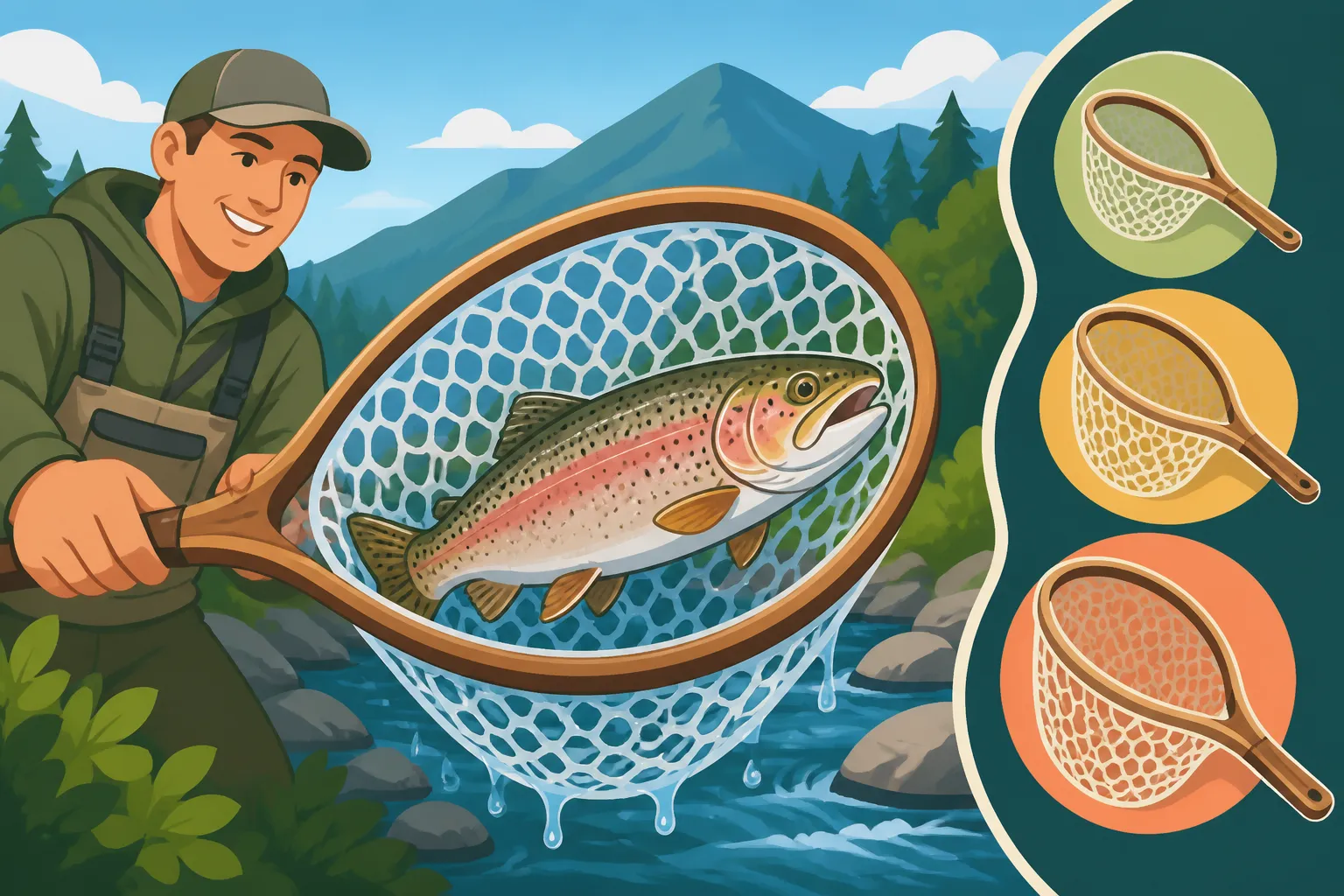
Best landing net size for trout
It’s a truly disheartening moment when you finally have that beautiful New Hampshire trout at the end of your line, only for it to get tangled in the wrong net, or worse, slip away entirely at the last second. Choosing the right landing net isn't just about successfully landing your fish; it's also about protecting them, especially if you're practicing catch and release. This guide will walk you through everything you need to know to select the perfect landing net for trout fishing across the Granite State, ensuring smooth landings and healthy releases.
Why Net Size and Features Matter for Trout Fishing
When you're out on the water, whether it's a rushing White Mountain stream or a calm pond in the Lakes Region, your landing net is the final, crucial tool in your arsenal. The size and specific features of that net can make or break your fishing experience, impacting not only your success rate but also the well-being of the fish.
Protecting the Fish in Catch and Release Scenarios
For many of us who love New Hampshire fishing, especially for trout, conservation and responsible angling are paramount. Catch and release isn't just a philosophy; it's a practice that requires the right tools to minimize stress and injury to the fish. A net that's too small or made from abrasive materials can do more harm than good. Imagine finally bringing a vibrant, wild brook trout to hand, only for its delicate fins to get shredded in coarse nylon mesh, or for it to flop around dangerously because the net wasn't deep enough. This kind of experience is frustrating for the angler and potentially fatal for the fish. A properly sized net with the right materials helps cradle the fish gently, reducing its struggle and making it easier to remove the hook quickly. This is especially important for species like Brook Trout: New Hampshire's Native Trout, known for their delicate nature.
Ensuring a Clean and Efficient Landing
Beyond fish welfare, the practical aspect of a clean, efficient landing cannot be overstated. There's nothing quite like the feeling of watching a hard-fighting rainbow trout make a last-ditch run just as it nears the net, only to slip free because your net was too shallow or its hoop too narrow. A net that is appropriately sized for the trout you're targeting allows you to scoop the fish quickly and confidently, reducing the chances of it thrashing off the hook. This is particularly true when you're fishing in fast-moving rivers or from a boat where space and timing are critical. A good net helps you gain control of the fish, allowing you to focus on hook removal rather than chasing a frantic, escaping fish around your feet or boat. It's about securing your catch with minimal fuss, whether you intend to keep it for dinner or return it unharmed to the water.
Understanding New Hampshire Trout Species and Their Sizes
New Hampshire is home to a wonderful variety of trout, each with their own typical sizes and habitats. Understanding these differences is key to choosing a landing net that's fit for purpose. You wouldn't use the same net for a feisty fingerling brook trout as you would for a hefty lake-dwelling brown trout.
New Hampshire's Common Trout Species
The three primary trout species you'll encounter in New Hampshire are the Brook Trout, Brown Trout, and Rainbow Trout. Each offers a unique fishing experience, and their size ranges will directly influence your net choice.
- Brook Trout: Our native trout, brookies are often found in smaller, colder streams and mountain ponds. While they can grow larger in prime conditions, many stream-dwelling brook trout are typically in the 6-12 inch range. A true trophy brook trout in New Hampshire might push 14-16 inches, but these are less common. For these smaller, more delicate fish, a compact, lightweight net is usually sufficient. Remember, a larger net can be cumbersome in tight stream environments.
- Brown Trout: Brown trout are known for their hardiness and ability to tolerate warmer water than brook trout, making them suitable for many larger rivers and lakes. They grow considerably larger than brook trout, with fish in the 12-20 inch range being common in many New Hampshire waters. Trophy browns can exceed 20 inches, sometimes even reaching the mid-20s. If you're targeting these bigger browns, especially in lakes like Sunapee or Winnipesaukee, a net with a larger hoop and deeper basket is a must. You can learn more about Brown Trout Habits in New Hampshire Streams to understand where you might encounter these impressive fish.
- Rainbow Trout: Rainbow trout are widely stocked across New Hampshire, particularly in ponds and rivers that receive regular state stockings. These fish are known for their acrobatic fights and can range from 10-18 inches, with larger individuals occasionally appearing. Like brown trout, targeting bigger rainbows means you'll need a net that can handle their length and fighting power. Rainbow Trout Stocking in New Hampshire efforts mean you'll find these fish in many accessible locations throughout the season.
Wild vs. Stocked: Size Expectations
The distinction between wild and stocked trout is critical when considering net size.
- Wild Trout: These fish, especially wild brook trout in remote streams, tend to be smaller but are often more robust and beautifully colored. A wild brook trout over 12 inches is a significant catch, and you might encounter them in designated "wild trout" or "fly fishing only" sections of rivers. For these average-sized wild fish, a smaller, more portable net is often ideal, as you'll likely be wading through dense cover or hiking to remote spots. The key here is quick, gentle handling.
- Stocked Trout: New Hampshire Fish and Game annually stocks hundreds of thousands of trout, primarily rainbows and browns, into various ponds and rivers. These fish are typically stocked at a catchable size, often in the 10-14 inch range, but many grow larger after stocking. Some lakes and ponds receive "trophy" stockings, where fish exceeding 16 or even 20 inches are released. When fishing freshly stocked waters, such as those mentioned in the New Hampshire Trout Stocking Report and Map, you can expect a higher likelihood of encountering fish on the larger end of the spectrum, requiring a more substantial net. For example, if you're hitting opening day for Spring Trout Fishing Techniques for New Hampshire Ponds, you might expect to encounter some larger, feistier rainbows or browns.
Here's a quick reference table for typical trout sizes and recommended net hoop sizes in New Hampshire:
| Trout Species (Common Size Range) | Fishing Location Type | Recommended Hoop Size (width) | Recommended Net Depth |
|---|---|---|---|
| Wild Brook Trout (6-12 inches) | Small streams, backcountry ponds | 8-12 inches | 10-12 inches |
| Stocked Rainbow/Brown (10-16 inches) | Medium rivers, stocked ponds, smaller lakes | 12-16 inches | 12-16 inches |
| Large Brown/Rainbow (16-24+ inches) | Large lakes (Winnipesaukee, Sunapee), big rivers | 16-20+ inches | 18-24+ inches |
| Landlocked Salmon (15-25+ inches) | Deep, cold lakes (similar to larger trout) | 18-22+ inches | 20-24+ inches |
Note: Landlocked Salmon are not technically trout, but are often pursued with similar gear and can reach impressive sizes, warranting a larger net.
Key Features to Look for in a Trout Landing Net
Beyond the sheer size of the net, several other features are absolutely critical when selecting the best landing net for trout fishing in New Hampshire. These aspects contribute to ease of use, fish safety, and the overall durability of your gear. If you're looking for Best Gear for New Hampshire Trout Fishing, a quality net is definitely high on the list.
Net Material and Mesh Size
This is arguably one of the most important considerations, especially for catch-and-release angling.
- Rubberized or Silicon Mesh: Hands down, this is the preferred material for trout nets today. The smooth, flexible nature of rubberized mesh is incredibly gentle on fish scales, fins, and slime coat. Hooks rarely get tangled in it, which means less time spent untangling your fly or lure, and more importantly, less stress on the fish. It also doesn't absorb water or fish odors like traditional nylon, making it cleaner and easier to maintain. While rubber nets can be a bit heavier and bulkier than nylon, the benefits for fish welfare and ease of use are well worth it. You'll find excellent options from brands like Frabill or Fishpond, often available at local shops or online retailers like Amazon.
- Knotless Nylon Mesh: If rubberized mesh isn't an option, look for knotless nylon. The absence of knots reduces friction and damage to the fish. However, hooks can still get tangled more easily than with rubber, and it's not as gentle on the fish's protective slime.
- Knotter Nylon Mesh: Avoid this for trout fishing, especially if you plan to release fish. The knots can strip a fish's protective slime, damage fins, and make hook removal a frustrating, fish-damaging ordeal.
Mesh size also plays a role. Finer mesh offers better support for smaller fish but can create more drag in the water. Larger, rubberized mesh is a good compromise, providing gentle support without excessive drag.
Handle Length and Portability
How and where you fish in New Hampshire will dictate the ideal handle length for your net.
- Short-Handled Nets (8-12 inches): These are perfect for wade fishing small streams and rivers. If you're navigating brushy banks and casting into tight pockets, a short handle that can be easily clipped to your vest or belt is invaluable. It keeps the net out of the way until you need it, and when you do, it's just long enough to reach fish without becoming cumbersome. Think of chasing wild brook trout on the Swift River or other White Mountains Trout Stream Access points; portability is key.
- Medium-Handled Nets (18-36 inches): A versatile choice for a variety of situations. This length works well for shore fishing smaller ponds, fishing from a float tube or kayak, or wading larger rivers like the Pemigewasset. It gives you a bit more reach than a short-handled net without being too unwieldy. Many telescoping models fall into this category, offering adjustable length for different scenarios.
- Long-Handled Nets (3 feet or more): Essential for boat fishing, especially on larger lakes like Winnipesaukee or Squam Lake, where you might be landing fish from a higher vantage point or reaching for a fish netted by a fishing buddy. These longer handles provide the necessary reach to scoop a fish from the water without leaning precariously over the boat's edge. Some long-handled nets are collapsible for easier storage in your vessel. You'll definitely want a longer handle if you're targeting big lake trout or landlocked salmon from a boat.
For anglers hiking into remote areas or practicing Fly Fishing for Trout in New Hampshire where minimal gear is preferred, foldable or telescoping nets that can be compactly stowed are a game-changer. These provide the necessary reach while taking up minimal space on your pack.
Hoop Shape and Depth
The shape and depth of the net's hoop are important for securely landing fish.
- Hoop Shape: Most trout nets come with an oval or teardrop-shaped hoop. These shapes are generally effective, offering a good balance between width and maneuverability. A wider opening (the "width" of the hoop) is crucial for larger fish. A 12-inch hoop width might be sufficient for a 14-inch trout, but for a 20-inch brown, you'll want something closer to 16-20 inches wide to ensure a clean scoop.
- Net Depth: The depth of the net basket prevents fish from flopping out once they're inside. For trout, you generally want a net depth that is roughly equal to or greater than the expected length of the fish. A 12-inch deep net is usually fine for 10-12 inch trout, but if you're routinely catching fish in the 16-20 inch range, a net with a depth of 18-24 inches will be far more secure. Deeper nets also allow the fish to stay submerged in the water while you work on hook removal, further reducing stress, especially beneficial on warm days. You can browse various options for specific dimensions at outdoor retailers like Bass Pro Shops or through online stores like Amazon.
Matching Net Size to Your Fishing Style and Location
The best net for you isn't just about the fish; it's about how and where you fish. Your personal fishing style and the environments you frequent in New Hampshire will heavily influence the ideal net choice. This is where the rubber meets the road, so to speak, in making your final decision.
Wading Streams and Small Ponds
If your idea of a perfect day is slipping on your Best Waders for New Hampshire Trout Streams and wading into a clear mountain stream, or perhaps exploring a quiet, hike-in pond, then portability and maneuverability are paramount.
- Net Type: For stream wading, a short-handled net (often called a "trout net" or "creel net") is almost always the best choice. These typically have hoop widths ranging from 8 to 14 inches and depths of 10 to 16 inches. The compact size allows you to clip it to your wading belt, vest, or backpack without snagging on trees or brush as you move through dense streamside vegetation. A net with a magnetic release or a retractor system is incredibly useful, keeping the net out of the way until you need it, then making it instantly accessible for that quick scoop.
- Material: Rubberized or silicon mesh is strongly recommended here, not just for fish safety, but because it sheds water quickly. When you're constantly in and out of the water, a soggy nylon net can be a real nuisance.
- Considerations: Think about the size of the water you're fishing. For tiny, brush-choked brooks, an 8-10 inch hoop might be perfect for those small wild brook trout. For wider rivers like the Ellis or Israel, where larger stocked fish or wild browns might surprise you, a 12-14 inch hoop offers a safer margin. Keep an eye on your Wading Techniques for New Hampshire Trout Streams to ensure safety while managing your gear.
Boat Fishing on Lakes and Rivers
When you're out on a boat, whether it's a bass boat on Winnipesaukee, a canoe on a quiet lake, or a drift boat on a larger river, your needs shift significantly. You have more space, and the fish you're targeting are often larger.
- Net Type: For boat fishing, you'll almost certainly want a long-handled net, often with a telescoping handle that can extend from perhaps 3 feet to 6 or even 8 feet. This extra reach is critical for guiding larger fish into the net from the side of the boat, especially when you're fishing with partners. Hoop sizes should be generous, typically in the 16-24 inch range, with corresponding depths of 18-30 inches. This larger size accommodates bigger trout, like the substantial lake trout or landlocked salmon you might find in deep New Hampshire lakes.
- Material: Again, rubberized mesh is ideal. Not only does it protect the fish, but it also prevents hooks from getting hopelessly tangled, which can be a particular problem with multiple lines or lures in play from a boat.
- Considerations: A large, deep net can be awkward to store in a smaller boat. Consider models that break down or collapse to save space. Also, think about the weight. While you have more space, a heavy, long net can still be tiring to wield, especially when landing multiple fish. If you’re trolling for lake trout, you might need a truly oversized net to handle those potential lunkers.
Shore Fishing and General Purpose Use
If you're someone who enjoys fishing from the bank of a pond, a dock, or casting from the shore of a larger river, you need a net that offers versatility and good reach without being cumbersome to transport.
- Net Type: A medium-handled net is often the sweet spot here. A handle that's fixed at around 2 to 3 feet, or a telescoping model that can extend to that length, provides enough reach to net fish from a slightly elevated position on the bank. Hoop sizes in the 14-18 inch range with depths of 16-20 inches offer a good balance for the typical stocked trout and holdovers you might encounter when shore fishing.
- Portability: While not as critical as for stream wading, being able to carry your net comfortably along a shoreline is important. Look for models that are relatively lightweight and can be carried by hand or slung over a shoulder.
- Considerations: If you frequently fish diverse locations – some wading, some shore, some from a small boat – a good quality telescoping net with a rubberized basket might be your best all-around investment. It provides the flexibility to adjust handle length as needed, making it a truly versatile tool for most New Hampshire trout fishing adventures. Whether you're targeting New Hampshire daily trout limit from a local pond or exploring a new river, a versatile net will serve you well.
Ultimately, choosing the best landing net size for trout in New Hampshire comes down to understanding the size of the fish you realistically expect to catch, and matching that with the practicalities of your chosen fishing environment and style. Invest in a quality net with rubberized mesh, and you'll be well on your way to smoother landings and healthier fish.
Disclaimer
This article is for general informational purposes only and does not constitute professional advice. Laws, prices and regulations vary by location and change over time. Consult a qualified professional for guidance on your specific situation.