Best Jigs for Ice Fishing Perch
Winter fishing for perch in New Hampshire can be incredibly rewarding, but it often comes with a unique set of frustrations. You've braved the cold, drilled your holes, and set up your gear, only to find the fish are finicky, looking at everything you drop down but refusing to commit. Often, the difference between a slow day and a bucket full of tasty perch comes down to the smallest detail: the jig. This guide is all about helping you understand the best jigs for ice fishing perch, equipping you with the knowledge to make those subtle, yet crucial, adjustments that put more fish on the ice.
Understanding Perch Behavior Under the Ice
Before we even talk about specific jigs, let's chat about perch themselves. They're often schooling fish, but their activity levels and feeding habits can change dramatically based on water temperature, light penetration through the ice, and forage availability. Knowing how they behave is key to selecting the right jig.
Perch Activity Levels and Seasonal Changes
Perch aren't always in a feeding frenzy. Early ice, from mid-December through January, often sees them relatively aggressive as they haven't been pressured much. They're still somewhat shallow, often associated with weeds, and chasing baitfish. As winter progresses into mid-season (February), they tend to move deeper, relate more to structure, and can become quite lethargic, especially during cold fronts. By late ice (March), just before break-up, they often become more active again, moving shallower and feeding heavily in preparation for spawning.
Think about a typical day on Lake Winnipesaukee or Squam Lake. Early in the season, you might find active schools of perch in 10-15 feet of water, slamming a brightly colored jig. But come February, after a few weeks of consistent cold, those same fish might be sluggishly suspended over 30 feet of water, requiring a much more subtle approach. This is why having a range of jigs is so important. You can't just rely on one "go-to" setup when the fish's mood swings so wildly.
Forage and Presentation Preferences
Perch are opportunists, but they have distinct preferences. Their primary diet often consists of insect larvae, small minnows, tiny crustaceans, and even other small perch. Matching the hatch, as fly anglers say, is just as important under the ice. When they're feeding on small invertebrates, a tiny jig mimicking a bug can be irresistible. When they're keying in on minnows, a more slender, horizontal jig with a bit of flash will often outperform.
Consider the water clarity of New Hampshire's lakes. Many of our pristine lakes, like Newfound Lake, have crystal-clear water. In such conditions, a natural-looking presentation is often paramount. Conversely, on a snow-covered pond with reduced light, a brighter, more contrasting jig might be necessary to get noticed. The idea is to present something that either looks exactly like what they're eating or stands out enough to trigger an investigative strike, even if they're not actively feeding. For more on specific techniques, check out Jigging for Perch Through the Ice.
The Essential Jig Materials: Lead vs. Tungsten
When you walk into a tackle shop, or browse online at Bass Pro Shops, you'll immediately notice jigs made from different materials. The two most common for ice fishing are lead and tungsten, and they behave very differently in the water.
Lead Jigs: The Affordable Classic
Lead jigs have been the standard for generations, and for good reason. They're inexpensive, readily available, and effective. Their main characteristic is their density – or lack thereof, compared to tungsten.
Lead jigs are lighter for their size, meaning they fall slower through the water column. This can be a huge advantage when perch are highly pressured or when you're fishing in relatively shallow water (say, 5-15 feet) where a slower fall can keep the jig in the strike zone longer. Think about those days on a smaller pond in southern New Hampshire where perch might be cruising just above the weeds. A slow-falling lead jig can suspend tantalizingly, giving a hesitant perch ample time to inspect and commit.
However, the slower fall also means they're more susceptible to current, and they can be harder to detect on your sonar, especially in deeper water. If you're fishing in 30 feet of water on Lake Winnipesaukee and trying to pick out your jig from baitfish or thermoclines, a lead jig might just disappear visually on your flasher. They also don't transmit subtle bites as well as their denser counterparts because they don't have the same "feel" on the line.
Tungsten Jigs: The High-Density Powerhouse
Tungsten jigs are the new kids on the block, and they've revolutionized ice fishing for many anglers. Tungsten is significantly denser than lead, often weighing twice as much for the same size jig. This density offers several distinct advantages.
First, tungsten jigs fall much faster. This means you can get your bait down to the fish quicker, especially when fishing deeper water or when you're trying to quickly drop back down to an active school. Imagine you're fishing a school of perch at 25 feet on Lake Sunapee. A tungsten jig will zip down, letting you capitalize on the bite window before the school moves on. Second, their compact size for their weight means they have a smaller profile, which can be crucial for finicky perch that are shy of larger offerings. This small, heavy package is perfect for mimicking tiny aquatic insects. Third, the density of tungsten transmits vibrations better up your line, allowing you to feel even the most subtle "tick" of a perch mouth. This is a game-changer when bites are light.
The main drawback? Cost. Tungsten jigs are typically more expensive than lead. Losing a few can add up, but for many, the enhanced performance is worth the investment. They are particularly effective when targeting pressured fish or when using micro-plastics, as the weight ensures a good presentation.
| Feature | Lead Jigs | Tungsten Jigs |
|---|---|---|
| Density | Lower | Higher |
| Fall Rate | Slower | Faster |
| Size/Weight | Larger for comparable weight | Smaller for comparable weight |
| Cost | Generally more affordable | More expensive |
| Sensitivity | Less sensitive to subtle bites | Highly sensitive, transmits bites well |
| Deep Water | Less effective, harder to see on sonar | Very effective, easy to track on sonar |
| Current | More affected by current | Less affected by current |
| Target Prey | Versatile, good for baitfish & insects | Excellent for mimicking small insects |
Top Jig Styles for New Hampshire Perch
Beyond the material, the actual shape and style of the jig play a huge role. Each design has its own unique action and excels in different scenarios.
Spoon Jigs: Flash and Attraction
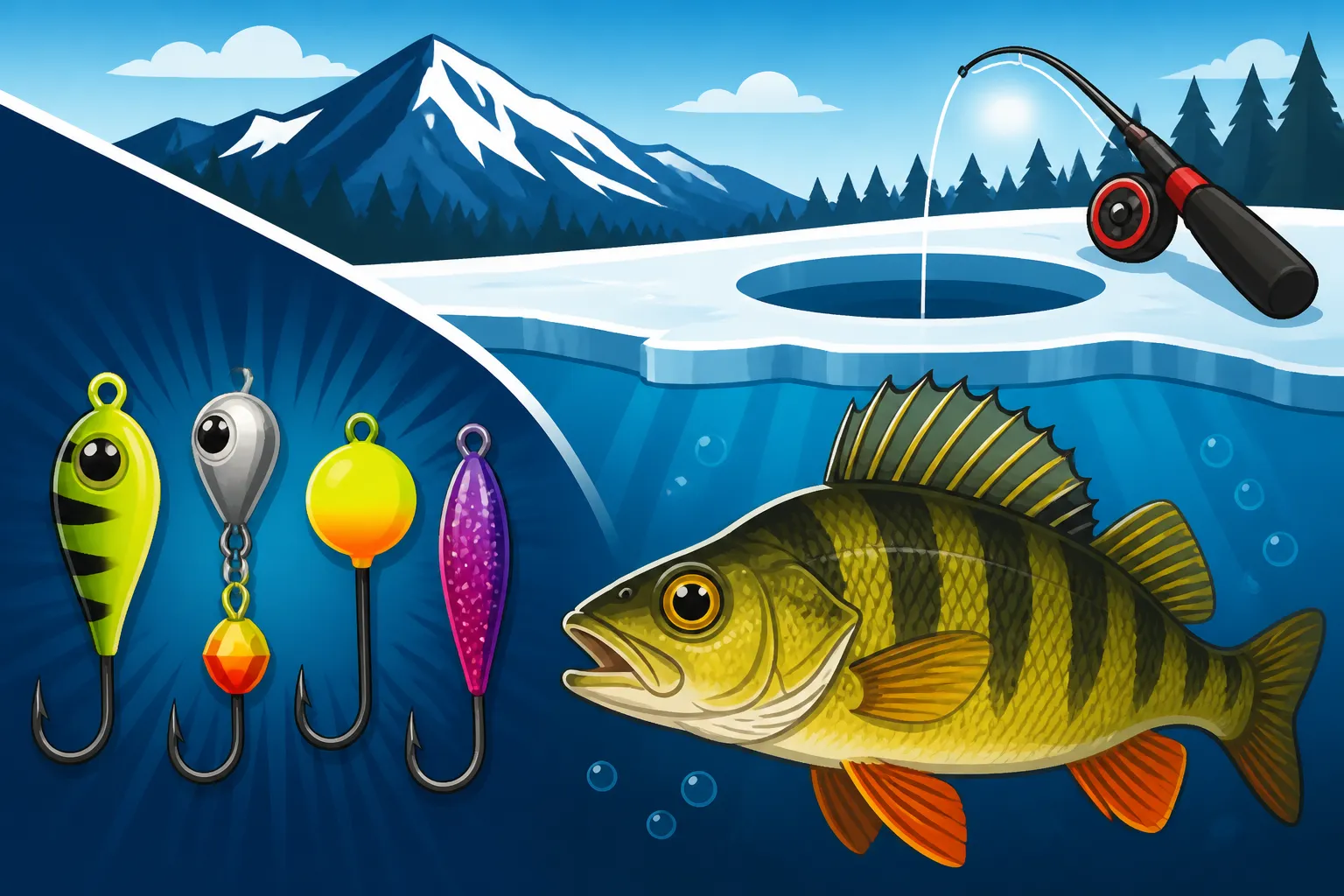
Spoon jigs are fantastic for attracting perch from a distance. Their primary appeal is their flash and flutter as they fall and are jigged. This action mimics a wounded baitfish, making them ideal when perch are actively chasing minnows.
You'll find spoons in various shapes – slender, wide, cupped – each with a different flutter. A wider, more cupped spoon will flutter erratically on the fall, hanging in the water longer, while a slender spoon will drop faster with a tighter wiggle. Many spoons also have a treble hook, which can increase hook-up ratios, especially when perch are just nipping at the bait. For added attraction, you can tip a spoon jig with a minnow head or a small maggot. When fishing a large basin on Lake Winnipesaukee where perch might be spread out, a spoon jig can be your best bet to call them in. Remember to check New Hampshire Bag and Possession Limits by Species for specific regulations if you're keeping your catch.
Teardrop and Drop Jigs: Subtle Enticement
Teardrop and drop jigs are incredibly versatile and often the "bread and butter" for many perch anglers. They typically have a fixed hook, with the weight concentrated at the bottom, creating a natural vertical presentation.
These jigs are excellent for vertical jigging directly over a school of perch. Their subtle action makes them perfect for tipping with live bait like a single or double maggot, a wax worm, or a small piece of nightcrawler. The weight allows them to drop quickly, but their small profile doesn't overwhelm finicky fish. When perch are suspended and lethargic, a small teardrop jig, barely quivering, can be the key. This is especially true in areas with clear water where perch might be inspecting your bait closely. They're also great for sight fishing in shallower waters, allowing you to watch the perch react to your bait.
Horizontal Jigs: Minnow Mimicry
Horizontal jigs, often resembling small minnows or shiners, are designed to suspend horizontally in the water. This profile perfectly imitates a small baitfish, making them deadly when perch are feeding on minnows.
These jigs often have hooks on both ends or a single hook extending from the belly. When jigged, they dart and swim, creating a lifelike action. They can be particularly effective when fished without any additional bait, relying solely on their built-in action. However, tipping them with a small minnow head or the tail of a plastic minnow can enhance their appeal. These are fantastic for aggressive perch, especially during early and late ice periods when minnows are a primary food source. Imagine fishing the mouth of a cove on Lake Wentworth, where schools of small baitfish are present – a horizontal jig would be a prime choice.
Jig Colors and Sizes: Matching the Conditions
Choosing the right color and size is just as important as the jig style. It's about adapting to the light conditions, water clarity, and the mood of the fish.
Color Theory for Perch Jigs
Perch respond to a wide range of colors, but certain hues tend to work better in specific conditions.
- Natural Colors: Browns, greens, blacks, and whites mimic natural forage like insect larvae or small baitfish. These are excellent for clear water conditions or when perch are finicky and need a subtle presentation. Think of fishing a clear, bright day on a deep lake; a small jig in a motor oil or perch pattern might be exactly what they want.
- Bright/Fluorescent Colors: Chartreuse, orange, pink, and bright greens stand out, especially in stained water, low light, or when trying to attract fish from a distance. These are often great "search baits." On a heavily overcast day with snow cover, a glow-in-the-dark or chartreuse jig can be a lifesaver, providing enough contrast for the fish to spot it. Best Panfish Jig Colors for Winter dives deeper into this topic.
- Metallic Colors: Gold, silver, and copper provide flash, mimicking baitfish scales. Gold often performs well on sunny days or in stained water, while silver is excellent in clear water or overcast conditions. These are particularly effective on spoon jigs.
Don't be afraid to experiment! Perch can be incredibly color-sensitive on any given day. What worked yesterday might not work today, even on the same water body. Sometimes, a subtle change from a bright chartreuse to a subdued glow-pink can make all the difference.
Sizing Up Your Jig
Jig size is often overlooked but critically important. The general rule of thumb is to start small and go bigger if the bite is aggressive, or stay small if the fish are finicky.
- Micro Jigs (1/64 oz to 1/32 oz): These tiny offerings are perfect for ultra-finicky perch, especially in clear water or when they're feeding on minuscule insect larvae. They require light line (2-4 lb test) and a sensitive rod to detect bites. If you're struggling to get bites, dropping down to a micro jig with a single maggot is often the answer. They're also excellent when using the increasingly popular Euro Nymphing style for ice fishing, where subtle presentations are key.
- Small Jigs (1/16 oz to 1/8 oz): This is the sweet spot for many perch anglers. These sizes are versatile enough for most conditions, offer good sensitivity, and can be tipped with various baits or plastics. They're heavy enough to get down in moderate depths but still small enough not to spook pressured fish. This range is your everyday workhorse for New Hampshire perch.
- Medium Jigs (1/8 oz to 1/4 oz): These are best for aggressive perch, deeper water, or when you're using larger baitfish imitations. They fall faster and create more vibration, attracting more attention. If you're targeting those larger perch that often school separately from smaller ones, a slightly bigger jig might be just the ticket. However, be mindful that a larger jig can also deter smaller perch, so adjust accordingly if you're after numbers.
Remember, the goal is to match the forage and the mood of the fish. A general approach might be to start with a 1/32 oz or 1/16 oz jig and adjust based on the bite.
Tipping Your Jigs: Bait and Plastics
While some jigs are effective on their own, tipping them with bait or small plastics can significantly increase your success rate. This adds scent, flavor, and additional visual appeal that perch find hard to resist.
Live Bait: The Classic Attractor
Live bait adds scent, movement, and a natural feel that artificial lures can't fully replicate.
- Maggots and Wax Worms: These are staples for ice fishing perch. Their small size and wiggling action are irresistible. One or two maggots hooked through the skin, or a single wax worm, is all you need on a small teardrop or tungsten jig. The white, yellow, or red colors provide contrast. They are especially deadly on those cold days when perch are lethargic and want an easy, scented meal.
- Minnow Heads: A small minnow head, often from a shiner or perch, threaded onto a jig can be incredibly effective. The scent trail it leaves and the natural eye provide an enticing target. This is particularly good for larger perch or when they are actively feeding on baitfish. Just be sure to check New Hampshire's regulations on baitfish use for specific water bodies.
- Small Live Minnows: While not typically used on a jig, a small live minnow hooked through the back just behind the dorsal fin and suspended beneath a bobber, often paired with a dead-stick rod, is a killer setup alongside your jigging rod. This gives perch a different presentation to consider, especially when they're inspecting the jig but not committing.
Soft Plastics: Versatility and Durability
Small soft plastic baits designed for ice fishing have come a long way and offer incredible versatility. They provide action and profile without the mess or constant re-baiting of live bait.
- Micro Worms/Larvae Imitations: These tiny plastics, often only an inch long, perfectly mimic natural insect larvae. Colors like white, black, green pumpkin, and chartreuse are popular. The slightest twitch of the rod tip can bring these plastics to life. They are particularly effective when paired with tungsten jigs due to the jig's compact size and enhanced feel.
- Small Minnow/Fry Imitations: These plastics, resembling juvenile baitfish, are fantastic when perch are feeding on small fish. They often have a small paddle tail or split tail that provides subtle action. Rig them horizontally on a small jig head for a lifelike swimming presentation.
- Grubs and Tails: Simple, curly-tailed grubs or straight-tailed plastics add a pulsing action to your jig. Experiment with colors and lengths, often cutting down larger plastics to fit micro-jigs. These are very versatile and can be fished aggressively or with very subtle movements.
When using plastics, consider adding a little scent gel or spray to them. While plastics have their own attraction, a little added scent can often tip the scales in your favor when perch are hesitant. Many anglers find a good selection of these small plastics, often from brands like Berkley or Clam, readily available at sporting goods stores or through online retailers like Amazon.
Jigging Techniques for Perch
It's not enough to have the right jig; you also need to present it correctly. Perch often respond to different jigging actions, and finding the right cadence is crucial.
Aggressive Jigging
When perch are active, you can be more assertive with your jigging. This involves lifting the rod tip several inches to a foot, then letting the jig fall back on a semi-slack line. This creates a darting, fluttering action that mimics a frantic baitfish or insect trying to escape.
After the initial drop, allow the jig to settle for a few seconds. Then, try a series of sharp, short snaps followed by a pause. The pause is often when the strike occurs, as the fish attacks the "dying" bait. On lakes like Pawtuckaway or Winnisquam, where perch can be quite aggressive, this technique can quickly draw fish in and trigger reaction strikes. Always be ready for the bite on the fall, as perch will often hit as the jig flutters down.
Subtle Jigging
For finicky or lethargic perch, a subtle approach is often necessary. This involves barely moving the jig, creating just enough action to entice a bite without spooking them.
Try "dead-sticking" where you simply let the jig hang motionless, maybe with a slight tremble from your hand. You can also try tiny quivers or slow, gentle lifts of just an inch or two, followed by a long pause. When you see perch on your flasher but they refuse to commit to aggressive jigging, switch to this method. They might be interested in a slow, easy meal rather than a chase. This approach is highly effective on pressured waters or during the mid-winter slump when fish metabolism slows down. A tiny tungsten jig with a maggot is a perfect combination for this kind of presentation.
The Importance of the Pause
No matter the jigging style, the pause is almost always the most critical part. Many strikes occur when the jig is completely still, or just as it's falling. Perch will often follow a jig, and the moment it stops moving, they see it as an opportune time to strike.
Experiment with pause lengths – from a quick second to 10 or even 20 seconds. Sometimes, the longer the pause, the better, especially with sluggish fish. Pay close attention to your line during the pause; any slight twitch, jump, or feeling of "weight" could be a bite. This is where a sensitive rod and line, often fluorocarbon, really shine. For more general advice on gear, consider reading Best Ice Fishing Gear for New Hampshire.
Essential Perch Ice Fishing Gear Beyond Jigs
Having the right jigs is just one piece of the puzzle. The rest of your gear needs to complement your jigging efforts to ensure success.
Rod and Reel Setup
For perch, a light to ultralight ice fishing rod is ideal. This allows you to feel the subtle bites and provides the right amount of flex to protect light lines. A sensitive tip is paramount. Pair this with a small spinning reel spooled with 2-4 lb test monofilament or fluorocarbon line. Fluorocarbon is often preferred for its low visibility and minimal stretch, which translates to better feel for those light bites.
A good example of a perch setup would be a 24-28 inch ultralight rod, like an action rod from a brand popular for ice fishing, paired with a 500-sized spinning reel. This setup is light enough for all-day jigging and sensitive enough to detect those delicate perch nibbles.
Line Selection
Your line choice is critical for transmitting those subtle bites.
- Monofilament: Affordable, good knot strength, and some stretch, which can be forgiving. Good for beginners.
- Fluorocarbon: Less visible in clear water, less stretch for better sensitivity, and sinks faster. Many experienced perch anglers swear by fluorocarbon as their main line or as a leader.
- Braided Line (with fluorocarbon leader): Braided line has zero stretch, offering ultimate sensitivity. However, it's highly visible, so always tie on a 2-4 foot fluorocarbon leader. This combo gives you the best of both worlds: sensitivity and stealth.
Consider the Best Line Weight for Lake Trout Trolling for contrasting deep-water applications, but for perch, think light and subtle.
Fish Finders and Flashers
A good fish finder or flasher is almost non-negotiable for ice fishing perch, especially on larger New Hampshire lakes. It allows you to:
- Locate schools: See where the fish are in the water column and how they're reacting to your jig.
- Gauge depth: Quickly determine the bottom depth and target structure.
- Detect bites: Often, you'll see a fish approach your jig on the flasher before you feel the bite. This gives you a crucial heads-up to prepare for the strike.
Brands like Vexilar, Humminbird, and Marcum are popular choices among New Hampshire ice anglers. They vary in features and price, but even a basic flasher can dramatically improve your success rate by showing you what's happening beneath the ice.
Other Essential Accessories
Don't forget the little things that make a big difference.
- Spring Bobbers/Indicators: These attach to your rod tip and magnify subtle bites, especially when dead-sticking or using micro-jigs.
- Ice Scoops: Essential for keeping your holes clear of slush and ice.
- Pliers/Forceps: For easy hook removal, especially from small perch mouths.
- Buckets/Sleds: For carrying your gear and your catch.
- Warm Clothing: New Hampshire winters are no joke! Layer up.
- Ice Cleats: For safety on slick ice. For more on ice safety, see How thick ice needs to be before New Hampshire anglers fish it.
Armed with the right jigs and complementary gear, you'll be well on your way to enjoying some fantastic perch fishing across the Granite State. Don't be afraid to experiment, stay warm, and enjoy the peace and quiet of a New Hampshire winter day on the ice.
Disclaimer
This article is for general informational purposes only and does not constitute professional advice. Laws, prices and regulations vary by location and change over time. Consult a qualified professional for guidance on your specific situation.