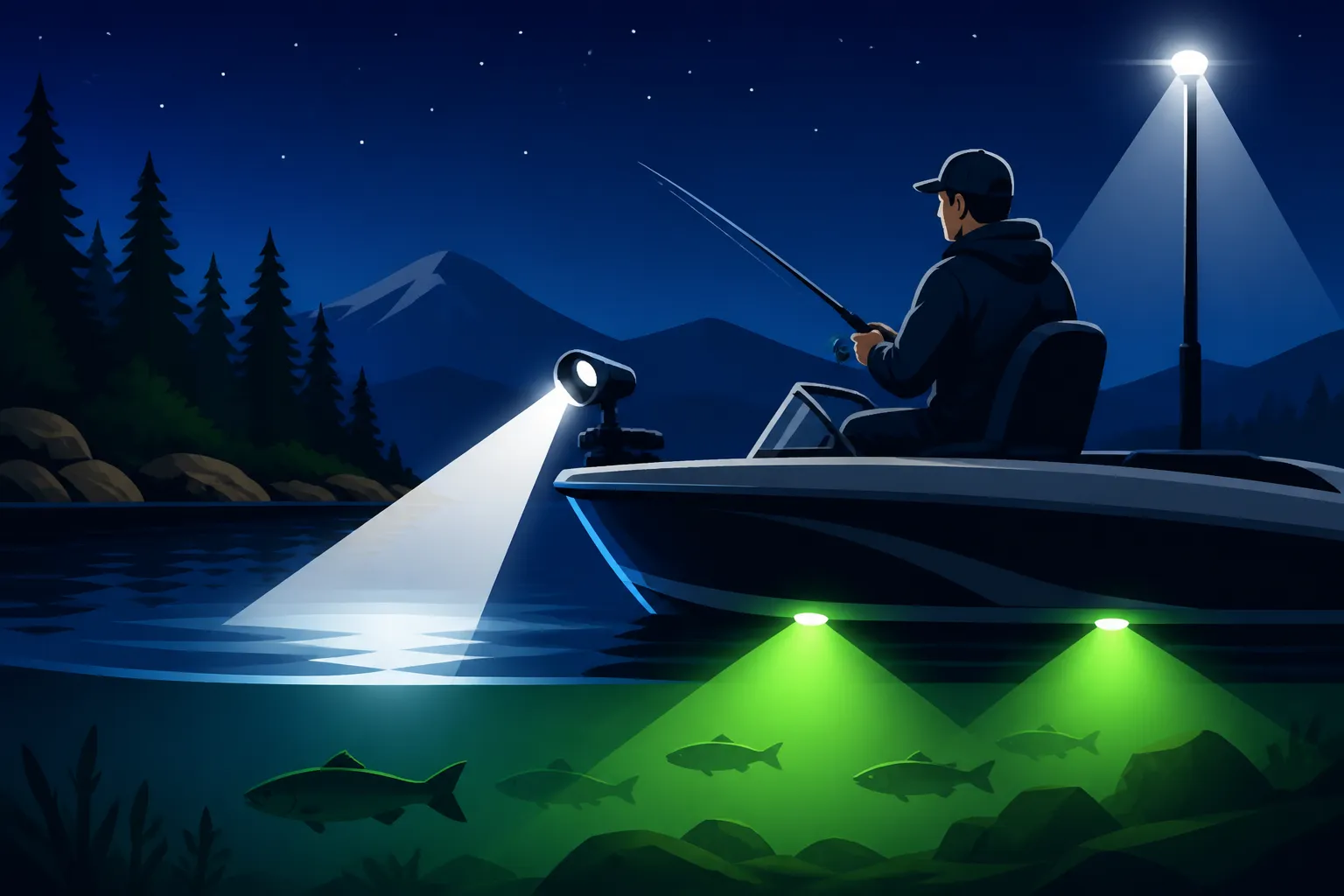
Best boat lights for night fishing
There’s nothing quite like the tranquility of a New Hampshire lake or river at night. The sounds of loons calling, the crisp air, and the promise of a big fish biting under the moonlight can be incredibly alluring. But let's be honest, trying to navigate or even just manage your gear in the dark on the water can be incredibly frustrating, even downright dangerous. You’re left fumbling for a flashlight, trying to see your knots, or worse, worrying if another boater can even see you. This guide is here to shed some light, literally, on boat lighting for night fishing, making your nocturnal angling adventures safer and much more enjoyable.
Understanding New Hampshire's Boating Light Regulations
Before you even think about hitting the water after sunset, it's absolutely crucial to understand the rules of the road – or, in this case, the rules of the water – when it comes to boat lights in New Hampshire. You might just want to catch some bass on a warm summer evening, but ignoring these regulations can lead to dangerous situations and hefty fines. It's not just about avoiding trouble; it's about ensuring everyone on the water stays safe.
The Basics of Navigation Lights
Every boat operating between sunset and sunrise, or during periods of restricted visibility like fog, rain, or heavy overcast, must display proper navigation lights. These aren't just suggestions; they are federal and state laws. For most powerboats and sailboats under power, this means a combination of red and green sidelights at the bow and a white stern light.
The red light must be visible from the port (left) side and the green light from the starboard (right) side, each visible over an arc of 112.5 degrees. These are designed so other boaters can instantly tell your direction of travel. Then there’s the all-important white light, often a masthead light (on larger vessels) or an all-around white light, visible for 360 degrees. This white light helps others see you from any direction. Imagine you're wrapping up a late-night session targeting lake trout on Lake Winnipesaukee Fishing Guide and heading back to the dock; without these lights, you're practically invisible to other boats, which could be moving surprisingly fast even in the dark.
Specific Requirements for Different Boat Sizes
The size and type of your vessel play a significant role in what specific lights you need. A small canoe or kayak paddling silently along the shore of a pond near your campsite will have different requirements than a 20-foot bass boat ripping across a major lake.
For very small vessels, like canoes, kayaks, or rowboats under oars, you might not need fixed navigation lights, but you must have an all-around white light, such as a lantern or flashlight, ready to display in time to prevent a collision. This means having it within easy reach and being proactive about showing it when other vessels approach. For larger powerboats, the requirements are more stringent, often involving separate masthead and stern lights, or combination lights that cover the required arcs. It's really worth taking a deep dive into the official New Hampshire Boating Laws for Anglers or picking up the latest New Hampshire Boating Guide from the NH Fish and Game Department to make sure you're absolutely clear on what your specific boat needs. Don't assume; verify.
The Importance of Compliance for Safety and Legality
Honestly, getting caught without proper lights after dark can ruin your fishing trip faster than a snagged lure. New Hampshire law enforcement, including Marine Patrol, takes boating safety very seriously, especially at night. Violations can result in citations, fines, and even having your boat ordered off the water until it's compliant.
Beyond the legal ramifications, the safety aspect is paramount. Most boating accidents that occur at night involve insufficient lighting. When you're out there in the dark, you're responsible not only for your own safety but for the safety of everyone else sharing the water. A good set of, properly installed and maintained, navigation lights is your first line of defense against collisions. Think about it: hitting an unmarked submerged object or, worse, another boat, because someone didn't have their lights on could turn a peaceful night of fishing into a nightmare. It's a small investment in time and money for a huge return in peace of mind.
Types of Boat Lights for Enhanced Night Fishing
Once you’ve got the essential legal lighting covered, you can start thinking about lights that make your night fishing experience more comfortable, efficient, and even help you catch more fish. There's a whole world beyond just red and green!
Navigation Lights: The Non-Negotiables
We've talked about them, but it bears repeating: your navigation lights are paramount. They are literally the beacons that guide you and warn others of your presence. While traditional incandescent bulbs have done the job for decades, modern LED navigation lights are a game-changer for night anglers in New Hampshire.
LEDs consume significantly less power, which means less drain on your boat's battery—a huge relief when you're far from shore on a big lake like Winnipesaukee. They also last much longer and are more resistant to vibration and water intrusion, making them incredibly reliable. Upgrading to LED nav lights is one of the best investments you can make, ensuring you're seen and compliant without constantly worrying about a burnt-out bulb. You can often find great deals on these lights, sometimes even entire kits, from online retailers like Amazon or marine specialty stores like Bass Pro Shops. Just make sure they are Coast Guard approved!
Courtesy and Utility Lighting: Seeing What You're Doing
This is where the real comfort for night fishing comes in. How many times have you fumbled in the dark trying to tie a knot, find a specific lure, or unhook a fish? Courtesy and utility lighting solves these frustrations beautifully.
- Interior LED Strips: Small, waterproof LED strips can be installed under gunwales, inside compartments, or along your boat's interior. They provide soft, ambient light that's enough to see what you're doing without being blinding. Many come with different color options, and often, a soft red light is preferred for night fishing. Red light preserves your night vision better than white light, meaning when you look up from tying a knot, your eyes don't have to readjust as much to the darkness. This is especially helpful if you’re trying to spot subtle bites or navigate by starlight.
- Deck Lights/Spreader Lights: For more general illumination of your deck area, especially if you have a larger boat or need to move around a lot, low-profile LED deck lights can be incredibly useful. These can illuminate the entire working area of your boat, making it safer to move, cast, and land fish. They're also helpful for cleaning up at the end of the night.
- Task Lighting: Small, focused lights can be invaluable for specific tasks. Think about a flexible LED gooseneck light mounted near your rod holder for tying knots, or a compact headlamp with a red-light setting for baiting hooks. These types of lights ensure you have light precisely where you need it, when you need it, without washing out the entire area and disturbing other anglers.
Underwater Fishing Lights: Attracting the Bite
Now for the really exciting part – lights specifically designed to help you catch more fish! Underwater fishing lights have become incredibly popular, especially for species that are active at night.
Most underwater fishing lights emit a green or sometimes white light. The principle is simple: this light penetrates the water, attracting plankton. The plankton then attract baitfish (like smelt or shiners) which feed on them. And guess what feeds on the baitfish? The bigger fish you're targeting – bass, crappie, perch, and even certain trout species. It creates an entire food chain right under your boat!
These lights can be submerged directly into the water, suspended from the side of your boat, or even built into the transom of larger vessels. They are particularly effective in clear waters found in many of New Hampshire’s best fishing lakes, and can be a fantastic tool when targeting How to Catch Largemouth Bass in New Hampshire or panfish like perch and crappie. However, it's worth noting that while these lights are excellent for attracting fish, they also attract attention, so be mindful of other anglers and consider the etiquette of using them in busy areas. They can be a real game-changer for night fishing, but always use them responsibly.
Choosing and Installing Your Boat Lighting System
Once you've decided on the types of lights you need, the next step is selecting the right products and getting them installed. This can feel a little daunting, especially if you're not super handy with electrical work, but with a bit of planning, it's totally achievable.
Powering Your Lights: Battery Life and Consumption
The most crucial aspect of any electrical accessory on your boat is power. Most boat lighting systems run on 12-volt DC power, drawing directly from your boat's marine battery. While LEDs are far more efficient than old-school incandescent bulbs, adding multiple lights will still increase your overall power consumption.
The last thing you want is to be stranded in the middle of a dark lake with a dead battery. Consider dedicated deep-cycle marine batteries for your accessory loads, separate from your starting battery. If you plan on long night sessions or running many lights, a dual-battery setup with an isolator or a battery management system is highly recommended. You might also consider portable power stations or small solar chargers for auxiliary lights to ease the burden on your main battery. Always have a clear understanding of your boat's electrical capacity and your lights' power draw. A good rule of thumb is to calculate the total amperage draw of all your planned lights and then estimate how long your battery can sustain that load. For instance, if you're frequently fishing on Best Ice Fishing Lakes in New Hampshire and using an ice shanty, you'll want to ensure your portable lighting is efficient and reliable.
DIY Installation Tips and Professional Help
For simple installations, like adding LED strips or replacing existing navigation light fixtures, many anglers can handle it themselves. The key is to work safely and correctly. Always disconnect your battery before working on electrical components. Use marine-grade, appropriately gauged wire and ensure all connections are properly crimped, soldered, and, most importantly, waterproofed. Heat-shrink tubing with adhesive lining is your best friend here. Routing wires neatly and securely prevents chafing and potential shorts.
However, if you're looking to install a complex system with multiple switches, a new fuse panel, or high-power underwater lights, it's often wise to consult or hire a professional marine electrician. They have the expertise to ensure everything is installed correctly, safely, and in compliance with all regulations. You can find many ready-to-install kits and individual components for various lighting needs on platforms like Amazon or at boating supply stores, including Bass Pro Shops. Just be sure to read reviews and check product specifications carefully to ensure they meet marine standards for durability and waterproofing.
Maintenance and Troubleshooting Your Lighting
Even with modern LED technology, boat lights still require a little TLC to keep them shining brightly. Regular maintenance can save you from a dark, frustrating night.
- Routine Checks: Before every night trip, quickly check all your lights – navigation, interior, and any utility lights – to ensure they are functioning. A quick visual inspection can catch a loose connection or a corroded bulb socket before it becomes a problem.
- Cleaning: Saltwater, freshwater, and even just humid air can cause corrosion on electrical contacts. Periodically clean terminals and connections with a brush and a specialized electrical contact cleaner. Ensure lenses are clean and free of salt spray, dirt, or insect buildup, which can dim your lights significantly.
- Wiring Inspection: Look for any signs of frayed wires, cracked insulation, or loose connections. These can lead to intermittent power, shorts, or even fire hazards. Repair or replace any compromised wiring immediately.
- Troubleshooting: If a light isn't working, start with the basics: Is there power to the circuit? Is the switch working? Are the wires connected? Check fuses. Sometimes it’s as simple as a loose connection, other times it might require tracing the entire circuit. Keeping a spare fuse kit and basic electrical tools on board is always a good idea.
Best Practices for Night Fishing Safety with Lights
Having the right boat lights is a massive step towards safe night fishing, but they're just one piece of the puzzle. True safety on the water after dark involves a comprehensive approach, combining proper gear with smart boating habits.
Beyond the Lights: Additional Safety Gear
While your lights make you visible, other safety equipment is equally vital for a secure night on the water.
- Personal Flotation Devices (PFDs): This is non-negotiable. Everyone on board, regardless of age or swimming ability, should have a properly fitting PFD. Consider wearing an inflatable PFD, especially if you're fishing alone, as they offer maximum mobility while still providing critical flotation. Even seasoned anglers can unexpectedly fall overboard in the dark. Remember, Life Jacket Requirements for New Hampshire Boaters are strict, especially for children.
- Sound-Producing Device: A whistle, air horn, or bell is essential for signaling other vessels, especially in fog or low visibility where lights might not be seen quickly enough.
- Visual Distress Signals: Flares, electronic distress signals, or a signal mirror (for daytime emergency use) are critical for attracting attention if you find yourself in trouble.
- First-Aid Kit: Accidents happen, especially in the dark. A well-stocked first-aid kit can address minor cuts, hook punctures, or other injuries.
- Navigation Tools: Even if you know the lake like the back of your hand, a reliable GPS chartplotter, or even a smartphone with a marine navigation app, is a lifesaver in the dark. It helps you stay on course and avoid hidden hazards that are impossible to see at night.
Navigating in the Dark: Tips for Anglers
Even with the best lights, navigating at night is fundamentally different from daytime boating. Your senses are reduced, and hazards are harder to spot.
- Slow Down: This is arguably the most important rule. Reduce your speed significantly. It gives you more time to react to unexpected obstacles or other vessels.
- Use Your Eyes (and Ears!): Constantly scan the water, not just directly ahead, but all around. Look for subtle reflections of light, listen for engine noises, or even the sounds of waves breaking against unseen shorelines or hazards. Your night vision, once adjusted, is a powerful tool.
- Trust Your Instruments: Learn to rely on your GPS, depth finder, and other electronic navigation aids. They provide information your eyes can't gather in the dark.
- Stay in Familiar Waters: Night fishing is not the time to explore new coves or uncharted areas. Stick to waters you know well and have navigated safely during the day.
- Be Aware of Other Boaters: Not everyone follows the rules. Be prepared for other boats that might be improperly lit or speeding. Always assume they haven't seen you until you're certain they have. Fishing can be addictive, but staying aware of your surroundings is paramount, especially when navigating some of the Best Fishing Lakes in New Hampshire at night.
Respecting the Environment and Fellow Anglers
Night fishing can be a solitary, peaceful experience, but it’s still a shared one. Good etiquette and environmental responsibility are just as important after dark.
- Minimize Light Pollution: While you need to be seen and see what you're doing, avoid excessive or unnecessarily bright lights that can disturb other anglers or shore dwellers. Dim your lights when approaching others, and try to use red or green task lights instead of bright white ones when you're actively fishing.
- Leave No Trace: Always pack out everything you pack in. This includes fishing line, bait containers, and any other trash. New Hampshire’s beautiful waters deserve our respect and protection. Adhering to New Hampshire Fishing Regulations Explained helps ensure these resources remain healthy for everyone.
- Sound Discipline: Noise carries much further at night over water. Keep voices down, avoid loud music, and be mindful of engine noise when cruising near residential areas or other anglers. A quiet approach often leads to better fishing anyway!
By combining the right boat lights with vigilant safety practices and respectful behavior, your night fishing adventures in New Hampshire can be some of the most memorable and rewarding experiences you'll have on the water.
| Light Type | Primary Purpose | Power Consumption (Relative) | Typical Cost Shape | Key Feature / Consideration |
|---|---|---|---|---|
| Navigation Lights | Legal compliance, collision avoidance | Low (LED) to Medium | Moderate | Mandatory for night operation, Coast Guard approved |
| Courtesy/Interior Lights | Task lighting, general comfort | Very Low (LED) | Low to Moderate | Often dimmable, red light for night vision |
| Deck/Spreader Lights | Area illumination | Medium (LED) | Moderate to High | Powerful, can be blinding if not aimed properly |
| Underwater Fishing Lights | Attract fish via baitfish | High | Moderate to High | Green/white light, creates feeding frenzy |
| Headlamp/Flashlight | Portable, personal task light | Very Low | Very Low to Low | Essential backup, often has red light option |
Disclaimer
This article is for general informational purposes only and does not constitute professional advice. Laws, prices and regulations vary by location and change over time. Consult a qualified professional for guidance on your specific situation.