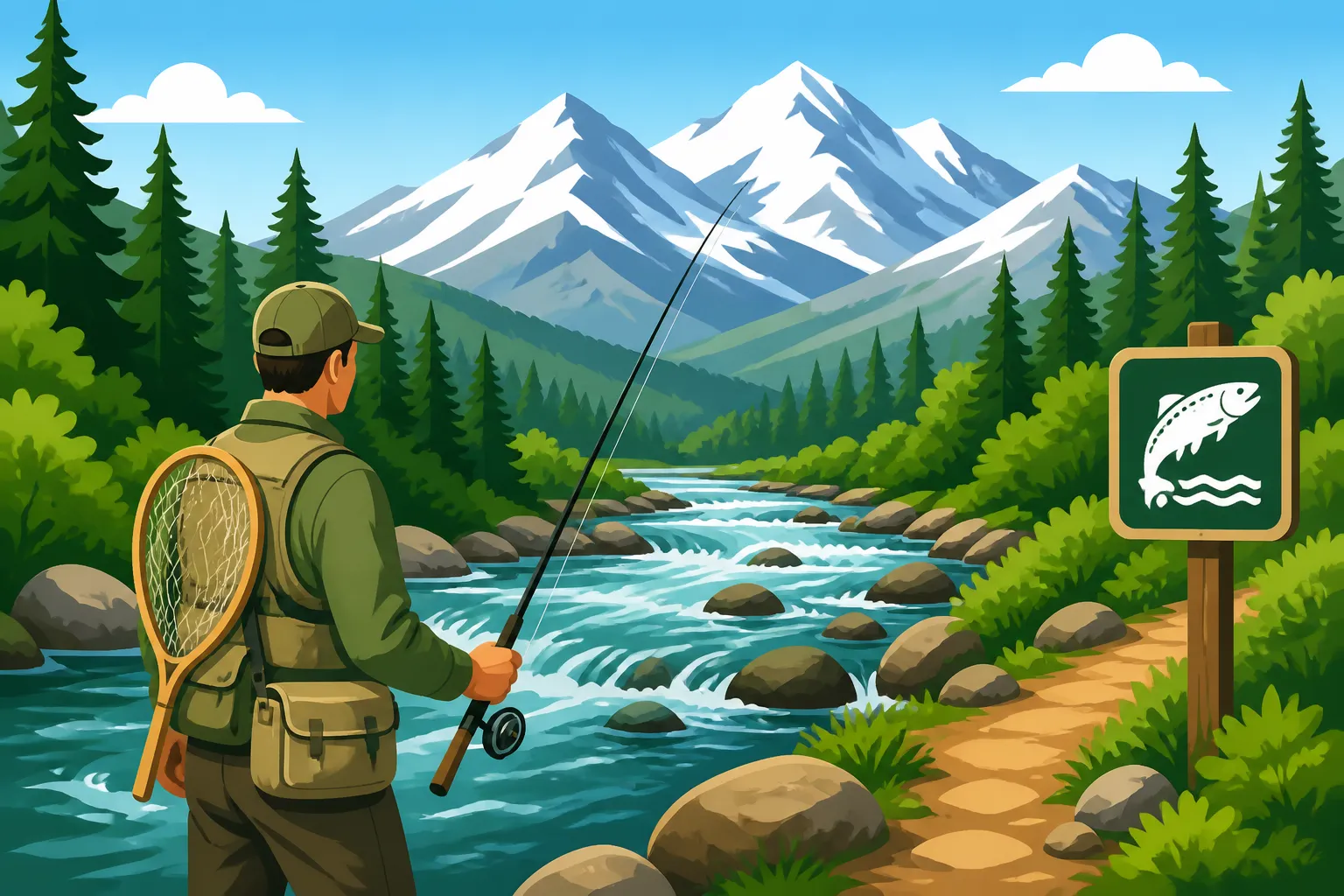
White Mountains Trout Stream Access
Finding prime trout stream access in New Hampshire's vast and often rugged White Mountains can feel like a daunting treasure hunt, leaving many anglers frustrated and unsure where to begin their adventure. This comprehensive guide is designed to cut through that confusion, providing you with detailed insights into the varied access points, unique challenges, and rewarding experiences awaiting you in these iconic mountain waters.
Understanding the Unique Challenges of White Mountains Trout Streams
Fishing in the White Mountains isn't your average day on a pond. The terrain, the weather, and the very nature of these mountain streams present a specific set of challenges and, consequently, unique rewards. You're not just casting a line; you're immersing yourself in a wild, ever-changing environment. It's an experience that truly tests your angling prowess and your appreciation for nature.
The Rugged Terrain and Remote Nature
Many of the most productive trout streams in the White Mountains flow through dense forests, over rocky streambeds, and down steep ravines. This isn't always easy walking, and what might look like a short hike on a map can quickly turn into an hour-long scramble over roots, boulders, and slippery moss. Access can range from convenient roadside pull-offs to remote backcountry trails that demand significant effort to reach. You might find yourself bushwhacking to get to a secluded pool, or carefully navigating slick rocks mid-stream. It's a physical challenge, but the reward of untouched water and genuinely wild trout makes every strained muscle worth it.
Consider the sheer scale of the White Mountains National Forest, spanning over 800,000 acres across New Hampshire and Maine. Within this vastness are countless miles of rivers, brooks, and hidden tributaries. While popular spots exist, the true gems often require effort and a willingness to explore off the beaten path. This remote nature means fewer anglers and less pressure on the fish, fostering robust populations and a sense of solitude that's hard to find elsewhere.
Water Flow and Temperature Dynamics
Mountain streams are highly reactive to weather patterns, especially rainfall and snowmelt. A sunny week can mean low, crystal-clear flows, while a heavy rainstorm can turn tranquil brooks into raging torrents overnight. These fluctuations directly impact water temperature, clarity, and fish behavior. Trout, particularly native brook trout, are highly sensitive to these changes. Understanding how to adapt your approach to different flow rates and temperatures is crucial for success.
During spring, snowmelt can keep water levels high and cold, often making for challenging but potentially rewarding fishing, especially as insect hatches begin. Summer can bring lower, warmer flows, making early morning or late evening fishing more productive, particularly in shaded areas. Fall sees stable flows and cooling temperatures, often igniting a strong bite from aggressive, pre-spawn trout. Monitoring local weather forecasts and stream gauges is an invaluable habit for any White Mountains angler.
Predominant Trout Species
When you talk about trout in the White Mountains, you're primarily talking about three species: brook trout, rainbow trout, and brown trout. Each has its own preferences and characteristics that influence where you'll find them and how you'll catch them. The native brook trout is arguably the star of these high-country waters. They thrive in the cold, clean, oxygen-rich flows of the smaller mountain streams and high-elevation ponds. Often smaller, their vibrant colors and feisty fight make them a cherished catch.
Rainbow trout and brown trout, while not native, are regularly stocked by the New Hampshire Fish and Game Department into many larger rivers and ponds, particularly those with easier access. Brown trout are known for their wariness and ability to grow to impressive sizes, often found in the deeper pools and undercut banks of bigger rivers. Rainbows are typically more aggressive and readily take a variety of flies and lures, making them a favorite for many anglers. Knowing which species you're likely to encounter in a particular stream helps tailor your gear and approach. For more details on species distribution, be sure to check out our guide on New Hampshire Trout Stocking and Fishing Rules.
Key Public Access Points and Their Characteristics
Navigating the White Mountains to find suitable trout stream access can be a bit of a puzzle. While some spots are well-known and easily accessible, others require a keen eye for detail and a willingness to explore. Understanding the different types of public access can significantly improve your planning and on-the-water experience.
Designated Trailheads and Parking Areas
Many of the most reliable and well-maintained access points to White Mountains trout streams are found at designated trailheads. These areas often feature marked parking lots, interpretive signs, and sometimes even vault toilets. They are typically gateways to popular hiking trails that follow river courses, offering numerous opportunities to drop down to the water. Examples include the popular Kancamagus Highway, which boasts multiple trailheads leading to the Swift River and its tributaries, and various access points within Franconia Notch State Park for the Pemigewasset River.
When using trailheads, always be mindful of signage. Some areas might have specific regulations regarding fishing, or even be designated "fly fishing only" waters. Parking is generally ample, but during peak hiking seasons (summer and fall foliage), lots can fill up quickly, especially on weekends. Arriving early is often your best bet. These areas are excellent starting points for those looking to combine a scenic hike with a productive day of fishing.
Roadside Pull-offs and Unmarked Access
Beyond the formal trailheads, a wealth of fishing opportunities can be found by simply keeping an eye out for roadside pull-offs, especially along less-traveled scenic routes. These informal access points often lead to smaller, less-pressured stretches of water. You might spot a faint path worn into the vegetation, indicating a popular local spot, or find a wide enough shoulder to safely park and bushwhack your way to the stream. This type of access requires a bit more adventurous spirit and a good map or GPS to ensure you know where you are and if the land is public.
Always exercise caution when parking at unmarked pull-offs. Ensure your vehicle is completely off the road and not blocking any gates or private driveways. Respect private property signs; "No Trespassing" means exactly that. While these spots can lead to fantastic solitude and excellent fishing, they also demand a higher degree of self-reliance and environmental awareness. It's often at these less obvious points that you'll discover truly special, hidden pools.
State Parks and National Forest Access
The vast majority of the White Mountains' trout streams fall within the White Mountain National Forest, which is federal land and generally open to public access for recreation, including fishing. This means you have a massive playground to explore. Additionally, New Hampshire State Parks, such as Franconia Notch State Park or Crawford Notch State Park, often have rivers and streams flowing through them, providing designated parking and clear access to water. These state-managed areas can offer convenient facilities, but also tend to see more recreational use.
Access within the National Forest can vary from well-maintained trails to completely wild, undeveloped areas. For specific details on access points, parking, and any associated fees (like day-use fees for certain trailheads or camping permits), consult the U.S. Forest Service website or visit a local ranger station. Planning your trip with resources like these can save you time and ensure you're fishing legally and safely. If you're looking for an easier start, many state park ponds are regularly stocked and provide great family fishing opportunities, as detailed in our New Hampshire State Park Fishing Guide.
Comparing Access Types
Here's a quick overview of the different access types you'll encounter in the White Mountains:
| Access Type | Pros | Cons | Best For |
|---|---|---|---|
| Designated Trailheads | Clear parking, marked trails, often well-maintained | Can be crowded, might require a hike to reach water | Anglers seeking established paths, combining fishing with hiking |
| Roadside Pull-offs | Solitude, less pressured water, often direct access | Unmarked, parking can be limited, potential for private land | Adventurous anglers, finding hidden gems, quick stops |
| State Parks/National Forest | Extensive land, diverse waters, some facilities | Regulations vary, may require maps/GPS for navigation | Exploring large areas, multi-day trips, backcountry fishing |
Navigating Different River Systems and Their Regulations
The White Mountains are a mosaic of diverse river systems, each with its own character, fish populations, and specific rules. Understanding these differences is key to a successful and legal fishing trip. Ignoring the nuanced regulations can lead to fines or, worse, harm the very resource you enjoy. It’s crucial to refer to the official New Hampshire Freshwater Fishing Digest, which outlines all the pertinent laws and special regulations.
Major Rivers: Pemigewasset, Saco, Connecticut River Tributaries
The larger river systems are the backbone of White Mountains trout fishing. The Pemigewasset River, often affectionately called "the Pemi," flows south from Franconia Notch and offers a mix of wild and stocked trout, particularly brown and rainbow trout in its middle and lower reaches, with brook trout more prevalent in its upper, colder tributaries. Access along the Pemi is good, with several public lands and road crossings providing entry. Its varying flows mean different tactics are required depending on the season and recent rainfall. Fly anglers often find success with nymphs and streamers, especially during higher flows.
Further east, the Saco River winds through scenic valleys near Conway, offering a beautiful backdrop for fishing. This river also receives significant stockings of rainbow and brown trout and holds a healthy population of smallmouth bass in its warmer sections. The Saco's varied bottom structure, from rocky runs to deeper pools, provides excellent habitat. Access can be found at various town landings and bridge crossings, making it popular for both wade fishing and drift boating. If you're interested in more details, we have a comprehensive guide on Saco River Fishing Guide.
While the mainstem Connecticut River itself is west of the White Mountains, many of its eastern tributaries, like the Ammonoosuc and Israel Rivers, flow directly from the mountains. These rivers offer prime cold-water habitat, particularly for wild brook trout in their headwaters and a mix of wild and stocked fish further downstream. The Ammonoosuc River near Littleton, for example, is well-regarded for its trout fishing, with both roadside access and more remote sections. These tributaries are critical for maintaining healthy fish populations throughout the region.
Smaller Freestone Streams and Mountain Brooks
This is where the White Mountains truly shine for those seeking solitude and native fish. Hundreds of smaller freestone streams and high-gradient mountain brooks cascade down the slopes, often hidden from view. These waters are typically characterized by their clear, cold, oxygen-rich flows, rocky bottoms, and abundant pocket water. They are the primary domain of New Hampshire's native brook trout, which thrive in these pristine conditions. Think of streams like the Swift River (a popular destination along the Kancamagus Highway), the Ellis River near Jackson, or countless unnamed brooks that feed into larger systems.
Fishing these smaller waters often involves stealth, short casts, and delicate presentations. Tenkara rods or shorter fly rods are ideal for navigating the dense canopy and tight quarters. Because these streams are less accessible and often unregulated by stocking, they offer a truly wild experience. However, it's essential to understand that many of these delicate ecosystems are also home to wild, reproducing brook trout, and as such, specific regulations like catch-and-release or artificial lures/flies only may apply. Always consult the New Hampshire Fishing Regulations Explained to avoid any issues.
Special Regulation Waters and Fly Fishing Only Sections
New Hampshire Fish and Game manages several "Special Regulation Waters" specifically to enhance trout fishing opportunities and protect fragile populations. These can include:
- Fly Fishing Only (FFO) sections: These stretches, like parts of the Ellis River or the Swift River, strictly prohibit the use of spinning tackle or bait. Only artificial flies, typically single, barbless hooks, are permitted. This helps reduce mortality rates, especially for wild trout, and promotes a specific angling experience.
- Catch and Release (C&R) sections: Some waters, often overlapping with FFO areas, mandate that all fish caught must be immediately released unharmed. This is crucial for sustaining populations in highly fished areas or for protecting wild, reproducing stocks.
- Reduced Bag Limits or Slot Limits: Certain waters might have lower daily creel limits than the statewide general regulations, or "slot limits" where fish within a certain size range must be released (e.g., to protect spawning-size fish).
These special regulations are implemented for a reason – to create better fishing and protect the resource. Anglers must always consult the most current New Hampshire Freshwater Fishing Digest to ensure they are compliant. Ignoring these rules not only risks fines but also jeopardizes the future of these precious fisheries. Knowing these specific rules is part of being a responsible angler, and you can find many of these waters detailed in our New Hampshire Catch and Release Fly Fishing Only Waters article.
Gear and Techniques for White Mountains Stream Fishing
Successfully fishing the White Mountains' trout streams requires a thoughtful approach to gear and technique. The dynamic environment, from tight, brushy brooks to wider, open rivers, demands versatility and the right tools for the job. You wouldn't bring a sledgehammer to tap in a nail, and similarly, the wrong tackle can make a challenging day even harder.
Essential Tackle for Mountain Trout
For the smaller, tighter mountain streams that are classic brook trout territory, a shorter, lighter fly rod (7' to 8'6", 3 or 4-weight) is often ideal. This allows for easier casting in brushy conditions and a more delicate presentation, which is key for wary trout. A quality fly reel with a smooth drag and matching weight-forward floating line will serve you well. For flies, a selection of attractor patterns like a Parachute Adams, Elk Hair Caddis, or Stimulator in sizes #12-18, along with an assortment of nymphs like Hare's Ear, Pheasant Tail, and Prince Nymphs in similar sizes, will cover most situations. Don't forget a few small streamers like a Woolly Bugger for deeper pools.
If you're targeting the larger rivers like the Pemigewasset or Saco, especially where stocked brown and rainbow trout might be present, you might opt for a slightly longer (9', 5 or 6-weight) fly rod, giving you more reach and power for longer casts and handling bigger fish. For spin anglers, an ultralight or light action spinning rod (5'6" to 6'6") paired with a small spinning reel spooled with 4-6 lb test monofilament or fluorocarbon line is perfect. Small spinners (Mepps Aglia, Panther Martin) and spoons (Little Cleo, Dardevle) in gold or silver, along with small jerkbaits or soft plastics rigged on jig heads, can be highly effective. The key is to match your tackle to the size of the water and the typical size of the fish you expect to encounter. For further insights on selecting the right setup, read our guide on Best Fly Rods for New Hampshire Trout Streams.
Wading Safety and Techniques
Wading in White Mountains streams can be challenging and sometimes hazardous due to slippery rocks, swift currents, and uneven streambeds. Safety should always be your top priority. Investing in good quality chest waders with sturdy wading boots (felt or rubber soles with studs for extra grip are often preferred) is essential. A wading staff is an invaluable tool for maintaining balance, probing the streambed, and testing current depth, especially when crossing faster water. Never wade alone, if possible, and always let someone know your fishing plans and expected return time.
When wading, adopt a slow, deliberate approach. Shuffle your feet rather than lifting them high, feeling for stable footing with each step. Face upstream and angle your body slightly to minimize resistance from the current. Avoid crossing directly above deep pools or fast rapids where you could be swept off your feet. If you find yourself in swift water, keep your knees bent and maintain three points of contact (two feet and the wading staff). Remember, no fish is worth risking your safety. Many local guides, some of whom can be booked through platforms like FishingBooker, often stress these safety points and can provide invaluable on-the-water instruction for newcomers.
Reading the Water and Locating Fish
Trout are masters of their environment, constantly seeking out areas that offer food, cover, and favorable water conditions. Learning to "read the water" is perhaps the most crucial skill for any stream angler. Look for areas where the current breaks or slows down, creating seams and eddies. These are prime feeding lanes where trout can ambush insects or baitfish without expending too much energy. Deep pools, especially those with undercut banks, fallen logs (known as "laydowns"), or large boulders, provide excellent cover from predators and strong currents.
Riffles and runs, the faster, shallower sections, can also hold actively feeding fish, particularly during insect hatches. Observe the water's surface for rising fish, indicating a hatch is underway, or look for signs of feeding fish flashing beneath the surface. Pay attention to changes in bottom structure, water color, and the presence of natural forage. Often, the best spots are those where slow water meets fast water, or where there's a significant change in depth or cover. Don't overlook small pockets behind rocks or tight corners where a single, prized trout might be holding. For deeper dives into these tactics, refer to our Wading Techniques for New Hampshire Trout Streams article.
Responsible Angling and Conservation in the White Mountains
The White Mountains are a precious natural resource, and it's incumbent upon every angler to practice responsible angling and conservation. Our actions today directly impact the health of these fisheries for future generations. The thrill of the catch is always more profound when you know you've done your part to protect the environment.
Leave No Trace Principles
The Leave No Trace principles are a set of outdoor ethics designed to minimize human impact on wild places. For anglers in the White Mountains, this means:
- Plan Ahead and Prepare: Know the regulations, carry appropriate gear, and understand the terrain. Pack out everything you pack in.
- Travel and Camp on Durable Surfaces: Stick to established trails and designated campsites. Avoid trampling streamside vegetation, which is vital for bank stability and insect habitat.
- Dispose of Waste Properly: This means all waste, including fishing line, broken lures, and food scraps. Pack out fruit peels and apple cores too; they don't decompose as quickly as you might think.
- Leave What You Find: Do not disturb natural objects, historical artifacts, or the stream environment. Let others experience the same sense of discovery.
- Minimize Campfire Impacts: Use established fire rings, keep fires small, and ensure they are completely extinguished.
- Respect Wildlife: Observe from a distance. Do not feed animals. Keep a clean camp to avoid attracting wildlife.
- Be Considerate of Other Visitors: Share the trails and waters. Keep noise levels down.
Adhering to these principles ensures that the beauty and ecological integrity of the White Mountains remain intact for everyone to enjoy.
Understanding and Following Local Regulations
As mentioned earlier, New Hampshire has specific fishing regulations that vary by water body, species, and season. These regulations are not arbitrary; they are scientifically determined to protect fish populations and ensure sustainable angling opportunities. Always carry a copy of the current New Hampshire Freshwater Fishing Digest, either physical or digital, and consult it frequently. Pay close attention to:
- Season Dates: When certain species can be legally harvested or must be released. For example, some trout streams may have specific opening and closing dates. Check out New Hampshire Fishing Season Dates and Closures for more information.
- Bag and Possession Limits: The number of fish you can keep per day and have in your possession.
- Size Limits: Minimum or maximum lengths for keeping certain fish.
- Gear Restrictions: Whether bait, artificial lures, or fly fishing only is permitted.
- Boundary Water Regulations: If fishing on waters bordering other states (e.g., Vermont along the Connecticut River), understand reciprocity rules.
A valid New Hampshire fishing license is always required for anyone 16 years or older, even if you are just releasing fish. You can find detailed information on obtaining one in our guide, Where and How to Buy a New Hampshire Fishing License. Ignorance of the law is not an excuse, and game wardens actively patrol these waters to ensure compliance. If you're unsure, it's always best to err on the side of caution or ask an official source. Many New Hampshire Fish and Game offices or licensed fishing guides, like those you can find on FishingBooker, are excellent resources for clarifying regulations.
Protecting Native Brook Trout Populations
New Hampshire's native brook trout are a cornerstone of the White Mountains' aquatic ecosystems. These beautiful fish thrive in the coldest, cleanest headwater streams, and their presence is an indicator of pristine water quality. Protecting these populations is paramount. Many of the smaller, higher-elevation streams are managed as wild trout waters, meaning they are not stocked and rely solely on natural reproduction.
When targeting brook trout, consider practicing catch and release, especially for larger breeding-size fish. Use barbless hooks to minimize harm, and handle fish as little as possible with wet hands. Revive tired fish gently in the water before releasing them. Avoid fishing during spawning season if you can, as disturbing their redds (spawning beds) can harm future generations. Supporting organizations dedicated to cold-water conservation and advocating for clean water policies also plays a critical role in ensuring these vibrant, native fish continue to grace our mountain streams. Learn more about their unique characteristics in Brook Trout: New Hampshire's Native Trout.
Disclaimer
The information provided in this guide is for general informational purposes only and is not intended as legal advice. Fishing regulations, access points, and conditions can change. Always consult the most current New Hampshire Fish and Game Department regulations, maps, and local authorities before planning your fishing trip. Safety in the outdoors is your personal responsibility.